
Five Queens of Adumatu


目次 (Index)
始めに
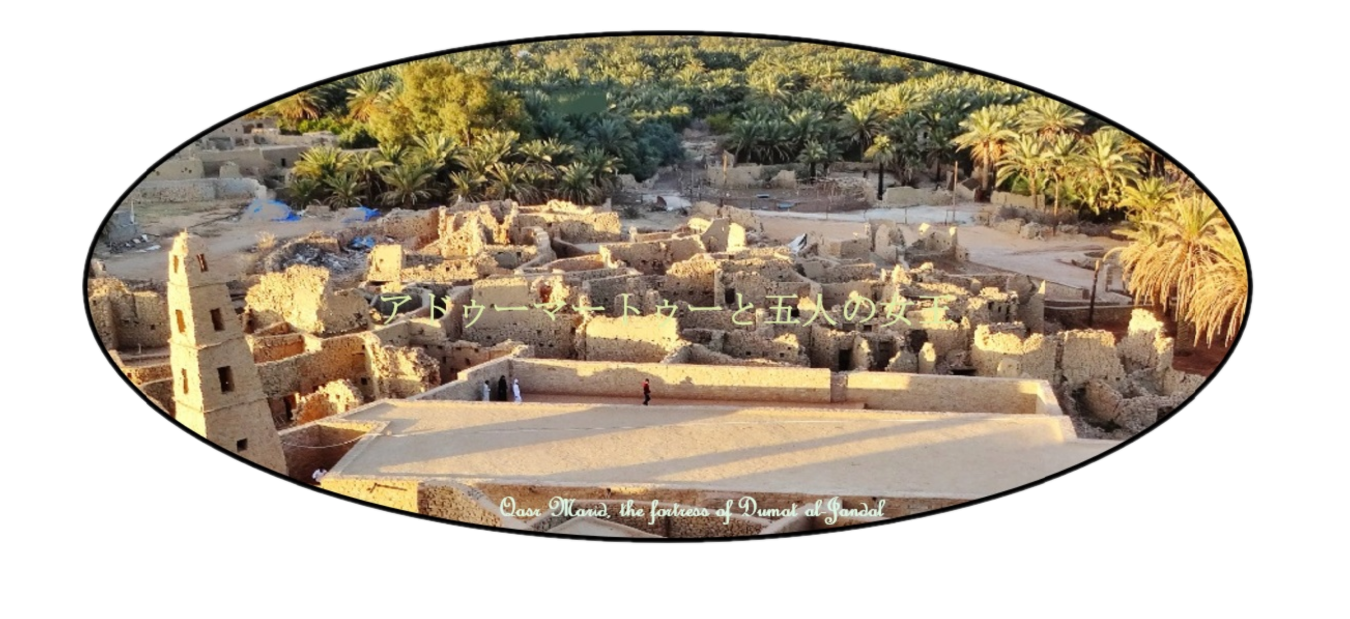
ドゥーマ・ジャンダル(Dumat al-Jandal)は紀元前8世紀から7世紀にかけて北アラビア北部の主要なアラブ居住地でした。アッシリア(Assyrian)の年代記にはアドゥーマートゥー(Adummatu)と云う名で記録されている沙漠の王国です。
アドゥーマートゥーとは不毛沙漠の荒れ地の中心にあるアラブの砦と云う意味です。このオアシスはケダール(Qedar)と云うアラブ部族(アドナーン部族(Adnani Arabs))の領地の中にありました。パルミレナ(Palmyrena)と呼ばれた南東ダマスカス(Damascus)を含む地域がケダール(Qedar)の生活圏であり、ケダール部族の各支族やケダール(Qedar)に従属していた他部族の支族の遊牧地は遠くナフード沙漠(An Nafud)まで広がっていました。
Introduction
Dumat al-Jandal was a major Arab settlement in the Northern Arabia from the 8th to the 7th century BC, and it was a desert kingdom recorded in the Assyrian chronicles under the name of Adummatu.
Adumatu means an Arab fort in the heart of a barren desert wasteland, and this oasis was located in the territory of the Arab tribe called Qedar (Adnani Arabs). The area that included the Southeastern Damascus called Palmyrena was the living territory of the Qedar tribe, and the nomadic lands of the branches of the Qedar tribe and the branches of other tribes subordinated to the Qedar tribe extended as far away as the An Nafud.
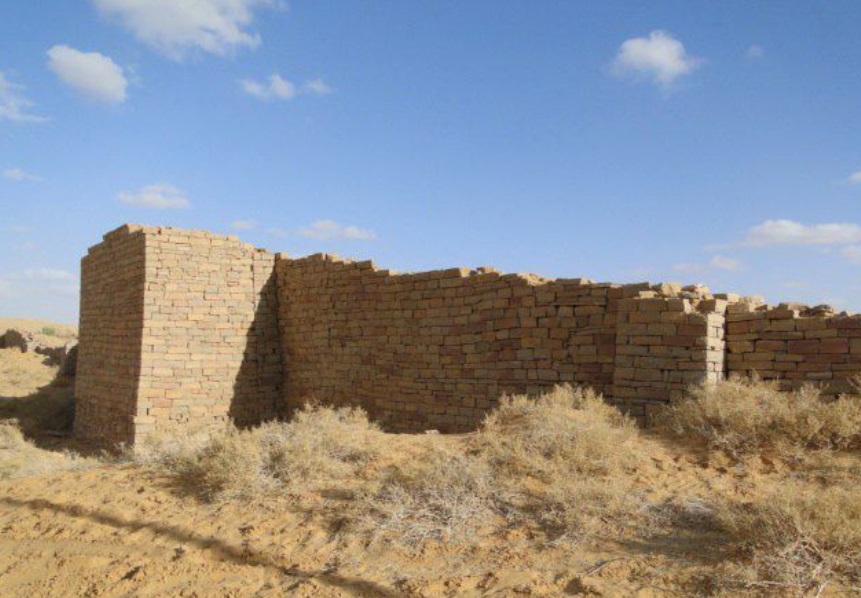
ドゥーマ・ジャンダル(Dumat al-Jandal)の住人はケダール(Qedar)の保護が無ければその隊商(Caravan)が沙漠を越えられなかったのでケダール(Qedar)に従属していました。アッシリア(Assyrian)の年代記にはドゥーマ・ジャンダルは一連のアラブ女王系譜の首都であったと記録されていました。その女王達とは女王ザビーベ (Queen Zabibe)、女王サミースィー (Queen Samisi)、女王ヤティ’エ (Queen Yati’e)、女王女王テ’エルクヌ (Queen Te’elkhunu)および王女タブ’ア (Princess Tabu’a)でした。
The inhabitants of Dumat al-Jandal were subject to the Qedar tribe because without the protection of the Qedar tribe their caravans were not able to crossed the desert. The Assyrian chronicles recorded that Dumat al-Jandal was the capital of a series of Arab queen lineages. Those queens were Queen Zabibe, Queen Samisi, Queen Yati’e, Queen Te’elkhunu and Princess Tabu’a.
女王ザビベ
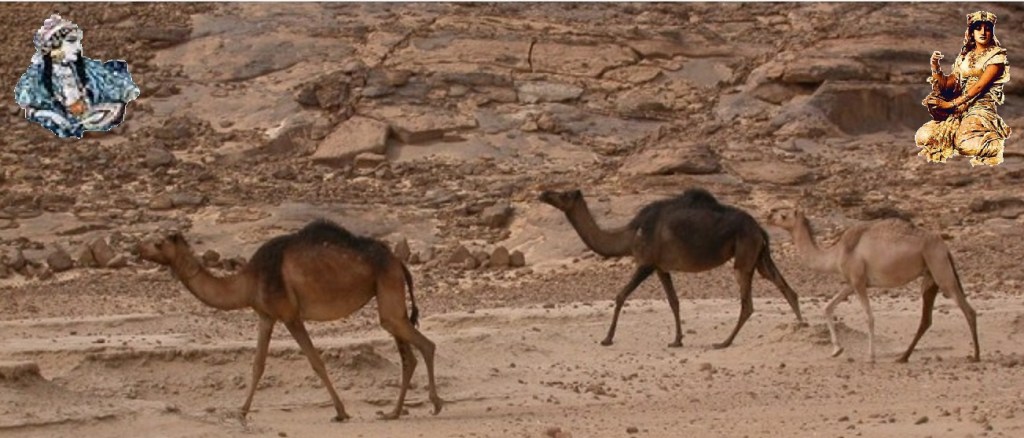
アッシリア(Assyrian)の年代記に登場する最初の北アラビアの女王が女王ザビベ(Queen Zabibe) (750~735BC)でした。それは第二次アッシリア帝国(Assyrian Empire)の創設者で「最も偉大な征服者」と呼ばれたティグラト・ピレセル三世(Tiglath-Pileser III 745BC~727 BC)の治世の事でした。ティグラト・ピレセル三世(Tiglath-Pileser III)はアッシリア(Assyrian)の支配を北アラビアまでに広げた最初の王であり、女王ザビベ(Queen Zabibe)は紀元前738年に同王に貢ぎ物を送っています。女王ザビベ(Queen Zabibe)はこのオアシスが貢ぎ物を支払っていたケダール族(Qedar)の最高位の巫女であり、デュマト アル ジャンダル(Dumat al-Jandal)を支配していました。
Queen Zabibe
The first northern Arabian queen to appear in the Assyrian chronicles was Queen Zabibe (750~735BC). It was the reign of Tiglath-Pileser III (745 BC~727 BC), the founder of the Second Assyrian Empire and called “the greatest conqueror”. Tiglath-Pileser III was the first king to extend Assyrian rule to the Northern Arabia. Queen Zabibe sent tribute to this king in 738 BC. Queen Zabibe was the highest-ranking priestess of the Qedar tribe that the oasis paid tribute to, and she ruled Dumat al-Jandal.
女王サミシ
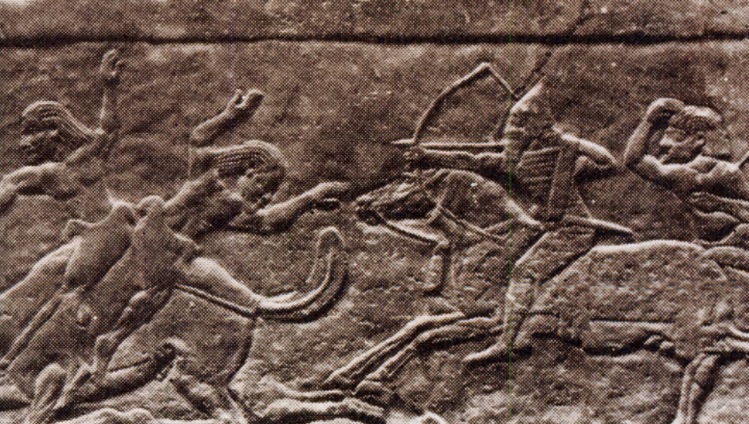
アッシリア(Assyrian)の年代記に記録されたアラブの二番目の女王はサミシ(Queen Samisi) (735~710BC)でした。女王サミシ(Queen Samisi)はアッシリア(Assyrian)に煩わせず忠誠を守ると云う偉大な神シャマシュ(Schamash)と女王自身の誓いを破ったので、紀元前735年、ティグラト・ピレセル三世(Tiglath-Pileser III)に成敗されました。同王は女王支配下の二つの町を攻め落とし、女王の野営地を包囲しました。この為、女王には降伏して駱駝の貢ぎ物を支払う以外に方法は有りませんでした。この時にアッシリア(Assyrian)に攻め落とされた町々はアッシリア(Assyrian)領土の南東国境に沿った南ハウラン(Hawran)の隊商路にあったと考えられます。この様な耕作地と沙漠の境界地帯の集落は女王サミシ(Queen Samisi)に朝貢していました。
Queen Samisi
The second Arab queen recorded in the Assyrian Chronicles was Queen Samisi (735~710BC). Queen Samisi broke her vows to the great god Schamash to keep the Assyrian loyalty without trouble and to herself, as well. In 735 BC, she was attacked and defeated by Tiglath-Pileser III. The king captured the two towns under the Queen’s rule and besieged the Queen’s encampment. Because of this, the Queen had no choice but to surrender and pay camels as tribute. The towns that were captured by the Assyrian at this time are thought to be along the caravan route of the South Hawran. The South Hawran is located in the southeastern border of Assyrian territory. Such settlements on the border between cultivated land and desert had paid tribute to Queen Samisi.
女王ヤティ’エ
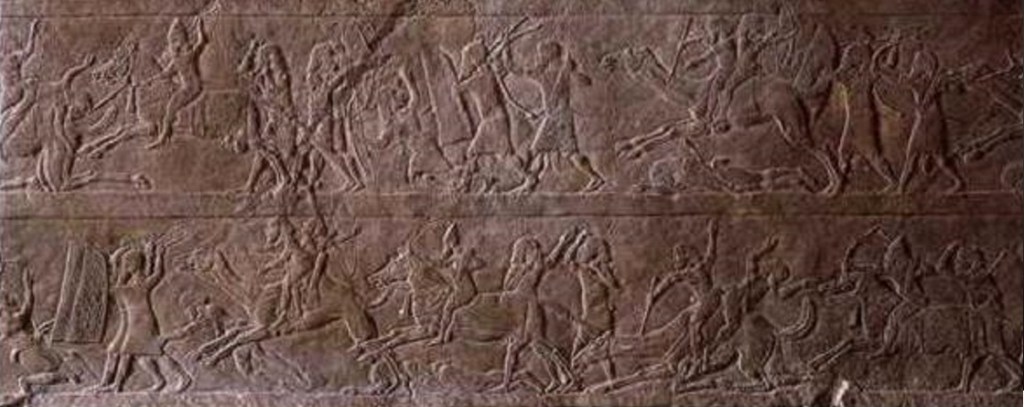
アラブの三番目の女王はヤティ’エ(Queen Yati’e) (710~695BC)でした。女王ヤティ’エ(Queen Yati’e)はバビロニア王(King of Babylonia)マルデュク・アパル・イッディナ(Marduk-apal-iddina)を援助してアッシリア(Assyrian)に対抗し、弟のバスグヌ(Basqnu)に軍勢を付け紀元前703年に援軍として送りました。その軍勢の大部分はキシュ(Kish)の戦いでセンナケリブ王(Sennacherib) (705~681BC) のアッシリア(Assyrian)軍によって制圧され捕虜となりました。
Queen Yati’e
The third Arab queen was Queen Yati’e. Queen Yati’e (710~695BC) was assisting the King of Babylonia, Marduk-apal-iddina to oppose the Assyrians, and sent his brother Basqnu in 703 BC as the reinforcement to Marduk-apal-iddina .Their forces were defeated by the Assyrian king. This was the Battle of Kish. This king was Sennacherib (705–681 BC). The Assyrian army captured almost of the allied force and took them as prisoners to them.

女王テ’エルクヌ
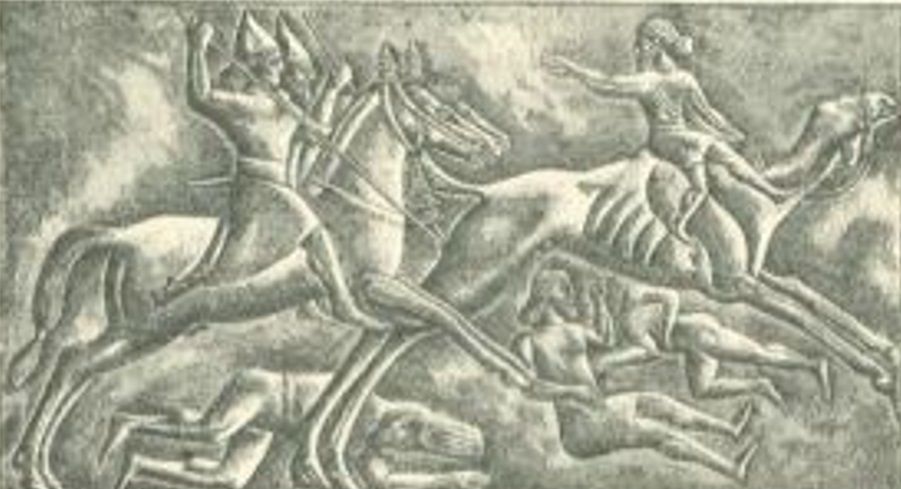
センナケリブ王(Sennacherib)は紀元前689年11月についにバビロニア(Babylonia)を征服し、その後は北アラビアに目を向けました。アッシリア(Assyrian)が不毛の沙漠荒れ地の中心にあるアラブの砦アデュッマツ(Adummatu)と記録して来たデュマト アル ジャンダル(Dumat al-Jandal)をセンナケリブ王(Sennacherib)は紀元前688年に攻撃しました。これはこのオアシスが攻撃を受けたとされる最初の記録でした。この時には第四番目のアラブ女王であった女王テ’エルクヌ(Queen Te’elkhunu) (695~690BC)がこのオアシスとその周辺を支配していました。隊商交易によってバビロニアからアデュッマツ(Adummatu)の町の住人が必要とする穀物、衣服やその他の物資を運んでいたので女王の威光はバビロニアの周辺にまで及んでいました。アッシリア(Assyrian)軍が近づいて来た時には女王とその同盟軍はバビロニアの西国境近くの沙漠に幕営していました。アッシリア(Assyrian)軍は同盟軍に襲いかかり、同盟軍は激しく責め立てられ敗北し、たくさんの駱駝を失ないました。女王は自分の天幕を捨て、アラブ同盟軍の指揮者カザ’イル(Khaza’il)と共にアデュッマツ(Adummatu)の砦に逃げ戻りました。女王テ’エルクヌ(Queen Te’elkhunu)はディルバト神(Dilbat)の巫女でした。ディルバト神(Dilbat)とは’アタールサマイン(‘Atarsamain)の名でデュマト アル ジャンダル(Dumat al-Jandal)の住人に崇拝され、古代中東ではイシュタール(Ishatar)の名で広く知れ渡った偶像神でした。他の女王達もこの偶像神の巫女の役目を担っていまし」た。この大きなオアシスはパルミレネ(Palmyrene)と呼ばれた北アラビアを支配するケダール族(Qedar)の庇護下にありました。ケダール族(Qedar)の首長がカザ’イル(Khaza’il)であり、女王テ’エルクヌ(Queen Te’elkhunu)と同盟していました。女王テ’エルクヌ(Queen Te’elkhunu)はカザ’イル(Khaza’il)を裏切り、アッシリア(Assyrian)に降伏したのでセンナケリブ王(Sennacherib)はデュマト アル ジャンダル(Dumat al-Jandal)の全ての偶像神を女王テ’エルクヌ(Queen Te’elkhunu)とその娘と共にニネヴェー(Nineveh)へと拉致しました。その娘がアラブの第五番目の女王となる王女タブ’ア (Princess Tabu’a)であり、同王女にはアッシリア(Assyrian)の容認する方法で、アッシリア(Assyrian)に忠実なアラブ女王と成る為の政治教育も含めた養育が施されました。
Queen Te’elkhunu
King Sennacherib finally conquered Babylonia in November 689 BC, and then turned his attention to northern Arabia. King Sennacherib attacked Dumat al-Jandal in 688 BC. Dumat al-Jandal was recorded in the Assyrian chronicles as the Arab fort Adummatu in the heart of a barren desert wasteland. This was the first record of an alleged attack on this oasis. Queen Te’elkhunu (695~690BC), the fourth Arab queen at the time, ruled the oasis and its surroundings. The queen’s prestige extended to the periphery of Babylonia as the caravan trade carried the grain, clothing, and other supplies needed by the inhabitants of the town of Adummatu from Babylonia. By the time the Assyrian army approached, the Queen and her allies were camped in the desert near the western Babylonian border. Assyrian forces attacked the allies, who were violently repulsed and defeated and lost many camels. The Queen abandoned her tent and fled back to the fort of Adummatu with Khaza’il, the commander of the Arab League. Queen Te’elkhunu was a priestess of the god Dilbat. Dilbat was worshiped by the inhabitants of Dumat al-Jandal under the name of Atarsamain, and was an idol god widely known in the ancient Middle East under the name of Ishatar. The other queens also served as the priestesses of this idol god. This large oasis was under the patronage of the Qedar tribe that ruled the Northern Arabia called Palmyrene. The chief of the Qedar tribe was Khaza’il, who allied with Queen Te’elkhunu. Queen Te’elkhunu betrayed Khaza’il and surrendered to Assyria. King Sennacherib kidnapped all idols of Dumat al-Jandal along with Queen Te’elkhunu and her daughter to Nineveh. This daughter was Princess Tabu’a, who would become the fifth Arab queen, and Princess Tabu’a was raised in a manner acceptable to the Assyrian, including political education to become an Arab queen who was loyal to the Assyrian.
王女タブ’ア
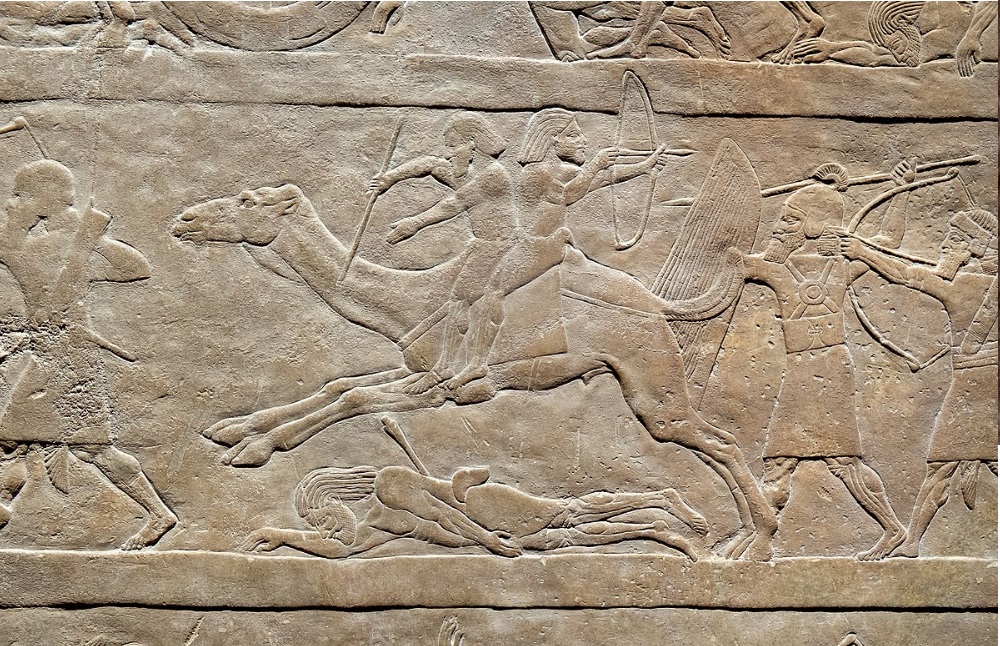
エサルハドン王(Esarhaddon) (681~669BC)は後に65頭の駱駝の貢ぎ物を得た見返りにカザ’イル(Khaza’il)をケダール族(Qedar)の王としても認めました。エサルハドン王(Esarhaddon)は職人に命じて、カザ’イル(Khaza’il)にこれらの偶像神達を返却する前に偶像神達の修復を命じ、その際に自分の名とアッシリア(Assyrian)の偶像神がデュマト アル ジャンダル(Dumat al-Jandal)の偶像神の上位にあるとの文字を彫り込ませました。王女タブ’ア(Princess Tabu’a)はアッシリア(Assyrian)のアラブ支配の手段としてアッシリア(Assyrian)式の教育で養育されていました。王女タブ’ア(Princess Tabu’a) (678~675BC)は女王の座に就かされますがこの時期には王や女王の座を単に保証するだけで収まらない程にアッシリア(Assyrian)とアラブの間の敵意は深まっていたのでそれは長くは続きませんでした。
紀元前675年にカザ’イル(Khaza’il)が死ぬとエサルハドン王(Esarhaddon)は1,000ミナエ(minae)の金、1,000個の貴石および50頭の駱駝から成る多大な貢ぎ物を受け取った見返りにカザ’イル(Khaza’il)の息子のウアイテ’(Uaite’)をその後継の王に任じました。しかしながらケダール族(Qedar)の民は厳しい状況に対応して来なければ成らなかった王の後継者としてウアイテ’ (Uaite’)を認めず、反乱しました。アッシリア(Assyrian)はその成り行きに非常に怒り、軍隊を派遣してその反乱を鎮圧し、首謀者のワーブ(Wahb)を捕らえました。これがケダール族(Qedar)の蜂起の最後では無く、ウアイテ’ (Uaite’)自信がアッシリア(Assyrian)に他の反乱軍を率いて対抗し、エサルハドン王(Esarhaddon)の善意のある対応や扱いにもかかわらず、沙漠の広大さを利用してアッシリア帝国(Assyrian Empire)の国境を襲っていました。エサルハドン王はウアイテ’の反乱を鎮圧しアラブの偶像神達を再び奪い、捕虜と共にアッシリア(Assyrian)に持ち帰りました。ウアイテ’ (Uaite’)は一人で逃れ、アッシリア(Assyrian)が追跡し捕らえられないまで奥深く沙漠に逃げ込みました。王女 タブ’ア(Princess Tabu’a)はアッシリアに対する忠誠を保っていたのでこの遠征の間にアッシリア(Assyrian)の軍隊が王女の支配するデュマト アル ジャンダル(Dumat al-Jandal)に攻め込む事はありませんでした。
Princess Tabu’a
Later, King Esarhaddon (681~669BC) recognized Khaza’il as the king of the Qedar tribe in exchange for a tribute of 65 camels. King Esarhaddon ordered his craftsmen to restore the idols before returning them to Khaza’il. By that order, the craftsmen carved the name of Esarhaddon and the inscription that the Assyrian idols were above the idols of Dumat al-Jandal. Princess Tabu’a (678~675BC) was raised in an Assyrian-style education as a means of Assyrian Arab rule. Princess Tabu’a was placed on the throne, but this did not last long because the hostility between the Assyrians and Arabs had deepened to the point where it was not enough to simply guarantee the kingship or queen’s throne.
On Khaza’il’s death in 675 BC, King Esarhaddon received a large tribute consisting of 1,000 minae of gold, 1,000 precious stones, and 50 camels, in exchange for Khaza’il’s son Uaite’ as his successor, and appointed him the king of Qedar. However, the Qedar people refused to recognize Uaite’ as the king’s successor, who had to deal with the difficult situation, and the Qedar people rebelled to the Assyrians. The Assyrians were so enraged by the turn of events that they sent troops to put down the rebellion and capture the ringleader, Wahb. This was not the end of the Qedar uprising, and Uaite’ confidence led other rebels against the Assyrians and King Esarhaddon. Despite the well-intentioned response and treatment of the Assyrian Empire, it took advantage of the vastness of the desert to strike the borders of the Assyrian Empire. King Esarhaddon suppressed the rebellion of Uaite’, recaptured the Arab idolamists, and brought them back to Assyrian with his captives. Uaite’ fled alone and fled deep into the desert until the Assyrian cannot pursue him and cannot capture him. Princess Tabu’a remained loyal to Assyria and so, during this expedition no Assyrian army invaded Dumat al-Jandal, ruled by Princess Tabu’a.
 Desert peninsula