| 昔、この広大な半島は単にアラビアとして知られていました。シリア沙漠の南に広がる広大な土地であり、アラビア沙漠とも呼ばれていました。長い歴史の中で、多くの民族や文化、文明を結ぶ場でもありました。 | In ancient times, this vast peninsula was simply known as Arabia. Stretching south of Syrian Desert, it was regarded as an immense and little-known land and was often called Arabian Desert. For many centuries, it remained a crossroads linking different peoples, cultures, and civilizations. |
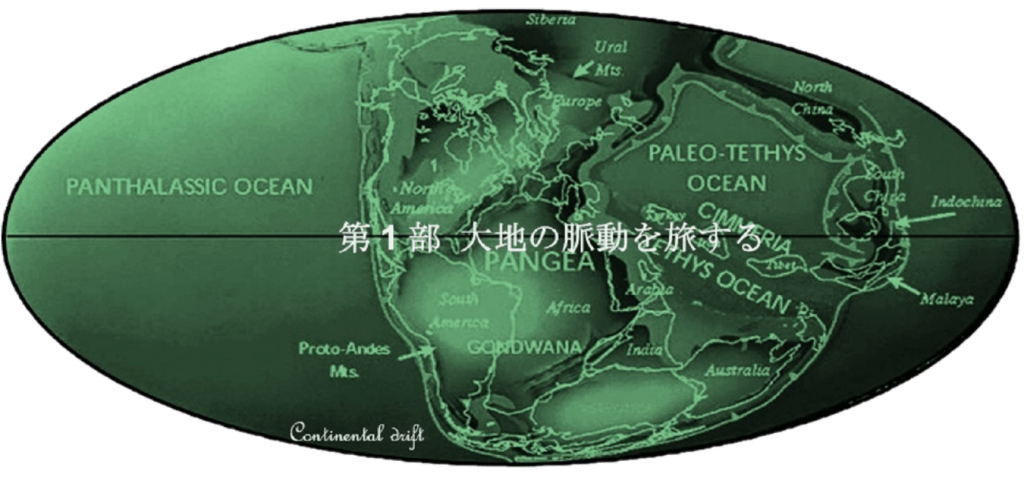
| アラビア半島は太古にはアフリカ大陸の一部でした。約2,500万年前の漸新世に大地溝帯の形成によってアフリカ大陸から分離し、次第にアジア大陸へ接近しました。また、この半島は大地溝帯で誕生した初期人類がユーラシア大陸へ移動する際の架け橋としての役割を果たしました。 | Arabian Peninsula was once part of African Continent. During Oligocene Epoch, it was separated from Africa by formation of Great Rift Valley about 25 million years ago and gradually moved closer to Asian Continent. This land bridge also provided a route through which early humans, believed to have originated in Great Rift Valley, migrated toward Eurasian Continent. |
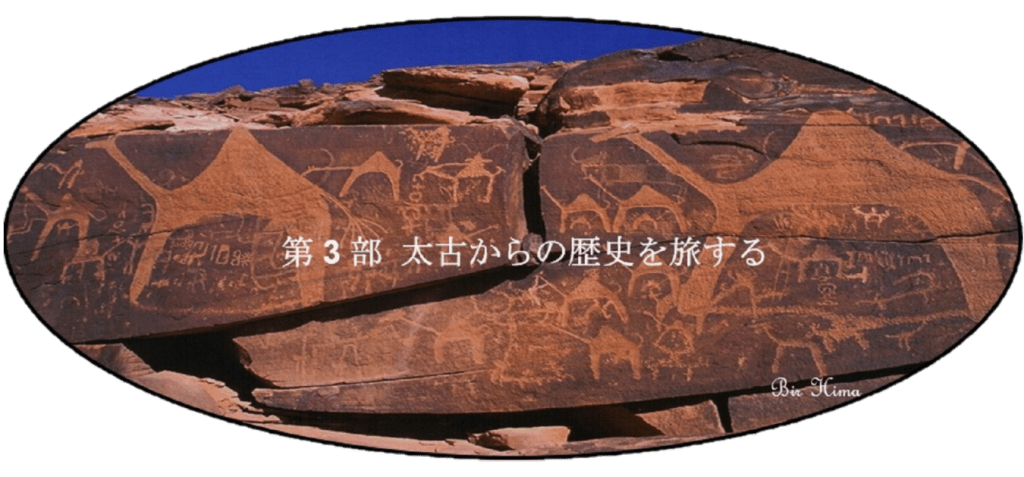
| アラビア半島は古代オリエント文明やエジプト文明の後背地でした。また、この地では独自のサイハド文明(古代南アラビア文明)が栄えました。さらに、マカル文明に関連する遺跡からは、新石器時代における馬の家畜化を示す一番古い考古学的遺物が発見されています | Arabian Peninsula served as hinterland for ancient civilizations of Orient and Egypt. At the same time, it nurtured its own Ṣayhadic Civilization, also known as Old South Arabian Civilization. Archaeological discoveries, including remains associated with Maqar Civilization, suggest that some of the earliest evidence of horse domestication may have existed in this region during Neolithic Period. |
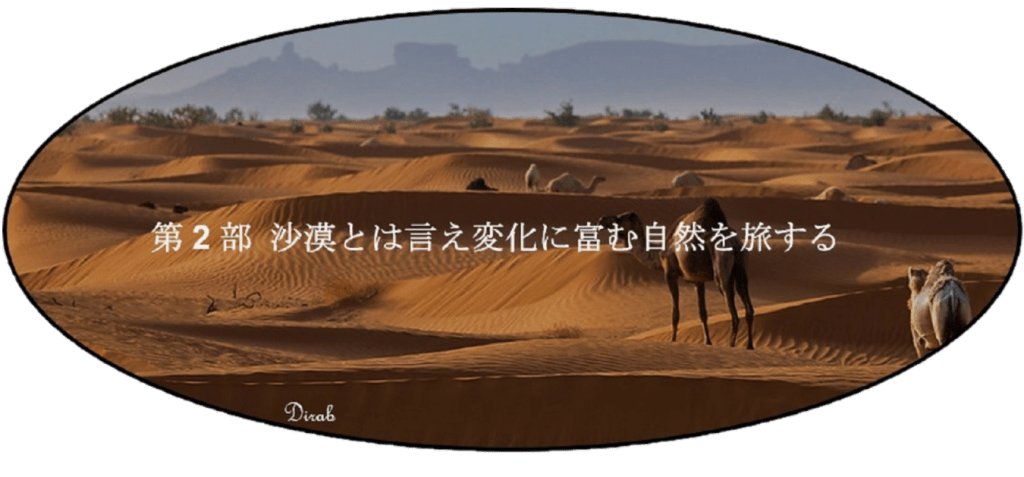
| 現在のアラビア半島は沙漠のイメージが強い地域ですが、遠い昔には豊かな緑に覆われていました。特に鮮新世後期から更新世初期にかけては緑豊かな環境が広がっていたと考えられています。これは氷河時代以前のことであり、その痕跡は現在の沙漠の各地に残されています。 | Although Arabian Peninsula is often associated with deserts today, much of its landscape was covered with rich vegetation in distant ages, particularly during late Pliocene and early Pleistocene. This was a period before Ice Age conditions became dominant, and many traces of those greener environments still remain beneath sands and rocks of present deserts. |
| この地域への理解を深めるため、本書では「アラビア半島を旅する」と題し、アラビア半島の歴史、自然、人々、社会および現代の発展を9章に分けて紹介しています。 | To deepen understanding of this remarkable region, this work is entitled “Nomad in Arabian Peninsula.” It introduces history, nature, people, society, and modern development of Arabian Peninsula through nine chapters. |
| 1. 大地の脈動を旅する | 1. Pulsation of Mother Earth |
| 2. 沙漠とは言え変化に富む自然を旅する | 2. Diversity of Nature |
| 3. 太古からの歴史を旅する | 3. History from Ancient to Modern |
| 4. イスラーム後の半島を旅する | 4. Travel the peninsula after the birth of Islam |
| 5. 半島諸国の成り立ちを旅する | 5. Origin of Current Peninsula Nations |
| 6. 多様な部族(アラブ族)出生を旅する | 6. Various Arabic Tribes |
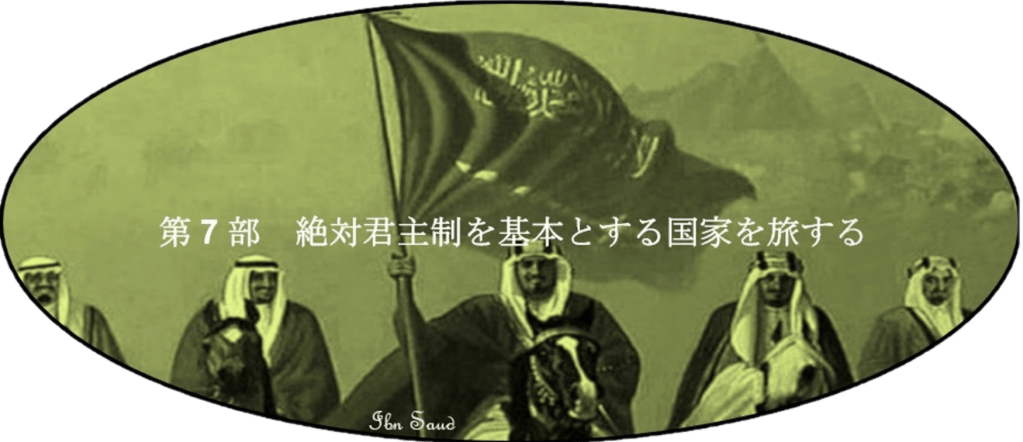
| 7. 絶対君主制を基本とする国家を旅する | 7. Absolute Monarchy System |
| 8. 石油依存経済からの脱却と産業基盤整備を 旅する | 8. From Oil Dependence to Industrialization |
| 9. 伝統を守りつつ進める教育・文化や生活改善を旅する | 9. Education and Culture that develop while preserving Tradition. |