Earth Surface with Full of Pulsation

Birth of Arabian Shield
(アラビア楯状地)


Return to Home Page Return to Part 1 Top
古代アッシリア時代には交易に従事したり、多数の駱駝騎乗戦士で略奪したりするアラブ族が住む沙漠がメソポタミアの南に有る事は知られていました。それでも自然条件の厳しさから自らその土地を訪れたり、略奪部隊を奥深くまで追撃したりする事はありませんでした。
ローマ時代には「アラビア・ペトラ(旧ナバテア王国領)」、「アラビア・フェリクス(幸福のアラビア)」及び「アラビア沙漠(不毛のアラビア)」の3つのアラビアが有るとされていました。
具体的な記述は、10世紀の学者ムハンマド・ハムダーニーが「三方を海に囲まれ、北部はユーフラテス川と地中海が国境であったので、アラブ族はこの国をジャジーラ・アル=アラブと呼んだ」と紹介した著書「アラブ族の島」が始めだといわれています。この著作は、19世紀終わりにD.H. ミュラーが翻訳して西洋で出版されました。
Since the Assyrian Eras, it was known that there is a vast desert south of the Mesopotamia. It was the homeland to the Arab Tribes, who engage in trade and plunder using a number of the camel cavalry warriors. Even if looting damage occurs, due to the harsh desert conditions, the reign body did not visit the desert or pursue the looting troops deep in it.
The Ancient Rome was said to have three Arabia: those were “the Arabia Petraea (the former Nabataean Kingdom)”, “the Arabia Felix (the Happy, or Flourishing, Arabia)” and “the Arabian Desert, (the Barren Arabia)”.
The specific description was given at first by the 10th century scholar Abu Muhammad al-Hamdani in his work “Island of the Arabs”. He called the desert as “Sifat Jazirat al-Arab” because it was surrounded by the sea on three sides and bordered the Euphrates and the Mediterranean Sea in the north. This work was translated by D.H. Müller at the end of the 19th century and published in the West as “Al Hamdanis Geographie der Arabischen Halbinsel”.

この概念はアラビア・プレート陸上部分とほぼ一致しています。現在では「アラブ族の島」からレヴァント地方およびシリア沙漠を除いたアラビア沙漠、具体的にはサウジアラビアおよびクウェイト国境から南がアラビア半島と呼ばれます。(ここでは他の半島と紛らわしくない限り、単に「半島」と記述しています)。
英国人文筆家で旅行家のチャールズ・モンタギュー・ ダウティは1876~1878年にローマ人が3つに分類したアラビアでも最も過酷な「アラビア沙漠」を敢えて旅行し、地理学、地質学そして人類原語学上の発見と観察の膨大な記録を「アラビア沙漠の旅行」として1888年に出版しています。この著書は野心的旅行記の傑作であるばかりでは無く、ダウティ自身も西洋旅行家で最も傑出した人物の一人であるとの評価を次第に確立し、トーマス・エドワード・ロレンスが1920年に再版させた程です。
The area currently called the Arabian Desert is, in principle, the “Island of the Arabs” area, but excludes the Levant region and the Syrian Desert. In other words, it is in the south of Saudi Arabia and Kuwait. (Here, unless it is confused with other peninsulas, the term “the peninsula” simply means this Arabian Desert).
British writer and traveler Charles Montague Doughty traveled to “the Arabian Desert” from 1876 to 1878. It is the toughest of the three Arabias classified by the Romans. He published a vast record of geographic, geological and anthropological discoveries and observations in 1888 as “Travels in Arabia Deserta”. Not only was this book a masterpiece of ambitious travel, but Doughty himself gradually established himself as one of the most prominent Western travelers, and was reprinted by Thomas Edward Lawrence in 1920.

ダウティの旅は後援も無く、「未知であったアラビアから遠ざかる方が良い」と云う周囲の賢明な忠告を無視した孤独な旅でした。ダウティは忠告を聞き入れなかった事に対してこの2年間の旅行中に「孤立した生命の存在も感じられず、ここに進入した熱の圧迫で死んだ土地になっている。もし死んでなければ自分の骨の絶え間ない疲労以外に家に持ち帰る物は無い。荒野は日で照らされた渇きの前にかすんでいた。…我々は炎を呼吸している様に見えた。私は呼吸が止まり、食べることも出来なかったので、終日あえぎながら、何とか生き延びていた」と述べています。その様に激しい暑さ、窮乏、渇き、そして唯一の安全保証である部族への所属無しでの他国者として絶え間ない死の脅威を受ける物凄く辛い代償を払っています。「無一文のキリスト教徒であるダウティが或る地点から次の地点までの旅を猜疑心の強いイスラーム教徒の当てに成らない好意を頼りにして乞わなければ成らなかった」と云う現実がありました。その上、異教徒であるが故に虐待され、つばを吐きかけられ、打ちのめされ、殺されかけ、危うく難を逃れていました。
Doughty’s travel was unsponsored and it was a lonely travel, ignoring the wise advice of those around him, saying, “It’s better to stay away from the unknown Arabia.” Doughty had a terrible painful experience during his two-year travel for not listening to their advice. It includes the intense heat, the poverty, the thirst, and the constant threat of death as a foreigner without belonging to the tribe that is the only security guarantee. Doughty wrote as follows; “I don’t feel the existence of an isolated life, and it’s a land that died from the pressure of the heat that entered here. If not dead, there is nothing to bring home other than the constant fatigue of my bones. The wilderness was hazy before the sunlit thirst …. We seemed to be breathing flames. I stopped breathing and couldn’t eat, so gasping all day, still somehow I managed to survive. “

アラビア語はほとんど話せず、アラビアの知識も殆ど無かったダウティをこの旅に駆り立てた動機は、シナイ半島を訪れ、「おそらくは月以外では何処にも世の輪郭がこの様にむき出しに曝されている場所はない」と記述している事にあるのでは無いでしょうか。又、ペトラを訪れ、「この忘れられた町の神秘について記録する最初の人間になりたいとの強い衝動に駆られた」とも述べています。王立地理学協会からの援助も受けられず、ダマスカス駐在の英国領事による冒険を思いとどまらせようとする試みを拒否して、ダウティはメッカに向かう隊商と共に南に向けて出発しました。
What motivated Doughty on this travel, who spoke little in the Arabic Language and had little knowledge of Arabia? When Doughty visited the Sinai Peninsula, he wrote, “Probably nowhere else except the moon is the outline of the world exposed in this way.” It might be his motivation on this journey. He also visited Petra and said, “I was driven by a strong urge to be the first person to record the mystery of this forgotten town.” Doughty’s desert travel was not aided by the Royal Geographical Society, and the British Consul in Damascus was trying to discourage Doughty’s travel. Nevertheless, Doughty departed south together with a caravan heading for Mecca.

1980年代初めの中国赴任時代に小休暇で新疆・ウイグルから甘粛省へと河西走廊を一人旅しました。砂利が堆積したゴビ灘、吐魯番近郊の燃える火炎山、巨大な土丹が並び、一年中風の吹きすさぶ布隆吉を通って、敦煌莫高窟の近くで鳴砂山に登り、その麓の月牙泉をしばらく眺めていました。月の明るさのある泉の畔を二瘤ラクダの行列が過ぎゆく様は、童謡から想像していた「月の沙漠」そのものでした。その月牙泉を観察していると、巨大な堆積が集水構造と成ってその下の基盤に水を貯え、基盤が地表に現れている場所が泉になる事が良く理解できます。
During my assignment to China in the early 1980s, I traveled alone from the Xinjiang Uygur Autonomous Region to the Gansu Province passing through the Hexi Corridor on a short vacation. I visited the Gobi Desert with dark gravels, the flaming mountains near Turfan, the huge land of the natural soil blocks, the wind-blown Bulongji all year round, and the Singing Sand Dune near the Mogao Caves in Dunhuang city.
I climbed up this sand dune and has been watched the Crescent Lake (Dunhuang) at the foot of the mountain for a while, even after sunset. The procession of the Bactrian camel (Camelus bactrianus) passing by the Crescent Lake (Dunhuang) under the moonlight was just like the well-known song of the moon desert that I had imagined from a nursery rhyme. Observing the Crescent Lake (Dunhuang), there is a place where a huge deposit of sand forms a catchment structure and stores water on the impermeable base underneath. Once this base appears on the earth surface, we can understand well that it will be an Oasis.


これはアラビア半島でも全く同じで、泉になっていなくても砂丘と砂丘の間の砂地を掘って水井戸としている場所があります。そのような場所が多いことが、沙漠トレックしているとよく分かります。
This is exactly the same on the Arabian Peninsula. Even if it is not a spring nor an oasis, a place between the sand dunes is frequently dug into a water well. We can see such places during our desert trekking.
平らな土漠や砂利原では映像として好まれず、砂丘地帯が沙漠の代表として映されるので「砂漠」が余り抵抗なく使われていますが、原語に戻れば文字通り、水の少ない場所が沙漠であり、山地や涸れ谷なども含む広大な地域です。沙漠に当用漢字では「砂漠」と云う漢字を当てていますが、「砂漠」という漢字は水のある場所との印象が強いので筆者は漠々と水の少ない地域示すのに「砂漠」ではなく、敢えて「沙漠」を使っています。水の少ない場所では基本的に草木は疎らであり、腐敗菌も余り居ないので土は作られません。例え作られたとしても乾燥している為に砂塵と成って風に吹き飛ばされるので砂丘地帯を除けば、グランドカバーと云われる表層は無くダウティが述べている「月世界の様な景観」との表現も相応しいかも知れません。
The dirt plain and the gravel plain are so flat and so monotonous that they are not preferred as the images. Since the sand dune area has been used as the represented images of all deserts, the Chinese Characters called “a vast land with few stones” are applied without much dissent. However, returning to the original meaning, literally, the desert is a vast land with little water, and it is a vast area including plains, mountains and wadi valleys. The Chinese Origin Characters in the Japanese written language refers the Chinese Characters “a vast land with few stones” to the desert. However, the Chinese Characters, “a vast land with few stones,” have a strong impression of being a place with water, because water might come out from such a place upon digging. For this reason, I dare to use the Chinese Characters, “a vast land with little water,” instead of the Chinese Characters, “a vast land with few stones,” to the indicate deserts with little water. In places with little water, vegetation is basically sparse and there are not many spoilage bacteria, so soil is scarcely made. Even if it is made, it becomes a dirt dust and is blown away by the wind. The desert is very dry, so except for the sand dune area, there is no surface layer called the grand cover. It made Doughty to state “the desert landscape is like the moon world. ” His expression might be very appropriated.

小さな砂粒の集まりが風に運ばれます。風も殆ど無くてもその砂地に座ると、砂が音も立てずにさらさらと静寂の中で地形も変えずにひたすら地表を移動していることが分かります。そして数百メートルの崖を這い登り、北のナフード沙漠から南のルブア・ハーリー沙漠まで1,000キロに及ぶ砂の河(ダフナー沙漠)が果てしなく流れ続けています。
A collection of small sand grains is carried by the wind. If you sit on the sand even without the wind, you can see that the sand is moving on the surface of the earth in a smooth and quiet environment without changing the terrain. Sometimes the sand is climbing the hundreds of meters of cliffs. And then, the 1,000-kilometer sand river (the Dahna Desert) continues to flow from the Great Nafud Desert in the north to the Rub’Al Khali Desert in the south.
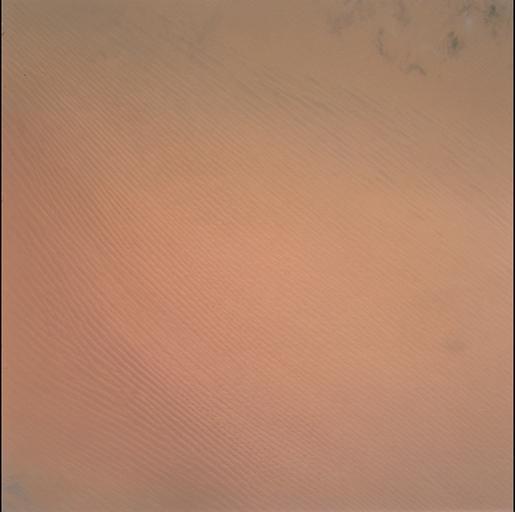
(The aerial view of the huge dunes lined up in the Rub’ Al Khali)
踏んでいる大地は「変化しない世界」として受け止められがちですが、十分に長い期間を展望すれば、この大地は非常に変化に富んでいます。大陸は地球上を活発に揺れ動き、相互にぶつかり、海洋は広くなったり狭くなったりを繰り返し、陸地は隆起したり沈下したりしてきました。同じ場所が過去の時代には氷河であったり、熱帯雨林であったり、珊瑚礁であったり、乾いた沙漠であったりもします。地勢の成り立ち、沙漠の地表に産出する化石や人の営み等発掘しなくとも沙漠では直視できますし、手で直接触ることもできます。苛酷な自然条件が幸いして人の立ち入りを阻害していたので多くが完全な形で残されてもいます。沙漠を旅(トレック)しながらその変化する地勢、地質や遺物を対比し、太古から現在に至るその成り立ちに思いを馳せながら太古の水の浸食やこの数千年の風食によって作られた地勢の形成過程、異なる地質や人の営みを考えながら時間を短縮すると、単調に思えた沙漠が興奮する程の脈動感に溢れる大地と成り、浪漫を秘めた世界が広がります。
The land you are stepping on is often perceived as an “unchangeable world,” but if you look at it for a long enough period, it is very varied. The continents swayed vigorously on the Earth, colliding with each other, the oceans repeatedly widened and narrowed, and the lands uplifted and subsided. The same place may have been a glacier, a rainforest, a coral reef, or a dry desert in the past. You can see the formation of the terrain directly in the desert without excavating the fossils and the human activities that left on the desert. And also, you can directly touch them by your own hand. Fortunately, many of the fossils and/or the relics left in their perfect forms, because the harsh natural conditions hindered the entry of the people. While traveling through the desert (trek), we can contrast the changing terrain, the geology and the relics, and then think about their origins from the ancient times to the present. For example, the current terrain has been created by the water erosion and/or the wind erosion over the past few thousand years. If you can shorten the time while considering the formation process, the different geology and the human activities, the desert that seems monotonous will become a land full of pulsation that excites, and the world with the full romance will open for us.
 Desert peninsula