Formation of Arabian Shield and Thick Sedimentary Layers




Birth of Arabian Shield
(アラビア楯状地)
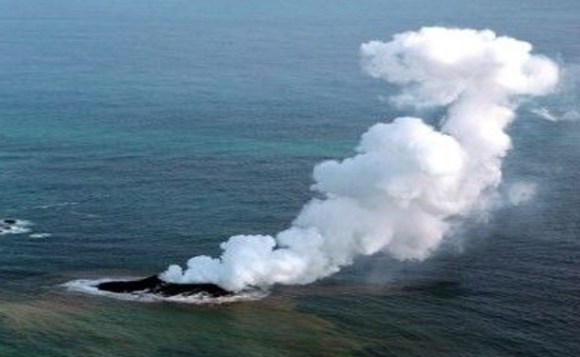
アフリカの北東には数百キロにわたって陸地がありませんせでしたが、10億年前に2つの小さなプレートが衝突して生まれた火山性の群島が海面上に現われました。これがアシール島弧であり、島々が1億年かけて合成された均一の陸地と成りました。その頃、ヒジャーズ島弧を形成した第二次衝突が始まりました。
Originally, the ocean northeast of the African Continent had been landless for hundreds of kilometers. Two small tectonic plates collided in this ocean a billion years ago. The resulting volcanic archipelago appeared on the surface of the sea. This is the Asir Island-Arc. The islands of this island-arc had been synthesized over 100 million years, and became a uniform land. Around the same time, the second collision began. This collision formed the Hejaz Island-Arc.
陸地が侵食によって削られ、すり減らされて出来た瓦礫は、雨水で流されて堆積盆を形成しました。堆積した瓦礫が時間と共に一体となり、幾種類かの堆積岩を作り、深い層のものは上部の地層の圧力で潰され、変成されます。火山活動が次第に収まるに連れて、地中の深い場所で冷えて固まった深成岩は、花崗岩、閃緑岩、その他色々の岩石の地域となって地上に露出してきました。最終的には比較的新しい堆積岩を突き抜けて古い火成岩の露頭がある概ね平らな景観を作り出し、小さなプレートを付着しながら一つのプレートを形成する過程は、約6億4千年前で終了しました。
The land was scraped by erosion and further worn down to debris. The debris were washed away with rainwater and deposited to form the basins. The sediments coalesced over time and formed several types of the sedimentary rocks. The deep layers of them are crushed and metamorphosed by the pressure of the upper strata. As the volcanic activity gradually subsided, the intrusive rock that cooled and solidified in the deep underground and became granite, diorite and many other rocks. And some of them have been exposed to the ground. Eventually it created a generally flat landscaped including outcrops of the old igneous rocks that broke through the relatively new sedimentary rocks. The process of forming the single tectonic plate while adhering small tectonic plates was completed about 640 thousand years ago.
その後は非常に大きなマグマがその地表の下に入り込み、ゆっくり冷やされて花崗岩の塊になるに連れて引っ張りと圧縮の力がたくさんの割れ目や断層を作りました。多量の火山性熔岩が地表に流れ出し、堆積岩と混じりあい、種々雑多に異なる岩石が雑然と混入したメランジュと呼ばれる地質体を作りながら5億5千年前までにアラビア楯状地の形成は終わりました。
After that, very large magmas penetrated beneath its surface. As they slowly cooled into a granite mass, the pulling and compressing forces occurred and they created many crevices and faults. By 550 thousand years ago, the formation of the Arabian Shield had been completed. In its process, a large amount of the volcanic lava had been flowing to the surface and been mixing with the sedimentary rocks. In some places, the terranes called mélange were created with cluttered the various different rocks.
その頃から地球上の全ての海面が切れ目無く上昇し続け、アラビア楯状地は新しく多様な生物の営みで活気付いていた海中にゆっくりと沈み、タブーク周辺の西北部とイエメン南西部の何ヶ所かの陸地を残すだけになるまで海水がアラビア楯状地の奥深くまで侵入して来ました。4億7千年前までにその浅い海は、数百メートルもの厚い層の砂と泥の混ざった堆積物を残して後退して行きました。
From that time on, the sea on the Earth continued to rise without any interruptions. The Arabian Shield slowly sank into the sea, which was booming with the new and diverse creatures, and the seawater penetrated deep into the Arabian Shield. Only a few places around Tabuk in the northwestern shield as well as a few places in the southwestern Yemen remained as land. By 470 thousand years ago, the shallow sea had receded, leaving behind hundreds of meters of the thick sand and/or mud deposits.

アラビア楯状地が陸地として海面上に現れて間もなく、その西側の半分は厚い氷の層に被われ、地表に残された堆積物の多くは氷の浸食を受けました。氷河は大地を削り、地表を被っていた堆積層を岩屑、巨礫岩の河原やその他の氷河特有の残存物に変えてしまいました。
Shortly after the Arabian shield emerged as land on the surface of the sea, its western half was covered with the thick layer of the ice, and many of the marine sediments left on the surface were eroded by the ice. The glaciers have carved the grounds and transformed those marine sediments into the debris rock flours, the boulder rock fields, and the other typical glacier remains.
平らな景観は氷河で削られ、巨礫岩が雑然と転がり、谷底を砂利で被われた谷で引き裂かれてしまいました。氷河から流れ出る水をテチス海へと運ぶ河川によってその東側すなわち氷河地帯と海洋の間でも堆積層は浸食されました。アラビア楯状地を含むゴンドワナ大陸が極地からもっと暖かい緯度へ移動すると、氷河は後退して再び海水が北西部を除いてアラビア楯状地を浸水しました。
The flat landscape was carved by glacial movement and torn with the glacier valleys. The bottoms of the glacier valleys were covered with the thick gravel layers and/or the boulders rolling cluttered. The marine sediments had still left between the ice-covered west and seaside east. However, the rivers that carried the water from the glaciers to the Tethys sea had washed away those marine sediments. As the Gondwanaland, including the Arabian shield, moved from the polar regions to the warmer latitudes, the glaciers receded and the seawater again infiltrated the Arabian shield except in the northwest.
海水が引いてアラビア楯状地が再び陸上に現れた時には筆石類の化石をたくさん含む頁岩の厚い堆積層が残りました。前回との違いは、湖、河川、海岸等の近傍に緑が生えて来た事でした。陸地の塊は海水面や構造地質とは無関係に、地中深いマントルの中の動きによって隆起したり沈下したりするので、アラビア楯状地はその後も12回以上も海中に没して居り、陸上に現れている期間の二倍も海中に没していました。約3億7千5百年前にも同じ様な現象が起き、海面の高さが一定であるのにアラビア楯状地が乾いた陸地として海中から隆起しました。これらの時代の顕著な地質学的な氷河作用はカスィーム地方に残る氷礫土、トゥワイク山脈最南端に広がる多くの花崗岩の巨礫岩地層、アカダル山塊(ハジャル山脈の一部)の氷礫土や縞模様のある巨礫岩、オマーンの涸れ谷カラタの河床を刻んでいる深さ1mもの並行な溝等にその特徴を残しています。
When the seawater recedes and the Arabian shield reappeared on land, the thick marine sedimentary layer of the shale remained on the ground surface. Those shale contained a lot of fossil of the Graptolithina species. The difference from the last appearance on the land was that the greens grew near lakes, rivers, coasts, etc. The land masses rise and fall due to movement in the deep underground mantles, regardless of the sea level or the structural geology. Because of this, the Arabian Shield has been submerged more than 12 times since then. It submerged in the sea twice as long as it appeared on the land. A similar phenomenon occurred about 375 million years ago. The Arabian Shield rose from the sea as the dry land, even though the sea level remained constant. The remarkable geological periglaciation left in the Arabian Shield during the time. The tills (the glacier-specific sediments) can be seen In the Qasim Region. There are many granite boulder formations at the southernmost tip of the Jebel Tuwaiq. The tills and the striated boulders exist in the Jebel Akhdar, which is part of the Hajar mountains. The parallel grooves placed with a depth of 1 m carving the flat rock bed at the bottom of the Wadi Al Khlata, In Oman as the characteristics of the glacier action.

二畳紀(2.9~2.45億年前)には厚い幾重もの砂岩層が形成されました。今日ではその殆どが浸食を受けて残っていなませんが、トゥワイク山脈南端に近いハシュム・グラーブ西65km付近ではワジード山塊の絵画的な景観が今も見られます。二畳紀の最後にアラビア楯状地が再び海中から隆起するに連れて植生と動物生の大規模な絶滅の時が訪れました。この隆起の時にはアラビア楯状地は、白い石灰岩でおおわれていました。二畳紀の絶滅は古生代(5.7~2.45億年前)の終わりの区切りとなりました。このときに多くの種が除去され、地球上の生態系が回復した時には随分と異なった生物が生息していました。それまで海中では圧倒的に多かった三葉虫は僅かな残存種を残すのみと成ってしまいました。中生代(2.45~0.65億年前)を通じて地球上の海面は、上昇して白亜紀(1.45~0.65 億年前)の終わりにはもっとも海面が高くなりました。この時代の殆どの間、アラビア楯状地は浅い熱帯性気候の海に沈んでいました。
During the Permian Period (290-245 million years ago), the thick layers of the sandstone were formed. Today, the most of them have been eroded and lost, so they are not left mostly. The pictorial landscape of the Jibel Wajid can still be seen as the remaining one. The Jibel Wajid is located around 65 km west of the Khashm Ghurab, which is near the southern tip of the Jebel Tuwaiq. At the end of the Permian, the time came of massive extinction of vegetations and/or animals. During this time, the Arabian Shield rose from the sea again. This uplifted shield was covered with the thick white limestone. The Permian extinction marked the end of Paleozoic (570-245 million years ago). The many species were removed and disappeared. When the ecosystem on the Earth was restored, it had the quite different organisms. The Trilobite, which was overwhelmingly predominant in the sea until then, had left only a few residual species. The sea levels on the Earth have risen through Mesozoic (245-605 million years ago). And, at the end of the Cretaceous (145-605 million years ago), the sea level was the highest. For this reason, the Arabian Shield was submerged in the shallow tropical waters for the most of this period.
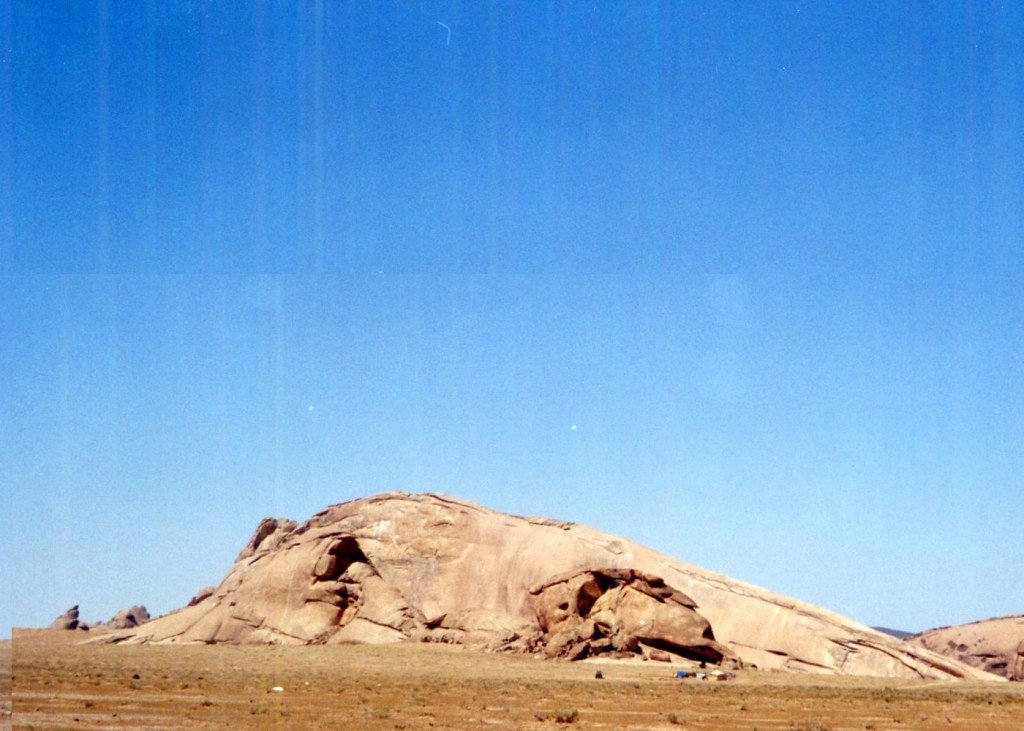
(Outcrops of the Paleozoic formation near Khabshan in the northern Riyadh Province)
最初に砂岩と頁岩の間に薄い石灰岩の層が挟み込まれましたが、やがて非常に厚い石灰岩の層が形成されました。それらが今日、トゥワイク山脈の石灰石の露頭に良くみられる岩礁の特徴を持つ熟成した多くの化石です。一般的には「一番初めの海水の進入が西側へと一番深く到達していた」と考えられています。実際にカンブリアン紀(5.7~5.1億年前)やその他の古生代堆積層がアラビア楯状地の北と南も一番紅海に接近していました。この古生代堆積層の痕跡はアラビア楯状地中央では見られませんが、それは古生代に続く多くの時代に引き続き浸食され続けた為です。古生代の終わりおよび中生代の堆積層はアラビア楯状地の中央を1,000kmに及ぶ弧に沿って並んでおり、多分、南北の堆積層の露頭を結ぶ線よりも更に西にまで及んでいるでしょう。旧リヤード・メッカ道路のアフィーフの近傍ではもっとも近い中生代の海中堆積層よりもさらに200kmも西に存在しています。トゥワイク山脈から陸地は東へとゆっくりした傾斜で下がり続けて居り、ダフナー砂丘帯までの間の露出した岩は殆ど全てが石灰岩です。この石灰岩の連続はジュラ紀(2.08~1.45億年前)および白亜紀に掛けての10層の異なる石灰岩の層が積み重なって形成されています。中生代の終わりが近づくに連れて、デボン紀(4.08~3.6億年前)と同じ様に半島中央は隆起してきました。海岸線は陸地が隆起する前に後退し東へと移っていました。それ以来、海岸線が内陸奥深くまで進入することはありませんでした。海岸線は、これ以降も上昇下降を繰り返し、その連続的な動きの中で現在のアラビア楯状地東部の土地が何度も水没する事がありましたが、海岸線が現在のダフナー砂丘帯を越えて、更に、西に侵入する事は無く、アラビア楯状地の中央部および西部は古い岩層から陸生の堆積層が形成された特異な地域と成っています。
Initially, a thin layer (stratum) of the limestone was sandwiched between a sand stone layer and a shale layer but eventually very thick layers (strata) of the limestone had been formed. They are many aged fossils with the characteristics of the rock reef commonly found in the outcrop of the limestone in the Jebel Tuwaiq, today. It is believed that “the first seawater ingress reached the deepest west of the Arabian Shield” In fact, the Cambrian (570-510 million years ago) and other Paleozoic sediments were found at the closest area to the Red Sea in the north and south of the Arabian Shield. No trace of this Paleozoic sedimentary layers can be seen in the central of the Arabian Shield, it is because the ground had continuously been eroded during many of the Paleozoic eras. The late Paleozoic and Mesozoic sediments line the center of the Arabian Shield along its 1,000 km arc. It extends further west of the north-south sedimentary outcrops line. Such sediment is found near the Afif on the old Riyadh-Mecca road. Afif is 200 km west of the nearest Mesozoic layers of the marine sediment. The land continues to descend from the Jebel Tuwaiq on a slow slope to the east, and almost all exposed rocks in the land surfaces from the Jebel Tuwaiq to the Dahna Desert are limestone. This series of limestones is formed by stacking 10 different layers of limestone from the Jurassic (208-145 million years ago) and the Cretaceous. As the end of the Mesozoic era approached, the central part of the peninsula (the Arabian Shield) rose, as in the Devonian Period (408-360 million years ago). The coastline receded and moved east before the land uplifted. Since then, the coastline has not penetrated deep inland. The coastline has continued to rise and fall, and the land in the eastern part of the current the Arabian Shield has been submerged many times in the continuous movement. However, the coastline has not crossed over the current Dahna Desert and further. It does not invade the west, therefore the central and western parts of the Arabian Shield are peculiar areas where the terrestrial sedimentary layers are formed from the old rock formations.
 Desert peninsula