The Queen of Sheba


目次 (Index)
はじめに
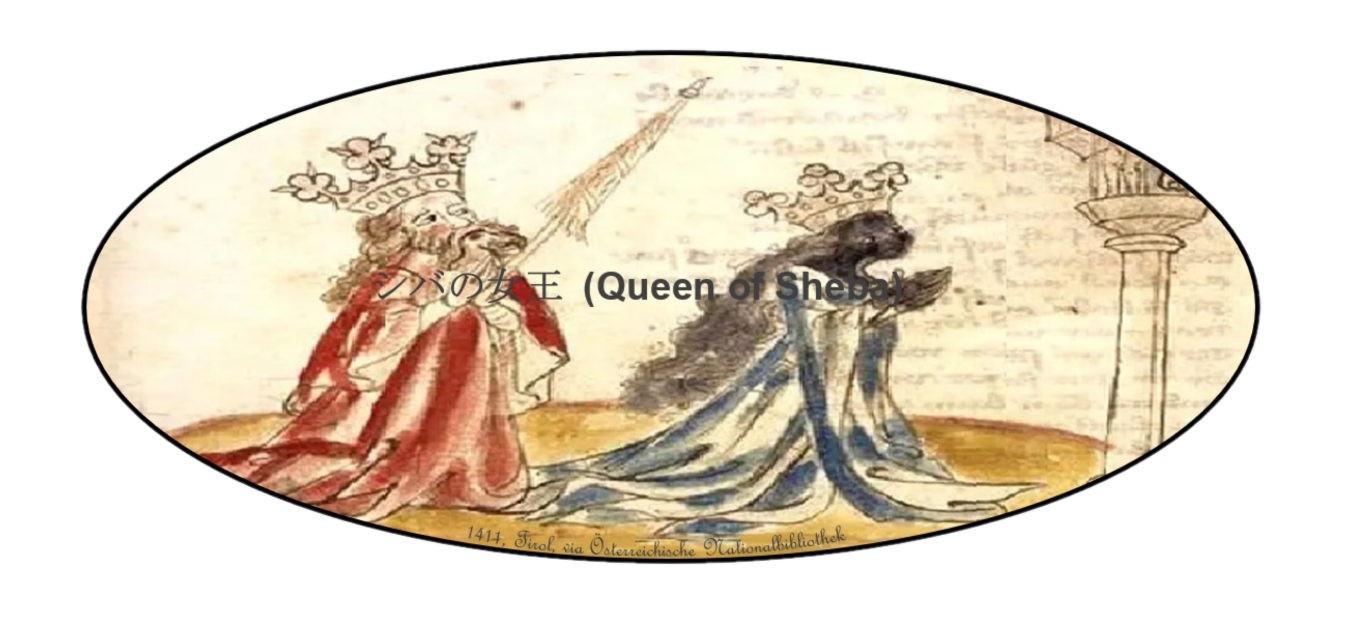
シバの女王(Queen of Sheba)」の名は、子供の時から親しみがあります。一般的には、「シバの女王はソロモンの知恵の噂を聞き、ソロモン試そうと考え、ラクダに載せた多くの贈り物を持って、ソロモンを訪れた。シバの女王は、数々の難問を浴びせたが、ソロモン(King Solomon)に答えられないことは何もなかった。シバの女王は感服し、持参した大量の金、香料や宝石をソロモンに贈った。ソロモンはそれに十分な贈り物で返した他、女王の望むものを何でも与えた。女王はソロモンの子供を宿すまでに成って、自分の土地(Arabia Felix)に帰って行った。」との理解が一般的だと思います。
Introduction
The name “the Queen of Sheba” has been familiar to the writer since the writer was a child. In general, “the Queen of Sheba” heard rumors of Solomon’s wisdom and thought to try Solomon. Queen brought many gifts on a camel, and visited Solomon. Queen was bombarding with a number of difficult questions, but there was none that Solomon could not answer. Queen was so impressed that she gifted Solomon a large amount of gold, fragrances and jewels she had brought. Solomon returned them with ample gifts and gave Queen whatever she wanted. Queen had born Solomon’s child, after going back to her own land. Queen’s own land was so called as the Arabia Felix. That story was the writer’s general understanding about “the Queen of Sheba”.
シバの女王については、エチオピア(Ethiopia or Abyssinia)の歴史、ヘブライ語聖書(the Hebrew Bible)、キリスト教聖典(the New Testament)およびクルアーン(Qur’an)のいずれでも、古代シバ王国(the ancient kingdom of Sheba)の支配者であった女性として引用されています。ヘブライ語聖書ではさらにシバは、ノア(Noah)の息子エベール(Eber)の息子ジョクタン(Joktan)の息子の子孫だと述べられています。
古代シバ王国が存在したところは、幸福なアラビア又は富裕なアラビア(Arabia Felix)であり、その存在にはエチオピアとイエメンの両方の説があります。(なお、この第3部ではArabia Felixも古代シバ王国もイエメンにあったとして記述しています。)ソロモン王(King Solomon) (c. 971~931BC)に会いに行ったという事から、シバの女王が実在したのであれば、紀元前10世紀の人物と考えられます。(イスラームではソロモン王は、ダビデの子スライマーン(Sulaiman) (ﺳليمان)と呼ばれています。)
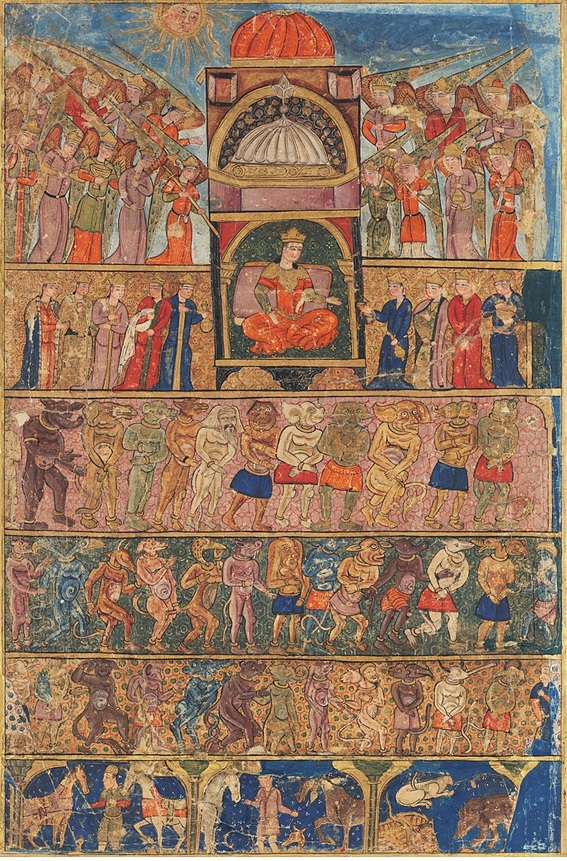
For the Queen of Sheba, see the History of Ethiopia (Abyssinia), the Hebrew Bible, the New Testament and the Qur’an. In either case, she is cited as the woman who was the ruler of the Ancient Kingdom of Sheba. The Hebrew Bible further states that the Queen is descended from the son of Noah’s son Eber’s son Joktan.
The Ancient Kingdom of Sheba existed in the happy Arabia or Arabia Felix, and there are both Ethiopian and Yemeni theories of its existence. (This Part 3 generally states that both the Arabia Felix and Ancient Kingdom of Sheb were in Yemen.) If the king Solomon (c. 971~931BC) really met the Queen, it is thought to be in the 10th century BC. (In Islam, King Solomon is called Sulaiman (سليمان), son of David.) )
シバの女王は、エチオピアの歴史では、マケダ(Makeda)と呼ばれ、イスラーム(Islam) 教典クルアーン(Qur’an)ではビルキース(Bilqis)と呼ばれています。また、ローマの歴史家ヨセフス(Flavius Josephus) (c. 37~c. 100 AD)は女王をニカウラー(Nicaula or Nikaule)と呼んでいます。さらにヘブライ語ではマルカト・シュバ(Malkat Shva)、ゲエズ語ではニギスト・サバ(Nigist Saba)、アラビア語ではマリカト・サバー(Malikat Sabaʾ) (ملكة سبأ) と呼ばれています。
ここでは、「ヘブライ語聖書の物語」、「キリスト教聖典の物語」、「コプト教会の物語」、「エチオピアの物語」、「ユダヤ教の物語」および「イスラム教の物語」を筆者の理解できる範囲で、以下に述べてあります。(なお、筆者はヘブライ語聖書が旧約聖書、キリスト教聖典が新約聖書に相当すると考えています。)
サバの女王(La reine de Saba)とも呼ばれているシバの女王について調べると、実在の人物なのかと疑問も出て来ます。いずれにせよ、シバの女王に関しては、その他にもさまざまな説や伝承があり、アラビア半島の歴史の中でロマンに溢れる謎の一つです。
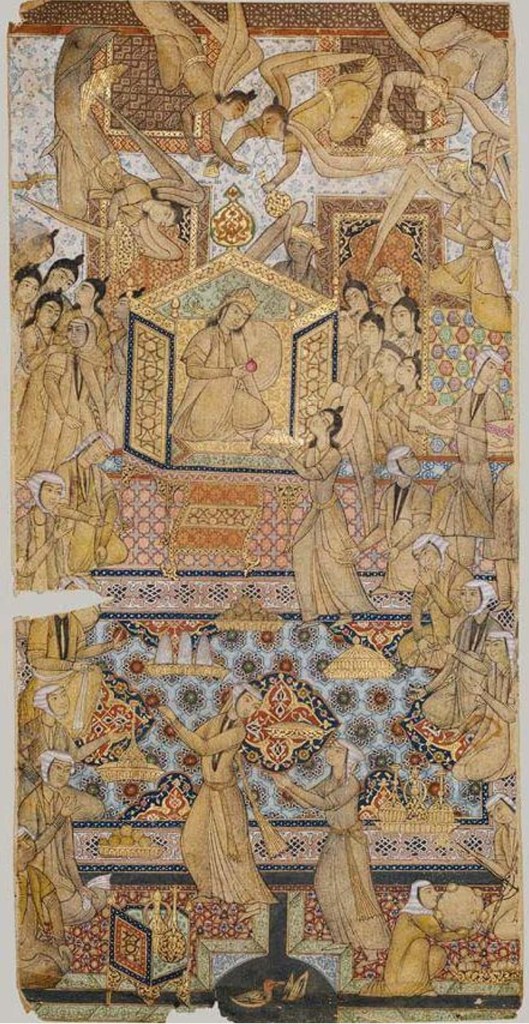
The Queen is called Makeda in Ethiopian history and Bilqis in the Islamic Qur’an. The Roman historian Flavius Josephus (c. 37~c. 100 AD) named the Queen Nicaula (Nikaule). In addition, the Queen was called as Malkat Shva in Hebrew, Nigist Saba in Ge’ez, and Malikat Sabaʾ (ملكة سبأ) in Arabic.
The stories in the Hebrew Bible, Story in Christian Scriptures, Coptic Bible, Ethiopian National Saga, Jewish Bible and Description in Holly Qur’an are described later to the extent that the writer can understand. The writer also consider that “Hebrew Bible” is “Old Testament” and “Christian Scriptures” is “New Testament”.
About the Queen of Sheba (La Reine de Saba), the more the writer researched, the more the writer became to wonder if she was a real person or if the variously described queens were the same person. There are too many other similar theories and lore. In any case, the Queen of Sheba is one of the most romantic mysteries in the history of the Arabian Peninsula.
ヘブライ語聖書の物語
シバの女王は、ヘブライ語聖書(Hebrew Bible or Tanakh)ではマルカト・サバ(Malkaṯ Šəḇā)、同聖書のアラビア語訳ではマリカト・サバー(ملكة سبأ) (Malikat Saba)、古代ギリシア語(Koine Greek)で書かれた七十人訳聖書(Septuaginta)では女帝サバ(Basílissa Sabá)、 古典シリア語(アラム語の一種)では「ܡܠܟܬ ܫܒܐ」(筆者には発音は不明です。)、古代エチオピア語(ゲエズ語)(Ge’ez)ではナグシャタ・サバ(Nəgśətä Saba)と呼ばれています。また、名前が述べられていませんが、「大勢の従者達を伴い、香辛料と非常に多くの金と貴石を積んだラクダを連れた女王が、ある時にエルサレムを訪問しました。「彼女がソロモンに与えたもののように豊富な香辛料がエルサレムに運ばれたことは、二度と来なかった」と述べられています。。彼女は「自分の難しい質問にソロモンが満足に答えられるかどうかを証明するためにエルサレムを訪れてきました。」ソロモンは彼女が満足行く答えを返し、彼女は満足しました。彼らは贈り物を交換し、その後彼女は彼女の土地に戻って行きました。
Story in Hebrew Bible
The Queen is called as Malkaṯ šəḇā in the Hebrew Bible (Tanakh), Malikat Saba (ملكة سبأ) in the Arabic translation of the Bible, Basílissa Sabá in Septuaginta written by Koine Greek, “ܡܠܟܬ ܫܒܐ”in Classical Syriac (Syriac Aramaic). And the Queen is also called as Nəgśətä Saba in Classical Ethiopic (Ge’ez).
Although the name is not mentioned, It is stated that “a queen together with a very large retinue, accompanied by camels laden with spices and so much gold and precious stones, had once visited Jerusalem. “
The abundance of spices as that gifted to Solomon by the queen was never again brought to Jerusalem.
The Queen said, “I have come to Jerusalem to prove whether Solomon can answer my difficult questions satisfactorily.”
Solomon replied with the queen’s satisfaction, and the queen was satisfied. Solomon and the Queen exchanged gifts each other, after which the queen returned to the queen’s land.
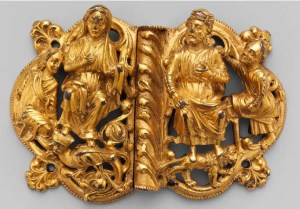
シバは古典世界では非常に有名で、紀元前1千年紀の半ば頃、その国はアラビアフェリックスと呼ばれていました。アラビアフェリックスの所在地は、エチオピアとイエメンの両方の説がありますが、ヘブライ語聖書ではそのどちらかとも述べられていません。先住民族の碑文もそのような違いをもたらさず、イエメン人とアフリカの両方がまったく同じ方法で綴られています。シバの女王自身の南アラビアでの実在の証拠となる碑文は見つかっていませんが、南アラビアの碑文には南アラビアの女王についての言及がされています。また、アラビア北部では、アッシリアの碑文がアラブの女王に繰り返し言及していいます。サバエの部族は高官を意味するmqtwytの称号を知っていいました。エチオピアの伝説に登場する女王の個人名であるマカダまたはマクエダは、mqtwytの称号の一般的な表現として解釈できるかもしれません。この称号は、古代エジプトのprotectressまたは、 housewifeを意味する m’kitに由来する可能性もあります
女王のソロモン王への訪問は貿易使節団だったかもしれません。ラクダによって運搬される木材や香辛料を含むメソポタミアとの初期の南アラビアの交易は紀元前9世紀初頭に証明されていますが、この訪問からすると、交易は早くも紀元前10世紀に始まったと考えられます。
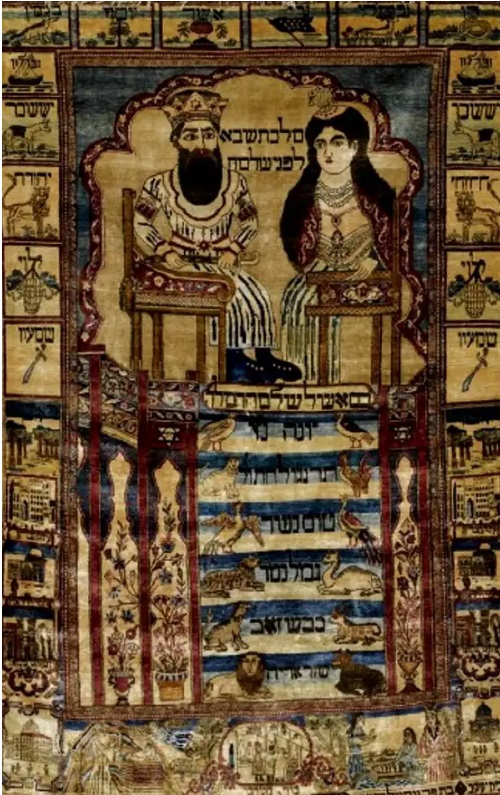
Sheba is very famous in the classical world, about the middle of the first millennium BC, the country was called the Arabia Felix. There are both Ethiopian and Yemeni theories about the location of the Arabia Felix, but the Hebrew Bible does mention neither of them.
The indigenous inscriptions also do not lead to such differences. Both Yemenis and African are spelled in exactly the same way. No inscriptions have been found to prove Queen’s own existence in the South Arabia, but the South Arabian inscriptions mention the Queen of the South Arabia.
Also in the Northern Arabia, the Assyrian inscriptions repeatedly mention the Arab queen. The Sabaean tribes knew the title of mqtwyt, meaning dignitary. Makada or Makueda, the personal name of the Queen in the Ethiopian legend, may be interpreted as a common expression of the title of mqtwyt. The title may be derived from the Ancient Egyptian protectress or m’kit, meaning housewife.
The Queen’s visit to the King Solomon may have been a trade mission. The early South Arabian trade with Mesopotamia, including timber and spices transported by camels, is attested to the early 9th century BC, but this visit suggests that this trade was earlier. Therefore, it can be thought to begin in the 10th century BC.
民間伝承では聖域ビルキース(Maḥram Bilqīs)として知られている古代のシバ族寺院であるアワーム寺院(Sabaic Awwam Temple) (معبد أوام)は、最近、考古学者によって発掘されましたが、そこで見つかった多くの碑文でシバの女王の痕跡は今のところ発見されていません。もう一つのシバ族寺院であるバラーン寺院(Barran Temple) (معبد بران)は、近くのアワーム寺院(Awwam Temple)と同様にアルマカ神(Almaqah) (المقه)に捧げられた「ビルキスの王座(Arash Bilqis)」としても知られていますが、バラーン寺院とシバ族の関係は考古学的には確立されていません。
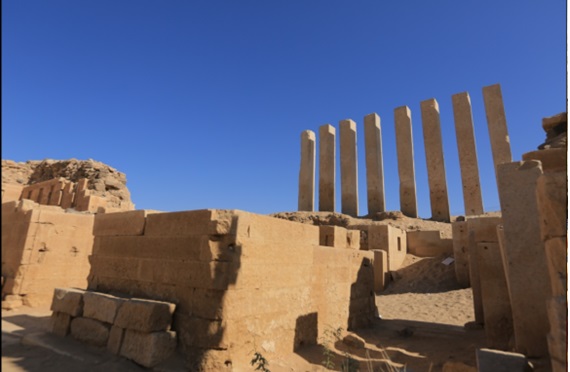
The Awwam Temple (معبد أوام) was recently excavated by archaeologists, but no trace of the Queen has been found so far, in spite of the many inscriptions found there. The Another Sabean temple, the Barran Temple (معبد بران), is located at the nearby the Awwam Temple.
This temples might also be the Arash Bilqis (Throne of Bilqis) dedicated to Almaqah (المقه) together with the Awwam Temple, however the relationship between the Barran Temple and Sheba has not been established archaeologically.
キリスト教の物語
キリスト教の聖典(the Christian scriptures)には、「南の女王(the queen of the South)」がおり、ソロモンの知恵(the wisdom of Solomon)を聞くために「地の果ての果て(the uttermost parts of the earth)から来ました」と述べられています。
Story in Christian Scriptures
The Christian scriptures writes that the Queen of the South came from the uttermost parts of the earth to hear the wisdom of Solomon.
古代キリスト教最大の神学者オリジェン(Origen Adamantius) (c.185~ c.253)は、ヘブライ語聖書(Hebrew Bible or Tanakh)の「雅歌(the Song of Songs or the Song of Solomon)」に登場する花嫁が福音書(the Gospels)の「南の女王」(すなわち、エチオピア人であったと考えられているシバの女王(the Queen of Sheba)と特定しました。
但し、他にも南の女王(the queen of the South)は、ソロモンが結婚したファラオの娘(Pharaoh’s daughter)あるいはイスラエル人の女性シュラマイト(an Israelite woman, the Shulamite)等の説もあります。
雅歌(the Canticles)の「歌の中の歌Song of Songs」の一節に「私は非常に暗いが、美しいです。」と翻訳された部分があり、「この中で歌われている花嫁は黒人であった。」と推定されています。
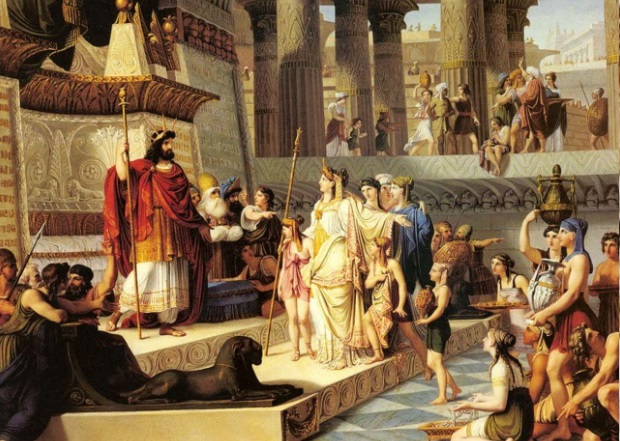
Origen of Alexandria (Origen Adamantius) (c.185~c.253), the greatest theologian of the ancient Christianity, identified the Bride mentioned in the Song of Songs (the Song of Solomon) of the Hebrew Bible (Tanakh) is the Queen of the Gospels. She is the Queen of the South, i.e., the Queen of Sheba, who is believed to have been Ethiopian.
However, there are also other theories such that the Queen of the South was a Pharaoh’s daughter or an Israelite woman, the Shulamite, whom Solomon married.
The bride of the Canticles is assumed to have been black because she songs the passage that I am very dark, but comely, in Song of Songs.
ある伝説によると、シバの女王(the Queen of Sheba)は、後にキリスト生誕の折にやってきた東方の三博士マギ(Magi)がキリストに与えた贈り物をソロモンにもたらしました。中世の間、キリスト教徒はシバの女王(the Queen of Sheba)をアポローン(Apollōn)の神託を受け取る古代の地中海世界における巫女のサバ(the Sibyl Sabba)と同一視されたこともあります。
According to one legend, the Queen brought to Solomon the same gift that the three Magi of the East, who came at the time of Chirist birth, gave to Chirist.
During the Middle Ages, Christians had also identified the Queen of Sheba with the Sibyl Sabba, who received the oracle of Queen Apollōn, in the ancient Mediterranean world.
コプト教会の物語
Coptic Story
ソロモンと女王の物語は、コプト教徒(Copts)の間で人気がありました。王妃は欺瞞に屈服し、ソロモンに地上のすべての科学が刻まれた柱を与えます。ソロモンは配下の悪霊(demon)の一人をエチオピアから柱を運び出すために遣わし、すぐに柱は届きました。コプトの詩の中(a Coptic poem)で、クシュ(Cush)の 女王イェサバ(the Queen Yesaba)は ソロモンの謎を尋ねています。クシュ(Cush)とは、現在のスーダン北部とエジプト南部のナイル川流域を中心したヌビア(Nubia)の古代王国(Kingdom of Kush) (c.1070BC~ c.550AD)と思われます。「女王イェサバ(the Queen Yesaba)がシバの女王(the Queen of Sheba)だ。」とコプト教徒(Copts)は考えていたのでしょう。
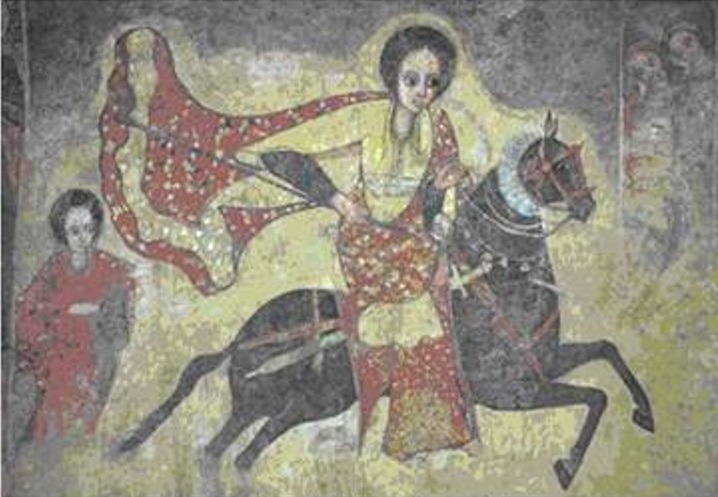
The story of Solomon and the Queen was popular among the Copts. The Queen surrenders to the deceit and gives Solomon a pillar inscribed with all earthly science. Solomon sent one of his demons to carry the pillar out of Ethiopia, and the pillar soon arrived. In a Coptic poem, the Queen Yesaba of Cush asks riddles of Solomon. (Cush was the ancient Kingdom of Kush (c.1070BC~ c.550AD) in Nubia, centered on the Nile River valley in the present-day northern Sudan and southern Egypt.)
Copts must have thought that the Queen Yesaba is the Queen of Sheba.
エチオピアの物語
14 世紀のエチオピア国民的物語(the Ethiopian national saga)であるケブラ・ナガスト(Kebra Nagast)(王の栄光) には、「女王が宿したソロモンの子供がメネリク 1 世(King Menelik I) (975~950BC)である。
その系譜はアクスム王国(The Kingdom of Aksum) (early 1st century~c. 960 AD)を経て、ソロモン朝(the Solomonid Dynasty or the House of Solomon)が興した近代のエチオピア帝国(the Ethiopian Empire) (c. BC 980/50 – 1974)に受け継がれた」と述べられています。エチオピア帝国は、1974 年にハイレ・セラシエ皇帝(Haile Selassie I)が打倒されるまで 2,900 年間続きました。
Ethiopian National Saga
“Kebra Nagas (Glory of the Kings)”, of the 14th-century writes that Solomon’s child conceived by the Queen Sheba was the King Menelik I (975~950BC).
Their lineage goes through the Kingdom of Aksum (early 1st century ~ 960AD) to the modern Ethiopian Empire (c. BC 980/50 – 1974) founded by the Solomonid Dynasty (the House of Solomon). The Ethiopian Empire lasted for 2,900 years until the emperor Haile Selassie I overthrown in 1974.
マタイとルカによる福音書(the Gospels of Matthew and Luke)によると、「南の女王(the Queen of the South )」はエチオピアの女王(the Queen of Ethiopia)であると言われています。当時、ソロモン王(the King Solomon)は神殿建設のための材料を買うために世界中から商人を探し求めました。
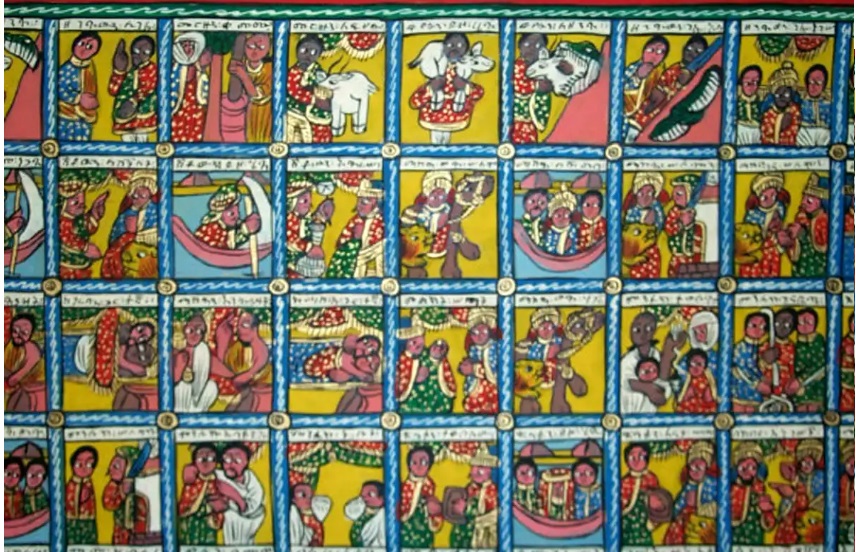
According to “the Gospels of Matthew and Luke”, “the Queen of the South” is “the Queen of Ethiopia (Makeda)”. At that time, the King Solomon sought out merchants from all over the world to buy materials for the construction of the temple.
その中には、エチオピアのマケダ女王(the Queen Makeda of Ethiopia.)の偉大な商人タムリン(Tamrin)もいました。エチオピアに戻ったタムリン(Tamrin)は、エルサレム(Jerusalem)で見たすばらしいことと、」ソロモンの知恵と寛大さについて女王に話したので、女王はソロモンを訪れることにしました。彼女は温かく歓迎され、住居用の宮殿を与えられ、毎日素晴らしい贈り物を受け取りました。ソロモン(Solomon)とマケダ(Makeda)は偉大な知恵をもって語り、ソロモンから教えを受け、マケダはユダヤ教(Judaism)に改宗しました。マケダが去る前に、王の宮殿で大きな宴会がありました。マケダは、ソロモンが彼女に何の害も及ぼさないと誓った後、一晩宮殿にとどまり、その見返りに彼女は彼から盗まないと誓った。食事が辛かったので、マケダは夜に喉が渇いて目を覚まし、水を飲みに行ったとき、ソロモンが現れ、彼女の誓いを思い出させました。彼女は答えた:「あなたへの誓いを無視して、ただ私に水を飲ませてください。その夜、ソロモンは太陽がイスラエルに昇るという夢を見ましたが、太陽は、ユダヤ人によって虐待され、軽蔑されたので、エチオピアとローマを照らすように動きました。
Tamrin was among them. He was the great merchant of “the Queen of Ethiopia (Makeda)”. Back in Ethiopia, Tamrin told Makeda of the wonderful things he had seen in Jerusalem, and of Solomon’s wisdom and generosity. Makeda decided to visit Solomon. Makeda was warmly welcomed, given a palace for residences and received wonderful gifts every day. Solomon and Makeda speak with great wisdom. Taught by Solomon, Makeda converted to Judaism.
Before Makeda left, there was a big banquet in the king’s palace. Makeda stayed in the palace overnight after Solomon swore that he would do no harm to Makeda, and in return Makeda swore not to steal from Solomon. The meal was so spicy, that Makeda woke up thirsty at night, and when she went to drink water, Solomon appeared and reminded her of Makeda’s vows. Makeda replied: “Ignore my vows to you and just let me drink water.
That night, Solo dreamed that the sun would rise over Israel, but the sun, abused and despised by the Jews, moved to illuminate Ethiopia and Rome.
ソロモンは信仰のしるしとしてマケダに指輪を渡し、それから彼女はその場を去りました。家に帰る途中、彼女は息子を産み、後にメニレク(Menilek)と呼ばれる「賢者の息子」バイナ・レケム(Baina-leḥkem or bin al-ḥakīm)と名付けました。少年はエチオピアで育った後、指輪を持ってエルサレムに行き、大きな栄誉を授けられました。王と人々は彼にとどまるよう説得しようとしましたが無駄でした。ソロモンは貴族を集め、長男を長子と一緒にエチオピアに送ると発表しました。ソロモンは、全世界がダビデ(David)の子孫によって支配されるようにローマの娘の王と結婚し、ローマを支配する三男を期待していると付け加えました。
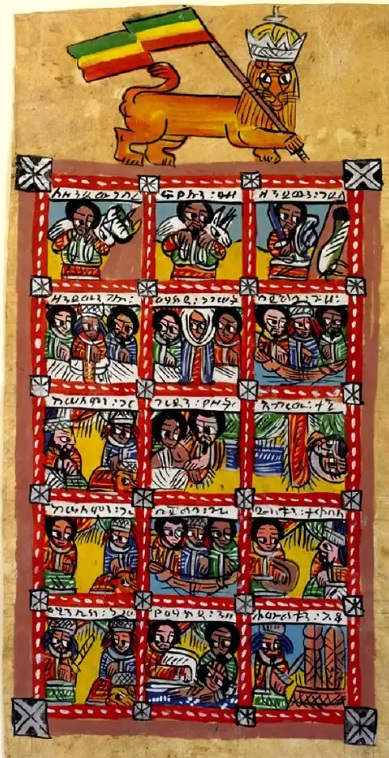
Solomon gave the ring to Makeda as a sign of faith, and then the queen left the place. On the way home, Makeda gave birth to a son, later called “Son of the Wise Man” Baina-leḥkem (bin al-ḥakīm). After growing up in Ethiopia, the boy went to Jerusalem with a ring and was bestowed with great honors.
Solomon and the people tried to persuade him to stay, but in vain. Solomon gathered the nobility and announced that he would send his eldest son to Ethiopia with his firstborn. Solomon added that he expects a third son to rule Rome, marrying a Roman king’s daughter so that the whole world will be ruled by David’s descendants.
その後、バイナ・レケム(Baina-leḥkem)は大祭司ザドク(Zadok)によって聖油で清められて即位した王となって、ダビデと名乗りました。彼の後に続いた最初の貴族は名前が付けられており、今日でもいくつかのエチオピアの家族が彼らが祖先であると主張しています。祭司の息子たちは、彼らの指導者アザリヤス(Azaryas)が一人の神の天使の命令に従って犠牲を捧げた後、そこを去る前に「契約の箱(the Ark of the Covenant)」を盗んでいました。
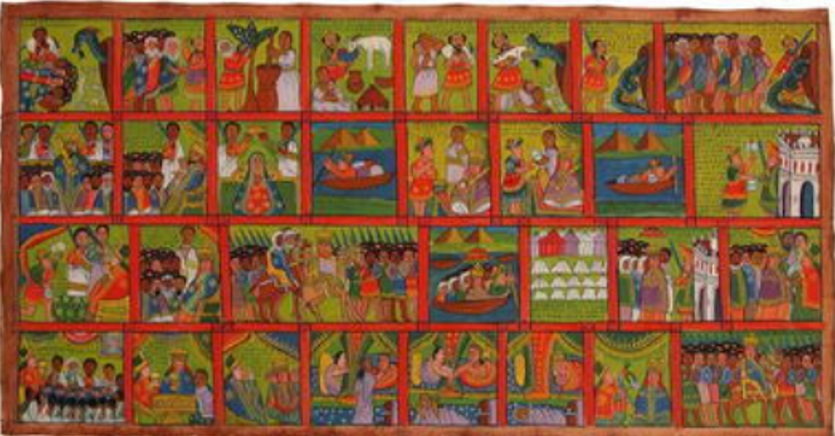
Later, Baina-leḥkem became a king who was cleansed with holy oil and enthroned by the high priest Zadok. And he named himself David. The first nobles followed him are named, and even today several Ethiopian families claim that they are their ancestors.
The sons of the priests, after their leader Azaryas offered sacrifices according to the command of one divine angel, had stolen “the Ark of the Covenant” before leaving there.
多くが嘆き悲しむ中、行列は大天使ミカエル(the archangel Michael)に導かれて運ばれた風の荷車に乗ってエルサレムを出発しました。紅海に到着したアザリヤ(Azaryas)は、「契約の箱)」が彼らと共にあることを人々に明らかにしました。ダビデが「契約の箱」に祈ると、人々は喜び、歌い、踊り、角笛や笛を吹き、太鼓を叩きました。「契約の箱」は嵐の海を渡るときに奇跡的な力を示し、全員が無傷で到着しました。ソロモンは、「契約の箱(the Ark of the Covenant)」が盗まれたことを知ったとき、盗賊の後に追っての騎手を送り、自分自身も追跡しましたが、どちらも彼らを捕まえることができませんでした. ソロモンはエルサレムに戻り、「イスラエルが名声を失った」と外国人が言えないように、盗難について沈黙を守り、「箱(the Ark)」の写しを神殿に置くよう祭司たちに命じました。
Amid much wailing, the procession departed Jerusalem in a wind cart carried by the Archangel Michael. Arriving in the Red Sea, Azaryas made clear to the people that “the Ark of the Covenant” was with them. When David prays to “the Ark of the Covenant”, people rejoice, sing and dance, blew horns and whistles and beat drums. “The Ark of the Covenant” showed miraculous power as it crossed the stormy sea, and everyone arrived unharmed. When Solomon learned that “the Ark of the Covenant” had been stolen, he sent horsemen to chase the bandits and he himself pursued them, but neither was able to catch them. Solomon returned to Jerusalem and told his people to keep silent about the theft so that foreigners could not say that “Israel has lost its fame.” Solomon ordered the priests to place a copy of “the Ark of the Covenant” in the temple.
いくつかの情報源によると、マケダ女王は紀元前1370年にザ・ベシ・アンガボ(Za Besi Angab)によって設立された王朝の一部でした。アクスム(Aksum)の支配者として一族は、マケダ(Makeda)の兄弟ヌラド王子(Prince Nourad)を選びましたが、ヌラド王子の早い死はマケダの王位継承につながりました。マケダは、エチオピア王国(the Ethiopian kingdom)を50年以上支配していたようです。「エチオピアのアクスムの書(the Ethiopian Book of Aksum)」では、「マケダ(Makeda)はアゼバ(Azeba)に新しい首都を設立する。」と記述されています。
また、マケダ(Makeda)は、メロエ(Meroe)またはセバ(Seba)出身の何人かのエチオピアの女王(Ethiopian Queens)の名前または称号であるキャンディス(Candve or Kandake)が訛ったとの説もあります。(メロエ(Neroe)はナイル川中流域ハルツーム(Khartoum)の北東200kmに繁栄した黒人文明で、同時代にはクシュ王国が(Kingdom of Kush) (c.1070BC~c.550AD)ありました。)
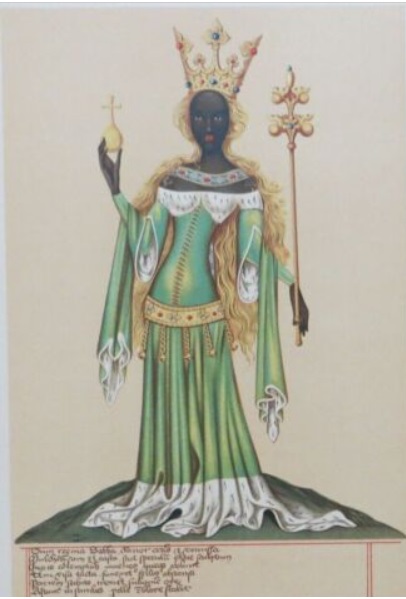
According to some sources, the Queen Makeda was a part of the dynasty founded by Za Besi Angab in 1370 BC. As the ruler of Aksum, the clan chose Makeda’s brother Prince Nourad. The early death of Prince Nourad led to Makeda’s succession to the throne. Makeda appears to have ruled the Ethiopian Kingdom for over 50 years. “The Ethiopian Book of Aksum” describes “Makeda establishes a new capital in Azeba.”
There is also another theory that Makeda is a corruption of Candace (Kandake), which was the name or title of several Ethiopian queens from Meroe or Seba. (Meroe was a thriving black civilization 200 km northeast of Khartoum in the middle Nile valley, and was known as the Kingdom of Kush ( c.1070BC~c.550AD).
ユダヤ教の物語
ヤツガシラ(hoopoe)から「シバ王国(the Kingdom of Sheba)は地上で(on earth)唯一、ソロモン(Solomon)に服従しない王国であり、その女王は太陽を崇拝する者(a sun worshiper)である」ことを伝えられました。ソロモンはその時、そのヤツガシラ(hoopoe)の翼に手紙を添えて、シバの地(the land of Sheba)のキトル(Kitor)に送り、その女王に臣民として自分のところに来るように命じました。そこで女王は、海のすべての船と6,000人の若者をソロモンに送りました。船は貴重な贈り物を積んでいました。若者たちは、同じ時間に生まれ、同じ大きさで、紫色の衣をまとっていました。若者たちは、「旅には通常7年かかりますが、女王は3年以内にエルサレムに着くことができる」と宣言する手紙を携えていました。女王が到着してソロモンの宮殿に来ると、ガラスの床は水たまりだと思い、ドレスの裾を持ち上げて素足を露わにしました。ソロモンは女王に女王の過ちを告げ、毛むくじゃらの足を露わにしたことを𠮟りつけました。女王はソロモンにソロモンの知恵を試すための謎々を尋ねました。これらの謎々のほとんどは単に聖書の質問(Bible questions)であり、中にはそれほど啓発的な性格(a very edifying character)ではないものもあります。真の謎である2つは、「生きている間に動きがなければ、頭が切り落とされたときに動く」ことと、「地面から生産され、人間がそれを生産し、その食物は地面の果実である」ということです。前者に対する答えは、「木(a tree)は、その頂部が取り除かれると、動く船にすることができる」ということです。後者に対する答えは、「芯(a wick)」です。(芯(a wick)は、直接的には蠟燭などの芯ですが、筆者には植物の茎に思えます。)
Jewish Story
A hoopoe informed, “the Kingdom of Sheba is the only kingdom on earth that does not submit to Solomon and Its queen is a sun worshiper.” Solomon then sent his message to the Kitor of the Land of Sheba with a letter on the wing of this hoopoe. He ordered the Queen to come to him as a subject. There the queen sent all the ships of the sea and 6,000 young men to Solomon. The ships were laden with precious gifts. The young men were born at the same time, were the same size, and wore purple robes. The young men carried the Queen’s letter declaring that “the journey usually takes seven years, but the queen can reach Jerusalem within three years.” When the queen arrived and came to Solomon’s palace, she thought the glass floor was a puddle and lifted the hem of her dress to expose her bare feet. Solomon told the queen of her mistakes and rebuked her for exposing her shaggy legs. The Queen asked Solomon the riddles to test Solomon’s wisdom. Most of these mysteries are simply Bible questions, and some are not so much a very edifying character. The two that are true mysteries are that “if there is no movement while alive, it will move when the head is cut off” and “it is produced from the ground, and man produces it, and its food is the fruit of the ground”. The answer to the former is that a tree, when its top is removed, can be made into a moving ship. The answer to the latter is “a wick”. (A wick is directly a wick such as a candle, but it seems to the writer to be the stem of a plant.)
ソロモンを非難するラビたち(rabbis)は、ソロモンがシバの女王と犯罪的な性交をしたと、解釈していました。そして、神殿を破壊したネブカデネザル(Nebuchadnezzar)は、その子孫でした。(ネブカドネザル2世(Nebuchadnezzar II)は、新バビロニア王国(the Neo-Babylonian Empire)の2代目の王(605~562BC)で、紀元前587年にユダ王国(the Kingdom of Judah)の首都エルサレム(Jerusalem)を包囲し、神殿を含め、徹底的に破壊しました。)他の説によると、「ソロモンに帰せられた罪は比喩的なものに過ぎず、ソロモンが偶像崇拝(idolatry)に陥ったことを意味するのではなく、妻たちを偶像崇拝の実践(idolatrous practises)から拘束しなかった罪を犯した。」とされています。
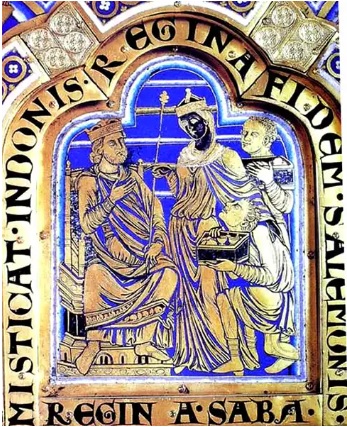
Rabbis accusing Solomon had interpreted that Solomon had criminal intercourse with Queen. And the Nebuchadnezzar who destroyed the temple was their descendant. (Nebuchadnezzar II was the second king (605-562 BC) of the Neo-Babylonian Empire, and in 587 BC he besieged Jerusalem, which was the capital of the Kingdom of Judah, and completely destroyed including the temples. )
According to other theories, it is said “the sin attributed to Solomon is only metaphorical, and does not imply that Solomon fell into idolatry. But he committed the sin of not restraining his wives from idolatrous practices”.
また、別の説では、ネブカデネザル(Nebuchadnezzar)がソロモンとシバの女王の結合の果実であったことを避けている記述があります。
ユダヤ教の伝統に基づいた創造論、終末論、メシア論を伴う神秘主義思想は、カバラ(Kabbalah)と呼ばれています。そのカバラ(Kabbalah)では、シバの女王(the Queen of Sheba)は悪魔の女王(the queens of the demons)の一人と考えられており、時には男を害すると信じられていた女性の悪霊リリス(Lilith)と同一視されました。
ユダヤとアラブの神話では、「シバの女王(the Queen of Sheba)は実際にはジン(jinn)であり、半分は人間で、半分は悪魔だった。」とされています。
There is also the other theory, which avoids Nebuchadnezzar being the fruit of the union of Solomon and the Queen of Sheba.
The mystical thought with creationism, eschatology, and messianism based on the Jewish tradition is called Kabbalah. In Kabbalah, the Queen of Sheba was considered one of the queens of the demons. She was also sometimes identified with the female demon Lilith, who was believed to harm men.
Judeo-Arab mythology states that the Queen of Sheba was actually a jinn, half human and half demon.
イスラム教の物語
アウワムの寺院(the Temple of Awwam)または「マフラム・ビルキス(Mahram Bilqis) (シバの女王の聖域)」は、現在のイエメンのイスラーム教徒の国であるマアリブ(Ma’rib)の近くにあるサバの主要な神(the principal deity of Saba)アルマカ(Almaqah)に捧げられたサバエの寺院(a Sabaean temple)です。
「そこに彼らを支配する一人の女性がいて、彼女は万物を与えられ、大いなる御座を得ています。彼女と彼女の民は神ではなく太陽にひれ伏しているのが分かりました。サタン(Satan)は彼らの行いを彼らにとって正しいように見せかけ、正しい道から遠ざけたので、彼らは自分の道を見つけることができません。」とクルアーンに述べられているそうです。
Story in Holly Qur’an
The Temple of Awwam or “Mahram Bilqis (Sanctuary of the Queen of Sheba)” is a Sabaean temple dedicated to the principal deity of Saba, Almaqah. This temple locates near Ma’rib in Yemen, a Muslim state of the present-day.
“I found [there] a woman ruling them, and she has been given of all things, and she has a great throne. I found that she and her people bow to the sun instead of God. Satan has made their deeds seem right to them and has turned them away from the right path, so they cannot find their way.”
(The writer heard that the Quran states as above:)
上記の節(ayah)では、近くの土地を偵察した後、 ヤツガシラ(hoopo)のハッドフッド (hud-hud)として知られる鳥がソロモン王(the King Solomon)に戻り、シバの地(the land of Sheba)は女王によって支配されていると語ります。ソロモンは手紙の中で、その臣民 (follower)と同じように太陽を崇拝していたシバの女王(the Queen of Sheba)に神に従うよう勧めています。
彼女は手紙が高貴であると表明し、彼女の主任顧問にどのような行動を取るべきか尋ねます。彼らは、彼女の王国はその力と戦争への傾向で知られているが、命令は彼女だけにあると言及することで答えました。彼女の指導下の外交的能力を示唆する行為で、彼女は力ずくで答えるのではなく、ソロモン王に贈り物を贈るために大使を送ることによって答えました。
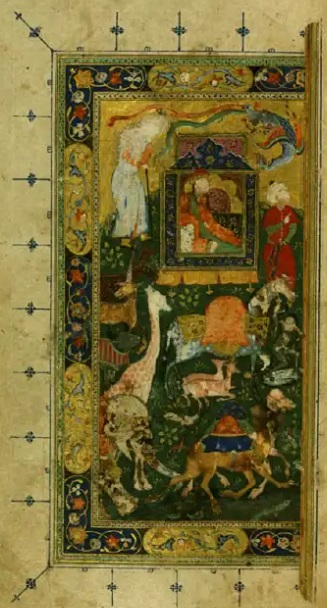
In the above-mentioned ayah, after scouting the nearby lands, a bird known as the hud-hud of hoopoe returns to the King Solomon and said that the land of Sheba is ruled by the Queen. In his letter, Solomon exhorts Queen, who worshipped the sun in the same way as her followers, to obey God.
The Queen expresses that the letter is noble and asks the Queen’s chief adviser what action should be taken. They replied by mentioning that “the queen’s kingdom is known for its power and propensity for war, but the command lies only with the queen.” In an act suggesting diplomatic competence under the Queen’s leadership, the Queen did not answer by force, but rather she responded by sending an ambassador to present a gift to the King Solomon.
ソロモンは贈り物を拒否し、「神ははるかに優れた贈り物を与えること」および「大使達は贈り物によってのみ喜ぶ者達であること」を宣言しました。ソロモン王は大使たちに、「もし女王のところに遠征すれば、女王が打ち負かすことのできない部隊を連れて行く。」という厳しいメッセージとともに、女王のもとに戻るよう指示しました。
その後、女王はソロモン王の宮殿に彼を訪問する計画を立てました。ソロモン王は数人の首長に、女王一行が完全に服従してソロモン王のところに来るよう、シバの女王が到着する前に女王の玉座を自分のもとへ運んでくるように指示しました。
一人のイフリット(Ifrit)(ジンの一種)はソロモン王が席から立ち上がる前に、女王の玉座を移すことを申し出ました。しかし、聖書の知識を持つ男は、代わりに彼女の玉座を瞬時にソロモン王の宮殿に移しました。ソロモン王は、これが「ソロモン王が感謝しているかあるいは感謝していないかどうか」を確認するための神のテストであると想定したため、神への感謝を表明しました。
ソロモン王は女王の自分の玉座に対する意識を試すために女王の玉座を偽装し、女王に「その玉座に馴染みがあるか」と尋ねます。女王は彼への旅の間に、「女王の宮廷がソロモン王の預言者性について女王に知らせ、それ以来、女王と女王の臣民は神に服従する意図をした」と答えます。ソロモン王は、「神が彼女が崇拝すべき唯一の神であり、彼女が崇拝していた他の偽りの神々と一緒に含まれてはならない。」と説明しています。
その後、シバの女王は宮殿のホールに入るように求められます。最初に見ると、彼女はホールを湖と間違え、服を濡らさないようにスカートを上げます。ソロモン王は女王に、「それは水ではなく、ガラスの滑らかなスラブである。」と告げます。それはこれまで見たことのない驚くべき建設であったことを認識した女王は「過去には自分の魂を傷つけていたが、今はソロモン王とともに神に服従している。」と宣言しました。
「彼女は『宮殿に入りなさい』と言われました。しかし、それを見たとき、彼女はそれが水域であると考え、彼女の脛を明らかにしました。彼は言った、『確かに、それはガラスで滑らかに作られた宮殿です。』『わが主よ、まことにわたしは自分自身を不当に扱い、ソロモンとともに世の主である神に服従します』と彼女は言いました。」とクルアーンにはその情景が述べられているそうです。
Solomon refused the gift, declaring that “God gives far superior gifts” and that “the ambassadors are those who rejoice only by gifts.” King Solomon instructed the ambassadors to return to the Queen with a stern message: “”If we go on an expedition to the Queen, we will take with us a force that the Queen cannot defeat.”
The Queen then made plans to visit him at the King Solomon’s palace. The King Solomon instructed several chieftains to bring the Queen of Sheba’s throne to him before the Queen’s arrival. By doing so, the Queen’s party come to the King Solomon in full submission.
An Ifrit (a type of djinn) offered to transfer the Queen’s throne before the King Solomon rose from his seat. However, a man with biblical knowledge instantly transferred her throne to the King Solomon’s palace instead. The King Solomon assumed that this was God’s test to see “whether the King Solomon is grateful or not,” so he expressed his gratitude to God.
King Solomon disguised the Queen’s throne to test the Queen’s awareness of her throne, and asked the Queen, “Are you familiar with that throne?” The Queen replied that during her journey to him, “The Queen’s court informed her of the King Solomon’s prophethood, and from then on the Queen and her Queen’s subjects intended to submit to God.” The King Solomon explained that “God is the only God she should worship, and should not be included with the other false gods she had worshiped.”
The Queen was then asked to enter the palace halls. At first look, the Queen mistook the hall for a lake and raised her skirt so as not to wet her clothes. Solomon told the Queen, “It is not water, but a smooth slab of glass.” Recognizing that it was an amazing construction she had never seen before, the Queen declared: “In the past I hurt my soul, but now I am obedience to God with the King Solomon.”
The writer heard that the Quran describes the scene as follows;
She was told, “Enter the palace.” But when she saw it, she thought it was a body of water and uncovered her shins to wade through. He said, “Indeed, it is a palace whose floor is made smooth with glass.” She said, “My Lord, indeed I have wronged myself, and I submit with Solomon to God, Lord of the world.”
 Desert peninsula