
Jahiliyyah Period (Hejaz)


目次(Index)
はじめに
ジャーヒリーヤ時代とはムハンマドによってイスラームが布教される以前の時代で、無知(ignorance) (جهل) (jahala)を語源とする無明時代(Jahiliyyah) (جَاهِلِيَّة)と呼ばれています。年代的には、半島各地の定期市で詠われたジャーヒリーヤ詩人達の詩によって時代考証ができる5世紀半ば以降を指している様です。
預言者ムハンマドによって唯一の神アッラーフの宗教の光明(イスラーム)がもたらされる以前のアラビア半島は、多神教・偶像崇拝が信仰され部族間抗争が絶えず、強者が弱者を虐げ嬰児殺害や淫蕩が蔓延するの時代でした。その一方で、アラブ的な純朴さや尚武の気風、詩の朗詠などで後代の規範ともされる時代でもありました。特に詩の朗読では、アラビア半島の各地で活躍した詩人たちが詠った詩の数々によってこの時代を知ることができます。詩の創作の動機(モチーフ)となったものは、恋愛や旅、勇敢さや寛大さなどアラブの男らしさを尊ぶ騎士道( مروءة murū’a, مروة murūwa)について扱ったものや、さらには部族間抗争など、当時のアラブ遊牧民、ベドウィンの価値観を讃美する内容でした。このようなアラブ詩人たちの広範囲に渡る活躍によって、アラビア半島全体で共通語としてのアラビア語の形成が促され、アラブとしての一体感が強められたと言われています。
Introduction
The Jahiliyah period is the period before the propagation of Islam by the Prophet Muhammad, and is derived from ignorance (جهل) (jahala). It is called the Period of Ignorance (Jahiliyyah) (جَاهِلِيَّة). Chronologically, it seems to refer to the middle of the 5th century or later, which can be verified by the poems of Jahiliyah poets sung in regular markets throughout the Arabian Peninsula.
Before the Prophet Muhammad brought about the enlightenment of the religion (Islam) of the one and only God, “Allah (Islam)”, this peninsula was a time of polytheism and idolatry, constant tribal strife, oppression of the weak by the strong, and the spread of infanticide and lewdness. On the other hand, it was also an era that was considered the norm for later generations due to the Arab naivety, ethos of a martial spirit, and poetry recitation. Especially in the poetry readings, we can learn about this period through the many poems written by poets who were active in various parts of this peninsula. The motif for the creation of the poem was Chivalry (مروءة murū’a, مروة murūwa), which respects Arab masculinity such as love, travel, bravery and generosity. and inter-tribal strife, praising the values of the Arab nomads and Bedouins of the time. It is said that the wide-ranging activities of such Arab poets promoted the formation of Arabic as a lingua franca throughout this peninsula and strengthened the sense of unity as the Arab.
クライシュ族のカアバ神殿守護職継承
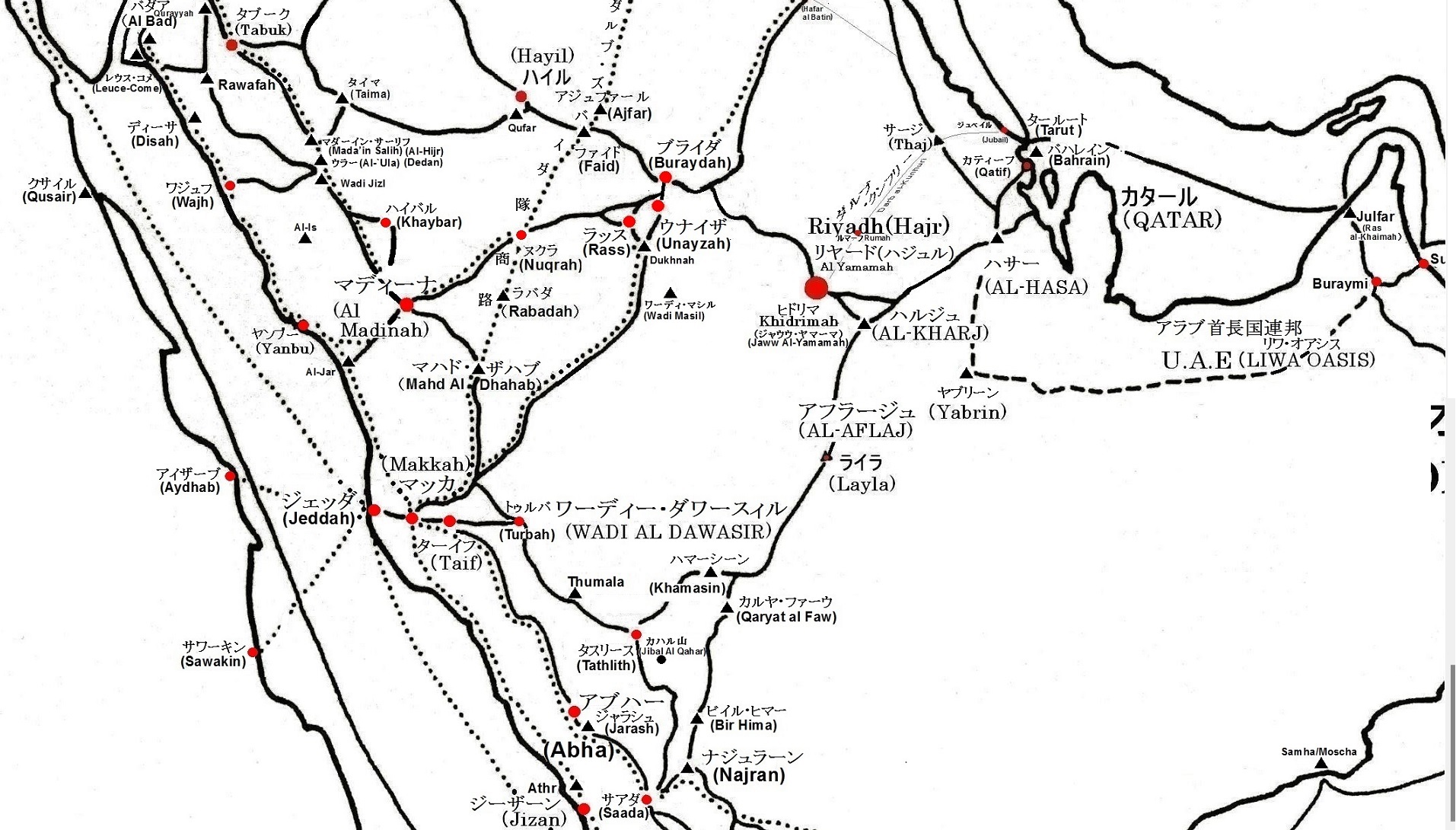
カフラーン・アズド族のフザーア(ハーリサ)は、同族と流浪して4世紀の終わり頃にメッカ谷とその井戸をジュルフム族から奪い、カアバ神殿の守護権も得ました。後にフザーア族長アムルが偶像神フバルをシリアから持ち帰り、支配の象徴としてカアバ神殿に持ち込みました。5世紀にカアバ神殿守護職が族長の娘婿でクライシュ族のクサイに譲られ、アドナーン部族がカフターニ部族に代わって古代聖地の守護者となりました。クサイは荒廃していたカアバ神殿を再建し、メッカの町作りを行い、法律を定め、税金を徴収してメッカを訪れる巡礼達が食料と水を受け取れる様にもしました。クライシュ族は熟練した商人や交易業者にもなり、利潤の多い、香料貿易に参加しました。ビザンチ帝国が支配していた紅海が海賊の増加で陰りが出た上にアラビア湾からチグリス・ユーフラテス川を経由する交易路もサーサーン朝の搾取やラフム朝およびガッサーン朝による妨害、さらにローマ・ペルシア戦争によって脅かされ、安全な交易の中心としてのメッカの卓越さがペトラやパルミラを凌いでいました。
Quraysh took over the guardianship of the Ka’bah
Khuza’a (خزاعة) (Haritha (حارثة)) of Azd (أزد) tribe of Kahlan (كهلان) tribe, exiled with his clanmates, took the Mecca Valley and its wells from Jurhum tribe at the end of the 4th century, and also gained the guardianship of the Ka’bah (لكعبة) Temple. Later, the Khuza’a chieftain Amr (عمر) brought the idol god Hubal (هبل) back from Syria and brought it to the Ka’bah Temple as a symbol of his rule. In the 5th century, the guardianship of the Ka’bah was ceded to the chief’s son-in-law, Qusai ibn Kilab ibn Murrah (c.40~480) of the Quraysh (قريش) tribe, and the Adnan (عدنان) Arab (Adnanites (عدنانيون)) replaced the Qahtan (قحطان) Arab (Qahtanite (قحطانيون)) as the guardian of the ancient holy land. Qusai rebuilt the ruined Ka’bah, built the city of Mecca (Makkah), instituted laws, collected taxes and allowed pilgrims visiting Mecca to receive food and water. The Quraysh tribe also became skilled merchants and traders, and participated in the lucrative incense trade. The Red Sea, which was ruled by the Byzantine Empire (395~1453), was overshadowed by the increase in piracy. And the trade route from the Arabian Gulf via the Tigris and Euphrates Rivers was exploited by the Sasanian dynasty (224~651). And it was also threatened by the obstructions of Lakhmids (266~602) (اللخميون) and Ghassanids (3rd~7th Century) (الغساسنة) and by the Roman-Persian Wars (92BC~627AD). Therefore, Mecca’s prominence as a safe trading center surpassed Petra and Palmyra.
定期市(スーク)
アラビア半島での部族同士の争いが絶えることは殆どありませんでしたが、一年に一度は休戦を宣言して巡礼の為にメッカに集まりました。そこでは争いが仲裁され、債務が解決され、そして定期市(スーク)が開かれました。6世紀末までにはメッカ商人達はアビシニア、ガッサーン朝およびラフム朝に代わってアラビア半島の交易を支配する様に成りました。それに伴い、カアバ神殿も多くの偶像神や部族守護神の安置所となって来ましたが、それでも一番重要な神はクライシュ族の守護神フバルであり、クライシュ族に守られて7世紀まで残っていました。
Regular markets (Souq)
Tribal strives in the Arabian Peninsula rarely ceased, but once a year they declared an armistice and gathered in Mecca for pilgrimage. There disputes were arbitrated, debts were settled, and regular markets (Souq (Suq) (سوق)) were held. By the end of the 6th century, the merchants of Mecca had replaced the Abyssinians, the Ghassanids, and Lakhmids dynasties in controlling the trade in the Arabian Peninsula. As a result, the Ka’bah Temple also became a resting place for many idol gods and tribal guardians, but the most important deity was the Quraish guardian god Hubal, who remained until the 7th century under the protection of the Quraysh tribe.
バヌー・アウス族とバヌー・ハズラジュ族の抗争
ラスリッパとして知られていた古代マディーナ・オアシスに最初に定住したのはノアの息子セムの子孫、バヌー・マトラウィール族とバヌー・ハウフ族でした。紀元1、2世紀のユダヤ戦争の勃興で、バヌー・カイヌカーウ族、バヌー・クライザ族およびバヌー・ナディール族等のユダヤ族が移住してきました。カフラーン族アズド族の支族バヌー・アウス族とバヌー・ハズラジュ族がマディーナに移住してきた2~4世紀には「70のアラブ族と20のユダヤ族がいた」と云われています。この両支族は5世紀末に支配権をユダヤ族から奪い取りましたが、敵対する様になり、ムハンマドの移住まで120年間に渡って戦い続けました。ユダヤ族のバヌー・ナディール族とバヌー・クライザ族は、バヌー・アウス族と同盟し、ユダヤ族のバヌー・カイヌカーウ族は、バヌー・ハズラジュ族と同盟しました。最後でもっとも血みどろだったのが617年の「ブアースの戦い」でした。622年にムハンマドとそのムハージルーンがメッカを離れてヤスリブ(マディーナ)に移住(イスラーム暦元年)すると、アウス族とカズラジ族の積年の敵意は、両部族の多くがイスラームに改宗する事で薄れてしまいました。
Conflict between the Banu Aus and al-Khazraj
The first people to settle in the ancient Madinah (Medina) Oasis, known as Lathrippa (لثريبا), were the descendants of Noah’s (نوح) son Shem (سام). They are the Banu Matraweel and Banu Hauf, etc. With the outbreak of the Jewish–Roman wars (66~135AD) in the 1st and 2nd centuries AD, the Jewish Tribe such as the Banu Banu Qaynuq, Banu Qurayza and Banu Nadir immigrated. It is said that in the 2nd and 4th centuries, when the Banu Aus and Banu al-Khazraj, a branch of the Kahlan Azd tribe, migrated to Madinah (Medina), “there were 70 Arab Tribes and 20 Jewish Tribes.” The two tribes wrested control from the Jewish Tribes at the end of the 5th century, but they became hostile each other and fought for 120 years until Muhammad’s migration. The Judean Banu Nadir and Banu Qurayza allied themselves with the Banu Aus, and the Jewish Banu Qaynuq allied with the Banu al-Khazraj. The last and bloodiest of the battles was the Battle of Bu’ath in 617. Muhammad and his Muhajirun left Mecca and moved to Yathrib (Medina) in 622 (the first year of the Islamic calendar). Then, many of the Aus tribe as well las the Khazraj tribe converted to Islamas and the long-standing hostility between two tribes faded.
ターイフのスーク・ウカーズ
6世紀にはターイフはバヌー・サキーフ族に支配されていました。この城壁に囲まれた市は「ターイフの淑女」として知られる女神アッラートの偶像を収め、その信仰の中心でした。一年の中の4ヶ月が神聖な月とされて居り、これらの月の間は交易隊商の安全を確保し、昔からの慣例である毎年のスークを営む為に戦争や襲撃は禁止されていました。半島の中で最も有名で、現在も続いている定期市がターイフのスーク・ウカーズです。商人や買い付け人と一緒に定期市は詩人達、吟遊詩人達や放浪の叙事詩吟唱者達を引き付け、スーク・ウカーズの祭りの市は注目される催し物として年間作詩コンテストを催していました。
Suq Okaz of Taif
In the 6th century, Taif was ruled by the Banu Thaqif tribe. This walled city housed an idol of the goddess Allat, known as the “Lady of Taif,” and Allat was the center faith of Taif. Four months of the year were considered sacred months, during which war and raids were forbidden to ensure the safety of trading caravans and to run the annual Souq (Suq), an ancient custom. The most famous and still regular market on the Arabian Peninsula is Suq Okaz of Taif. Along with merchants and buyers, the regular market attracted poets, minstrels and wandering epic minstrels, and the festival market of Suq Okaz held an annual poetry contest as a high-profile event.
預言者ムハンマドとターイフ
預言者ムハンマドは、ターイフから遠くない村出身の乳母に育てられ、その豊かさと自由さを良く知っていました。布教早期の小さなムスリムの共同社会に取ってメッカでの生活が難しく成って来た時に、ムハンマドは、先ずはターイフに移住する事を考えました。この時のバヌー・サキーフ族首領であった三人の兄弟は、ムハンマドを受け入れて最初は親切に扱いましたが、ハンマドがこの兄弟をイスラーム信仰に加わるように誘うと親切は軽蔑に代わりました。ムハンマドは絶望してそこを離れなければならなかったばかりではなく、三兄弟は酷い事に奴隷とごろつきをけしかけて町からムハンマドを追い払いました。住人達も礼儀正しい作法で答えずにムハンマドに石を投げつけ始め、この為にムハンマドは激しく出血しました。こうしてムハンマドは涸れ谷マスナーフの果樹園に避難せざるを得ませんでした。涸れ谷マスナーフの果樹園はたまたまそこで葡萄園の世話をしていた二人のクライシュ族の兄弟の所有でした。二人はこの人物が手荒く扱われているのを見て、哀れみを持ち、アッダースと云う名のニネヴェ出身のキリスト教徒の奴隷に大皿に幾つかの葡萄の房を載せて持って来て、この異邦人に食べさせる様に命じました。アッダースはそれに従い、預言者と短い会話をした後、イスラームに改宗しました。涸れ谷マスナーフの中の小さなモスクはこの出来事が起きた場所にあり、今でもターイフで最初にイスラームに奉じたアッダースと云う人物名を使い続けています。
The Prophet Muhammad and Taif
The Prophet Muhammad was raised by a nanny originating from a village not far from Taif and he was well aware of its richness and freedom. When life in Mecca became difficult for the small Muslim community in the early days of the mission, he first considered moving to Taif. The three brothers, who were the leaders of the Banu Thaqif tribe at the time, accepted Muhammad and treated him kindly at first, but when Muhammad invited them to join the Islamic faith, kindness was replaced by contempt. Not only did Muhammad have to leave in despair, but the three brothers badly instigated slaves and thugs to drive Muhammad out of the city. The inhabitants also began throwing stones at Muhammad without answering in a polite manner, causing Muhammad to bleed violently. Thus, Muhammad was forced to take refuge in the orchards of the Wadi Mathnah. The orchard in Massenaf happened to belong to two Quraysh brothers who happened to be tending to the vineyards there. When they saw that this man was being treated roughly, they took pity on him and ordered a Christian slave originating from Nineveh, named Addas, to bring several tufts of grapes on a platter and feed them to the Gentiles. Addas complied, and after a brief conversation with the Prophet, converted to Islam. A small mosque in the Wadi Mathnah is located at the site of the event, and it still uses the name of the first person in Taif to embrace Islam, called Addas.
 Desert peninsula