11 Vegetation


目次 (Index)
アラビア沙漠を代表する樹木
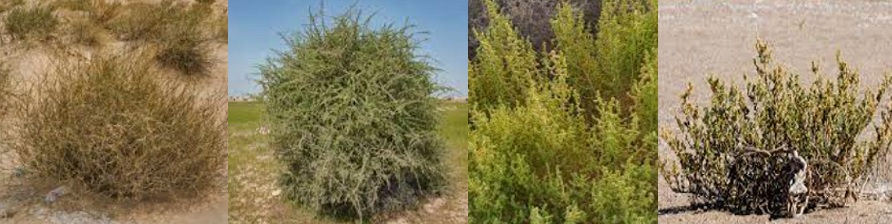
アラビア沙漠(アラビア半島の沙漠地帯)を代表する樹木としては、ガート(Ghat)、デーツ(Date)、サラム(Salam)、タルフ(Talh)、タマリスク(Tamarisk)、エダウチ椰子(Doum Palm or Dawn Palm)、ソドムのリンゴ(Apple of Sodom)等が挙げられます。
Trees representing the Arabian Desert
The trees that represent the Arabian desert (the desert region of the Arabian Peninsula) include Ghat, Date, Salam, Tahlh, Tamarisk, and Doum Palm or Dawn Palm. , Apple of Sodom, etc.
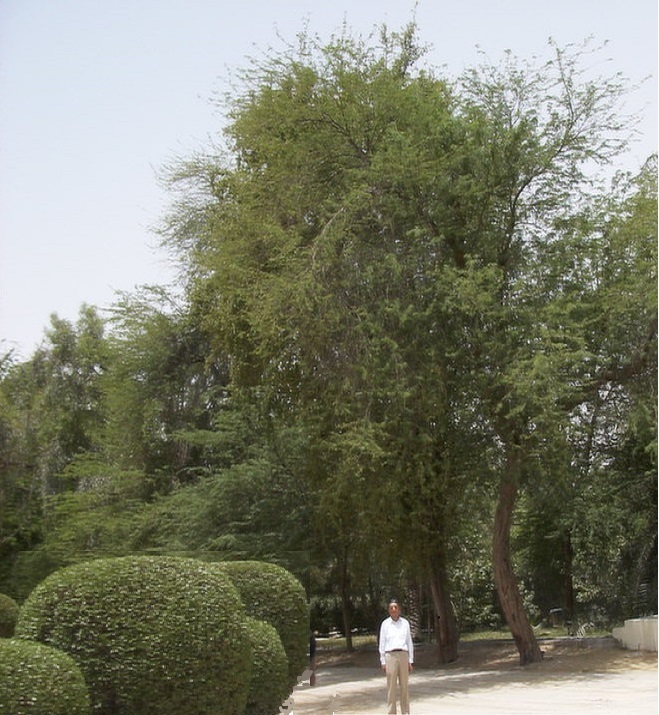
ガート(Ghat)
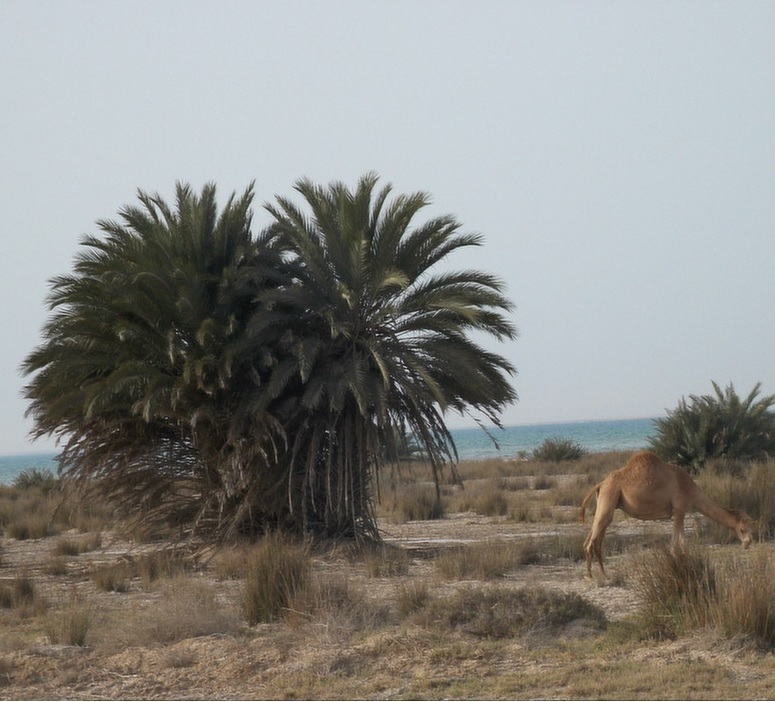
デーツ(Date)
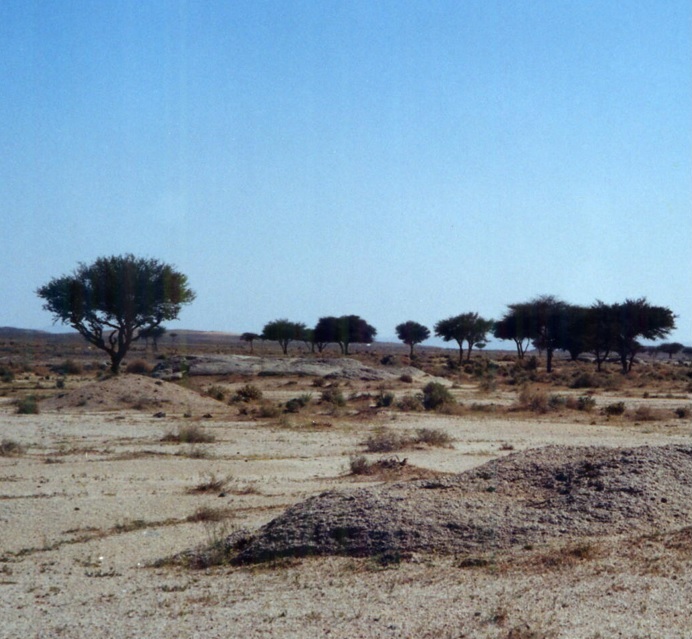
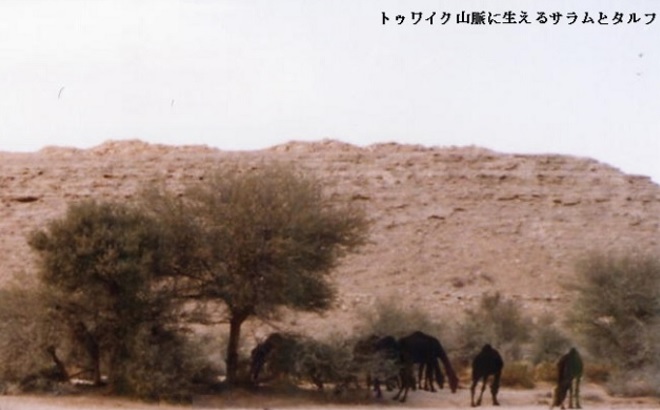
サラム(Salam)
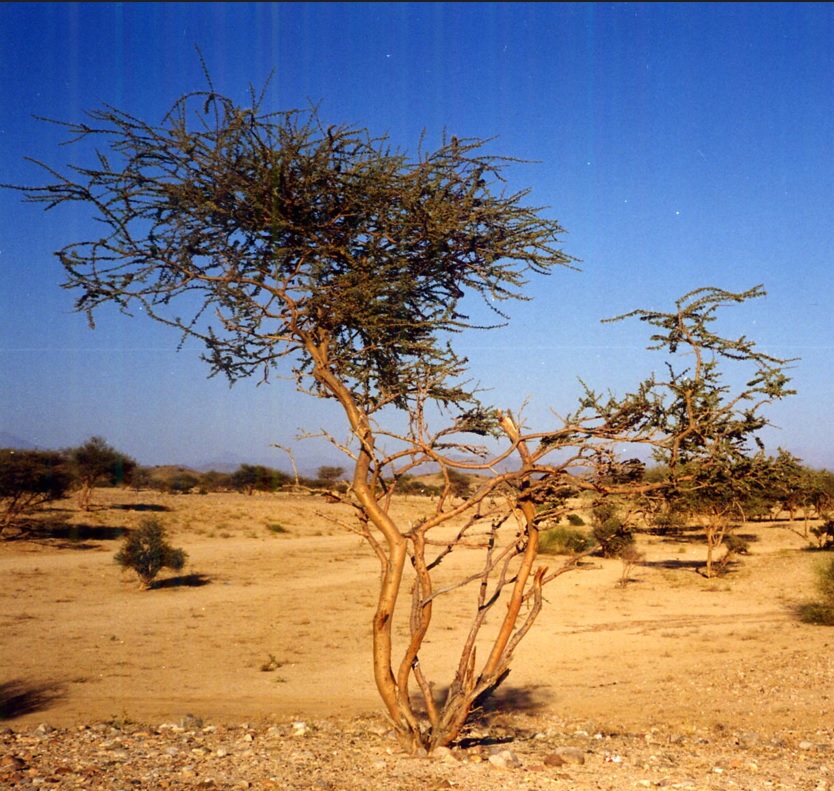
タルフ(Talh)
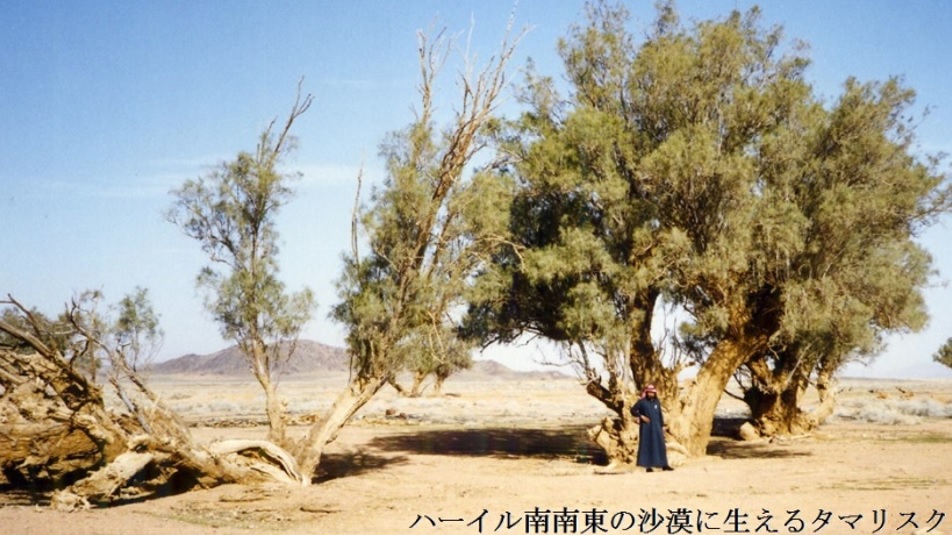
タマリスク(Tamarisk)
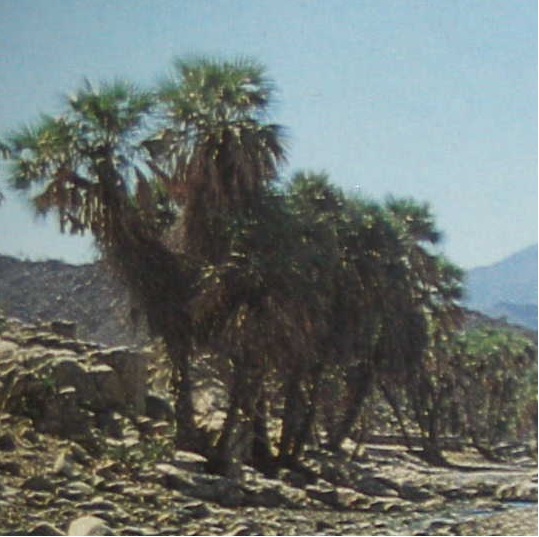
エダウチ椰子(Doum Palm or Dawn Palm)
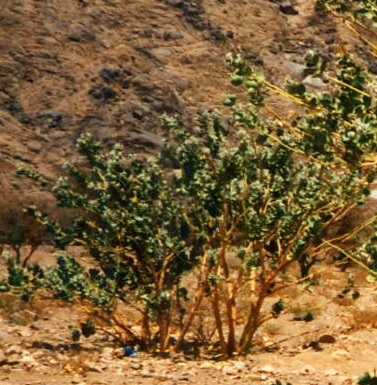
ソドムのリンゴ(Apple of Sodom)
アラビア半島の植生は3,500種を超えます。サボテンや多肉植物の様な耐乾性植物や矮小低木(シュラブ)が、それらの殆どを占めます。ナツメヤシを除いては樹木の種類は僅かです。
アラビア湾岸では11月を過ぎると、地中海低気圧が訪れます。その低気圧が、雨を降らし、多年草が芽を萌えだします。一年草は芽を出し、実を付け、種を作り、数週間で休眠します。そして、次の雨の季節に備えます。
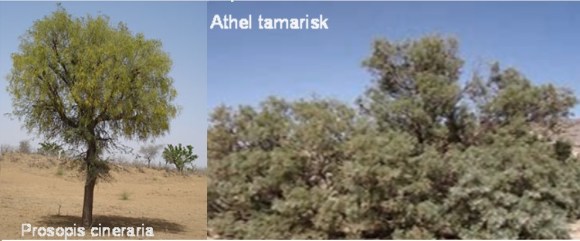
沙漠地帯では植生は主に窪地や涸れ谷でしか成長しません。それでもナツメヤシやアティル・トレスとも呼ばれるアティル・タマリスク(御柳(ギョリュウ))やガーフとも呼ばれるプロソピスは、地中深く根を下ろして水脈をつかみ取ります。
More than 3,500 species of vegetation grow naturally on the Arabian Peninsula. Drought-resistant plants, such as cacti and succulents, make up most of them, together with dwarf shrubs (shrubs). Except for date palms, the variety of trees is limited.
On the Arabian Gulf coast, a Mediterranean cyclone (a low pressure) comes annually after November. It brings rains, and perennials begin to sprout. An annual plant sprouts, bears fruit, makes seeds and dormant in a few weeks. And it is waiting for a next rainy season.
In the desert, vegetation grows mainly in a depression and a wadi. Still, Dates, Athil tress and Ghafs take root deep underground and grab water veins. Athil tress is the local name of Athel tamarisk (Tamarix aphylla) and Ghaf is that of Prosopis cineraria.
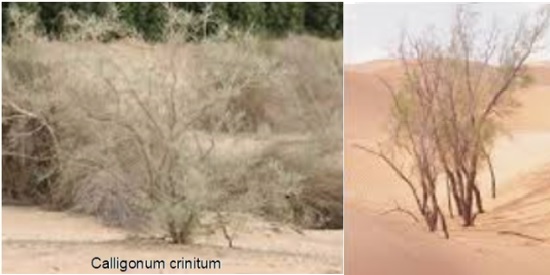
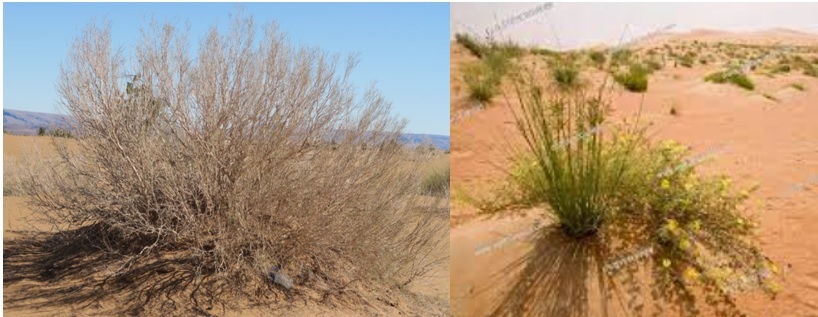
いくつかの種類の植物は、何十年も雨が降らずに生き残ることができるように、その地域によく適応しています。たとえば、人命がほとんどない荒涼とした土地でも、アバル(abal)だけが少しの命を与えます。アバルは、葉のないカリゴナム・クリニタム(Calligonum crinitum)という名前の低木です。この葉のない低木は、ルブア・ハーリー沙漠に特有の亜種です。電線のような根は浅く広く広がっています。雨が降っている限り、それらの根は砂の表面が乾く前に約20センチメートルの深さから水を集めます。
Some types of plants are well adapted to the area so that they can survive without rain for decades. For example, only Abal gives a little life even in a desolate land, where is almost no life. Abal is the shrub, named Calligonum crinitum, without leaves. This leafless shrub is a subspecies peculiar to the Rub’ al Khali Desert. The roots like electric wires are spread shallowly and widely. As long as it rains, those roots collect water from a depth of about 20 centimeters before sand surface dries.
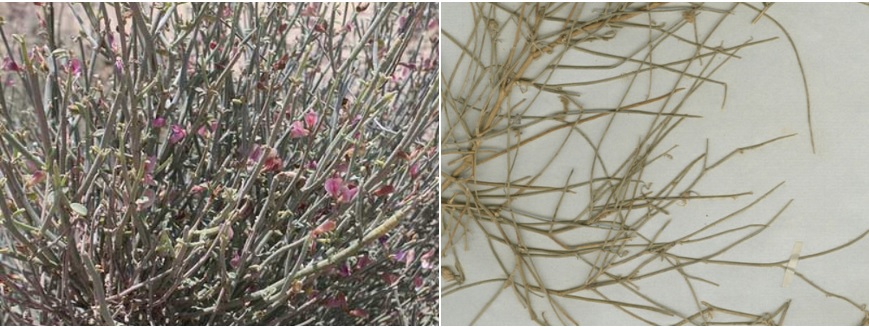
砂利沙漠では、ハド(hadh)(حاذ شوكي)(コーヌラカ・モナカンタ(Cornulaca monacantha))、クロタラリア・ペルシカ(Crotalaria persica)、ソドムのリンゴ(Apple of Sodom, Calotropis procera)、タヴェルニエラ・スパルテア(Taverniera spartea)が自然に育ちます。寄生植物で、多年生植物に属するカンカニクジュヨウ(寄生沙漠ヒヤシンス)も自生しています。メスキート(Mesquite)は少し高い高度に現れます。
In the gravel desert, Cornulaca monacantha, Crotalaria persica, Apple of Sodom (Calotropis procera) and Taverniera spartea grow naturally. Parasitic desert hyacinth (Cistanche tubulosa) (ذؤنون أنبوبي), which is a parasitic plant and belongs to perennials, grow wild there. Mesquite will appear at a slightly higher altitude.


ソドムのリンゴ(Apple of Sodom)
コーヌラカ・モナカンタ(Cornulaca monacantha)は、低木(コーヌラカ・アラビカ (Cornulaca arabica))の仲間です。ハド(Hadh)と呼ばれることもあります。 クロタラリア・ペルシカ(Crotalaria persica)の学名はクロタライア・セシリフロラ(Crotalaria sessiliflora)、ソドムのリンゴ(Apple of Sodom)の学名はカロトロピス・プロセラ (Calotropis procera)です。タヴェルニエラ・スパルテア(Taverniera spartea)は、アエリジャーン(Aelijaan)またはダヒアー(Daheer)とも呼ばれ、マメ科に属しています。 カンカニクジュヨウ(Cistanche tubulosa)は「沙漠の親指」または「沙漠の高麗人参」と呼ばれ、生薬としても使用されます。沙漠の全寄生植物種であるホンオニク属に属しています。メスキートはマメ科プロソピスのメンバーです。
Cornulaca monacantha is a member of the shrub “Hadh (Cornulaca arabica)”. It is also sometimes called itself as Hadh. Crotalaria persica has the scientific name of “Crotalaria sessiliflora”, and Apple of Sodom has that of “Calotropis procera”. Taverniera spartea, also known as Aelijaan or Daheer, belongs to Fabaceae family. Cistanche tubulosa is called “desert thumb” or “desert ginseng” and is also used as a crude drug. It is belonged to the genus cistanch, which is a desert holoparasitic plant species. Mesquite is a member of the Leguminosae Prosopis.
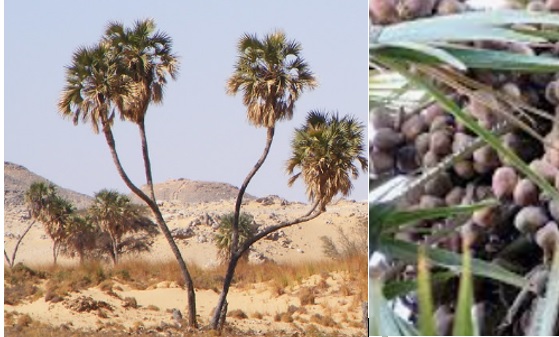
溶岩地域では、特徴的な植物はエダウチヤシ(Hyphaene thebaica)です。その幹は3つまたは4つの枝に分かれており、上部にいくつかの大きな扇形の葉があります。果物はリンゴの大きさで食べることができます。サラワート山脈の溶岩層に広く生息しています。ティハーマ低地にも点在しています。エダウチヤシは、半分埋められた小さな溶岩の岩石地帯を特定するために不可欠でした。
In a lava zone, the characteristic plant is Dawn palm (Hyphaene thebaica). Its trunk is divided into three or four branches with several large fan-shaped leaves at their top. The fruit can be eaten in the size of an apple. It is widely native to lava formations in the Sarawat Mountains. It also scatters in the Tihama lowlands. Dawn palm was indispensable for me to identify a half buried and small lava rock zone.
ルブア・ハーリー沙漠では、植生の種類が非常に限られています。それでも、アバル(Abal)、ハマアカザ (Atriplex)、数種類のスゲ(Sedge)、30〜40種類の開花植物があります。前述したようにアバルはカリゴナム・クリニタム (Calligonum crinitum)の学名を持ち、沙漠に最も適応した植物の1つです。カヤツリグサの中で、シペラス・コングロムラトス(Cyperus conglomeratus)は、層状に並んだ砂丘の間の谷で自然に成長します。それはハドとハームの近くに成長します。前述のハド(hadh)はコーヌラカ・アラビカ(Cornulaca arabica)の学名を持つとげのある低木ですが、ハーム (Harm)はジゴフィラム・マンダヴィレイ(Zygophyllum mandavillei)の学名を持つジューシーで耐塩性の低木です。
In the Rub’ al Khali Desert, the types of vegetations are extremely limited. Even so, there are Abal, Ariplex (saltbush), several types of sedge and 30 to 40 kinds of bloomed plants. As mentioned above, Abal has the scientific name of “Calligonum crinitum” and is one of the most adapted plants to the desert. Among sedges, Cyperus conglomeratus grows naturally in a valley between sand dunes lined up in layers. It grows close to Hadh and Harm. While Hadh is a thorn shrub having the scientific name of “Cornulaca arabica”, Harm is a juicy and salt-resistant shrub having that of “Zygophyllum mandavillei”.

アンダブ(Andab)(Calligonum polygonoides)はラクダが食べる牧草地として沙漠に存在する貴重な存在です。アンダブ(Andab)の学名はカリゴナム・ポリゴノアイヅ(Calligonum polygonoides)です。ザール(Zahr) (Tribulus arabicus)は、希少で貴重なラクダの牧草地に散在するハド(Hadh)とアンダブ(Andab)と一緒に、ザフルが自生しています。とともに自然に成長します。 ザール(Zahr)は、他の多くの低木と同様に、地面を這う低木です。 ザール(Zahr)は雨の後すぐに成長し、その目立つ黄色い花を咲かせます。ほとんどの沙漠の一年生植物のように、それは急速に開花し、1か月以内に種をまき、そしてすぐに枯れます。それでも、Zザール(Zahr)はラクダの牧草地として非常に適しています。 ザール(Zahr)はとげのある植物なので、噛むのはとても難しいようです。しかし、ラクダは彼の口をザール(Zahr)でいっぱいにし、満足してそれをよく噛みます。ハド(Hadh)は他の塩生植物ほどジューシーではありませんが、アンダブはその食物価値よりも多くの水分を飲むために食べられます。さらに、ラクダの乳をよく作るので、ハド (Hadh)ザールが好まれます。
Andab (Calligonum polygonoides) is valuable existence in desert as a pasture eaten by camel. The scientific name of Andab is Calligonum polygonoides. Zahr (Tribulus arabicus) grows naturally along with scattered Hadh and Andab in the places that are rare and precious camel pastures. Zahr is a prostrate shrub crawling on the ground, like many other shrubs. Zahr grows quickly after rain and blooms its prominent yellow flowers. Like most desert annuals, it blooms rapidly, seeds within a month, and quickly withers. Still, Zahr is very suitable as a camel pasture. Zahr is so thorny plant, that seems to be so difficult to bite. However, the camel fills his mouth with full of Zahr and chews well it with satisfaction. While Hadh isn’t as juicy as other halophytes, Andab is eaten to drink more moisture than its food value. In addition, Zahr is preferred because it makes camel milk well.
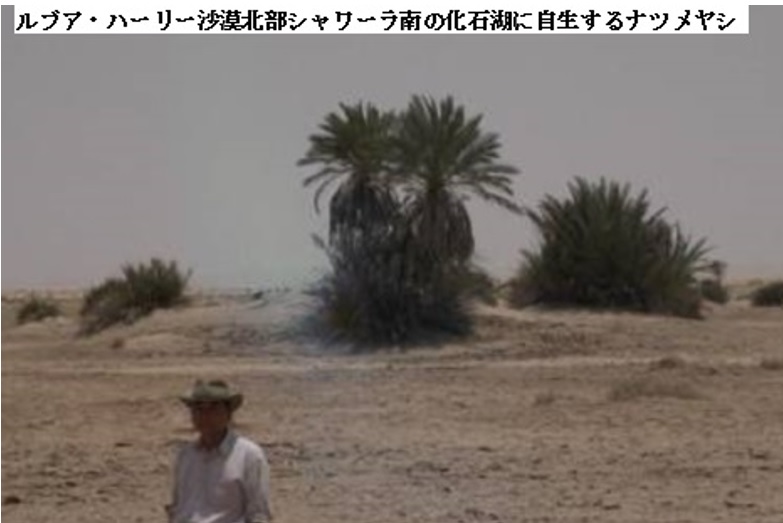
化石湖や砂丘の間の平地など、浅い地下水が確保されている場所もいくつかあります。そのような場所には、ナツメヤシのコロニー、プロソピス、アカシアの木があります。アカシアの木には、Talh (Acacia gerrardii)とSalam (Acacia tortilis)が含まれます。 SalamはSamerまたはSamrとしても知られています。ナツメヤシとプロソピスは根を地下深くまで伸ばし、水脈に到達します。ナツメヤシは密に成長し、他の木と共存しません。対照的に、プロソピスはアカシアと共存することができます。これは、アカシアの根が比較的浅く、広く広がり、雨水に依存し、乾季の乾燥と熱に耐えるためです。
There are also a few places where shallow groundwater is reserved, such as fossil lakes and flatlands between sand dunes. In such places there are dates palm colonies, Prosopis and Acacia trees. Acacia trees include Talh (Acacia gerrardii) and Salam (Acacia tortilis). Salam is also known as Samer or Samr. Date palms and Prosopis extend the roots deep underground to reach the water veins. Date palms grow densely and do not coexist with other trees. In contrast, Prosopis can coexist with Acacias. This is because Acacias have relatively shallow roots that spread widely, rely on rainwater and withstand dryness and heat during a dry season.
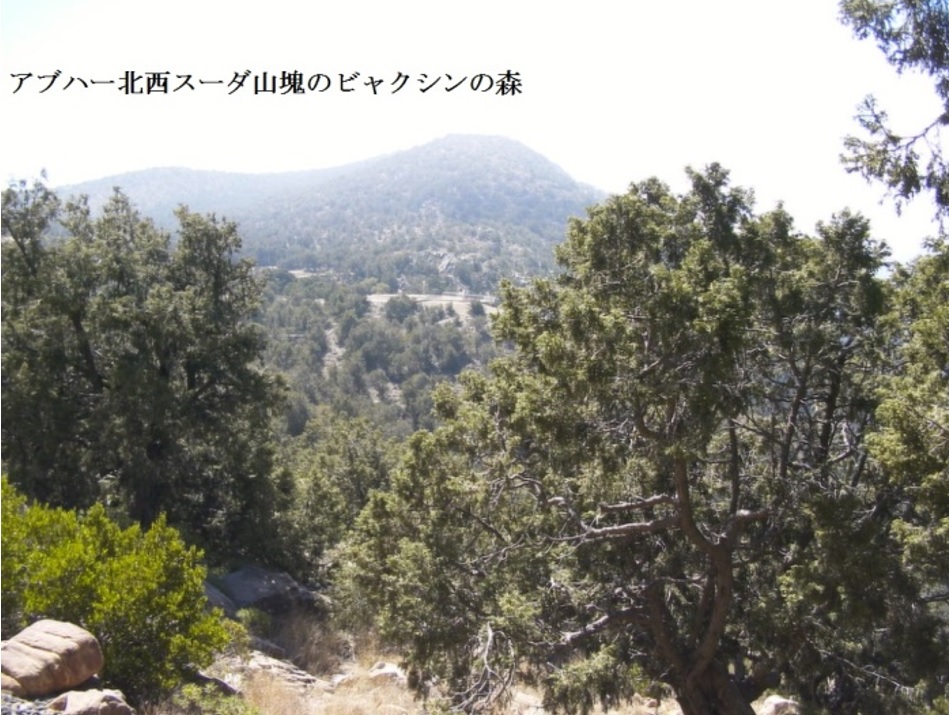
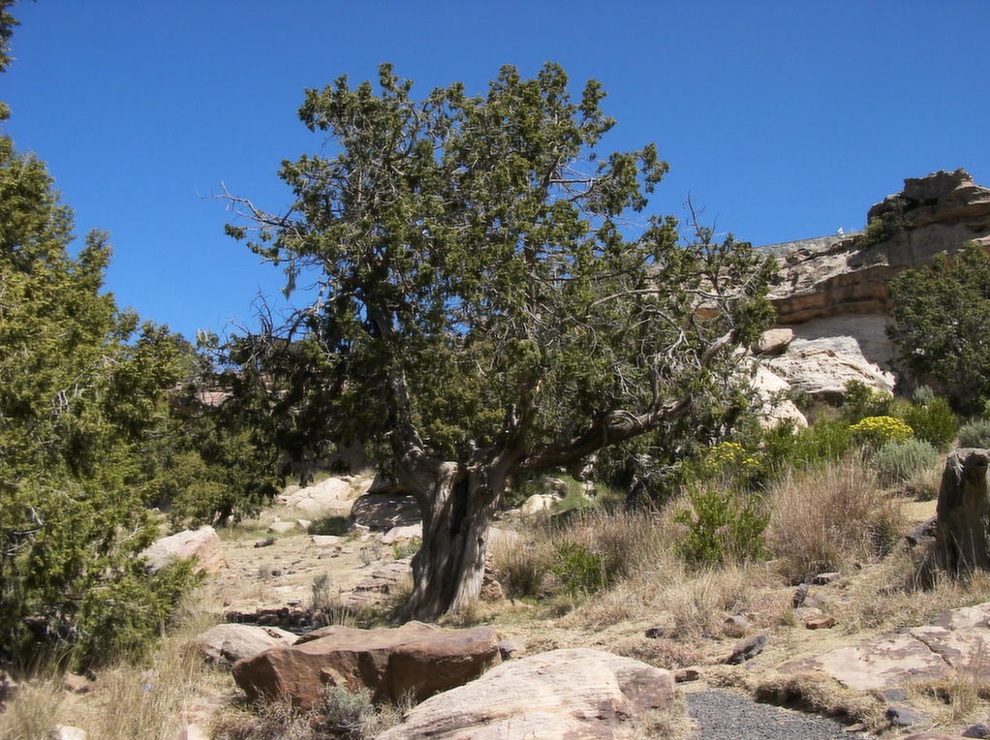
この半島の南西部にあるアシール山脈とイエメンの西部高地の植生は、東アフリカの植生と似ています。一番高いところは高原の森に覆われています。その北側では、特にアフリカのジュニパー(Juniperus procera)とデイジーファミリー(キク科)のアラビア種のユリオプス(Euryops arabicus)が多く成長しています。地衣類アスネア・アーティキュラータ(Usnea articulata)がジュニパーの枝に引っかかることは珍しいことではありません。南面の乾燥した場所にはキク科のキオンやトウダイグサ属のユーフォルビア等が生えてます。標高が2,500メートル付近から下ではビャクシンは、自生しません。植生は落葉性の低木地帯になります。そこにはアカシア、カンラン科のコンミフォラ属(Commiphora)(ミルラの仲間)、シナノキ科のウオトリギ属(Grewia)や多肉多汁植物が混ざる様になります。イエメン西部高地の南面では多肉多汁植物のアロエ(aloes)やトウダイグサ属(euphorbias)スパージ(supurg)が生え、標高の低い場所ではアビシニアバラ(Abyssinian rose)や樟脳灌木(camphor bush)等の灌木林があります。さらに高度を下げて標高2,000メートル以下ではアカシアや棘の多いミルラノキ(myrrh)が増えてきます。
アカシアは、マメ科アカシア属の常緑樹の総称でガフ(Ghaf)(Prosopis cineraria)、タルフ(Talh)(Acacia gerrardii)、サラム(Salam or Acacia tortilis)等のアラビア半島の沙漠に自生する樹木の多くがアカシア属又はその亜属に含まれています。棘の多いミルラノキは、ムクロジ目カンラン科コンミフォラ属です。
The vegetation of the Asir Mountains in the southwestern part of this peninsula and the Western Highlands in Yemen is similar to that of the East Africa. The highest place is covered by a highland forest. On its northern side, especially African juniper (Juniperus procera) and Euryops arabicus of Daisy family (Asteraceae) are growing a lot. It is not uncommon for lichen Usnea articulata to be caught on branches of juniper. In the dry area on the south side, Senecio nemorensis of Asteraceae family and Euphorbiaceae Euphorbia are growing. Juniper does not grow naturally at places located below 2,500 meters above sea level. Vegetation becomes deciduous forest of normal shrub forest. There will be a mixture of Acacia, Commiphora (Myrrh associate) ,Grewia of Tiliaceae and succulent plants. Further lowered altitude below 2,000 meters above sea level, Acacia and Commiphora Myrrh (Commiphora) increase their numbers.
Acacia is a generic name for evergreen trees of the legume family Acacia genus or its subgenus, and includes many of the trees native to the desert of the Arabian Peninsula, such as Ghaf (Prosopis cineraria), Talh (Acacia gerrardii), Salam (Acacia tortilis), etc.
Spiny Commiphora Myrrh belongs to the genus Combifola of the order Sapindales.

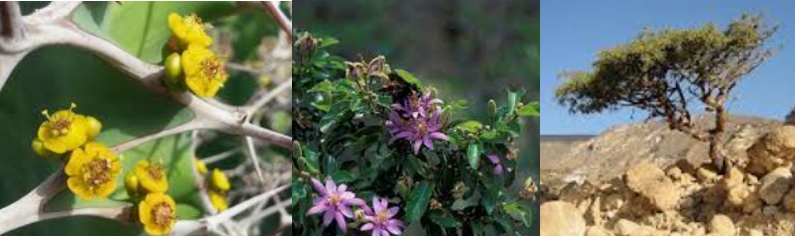
イエメン南部のハドラマウト地方では、ココナッツヤシやナツメヤシとともに乳香の樹が育っています。乳香の樹は、ムクロジ目カンラン科のボスウェリアです。乳香の樹とミルラの木は、半島南部のアシール県からドファール県までの地域でしか育ちません。これらはまだ希少な木です。
乳香は、乳香の樹から分泌される樹脂です。古くから焚いて、祭壇のお香に使われてきました。また、香水や漢方薬の原料としても使用されています。没薬は、ミルラの木から分泌される赤褐色の植物性ゴム樹脂です。没薬は古代エジプトからミイラ作りの防腐処理に使用されており、香料や薬草としても使用されています。カート(Qat)は、没薬や乳香とは異なり、同じ樹種ではありませんが、カート(Qat)は、ティハーマ低地の同じようなの標高の場所で栽培されています。カート(Qat)は、ニシキギ科の常緑樹の一種です。葉には興奮性のカチノンとカチノンが含まれているので、イエメン人が好んで栽培しています。
In the Hadramaut region of the southern Yemen, Frankincense tree is growing up along with Coconut palms and Date palms. Frankincense (Boswellia sacra) is Bosswellia of Burseraceae in Sapindales. Frankincense tree and Myrrh tree grow in the region of the south part of the Peninsula only from the Asir prefecture to the Dhofar governorate. These are still rare trees. Frankincense (Olibanum) is the resin secreted from the Frankincense tree. It has been burned since ancient times and used for incense of altars. It is also used as a raw material for fragrances and Chinese medicines. Myrrh is the reddish-brown vegetable rubber resin secreted from the myrrh tree. Myrres have been used for mummy-making embalming since ancient Egypt, and are also used as fragrances and Herbal medicines. Khat (Qat) is not the same family of Unlike Myrrh nor Frankincense, but Khat (Qat) is grown at similar elevation locations in the Tihama lowlands. It is a kind of evergreen trees of Celastraceae. It contains excitatory Cathinone and Catine in the leaves, so it is grown fondly by Yemenis.
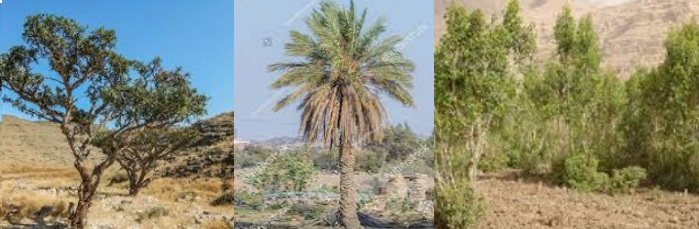
アラビア湾沿岸のサブハではサルコルニア(Salicornioideae)やハマビシ科のジゴフィルム(Zygophyllum)が見られます。サルコルニアは、耐塩性植物アッケシソウ(厚岸草)の仲間です。内陸のサブハではジゴフィルム属(Zygophyllaceae)のカタレンス(Zygophyllum qatarense)、マンゴローブ草(Aeluropus lagopoides)、イネ科の野生キビ(Panicum turgidum)が見られます。涸れ谷ではアウサジ(awsaj)とも呼ばれるリキウム・シャウィー(lycium shawii or Arabian boxthorn)が分布しています。サブハ近傍の砂地には矮小化したタマリスク(tamarisk)、ヒエ科のオアカヒジキ(Salsola imbricata)やハマビシ科の耐塩性灌木ハルム(harm or Zygophyllum mandavillei)が自生します。海岸の潟(ラグーン)や水路には白いマングローブ(white mangrove)が繁茂しています。但し、マングローブの自生は紅海沿岸の方が一般的です。オマーンのバーティナ地方やドファール地方の海岸平地は丘や塩水湿地帯に縁どられているので耐塩性植物が豊富です。その多くはハマビシ科(Zygophyllaceae)、イソマツ属のシーラベンダー(Sea lavendar)やマングローブ樹種のヒルギダマシ(white mangrove or Avicennia marina )等です。但し、オマーンのバーティナ地方には、南部海岸では見られませんが、イランやトルコに見られる多くの耐塩性植物が生えています。
In sabkhas on the Arabian Gulf coast, there are the natural growths of Salicornia and Zygophyllum of Zygophyllaceae. Salicornia is a companion of the salt-resistant plant “Glasswort”. In the inland sabkhas, there are the wild growths of Zygophyllum qatarense of Zygophyllaceae, Aeluropus lagopoides and Panicum turgidum of Poaceae. In wadis, Lycium shawii (Arabian boxthorn), also known as Awsaj, naturally grows distributedly. Dwarfed Tamarisk, Salsola imbricata and Harm grow naturally in a sandy area near a sabkha. While Salsola imbricata belongs to Amaranthaceae, Harm is a salt-tolerant shrub (Zygophyllum mandavillei) and belongs to Zygophyllaceae.
The coastal lagoons and waterways are home to the White mangroves. However, Mangroves naturally grow more commonlly along the Red Sea coast. The coastal flatlands of the Batinah and Dhofar regions in Oman are bordered by hills and saltwater marshlands, thus they are rich in salt-resistant plants. Many of them are Zygophyllaceae, Limonium sea Lavender or White mangrove (Avicennia marina), etc. Many of the salt-resistant plants found in Iran and Turkey grow in the Battleh region of Oman, however, these are not found on the southern coast of the Arabian Peninsula.


 Desert peninsula