12 Animals


目次 (Index)
The wild animals, which live on the Arabian Peninsula
Endangered animals on the Arabian Peninsula
Typical migratory birds of the Arabian Peninsula
Reptilia class Squamata order Iguania suborder
Reptilia class Squamata order Serpentes suborder
Amphibia class Anura order Bufonidae family
Branchiopoda class Notostraca order Triopsidae family
Artiodactyla order Cetacea infraorder
Artiodactyla order Odontoceti infraorder Delphinidae family
灼熱の夏と厳しく乾いた寒さの冬、乏しい水と餌、吹きすさぶ熱風と砂塵、ルブア・ハーリー沙漠が空白地帯と呼ばれることに代表される様に不毛の沙漠地帯がアラビア半島の大部分です。そのアラビア半島の動物について「アラビア半島に野生する動物」を紹介し、次に「アラビア半島で絶滅しかけている動物」を紹介して行きます。次に数が増え過ぎの感のあるマントヒヒおよび種類の多い齧歯動物とコウモリについて述べます。
哺乳動物以外として、先ず鳥類について、渡り鳥、渉禽類の渡り鳥、沙漠に棲む鳥、猛禽類を紹介します。その次に爬虫類についてカナヘビ、トカゲ、ヤモリ、アマガ、カメレオン、ヘビを紹介します。その次に両生類、カブト海老を紹介します。海洋動物としては、クジラ、イルカ類やジュゴンを紹介します。海の魚に関しては、紅海、アラビア海、アラビア湾生息する魚について、それぞれ言及する必要があります。魚の種類は非常に多く、その紹介は、別途行うことがあるかもが知れません、ここでは別のホームページに掲載した「アラビア湾の魚」を引用するだけとします。
The Arabian Peninsula is almost barren desert areas, typified by scorching hot summers and harshly dry & cold winters, lack of water and scarce of food, gusty hot air and dust. Being called as the empty, the naming Rub’ al Khali represents such a barren desert. Here, “the wild animals living on the Arabian Peninsula” is introduced at first, and then “the endangered animals on the Arabian Peninsula”. At the next, baboons, looking like overnumbered, are mentioned, then a wide variety of rodents and bats is followed.
In addition to mammals, birds are first introduced, such as the typical migratory birds, the migratory wading birds, the birds living in desert and the birds of prey. Then the reptiles are mentioned. They include lacertids, lizards, geckos, agamas, chameleons and snakes. At the next, amphibians and horseshoe shrimp are introduced. As marine animals, whales, dolphins and dugongs are mentioned.
When it comes to sea fish, it is necessary to mention the fish that live in the Red Sea, the Arabian Sea, and the Arabian Gulf. As there are so many kinds of fish, it might be to have another occasion to introduce them. Here, the writer only quote “Fishes of the Arabian Gulf” posted on another homepage, for reference.
アラビア半島に野生する動物
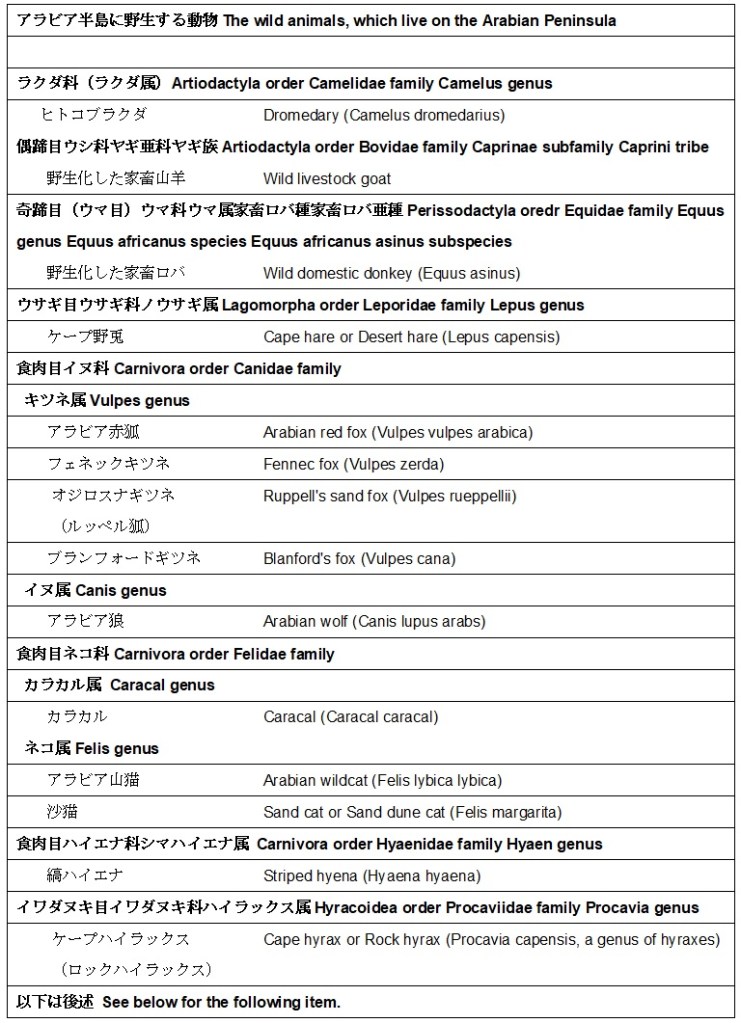
アラビア半島に野生する動物は、ヒトコブラクダ、アラビア野生山羊、アラビア狼、アラビア赤狐、フェネックキツネ、オジロスナギツネ(ルッペル狐)、ブランフォードギツネ、カラカル、アラビア山猫、沙猫、縞ハイエナ、イワダヌキ科のケープハイラックス(ロックハイラックス)、ケープ野兎等です。
The wild animals, which live on the Arabian Peninsula
Wild animals on the Arabian Peninsula include Dromedary, Arabian tahr Arabian wolf, Arabian red fox, Fennec fox, Ruppell’s sand fox, Blanford’s fox, Caracal, Arabian wildcat, Sand cat, Striped hyrax, Rock Hyrax, Desert hare, etc
これらの動物は見事に沙漠適応しています。
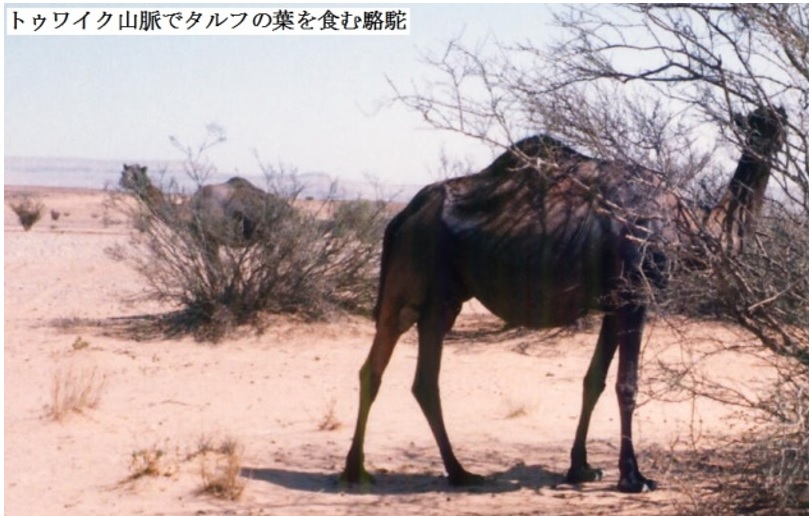
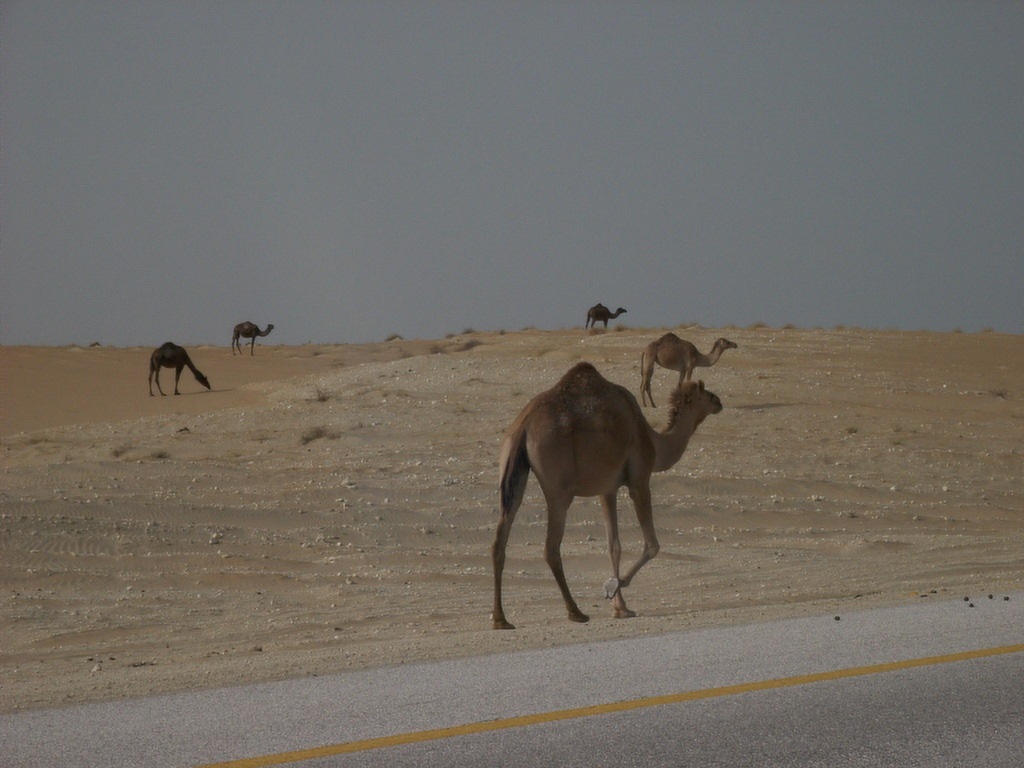
特にヒトコブラクダは沙漠適応に優れた動物です。ラクダは、背中に断熱効果のある脂肪を貯え、腹側は放熱し易い皮膚ですが、冬には冬毛が貯え、気温によって体温を変えることができ、暑さ寒さに耐えます。胼胝と呼ばれる厚くて平らなタコが左右の前脚の付け根、後脚の膝、胸の5か所にあり、高温・低温の地面でも休めます。脚の裏はクッション状に皮膚が膨らみ砂地を歩くのに適しています。目は長いまつ毛と瞬膜を備え、鼻腔は閉じられるので砂塵を避けられます。背中の皮膚の一部が瘤に成って脂肪を貯え、血液中にも血液とほぼ同量の水を蓄えられるので飲まず食わずでの沙漠の旅でも1週間程度は耐えます。食料も棘だらけのアカシヤの葉やサボテンを食べますし、海水程度までの含塩水も飲みます。そんな状態でも飲み水の代わりともなり、栄養補給もできる乳を提供してくれます。側対歩に慣れるが必要ですが、騎乗できますし、荷役にも使えます。また、食肉にもなります。この様な利用価値も高いですし、寿命が30年もあるので財産としても保有されています。そのため、野生種は存在していないと言われています。
These animals are perfectly adapted to the desert. In particular, the dromedary (the one-humped camel) is the animal with excellent desert adaptation. an one-humped camel store fat on his back that has a heat insulating effect. On contrary, its skin on the ventral side easily dissipates heat in the hot season, but cover winter hairs in the cold season. Thick and flat calluses are located at the base of the left and right front legs, the knees of the rear legs, and the chest, and can rest even either on hot or cold ground. The soles of the legs are cushioned with the swelled skin, making it suitable for walking in a sandy desert. The eyes have long lashes and nictitating membranes, and the nasal passages are closed to avoid dust. A part of the skin on the back becomes a hump and stores fat, and since it also can store almost the same amount of water as blood in the blood flow, it can withstand a desert trip without drinking and eating for about a week. As for food, a dromedary can eat acacia leaves and cactuses with full of thorns, and it also drink salt-containing water up to the level of seawater. Even in such a state, it can provide milk as a substitute of water for a nomad to drink water and as a nutritional supplement to alimental. A nomad needs to get used to its pace walking, but he can ride on it and also use it for cargo handling. It can also be used as a meat animal. Because of its utility value a long lifespan of 30 years, it is also held as a precious property by the locals. It might be the reason why there are no wild species of the dromedary.
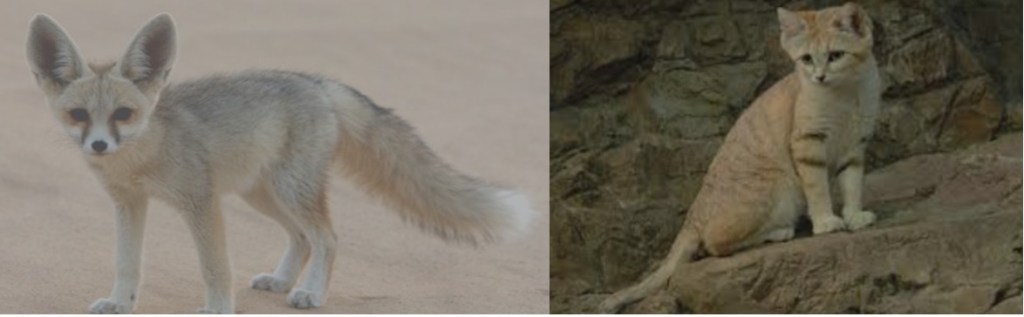
オジロスナギツネ(ルッペル狐)は、その銀灰色の毛皮が沙漠の獲物となる動物から身を隠します。大きな耳が熱の放散を助け、その毛に被われた足裏は、柔らかな砂に足が沈むのを防いでいます。沙漠の野生動物は、真水を飲む必要は無く、必要な水分は植物や補食した獲物から得ています。
沙猫は、砂丘猫とも呼ばれる小さな野生の猫です。水源から遠く離れた石の多い沙漠の砂地に穴を掘って生息します。頭が広く、目が大きく、鋭い聴覚使って獲物を認知するので耳は低く付いています。足の裏を覆う長い髪で砂漠の非常に高温と低温に耐えます。獲物は小さな齧歯動物の他にノウサギ、鳥、クモ、昆虫、爬虫類も捕食します。毒蛇も含め蛇を大胆に捕えます。アラビア半島では絶滅したと一時は考えられていました。
The Ruppell’s sand fox hides itself with its silver-gray hairs from its preys of the desert. The large ears help dissipate heat, and the hair-covered soles prevent the feet from sinking in the soft sand. Desert wildlife do not need to drink fresh water because the necessary water get from plants and preys.
The sand cat is a small wild cat, also known as the dune cat. It lives by digging holes in the sandy deserts. Those deserts are located far from the water source, and contain many stones. It has a wide head, large eyes, and low ears. Its ears have a sharp hearing ability to recognize its preys. The long hairs cover the feet soles to be able to withstand the extremely high and low temperatures of the desert. It preys on small rodents as well as hares, birds, spiders, insects and reptiles. It also catches boldly snakes, even including venomous snakes. It was once thought to be extinct on the Arabian Peninsula.
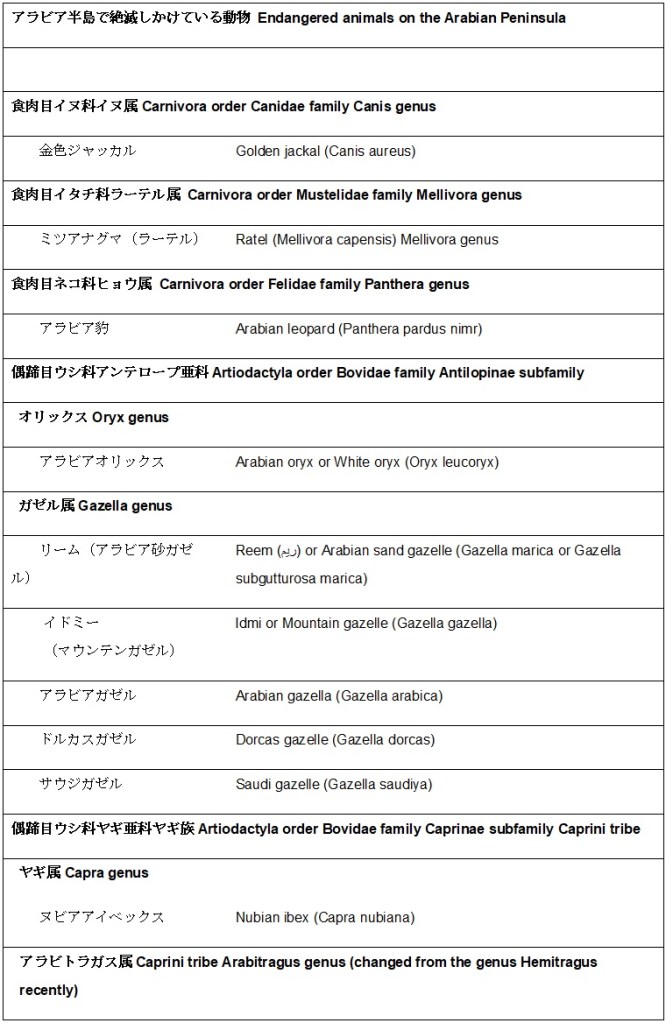
アラビア半島で絶滅しかけている動物
Endangered animals on the Arabian Peninsula
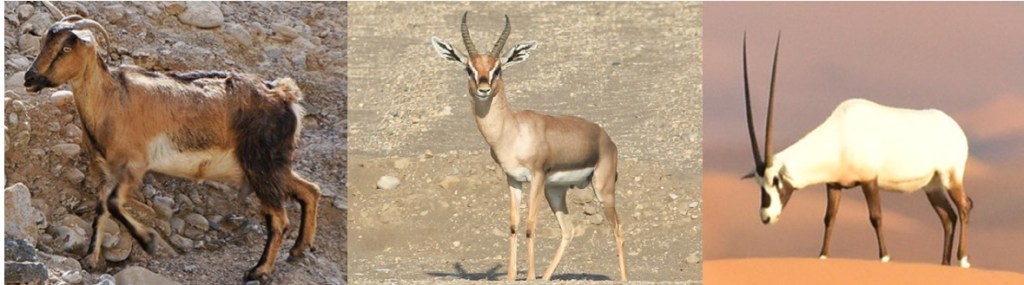
現在では多くの場所で狩猟、交通事故、開発等で、縞ハイエナ、金色ジャッカル、ミツアナグマとも呼ばれるイタチ科のラーテルは、絶滅してしまいました。アラビア豹は、アシール山脈とオマーン南部でやっと生き残っている状態です。アラビアオリックスが、沙漠を広く歩き回っていたのは、1970年代まででした。何でも手当たり次第に旺盛に食べてしまう野生化した山羊やロバに、オリックスやガゼル類等は、エサとなる草や樹木を奪われ、その数を増やす機会を奪われてしまっています。その上、狩猟によって殆ど狩りつくされてしまいました。それでも、ルブア・ハーリー沙漠の孤立した幾つかの限られた場所ではリームとも呼ばれるアラビア砂ガゼルが生き残っています。また、イドミーやアイベックスもサラワート山脈の南部やハジャル山脈で生き残っている可能性もあります。オリックスは保護されていた個体が野生に再導入され、数は限られているものの、多少はふえています。これは、オリックスやガゼル等は、乾燥した夏期の間は植物の葉や茎に付いた朝露から必要な水を摂取できことが、幸いしています。
Nowadays, the honey badger of the Mustelidae family, also known as the striped hyena, the golden jackal, and the honey badger, have become extinct in many places due to hunting, traffic accidents, and development. The Arabian leopard is somehow surviving in the Asir Mountains and southern Oman. Until the 1970s, the Arabian Oryx had been seen in the desert by chance, but afterwards it completely disappear in wild. The wild goat and donkey, which eat everything randomly, deprive the Oryx and Gazelle of the grass and trees that feed them, and have also taken out their opportunity to increase numbers. What’s more, the hunting has almost eradicated them off. Yet, in some isolated and limited areas of the Rub’ al Khali Desert, the Arabian sand gazelle, also known as the Reem, survives. And also, the Idmy and Ibex may remain alive in the southern Sarawat Mountains and Hajar Mountains. The Oryx has been reintroduced into the desert under the wild protection laws of the Gulf countries. It has increased somewhat but in limited numbers. Fortunately, the Oryx and Gazelle can get the water, they need, from the morning dew on the leaves and stems of the plants during the dry summer months. It is the reason why they can survive in the far remote isolated zone in the desert.
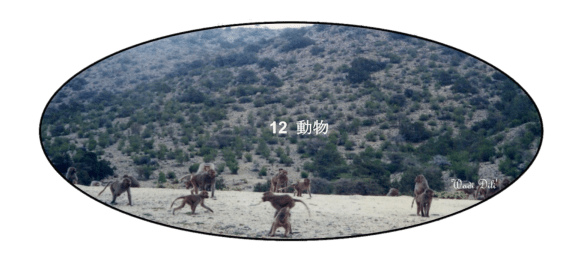
マントヒヒ
Hamadryas baboon
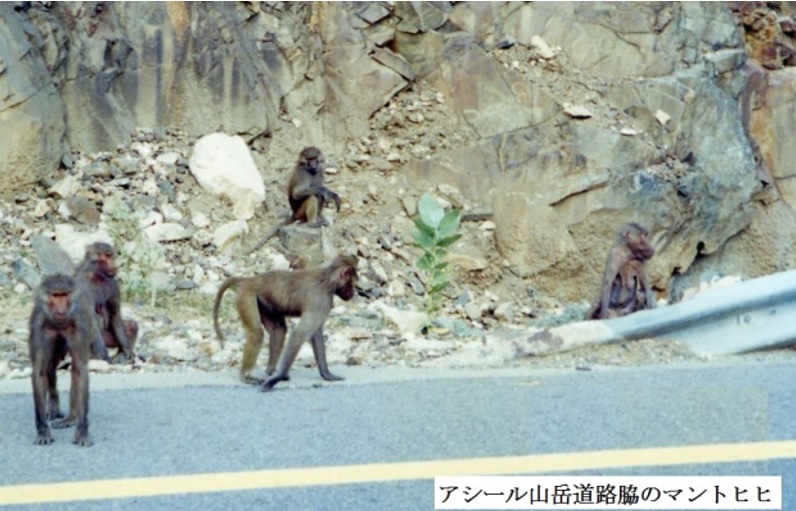
アラビア半島南西部のアシール山脈ではマントヒヒが群れを成して道路脇で餌をねだる程に増え、その生息域はメッカの南まで広がってきています。マントヒヒの増える原因は、「残飯処理の問題だった」と思います。どこの市役所でも収集した家庭ごみを沙漠に掘った穴に埋めますが、乾燥しているので残飯は腐敗せずに干物となるため、一昔前までは、マントヒヒの絶好の餌場に成っていました。カラスやトンビの仲間が多かったのも「同じ原因」だと思います。
The Hamadryas baboons have increased their numbers and formed many herds In the Asir Mountains of the southwestern peninsula. Their population gaining has made their prey grounds expanding upto the road side for begging foods to the drivers. Their habitat has also enlarged to the southern Mecca. The biggest reason, leaping their numbers, is “the problem of the leftover food disposal.” The household waste, collected at any municipality, is buried in a big hole, dug in the desert. Since the food disposal is dry, it does not spoil and becomes a kind of the dried food. Until one decade or two decades ago, it was a perfect feeding ground for the Hamadryas baboons. Because of the same reason, there were many crows and black kites in the desert.

齧歯目
Rodentia order
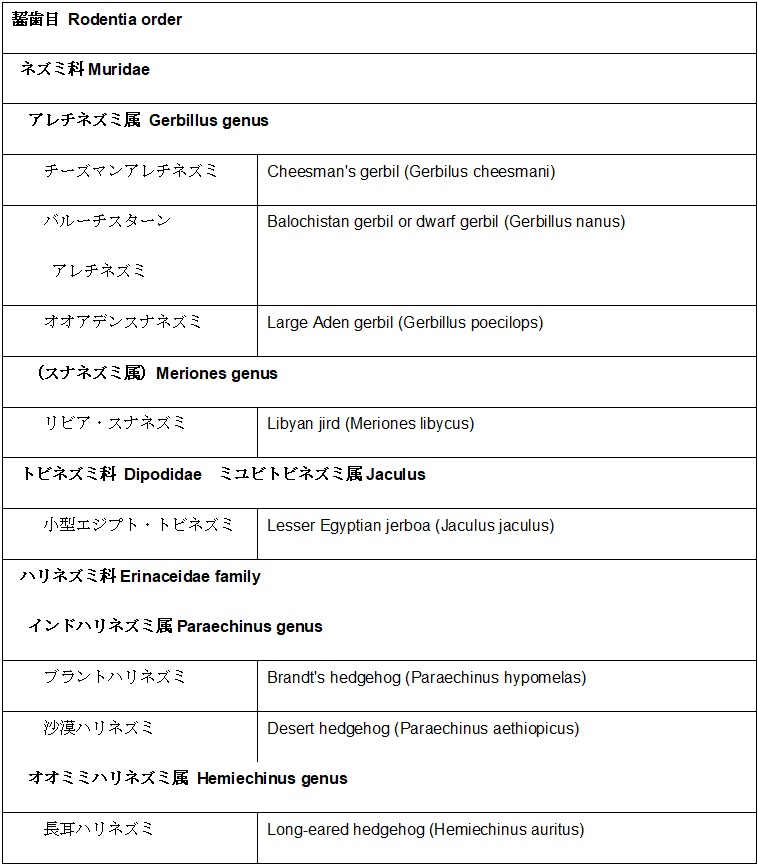
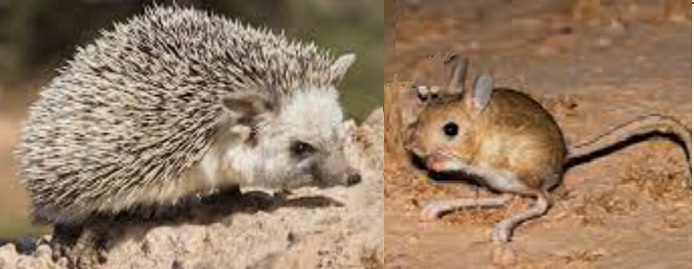
齧歯動物では小型エジプト・トビネズミ、チーズマン・アレチネズミ、バルーチスターン・アレチネズミ、ハリネズミ科ではブラントハリネズミ、沙漠ハリネズミ、長耳ハリネズミがおり、大型のリビア・スナネズミやオオアデンスナネズミが沙漠に生息しています。
In the rodent species, there are the Lesser Egyptian jerboa, the Cheesman’s gerbil, the Balochistan gerbil, the Brandt’s hedgehog, the Desert hedgehog, and the long-eared hedgehogs. And, the Libyan jird and the Libyan jird live also in the Desert.
コウモリ
Chiroptera (Bats)
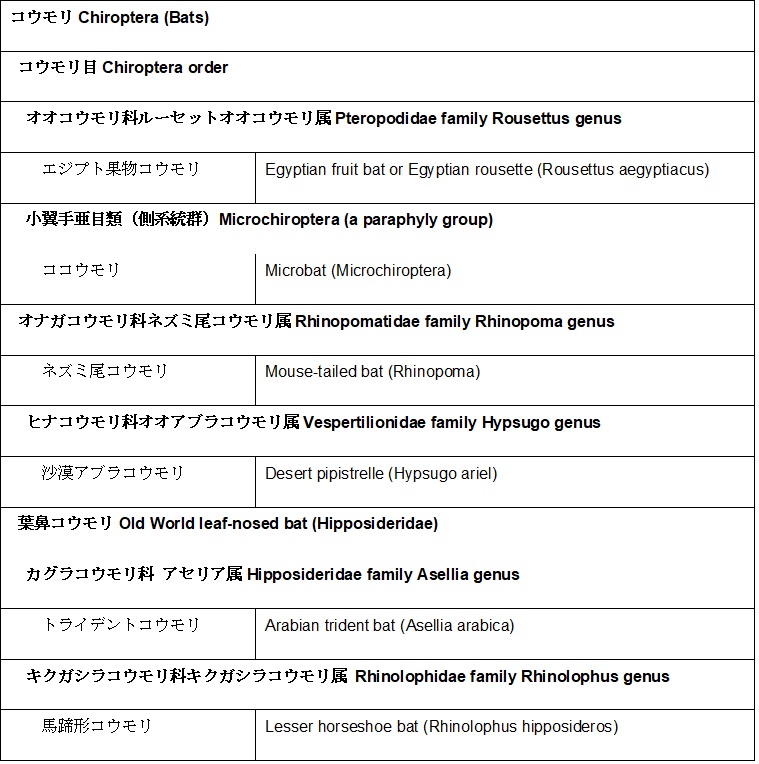
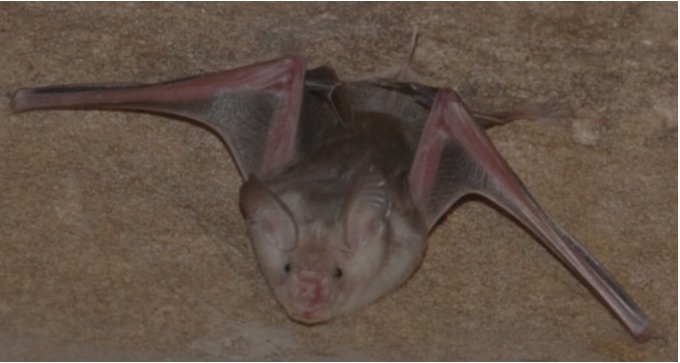
コウモリの類ではエジプト果物コウモリ、ココウモリ、ネズミ尾コウモリ、沙漠アブラコウモリおよび葉鼻コウモリの仲間のトライデントコウモリと馬蹄形コウモリ等が挙げられます。
The bat species include the Egyptian fruit bat, the Microbat, the Mouse-tailed bat, the Desert pipistrelle. among the Old-world leaf-nosed bats, the Arabian trident bat and the Lesser horseshoe bat also habitat in the Desert.
アラビア半島の代表的な渡り鳥
Typical migratory birds of the Arabian Peninsula
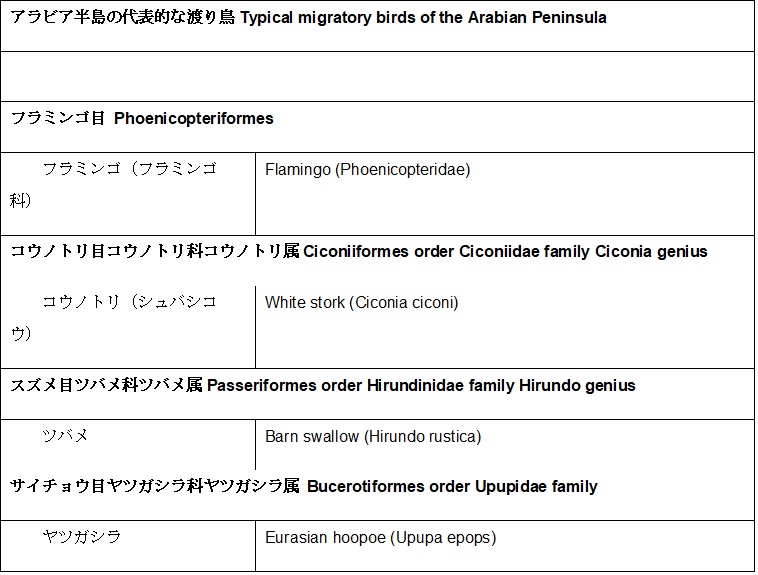
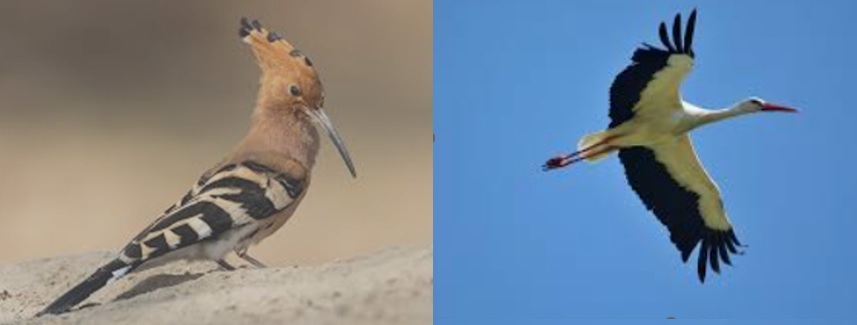
アラビア半島は、アフリカ大陸とユーラシア大陸を往復す渡り鳥の中継地です。主な渡りルートは2つあり、この半島は2つの渡りルートが交差する場所でもあります。代表的な渡り鳥としてはフラミンゴ、コウノトリ、ツバメ、ヤツガシラ等が挙げられます。
The Arabian Peninsula is the stopover for migratory birds to and from the continents of Africa and Eurasia. There are two main migration routes, and this peninsula is the intersection of these two migration routes. Typical migratory birds include the Flamingo, the White stork, the Barn swallow and the Eurasian hoopoe.
渉禽類の渡り鳥
Migratory wading birds
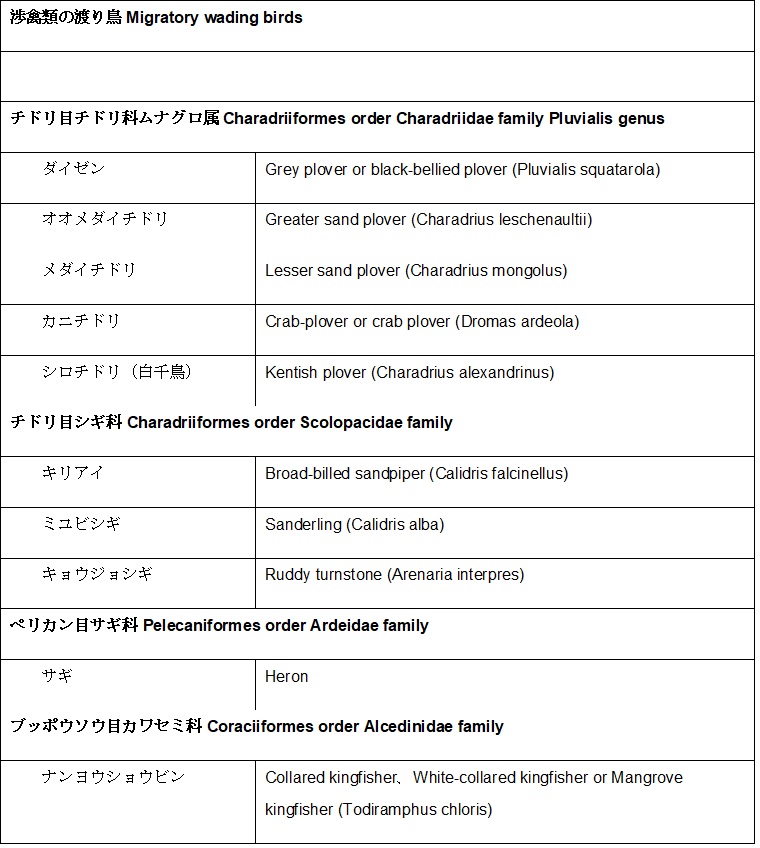
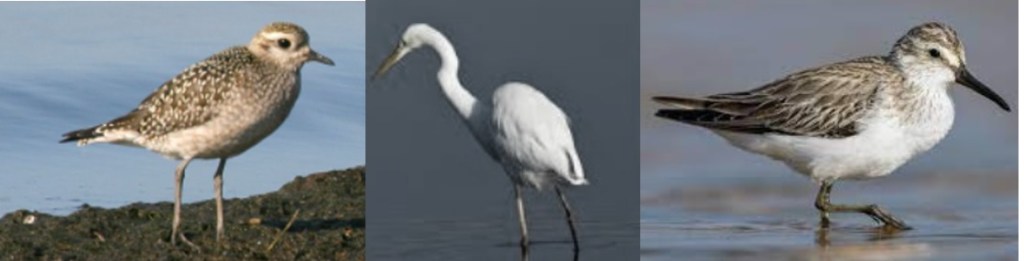
その1つはユーラシア大陸北部とサハラ沙漠以北の北アフリカの間の往復ルートがあります。ユーラシア大陸北部にはヒマラヤ山脈以北の東アジア、北アジア、中央アジアおよび中東北部やヨーロッパが含まれます。もう1つは中近東とインド亜大陸の間の往復ルートです。その為に、半島で見られる鳥類の種類と数は限りがありません。渡り鳥としては渉禽類だけでもダイゼン、オオメダイチドリ、メダイチドリ、カニチドリ、シロチドリ、キリアイ、ミユビシギ、キョウジョシギ、サギ、ナンヨウショウビン等が挙げられます。
One is the round-trip route between the northern Eurasia and the north of the Sahara Desert of the North Africa. The Northern Eurasia, which is the more northern regions than the Himalaya mountains, includes the East Asia, the North Asia, the Central Asia and the Central Northeast Asia and the Europe. The another is the round-trip route between the Middle East and the Indian subcontinent. Therefore, the types and numbers of birds found on the peninsula are a tremendous number. For examples, even only waders include the Grey plover, the Greater sand plover, the Lesser sand plover, the Crab plover, the Kentish plover, the Broad-billed sandpiper, the Sanderling, the Ruddy turnstone, the Heron and the Collared kingfisher.
沙漠に棲む鳥
Birds living in Desert
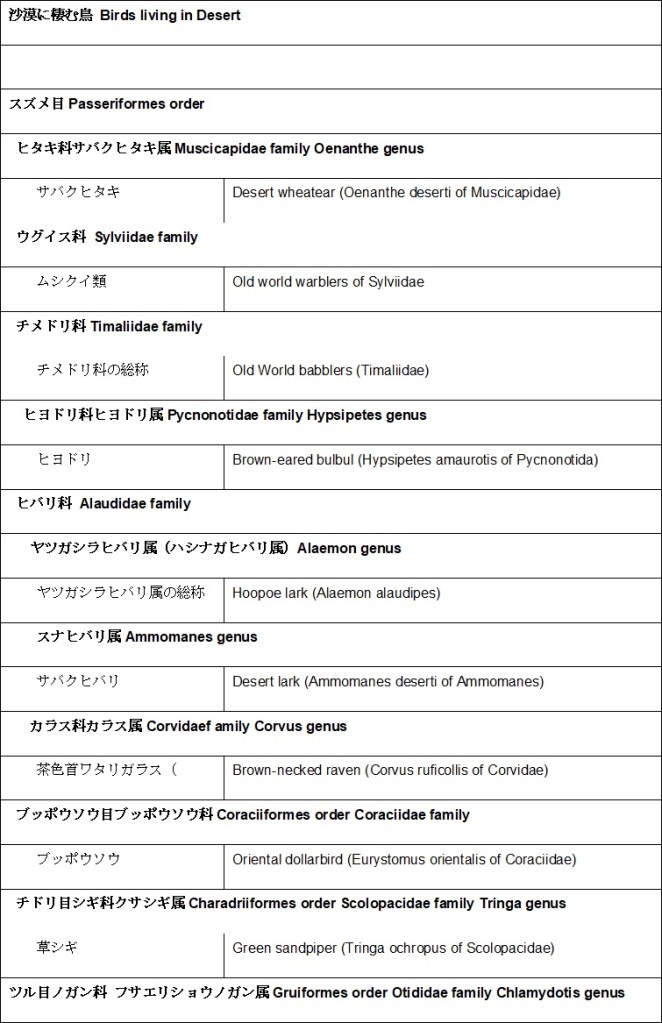
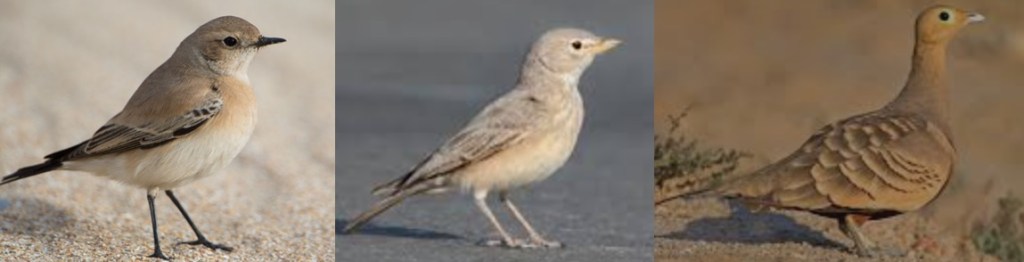
沙漠にはサバクヒタキ、ムシクイ、チメドリ、ブッポウソウ、ヒヨドリ、サバクヒバリ等のスズメ目の鳥達も繁殖しています。ルブア・ハーリー沙漠でも茶色首のワタリガラスやヤツガシラヒバリ、草シギ等がいます。半島南西部から半島南部には沙漠に良く適応したフサエリノガンも棲んでいますが、タカ狩りの獲物として好まれたことから、現在では絶滅危惧種となっています。ここでは、やはり絶滅危惧種のキジ科のスナシャコ、沙ライチョウとも呼ばれるサケイ等も見られます。
沙漠にいるどんな鳥でも植物に付いた露から水分を摂ります。また、朝露を吸ったばかりの甲虫を補食しても水を得ています。
The Passerine birds breed in the Desert. They include the Desert wheatear, the Old world warblers, the Old World babblers, the Oriental dollarbird, the Brown-eared bulbul, the Desert lark. Even in the Rub’ al Khali Desert, there are the Brown-necked raven, the Hoopoe lark, the Green sandpiper. The Houbara bustard, which is one of the most well adapted bird to the desert, also lives widely from the southwest to south parts of the peninsula, but it is now an endangered species. That is because it was favored as a prey for the hawk hunting. Here, there are also the endangered the Phasianidae family such as the Sand partridge and the Chestnut-bellied Sand grouse.
.
猛禽類
Birds of prey
猛禽類としては鷹が国鳥となるくらいに大切にされていますが、ほとんどが鷹狩用の飼育されています。それでもカタシロワシやコシジロイヌワシの様に野生種もいます。
As a bird of prey,
the hawks are so prized that the national bird is selected among them, and the most of them are bred only for the falconry. Still, there are wild species such as the Eastern imperial eagle and the Verreaux’s eagle.
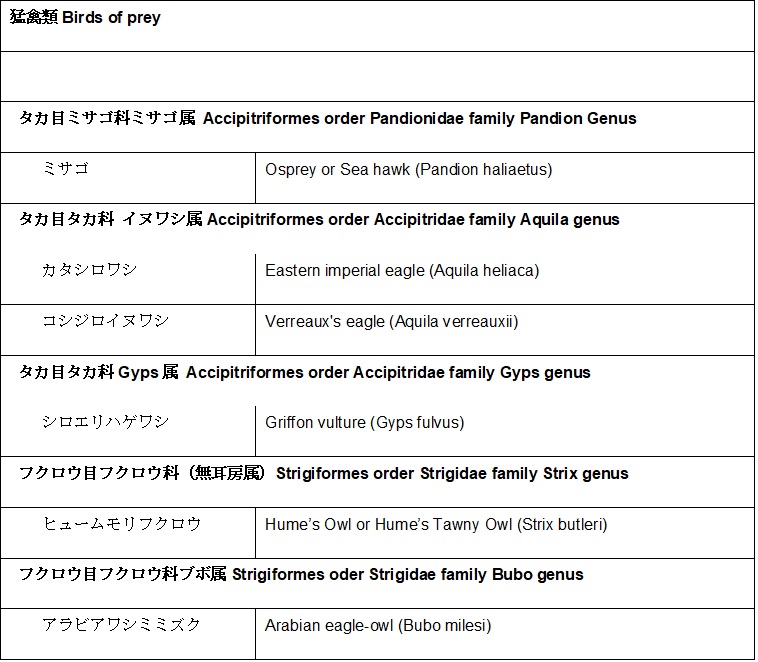
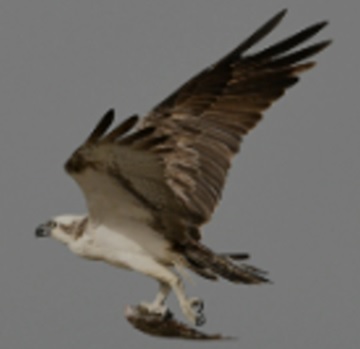
鷹の仲間でもミサゴは魚しか獲物にしないので、野生のままに置かれているようです。
Even among the hawks, the Osprey (the Sea hawk) only preys on fish, so it seems that they are left in wild.
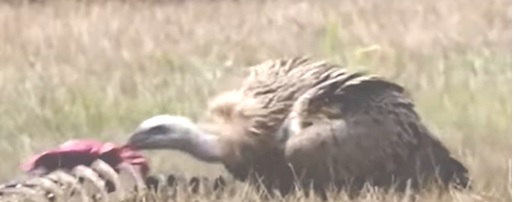
また、ハファル・バーティン(Hafar al Batin)からハーイル(Ha’il or Hayil)間の沙漠道では羊の死骸に群がっている数羽のシロエリハゲワシを何度か見かけました。
Several Griffon vultures, swarming on a dead sheep, were seen several times on the Desert road between Hafar al Batin and Hayil.
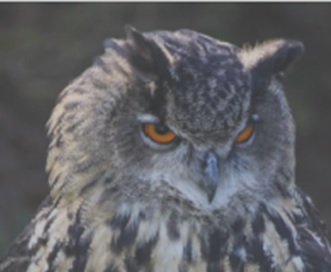
フクロウの仲間は希少種で、半島南部に生息するアラビアワシミミズクや1975年に発見され、トゥワイク山脈にのみ生息するヒュームモリフクロウが挙げられます。
The owl family is a rare species, including the Arabian Eagle Owl, which inhabits the southern part of the peninsula, and the Hume’s Tawny Owl, which was discovered in 1975 and inhabits only the Tuwaiq Mountains.
 Desert peninsula