12 Animals No.2


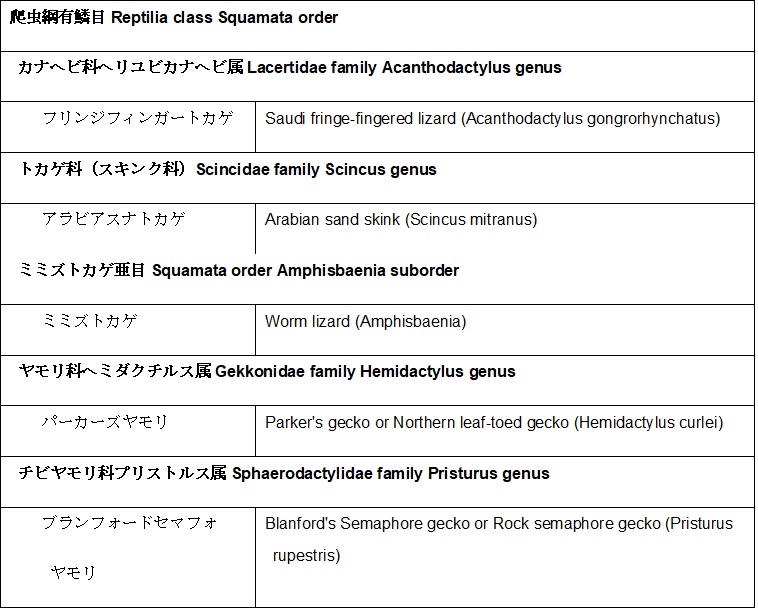
爬虫綱有鱗目
Reptilia class Squamata order
爬虫類は特にトカゲの数が多く、代表的なトカゲとしては、フリンジフィンガートカゲ、アラビアスナトカゲ、ミミズトカゲ等が生息しています。パーカーズヤモリやセマフォヤモリ等のヤモリの類も少なくありません。
The reptiles have a particularly large number of the lizards. The typical lizards include the Saudi fringe-fingered lizard, the Arabian sand skink, and the Worm lizard. There are also many types of the geckos such as the Parker’s gecko and the Blanford’s Semaphore gecko.

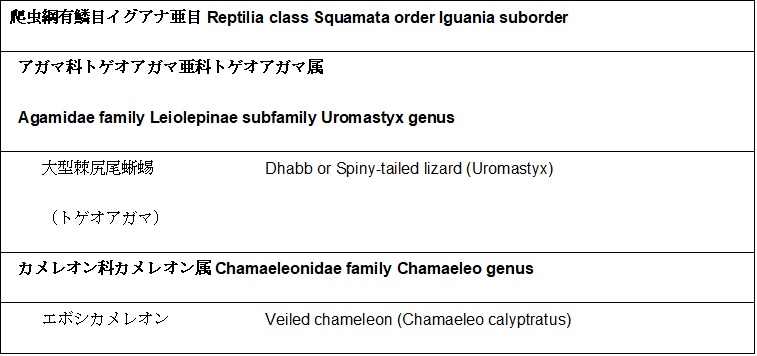
爬虫綱有鱗目イグアナ亜目
Reptilia class Squamata order Iguania suborder
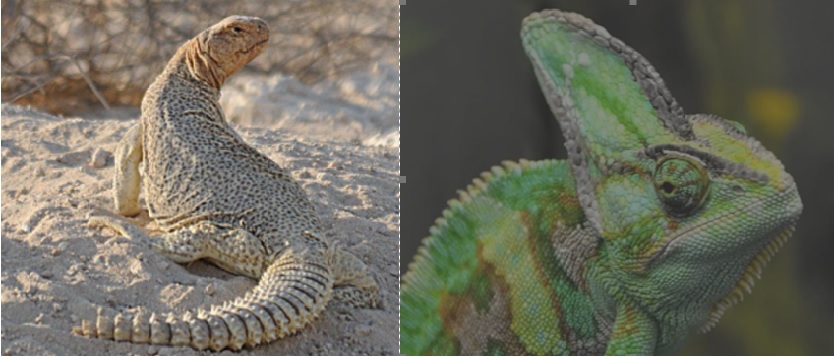
トカゲ類の代表はダッブと呼ばれる有鱗目アガマ科(キノボリトカゲ科)トゲオアガマ属大型棘尻尾蜥蜴です。また、エボシカメレオン等のカメレオン科も見られます。
The representative of the lizards is the large Spiny-tailed lizard
of the Uromastyx genus, which is called the Dhabb. The Veiled chameleon of the Chamaeleonidae family is also seen in the Desert.
ダッブは、50年位前には半島東北部の土漠の小高いところには尾まで入れると2メートル近いダブが陣取って沙漠を睥睨していました。しかし、狩猟の的にされたり、食用に狩られたりして今では50センチを超えるものは余り見られません。捕獲方法としては巣穴を水攻めにしたり、走って追いかけたりする方法があります。スーク(市場)でも大量に金網の籠に入れて売っていて体長40センチ程度の個体が一匹20リアル程度で売っていました。カエルの料理は洋の東西を問わずに食されています。カエルは見かけによらず、実際に美味いので、ダッブも食べられないことは無いのでしょう。
About 50 years ago, the big Dhabbs were glaring the Desert on almost each mound around Khafji region in the northeastern part of the peninsula, Those Dhabbs were close to 2 meters long including their tails. However, they have been reducing their numbers, because of hunting. Now days, an individual Dhabb with more than 50 centimeters long is quite rare. As the hunting methods, there are several methods. The natives catch them by attacking their burrows with filling water to make them out, chasing them by running and finally kick them by a foot, etc. In a Souqs (a market), a large number of them were put in wire mesh baskets and were sold for alimentation. Such individual Dhabbs with a body length of 40 cm were sold for 20 reals per animal. Frog dishes are eaten regardless of the east or west of the Eurasia. It is said that a frog is rather delicious to eat, regardless of their grotesque appearance. By analogy with that, it’s understandable for the locals to eat a Dhabb as a kind of meat.
爬虫綱有鱗目ヘビ亜目
Reptilia class Squamata order Serpentes suborder
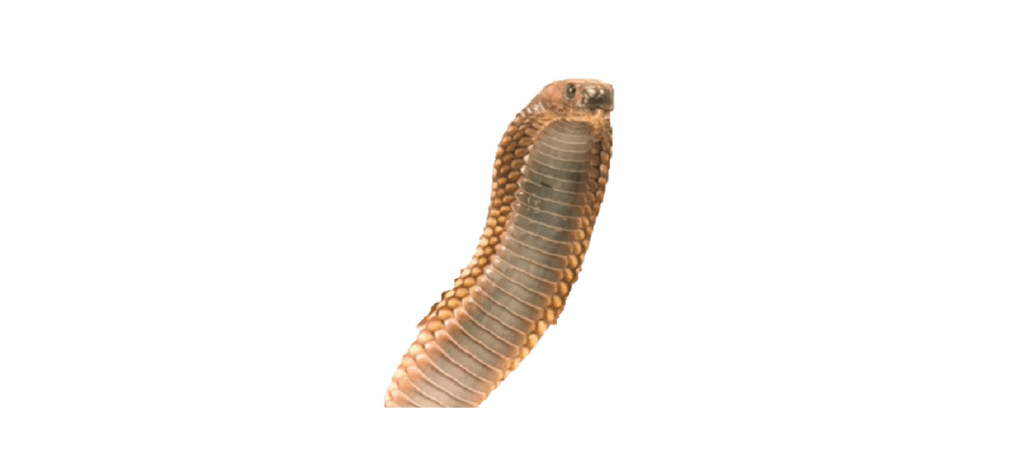
蛇類の種類は多くはありませんが、ニシキヘビ科スナボア(無毒)等を除けば、毒蛇が殆どです。毒蛇としては、クサリヘビ科のカーペット・バイパー、サイドワインダーやパフアダーに加えて、コブラ科のアラビア・コブラ等が挙げられます。
There are not many types of snakes, but most of them are the venomous snakes, except for the Arabian sand boa of the Boidae family (non-toxic). The venomous snakes include the Carpet viper, the Sidewinder and the Puff Adder of the Viperidae family, as well as the Arabian Cobra of the Elapidae family.

この半島におけるサイドワインダーとは角クサリヘビ等4種のツノクサリヘビの仲間の総称です。サイドワインダーは体を埋めて獲物を待ち伏せます。移動する際には、柔らかい砂の上を斜め前方に、その体全体を移動させます。このため、への字が限りなく並行に続く、独特の足跡を残します。
The Sidewinder on this peninsula is a general term for the four species of the Cerastes genus, such as the horned desert viper. Sidewinders bury their bodies and ambush their prey. When moving, they move the entire body diagonally forward on soft sand. This leaves a unique footprint with endless parallel letters. The Arabian Cobra is endemic to this peninsula.

また、アラビア・コブラ等は、この半島の固有種です。半島東北部のカフジには鉱業所付属の沙漠ゴルフ場がありました。バンカーショットの途中で小型の白いコブラに出くわしました。その時は船から流木に乗って流れ着いたのか位に思ってました。しかし、数年後に半島南西部観光都市アブハーの博物館の展示を見て、アラビア・コブラと云う固有種である事を知りました。
At Khafji in the northeastern Arabian Peninsula, there was a desert golf course attached to the Crude oil treating and storage facilities. The writer found a tiny white cobra in the middle of a bunker during the play. At that time, The writer was wondering if it got on a driftwood from an ocean cargo ship and arrived there. However, a few years later, the writer saw an exhibition at the museum in Abha, a tourist city, in the southwestern Arabian peninsula, and learned that it is an endemic species called the Arabian cobra.
両生綱無尾目ヒキガエル科
Amphibia class Anura order Bufonidae family
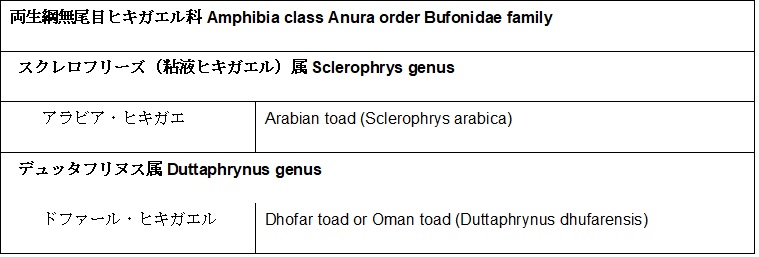
両生類としてアラビア・ヒキガエルやドファール・ヒキガエルが挙げられます。アラビア半島で発見された9種の両生類の内の2種で、この2種はいずれもアラビア半島の固有種です。
The Amphibians include the Arabian toad and the Dhofar toad. They are two of the nine amphibians had been found on the Arabian Peninsula, and the both are endemic to the Arabian Peninsula.
鰓脚綱背甲目カブトエビ科
Branchiopoda class Notostraca order Triopsidae family
沙漠お玉杓子海老等は、沙漠で生き残る為のライフサイクルを持つ生物の典型です。
The Triops (Tadpole shrimp) etc. are typical creatures with a life cycle to survive in the Desert.

繁殖に適した雨が降った時のみ、湧いてくる様に現れます。形としては馬蹄形カニ(兜ガニ)によく似ています。
It appears to spring up only when it rains suitable for breeding. The shape is very similar to the Horseshoe crab.

鯨偶蹄目クジラ亜目
Artiodactyla order Cetacea infraorder
海洋動物としては、クジラ、イルカ類やジュゴン等が生息しています。
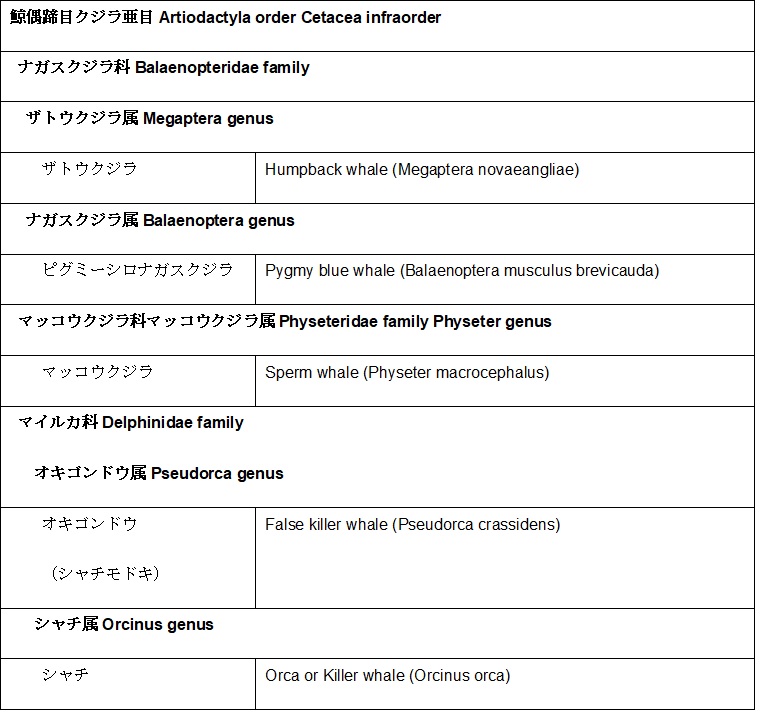
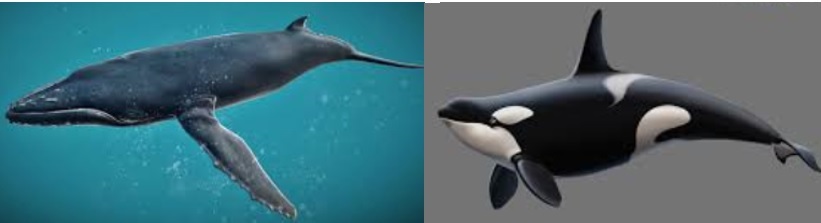
クジラ類としては、ザトウクジラ、ピグミーシロナガスクジラ、マッコウクジラ、オキゴンドウ(シャチモドキ)、シャチ等が挙げられます。
As marine animals, whales, dolphins and dugongs inhabit the coast al water of the Arabian Peninsula.
Examples of whales include the Humpback whale, the pygmy blue whale, the Sperm whale, the False killer whales (orca), and the Orca.
鯨偶蹄目ハクジラ亜目マイルカ科
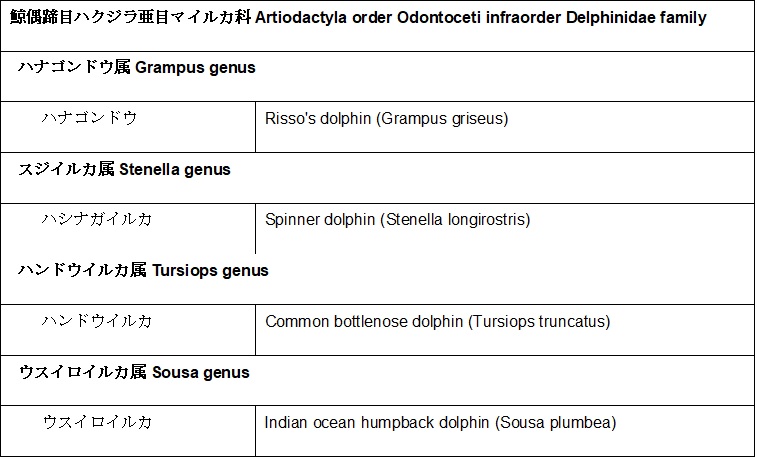
Artiodactyla order Odontoceti infraorder Delphinidae family
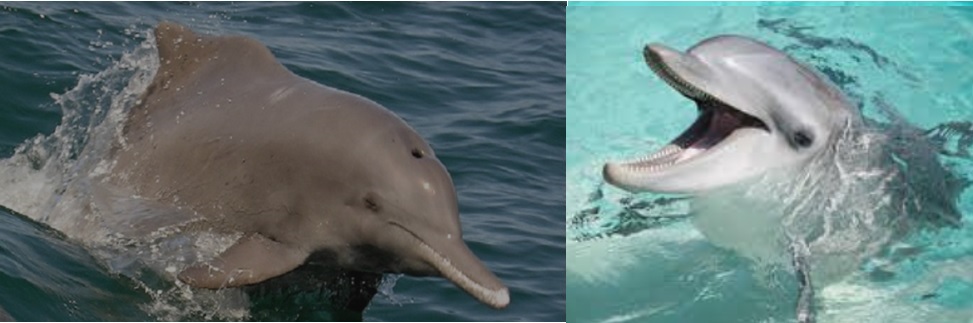
イルカ類ではハナゴンドウ、ハシナガイルカ、ハンドウイルカ、ウスイロイルカ等が棲んでます。クウェイトの海岸で子供を泳がせていると手の届くところまで寄ってきました。
Among the dolphins, the Risso’s dolphin, the Spinner dolphin, the Common bottlenose dolphin, the Indian Ocean humpback dolphin, etc. are observed in the sea and gulfs around the Arabian Peninsula. Some of them had used to be visiting in the water area, where my children were sea-bathing with me, on the coast of Kuwait.
哺乳綱ジュゴン(海牛)目ジュゴン科
Mammalia class Sirenia order Dugongidae family
ジュゴンはカタール半島北部やバハレイン諸島周囲を含むラアス・タヌーラとアブダビの間で生息しています。個体数はおよそ7,000頭と推定されています。ジュゴンはアラビア湾のみならず、紅海にも生息しています。どちらの海域でも、絶滅の危機にさらされ、個体数が減ってきています。
The dugong inhabits in the sea-area between Ras Tanura and Abu Dhabi city. It includes the coast of the northern Qatar Peninsula and Bahrain Islands.Their population is estimated to be around 7,000. The dugongs live not only in the Arabian Gulf but also Red Sea. Both of them are endangered and declining in their population.


アラビア湾の魚
Fishes of the Arabian Gulf

海の魚介類 (Fish and shellfish)の種類は余りに多く、ここでは割愛しますのでhttp://saudinomad.karuizawa.ne.jp/gulffishes.htmlをご参照ください。
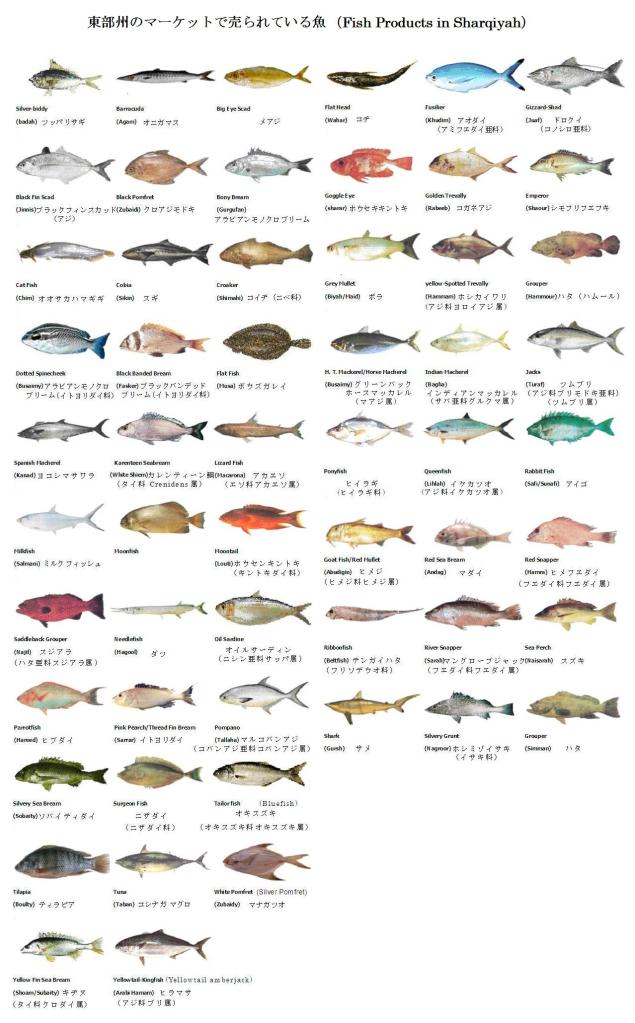
下の一覧図はその一部で、「アラビア湾のサンゴ礁に棲む魚介類」です。
A lot of types of the fish and shellfish are observed in the sea and gulfs surrounding this Peninsula. A part of them is introduced in another homepage. Please refer to http://saudinomad.karuizawa.ne.jp/gulffishes.html.
The list below shows some of the “The fishes, shells etc. living on coral reefs in the Arabian Gulf”.

 Desert peninsula