
Civil strife within the Islamic Empire (Fitna)
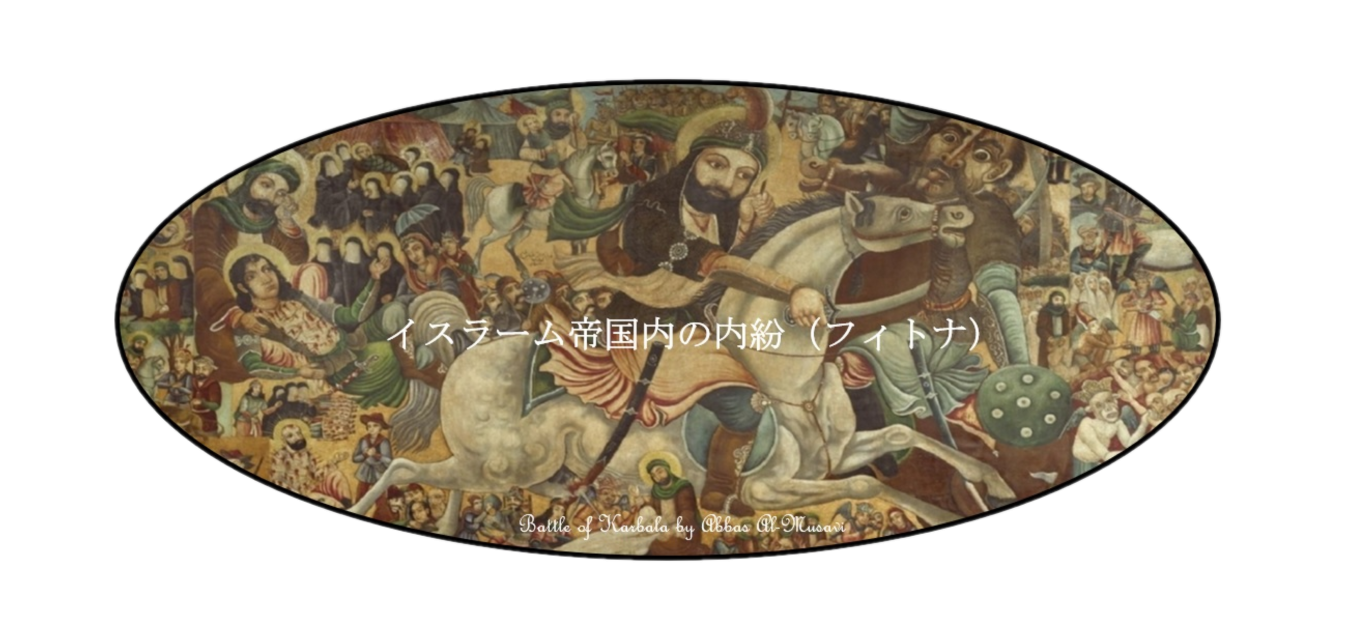
https://en.wikipedia.org/wiki/Battle_of_Karbala



イスラーム帝国は広大な領土を持ち、預言者ムハンマドが622年にマディーナへ移住してウンマ(Umma Islamiya) (أمة)を発布してイスラーム帝国を樹立して以来、第一次大戦(1914~1918)でオスマントルコ(Ottoman Empire) (c.1299~1922)が敗戦するまで、1,300年に渡って続き、盤石な帝国の様に思われます。しかし、内情は、内紛や内乱が頻繁に起こっていました。この様な内紛や内乱は、試練、苦難、または苦悩を意味するフィトナ(fitna) (فتن) またはフィトナー(fitnah) (فتنة)と呼ばれています。ここでは、時に政権を打倒・後退させた程の規模を持った、紀元 7 世紀から 9 世紀までのイスラーム帝国(Caliphate) (خِلافة)内の 4 つの内乱(フィトナ)を紹介するに止めます。
Islamic Empire had been keeping a vast territory. Since the Prophet Muhammad moved to Madinah in 622 and established Islamic Empire by promulgating the Umma Islamiyah (أمة), Islamic Empire has been one of the first and foremost strong empire in the world until the World War I. In the World War I (1914~1918) the last Islamic Empire (Ottoman Empire) (c.1299~1922) was defeated and then dissolved consequently.
As this continuation of nearly 1,300 years, Islamic Empire looks like a solid and steady political entity, however there had incessantly been internal infightings and civil wars. Such infightings and civil strives are called as fitna (فتن) or fitnah (فتنة) that means trial, tribulation, or affliction. As the typical fitnas, 4 Muslim civil wars (fitnas) are introduced here. They had the scale of either overthrowing a Caliphate or retreating a regime, during the 7th to 9th century AD.

Major Battlefields of the Muslim Civil War (Fitna)
ムスリム内戦(Fitna)の主な戦場
| 第一次ムスリム内戦 (First Fitna) | 正統カリフ政権(Rashidun Caliphate)の継承を巡って、アリー(Ali)対ムアーウィヤ(Mu’awiya)とアーイシャ(Aisha)の間の内乱(656~661) |
| 第二次ムスリム内戦 (Second Fitna) | ウマイヤ朝(Umayyads)とイブン・ズバイル(Abd Allah ibn al-Zubayr)の間の内乱 (680/683~685/692) |
| 第三次ムスリム内戦(Third Fitna) | ウマイヤ朝のムスリム内戦(Umayyad civil wars ) を含むアッバース朝革命(Abbasid Revolution) (744/750~752) |
| 第四次ムスリム内戦 (Fourth Fitna) | カリフ・アミーン(Caliph Amin)と皇太子マアムーン(Crown Prince Ma’mun)の間のムスリム内戦およびその他の地域紛争を含む(811/813~827) |
Major Battlefields of the Muslim Civil War (Fitna)
目次(Index)
第一次ムスリム内戦
First Fitna
第一次ムスリム内戦(فتنة مقتل عثمان)(ウスマーンの殺害を巡っての争い・扇動)は、イスラーム共同体(Umma Islamiya) (أمة)における最初のムスリム内戦でした。それは、正統カリフ制の打倒とウマイヤ朝(Umayyad Caliphate)の設立につながりました。ムスリム内戦には、第4正統カリフのと反政府勢力グループの間の3つの主要な戦いが含まれていました。
The First Muslim Civil War (فتنة مقتل عثمان) (conflict and incitement over the murder of Uthman) was fought within the internal of the Umma Islamiyah (أمة). It was the First Muslim Civil War in the Umma Islamiyah. It led to the overthrow of Rashidun Caliphate and the establishment of Umayyad Caliphate. The Muslim Civil War included three major battles between the Fourth Rashidun Caliph and rebel groups.
このムスリム内戦の原因は、第二代正統カリフのウマル(Umar ibn al-Khattab)の暗殺にまでさかのぼることができます。彼が傷で死ぬ前に、ウマルはウスマーン(Uthman ibn Affan)を次の第三代正統カリフとして選出した6人のメンバーからなる評議会を結成しました。ウスマーンのカリフ時代の最後の数年間、彼は縁故主義で告発され、656年に反政府勢力によって殺されました。ウスマーンの暗殺後、アリー(Ali ibn Abi Talib)は第四代正統カリフに選出されました。
The causes of this Muslim civil war can be traced back to the assassination of Umar ibn al-Khattab, the Second Rashidun Caliph. Before he died of his wounds, Umar formed a six-member council to elect the next Third Rashidun Caliph. This council eventually chose Uthman ibn Affan as the Third Caliph. During the last years of Uthman’s Caliphate, he was accused of nepotism and killed by rebels in 656. After Uthman’s assassination, Ali ibn Abi Talib was elected the Fourth Rashidun Caliph.
アイシャ(Ayesha)、タルハ(Talha ibn Ubaydullah)、イブン・ズバイル(‘Abd Allah ibn al-Zubayr)は、アリーに反抗して彼を追放しようとしました。両者は656年12月にラクダの戦い(Battle of Camel or Battle of Basra)で争い、そこでアリーが勝利を収めました。
Ayesha, Talha ibn Ubaydullah and Ibn Zubayr rebelled against Ali and tried to depose him. Both parties fought in December 656 at the Battle of Camel (Battle of Basra). Ali was victorious in this Battle.
その後、現職のシリア総督ムアーウィヤ(Mu’awiya ibn Abu Sufyan ibn Harb ibn Umayyah)は、ウスマーンの死に復讐するために、表面上はアリーに宣戦布告しました。両者は 657年7月にスィッフィーンの戦い(Battle of Siffin)で対決しましたが、膠着状態と仲裁に終わりました。
Later, the incumbent governor of Syria, Mu’awiya ibn Abu Sufyan ibn Harb ibn Umayyah, ostensibly declared war on Ali to avenge Uthman’s death. The two parties faced off at the Battle of Siffin in July 657. It ended in stalemate and arbitration.
この仲裁は、アリー、ムアーウィヤ、およびその信者を異教徒と宣言したハワーリジュ派(Kharijites)を憤慨させました。ハワーリジュ派の民間人に対する暴力に続いたため、アリーの軍隊は、ナフラワーンの戦い(Battle of Nahrawan)で彼らを粉砕しました。その後まもなく、ムアーウィヤは、アムル・イブン・アース(Amr ibn al-‘As)の助けを借りてエジプトの支配権も掌握しました。
This arbitration was outraged by the Kharijites, who declared infidels to Ali, Mu’awiya, and their followers. Following the Kharijites’ violence against civilians, Ali’s army crushed them at the Battle of Nahrawan (658). Shortly thereafter, Mu’awiya also seized control of Egypt with the help of Amr ibn al-‘As.
661年、アリーはハワーリジュ派アブドッラフマーン(Abd al-Rahman ibn Muljam)によって暗殺されました。アリーの死後、彼の長男で相続人ハサン(Hasan ibn Ali)は、カリフに選出されました。しかし、すぐにムアーウィヤに攻撃されました。困惑したハサンは、平和条約を締結し、ムアーウィヤの支配を認め、ムアーウィヤは、ウマイヤ朝(Umayyad Caliphate) (661~750)を設立し、その最初のカリフとしてイスラーム帝国(イスラーム共同体)を統治しました。
In 661, Ali was assassinated by Abd al-Rahman ibn Muljam. After Ali’s death, his eldest son and heir Hasan ibn Ali was elected Caliph, however, he was soon attacked by Mu’awiya. Embarrassed, Hasan signed a peace treaty and recognized Mu’awiya’s rule, and Mu’awiya, who subsequently founded the Umayyad Caliphate (661~750) and ruled as its First Caliph.
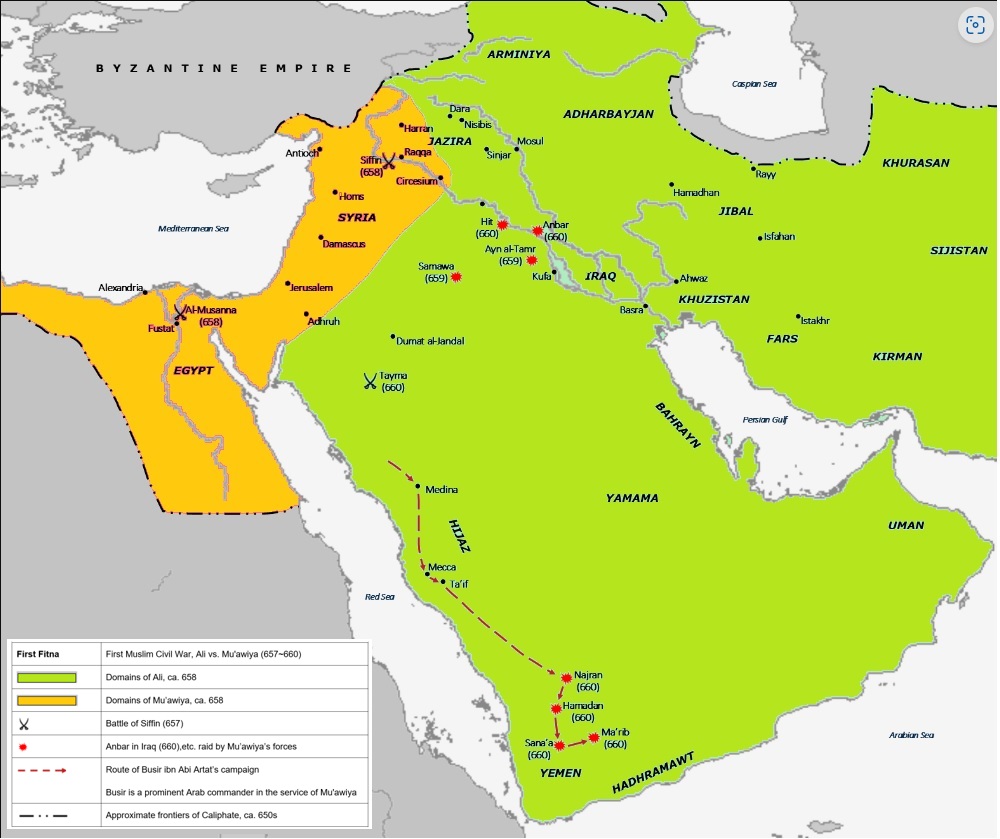
Original: en.wikipedia.org/wiki/First_Fitna
第二次ムスリム内戦
Second Fitna
第二次ムスリム内戦(الفتنة الثانية)は、ウマイヤ朝(Umayyad Caliphate)初期のイスラム共同体における一般的な政治的および軍事的混乱とムスリム内戦の時期でした。それは680年に最初のウマイヤ朝(Umayyad Caliphate)のカリフ・ムアーウィヤ1世が死亡した後、約12年間続きました。戦争には、ウマイヤ朝(Umayyad Caliphate)への2つの挑戦の抑圧が含まれ、最初は、フサイン・イブン・アリーと、イラクでの復讐のために集まったイブン・スラドとムフタールを含むフサインの支持者、そして2番目はイブン・ズバイルによるものでした。
The Second Muslim Civil War (الفتنة الثانية) was a period of general political and military turmoil and Muslim Civil War in the early Umayyad Islamic Community. It lasted about 12 years after the death of the First Umayyad Caliph Mu’awiya I in 680. The war involved the suppression of two challenges to Umayyad Caliphate. The first challenge was done by Husayn ibn Ali and Husayn’s supporters, including Ibn Surad and Mukhtar, who gathered for revenge in Iraq. The second challenge was done by Ibn Zubayr.
フサイン・イブン・アリー(Husayn ibn Ali) (626~680) (الحسين بن علي):イスラーム教の預言者ムハンマドの孫であり、アリー・イブン・アビー・ターリブ(Ali ibn Abi Talib)とムハンマドの娘ファティマ(Fatima)の息子であり、ハサン・イブン・アリー(Hasan ibn Ali)の弟でもあります。「兄のハサンに次ぎ、息子のアリー・イブン・フセイン(Ali ibn Husayn)の前に、シーア派イスラーム教の3番目のイマームである」と主張されています。
Husayn ibn Ali (626~680) (الحسين بن علي): He was a grandson of the Islamic Prophet Muhammad, a son between Ali ibn Abi Talib and Muhammad’s daughter Fatima, and a younger brother of Hasan ibn Ali. He was claimed to be the Third Imam of Shia Islam after his brother, Hasan, and before his son, Ali ibn Husayn.
イブン・スラド:スレイマン・イブン・スラド(Sulayman ibn Surad) (d.685) (سليمان بن صرد)は、クーファ(Kufa)出身の親アリード指導者(a pro-Alid leader)であり、第二次ムスリム内戦中に、イスラーム教の預言者ムハンマドの孫であるフサイン・イブン・アリーの死を復讐するためにカルバラの戦い(Battle of Karbala)の後にクーファのシーア派(Kufan Shia)が蜂起したタウワビン運動(Tawwabin movement)を主導しました。
Ibn Surad: His full name is Sulayman ibn Surad (d.685) (سليمان بن صرد). He was a pro-Alid leader from Kufa. During the Second Muslim Civil War, he led Tawwabin movement after the Battle of Karbala.
タウワビン運動: イスラーム教の預言者ムハンマドの孫であるフサイン・イブン・アリー(Husayn ibn Ali)の死を報復するためのクーファの シーア派の蜂起です。
Tawwabin Movement: It is the uprising for Kufan Shia to avenge the death of Husayn ibn Ali, a grandson of the Islamic prophet Muhammad.
アリード(Alids):イスラームの預言者ムハンマドの従兄弟であり、義理の息子であり、第四代正統カリフ(656–661)であったイマーム・アリー・イブン・アビー・ターリブ(Ali ibn Abi Talib)の子孫であると主張する人々です。
Alids: Alids was those who claimed to be a descendant of Imam Ali ibn Abi Talib, who was a cousin, son-in-law of the Islamic prophet Muhammad, and Fourth Rashidun Caliph (656–661).
ムフタールの乱:ムフタール・アル・タカフィ(Mukhtar al-Thaqafi) (622~687) (المختار الثقفي)は、クー ファ(Kufa)を拠点とする親アリード派(pro-Alid)の革命家であり、685年にウマイヤ朝に対する反乱を主導し、第二次ムスリム内戦の間に18か月に渡りイラクの大部分を支配しました。
Mukhtar Rebellion: Mukhtar al-Thaqafi (622-687) (المختار الثقفي) was a Kufa-based pro-Alid revolutionary. He led a rebellion against Umayyads Caliphate in 685 and ruled most of Iraq for 18 months during the Second Muslim Civil War.
イブン・ズバイル(Ibn al-Zubay):アブド・アッラー・イブン・アル・ズバイル(Abd Allah ibn al-Zubayr) (624~692) (عبد الله بن الزبير)は、683年からその死までウマイヤ朝に匹敵するメッカに拠点を置くカリフ制の指導者でした。イブン・ズバイルは、アル・ズバイル・イブン・アル・アウワム(al-Zubayr ibn al-Awwam)と初代正統カリフのアブー・バクルの娘アスマ・ビント・アビ・バクル(Asma bint Abi Bakr)の息子でした。イブン・ズバイルは、初期のイスラーム教徒コミュニティの主要な部族であるクライシュ族(Quraysh)に属し、イスラーム教の最も初期の改宗者であるムハージルーン(Muhajirun)に生まれた最初の子供でした。若い頃、シリアとエジプトで父親と一緒に初期のイスラームの征服(Muslim conquests)に参加し、後にそれぞれ647年と650年に北アフリカとイラン北部のイスラームの征服に役割を果たしました。第一次ムスリム内戦中、彼は叔母のアーイシャ(Aisha)の側で第4代正統カリフ(r.656–661)のアリー(Ali ibn Abi Talib)と戦いました。最初のウマイヤ朝(Umayyad Caliphate)のカリフ(1st Caliph) (661~680)ムアーウィヤ1世(Mu’awiya I)のその後の治世中におけるイブン・ズバイルについてはほとんど聞かれていません。しかしながら、イブン・ズバイルは、ムアーウィヤ1世が息子のヤズィード(Yazid ibn Mu’awiya)を後継者として指名することに反対したことが知られていました。イブン・ズバイルは、ヒジャーズ(Hijaz)の主要なイスラーム教徒グループであるクライシュ族とアンサール族(Al Ansar)の多くとともに、カリフ制がウマイヤ朝の世襲可能な機関になることに反対しました。
Ibn al-Zubayr: Abd Allah ibn al-Zubayr (624~692) (عبد الله بن الزبير) was the leader of the Caliphate based in Mecca. This was the comparable Caliphate to Umayyad as the hostile rival, from 683 until his death.
Ibn Zubayr was a son between al-Zubayr ibn al-Awwam and Asma bint Abi Bakr, a daughter of the first orthodox Caliph Abu Bakr. Ibn Zubayr belonged to Quraysh, the main tribe of the early Muslim community, and was the first child born to Muhajirun, one of the earliest converts to Islam. As a young man, he participated in the early Muslim Conquests with his father in Syria and Egypt, and later played a key role in the Islamic Conquests of the North Africa and Northern Iran in 647 and 650, respectively. During the First Muslim Civil War, he fought on the side of his aunt Aisha against Ali ibn Abi Talib, the Fourth Orthodox Caliph (r.656–661).
Little had been heard of Ibn Zubair during the subsequent reign of Mu’awiya I, the 1st Caliph of Umayyad Caliphate (661-680). However, Ibn Zubair was known to object to Mu’awiya naming his son Yazid ibn Mu’awiya as his successor.
Ibn Zubayr, along with many of the major Hijaz Muslim groups, Quraysh and Al Ansar, opposed the Caliph becoming a hereditary institution of Umayyad Dynasty.
第二次ムスリム内戦の原因は、最初のフィトナ(First Fitna)(第一次ムスリム内戦)にまでさかのぼります。第三代正統カリフ・ウスマーン(Uthman ibn Affan)の暗殺後、イスラーム共同体(イスラーム帝国)は主導権の問題をめぐって最初のモスリム内戦を経験しました。主導者の主な候補者はアリーとムアーウィヤでした。661年にアリーが暗殺され、同じ年に後継者であるハサンが退位した後、ムアーウィヤはイスラーム・カリフの唯一の支配者になりました。
The roots of the Second Muslim Civil War went back to the First Fitna (First Muslim Civil War). After the assassination of the Third Orthodox Caliph Uthman ibn Affan, Umma Islamiya (Islamic Empire) experienced its First Muslim Civil War over issues of its leadership. The main contenders were Ali and Mu’awiya. After the assassination of Ali in 661 and the abdication of his successor Hassan in the same year, Mu’awiya became the sole ruler of the Islamic Caliphate.
ムアーウィヤが息子のヤズィード(Yazid ibn Mu’awiya)を後継者として指名するという前例のない動きは、反対を引き起こし、ムアーウィヤの死後緊張が高まりました。フサイン・イブン・アリーは、親クーファ同盟からウマイヤ朝(Umayyad Caliphate)を倒すように招待されましたが、680年10月のカルバラの戦い(Battle of Karbala)でクーファに向かう途中で彼の小さな部隊と一緒に殺されました。ヤズィードの軍隊は683年8月にメディナで反政府勢力を襲撃し、その後イブン・ズバイルがヤズィードに反対して地位を確立したメッカを包囲しました。ヤズィードが11月に亡くなった後、包囲は放棄され、ウマイヤ朝(Umayyad Caliphate)の権威はシリアの特定の地域を除いてカリフ制全体で崩壊しました。ほとんどの州はイブン・ズバイルをカリフとして認めました。
Mu’awiya’s unprecedented move to nominate his son Yazid (Yazid ibn Mu’awiya) as his successor provoked opposition, and tensions rose after Mu’awiya’s death. Husayn ibn Ali was invited by a pro-Kufa alliance to overthrow the Umayyad Caliphate, but was killed with his small company en route to Kufa during the Battle of Karbala in October 680. Yazid’s army raided the rebels in Medina in August 683 and then besieged Mecca, where Ibn Zubayr had established himself in opposition to Yazid. After Yazid died in November, the siege was abandoned and the authority of the Umayyad Caliphate collapsed throughout the Caliphate except in certain parts of Syria. Most states recognized Ibn Zubair as their Caliph.
イブン・スラド(Sulayman ibn Surad)の悔い改め運動(Penitents movement)に始まり、フサイン(Husayn ibn Ali)の死に対する復讐を要求する一連の親アリード運動(pro-Alid movements)は、クーファで出現しましたが、685年1月のアイン・ワルダの戦い(Battle of Ayn al-Warda)でウマイヤ朝(Umayyad Caliphate)によって鎮圧されました。その後、クーファはムフタール(Mukhtar al-Thaqafi)に引き継がれました。彼の軍隊は 686年8月のハジールの戦い(Battle of Khazir)で大規模なウマイヤ朝軍を敗走させましたが、ムフタールと彼の支持者は一連の戦いの後、687年 4月にズバイル朝(Zubayrids)によって殺害されました。アブドゥルマリク(Abd al-Malik)の指導の下、ウマイヤ朝(Umayyad Caliphate)はイラクのマスキンの戦い(Battle of Maskin)でズバイル朝(Zubayrids)を打ち負かし、692年のメッカ包囲戦(Siege of Mecca)でイブン・ズバイル(Ibn al-Zubayr)を殺害した後、カリフ制の支配を再主張しました。
A series of pro-Alid movements emerged in Kufa, beginning with the Penitents movement of Sulayman ibn Surad and demanding revenge for the death of Husayn ibn Ali was put down by Umayyads in the Battle of Ayn al-Warda in January 685. Kufa was then taken over by Mukhtar al-Thaqafi. Although his army routed a large Umayyad Army in the Battle of Khazir in August 686, Mukhtar and his followers were defeated and murdered by Zubayrids in April 687 after a series of battles. Under the leadership of Abd al-Malik, Umayyads defeated Zubayrids in the Battle of Maskin in Iraq and defeated and killed Ibn al-Zubayr in the Siege of Mecca in 692. Then, Umayyads reasserted sole and full control of Caliphate.
ハジール川(الخازر: イラク北部の川で、大ザブ川の支流であり、その右岸に合流しています。
The Khazir River (الخازر): It is a river of the northern Iraq, a tributary of the Great Zab river, joining its right bank.
アブドゥルマリク(Abd al-Malik)の正式名は、アブド・アルマリク・イブン・マルワーン(Abd al-Malik ibn Marwan) (644/647~705) (عبد الملك بن مروان)です。アブドゥルマリクは、第五代ウマイヤ朝カリフであり、685年4月からその死まで統治しました。生まれながらのイスラーム教徒の第 1 世代のメンバーであるアブドゥルマリクのメディナでの初期の生活は、敬虔な追求に専念していました。アブドゥルマリクは、ムアーウィヤ1世(Mu’awiya I) とマルワーン1世の下で行政および軍事の役職を歴任しました。ムアーウィヤ1世(Mu’awiya I) は、祖父でウマイヤ朝を創設した初代カリフ(在位661–680)です。マルワーン1世は、父でウマイヤ朝第四代カリフ(在位684–685)です。
Abd al-Malik’sfull name is Abd al-Malik ibn Marwan (644/647~705) (عبد الملك بن مروان). Abd al-Malik was the Fifth Umayyad Caliph and ruled from April 685 until his death. A member of the first generation of Muslims by birth, Abd al-Malik’s early life in Medina was devoted to his pious pursuits. Abd al-Malik held administrative and military posts under Mu’awiya I and Marwan I. Mu’awiya I was his grandfather and the First Caliph (r. 661–680), as well as founder of Umayyad Dynasty. Marwan I was his father and the Fourth Umayyad Caliph (r. 684–685).
アブドゥルマリクのカリフ継承時までに、ウマイヤ朝の権威は第二次ムスリム内戦の結果としてカリフ制全体で崩壊し、父親の治世中にシリアとエジプトで再構成されました。686年にイラク侵攻が失敗した後、アブドゥルマリクは、シリアの安全に焦点を合わせた後、アブドゥルマリクの主要なライバルであるメッカを拠点とするイブン・ズバイルからカリフ制の大部分を征服しようとさらに試みました。そのために、アブドゥルマリクは689年に再活性化されたビザンチン帝国と不利な停戦を締結し、翌年、彼の親戚であるアシュダク(al-Ashdaq)によるダマスカスでのクーデターの試みを鎮圧し、691年にジャズィーラ(Jazira)(上部メソポタミア)の反抗的なカイシ族(Qaysi tribes)を軍隊に再編しました。その後、彼はズバイル朝イラクを征服し、彼の将軍であるアル・ハッジャージ・イブン・ユスフ(al-Hajjaj ibn Yusuf)をメッカに派遣し、そこで692年後半にイブン・ズバイルを殺害し、それによってアブドゥルマリクの支配下でカリフ制を再構築させました。
By the time of Abd al-Malik ‘s succession to the Caliph, the authority of Umayyad Caliphate had collapsed throughout Caliphate as a result of the Second Muslim Civil War, and was reconstituted in Syria and Egypt during the reign of his father. After a failed invasion of Iraq in 686, Abd al-Malik focused on securing of Syria before making further attempts to conquer most of Caliphate from his main rival, Mecca-based Ibn al-Zubayr.
To that end, he concluded an unfavorable truce with the reactivated Byzantine Empire in 689, and the following year he crushed a coup attempt in Damascus by his relative al-Ashdaq, and in 691 he reincorporated into the army the rebellious Qaysi tribes of Jazira. (Jazira is Upper Mesopotamia). He then conquered the Zubayrid Iraq and dispatched his general, al-Hajjaj ibn Yusuf to Mecca. There, he killed Ibn al-Zubayr in late 692, thereby reuniting the entire Caliphate under Abd al-Malik’s rule.
ビザンチン帝国との戦争が再開され、ウマイヤ朝は、アナトリア(Anatolia)とアルメニア(Armenia)に進出し、カルタゴ(Carthage)を破壊し、698年に北アフリカ西部とイベリア半島を征服するための出発点であるチュニジアの都市ケルアン(Kairouan)を奪還しました。東部では、アブドゥルマリクの総督(viceroy)であるアル・ハッジャージ(al-Hajjaj)が、702年までにハワーリジュ派(Kharijites)とアラブ部族の貴族(Arab tribal nobility)による反対を根絶し、イラクと北東イランのホラーサーン(Khurasan)でカリフの権威をしっかりと確立しました。アブドゥルマリクの最後の年は、国内的に平和で繁栄した権力の統合によって特徴づけられました。、
The war with Byzantine Empire resumed, and Umayyad Caliphate invaded in Anatolia and Armenia, destructed Carthage. It also recaptured the Tunisian city of Kairouan, a springboard for the later conquests of the western North Africa and Iberian Peninsula, in 698. In the east, al-Hajjaj, the viceroy of Abd al-Malik firmly established the authority of Caliphate in Iraq and Khurasan in northeastern Iran, by stamping out opposition by Kharijites and Arab tribal nobility until 702. The last years of Abd al-Malik were marked by the consolidation of powers that were peaceful and prosperous domestically.
アブドゥルマリクは、カリフ権力の強化、軍の再編、官僚機構のアラブ化とイスラーム化など、カリフ制の行政構造に重要な改革を行いました。第二次フィトナの出来事はイスラーム教における宗派的傾向を強め、後にイスラーム教のスンニ派とシーア派の各宗派となるさまざまな教義が発展されました。
Abd al-Malik made important reforms to the administrative structure of Caliphate, including the consolidation of Caliph power, the reorganization of the army, and the Arabization and Islamization of the bureaucracy. The events of the Second Fitna (the Second Muslim Civil War) strengthened the sectarian tendencies in Islamism, and various doctrines developed that later became the Sunni and Shia sects of Islam.
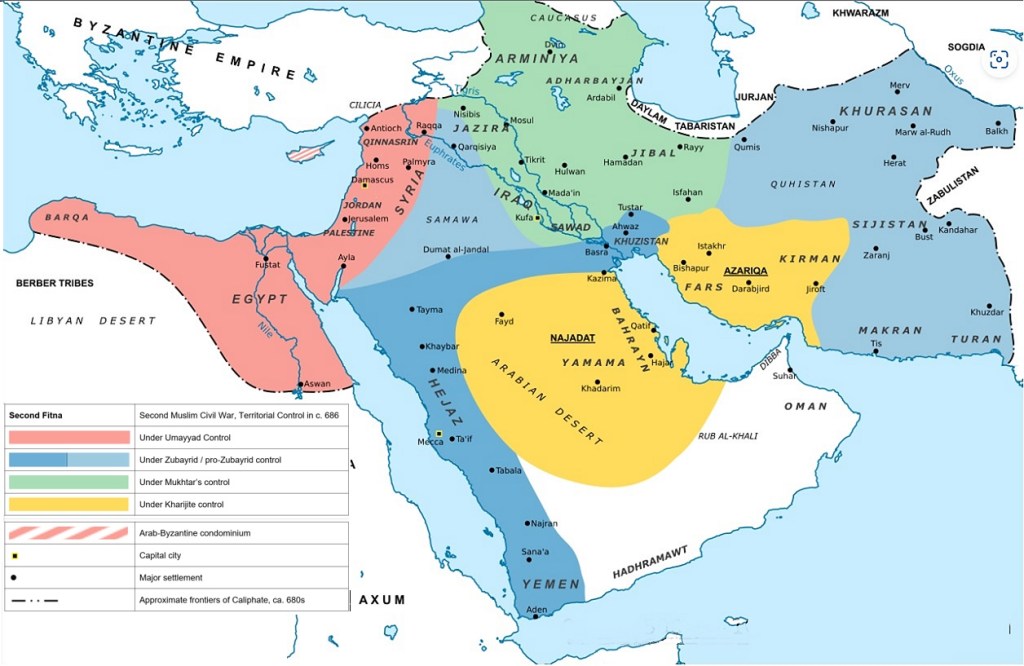
Original: en.wikipedia.org/wiki/Second_Fitna
第三次ムスリム内戦
Third Fitna
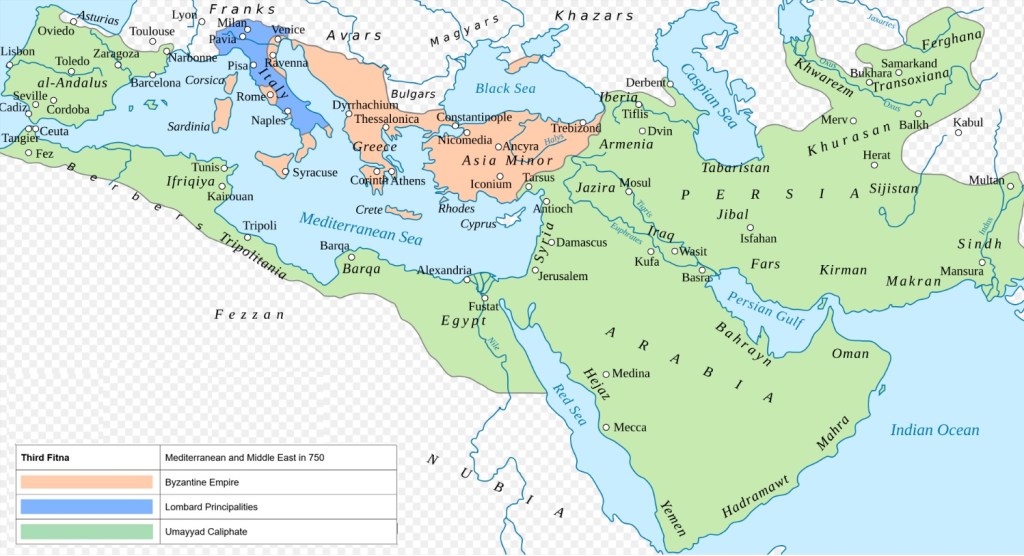
第三フィトナ(الفتنةالثالثـة)は、744年のカリフ・アルワリド2世(Caliph al-Walid II)の転覆から始まり、747年のカリフ制のさまざまな反政府勢力やライバルに対するマルワーン2世の勝利で終わった、ウマイヤ朝に対する一連のムスリム内戦と蜂起でした。しかし、マルワーン2世の下でのウマイヤ朝の権威は、完全には回復されず、ムスリム内戦は、アッバース朝革命(746~750)に流れ込み、ウマイヤ朝の打倒と750年のアッバース朝の設立に至りました。この対立の明確な年代順の区切りは、決め難いと言われています。
The Third Fitna (الفتنةالثالثـة) (the third Muslim Civil War) was a series of Muslim civil wars and the uprisings against Umayyad Caliphate. It began with the overthrow of the Caliph al-Walid II in 744, and ended with the victory of Marwan II over the various rebels and rivals for Caliphate in 747.
However, the authority of Umayyad Caliphate under Marwan II was not fully restored, and the Muslim Civil War flowed into the Abbasid Revolution (746~750), which led to the overthrow of Umayyad Caliphate and the establishment of Abbasid Caliphate in 750. It is said that a clear chronological delimitation of this conflict is quite difficult.
アルワリド2世:通常単にアルワリド2世として知られているのは、743年から744年に暗殺されるまで統治した第11代ウマイヤ朝カリフのアル・ワリド・イブン・ヤズィード(Caliph Al-Walid ibn Yazid) (709~744)(الوليد بن يزيد)でした。アルワリド2世は叔父のヒシャム・イブン・アブド・アルマリク(Hisham ibn Abd al-Malik)の後を継いで、カリフに成りました。
Al-Walid II: Usually known simply as Al-Walid II, was the 11th Umayyad Caliph who ruled from 743 until his assassination in 744. The formal his name was Caliph Al-Walid ibn Yazid (709~744)(الوليد بن يزيد). Al-Walid II succeeded his uncle Hisham ibn Abd al-Malik as Caliph.
マルワーン2世:通称マルワーン2世として知られたマルワーン・イブン・ムハンマド(691~750) (مروان بن محمد)は、744年から彼の死まで統治した14番目で最後のウマイヤ朝のカリフでした。彼の治世はムスリム内戦によって支配され、アッバース革命がウマイヤ朝を倒す前に、統一カリフ制を統治した最後のウマイヤ朝の支配者でした。
Marwan II: Marwan ibn Muhammad (691~750) (مروان بن محمد), commonly known as Marwan II, was the 14th and last Umayyad Caliph who ruled from 744 until his death. His reign was dominated by the Muslim Civil War, and he was the last Umayyad ruler to rule the unified Caliphate before the Abbasid Revolution overthrew Umayyad Caliphate.
Original: en.wikipedia.org/wiki/Third_Fitna

第四次ムスリム内戦
Fourth Fitna
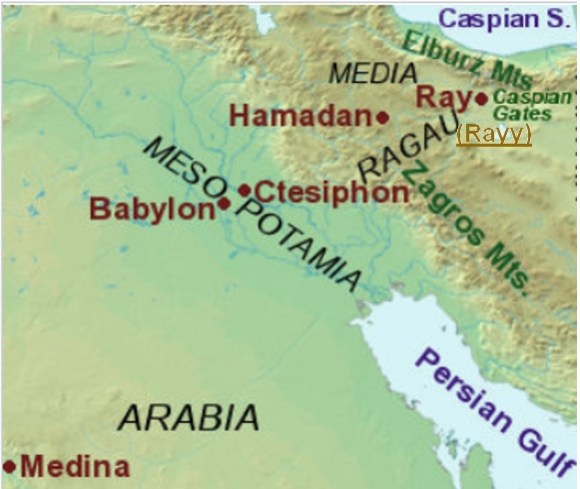
第四次フィトナまたは大アッバース朝内戦(第四次ムスリム内戦)は、アッバース朝(Abbasid Caliphate) (750~1258)の王位継承をめぐるアミーン(Amin)とマアムーン(Ma’mun)兄弟の間の対立から生じました。彼らの父、第五代カリフのハールーン・アッラシード(Caliph Harun al-Rashid) (786~809)は、最初の後継者としてアミーン(Amin)を指名しましたが、2番目の後継者としてマアムーン(Ma’mun)も指名し、ホラーサーン(Khorasan)が領地(appanage)としてマアムーン(Ma’mun)に与えられました。 その後、三男のカースィム(Qasim)が3番目の後継者に指名されました。ハールーン・アッラシードが809年に亡くなった後、アミーン(Amin)は、バグダッドで父の後を継ぎました。バグダッドの法廷に励まされて、アミーン(Amin)は、ホラーサーンの自治的地位を覆そうとし始め、カースィム(Qasim)は、すぐにカリフ後継者から外されました。これに対して、マアムーン(Ma’mun)は、ホラーサーン(Khorasan)の地方エリートの支援を求め、彼自身の自治を主張する動きをしました。二人の兄弟とそれぞれの陣営の間の亀裂が広がるにつれて、アミーン(Amin)は、自分の息子ムーサ(Musa)を自分の後継者として宣言し、大軍を集めました。811年、アミーン(Amin)の軍隊はホラーサーン(Khorasan)に向かって行進しましたが、マアムーン(Ma’mun)の将軍ターヒル・イブン・フサイン(Tahir ibn Husayn)は、レイの戦い(Battle of Rayy)でアミーン(Amin)の軍隊を打ち負かし、続いてイラクに侵攻してバグダッド自体を包囲しました。
The Fourth Fitna or Great Abbasid Civil War (the Fourth Muslim Civil War) was fought among the internals ,within Abbasid Caliphate (750~ 1258), which arose from a conflict between the brothers Amin and Ma’mun over the succession to the throne. Their father, the Fifth Caliph Harun al-Rashid (786–809), nominated Amin as his first successor, but also Ma’mun as his second successor, and Khorasan ( Khorasan) was given to Ma’mun as the fiefdom (appanage). Later, his third son, Qasim, was named his third successor. After Harun al-Rasheed died in 809, Amin succeeded him in Baghdad. Encouraged by the Baghdad court, Amin began to try to overturn Khorasan’s autonomous status, and Qasim was soon removed as Caliph’s successor. In response, Ma’mun sought the support of the local elites of Khorasan and made a move to assert his own autonomy. As the rift between the two brothers and their respective camps widened, Amin declared his own son Musa as his successor and gathered a large army. In 811, Amin’s army marched towards Khorasan, but Ma’mun’s general Tahir ibn Husayn defeated Amin’s forces in the Battle of Rayy, then invaded Iraq and laid siege to Baghdad itself.
Ray (Rayy)
バグダッドは1年後に崩壊し、アミーン(Amin)は、処刑され、マアムーン(Ma’mun)は、カリフになりました。
しかし、マアムーン(Ma’mun)は、首都バグダッドに来るのではなく、ホラーサーン(Khorasan)に留まることを選びました。これにより、カリフ制の州でムスリム内戦が育んだ権力の空白が拡大し、ジャズィーラ(Jazira)、シリア、エジプトにいくつかの地元の支配者が出現しました。さらに、クーファ(Kufa)のザイド派(Zaydism)指導者アブール・サラヤー(Abu’l-Saraya)から始まり、イラク南部、ヒジャーズ、イエメンに広がる一連のアリード蜂起(Alid Uprisings)が発生しました。
Baghdad fell a year later, Amin was executed, and Ma’mun became the Caliph.
However, Ma’mun chose to stay in Khorasan rather than came to the capital, Baghdad. This widened the power vacuum fostered by the Muslim Civil War in the Caliphate provinces, and several local rulers emerged in Jazira, Syria, and Egypt. In addition, a series of the Alid Uprisings began with Zaydism leader Abul’l-Saraya in Kufa and spread to the southern Iraq, Hejaz and Yemen.
マアムーン(Ma’mun)の強力な首相であるファドル・イブン・サール (al-Fadl ibn Sahl) (فضل بن سهل السرخسي)は、親ホラーサーン(Khorasan)政策を堅持し、マアムーン(Ma’mun)は、イマーム・アリー・リダー(Ali al-Rida)(シーア派・十二イマーム派の第8代イマーム)のアリード(Alids)継承を擁護しました。これらが、伝統的なバグダッドのエリート達の疎外感を一層強めました。その結果、マアムーン(Ma’mun)の叔父イブラヒム(Ibrahim)は、817年にバグダッドで対抗するカリフ(rival caliph)を宣言しました。ファドル・イブン・サールは暗殺され、マアムーン(Ma’mun)は直接介入することを余儀なくされました。
Fadl ibn Sahl (فضل بن سهل السرخسي), the powerful prime minister of Ma’mun, adhered to a pro-Khorasan policy and Ma’mun supported the succession of Alids to the Ali al-Rida, the eighth Imam of the Twelver Shia sect. These further reinforced the alienation feeling of the traditional Baghdad elites. Consequently, Ma’mun’s uncle Ibrahim declared a rival Caliph in Baghdad in 817. Fadr ibn Sarr was assassinated and Ma’mun was forced to intervene directly.
マアムーン(Ma’mun)はホラーサーン(Khorasan)を離れてバグダッドに向かい、819年にバグダッド入りしました。次の数年間に、マアムーン(Ma’mun)の権威が強化され、地元の反政府勢力に対する西部の州が再編に取り掛かりましたが、この再編は827年のエジプトの鎮圧まで完了しませんでした。いくつかの地元の反乱、特にフラマイト(Khurramites)の反乱は、830年代まではるかに長く続きました。
Ma’mun left Khorasan for Baghdad, and reached to Baghdad in 819. In the following years, the authority of Ma’mun was strengthened. He began to reorganize the western provinces against local rebels but this reorganization had not been completed until the suppression of Egypt in 827.
Several local revolts, notably those of the Khurramites lasted much longer until 830’s.
フラマイト(Khurramites):ゾロアスター教(Zoroastrian)の宗派にルーツを持つイランの宗教的および政治的運動
Khurramites: Iranian religious and political movements with roots in the Zoroastrian sect.

“The victory of Maʿmun over Amin”.
Folio from a manuscript of Nigaristan,
Iran, probably Shiraz, dated 1573-74.
https://en.wikipedia.org/wiki/Fourth_Fitna
アミーン(Amin) (محمد الأمين):Abu Musa Muhammad ibn Harun al-Rashid (787~813) (أبو موسى محمد بن الرشيد)は、809 年から 813 年までアラブのアッバース朝の第 6 代カリフでした。アミーンは、809年に父親のハールーン・アッラシード(Harun al-Rashid)の後を継ぎ、813年に異母兄弟のマアムーン(Ma’mun)によって内戦中に追放され、殺害されるまで支配した。
Amin (محمد الأمين): Amin’s formal name was Abu Musa Muhammad ibn Harun al-Rashid (787~813) (أبو موسى محمد بن الرشيد). He was the sixth Caliph of Abbasid Caliphate from 809 until 813. Amin succeeded his father Harun al-Rashid in 809. He ruled until he was ousted and killed by his half-brother Ma’mun during the Muslim civil war.
マアムーン(Ma’mun) (المأمون):アブー・アル・アッバース・アブダラ・イブン・ハルン・アル・ラシードAbu al-Abbas Abdallah ibn Harun al-Rashid (786~833) (أبوالعباسعبداللهبنهارونلرشيد)は、一般に彼の高貴な名前マアムーン(Ma’mun)として知られていました。 彼は7番目のアッバース朝のカリフ(7th Abbasid Caliph)であり、813年から833年に亡くなるまで統治していました。アッバース朝(Abbasid Caliphate)の統一は反乱と地元の有力者の台頭によって弱体化していたため、マアムーンの国内統治の多くは、抑圧キャンペーンに費やされました。彼は、教育を受け、学問に相当な関心を持っていたので、翻訳運動を促進し、バグダッドで学問と科学を開花させました。彼は「代数」として知られるフワーリズミー(Al-Khwarizmi)の本を出版しました。彼はまた、ムウタズィラ学派(Mu’tazila)の教義を支持し、イマーム・アフマド・イブン・ハンバル(Imam Ahmad ibn Hanbal)を投獄し、宗教的迫害(ミフナ)を高め、ビザンチン帝国との大規模な戦争を再開したことでも知られています。
Ma’mun (المأمون): Abu al-Abbas Abdallah ibn Harun al-Rashid (786~ 833) (أبو العباس عبد الله بن هارون الرشيد) was commonly known as his noble name of Ma’mun (المأمون). He was the seventh Abbasid caliph, reigning from 813 until his death in 833. Since the unity of Abbasid caliphate had been weakened by rebellion and the rise of local magnates, much of Ma’mun’s domestic reign had spent on suppression campaigns. As he had well educated and had a considerable interest in scholarship, he promoted the translation movement and made to blossom scholarship and science in Baghdad. He published al-Khwarizmi’s book known as “algebra”. He is also known for supporting the doctrine of Mu’tazilism, imprisoning Imam Ahmad ibn Hanbal, rising the religious persecution (mihna), and also resuming the large-scale warfare with Byzantine Empire.
イマーム・イブン・ハンバル(Imam Ahmad ibn Hanbal):ハンバリー派法学(the Hanbali)の基礎を築いた神学者で法学者です。
Imam Ahmad ibn Hanbal: Theologian and jurist who laid the foundations of the Hanbali jurisprudence.
ミフナ (Mihna)ミフナ(محنة خلقالقرآن):一般的に「833年から851年までの18年間続いた宗教的迫害の期間」を指します。 それはマアムーン(Ma’mun)によって 始められました。 この期間中、宗教学者は、ムウタズィラ学派(Mu’tazila)の教義に従わない限り、罰せられたり、投獄されたり、殺されたりしました。
Mihna: Mihna (محنة خلق القرآن) generally refers to “a period of religious persecution that lasted 18 years, from 833 to 851.” It was initiated by Ma’mun (المأمون). During this period, religious scholars were punished, imprisoned, or even killed, as long as they did not follow the doctrine of M’tazila.
ムウタズィラ学派(Mu’tazila) (المعتزلة):(https://www.britannica.com/topic/Mutazilah)
以下はブリタニカからのムウタズィラ学派についての引用の和訳です。なお、ムウタズィラ学派(al-Mu’tazila)との転写は、岩波イスラーム辞典に従いました。
ムウタズィラ学派(Muʿtazilah) は、「撤退する、または離れる人々」を意味します。英語のミュータジライト(Mut’azilites)、イスラーム教では、政治的または宗教的中立主義者であるAhl al-ʿAdl wa al-Tawḥid (أهل العدل والتوحيد)とも呼ばれます。 西暦10世紀までに、この用語は、バスラとバグダッド(8~10世紀)で栄えた投機的神学のイスラーム学校(kalām)を特に指すようになりました。
この名前は、3番目のカリフであるウスマーン(Uthman ibn Affan) (656)の殺害後のイスラーム共同体(Umma Islamiya)のアリー(Ali ibn Abi Talib)のカリフとしての地位をめぐる論争が初期イスラーム史に最初に登場しました。アリーやその反対者を非難も制裁もせず、中間の立場をとった人々は、ムウタズィラ学派(Muʿtazilah)と呼ばれていました。
ムウタズィラ学派(Muʿtazilah)神学学校は、ハサン・アル=バシュリー(al-Ḥasan al-Baṣri)(初期のイスラム教徒の説教者、禁欲主義者、神学者、聖書学者、学者、裁判官、神秘主義者)の学生であるワーシル・イブン・アター(Waṣil ibn ʿAṭaʾ) (699–749)(イスラーム教徒の神学者、法学者であり、カラム(Kalam)のムタズィル派の創始者であると考えられています。)にまでさかのぼり、重大な罪人(fasiq)は信者でも不信者でもないが、中間的な立場にあったと述べて、先生のサークルから撤退しました。(同じ話がアムル・イブン・ウバイド(ʿAmr ibn ʿUbayd) (d. 762)に対しても述べられています。) 自由思想家や異端者としてさまざまに悪意を持ったムウタズィラ学派(Muʿtazilah)は、8世紀に、ヘレニズム哲学(Hellenistic philosophy)のカテゴリーと方法を使用して、3つの主要で独特の独断的なポイントを導き出した最初のイスラーム教徒でした。
第一に、彼らは神の絶対的な一致または一体性(tawḥīd) (توحيد)を強調しました。このことから、神には分離可能な部分がないため、クルアーン(Qur’an) (القرآن)は、創造されなければならず、神と共に永遠ではなかったため、クルアーン(Qur’an)は、技術的に神の言葉(正統派の見解)と見なすことはできないと論理的に結論付けられました。アッバース朝(Abbasid Caliphate)のカリフ・マアムーン(Caliph al-Maʾmūn)の下で、作成されたクルアーン(Qur’an)のこの教義は、国家教義として宣言され(827)、833年に、この教義に異議を唱えた人々(特に神学者のアフマド・イブン・ハンバル(Aḥmad ibn Ḥanbal))を裁判にかけるためにミフナ(miḥnah)または法廷が設立されました。ムウタズィラ学派(Muʿtazilah)の地位は、最終的にムタワッキル(Al-Mutawakkil) (أبو الفضل جعفر المتوكل على الله)(アッバース朝第10代カリフ(847~861))の下で、849年頃に放棄されました。
ムウタズィラ学派(Muʿtazilah)は、さらに、第二の原則として神の正義(ʿadl) (عدل)を強調しました。正統派は、善悪を問わず、すべての行動は、最終的に神によって意志されるという特定の決定論を教えましたが、ムウタズィラ学派(Muʿtazilah)は、神は、人間にとって最良のものだけを望んでいるが、自由意志によって人間は、善と悪のどちらかを選択し、したがって彼の行動の最終的な責任になると仮定しました。
したがって、第三の教義、約束と脅威(the promise and threat) (“الوعد والتهديد”)、または楽園と地獄(paradise and hell) (الجنة والنار)では、神の正義は、論理的必要性の問題になります。約束されたように神は、善に報いなければならず、脅かされたように悪を罰しなければなりません。
最も重要なムウタズィラ学派(Muʿtazilah)神学者の中には、バスラ(Basra)のアブー・アル・フダイル・アル・アッラーフ(Abu al-Hudhayl al-ʿAllaf) (d. c. 841)とアル・ナエム(al-Naẓẓām) (d. 846)およびバグダッド(Baghdad)のビシュル・イブン・アル・ムタミール (Bishr ibn al-Muʿtamir) (d. 825)がいました。ムタジリー・アル・ジュバーイー(the Muʿtazili al-Jubbaʾi)の学生であるアル・アシュアリー(al-Ashʿari) (d. 935 or 936)は、ムウタズィラ学派(Muʿtazilah)によって最初に導入されたのと同じヘレニズム的(Hellenistic)で合理的な方法でその教えに反論することによって運動の力を壊しました。
ムウタズィラ学派(Muʿtazilah)の信念は、スンニ派イスラーム教徒(Sunni Muslims,)によって否認されましたが、シーア派イスラーム教徒(Shia Islam)は、彼らの前提を受け入れました
Muʿtazilah (المعتزلة) : (https://www.britannica.com/topic/Mutazilah)
Below is a quote from Britannica about Muʿtazilah.
Muʿtazilah, (Arabic: “Those Who Withdraw, or Stand Apart”) English Mutazilites, also called Ahl al-ʿAdl wa al-Tawḥīd (أهل العدل والتوحيد), in Islam, political or religious neutralists; by the 10th century CE the term had come to refer specifically to an Islamic school of speculative theology (kalām) that flourished in Basra and Baghdad (8th~10th century).
The name first appears in early Islamic history in the dispute over ʿAlī’s leadership of the Muslim community (ummah) after the murder of the third caliph, ʿUthmān (656). Those who would neither condemn nor sanction ʿAlī or his opponents but took a middle position were termed the Muʿtazilah.
More From Britannica Islam: The Muʿtazilah theological school is traced back to Wāṣil ibn ʿAṭāʾ (699~749), a student of al-Ḥasan al-Baṣrī, who, by stating that a grave sinner (fāsiq) could be classed neither as believer nor unbeliever but was in an intermediate position (al-manzilah bayna manzilatayn), withdrew (iʿtazala, hence the name Muʿtazilah) from his teacher’s circle. (The same story is told of ʿAmr ibn ʿUbayd (died 762).) Variously maligned as free thinkers and heretics, the Muʿtazilah, in the 8th century, were the first Muslims to use the categories and methods of Hellenistic philosophy to derive their three major and distinctive dogmatic points.
First, they stressed the absolute unity or oneness (tawḥīd) of God. From this it was logically concluded that the Qurʾān could not be technically considered the word of God (the orthodox view), as God has no separable parts, so the Qurʾān had to be created and was not coeternal with God. Under the Abbasid caliph al-Maʾmūn, this doctrine of the created Qurʾān was proclaimed (827) as the state dogma, and in 833 a miḥnah, or tribunal, was instituted to try those who disputed the doctrine (notably the theologian Aḥmad ibn Ḥanbal); the Muʿtazilī position was finally abandoned by the caliphate under al-Mutawakkil about 849. The Muʿtazilah further stressed the justice (ʿadl) of God as their second principle. While the orthodox taught a certain determinism in which all actions, whether good or bad, are ultimately willed by God, the Muʿtazilah posited that God desires only the best for man, but through free will man chooses between good and evil and thus becomes ultimately responsible for his actions. So in the third doctrine, the promise and the threat (al-waʿd wa al-waʿīd) (“الوعد والتهديد”), or paradise and hell, God’s justice becomes a matter of logical necessity: God must reward the good (as promised) and must punish the evil (as threatened).
Among the most important Muʿtazilī theologians were Abū al-Hudhayl al-ʿAllāf (died c. 841) and al-Naẓẓām (died 846) in Basra and Bishr ibn al-Muʿtamir (died 825) in Baghdad. It was al-Ashʿarī (died 935 or 936), a student of the Muʿtazilī al-Jubbāʾī, who broke the force of the movement by refuting its teachings with the same Hellenistic, rational methods first introduced by the Muʿtazilah. Muʿtazilī beliefs were disavowed by the Sunni Muslims, but the Shiʿah accepted their premises.
 Desert peninsula