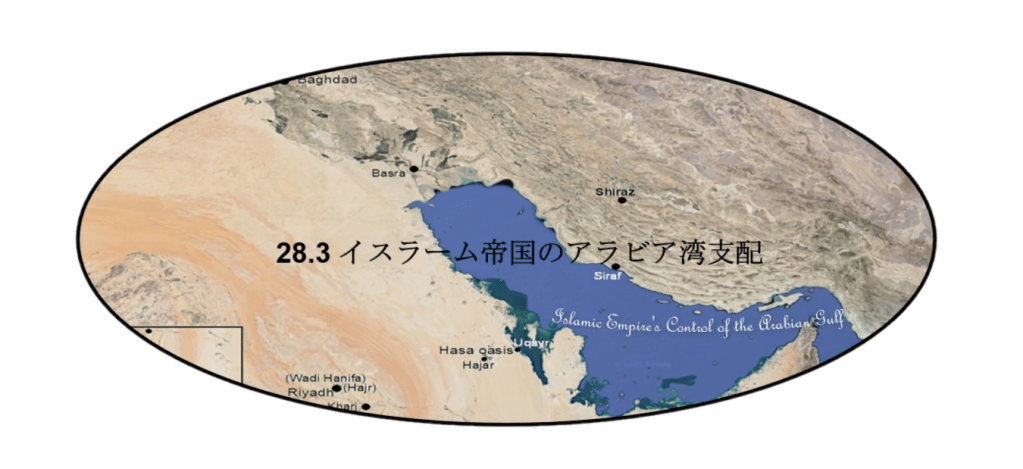
Islamic Empire’s Control of the Arabian Gulf



目次(Index)
Arabian Gulf
正統カリフ時代
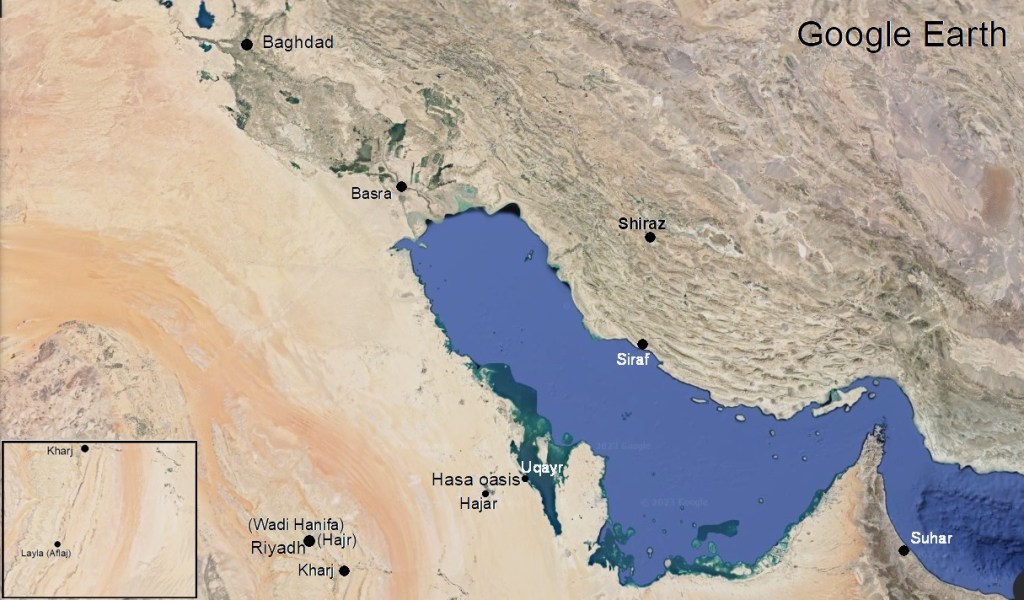
第三代正統カリフ・ウスマーン(Uthman ibn Affan) (r. 644~ 656) (عثمان ابن عفّان)が派遣したイスラーム軍のサーサーン朝ペルシア(Sassanid Empire) (226~651) (ساسانيون)制圧中にアブドゥルカイス族(‘Abd al-Qays or Abdul Qays) (عبد القيس)は、ペルシア海岸への海上遠征を行い、649/650年のイラン高原ファールス(Fars) (فارس)の征服に参加していました。当時、アラビア湾の海岸は遠くオマーンに至るまでバスラ(Basra) (البصرة)の偉大な新しいムスリム支配の下に単一な州として再編されていました。早期のバスラは重要な軍事センター(ミズル)でした。このミズル(misr)には特にペルシアおよびホラーサーン(خراسان) (Khorasan)のムスリム征服に参加したアブドゥルカイス族、バクル・イブン・ワーイル族(بكر بن وائل) (Bakr ibn Wa’il)(およびタミーム族(Bani Tamim) (تميم بني)等多くのアラビア半島東部の部族民を引き入れていました。
Rashidun Caliphs’ Era
The third Rashidun Caliph Uthman (r. 644~ 656) (عثمان ابن عفّان), sent the Islamic army to perform the conquest of Sassanid Empire (226~651) (ساساننيون). During that time, ‘Abd al-Qays tribe(عبد القيس) made a sea expedition to the Persian coast and participated in the conquest of the Iranian plateau Fars (فارس) in 649/650. At that time, the coast of the Arabian Gulf including far away Oman was reorganized as the single province of Basra (البصرة) under the great new Muslim ruler. In Early Islamic Empire, Basra was one of important military centers (misr). This misr gathered especially Abdul Qais tribe, Bakr ibn Wa’il tribe and Bani Tamim) (تميم بني), who participated in the Muslim conquest of Persia (فارس) and Khorasan (خراسان). And also, it included many tribesmen from the eastern Arabian Peninsula.
ファールス(Fars) (فارس):イランの州で州都は、シーラーズ(Shiraz) (شیراز)。
アブドゥルカイス族(‘Abd al-Qays or Abdul Qays) (عبد القيس):ラビーア・アドナーン部族(Rabi’ah Adnan Arab) (ربيعة عدنان عرب)に帰属する一部族です。アブドゥルカイス ・アドナーン族(Abdul Qays Adnan) (عبد القيس العدناني)とも呼ばれています。
バクル・イブン・ワーイル族(Bakr ibn Wa’il) (بكر بن وائل):ラビーア・アドナーン部族(Rabi’ah Adnan Arab) (ربيعة عدنان عرب)の一部族です。バクル族(Bakr) (بكر)、バヌー・バクル族(Banu Bakr) (بنو بكر)、バニー・ワーイル族(Bani Wa’il) (بني وائل)、バヌー・バクル・イブン・ワーイル族(Banu Bakr ibn Wa’il) (بنو بكر بن وائل) とも呼ばれています。
タミーム族(Bani Tamim) (تميم بني):ムダル・アドナーン部族(Mudar Adnan Arabs) (مضرعدنان عرب)の一部族です。
Fars (فارس):One of the Iranian provinces. Shiraz (شیراز) is its provincial catital.
‘Abd al-Qays or Abdul Qays (عبد القيس): A tribe belonging to the Rabi’ah Adnan Arab (ربيعة عدنان عرب). It is also known as the Abdul Qays Adnan (عبد القيس العدناني).
Bakr ibn Wa’il (بكر بن وائل): A member of Rabi’ah Adnan Arab (ربيعة عدنان عرب). It is also known as Bakr (بكر), Banu Bakr (بنو بكر), Bani Wa’il (بني وائل), and Banu Bakr ibn Wa’il (بنو بكر بن وائل).
Bani Tamim (تميم بني): A member of the Mudar Adnan Arabs (مضرعدنان عرب).
ウマイヤ朝時代
イスラームがインド洋に広まるに連れてハサーは、遠征の為に兵士や舟の提供で貢献しました。拡張や征服が海に向かったにもかかわらず海岸とその後背地は、内陸のアラブ部族支配の下で結束していました。例えば660年代の印度へのハサーウィー遠征隊(Hasawi) (حساوي)の指揮官は、ハサー・オアシスの主要都市ハジャル(Hajar) (الحجر)の出身でした。この遠征の戦利品の一つが象であり、ダマスカスを根拠地にするウマイヤ朝(661~750)カリフのムアーウィヤ(Mu’awiya ibn Abu Sufyan) (r. 661~680) (602~680) (معاوية بن أبي سفيان)に送られました。
当時は北アフリカからイラクおよびイランに及ぶ単一国家であったイスラーム帝国は、ウマイヤ朝 (661~750)によってダマスカスから支配されていました。ムアーウィヤの後のウマイヤ朝カリフは、ウマイヤ・イデオロギーに疑問を持ち、出ていった者達(ハワーリジュ派(Al Khawarij) (الخوارج))と呼ばれる幾つかのグループの出現に直面しました。その中でも最も卓越した指導者達の一人にヤマーマおよびハルジュ地区のナジュダ・イブン・アーミル(Najdah ibn ‘Amr al-Hanafi) (d. 692) (نجدة بن عامر الحنفي)がいました。
Umayyad Caliphate Era
As Islam spread to the Indian Ocean, Hasa (حسا) contributed its expedition providing soldiers and boats. Despite expansion and conquest by sea, the coast and hinterland were united under the inland Arab tribal rule. For example, in the 660s, the commander of the Hasawi (حساوي) expedition to India was from Hajar (الحجر), one of the main cities in the Hasa oasis. One of the spoils of this expedition was an elephant, which was sent to Mu’awiya ibn Abu Sufyan (r. 661~680) (602~680) (معاوية بن أبي سفيان) of Umayyad Caliphate based in Damascus.
Empire, then a unitary state stretching from the Northern Africa to Iraq and Iran, was ruled from Damascus by Umayyad Caliphate (661~750). The Umayyad Caliphs after Mu’awiya questioned Umayyad ideology and faced the emergence of several groups called Khawarij (الخوارج), which means those who left. One of the most outstanding leaders was Najdah ibn ‘Amr al-Hanafi (d. 692) (نجدة بن عامر الحنفي) of Yamamah (اليمامة) and Kharj (خرج) districts.
ナジュダとその追従者達はハサーのアブドゥルカイス族を征服し、数年に渡って「アラビア半島」の大半をハワーリジュ派の王国として支配しました。692年にウマイヤ朝がバスラの軍事都市を通して、ハサーの支配を取り戻しました。ウマイヤ朝は、アブドゥルカイス族を復活させ、要塞としてのハジャルを合併しました。しかしながらその支配の残りの間、ウマイヤ朝はハサーの断続する蜂起に悩まされ続けました。
Najdah and his followers conquered Abdul Qais tribe of Hasa and ruled the most of the Arabian Peninsula as a Khawarij kingdom for several years. In 692, Umayyad Caliphate, through the military city of Basra, regained control of Hasa. Umayyads revived Abdul Qays tribe and merged Hajar as a fortress. However, during the rest of its reign, Umayyad Caliphate continued to be plagued by the continuous uprisings of tHasawis (inhabitants of Hasa).
アッバース朝時代
アッバース朝(750~1258)が750年にウマイヤ朝から政権を奪権し、イスラーム国都をバクダットに遷都しました。この事は、10世紀まで続くアラビア湾交易を新たな黄金時代へと導きました。それに先立ちヤマーマを含む半島東部へバクダットから新たな総督達が任命されました。アッバース朝に対する僅かな抵抗がアブドゥルカイス族によって先導されましたが、ハジャルは、主要な町として行政の中心に残りました。
Abbasid Caliphate Era
Abbasid Caliphate (750~1258) seized power from Umayyad Caliphate in 750 and moved the capital of Islamic state to Baghdad. This ushered into a new golden age of the Arabian Gulf trade, which lasted until the 10th century. Prior to that, the new governors were appointed from Baghdad to the eastern peninsula, including Yamamah. A slight resistance to Abbasid Caliphate was led by Abdul Qais tribe, but Hajar remained in the administrative center as a major town.
インドや中国との貿易に携わっていたアラビア湾の港や商人は、莫大な富を蓄積しました。特にペルシャのシーラーフ(Siraf) (سيراف)は繁栄しましたが、オマーンの港スハール(Suhar) (صحار)の台頭とスライマーン(Sulayman) (سليمان)、アブー・ウバイダ(Abu Ubaydah) (عبيدة أبو)などのアラブの偉大な商人の成長に伴い、アラブの部族が貿易においてますます重要な役割を果たしました。「千夜一夜物語」には「シンドバッドの物語(البحريالسندباد)」が追加されていますが、これは他の物語よりも少し遅いですが、この時代のアラブの商人、船乗り、支配者の生活から派生した物語です。
The ports and merchants of the Arabian Gulf who were involved in the trade with India or China amassed enormous wealth. The Persian port of Siraf (سيراف) in particular prospered, but Arab tribes played an increasingly important role in the trade, such as the rise of the Omani port Suhar (صحار) and the growth of the Arab great merchants like Sulayman (سليمان), Abu Ubaydah (عبيدة أبو), etc. The “One Thousand and One Nights” added “The tales of Sinbad (البحري السندباد)”, which are a little later in time than others, but are the narratives derived from the lives of Arab merchants, sailors and rulers of this period.
ハサー・オアシスの港であるウカイル(Al Uqayr) (العقير)は840年代にバスラ、オマーン、中国およびイエメンを訪れる為の港として記述されていますので、そこにはイスラーム早期の大きな考古学的遺跡が残されていると思われます。アッバース朝国庫への半島東部の重要性は、そこから徴収される非常に大きな歳入によって確認されています。その額はオマーンよりも多く、殆どイエメン全体に匹敵していました。
As Al Uqayr (العقير), the port of the Hasa Oasis, was described as a port for visiting Basra, Oman, China and Yemen in 840, it is likely that there are the large archaeological sites of the early Islamic period. The importance of the eastern peninsula for the Abbasid treasury was confirmed by the enormous revenues collected from there. Its amount was larger than that in Oman and almost equal to that in the whole of Yemen.
 Desert peninsula