
Control of Eastern Arabia by the Qarmatians




目次(Index)
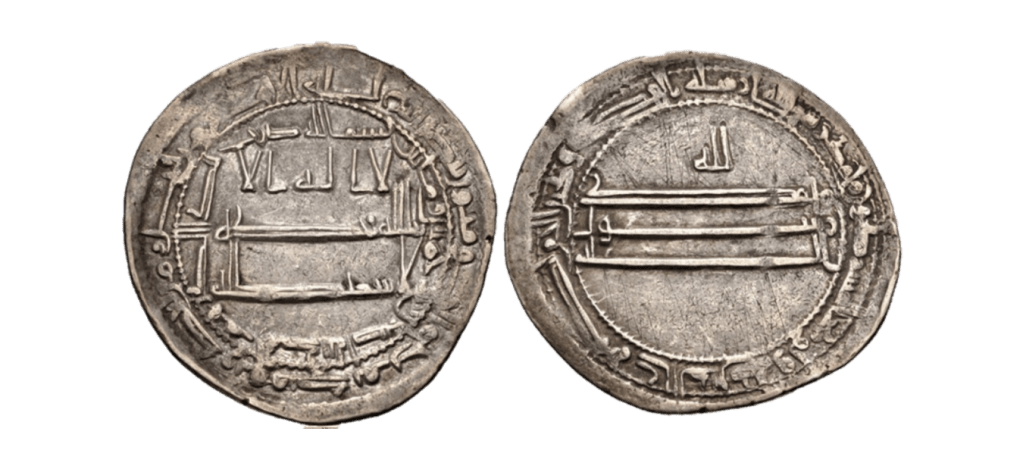
Gold dinar minted by the Qarmatians in the 970s
イスマーイール派霊感
Ismaili Inspiration
イスマーイール派霊感(Ismaili Inspiration)とは、Dr. William Faceyがカルマト派(Qarmat)の説明に使用した用語です。イスマーイール派とは、イスマーイール・イブン・ジャアフィル(Isma’il ibn Jafar) (c.719~c.762)が説き、自己の本質と真の神についての認識に到達することを求める物質と霊の二元論思想であるグノーシス(Gnosticism)的な神秘主義的教説を信奉し、イスマーイールを七代目イマームと認めたシーア派の分派で、七イマーム派(Seveners) (سبعية)と呼ばれることもあります。なお、イスマーイールが死亡していた為、弟のムーサー・アル=カーディム(Musa al-Kadhim)を七代目イマームとして受け入れた分派が十二イマーム派(Twelve Shia) (شيعة اثنا عشرية)です。
Ismaili inspiration was a term used by Dr. William Facey to describe Qarmat. The Ismailis are an offshoot of Shia Islam that recognizes Isma’il ibn Jafar (c.719-c.762) as the Seventh Imam, and so they are sometimes called the Seveners (سبعية). In the Ismailis, Isma’il preached the dualism of matter and spirit, which seeks to reach knowledge of one’s own essence and the true God, using relatively similar manner as the mystical doctrine of Gnosticism. Since Ismail had died, the offshoot that accepted his brother Musa al Qadhim as the seventh imam is Twelve Shia (شيعة اثنا عشرية).
イスラーム学者で東京大学教授の菊地 達也(Tatsuya Kikuchi)博士は、学位論文に次の様に述べられています。
Dr. Tatsuya Kikuchi, an Islamic scholar and professor at the University of Tokyo, wrote in his dissertation, as follows;
「神話と哲学は、共に宇宙論的レベルから終末論を説明するという機能を持っていた。キヤーマ(Qiyamah)を補完する宇宙論においては、超越神によるデミウルゴス(Demiurge)の創造によって宇宙が始まる。その過程で生まれた天上的存在者は、何らかの形で過ちを犯す。この過ちによって天上的存在者は転落し、その結果としてこの地上世界が成立する。
“Both mythology and philosophy had the function of explaining eschatology from a cosmological level. In the cosmology that complements the Qiyamah, the universe begins with the creation of the Demiurge by the transcendent God. Heavenly beings born in the process make mistakes in some way. This mistake causes the fall of the heavenly beings, and as a result, this earthly world is established.
天上的存在者が原初の状態に戻るためには、地上におけるイスマーイール派(Ismailism)宣教組織の活動が不可欠である。ここにおいて、7つのサイクルからなる人類史は、天上世界の動向に密接な関係を持つ。一つのサイクルが完了する度に、転落者は、元の位階に向かって一つずつ位階を上昇することになる。カーイム(Qa’im)が出現する時に、人類史は完成に至り、転落者は、元の位階に復帰することになる。
In order for the heavenly beings to return to their primordial state, the activities of Ismailist missionary organizations on earth are indispensable. Here, human history consisting of seven cycles is closely related to trends in the heavenly world. Each time a cycle is completed, the faller will move up one rank toward the original rank. When Qa’im appears, the human history will be complete and the faller will be restored to their original ranks.
このような宇宙論構造は、神話的教義と哲学的教義の双方に見受けられる。このような視点に立てば神話と哲学との間には本質的な差異は存在しなかったのである。イスマーイール派の神話と哲学は、人類の歴史の終わりでもあるキヤーマを宇宙的レベルから説明し、宇宙的正統性を与える。宇宙的レベルにまで高められたキヤーマは、その劇的な性格を増幅させることになる。また、イスマーイール派信徒は、自分が存在する宇宙的な意味を獲得することになる。このように、宇宙的神話は、政治的・宗教的イデオロギーの補完物となる。」
Such cosmological structures are found in both mythological and philosophical doctrines. From this point of view, there was no essential difference between the mythology and the philosophy.
Ismaili mythology and philosophies explain Qiyamah, the end of human history, from a cosmic level, giving it cosmic legitimacy. Qiyamah is raised to a cosmic level, then Qiyamah amplifies its dramatic character. Also, the Ismailis will acquire a cosmic meaning of their existence. The cosmic mythology thus becomes a complement to the political and religious ideologies. ”
デミウルゴス(Demiurge):哲学的な神とコーラン的な神の両方の性格を持ち合わせている第一知性。(筆者の解釈)
カーイム(Qa’im):シーア派イスラーム教の救世主のような人物。(筆者の解釈)
Demiurge: The first intelligence that possesses the character of both a philosophical god and a Quranic god. (Writer’s interpretation)
Qa’im: A figure who is like the savior of Shia Islam. (Writer’s interpretation)
イスマーイール派最高潮(ファーティマ朝)
Ismailis’ Culmination (Fatimid Caliphate)
イスマーイール派は、10 世紀から 12 世紀に通じて、ファーティマ朝カリフ(Fatimid Islamic Caliphate) (909~1171) (خلافة فاطمية)をその政治権力として最高潮に達し、シーア派イスラーム教の最大の分派にまで発展しました。しかし、ファーティマ朝は、イスマーイール派のメシア思想を保持し、キヤーマ(Qiyamah)、つまり世界の終わりと楽園の実現することを目指しましたが、その実現には失敗しました。この為、ファーティマ朝国家は、彼らが地球上の秩序を根本的に変えるという本来の目的を脇に置いて、世俗的な支配に占領された通常の国家に変身しました。
イスマーイール派の分派にはカルマト派(Qarmatians)、ドゥルーズ派(Druze) (دروز)、ニザール派(Nizari) (نزارية)、ムスタアリー派(Musta’li) (مستعلي)、ハーフィズィー派(Hafizi) (حافظية)等があります。なお、カルマト派(Qarmat) (قرمط)は、カルマティア派(Qarmatians)或はカラーミタ派(Qaramita) (قرامطة)とも転写されています。
Ismailis culminated in Fatimid Islamic Caliphate (909~1171) (خلافة فاطمية) as their political power throughout the 10th and 12th centuries,, and developed into the largest branch of Shia Islam. Fatimid Caliphate retained the Ismaili messianic idea and sought to realize Qiyamah, that is the end of the world and paradise, but failed to achieve Qiyamah. Because of this, Fatimid state was transformed into a normal state occupied by secular rule, leaving aside their original purpose of radically changing the order on earth.
Offshoots of the Ismaili faction include Qarmatians, Druze (دروز), Nizari (نزارية), and Musta’li (مستعلي), Hafizi (حافظية), etc. Qarmats (قرمط) are also transcribed as Qarmatians or Qaramita (قرامطة).
カルマト派支配
Qarmat Rule
9世紀の後半にアッバース朝支配(Abbasid control) (750~1258)が崩壊し始め、イスラーム世界は、様々な反体制運動で引き裂かれました。反体制の多くは、イスマーイール派霊感(the Ismailites from Hosain al-Ahwaz)でした。イラクから起こったその様な運動の一つが東アラビアに定着しました。その運動がカルマティア派 (Qarmatians) (قرمطیان)(カルマト派(Qarmat) (قرمط))として知られています。
In the second half of the 9th century, Abbasid control (750~1258) began to collapse and the Islamic world was torn apart by various dissident movements. Many of them were the Ismailites from Hosain al-Ahwaz. One such movement, that originated in Iraq, had taken root in the eastern Arabia. This movement is known as the Qarmatians (قرمطیان) (Qarmat (قرمط)).
ハサン・カルマト(Hassan Qarmat) (حسن قرمط)が初代の指導者となり、899年にカティーフ(Qatif)を占拠し、ザーラ(Zara) (زارة)を焼き、ハジャル(Hajar) (الحجر)を攻撃しました。カルマト派は、伝道師アブー・サイード・ジャンナービー(Abu Sa’id al-Jannabi)(855~913) (أبو سعيد الجنّابي)の下に首都をハサー・オアシスに置き、そして、このオアシスの古い町ハジャルあるいはその少し外側を新たな根拠地に持つ、しっかりした国家体制が組織されました。
Hassan Qarmat (حسن قرمط) became the first leader, seizing Qatif, burning Zara (زارة), and attacking Hajar (الحجر) in 899. Qarmatians, under their preacher Abu Sa’id al-Jannabi (855-913) (أبو سعيد الجنّابي) placed their capital in the Hasa oasis, and a solid state system was organized with a new base at the old town (Hajar) or slightly outside of it.
海岸地帯と内陸を緊密に結びつけ、南ナジュド(Southern Najd)から現在の東部州に最近移動して来た部族の支援を得てカルマティア国(the Qarmatian state)は、その支配と影響をイランやイラク南部に広げていました。カルマト派時代にハサー・オアシスは政治的に歴史な頂点に達しました。カルマト派の最初で最大の軍事活動は西暦886年から935年の間であり、バスラ、クーファおよびワースィト(Wasit) (واسط)を度々襲撃し、巡礼を途絶させました。
Closely linking the coast with the interior, Qarmatian state, with the support of tribes who had recently moved from the southern Najd to the present Eastern Province, extended its control and influence to Iran and southern Iraq. During the Qarmat period, the Hassar Oasis reached a political pinnacle in history. The first and largest military activity of Qarmat was between 886 and 935 AD, when they frequently raided Basra, Kufa and Wasit (واسط), disrupting pilgrimages.
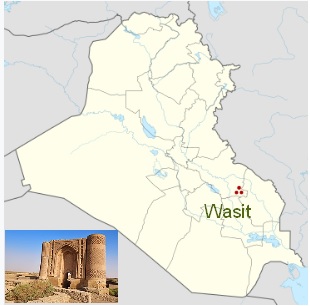
Wasit
西暦930年にカルマト派はマッカを攻略し、カアバ神殿(Ka’bah) (الكعبة)から聖なる黒い石を奪うと云う神聖冒涜を行いました。さまざまな無法や忌まわしい行為が犯された8日間の混乱の後に自らの誤りを正すため931年にアブー・サイードの息子アブー・ターヒル(Abu Tahir) (906 – 944) (أبو طاهر) は、統治をペルシアのマギアン(Magian)(司祭)に引き渡しました。この出来事がカルマト派の宗教的過激主義の転機となりました。
In 930 AD, Qarmatians conquered Makkah and committed a blasphemy by taking the holy black stone from Ka’bah (الكعبة). Abu Tahir (906~944) (أبو طاهر), a son of Abu Sa’id handed over his authority of the reign to the priest (Magian) in 931, after eight days of the turmoil in which various lawlessness and abominations were committed. It was for correcting their mistakes. This event became a turning point in the religious extremism of Qarmatian school.
第二期カルマト派時代
Second Qarmat Period
西暦935年から988年の第二期カルマト派時代ではアッバース朝と友好関係を結びましだ。この間に北アフリカに興ったファーティマ朝がエジプトからシリアへの拡大し、エジプトおよびシリア一帯を支配していました。カルマト派は、アッバース朝への援助として、バクダッドがファーティマ朝を撃退するのを助けました。聖なる黒い石はマッカに戻され、以前よりもカルマト派の教義は、正統なイスラームへと戻った様に思われました。
During Second Qarmat period, from 935 to 988 AD, it established friendly relations with Abbasid Caliphate. During this period, Fatimid dynasty, which arose in the northern Africa, expanded from Egypt to Syria, and ruled all of Egypt and Syria. Qarmats helped Baghdad to defeat Fatimid dynasty as its assistance to Abbasid Caliphate. The holy black stone was returned to Makkah, and the Qarmat doctrine seemed to have returned to orthodox Islam than before.
アッバース朝との協力は、西イランに台頭したブワイフ朝(Buyid Dynasty) (934~1055) (الدولة البويهية)にも向けられました。983年にカルマト派は、イラク南部に侵入しましたが、988年にブワイフ朝に打ち負かされ、その根拠地のハサー・オアシスやカティーフ・オアシスが侵略されました。カルマト派は、988年の逆襲の後に半島東の支配を取り戻しましたが、その支配の最後の期間である988年から1073年にはアラビア湾航路に対抗してのインド洋からの紅海交易とエジプトの台頭によりその勢力と繁栄の衰えが記録されています。1073年にハサー・オアシス(Hasa Oasis)北部のウユーン(Uyun) (العيون)出身のアブドゥルカイス族(‘Abd al-Qays) (عبد القيس)のリーダーの一人がセルジューク・トルコ(Seljuq Turks) (1037~1194) (الدولة السلجوقية)の支援を得て、カルマティア(Qarmatians)を打ち破りました。、
Cooperation with Abbasid Caliphate was also directed to Buyid dynasty (934~1055) (الدولة البويهية), which emerged in the western Iran. In 983, Qarmatians invaded the southern Iraq, but in 988 Qarmatians was defeated by Buyid dynasty, then Buyid dynasty invaded Qarmatians’ strongholds, the Hasa and Qatif oases. Qarmatians regained its control of the eastern part of the peninsula after its counterattack in 988, but the last period of its rule, from 988 to 1073, the rise both of the Red Sea trade and Egypt marked Qarmatians’ declines of the power and prosperity. (In this period, the Red Sea trade from the Indian Ocean was in opposition to the Arabian Gulf trade.) In 1073, one of the leaders of ‘Abd al-Qays (عبد القيس) from Uyun (العيون) in the northern Hasa Oasis defeated the Qarmatians, with the support of Seljuq Turks (1037~1194) (الدولة السلجوقية).
 Desert peninsula