Dynasties of the Hasa and Qatif oases



目次(Index)
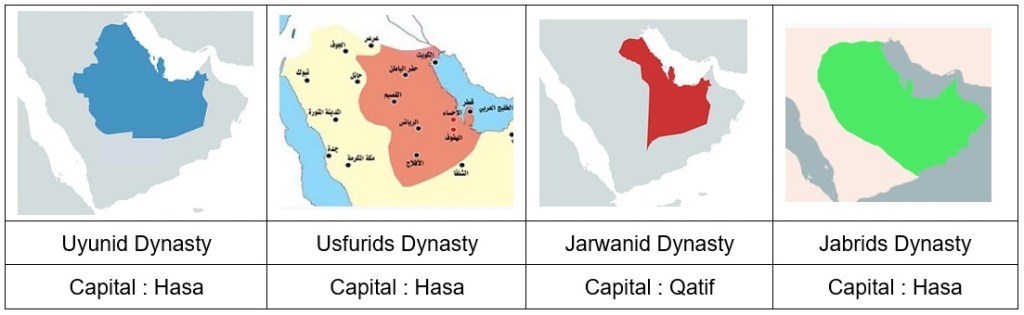
| ウユーニード王朝 | Uyunid Dynasty | الدولة العيونية | 1073~1253 |
| ウスフーリード朝 | Usfurids Dynasty | الدولة العصفورية | 1253~1440 (1253–1320) |
| ジャルワーン朝 | Jarwanid Dynasty | الإمارة الجبرية | 1305~1417 |
| ジャブリード朝 | Jabrids Dynasty | الإمارة الجبرية | 1417–1524 |
Dynasties of the Hasa and Qatif oases
ウユーニード王朝
Uyunid Dynasty
ハサーのカルマト派衰退は、北へのセルジューク・トルコ(Seljuq Turks) (1037~194) (الدولة السلجوقية)の台頭と同時に起き、11世紀にセルジューク・トルコは、急速にその支配をイラン、イラクおよびシリア北部に確立しました。ハサー・オアシス北部のウユーン(‘Uyun) (العيون)(ホフーフ北25km)にはアブドゥルカイス族(‘Abd al Qays) (عبد القيس)の集落がありました。1073年にそのリーダーの一人がセルジューク・トルコの支援を得て、カルマト派を打ち破り、ウユーニード王朝(Uyunid Dynasty) (1073~1253) (الدولة العيونية)を樹立しました。
The decline of Qarmatians of the Hasa oasis coincided with the rise of Seljuq Turks (1037~1194) (الدولة السلجوقية) to the north, and in the 11th century Seljuk Turks Turkey had rapidly established its control over the Iran, Iraq and northern Syria. There were ‘Abd al Qays (عبد القيس) settlements at ʻUyun (العيون) (25 km north of Hofuf), in the northern part of the Hasa Oasis. In 1073 one of their leaders, with the support of Seljuk Turks, defeated Qarmatians and established Uyunid dynasty (1073~1253) (الدولة العيونية).
初代ウユーニード王朝支配者のアブドゥッラー・イブン・アリー(Abdullah ibn Ali Al Uyuni) (عبد الله بن علي)は、ハサーを自分の都にしました。しかし、地方勢力としてのハサーの衰退とこの時代の中東政治の主要な流れからの孤立がその目を海上交易へと向かわせました。
Abdullah ibn Ali Al Uyuni (عبد الله بن علي) made Hasa his capital. However, the decline of the Hasa as a local power and their isolation from the major currents of the Middle Eastern politics of this era turned their attention to the maritime trade.
アラビア湾交易の繁栄は、下り坂に成ってはいたものの、それでもなお儲かり、ウユーニード王朝支配者は、この数世紀間にアラビア湾岸の中心的主要勢力であったカイス島 (Qays Island) (جزیره کیش) (現在のキーシュ島(Kish Island) (كيش))のアラブ商人首長(Arab merchant rulers)と対抗するまでになりました。12世紀を通じてカイス島のアラブ商人首長艦隊がバハレイン島やカティーフを襲いました。
Although the prosperity of the Arabian Gulf trade had been less prosperous, it was still profitable, and the rulers of Uyunid dynasty had become strong enough to oppose Arab merchant rulers of the Qays Island(جذیره کیش). The Qays Island (now the Kish Island (كيش)) in these centuries was the central major power on the Arabian Gulf coast. Throughout the 12th century, the fleets of the Qays Island attacked the Bahrain Island and the Qatifs oasis.
それでもカティーフは、次第にウユーニード王朝の中心となり、ハサー・オアシスは、そこから支配を受けました。カティーフは、アラビア半島東部の港としてウカイルに取って代わりました。ウワール(Uwal or Awal) (أوال)(バハレイン島の古代名)として知られ、ウユーニード王朝に支配されていたバハレインも12世紀末には海岸地帯領地からの税をカイス島のアラブ商人首長達と分け合わざる負えませんでした。
Nevertheless, the Qatif oasis gradually became the center of Uyunid dynasty. Accordingly, the Hasa oasis became under control from Qatif. Qatif replaced Uqair as the port of the eastern Arabian Peninsula. The Bahrain Island known as Uwal or Awal (أوال) (the ancient name of Bahrain) had been controlled byUyunid dynasty. However, at the end of the 12th century, Uyunid dynasty was forced to share taxes from the Bahrain coastal domains with Arab merchant rulers of the Qais Island.
アブドゥルカイス族(‘Abd al-Qays or Abdul Qays) (عبد القيس):ラビーア・アドナーン部族(Rabi’ah Adnan Arab) (ربيعة عدنان عرب)に帰属する一部族です。アブドゥルカイス ・アドナーン族(Abdul Qays Adnan)とも呼ばれています。
‘Abd al-Qays or Abdul Qays (عبد القيس): A tribe belonging to Rabi’ah Adnan Arab (ربيعة عدنان عرب). It is also known as Abdul Qays Adnan.
ウスフーリード朝
Usfurids Dynasty
13世紀になるとカイス島のアラブ商人首長勢力は、アラビア湾入り口のホルムズの新しい海事勢力に脅かされ始めました。1253年にウユーニード王朝に代わったハサーのウスフーリード朝 (Usfurids dynasty) (1253~1440) (الدولة العصفورية)支配者達(バヌー・ウカイル族(Banu Uqayl) (بنو عقيل)は、ホルムズからの挑戦に対抗する為に自らカイス島のアラブ商人首長達と同盟しました。こうしている内にウスフーリード朝は、バハレインを含めて半島東部の支配を掌握して繁栄をもたらしました。14世紀初期までにそのナツメ椰子の実、真珠および特に馬は、印度への国際交易でこれまでよりも大きな需要が出て来ました。
In the 13th century, Arab merchant rulers of the Qais Island began to be threatened by the new maritime power of Hormuz at the entrance to the Arabian Gulf. In 1253 Uyunid dynasty was replaced by Usfurids dynasty (1253-1440),who was from Banu Uqayl (بنو عقيل) tribe of Hasa. Usfurids rulers allied themselves with Arab merchant rulers of the Qais Island to counter a challenge from Hormuz. In the meantime, Usfurids dynasty seized control of the eastern Arabian Peninsula, including Bahrain, and brought prosperity there. By the early 14th century, the date palms, pearls and especially horses were in greater demand in the international trade with India.
バヌー・ウカイル族(Banu Uqayl) (بنو عقيل):アーミル・イブン・サウサア族同盟(‘Amir ibn Sa’sa’ah Confederation) (اتحاد عامر بن صعصعة)バヌー・カアブ族(Banu Ka’b or Banu Kaab) (بنو كعب)の一門です。
Banu Uqayl (بنوعقيل): A clan of Banu Ka’b (Banu Kaab) (بنو كعب) of’Amir ibn Sa’sa’ah Confederation) (اتحاد عامر بن صعصعة).
バヌー・ウカイル族(Banu Uqayl) (بنو عقيل):ムダル・アドナーン部族(Mudar Adnan Arabs) (مضرعدنان عرب) カイス・アイラーン族(Qais Ailan) (قيس عيلان)(カイス族(Qais) (قيس))ハワージン族(Hawazin) (هوازن)バヌー・カアブ族(Banu Ka’b or Banu Kaab) (بنو كعب)の一門です。
Banu Uqayl (بنو عقيل): A clan of Banu Ka’b (Banu Kaab) (بنو كعب) of Hawazin (هوازن) of Qais Ailan (قيس عيلان) (Qais (قيس)) of Mudar Adnan Arabs (مضرعدنان عرب)
アーミル・イブン・サウサア族(‘Amir ibn Sa’sa’ah) (عامر بن صعصعة) :アーミル(Amir) (عامرية)やバヌー・アーミル族(Banu ‘Amir) (بنو عامر)とも呼ばれ、ムダル・アドナーン部族(Mudar Adnan Arab) (مضر عدنان عرب)カイス・アイラーン族(Qais Ailan) (قيس عيلان)ハワージン族(Hawazin) (هوازن)の一支族です。
‘Amir ibn Sa’sa’ah (عامر بن صعصعة):A branch of Hawazin (هوازن) of Qais Ailan (قيس عيلان) of Mudar Adnan Arab (مضر عدنان عرب). It also called as Amir (عامرية) or Banu ‘Amir (بنو عامر).
ジャルワーン朝
Jarwanid Dynasty
西暦1330年代にカイス島のアラブ商人首長達は、アラビア湾交易の支配を遂にホルムズに譲りましたが、アラビア半島東部は、殆どその影響を受けませんでした。ホルムズ王国(Kingdom of Hormuz) (10th C~17th C) (مملكة هرمز)は、バハレイン島やカティーフも支配しようとはしていましたが、及びませんでした。
In the 1330s AD, Arab merchant chieftains of the Qays Island (جزیره کیش) finally ceded the control of the Arabian Gulf trade to Kingdom of Hormuz (10th C~17th C) (مملكة هرمز), but the eastern part of the Arabian Peninsula was largely unaffected. Kingdom of Hormuz also tried to control the island of Bahrain and Qatif oasis, but was unable to do so.
しかしながら14世紀に入るとウスフーリード朝(Usfurid Dynasty) (آل عصفور)もジャルワーン朝(Jarwanid Dynasty) (1305~1417) (الدولة الجروانية)にその権力を奪われました。ジャルワーン朝(Jarwanid Dynasty)は、カティーフに根拠を置く、ホルムズ王国の封建国でした。これに続く世紀でも交易環境は、改善し続け西暦1400年迄にはアラビア湾は、商業の繁栄した新しい時代に入ろうとしていました。印度や中国からの物資が再びイラクへと大量に送り出され、ホルムズ島は交易勢力としては西洋では伝説となった絶頂期を迎えていました。
However, in the 14th century, both Usfurids Dynasty (1253~1440) (الدولة العصفورية) lost power to Jarwanid Dynasty (1305~1417) (الدولة الجروانية). Jarwanid Dynasty was a feudal state of Kingdom of Hormuz, based in the Qatif oasis. In the following centuries, the trading environment continued to improve, and by 1400 AD, the Arabian Gulf was entering a new era of flourishing commerce. Supplies from India and China were once again sent out in large quantities to Iraq, and the Hormuz Island was at the height of its legendary trading power.
ジャルワーン朝はバニー・マーリク族(بني مالك) (Bani Malik)とされていますが、ウスフーリード朝と同じくバヌー・ウカイル族であるとの説もあります。
The Jarvanid dynasty is considered to be the Bani Malik tribe (بني مالك), but there is also a theory that it is the Banu Uqair like the Usfurids Dynasty.
バニー・マーリク族(Bani Malik) (بني مالك):カフラーン・カフターン部族(Kahlan Qahtan Arabs) (كهلان قحطان عرب) アズド族(Azd) (أزد)(ウズード族(Uzud) (أزود))ハーリサ族(Haritha) (حارثة)(フザーア族(Khuza’a) (خزاعة))の一門。
Bani Malik (بني مالك): A clan of Khuza’a) (خزاعة) belonging to Haritha (حارثة) of Uzud (Azd) tribe (أزد) of Kahlan Qahtan Arabs (كهلان قحطان عرب).
ジャブリード朝
Jabrids Dynasty
ジャルワーン朝(Jarwanid Dynasty)は、ジャブリード朝(Jabrids) (1417~1524) (الإمارة الجبرية)によってその支配者を殺害され滅びました。ジャブリード朝(Jabrids Daynasty) (الإمارة الجبرية)は、15世紀初期に樹立していました。ジャブリード朝は、アーミル・イブン・サウサア族の強力な一門でした。最盛期にはバハレイン島を含むアラビア湾西岸全体を支配し、その支配は、半島中央部にも及んでいました。
Jarwanid dynasty perished when its ruler was murdered by Jabrids (1417~1524) (الإمارة الجبرية). Jabrid dynasty was established in the early 15th century. Jabrid dynasty was a powerful branch of ‘Amir ibn Sa’sa’ah tribe. At its peak, it controlled the entire western coast of the Arabian Gulf, including the island of Bahrain, and extended its control to the central part of the Arabian Peninsula.
但し、「ウスフーリード朝(Usfurids) (1253~1440) (الدولة العصفورية)は、カティーフからの支配で独立を保ち、ハサーの生活は適当に繁栄した水準を保ち続け、1440年にウスフーリード朝はその支配を新たな部族王朝ジャブリード(1440~1524)に譲った」との記述もあります。
However, there is another theory as follows;
“Usfurids dynasty (1253~1440) (الدولة العصفورية) retained its independence under the rule of the Qatifs oasis, and the life of the Hasa oasis continued to be of a reasonably prosperous level. In 1440 the Usfurids dynasty ceded its rule to the new tribal dynasty Jabrids (1440-1524).”
ハサーのジャブリード家によるヤマーマ支配
Yamamah rule by the Jabrid family of Hasa

Map of eastern and central Arabia in the 9th–10th centuries
14世紀と15世紀の涸れ谷ハニーファ(Wadi Hanifa)とハルジュ(Kharj)等のヤマーマ(Yamamah) (اليمامة)の住人は、アーミル・イブン・サウサア族から続くハサー(the Hasa oasis)の為政者に支配されていました。15世紀半ばにおけるアーミル・イブン・サウサア族(Amir ibn Sa’sa’ah)属する一門の指導者家族であるジャブリード家(Jabrids) (الجبرية)が王朝 (Jabrid Daynasty) (1440~1524) (الجبرية مملكة)を樹立しました。カティーフのホルムズ王国(Kingdom of Ormus) (10th C~17th C) (مملكة هرمز)の封建領主ジャルワーン朝(Jarwanid Dynasty) (1305-1487) (الدولة الجروانية)(シーア派王朝)を退けてその支配者を殺害し、バハレイン島を含むアラビア湾西岸の支配を奪い取りました。
In the 14th and 15th centuries, the inhabitants of Yamamah (اليمامة), such as Hanifa and Khalj were ruled by the rulers of the Hasa oasis, descending from Amir ibn Sa’sa’ah tribe. Jabrid (الجبرية), a family of leaders belonging to Amir ibn Sa’sa’ah tribe in the mid-15th century, formed Jabrid dynasty (1440~1524) (الجبرية مملكة). Jabrid dynasty killed the ruler of Jarwanid dynasty (1305-1487) (الدولة الجروانية) of Qatif and defeated it, and took control of the western coast of the Arabian Gulf, including Bahrain. Jarwanid dynasty was a Shia dynasty and also a feudal lord of Kingdom of Hormuz (10th C – 17th C) (مملكة هرمز).
ジャブリード家は、その実力と敬虔さおよび公平さの尊重および実質的な聖職者ウラマー(‘Ulama) (علماء)としての名声を得て交易も栄えました。ジャブリード家(Jabrids)は、巡礼を非常に重要視していました。ジャブリード家の最初で著名な為政者アジュワード・イブン・ ザミール・ジャブリー(‘Ajwad ibn Zamil al-Jabri) (أجود بن زامل الجبري)は、ヤマーマを経由して1472年に多くの人数、1483年に駱駝20,000頭、1488年に駱駝15,000頭から成る「アラビア半島」横断の大巡礼団をそれぞれ送っていました。この様な行事は敬虔さと同じ様にジャブリード家が半島東部とナジュドにもたらした政治的支配と安定の証でありました。
As Jabrid family respected its merit, piety, and fairness, and earned a reputation as a substantial clergyman ‘Ulama (علماء), it also flourished in its trading business. Jabrids attached great importance to pilgrimage. The first and prominent ruler of Jabrid family, ‘Ajwad ibn Zamil al-Jabri (أجود بن زامل الجبري) sent the great pilgrims crossing the Arabian Peninsula via Yamamah, consisting a large number of camels in 1472, 20,000 camels in 1483 and also 15,000 camels in 1488. Such events were as a testament to the political control and stability that Jabrid family brought to the eastern Arabian Peninsula and Najd, as well as piety.
巡礼団にはヤマーマ(Yamamah)からの多くの巡礼も勿論含まれていました。事実、ジャブリード家のヤマーマの古い地域への影響は、定住生活の価値観を強めて支持されていました。ジャブリー家の威光がアラビア半島東部の遊牧民および定住民に広がるに連れて、ジャブリード家は、ハルジュ(Kharj)周辺の殆どの遊牧民に向けて戦闘を行いました。それらの遊牧民にはナジュド(Najd)のムガイラ族(Al Mughirah) (المغيرة)、ダワースィル族(Dawasir) (دواسر)、ファドル族(Al-Fadl) (الفضل)、アイド族(Al Aidh) (الأيض)およびスバイウ族(سبيع) (Subai)等が含まれていました。
The pilgrims included of course many pilgrimages from Yamamah. In fact, the influence of Jabrid family on the old Yamamah was supported by the values of sedentary life. As the prestige of Jabrid family spread to the nomads and settlers of the eastern Arabian Peninsula, Jabrids fought against most of the nomads around Kharj. These nomads included Al Mughirah (المغيرة), Dawasir (دواسر), and Fadl (الفضل ), Al Aidh (الأيض) and Subai (سبيع) in Najd.
ムガイラ族(Al Mughirah) (المغيرة):ムダル・アドナーン部族(Mudar Adnan Arabs) (مضر عدنان عرب)バヌー・キナーナ族(Banu Kinana) (بنو كنانة)クライシュ族(Quraysh) (قريش)マクズウム一門(Makhzum) (مخزوم)の有力家族で15世紀半ばにハルジュ周辺にいた部族です。
Mughirah (المغيرة): an influential family of Makhzum clan (مخزوم) of Quraysh (قريش) of Banu Kinana tribe (بنو كنانة) of Mudar Adnan Arabs (مضر عدنان عرب). It lived around Kharj in the mid-15th century.
ダワースィル族(Dawasir) (دواسر):カフターン部族(Qahtan Arabs) (قحطان)系譜部族同盟で、南ナジュド(the southern Najd)のワディ・ダワスィール(Wadi Al-Dawasir) (وادي الدواسر)、スライル(As Sulayyil) (السليل)、アフラージュ(現在のライラ)(Aflaj) (أفلاج)、ハルジュ(Kharj) (خرج)等拠点としていました。部族民の家名は、単数形のドゥーサリー(Dosary) (دوسري)を使っています。
Dawasir (دواسر): A tribal alliance of Qahtan Arabs (قحطان) lineage. They were base on the Wadi Dawasir (وادي الدواسر) As Sulayyil (السليل), Aflaj (أفلاج) (now Laila) and Kharj (خرج) in of the Southern Najd. The tribesmen use the singular form Dosary (دوسري) as their family name.
ファドル族(Al-Fadl) (الفضل):カフラーン・カフターン部族(Kahlan Qahtan) (كهلان قحطان عرب)タイイ族 (Tayy) (طيء)の支族で’アムル族(Amr) (عمرو)の親部族。
Fadl (الفضل): A branch of Tayy (طيء) tribe of Kahlan Qahtan Arabs (كهلان قحطان عرب) and the parent tribe of Amr tribe (عمرو).
アイド族(Al ‘A’idh or Al Aidh) (الأيض): 15世紀後期から16世紀の遊牧民の連続した移動の波の中で、下ナジュドに移住、旱魃により17世紀ハルジュに再移住した少数民族。
Al ‘A’idh or Al Aidh (الأيض): A minority ethnic group that migrated to the Lower Najd during a continuous wave of the nomadic migration in the late 15th and 16th centuries and resettled to Kharj in the 17th century due to drought.
スバイウ族(سبيع) (Subai):ムダル・アドナーン部族(Mudar Adnan Arabs) (مضرعدنان عرب)カイス族(Qais) (قيس)ハワージン族(Hawazin) (هوازن) アーミル・イブン ・サウサア族(Amir ibn Sa’sa’ah) (عامر بن صعصعة)の一門)
Subai (سبيع): A clan of Amir ibn Sa’sa’ah (عامر بن صعصعة) of Hawazin sub-tribe (هوازن) of Qais tribe (قيس) of Mudar Adnan Arabs (مضرعدنان عرب).
そうする事でアーミル・イブン・サウサア族(Amir ibn Sa’sa’ah)の諸族やその同盟の部族の為にジャブリー家(Jabrids)は、放牧地をナジュド(Najd)に比較的新たらしく入って来た諸部族から守ろうとしたのだと、考えられます。しかしながら、この戦闘は隊商路、巡礼路の安全を保障し定住民の中の同盟部族を支援し、遊牧民と町住人の間の離反関係を一般的に罰する目的も或る程度あったとのだと思われます。
In doing so, it is thought that Jabrid family was trying to protect their grazing lands from the relatively new tribes that entered the area for the sake of the tribes of Amir ibn Sa’sa’ah and their allies. However, this battle seems to have been intended to guarantee the safety of the caravan and pilgrimage routes, to support the allied tribes among the fixed inhabitants, and to punish infights between nomads and town dwellers in general.
ジャブリー家は基本的には遊牧民の首領と云うよりは定住民の首長であり、部族的忠誠を広範囲な為政者(ウラマー(‘Ulama))への服従に代える事で分裂しがちな部族的状況に統一をもたらそうとしていました。そうすることで「ナジュドの信心深い定住民の首長と成ろう」と云う復古的な目的を成し遂げようともしていました。当時の或る学者はジャブリー家の有名な支配者アジュワード・イブン・ザミール(‘Ajwad ibn Zamil al-Jabri) (1418~1496) (أجود بن زامل)について、「ハサーとカティーフの王でナジュド族の首領である」と記述しています。
Jabrid family was basically a settled chieftain rather than a nomadic chieftain, and sought to unify the divisive tribal situation by replacing tribal allegiance with submission to a broad ruler (‘Ulama). In doing so, he was also trying to achieve his restorative purpose: “Become the chief of the devout settlers of Najd.” A scholar of the time described the famous ruler of House of Jabrids, ‘Ajwad ibn Zamil al-Jabri (1418~1496) (أجود بن زامل), as the King of the Hasa and Qatif and chief of the Najd tribe.
更に15世紀はナジュドの定住民にとって政治的に順調な時代であっただけでは無く、良好な気候の時期でもありました。地方的歴史に対して気候や病害やイナゴ発生等の政治以外の要素についてもその影響が大きかった事を初めて物語っています。15世紀は特に雨は多く干魃は殆ど無く、今日の伝統的なナジュド(Najd)の町や村の多くはこの世紀およびそれに続く世紀にその発祥を辿れます。
Moreover, the 15th century was not only a period of political success for the inhabitants of Najd, but also a time of favorable climate. It tells us for the first time that non-political factors such as climate, disease, and locust outbreaks had a significant impact on local history. The 15th century was particularly rainy and drought-free, and many of today’s traditional towns and villages of Najd can be traced back to this and subsequent centuries.
特にサウジ公国) (First Saudi State) (1744–1818) (الدولة السعودية الأولى)の発展の重要な役割を特に果たした町の一つである涸れ谷ハニーファ(Wadi Hanifa)のディルイーヤ(Dir’aiyah) (لدرعية)の発祥もこの時代でした。当時の下ナジュドの人々は様々な理由で今日まで維持されて来た定住と云う生活形態の価値が有利となる歴史的変化の時期にありました。
Dir’aiyah) (لدرعية) in the Wadi Hanifa, one of these towns, that played a particularly important role in the development of First Saudi State (1744–1818) (الدولة السعودية الأولى) also originated in this period. At that time, the people of Lower Najd were in a period of historical change that, for various reasons, favored the value of the way of life called settlement that has been maintained to this day.
 Desert peninsula