Hejaz and the Sharif regime



目次(Index)

Hejaz included Hali, Jeddah, Mecca, Madinah, Embo (Yanbu) and Khaybar
イスラーム帝国首都移転と州への降格
Capital Relocation and Demotion to Province-status
ムハンマドのマディーナへの移住(ヒジュラ)でイスラーム帝国の中心もメッカから移動し、さらにその中心は、ウマイヤ朝(661~750)が権力を握るとその首都としてシリアのダマスカスへ移されました。イスラーム帝国本部がダマスカスに移ると、メッカを含むヒジャーズは、イスラーム帝国の中心としての地位から一つの州に降格されました。その後のメッカは、ハーシム家(Hawashim Clan) (الهاشميون)のシャリーフが統治する信仰と学問の中心として存続しましたが、政治にはほとんどかかわりがありませんでした。
With Muhammad’s migration to Madinah (Hijra), the center of Islamic Empire also moved from Mecca, and when Umayyad Caliphate (661~750) came to power, it was moved to Damascus in Syria as its capital. When the headquarters of Islamic Empire moved to Damascus, the Hejaz, including Mecca, was demoted from its status as the center of Islamic Empire to a province. Mecca then continued to be a center of faith and learning ruled by the Sharif of Hawashim clan (الهاشميون), but it had little to do with politics.
イブン・ズバイル反乱とカルマト派侵略
Ibn al-Zubayr Revolt and Qarmatian Invasion
683年にイブン・ズバイル(Ibn al-Zubayr) (624~692) (بد الله بن الزبير)は、ウマイヤ朝に対して公然と叛乱を起こし、自らカリフを名乗りました。詳細は、第二次叛乱に述べてあります。その叛乱はおおよそ10年に及びました。ウマイヤ朝に代わったアッバース朝(750~1258)は、首都を現在のイラクのバグダッドに移し、バグダッドがその後500年にわたってイスラーム帝国の中心となりました。
In 683, Ibn Zubay (624~692) (عبد الله بن الزبير) publicly rebelled against Umayyads and proclaimed himself caliph. The details are described in the Second Rebellion. The rebellion lasted about 10 years. Abbasid caliphate (750~1258), which replaced Umayyad caliphate, moved its capital to present-day Baghdad, Iraq, and Baghdad became the center of Islamic Empire for the next 500 years.

Ibn al-Zubayr’s sovereignty as caliph
930年にメッカは、カルマト派の攻撃を受け、略奪されました。カルマト派は、神が直接地上を支配する千年王国を説くイスマーイール派霊感(Isma’ilism) (الإسماعيلية)の1つです。カルマト派は、創設者アブー・サイード(Abu Sa’id al-Jannabi) (855~913) (أبو سعيد الجنّابي)の息子アブー・ターヒル・スライマーン・ジャンナービー (Abu Tahir Sulayman Al-Jannabi) (906 – 944) (أبو طاهر سليمان الجنّابي)に率いられ、半島東部に中心を置いていました。
In 930 Mecca was attacked and plundered by Qarmat sect. Qarmat sect was one of the Isma’ilisms (الإسماعيلية) that preach a millennial kingdom in which God directly rules over the earth. Qarmat sect was led by Abu Tahir Sulayman Al-Jannabi (906-944) (أبو طاهر سليمان الجنّابي), son of the founder Abu Sa’id al-Jannabi (855-913) (أبو سعيد الجنّابي). Its centere was located in the eastern Arabian Peninsula.
メッカの大シャリーフとバヌー・カターダ王朝
Great Sharif of Mecca, and Banu Qatada dynasty
アッバース朝(750~1258)衰退した結果、10世紀後半の早い時期にメッカ首長管轄区は、正式な統治体制として創設されました。いずれにしてイスラーム帝国の権力の中心が弱り、そして地理的に遠く離れたバグダッドからの直接統治が取り払われるに連れてターイフを含むヒジャーズでのシャリーフ支配は、時と共に固まり、メッカの首長の掌中にもっと現実的で直接的な付与された権威が出来てきました。メッカの首長のもっとも有名な西欧で付けられた呼称はメッカの大シャリーフでした。メッカの首長に就くのは預言者の子孫であるハーシム家系譜のメッカのシャリーフ家の者と決められました。
As a result of the decline of Abbasid Caliphate (750~1258), the Mecca Emirate was created as a formal governing system in the late 10th century. In any case, as the center of power of Islamic Empire weakened, and the direct rule from geographically distant Baghdad was removed, Mecca Sharif (Mecca Amir) rule in the Hejaz, including Taif, consolidated over time. The more real and direct authority has been created and was granted in the hands of Mecca Amir. The more famous Western designation of Mecca Amir was Great Sharif of Mecca. Mecca Amir was decided to be a descendant of the Prophet, which was Sharif family of Mecca and Hashim lineage.
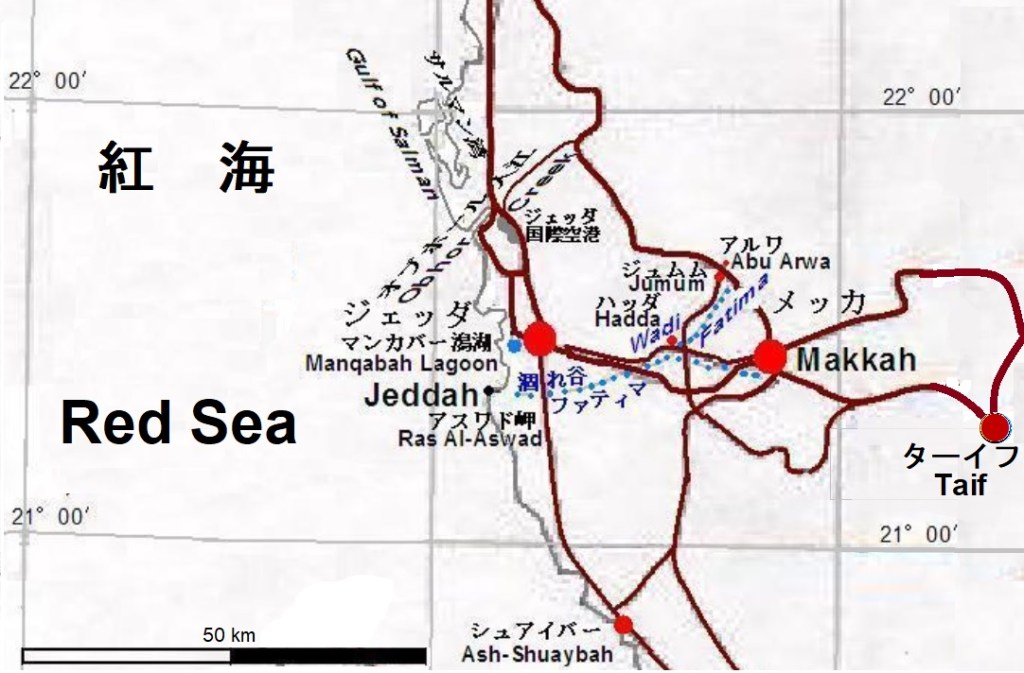
Mecca and its vicinity
1147年にシャリーフ家の有力な一員であるカターダ・イブン・イドリース(Qatada ibn Idris) (1130 – 1220) (إدريس بن قتادة)がメッカのアミールに就くと対抗する族長達に対する一連の軍事的侵略に勝利して自分の支配する領土を南北へ相当程度に広げました。イドリースの命令で行われた懲罰的な遠征の一つがサキーフ族とターイフ市に対してでした。メッカ太守の地位はアッバース朝(750~1258)時代の1201年に創設されました。カターダ・イブン・イドリースは、1220年までメッカのシャリーフの地位にあり、バヌー・カターダ 王朝(Banu Qatada Dynasty) (1201~1925) (قتادة بنو)を創設して「シャリーフの子孫がメッカを支配する」と云う伝統を確立ました。その伝統は、1925年にヒジャーズがイブン・サウード(1876 ~1953) (محمد بن سعود)に征服されるまで続きました。
In 1147, Qatada ibn Idris (1130 – 1220) (إدريس بن قتادة), , an influential member of Sharif family, took over Amir of Mecca and defeated a series of military invasions against opposing chieftains. He expanded his territory considerably from north to south. One of the punitive expeditions undertaken on the orders of Qatada ibn Idris was against Saqif tribe and the city of Taif. The status of Mecca Amir was established in 1201 during Abbasid Caliphate (750~1258). Qatada ibn Idriss held the position of Sharif of Mecca until 1220, when he founded Banu Qatada Dynasty (1201~1925) (بنو قتادة) to establish the tradition that “Mecca is ruled by the descendants of Sharif “. This tradition had continued until the conquest of Hejaz by Ibn Saud (1876 ~ 1953) (محمد بن سعود) in 1925.

Sharifate of Mecca
アッバース朝滅亡と後継者保護
Fall of Abbasid dynasty and Protection of its scion
前述したようにモンゴル帝国(1206~1368)が1258年にバクダッドに侵攻してアッバース朝が滅び、カリフ位継承者がマムルーク朝(1250~1517)スルターンの庇護の下に移りました。その後はムスリム帝国の元の州であるヒジャーズも紅海と東方交易に古くから関心を持っていたエジプトへの併合の対象に成りました。1269年にスルターン・バイバルス(Baybars) (بيبرس) (Baybars) (r.1260~1277)は、巡礼を終わらせましたが、公にはエジプト人巡礼を保護する名目で軍隊を残留させました。バイバルスの本当の目的は、メッカに覇権を樹立する為でしたが、この計画は、シャリーフの猛反対の為にすぐに失敗しました。シャリーフは、イエメンのスルターンおよびイラクのタタール人から受けた同じ様な企てに抵抗していました。しかしながらシャリーフは、国際的な勢力には成れず、マムルーク朝による保護が避けられないのが現実でした。
As mentioned above, Mongol Empire (1206-1368) invaded Baghdad in 1258 and Abbasid dynasty had fallen, and the successor to the caliphate moved under the protection of Mamluk sultanate (1250~1517). After moving under the protection of Sultanate, the former state of Muslim Empire, Hejaz, was also annexed by Egypt, which had long been interested in the Red Sea and orient trade. Sultan Baybars (r.1260~1277) (بيبرس) in 1269 ended the pilgrimage but publicly stationed his army at Mecca in the name of protecting the Egyptian pilgrimage. Baybars’ real purpose was to establish hegemony in Mecca, but this plan soon failed due to Sharif’s fierce opposition. Sharif resisted similar attempts received from Sultan of Yemen and Tatars of Iraq. However, Sharif could not become an international power, and the protection of Mamluks was inevitable.

Mamluk Egypt
シャリーフ政権内紛と対抗勢力
Civil strife and Powerful opponent
エジプトが遭遇している北の問題は地中海の海賊であり、東の問題は離反する王国群と時々で独立した態度を見せるシャリーフを鼓舞するペルシアのティムール朝(Timurid Dynasty) (1370~1507) (التيموريون)でした。自分の兄弟に対して戦いを挑んだバラカート一世(Barakat I) (r.1404~1452) (بركات الأول)のシャリーフ政権下での内紛がメッカ支配者の力を急激に弱め、その支配力は最低に成りました。有力な対抗勢力のシャイビ族(Shaibi) (شعيب)がシャリーフに公に戦いを挑みました。エジプトのマムルーク朝スルターン・バルスバーイ(Barsbay) (1422~1438)は、治安を口実として1425年メッカに守備隊を駐屯させてシャリーフを従属させ、ジェッダの徴税権を奪いました。
The problem in the north, that Egypt was encountering, was piracy in the Mediterranean, and the problem in the east was the Persian Timurid Dynasty (1370~1507) (التيموريون), which inspired dissident kingdoms and the Sharif regime who sometimes showed independent attitude. The civil strife under the Sharif regime of Barakat I (r.1404~1452) (بركات الأول), who fought against his brothers, sharply weakened the power of the Meccan Amir (the Sharif regime) and its dominance reached its lowest. A powerful opponent, the Shaibi (شعيب), publicly challenged the Sharif regime. The Egyptian Mamluk Sultan Barsbay (1422~1438) stationed his garrison in Mecca in 1425 to subordinate the Sharif regime, depriving Jeddah of its right to collect taxes.
シャイビ族(Shaibi) (شعيب):ムダル・アドナーン部族(Mudar Adnan Arab) (مضر عدنان عرب)バヌー・キナーナ族(Banu Kinana) (بنو كنانة)クライシュ族(Quraysh) (قريش)バヌー・アブド・マナーフ一門(Banu Abd Manaf) (بنو عبد مناف)バヌー・ハーシム一門(Banu Hashim) (بنو هاشم)の支族です。
Shaibi (شعيب): A clan of Banu Hashim (بنو هاشم) of Banu Abd Manaf (بنو عبد مناف) of Quraysh (قريش) of Banu Kinana (بنو كنانة) of Mudar Adnan Arab (مضر عدنان عرب).
マムルーク朝への従属
Subordination to Mamluk sultanate
この時までエジプトはシャリーフに大きな自治権を与えて、聖地の保護、巡礼の監督および紅海の港全体の支配にのみ主な関心を持っていましたが、ジェッダ港とその政権への直接支配の確立は、ヒジャーズ支配とへの公然とした干渉と事実上のシャリーフ従属が始まった証でした。マムルーク朝は、賢明にもジェッダ港からの歳入を全て収得せず、シャリーフへのその一部割り当てを許していました。マムルーク朝とシャリーフは、重大な紛争が無い限りは、この地区からの歳入が両方の国庫に自然に流れ込む事をお互いに認識していました。
Until this time, Egypt had given Sharif regime great autonomy and had only the primary interest in the protection of the Holy sites, the supervision of pilgrimages and the control of the entire Red Sea ports, but the establishment of direct control over the port of Jeddah and its administration was a sign of the beginning of open interference and de facto subordination of Hejaz rule. Mamluks wisely did not collect all the revenue from the port of Jeddah and allowed some of it to be allocated to Sharif regime. Mamluks and Sharif recognized each other that unless there was a serious conflict, revenues from the region would flow naturally into both treasuries.
ターイフの重要さは、イスラーム時代の最初の世紀の間にゆるやかな後退を経験しました。この動きは、ターイフだけでは無く全ての地域に影響しました。さらにターイフの主要地域部族サキーフ族(Thaqif) (ثقيف)の多くの勇敢で博学な男達がイスラームを広め、自分達の才能をカリフの宮廷に貢献する為に移住して行きました。
The importance of Taif experienced a gradual decline during the first century of the Islamic era. This move affected not only Taif, but also all regions. In addition, many brave and erudite men from Thaqif (ثقيف), the main regional tribe of Taif, migrated to spread Islam and contribute their talents to Caliphate’s court.
マムルーク朝滅亡とオスマン・トルコへの臣従
Fall of Mamluk and Vassalage to Ottoman
1516年の春にオスマン・トルコ第9代皇帝(r.1512~1520)サリーム一世(Sultan Salim I) (الأول سليم)が突然、シリアのマムルーク朝領内に攻め込みました。その時のブルジー・ マムルーク朝(Burji Mamuluk) (1382~ 1517)のスルターンは、カンスーフ・ガウリー(Qansawh al-Ghawr) (r.1501-1516) (قنصوه الغوري)でした。彼は、マムルーク朝と共にシリア北部のアレッポ(ﺐﺣﻠ) (Aleppo or Halab) 北44kmのマルジ・ダービク(Marj Dabiq) (مرج دابق)の平原でオスマン・トルコ軍を迎え撃ちました。これが「マルジ・ダービクの戦い(Battle of Marj Dabiq) (معركة مرج دابق)」です。1516年8月24日に始まった戦闘ではオスマン側の圧倒的な火力でエジプト側が粉砕されました。続いて1517年1月22日にカイロは、オスマン側の手に落ちてマムルーク王朝は滅亡しました。
In the spring of 1516, the ninth Ottoman emperor (r.1512-1520) Sultan Salim I (الأول سليم) suddenly invaded Syria’s Mamluk territory. Burji Mamuluk (1382~1517) Sultan at that time was Qansawh al-Ghawr (r.1501-1516) (قنصوه الغوري). Together with Mamluks, he met Ottoman forces on the plains of Marj Dabiq (مرج دابق). It is 44 km north of Aleppo (Halab) in the northern Syria. This is the “Battle of Marj Dabiq”. The battle that began on August 24, 1516. Egyptians were crushed with overwhelming Ottoman firepower. It followed by the fall of Cairo to Ottomans on January 22, 1517, ending Mamluk dynasty.

Sultan Salim I
マムルーク王朝の滅亡を受け、メッカ首長のバラカート二世(Barakat II) (r.1497~1525) (بركات الثاني)は、オスマン・トルコから正式に自分の権威の承認を得る為、次男で13歳になるアブー・ヌマイイ(Abu Numayy) (أبو نمي)をスルターン・サリーム一世((Sultan Salim I))の宮廷へ自発的に送りました(前述)。サリーム一世は、預言者の子孫で2つのモスクの守護者から臣従の礼を受け、名誉に感じました。
Following the fall of Mamluk dynasty, Barakat II (r.1497~1525) (بركات الثاني), Sherif of Mecca, voluntarily sent his second son Abu Numayy (أبو نمي), aged 13, to the court of Sultan Salim I for obtaining the formal recognition of his authority from Ottoman Turks. (see above). Salim I felt honored to have received obedience from the guardians of the two mosques, a descendant of the Prophet.
恐らく遠隔地での不確定な戦闘から解放されてホッとしていたので、自分の満足感をメッカ首長の支配を実質的に全ヒジャーズに確認する事で示しました。それには、ハリー(Hali) (حلي)、ジェッダ(Jeddah) (جدة)、メッカ (Makkah Al Mukarramah) (مكة المكرمة)、マディーナ (Al Madinah Al Munawwarah) (المدينة المنورة)、エンボ(ينبع) (Yenbo)(現在のヤンブー)およびハイバル(خيبر) (Khaybar)等を含みます。したがって、オスマン帝国の治世下でも、メッカのシャリフの地位と権威は以前と同じように保持されました。
Perhaps relieved to be free from indeterminate fighting in remote areas, Salim I showed his satisfaction by confirming the rule of Mecca Amir to virtually all the Hejaz. These include Hali (حلي), Jeddah (جدة), Mecca (مكة), Madinah (المدينة), Embo (ينبع) (Yenbo) (now Yanbu) and Khaybar (خيبر). Thus, even under the reign of Ottoman Empire, the status and authority of Sharif of Mecca were retained as before.
 Desert peninsula