Tribal Migration and Reformation (Lower Najd since Mid-15th century)


目次(Index)
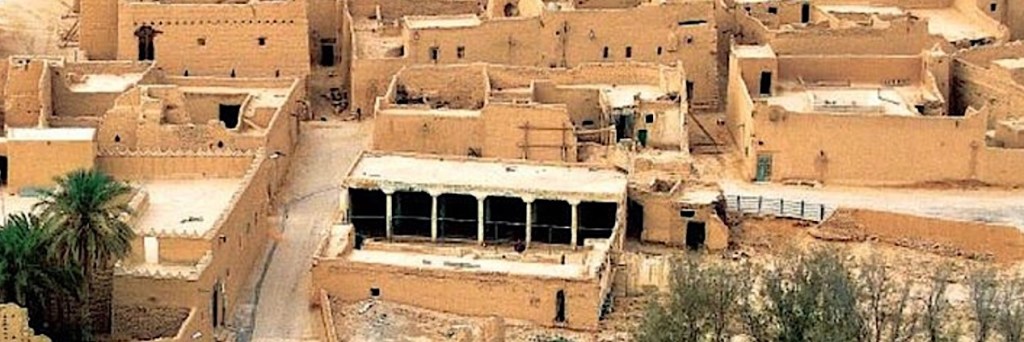
A remain of mosque in Dirʻiyyah
涸れ谷ハニーファへの部族移住とハジュルの衰退
Tribal migration to Wadi Hanifa and Decline of Hajr
15世紀半ばから17世紀初期にわたって続いた環境条件の改善で、下ナジュド(Lower Najd)の集落が次第に復活し始めました。集落の復活は、ハサーのジャブリード朝 (Jabrids) (1417~1524) (الإمارة الجبرية)のヤマーマ(Yamamah)およびアリード (Al Arid) (العريض)への侵略や14世紀および15世紀のホルムズ王国(Kingdom of Hormuz) (10th~17th C) (مملكة هرمز)覇権下のアラビア湾交易の繁栄に刺激されたのだと思われます (第28章参照)。
多くの集落が新たにやって来た人々によって作られたり、復活させられたりしました。その中でもタミーム族(Tamim) (تميم)が取り分け積極的でした。ワシュム扇状地(الوشم) (Al Washm)の初期の集落やアジャー山塊(Jibal Aja) (جبال أجا)のクファール(Qufar) (قفار)からタミーム族は数を増やし、涸れ谷ハニーファ(Wadi Hanifa)、スダイル(Sudayr) (سدير)およびカスィーム(Al Qasim Province) (القصيم)へと移住しました。放牧民も紀元1,500年直後のナジュド(Najd) (نجد)におけるジャブリード朝(Jabrids Dynasty) (1417~1524) (الإمارة الجبرية)勢力の衰退の後は、集落の増加に貢献しました。人口密集の結果として17世紀のうち続く干魃によって居住環境は、悪化させられましたが、定住化と再移住を行う事で解決されました。特に積極的だったのがダワースィル族(Dawasir) (دواسر)、アナザ族(‘Anazah) (عنزة))、バヌー・バクル・イブン・ワーイル族(Banu Bakr ibn Wa’il) (بنو بكر بن وائل)およびアイド族(Al ‘A’idh or Al Aidh) (العيض أو الأيض) 等でした。一方で17世紀のナジュドの最大の町ウヤイナ(’Uyaynah) (عيينة)と成った場所のタミーム族(Tamim)への売却は、バヌー ・ハニーファ 一門(Banu Hanifa) (بنو حنيفة)の数と勢力の衰退を示していました。
The settlement of the Lower Najd had gradually been revived as the improvements in environmental conditions from the mid-15th century to the early 17th century. This revival might be stimulated by the invasion of Jabrids (1417~1524) (الإمارة الجبرية) to Yamamah (يمامة) and Arid (عريض). It’s also be done by the prosperity of the Arabian Gulf trade under the hegemony of Kingdom of Hormuz (10th~17th C) (مملكة هرمز) from 14th century to 15th century (see chapter 28).
Many settlements were created or revived by new arrivals. Among them, Tamim (تميم) were particularly active. As Tamim had increased in number, more of them migrated from their early settlements of the Washm (وشم) alluvial fan (الوشم) and Qufar (قفار) in the Aja massif (Jibal Aja) (جبال أجا) to Wadi Hanifa, Sudayr (سدير) and Qasim (القصيم). The herders had also contributed to increase the number of settlements in Najd (نجد) just after 1,500 AD, when Jabrids Dynasty (1417~1524) (الإمارة الجبرية) had declined its power. Population conditions were degraded by droughts in the 17th century as the result of dense population, but they were solved by new settlements and resettlements. Particularly active tribes were Dawasir (دواسر), ‘Anazah (عنزة), Banu Bakr ibn Wa’il (بنو بكر بن وائل) and Al ‘A’idh (العيض أو الأيض), etc. On the other hand, the fact that Banu Hanifa (بنو حنيفة) sold the place which later became ‘Uyaynah (عيينة), the largest town of Najd in the 17th century, to Tamim, showed the declining power of Banu Hanifa.

Tribal migration to Wadi Hanifa
アリード (Al Arid) (العريض):リヤード及びその一部。
タミーム族(Tamim) (تميم):ムダル・アドナーン部族(Mudar Adnan Arabs)支族で、クライシュ族Quraysh (قريش)とは姉妹関係の一門。
ワシュム(Al Washm) (الوشم):サルミダー(Tharmida) (ثرمداء)起点の扇状地。
Al Arid (العريض): Riyadh and its parts.
Tamim) (تميم):A subtribe of Mudar Adnan Arabs, and a sister clan with Quraysh (قريش).
Al Washm (الوشم): An alluvial originating from Tharmida (ثرمداء).
クファール(Qufar) (قفار) :ハーイル南西15km
アナザ族(‘Anazah) (عنزة):ラビーア・アドナーン部族(Rabi’ah Adnan Arabs)の支族。
Qufar) (قفار): It is located15 km southwest of Ha’il (حائل).
‘Anazah) (عنزة): A subtribe of Rabi’ah Adnan Arabs.
バヌー・バクル・イブン・ワーイル族(Banu Bakr ibn Wa’il) (بنو بكر بن وائل) : ラビーア・アドナーン部族(Rabi’ah Adnan Arabs)の支族。バクル族(Bakr)、バヌー・バクル族(Banu Bakr)、バニー・ワーイル族(Bani Wa’il)、バクル・イブン・ワーイル族(Bakr ibn Wa’il)とも呼ばれます。
Banu Bakr ibn Wa’il) (بنو بكر بن وائل): A subtribe of Rabi’ah Adnan Arabs, also known as Bakr, Banu Bakr, Bani Wa’il, Bakr ibn Wa’il.
アイド族(Al ‘A’idh or Al Aidh) (العيض أو الأيض)(詳細は不明)、15世紀後期から16世紀の遊牧民の連続した移動の波の中で、下ナジュドに移住、旱魃により17世紀ハルジュ(Kharj) (خرج)に再移住)。
Al ‘A’idh or Al Aidh (العيض أو الأيض):Details unknown, migrated to the Lower Najd in a continuous wave of nomadic migrations in the late 15th and 16th centuries, resettled to Kharj (خرج) in the 17th century due to drought。
ムラダ一門の招聘
Invitation of Muradah Clan
そうした状況でハジュル(Hajr) (حجر)およびその近傍のジズア(Jiz’ah) (جذعة)を支配していたディルア族(Dir’) (درع)の首領であったイブン・ディルア(Ibn Dir’) (ابن درع)は、この地方の親族(ムラダ一門(Muradah Clan) (مردة))の数を増やそうと、アラビア湾のカティーフ(Qatif)の近くのディルイーヤ(Al-Diriyah) (لدرعية)と云う場所に住んでいた同じ一門のムラダ族を招きました。マーニア・ビン・ラビーア・ムライディー(Mania bin Rabiah Al-Muraydi) (مانع بن ربيعة المريدي)に率いられたムラダ族(Muradah)は、1,446年に到着しました。イブン・ディルア(Ibn Dir’)は、ヤズィード族(Al Yazid) (اليزيد)領と接している自分の領土北部のガースィバ(غاسبة) (Ghasibah)および同じく涸れ谷ハニーファ内のムライビド地区(Mulaybid) (مليبد)をこのムラダ一門に与えました。ムラダ一門は、自分達の故郷に因んで新しい集落にディルイーヤと云う名を付けました。後に改革運動の中心と成るように運命付けられたディルイーヤは、この新しい血の注入で急速に拡大しました。数年でムラダ一門(Muradah Clan)はヤズィード族(Al Yazid)領の残っていた部分を奪い取ってしまいました。
Under such circumstances, Ibn Dir’ (ابن درع) invited Muradah Clan (مردة) in order to increase the number of his relatives in this region. Ibn Dir’ (ابن درع) was the chieftain of Dir’ tribe (درع) and controlled Hajr (حجر) and its neighbouring Jiz’ah (جذعة). Muradah Clan (مردة) were living in the place called Al-Diriyah (لدرعية) near Qatif in the Arabian Gulf. Then, Muradah clan, led by Mania bin Rabiah Al-Muraydi (مانع بن ربيعة المريدي), arrived there in 1,446. Ibn Dir’ gave them Qhasibah (غاسبة), his northern territory, which was next to the territory of Al Yazid (اليزيد) tribe. He also gave them his another territory named Mulaybid (مليبد). Muradah clan named their new settlement Diriyah (درعية) after their hometown. Diriyah, destined to become the center of the reform movement, expanded rapidly with this new blood injection. Within a few years, Muradah Clan had taken what remained of Al Yazid territory.
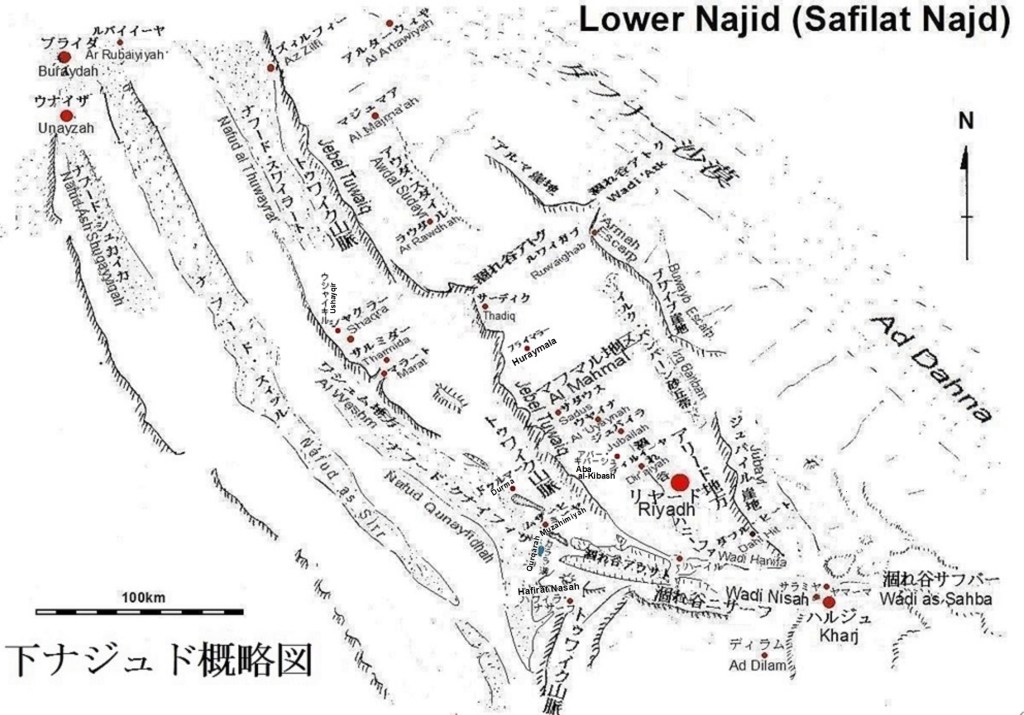
Lower Najd
ムラダ一門(ムルダ一門)には、下記の様にバクル・イブン・ワーイル族傘下の一門と同名でラビーア部族同盟傘下の一門がありますが、ここで記述している一門は、後者のラビーア部族同盟傘下の一門です。
ムラダ一門Muradah (مردة):ラビーア・アドナーン部族(Rabi’ah Adnan Arabs) (ربيعة عدنان عرب)バクル・イブン・ワーイル族Bakr ibn Wa’il) (بكر بن وائل)ハニーファ一門(Banu Hanifa) (بنو حنيفة)ハナフィー族(Hanafi) (الحنفي)の一門。なお、ムルダ一門(Mrudah)とも転写されています。
ムラダ一門(Muradah Clan)(ムルダ一門Mrudah)):アドナーン部族同盟(Adnan tribal confederation) (اتحاد قبيلة عدنان)のラビーア部族同盟(Rabi’ah Tribal Confederation) (تحالف قبائل ربيعة)に属するワーイル族(Wa’il) (وائل)のバヌー・ハニーファ一門(Banu Hanifa Clan) (بنو حنيفة)の支門。なお、ムルダ一門(Mrudah)とも転写されています。
Murada has one clan under Bakr ibn Wail tribe with the same name as one under Rabia Tribal Alliance as shown below. The one described here is the latter, which is under Rabia Tribal Alliance.
Muradah (مردة): A branch of Hanafi clan (الحنفي) belonging to Hanifa clan (بنو حنيفة) of Banu Bakr ibn Wa’il tribe (بكر بن وائل) of Rabi’ah Adnan Arabs (ربيعة عدنان عرب). It is also transcribed with Mrudah.
Muradah (Mrudah) (مردة): A branch clan of Banu Hanifa clan (بنو حنيفة) of Wa’il tribe (وائل) belonging to Rabi’ah tribal confederation (تحالف قبائل ربيعة) of Adnan tribal confederation (اتحاد قبيلة عدنان). It is also transcribed with Mrudah.
ヤズィード族(Al Yazid) (اليزيد):ラビーア・アドナーン部族バクル・イブン・ワーイル族ハニーファ一門の末裔の一つ。
Al Yazid: A descendants of Banu Hanifa clan belonging to Banu Bakr ibn Wa’il tribe of Rabi’ah Adnan Arabs.
ディルア族(Dir’) (درع):ラビーア・アドナーン部族バヌー・バクル族ハニーファ一門ハナフィー族ムラダ一門
ガースィバ(غاسبة) (Ghasibah):涸れ谷ハニーファ(Wadi Hanifa) (وادي حنيفة)内で、ディルイーヤ(Dir’aiyah) (الدرعية)対岸。
ムライビド地区(Mulaybid) (مليبد):涸れ谷ハニーファ(Wadi Hanifa)内。
Dir’ (درع):A clan of Murudah branch of Hanafi clan belonging to Hanifa clan of Banu Bakr ibn Wa’il tribe of Rabi’ah Adnan Arabs.
Ghasibah (غاسبة): A district on the opposite bank of Dir’aiyah (الدرعية) in Wadi Hanifa (وادي حنيفة).
Mulaybid (مليبد): A district in Wadi Hanifa.
涸れ谷ハニーファ支配の2分割
2 divisions of Wadi Hanifa rule
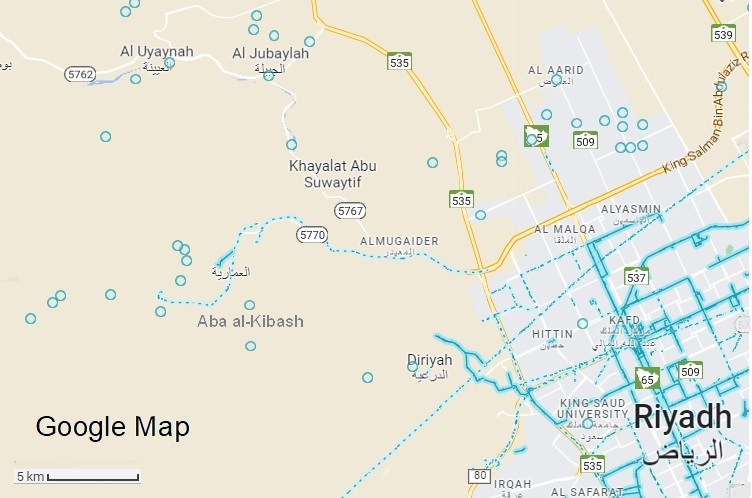
16世紀の初め迄に涸れ谷ハニーファ(Wadi Hanifa)の全ての集落への支配力はジュバイラ(Jubailah) (الجبيلة)を境にしてウヤイナ(‘Uyaynah) (عيينة)とディルイーヤ(Dir’aiyah) (درعية)に分割されました。ディルイーヤは、新しい定住者を引きつけ交易商がしばしば出入りしました。16世紀の間、大きく数を増やしたディルイーヤ為政者一門は、分裂し始めました。分家の一つは、トゥワイク山脈(Jebel Tuwaiq) (جبال طويق)を西へ越えてドゥルマー(Durma) (ضرما)に定住するために離れました。この分家は、やがてそこの為政者に成りました。もう一つの分家は、ディルイーヤの北方のアバー・キバーシュ(Aba al-Kibash) (أبا الكباش)へ移動しました。
By the beginning of the 16th century, the control over all the settlements of Wadi Hanifa was divided by Jubailah (الجبيلة) into ‘Uyaynah (عيينة) and Dir’aiyah (درعية). Dir’aiyah attracted new settlers and traders often came and went. During the 16th century, the greatly outnumbered Dir’aiyah rulers began to divide between themselves. One of the branches left to settle at Durma (ضرما) across the Tuwaiq Mountains (جبال طويق) to the west. This branch eventually became the ruler there. Another branch moved north of Diriyah to Aba al-Kibash (أبا الكباش).
Northwestern Suburb of Riyadh
涸れ谷ハニーファ北部にあるウヤイナ(‘Uyaynah) (عيينة)も15世紀の創設の後は、同じように生長しました。その為政者で、タミーム族(Tamim)の一門であるムアンマル(Mu’ammar) (المعمر)は、15世紀にバヌー・ハニーファ族ヤズィード族(Yazid) (اليزيد)一門からウヤイナ購入していました。そして、その勢力を北方で、バヌー ・ハニーファ一門の古い集落のある涸れ谷クッラーン(Wadi Qurran) (وادي القران)(現在はリヤード市内)へ広げました。ムアンマル一門は、ディルイーヤのルアサーウ(‘ru’asa’) (رؤاساء)(為政者)よりも結束力が強かったので、17世紀から18世紀初めにウヤイナを秀でた町に発展させました。
‘Uyaynah (عيينة) in the northern part of Wadi Hanifa had growm similarly after its founding in the 15th century. Its ruler, Mu’ammar clan (المعمر), a branch of Tamim tribe, In the 15th century, Mu’ammar clan purchased ‘Uyaynah from Yazid tribe (اليزيد) of Banu Hanifa clan. And Mu’ammar clan extended its influence northward up to Wadi Qurran (وادي القران), in spite of that Banu Hanifa clan had their own old settlements in it. This wadi is presently within Riyadh urban area. Muammar clan was more cohesive than the ‘ru’asa’ (رؤاساء) (ruler) of Diriyah, therefore they had developed ‘Uyaynah into an outstanding town in the 17th century and early 18th century.
ムアンマル(Mu’ammar) (المعمر):ムダル・アドナーン部族(Mudar Adnan Arabs)のタミーム支族(Tamim) (تميم)の一門。
Al Mu’ammar (المعمر):A Clan of Tamim subtribe (تميم) of Mudar Adnan Arabs, and a sister clan with Quraysh (قريش).
オスマン帝国の圧力とシャリーフの下ナジュド攻撃
Ottoman Empire pressure and Sharif’s attacks to the lower Najd region
オスマン帝国(Ottoman Empire) (1299~1922) (الدولة العثمانية)は、1517年にマムルーク朝(Mamluk Sultanate) (1250~1517) (الدولة المملوكية)を滅ぼし、ヒジャーズ(Hijaz) (حجاز)に対しては、マッカ・シャリーフ(Sharif of Mecca) (شريف مكة)の勢力と権威を維持して支配をするマムルーク朝(1250~1517)のやり方を踏襲しました。その直ぐ後でハサー(Hasa or Ahsa) (حسا)のジャブリード朝(Jabrids) (1417~1524) (الإمارة الجبرية)勢力は、アラビア湾への侵入したポルトガル艦隊(Portuguese fleet)に遭遇して衰えました。それに対して、オスマン帝国は、インド洋貿易の脅威となるペルシア勢力とポルトガル艦隊の両方同時に立ち向かうことを懸念し、その支配を陸伝いに南イラクそしてそこからアラビア半島東部へと広げました。そして、およそ1550年にハサー・オアシス(Hasa or Ahsa Oasis)を占拠してホフーフ(Hofuf) (هفوف)を州都とするラハサー州(Lahsa) (الأحساء)を設けました。
Ottoman Empire (1299~1922) (الدولة العثمانية) overthrew Mamluk Sultanate (1250~1517) (الدولة المملوكية) in 1517. To rule Hijaz (حجاز), it followed the control way of Mamluk Sultanate who maintained the power and authority of Sharif of Mecca (شريف مكة). Shortly thereafter, the Portuguese fleet invaded the Arabian Gulf. Jabrids Dynasty (1417~1524) (الإمارة الجبرية) of Hasa (Ahsa) rapidly languished against Portuguese. Thus, both of the Persian powers and Portuguese fleet threatened the Ottomans’ Indian Ocean trade. Worrying about facing both parties at once, Ottomans extended its control along the land to the southern Iraq and from there further extended to the eastern Arabian Peninsula. Then, in about 1550, they occupied the Hasa (Ahsa) Oasis and established Lahsa Eyalet (إيالة الأحساء) as an administrative region and made Hofuf (هفوف) as its capital.
ラハサー州(Lahsa Eyalet) (إيالة الأحساء):オスマン帝国(Ottoman Empire)の行政区(Eyalet)の一つでした。かつてのラハサー州(Lahsa Eyalet)の領土は、現在、サウジアラビア(Saudi Arabia)、クウェート(Kuwait)、カタール(Qatar)の一部です。アハサー(Hasa or Ahsa) とカティーフ(Qatif)は、ラハサー州(Lahsa Eyalet)の主要oasesであり、この州の名は、アハサー(Hasa or Ahsa)から名付けられました。この地域は、16世紀半ばにオスマン帝国軍(Ottoman Army)によって占領され、次の130年間、さまざまな程度にオスマン帝国軍(Ottoman Army)によって統治されていました。
Lahsa Eyalet (إيالة الأحساء): It was an administrative region (Eyalet) of Ottoman Empire. The territory of the former state of Lahsa Eyalet is now part of Saudi Arabia, Kuwait and Qatar. Hasa (Ahsa) and Qatif are the main oases of Lahsa Eyalet, which are named after Ahsa (Hasa). The territory was occupied by the Ottoman Army in the mid-16th century and was ruled to varying degrees by the Ottoman Army for the next 130 years

Lahsa Eyalet in 16th century
下ナジュドの繁栄と半島西部および東部におけるオスマン帝国の支配と云う状況で、マッカのシャリーフ(Sharif of Mecca) (شريف مكة)は、半島中央部の下ナジュドでの新しい繁栄に興味を示し、自らの勢力を広げようとする強い姿勢を示しました。最初の攻撃は、1578年にミアカル集落(Mi’qal) (معقل)に対して行われました。時のシャリーフのアブー・ヌマイイ二世(محمد أبو نمي الثاني) (Abu Numayy II) (1506~1584) (r. 1512~1566)の息子が50,000人以上の軍隊を持って急襲しました。多くの住民を殺して土地を略奪し、捕虜を取り、この地に代官を擁立しました。
Given the prosperity of the Lower Najd and the domination of Ottoman Empire in the western and eastern parts of the peninsula, Sharif of Mecca (شريف مكة) expressed interest in the new prosperity of the Lower Najd in the central part of the peninsula and showed a strong attitude of trying to spread his control. His first attack was in 1578 against Mi’qal (معقل). The son of the Sharif of the time Abu Numayy II (1506~1584) (r. 1512~1566) (محمد أبو نمي الثاني) swooped in with an army of over 50,000 men. He killed many of the inhabitants, plundered the land, took prisoners, and set up his local governor in the Lower Najd.
ミアカル集落(Mi’qal) (معقل):以前は、ハジュル(Hajr) (حجر)の中心でリヤード(Riyadh) (رياض)の前身ムクリン(Muqrin) (مقرن)の隣町。
Mi’qal (معقل): Formerly the center of Hajr (حجر) and the neighboring town of Muqrin (معقل). Muqrin was the predecessor of Riyadh (رياع).
アブー・ヌマイイ二世 (Abu Numayy II) (1506-1584) (r. 1512–1566) (محمد أبو نمي الثاني):ムハンマド・アブー・ヌマイ2世(Muḥammad Abu Numayy II)は、1512年から1566年までメッカのシャリーフ(Sharif of Mecca)でした。最初に父親(1512~1525)と共同統治し、後に息子(1540~1566)と共同統治しました。ムハンマド・アブー・ヌマイ2世(Muḥammad Abu Numayy II)は、6歳の時にメッカのシャリーフ(Sharif of Mecca)の宗主国であるマムルーク朝(Mecca Sharif’s Mamluk Suzerain)のスルターン・カンスー・アル・ガウリ(Sultan Qansuh al-Ghawri)に父と共に共同統治者に任命されました。オスマン帝国(Ottoman Empire)が1517年にエジプトのマムルーク朝(Mamluk Sultanate)を滅ぼすと、父バラカット(Barakāt ibn Muḥammad)は、すぐにアブー・ヌマイイ二世 (Abu Numayy II)を聖なる都市の鍵やその他の贈り物を携えさせて、オスマン帝国(Ottoman Empire)のスルターン・セリム1世(Sultan Selim I)の下に送り、恭順を示しました。それによって、スルターン・セリム1世からバラカット(Barakāt)とアブー・ヌマイイ二世(Abu Numayy II)をヒジャーズの共同支配者としての地位に確認して貰うことができました。1525年に父親が亡くなった後、アブーヌマイは、ヒジャーズの唯一の支配権を引き継ぎました。1540年の後半、彼は、スルターン・スレイマン1世(Sultan Suleiman I)から長男アフマド(Ahmad)を共同統治者(the co-rulers of the Hejaz)として任命して貰い、1554年でのアフマドの死後、その次の最年長(his next eldest son)の息子ハサン(Hasan)を共同統治者(the co-rulers of the Hejaz)任命して貰えました。
Abu Numayy II (1506-1584) (r. 1512–1566) (محمد أبو نمي الثاني): Muhammad Abu Numayy II was a Mecca sharif. He co-ruled first with his father (1512~1525) and later with his son (1540~1566). He was appointed the co-ruler of Hejaz by Mecca Sharif’s Mamluk Suzerain, Sultan Qansuh al-Ghawri, together with his father. After Ottoman Empire conquered Mamluk Sultanate of Egypt in 1517, his father (Barakat ibn Muhammad) immediately sent Abu Numayy II with the keys of the holy city and other gifts to Sultan Selim I of Ottoman Empire to show his respects. Thereby, Barakat and Abu Numayy II were confirmed by their positions as the co-rulers of the Hejaz by Sultan Selim I. After the death of his father in 1525, Abu Numayy II assumed sole control of the Hejaz. Later in 1540, his eldest son Ahmad was confirmed as the co-rulers of Hejaz by Sultan Suleiman I, together with him. And after Ahmad’s death in 1554, his next eldest son (Hasan) was also confirmed as the co-ruler of Hejaz.
3年後にシャリーフ軍(Sharif Army)は、ハルジュ(Kharj) (خرج)に侵入しました。更に16回余りの襲撃が18世紀初期までに記録されています。シャリーフ軍の遠征は、集落へと同じ様に遊牧民にも向けられていました。シャリーフ軍の目的は、表面上ではこの地方に政治的支配を及ぼそうとした様に見えます。しかしながら捕虜を取り、共鳴する首領を擁立するだけの勝利では余りに一時的であり、持続する中央権威を確立する事等は、遠く及びませんでした。実際にはシャリーフ軍の遠征は、部族の有徳な振る舞い、特に巡礼達への妨害の節制を守らせ、部族への食糧を主とする貢ぎ物の強要が主要な目的でした。このような貢ぎ物が定期的に支払われる事は無く、その徴収には新たな戦役を必要としました。
Three years later the Sharif Army invaded Kharj (خرج). A further 16 more raids were recorded by the early 18th century. The Sharif military expeditions were aimed at nomads as well as settlers. On the surface, the aim of the Sharif forces appears to be to exert political control over the region. However, winning only by taking prisoners and establishing a sympathetic chieftain were too short-lived and far from establishing a lasting central authority. In fact, the Sharif expedition was primarily aimed at enforcing tribute, mainly food, to the tribe, to enforce the tribe’s virtuous conduct and abstinence from interfering with pilgrims in particular. Such tribute was not paid regularly, and its collection required a new campaign.
六回の干魃で苦しんだ17世紀
17th century with suffering from six droughts
17世紀からナジュド(Najd)の住人に新しい圧力が掛かって来ました。シャリーフ軍(Sharif Army)の遠征もその一つでした。シャリーフ軍は、遊牧民に東ヒジャーズおよび上ナジュドから下ナジュドへ移動する圧力を加えました。もう一つの大きな圧力は、1620年から1676年の間に半島中央部の民を苦しめた6回の干魃でした。これらによって遊牧民と定住民の多くがナジュドから東方や北方への移住を余儀なくさせられました。同じ時代に多くの放牧民は、不安定な生活を捨て定住する事を強られました。16世紀後半から17世紀にナジュドへ移動した遊牧部族にはザフィール族(Al Zafir) (الظفير)、アナザ族(‘Anazah) (عنزة)、バニー・ワーイル族(Banu Bakr ibn Wa’il) (بنو بكر بن وائل)およびダワースィル族(Dawasir) (دواسر)がいました。さらに、ムタイル族(Mutayr) (مطير)、バヌー・ハーリド 族(Banu Khalid) (بنو خالد)およびカフターン族(Qahtan) (قحطان)が後に続きました。
Since the 17th century, new pressures have come on the inhabitants of Najd. The expedition of the Sharif Army was one of them. The Sharif forces pressured the nomads to move from the Eastern Hijaz and the Upper Najd to the Lower Najd. Another major pressure was the six droughts that afflicted the people of the central peninsula between 1620 and 1676. These forced many nomads and settlers to migrate eastwards and northwards from Najd. During the same period, many pastoralists were forced to abandon their precarious lives and settle down. Nomadic tribes that migrated to the Najd in the late 16th and 17th centuries included Al Zafir (الظفير), ‘Anazah (عنزة), and Banu Bakr ibn Wa’il (بنو بكر بن وائل) and Dawasir (دواسر). In addition, the Mutayr (مطير), Banu Khalid (بنو خالد) and Qahtan (قحطان) followed.
ザフィール族(Al Zafir) (الظفير):カフラーン・カフターニ部族(Kahlan Qahtani Arabs)タイイ族(Tayy)の支族。
バニー・ワーイル族(バクル族)(Banu Bakr ibn Wa’il):前述。
ダワースィル族(Dawasir) (دواسر):28章参照
ムタイル族(Mutayr) (مطير):スンニー・ムスリム部族同盟、イフワーン3部族の1つ。
バヌー・ハーリド 族(Banu Khalid) (بنو خالد):カフラーン・カフターニ部族のタイイ族の支族、但し、アドナーン族と称しており、タイイ族子孫は一部門、東アラビアおよび中央アラビアのアラブ部族同盟の中核となった部族。
Al Zafir (الظفير): A branch of Tayy tribe belonging to Kahlan Qahtani Arabs.
Banu Bakr ibn Wa’il: Previously mentioned.
Dawasir) (دواسر): See chapter 28.
Mutayr (مطير): One of 3 Ikhwan (الإخوان) tribes of Sunni Muslim Confederation (الاتحاد السني المسلم).
Banu Khalid (بنو خالد):A branch of Tayy tribe (طيء) belonging to Kahlan Qahtani Arabs (كهلان قحطان عرب). They call themselves one of Adnan Arabs, and the Taiyy descendant was one division, that has become the core of Arab Tribal Confederation in the East and Central Arabian Peninsula.
カフターン部族(Qahtan Arabs) (قحطان عرب) :純粋のアラブ人。
Qahtan Arabs (قحطان عرب): Pure Arabs.
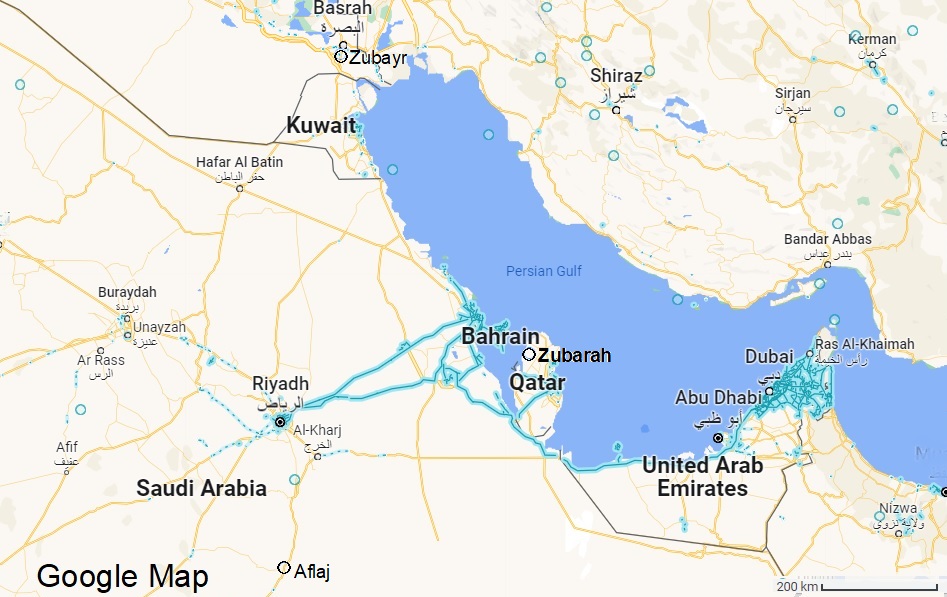
例えばウトゥーブ族(‘Utub) (العتوب)は、南ナジュドのアフラージュ(Aflaj) (أفلاج)をダワースィル族の圧力で離れ、アラビア湾岸に移動しました。その後にクウェイトやズバーラ(Zubarah) (الزبارة)を見つけ、最終的にバハレインを支配下に置きました。同じ様にディルイーヤ(Dir’aiyah) (درعية)および涸れ谷ハニーファ(Wadi Hanifa)を含む下ナジュド(Lower Najd)から多くの定住民がバスラ南西でアラビア湾の頭部のズバイル(Zubayr) (الزبير)に移動しました。疑いも無くそこに引きつけられたのは、一部には交易の可能性にあった為です。特に1637/8年にナジュドを襲った干魃の後はナジュドの住人が大規模に移動し、ズバイルは、急速にナジュド人の支配する隊商交易の重要な町となりました。
For example, ‘Utub tribe (العتوب) left Aflaj (أفلاج) in the southern Najd under pressure from Dawasir tribe and moved to the Arabian Gulf. It then found Kuwait and Zubarah (الزبارة) and eventually took control of Bahrain. Similarly, many settlers from the Lower Najd, including Dir’aiyah (درعية) and Wadi Hanifa, moved and settled at Zubayr (الزبير) in the southwestern Basra, which located in the head of the Arabian Gulf. Some of them were undoubtedly drawn there because of a certain level of the trade potential. Especially after the droughts that hit Najd in 1637/8, the Najd inhabitants moved on a large scale and Zubair rapidly became an important caravan trade town under the Najdi control.
‘Utub migration
ウトゥーブ族(‘Utub) (العتوب):ムダル・アドナーン部族(Mudar Adnan Arabs) (مضرعدنان عرب)バニー・スライム・ビン・マンスール族(Bani Sulaim bin Mansoor) (بني سليم بن منصور)ハファーフ一門(Khafaf) (خفاف)のバニー・ウトバ族(Bani Utbah) (بني عتبة)の支族。
‘Utub (العتوب):A branch of Bani Utbah (بني عتبة) of Khafaf clan (خفاف) belonging to Bani Sulaim bin Mansoor (بني سليم بن منصور) of Mudar Adnan Arabs (مضرعدنان عرب).
ズバーラ(Zubarah) (الزبارة):カタール半島北西部に廃墟が残っています。
Zubarah (الزبارة):A Zubarah Town ruins locate in the north-western Qatar peninsula.
ズバイル(Zubayr) (الزبير):イラクのバスラ州(Basra) (البصرة)の町。
Zubayr (الزبير): A town in Basra Province (البصرة), Iraq.
ディルイーヤとウヤイナ
Dir’aiyah and‘Uyaynah
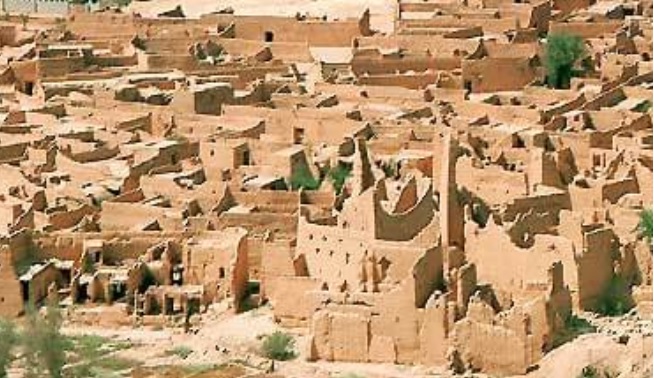
ムルダ一門(Mrudah)の分裂は、17世紀中頃に首領を争う競合同士としてムクリン家(Muqrin) (المقرن)とワトバーン家(Al Watban) (وطبان)と云う二つの主要なグループがあらわれるまで続いました。この競合関係は、町の配置を反映していました。ナジュド(Najd)においては、例えばディルイーヤ(Dir’aiyah)自身とガースィバ(Ghasibah) (غاسبة)の様に一つの町が涸れ谷のそれぞれの岸に二つの地区として分かれている事が大変多くありました。ガースィバ(Ghasibah)は、1446年に創設されたムラダ一門(Mrudah)の元々の集落の一つであり、この町の最も古い地区と考えられていました。
The splitting of Murdah clan continued until the middle of the 17th century, when two major groups emerged as rivals for supremacy: Muqrin (المقرن) and Watban (وطبان). This rivalry reflected placement in town. Very often in Najd one town was divided into two districts on each bank of a wadi, for example Dir’aiyah itself and Ghasibah (غاسبة). Ghasibah was one of the original settlements of Mrudah clan founded in 1446 and considered the oldest district of the town.
Dir’aiyah
ムルダ一門(Mrudah):ムラダ族(Muradah)(ムルダ族(Mrudah))として前述。
Mrudah: Previously mentioned as Muradah (Mrudah).
ムクリン家(المقرن) (Muqrin):ムラダ一門(Muradah)の支配者家族。
House of Muqrin: Ruling Family of Muradah Clan (Mrudah Clan).
ワトバーン家(Watban) (وطبان):ムラダ一門(Muradah)の支配者家族。
House of Watban (وطبان): Ruling Family of Muradah Clan (Mrudah Clan).
ガースィバ(Ghasibah) (غاسبة):前述。
Ghasibah (غاسبة): Previously mentioned.
18世紀初めまではディルイーヤ(Dir’aiyah)の為政者は、ワトバーン家(House of Watban)の出でした。1720年の少し前からムクリン家(House of Muqrin)の競合分家のサウード・イブン・ムハンマド(Saud ibn Muhammad) (سعود بن محمد)が首領の役を引き受け、首領を務める間にサウード家の名祖となる創始者になりました。サウード・イブン・ムハンマドは1725年まで支配を行い、その支配はワトバーン家の一員に引き継がれました。この為政者は、翌年のウヤイナに対する遠征の失敗の中で殺されてしまいました。その後にムクリン家のサウードの息子のムハンマド(Muhammad ibn Saud or Ibn Saud) (محمد بن سعود)が首領の地位を奪い、ワトバーン家を町から追放しました。ワトバーン家は、ズバイル(Zubayr) (زبير)(前述)へ赴き、そこで親族と一緒になり、ついには為政者家族と成りました。
Until the early 18th century, the rulers of Dir’aiyah were from House of Watban. Shortly before 1720, Saud ibn Muhammad (سعود بن محمد), a competing branch of House of Muqrin, assumed the role of chieftain, and became the eponymous founder of House of Saud during his tenure. Saud ibn Muhammad ruled until 1725, when control was passed to a member of House of Watban. This ruler was killed in a failed expedition against ‘Uyaynah in the following year. Muhammad ibn Saud (Ibn Saud) (محمد بن سعود), Saud’s son of House of Muqrin, then seized the position of chieftain and banished Watbans from the town. The Watbans traveled to Zubayr (زبير) (mentioned above), where they joined relatives and eventually became a ruling family.
サウード・ビン・ムハンマド・アル・ムクリン(Saud bin Muhammad Al Muqrin) (1640~1726)(سعود بن محمد آل مقرن):サウード家(House of Saud) (آل سعود)の名を冠した祖先でした。 サウードは、ムクリン家(Muqrin) (مقرن)の出身であり、1720年から1726年までディルイーヤ(Dir’aiyah) (درعية)のオアシスの首領でした。
Saud bin Muhammad Al Muqrin (1640~1726) (سعود بن محمد آل مقرن): the eponymous ancestor of House of Saud (آل سعود). Saud was from the family of Muqrin (مقرن) and the leader of the oasis of Diriyah(درعية) from 1720 to 1726.
ムハンマド・イブン・サウード(Muhammad ibn Saud or Ibn Saud) (محمد بن سعود):サウード家(House of Saud) (آل سعود)初代当主(r. 1726~1765 )で、1744/5年にムハンマド・イブン・アブドゥルワッハーブ(Muhammad ibn Abd al-Wahhab) (1703~1792) (محمد بن عبد الوهاب)を受け入れ、第一次サウジ公国(First Saudi State) (1744~1818) (الدولة السعودية الأولى)を創設しました。
Muhammad ibn Saud or Ibn Saud (محمد بن سعود): He was the first head (r. 1726~1765) of House of Saud (آل سعود), accepted Muhammad ibn Abd al-Wahhab (1703~1792) (محمد بن عبد الوهاب) in 1744/5. And he established First Saudi State (1744~1818) (الدولة السعودية الأولى).
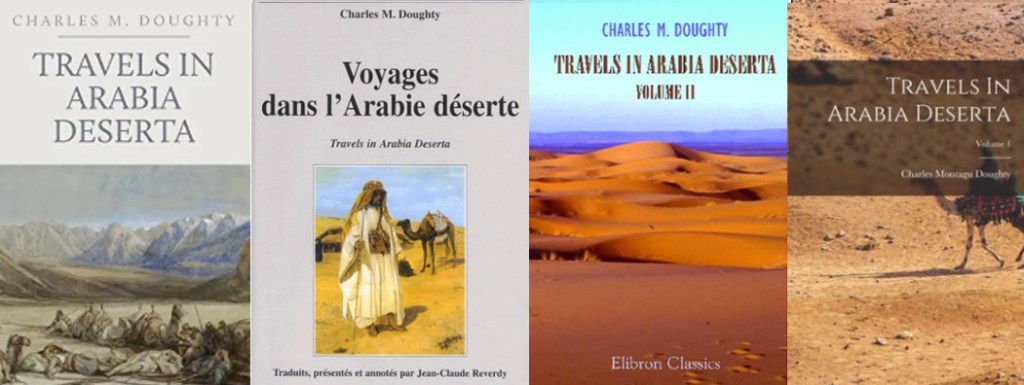
サウード家とアナザ族との関係:ラビーア部族同盟にはアブドゥルカイス族(Abdul Qays) (عبد القيس)、タグリブ族(Taghlib) (تغلب), ナミール・イブン・カシット族(al-Nammir ibn Qasit) (النمير بن قاسط)とアナザ族(Anazzah) (عنزة)が含まれています。この内のアナザ族(Anazzah)は、前述のラビーア・アドナーン部族(Rabi’ah Adnan Arabs) (ربيعة عدنان عرب)に含まれるアナザ族(Anazzah) (عنزة)ではなく、ラビーア部族同盟(Rabi’ah tribal confederation)傘下のアナザ部族同盟(‘Anazzah Confederation) (تحالف قبائل عنزة)です。イスラーム以前からヤマーマ(Yamamah) (يمامة)に住んでいた自立した古代部族の一つです。チャールズ モンタギュー ダウティ(Charles Montague Doughty) (1843~1926)は、その著書「アラビア沙漠の旅行(Travels in Arabia Deserta)」の中で、「王室のサウード家 (House of Saud)は,「アナザ族(‘Anazzah)」の出身である。」と述べていますし、筆者自身もまた、その様な話は良く耳にしました。19 世紀の歴史家イブン・ラブーン(Ibn La’bun)は「アナザ(Anazzah)の子孫の一部が「ワーイル族(Wa’il) (وائل)」という部族呼称を使用していた。」とも述べています。(「サウード家 (House of Saud)は、アーミル・イブン ・サウサア族(‘Amir ibn Sa’sa’ah) (عامر بن صعصعة)にその起源をたどるムクリン家(Muqrin) (المقرن)の出身でした。」との記述もあります。)
Relation between House of Saud and ‘Anazzah: Rabia tribal alliance includes Abdul Qays (عبد القيس), Taghlib (تغلب), al-Nammir ibn Qasit (النمير بن قاسط) and ‘Anazzah (عنزة). This ‘Anazzah is not a branch of the aforementioned Rabi’ah Adnan Arabs (ربيعة عدنان عرب), but ‘Anazzah Confederation (تحالف قبائل عنزة) under Rabi’ah tribal confederation (تحالف قبائل ربيعة) of Adnan tribal confederation (اتحاد قبيلة عدنان). It was one of the independent ancient tribes that inhabited Yamamah (يمامة) since pre-Islamic times. Charles Montague Doughty (1843~1926), in his book Travels in Arabia Deserta, described the “Royal House of Saud is from ‘Anazzah.” And the writer myself had often heard such stories. The 19th-century historian Ibn La’bun also noted that “some of the descendants of the ‘Anazzah used the tribal designation ‘Wa’il’ (وائل).” (There is also another description that, “House of Saud was from Muqrin, which traces its origins to ‘Amir ibn Sa’sa’ah) (عامر بن صعصعة).” )
Travels in Arabia Deserta
アーミル・イブン・サウサア族(‘Amir ibn Sa’sa’ah) (عامر بن صعصعة) :ムダル・アドナーン部族(Mudar Adnan Arab) (مضر عدنان عرب)のカイス・アイラーン族(Qais Ailan) (قيس عيلان)のハワージン族(Hawazin) (هوازن)の一支族です。アーミル・イブン・サウサア族は、アーミル(Amir) (عامرية)やバヌー・アーミル族(Banu ‘Amir) (بنو عامر)とも呼ばれます。
‘Amir ibn Sa’sa’ah (عامر بن صعصعة): A branch of Hawazin tribe (هوازن) belonging to Qais Ailan tribe (قيس عيلان) of Mudar Adnan Arab (معر عدنان عرب). ‘Amir ibn Sa’sa’ah are also known as ‘Amir (عامرية) or Banu ‘Amir (بنو عامر).
ルアサーウ(‘ru’asa’) (رؤاساء)(為政者)の間の闘争にもかかわらず、ディルイーヤ(Dir’aiyah) (درعية)は、この時代を通じて生長し、繁栄続けました。ディルイーヤおよびドゥルマー(Durma) (ضرما)は、両方とも農業生産とその廉価さで注目され、ディルイーヤは涸れ谷ハニーファの集落の中でウヤイナに次ぐ第二の集落と成っていました。
17世紀の中頃までに涸れ谷ハニーファの北の端にあるウヤイナ(‘Uyaynah) (عيينة)はその勢力が更に北方のサーディク(Thadiq) (ثادق)(リヤード西北西115km)まで広がり、南ナジュドで一番領土の拡張した町と成って来ていました。フライマラー(Huraymala) (حريملا)(リヤード北西80km)との反目でディルイーヤ(Dir’aiyah) (درعية)と同盟しましたけれども、1680年代にその関心を南方へ転じ南の隣人の領域を侵略しました。その後、ディルイーヤ、フライマラーおよびハルジュ(Kharj) (خرج)は、ウヤイナに対抗する共同戦線を張りました。しかしながらウヤイナは、下ナジュドで最強の町として残りました。末期にはハサーの為政者であるバヌー・ハーリド族(Banu Khalid) (بنو خالد) (Banu Khalid)(前述)と同盟し、バヌー・ハーリド族は、18世紀初期にウヤイナのディルイーヤおよびハルジュへの攻撃への援軍にやって来ました。
Despite the struggles among the ‘ru’asa’ (رؤاساء) (rulers), Dir’aiyah (درعية) continued to grow and prosper throughout this period. Both Diriyah and Durma (ضرما) were noted for their agricultural productions and low prices. Dir’aiyah had become the second settlement after ‘Uyaynah among the settlements of Wadi Hanifa.
By the middle of the 17th century, ‘Uyaynah (عيينة), at the northern end of Wadi Hanifa, had spread its influence further north to Thadiq (ثادق) (115 km WNW of Riyadh), making it the most expanded town in the Lower Najd. In feud with Huraymala (حريملا) (It is 80 km northwest of Riyadh), ‘Uyaynah allied with Dir’aiyah (درعية), but turned its attention southward in the 1680s and invaded its southern neighbor’s territory. After that, Dir’aiyah, Huraymala and Kharj (خرج) formed a united front against ‘Uyaynah, however, ‘Uyaynah remained the strongest town in the Lower Najd. In the end of ‘Uyaynah’s control, it allied with Banu Khalid (بنو خالد) who was the ‘ru’asa’) (رؤاساء) (rulers)of Hasa region. When ‘Uyaynah’s attacked on Dir’aiyah and Kharj in the early 18th century, Banu Khalid came to the Lower Najd as the reinforcements for ‘Uyaynah.

Huraymala

Desert near ‘Uyaynah
1660年代にはウヤイナは、すでにハサー海岸から反物を輸入する大きな商業センターでした。18世紀の初めまでにその建物や農業開発は、半島中央部の驚異でした。しかしながら、1725/6年にウヤイナは、伝染病に見舞われました。この伝染病は、全ナジュドで当時は最も敬意を払われていたアブドゥッラー・イブン・ムハンマド (Abdullah ibn Muhammad) (d. 1725-6) (عبد الله بن محمد)を含む多くの人々の命を奪いました。それでもディルイーヤの人々によるこの町を強奪しようと云う企てを防ぎ、この町は、次第のその信望を取り戻しました。この頃までにシャイフ(Shaykh) (شيخ)・ムハンマド・イブン・アブドゥルワッハーブ (Muhammad Ibn Abd al Wahhab) (1703~1792) (محمد بن عبد الوهاب) は、改革運動を始め、それがナジュドがイスラーム初期から築いて来た最も強い宗教的権威に再び成って来ました。
By the 1660s, ‘Uyaynah was already a large commercial center importing cloth from the Hasa coast. By the beginning of the 18th century its buildings and agricultural development were a wonder of the central peninsula. However ‘Uyaynah was struck by an epidemic from 1725 to 1726. The epidemic claimed lives of many people, including Abdullah ibn Muhammad (d. 1725-6) (عبد الله بن محمد), who was then the most respected of all Najds. Nevertheless, an attempt by the people of Dir’aiyah to seize the city of ‘Uyaynah was thwarted, and this city gradually regained its prestige. By this time, Shaykh Muhammad Ibn Abd al Wahhab (1703-1792) (شيخ محمد بن عبد الوهاب) began a reform movement that again became the strongest religious authority that the Najd had established since the early days of Islam.
アブドゥッラー・イブン・ムハンマド (Abdullah ibn Muhammad) (d. 1725-6) (عبد الله بن محمد):18世紀初めに全ナジュドで最も敬意を払われていた人物でしたが、1725/6年にウヤイナを襲った伝染病に見舞われ、死亡しました。
Abdullah ibn Muhammad (d. 1725-6) (عبد الله بن محمد):He was the most respected figure in all Najd in the early 18th century. In 1725/6, he suffered from the epidemic that struck Uyaina and passed way.
ムクリンからリヤードへの移行
Transition from Muqrin to Riyadh
リヤード集落地区の主要な町は、ムクリン(Muqrin) (مقرن)でした。(ムクリンは、リヤードの前身とされています。)ナジュドのイスラーム初期のウラマー(Ulama) (علماء) の15人の内の2人がこの時代にここに住んだ事が記録に残っています。ムクリンは、16世紀までに確かに既に或る程度の重要さを担っていました。その隣町のミアカル(Mi’qal) (معقل)とその他の村々と共にムクリンは、昔はハジュル(Hajr) (حجر)として知られた地域にありました。これらの集落や村々は、この沈泥平地で農園および集落を途切れなく継続させてきました。
ミアカルが1578年のマッカのシャリーフの遠征で生き残れなかった一方で、17世紀にはムクリンがその重要性が増したことを示唆する様に資料の中に頻繁に記述されています。ここには一般に有る様に支配をめぐっての為政者一門の競合関係がありました。17世紀末までは為政者家族は、ハニーファ一門(Banu Hanifa) (بنو حنيفة)出身の数少ない生き残りの一つと言われたアバー・ザルア家(Al Aba-Zar’ah) (أبا الزرعة)でした。
The principal town of Riyadh Settlement District was Muqrin (مقرن). (Muqrin is said to be the predecessor of Riyadh.) It is recorded that two of the fifteen Ulama (علماء) of the early Islam of Najd lived here during this period. Muqrin certainly already assumed some importance by the 16th century. Muqrin, along with its neighboring town of Mi’qal (معقل) and other villages, was in the area formerly known as Hajr (حجر). These settlements and villages have provided an uninterrupted continuity of plantations and settlements on this silt plain.
While Mi’qal did not survive Sharif of Makkah’s expedition in 1578, it is frequently mentioned in sources to suggest that Muqrin increased in importance in the 17th century. Here, as is generally the case, there were internal rivalries among the ruler families for control. By the end of the 17th century, the ruling family was said to be Aba Al Zar’ah (أبا الزرعة) which was one of the few surviving families of the Banu Hanifa clan (بنو حنيفة) .
アバー・ザルア家(Al Aba-Zar’ah) (أبا الزرعة):ハニーファ一門(Banu Hanifa) (بنو حنيفة)で、ムクリン集落(Muqrin) (مقرن)の為政者家族。
Al Aba-Zar’ah (أبا الزرعة): Ruling family of the village of Muqrin (مقرن) and belonging to Banu Hanifa clan (بنو حنيفة).
17世紀中にムクリン(Muqrin) (مقرن)周辺の農園と集落の地域は、リヤードの発祥として参照される様になり始めました。リヤード(Riyadh) (رياض)(単数はラウダ(Rawdat) (روضة))は単に沈泥平地、窪地そして拡張され果樹園を意味したのでこの町の周囲の地域は非常に長い間おそらくこの名で呼ばれて来ました。ムクリンは、ディルイーヤの近くの町であり、この当時は、粘土で出来700軒余りの家がありました。リヤード地域は、両方の町と幾つかの地区に分かれ、その中にマンフーハ(Manfuhah) (منهوحة)やミアカル(Mi’qal) (معقل)も含まれていました。1688年に「アリード(Al Arid) (العريض)地方のリヤード地域、特にムクリンが致命的な疫病に襲われた」との記録があり、当時のムクリンは、リヤードと呼ばれる地域の中の町であったのが分かります。
During the 17th century the area of plantations and settlements around Muqrin (مقرن) began to be referred to as the birthplace of Riyadh (ريان). As Riyadh (ريان) (singular Rawdat (روسة)) simply means silt flats, depressions or extended orchards, the area surrounding the town of Muqrin has probably been called by this name of Riyadh for a very long time. Muqrin is a town near Dir’aiyah, which at that time had more than 700 households being made of clay. The Riyadh region was divided into both towns and several districts, including Manfuhah (منهوحة) and Mi’qal (معقل). In 1688, there is a record that “the Riyadh region of the Al Arid (العرين) distinct, especially Muqrin, was struck by a deadly plague”. This report means that at that time it had already been known that Muqrin was a town in the region called Riyadh.
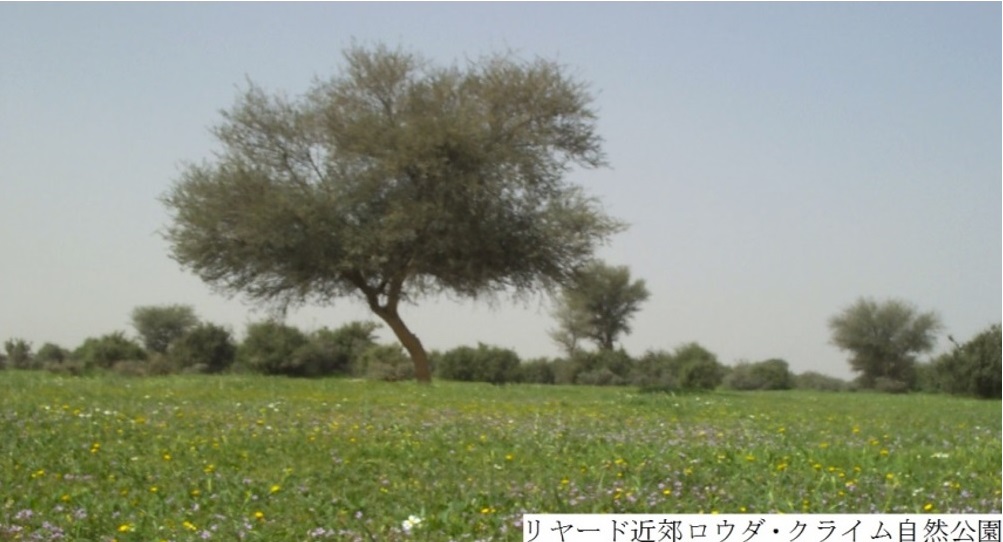
Rawdat Khuraim
ディハーム・イブン・ダウワースのリヤード支配
Diham ibn Dawwas ‘s Rule of Riyadh
1726年までにアバー・ザルア家(Al Aba-Zar’ah) (أبا الزرعة)に支配された町がリヤードと呼ばれる様に成り、マンフーハ(Manfuhah) (منهوحة)の近くの古代からの町の為政者家族でバヌー ・ハニーファ一門(Banu Hanifa) (بنو حنيفة)の生き残り家族の一つと考えられているシャアラーン家(Al Sha’lan) (الشعلان)の一員のディハーム・イブン・ダウワース(Diham ibn Dawwas) (d. 1773) (دهام بن دواس)がリヤードの為政者と成りました。
By 1726 the town ruled by Al Aba-Zar’ah (أبا الزرعة) family was called Riyadh. Diham ibn Dawwas (d. 1773) (دهام بن دواس) became the ruler of Riyadh. Diham was a member of Al Sha’lan (الشعلان) which was one of the surviving families of Banu Hanifa clan (بنو حنيفة) and the ruler family of an ancient town near Manfuhah (منهوحة).
ディハームの父ダウワース・イブン・アブドゥッラー(Dawwas Ibn Abdullah) (دواس بن عبد الله)は、1682年までマンフーハを支配していましたが、1726年に没するとその後継者をめぐってルアサーウ(為政者)(Ru’asa’) (رؤاساء)の間で典型的な争いが続きました。遂に従兄弟がダウワースの息子達をマンフーハから追放して後継者と成り、首領の地位を奪い取りました。前述の様にディハームとその兄弟達は、アバー・ザルア家(Al Aba-Zar’ah) (أبا الزرعة)のザイド・イブン・ムーサー (Zayd ibn Musa) (d.1733) (زيد بن موسى)に支配されていたリヤードに逃れました。
Diham’s father, Dawwas Ibn Abdullah (دواس بن عبد الله), ruled Manhuha until 1682. When he died in 1726, a fight ensued among the family to usurp the position of chieftain as usual in that era.
Finally, one of the cousins banished Dawwas’ sons from Manfuhah to become Dawwas’s heir. As mentioned above, Diham and his brothers fled to Riyadh which was ruled by Zayd ibn Musa (d.1733) (زيد بن موسى) of Al Aba-Zar’ah (أباالزرعة) family.
1733年にディハームの姉妹の一人を母とする後継者と成る子供を残してザイド・イブン・ムーサーは、殺されました。クマイイス(Khumayyis))と云う名のザイド・イブン・ムーサーの奴隷が一時的に為政者と成りましたが、3、4年後に殺されるのでは無いかと云う恐怖からリヤードからマンフーハに逃れました。この時点でディハーム・イブン・ダウワースは、自分の姉妹の子供を擁護すると装ってリヤードの支配権を乗っ取りました。
In 1733 Zayd ibn Musa was killed leaving a successor child whose mother was one of Diham’s sisters. One of Zayd ibn Musa’s slaves named Khumayyis temporarily became the ruler, but he fled from Riyadh to Manfuhah for fear of being killed in three or four years. At this point Diham ibn Dawwas took over control of Riyadh under the guise of defending his own sister’s child.
ディハーム・イブン・ダウワース支配の殆ど全期間にわたってディハームとその家来達は、隣の勢力を増しつつあるディルイーヤに激しい抵抗を示しました。例えばディルイーヤ、ドゥルマー、ウヤイナおよびフライマラーの連合軍は、1748年にリヤードを攻撃しましたが、一部勝利したもののムスリムが破れ、25名の戦士が殺されました。何といってもナジュドの町では当たり前であった自分の足元の隣人との戦争が同居していたにもかかわらず、ディハーム支配下のリヤードは、競合相手のマンフーハを追い越してハサー(Hasa or Ahsa) (حسا)からの交易を引きつけ繁栄し、重要な中心に成って来ました。ディハームの強固な指導の下にリヤードは、始めてその名声を得ましたが、ディハームが1773年に没すると、リヤードはディルイーヤに降伏しました。
For most of Diham ibn Dawwas rule, Diham and his followers put up fierce resistance to the growing power of Dir’aiyah next neighbor. For example, a coalition of Dir’aiyah, Durma, ‘Uyaynah and Huraymala attacked Riyadh in 1748. Despite a partial victory, the Muslims were defeated and 25 warriors were killed. After all, Riyadh under Diham overtook its competitor Manfuhah despite the wars with his neighbors, which was commonplace in the towns of Najd. Thus, Riyadh had become a prosperous and important center, attracting trade from/to Hasa (Ahsa) (حسا).Under Diham’s firm leadership, Riyadh first gained fame, but when Diham died in 1773, Riyadh surrendered to Dir’aiyah.
その後の1820年にムハンマド・アリー朝(Muhammad Ali dynasty) (1805~1953) エジプトの占領軍がリヤードを守備隊の町として選び、1824年にトゥルキー・イブン・アブドゥッラー・アール・サウード (Turki ibn Abdullah bin Muhammad Al Saud) (r.1821~1834) (تركي بن عبد الله بن محمد آل سعود)が第二次サウジ公国(Second Saudi State) (1824~1891) (الدولة السعودية الثانية)の首都とするまでの間、リヤードは、その存在が曖昧に成っていました。
Later in 1820 Muhammad Ali Dynasty (1805~1953) Egyptian occupying forces chose Riyadh as its garrison town. And in 1824 Turki ibn Abdullah bin Muhammad Al Saud (r.1821~1834) (تركي بن عبد الله بن محمد آل سعود)) made Riyadh as the capital of Second Saudi State (1824~1891) (الدولة السعودية الثانية). Between them, the existence of Riyadh remained obscure.
シャイフ・ムハンマドの登場
Appearance of Shaykh Muhammad
シャイフ・ムハンマド・イブン・アブドゥルワッハーブ (Shaykh Muhammad Ibn Abd al Wahhab) (1703~1792) (شيخ محمد بن عبد الوهاب)は、1703年にウヤイナ(‘Uyaynah) (عيينة)で生まれました。シャイフ・ムハンマド(Shaykh Muhammad) (شيخ محمد)は、扇状地ワシュム(Washm) (وشم)のウシャイキル(Ushayqir) (أشيقر)のタミーム族(Bani Tamim) (بني تميم)の出身でした。シャイフ・ムハンマド(Shaykh Muhammad) (شيخ محمد)の祖父は、ウヤイナ(‘Uyaynah)のカーディー(قاضي) (Qadi)(判事)およびムフティー(مفتي) (Mufti)でした。その父もまたその時代の最も著名なウラマー(‘Ulama) (علماء)であり、1713年から1726-7年までウヤイナのカーディーを勤めました。父はその為政者(Ru’asa’) (رؤاساء)と意見が合わずウヤイナを離れ、フライマラー(Huraymala) (حريملا)に移ってやはりそのカーディーとなりました。
Shaykh Muhammad Ibn Abd al Wahhab (1703~1792) (شيخ محمد بن عبد الوهاب) was born in 1703 in ‘Uyaynah (عيينة). Shaykh Muhammad (شيخ محمد) was from Bani Tamim tribe (بني تميم) of Ushayqir (أشيقر) in the alluvial fan “Washm (وشم)”. Shaykh Muhammad (شيخ محمد)’s grandfather was Qadi (قامي) (judge) and Mufti (مفتي) of ʻUyaynah. His father was also the most prominent ‘Ulama (علماء) of his time, serving as ‘Uyaynah Qadi from 1713 to 1726/7. His father disagreed with its ruler (Ru’asa’) (رؤاساء) and left ‘Uyaynah and moved to Huraymala (حريملا), also becoming its Qadi.
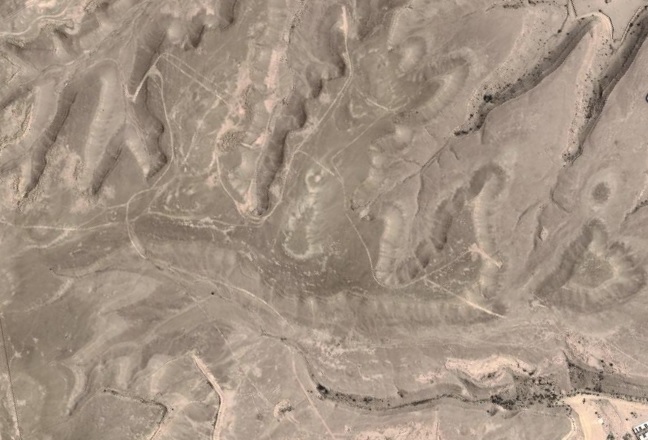
North of Huraymala
ウシャイキル(Ushayqir) (أشيقر):シャクラー(Shaqra) (شقراء) の北西 11 km に位置します。
Ushayqir(أشيقر): It locates 11 km northwest of Shaqra (شقراء).
タミーム族(Bani Tamim) (تميم بني):ムダル・アドナーン部族(Mudar Adnan Arabs) (مضرعدنان عرب)の一部族です。
Bani Tamim (تميم بني): A member of Mudar Adnan Arabs (مضرعدنان عرب).
ムフティー(Mufti) (مفتي):シャリーア法(Sharia) (شريعة)の解釈と適用に関してファトワー(Fatwa) (فتوى)(勧告・布告・見解・裁断) を発行する資格を有する宗教指導者(Mufti) (مفتي)であり、ウラマー(‘Ulama) (علماء) (実質的な聖職者)の中でも上位に属します。
Mufti (مفتي): A religious leader (Mufti) (مفتي) is qualified to issue Fatwa (فتوى) (recommendations, decrees, views and cuts) regarding the interpretation and application of the Sharia law (شريعة) and belongs to the top of ‘Ulama (علماء) (de facto clergy).
シャイフ・ムハンマド(Shaykh Muhammad) (شيخ محمد)は、1723年にナジュド(Najd)を離れ、更に勉学する為にヒジャーズ(Hijaz) (حجاز)とバスラ(Basra) (بصرة)を訪れました。シャイフ・ムハンマドは、それまでの多くのウラマー(‘Ulama) (علماء)を引きつけたハンバリー法学派(Hanbali Madhhab) (مذهب حنبلى)の中心であるダマスカス(Damascus) (دمشق)でも勉学しようと考えていました。しかしながら、その過激な思想とその影響力が増して来た事でバスラから放逐されてしまいました。無一文でズバイル(Zubayr) (زبير)(前述)を通り、ハサー(Hasa or Ahsa) (حسا)(前述)まで旅をし、そこで更に自分の勉学を続けました。そこからフライマラー(Huraymala)に居る父の下に戻り父が没する1740年までそこに留まっていました。
Shaykh Muhammad (شيخ محمد) left Najd in 1723 and visited Hijaz (حجاز) and Basra (بصرة) for further studies. Shaykh Muhammad also considered studying at Damascus (دمشق), the center of the Hanbali Madhhab (مذهب حنبلى), which had attracted many ‘Ulama (علماء). However, due to his radical ideas and growing influence, he was expelled from Basra. Penniless, he traveled through Zubayr (Zabir) (mentioned above) to Hasa (Ahsa) (حسا) (mentioned above), where he continued his studies. From there he returned to his father at Huraymala, where he remained until his father’s death in 1740.
ハンバリー法学派(Hanbali Madhhab) (مذهب حنبلى):この法学派は、ハナフィー派(Hanafi ) (حنفي)、マーリク(Maliki) (مالكي)、シャーフィイー派(Shafi`i) (شافعية)を含む、イスラーム法学(Fiqh) (Islamic jurisprudence) (فقه)の 4 つの主要な伝統的スンニ派 マダヒブ(the traditional Sunni schools ) (المذاهب الفقهية السنة الإسلامية)の 1 つです。 アラブの学者アフマド イブン ハンバル(Ahmad ibn Hanbal) (780~855) (أحمد بن حنبل)によって設立されました。この法学派は、主にクルアーン(Qur’an) (قرآن)、ハディース(Hadiths) (حديث)、およびサハバ(Sahabah) (صحابة) (ムハンマドの仲間) の見解からシャリア(Sharia) (شريعة)を派生させます。 イスラーム教の聖典に明確な答えがない場合、イスラーム法(Sharia) (شريعة)を導き出すための健全な根拠として法学者の裁量(istihsan) (استحسان) 又は 共同体の慣習(‘urf) (عرف) を受け入れません。上記4つの伝統的スンニ派 マダヒブ(the traditional Sunni schools ) (المذاهب الفقهية السنة الإسلامية)の中で最も厳格な伝統主義の法学派です。
The Hanbali school (مذهب حنبلى): It is one of the four major traditional Sunni schools (المذاهب الفقهية السنة الإسلامية) (madhahib (مذهب)) of Islamic jurisprudence, which also includes Hanafi (حنفي), Maliki (مالكي) and Shafi`i (شافعية). It was established by Ahmad ibn Hanbal (780~855) (أحمد بن حنبل), a Arab scholar. It derives sharia primarily from the Qur’an (قرآن), Hadiths (حديث) and views of Sahabah (صحابة) (Muhammad’s companions). In cases where there is no clear answer in sacred texts of Islam, it does not accept istihsan (استحسان) (jurist discretion) or ‘urf (عرف) (customs of a community) as a sound basis to derive Islamic law. It is the most strict traditionalist school of jurisprudence among the above 4 traditional Sunni schools (المذاهب الفقهية السنة الإسلامية).
それから自分の思想を熱心にフライマラーで普及させようとしていましたが、ウラマーから強く反対されてしまいました。シャイフ・ムハンマド(Shaykh Muhammad) (شيخ محمد)の教えに対する反対の首謀者は、リヤード(Riyadh) (رياض)のカーディー(قاضي) (Qadi)(判事)のイブン・スハイム(ابن سحيم) (Ibn Suhaym)でした。シャイフ・ムハンマドは、ウヤイナ(‘Uyaynah) (عيينة)の為政者ウスマーン・イブン・ハマド・ムアンマル(‘Uthman ibn Hamad Al Mu’ammar) (عثمان بن حمد المعمر)の保護を求める事にしました。シャイフ・ムハンマドは、歓迎され、為政者は新しい運動に強い支持を与えました。新しい運動は、直ぐにウヤイナを崇拝の正しい実践と順番をもって清めました。しかしながらシャイフ・ムハンマド活動のニュースは、ハサーの為政者であるバヌー・ハーリド族(Banu Khalid) (بنو خالد) (前述)に伝わり、バヌー・ハーリド族 は、「もしシャイフ・ムハンマドの新しい運動を中止しなければウヤイナに支払っている助成金を引き上げる」と脅かしました。これは、ウヤイナに取って受け入れがたい犠牲だったのでシャイフ・ムハンマドは、そこを引き払う様に要求されました。シャイフ・ムハンマドは、それに従い、ディルイーヤ(Dir’aiyah) (درعية)を次の目的地に選びました。
Then Shaykh Muhammad was eager to promote his ideas in Huraymala, but was strongly opposed by ‘Ulama. The ringleader of opposition to Shaykh Muhammad’s teachings was Ibn Suhaym (ابن سحيم) who was the Judge (Qadi) (قامي) of Riyadh. Shaykh Muhammad decided to seek protection from ‘Uyaynah’s ruler ‘Uthman ibn Hamad Al Mu’ammar (عثمان بن حمد المعمر). Shaykh Muhammad was welcomed and the ruler gave strong support to the new movement. The new movement soon purified ‘Uyaynah with the correct practice and order of worship. When the news of Shaykh Muhammad’s activities reached the Hasa (Ahsa) rulers, the Banu Khalids (بنو خالد) (mentioned above) threatened ‘Uyaynah’s ruler to raise the subsidies he had, if he does not stop it. This was an unacceptable sacrifice for ‘Uyaynah, therefore Shaykh Muhammad was asked to leave there. Shaykh Muhammad accordingly chose Dir’aiyah) (درعية) as his next destination.
ディルイーヤでの新しい運動の結果は、シャイフ・ムハンマドとディルイーヤの為政者ムハンマド・イブン・サウード(Muhammad ibn Saud) (1687 ~1765) (محمد بن سعود)(前述)との間の政教契約でした。シャイフ・ムハンマドが支持と助言を保証する代わりに、為政者はシャイフ・ムハンマドの教義を政治的に軍事的に支持する事に同意しました。これは1745年の事でした。これが第一次サウジ公国(First Saudi State) (1744~1818) (الدولة السعودية الأولى)の勢力台頭の始まりと同時にと為政者と為政者を特徴付ける宗教的指導者の間での協力の始まりでした。
The result of the new movement in Dir’aiyah was an ecclesiastical and political contract between Shaykh Muhammad and Dir’aiyah’s ruler Muhammad ibn Saud (1687~1765) (محمد بن سعود) (mentioned above). In exchange for Shaykh Muhamma’s endorsement and advice, the ruler agreed to politically and militarily uphold Shaykh Muhammad’s doctrines. This was in 1745. And it was the beginning of the rise of power of First Saudi State (1744~1818) (الدولة السعودية الأولى) and also the beginning of the cooperation between the ruler and the religious leader that characterized them.
これは、運動の創設者を鑑みてワッハービ(ワッハーブ派(Wahhabi) (وهابية))と呼ばれていますが、シャイフ・ムハンマドの信奉者達は自分達を単にムスリム(Muslim) (مسلم)と呼んでいて、自分達を周囲のイスラーム教世界の異端と自分達が考えている人々と遠ざかっていました。シャイフ・ムハンマドの信奉者達のもう一つの呼び名は、唯一神信仰者を意味するムワッヒドゥーン(Muwahhidun) (الموحدون)でした。
This is called the Wahhabi sect (وهابية) after the founder of the movement, but Shaykh Muhammad’s followers called themselves simply Muslims (مسلم) and alienated themselves from the people, who considered them heretical believers of the Islam, around them. Another name for Shaykh Muhammad’s followers was Muwahhidun (الموحدون), meaning monotheist.
 Desert peninsula