
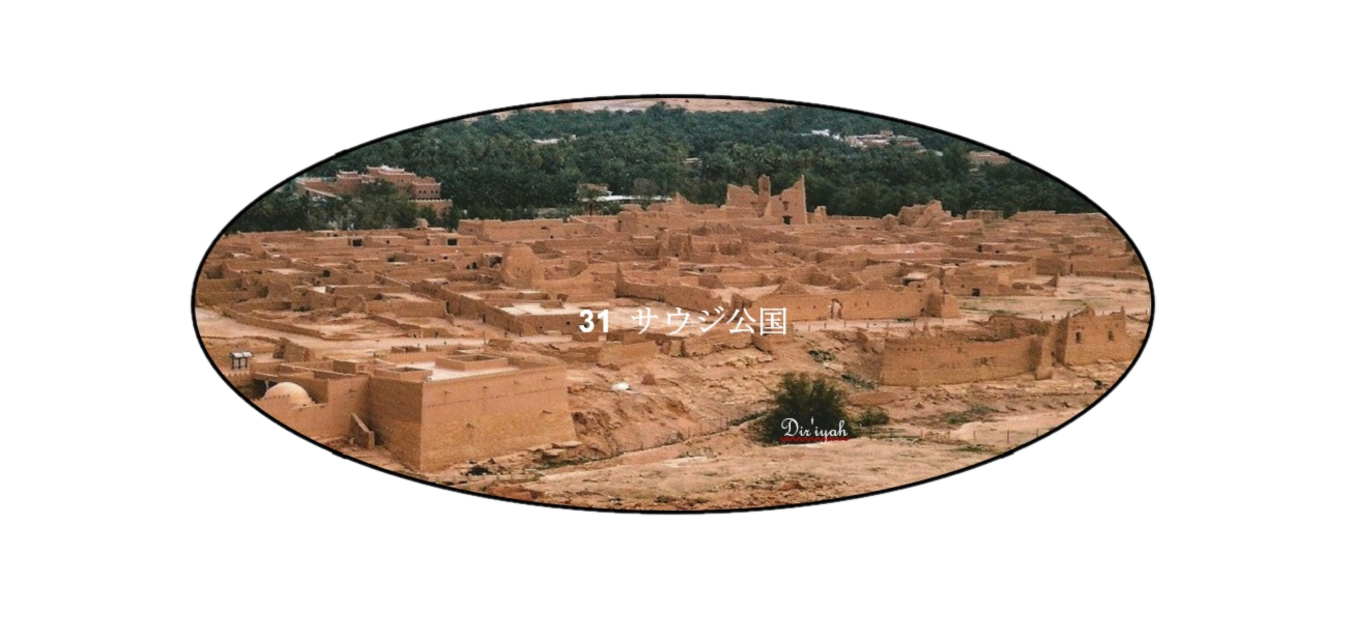
31 Saudi State


目次(Index)
第一次サウジ公国
First Saudi State
前述の様にシャイフ ・ムハンマド・イブン・アブドゥルワッハーブ(Shaykh Muhammad ibn ‘Abd al-Wahhab) (1703~1792) (الشيخ محمد)とディルイーヤ(Dir’aiyah) (درعية)のムハンマド・イブン・サウード(Muhammad ibn Saud) (1687~1765) (محمد بن سعود)との間の政教契約同意が第一次サウジ公国(First Saudi State) (1744~1818) (الدولة السعودية الأولى)台頭の始まりです。
As mentioned above, Shaykh Muhammad ibn ‘Abd al-Wahhab (1703-1792) (الشيخ محمد) and Muhammad ibn Saud (1687-1765) (محمد بن سعود) had agreed to a political and religious contract. This contract stipulated that “In exchange for the Shaykh’s assurance of support and advice, the ruler would politically and militarily uphold the doctrines of the Shaykh.” Muhammad ibn Saud was the ruler of Dir’aiyah (درعية). The signing of this contract marked the beginning of the rise of the First Saudi State (1744~1818) (الدولة السعودية الأولى).
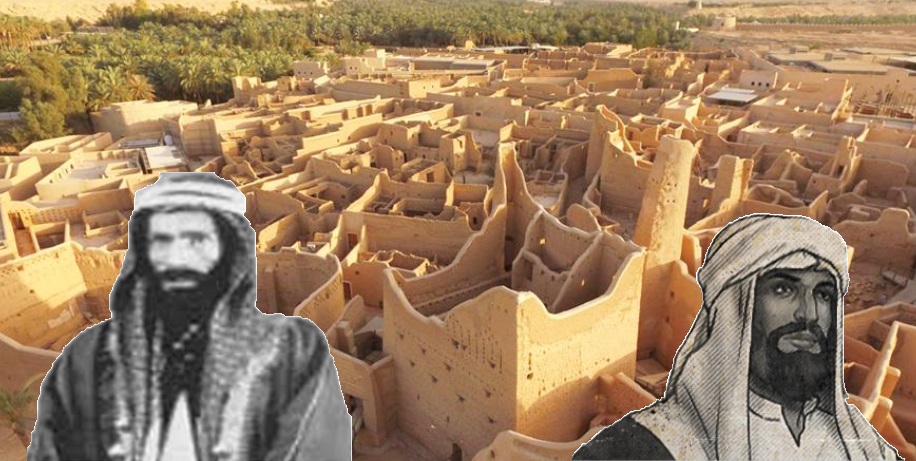
‘Abd al-Wahhab & Muhammad ibn Saud
アシール地方とハサー地方の征服
Conquering Asir and Hasa
建国者の息子で第2代首長アブドゥルアズィーズ(Abdul Aziz Ibn Mohammed Ibn Saud) (r.1765~1803) (عبد العزيز بن محمد بن سعود)は、1773年にナジュド(Najd) (نجد)全域を支配下に治め、アシール地方(Asir) (عسير)とハサー地方(Hasa) (حسا)の征服に取り掛かりました。
Abdul Aziz Ibn Mohammed Ibn Saud (r.1765~1803) (عبد العزيز بن محمد بن سعود), the son of the Founder and the second Emir, ruled all of Najd (نجد) by 1773. And then, he set about conquering Asir (عسير) and Hasa (حسا).
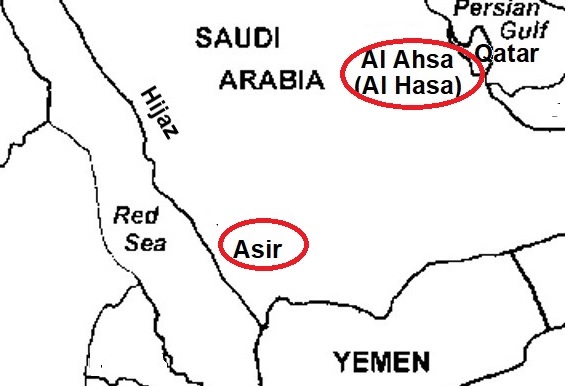
Asir & Al Ahsa
アシール地方は、1517年からオスマン帝国(Ottoman Empire) (1299 ~1923) (الدولة العثمانية)統治の下に入り、実質的には競合する多くの首長や君主による分断支配が続いていました。1800年に第一次サウジ公国の支配に入り、サウード系列のマトハミー家(Al Mathami) (آل المتحمي)出身の首長が1817年まで統治していました。
The Asir region was controlled under the rule of the Ottoman Empire (1299 ~1923) (الدولة العثمانية) from 1517, effectively continuing to be divided and ruled by many competing chiefs and monarchs. It came under the rule of the First Saudi State in 1800 and was ruled until 1817 by the Al Mathami family (آل المتحمي) of the Saud lineage.
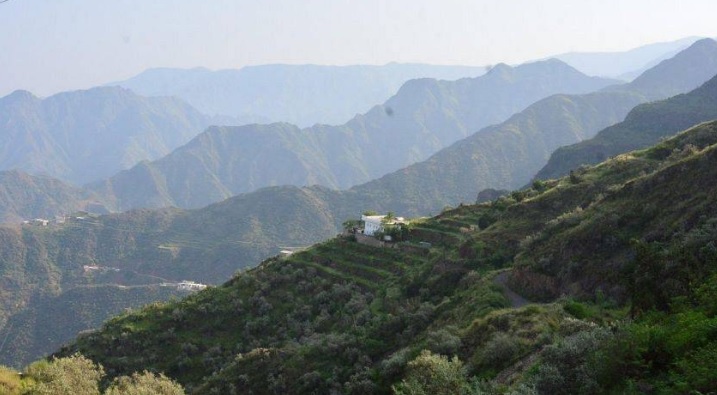
Asir
ハサー地方は、1680年にフマイド一門(Humayd Clan) (حميد)がオスマン帝国州庁(Lahsa Eyalet) (إيالة الأحساء)を放逐した後、その所属するバヌー・ハーリド族(Banu Khalid) (بنو خالد)が強力な地方勢力となっていました。バヌー・ハーリド族はシャイフ ・ムハンマド(Shaykh Muhammad)をウヤイナ(`Uyaynah) (عيينة)首長に追放させ、保護したディルイーヤの勃興を妨害しました。しかしながら、1790年のカティーフ・オアシス(Qatif Oasis) (واحة القطيف)南の「グライミールの戦い(Battle of Ghuraymil) (1790) (معركة غريميل)」でサウード家(House of Saud) (آل سعود)に敗北し、ハサー地方は、第一次サウジ公国に編入されました。
After the Humayd Clan (حميد) expelled the Ottoman Empire’s Lahsa Eyalet (إيالة الأحساء) in 1680, the Banu Khalid (بنو خالد), to which the Humayd Clan belonged, became to the strong local force. The Banu Khalid had made Shaykh Muhammad to be expelled by the `Uyaynah (عيينة) Emir and sabotaged the rise of the Dir’aiyah (درعية), who protected Shaykh Muhammad. But, it was defeated by the House of Saud (آل سعود) in the Battle of Ghuraymil (1790) (معركة غريميل) at the south of Qatif Oasis (واحة القطيف) in 1790. Then, the Ahsa (Hasa) region was incorporated into the first Saudi State.
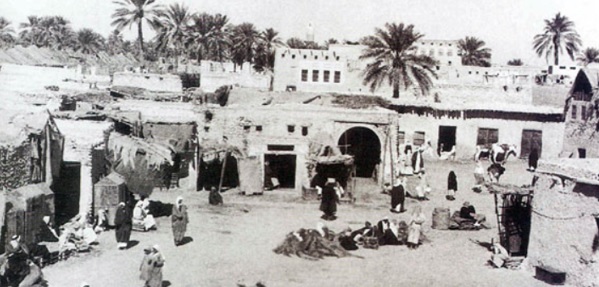
Historical Qatif Souq
オマーン、イエメンおよびヒジャーズ
Oman, Yemen and Hijaz
アブドゥルアズィーズが1803年に暗殺されると、息子サウード(Saud Ibn Abdul Aziz ibn Mohammed Ibn Saud) (r.1803~1814) (سعود بن عبد العزيز بن محمد بن سعود)が第3代首長となり、オマーン(Oman) (عمان)、イエメン(Yemen) (يمن)の大部分やメッカ(Mecca) (مكة)、マディーナ(Madinah) (مدينة)を征服して領土を拡大し、その後もシリア(Syria) (سوريا)、イラク(Iraq) (عراق)方面へ進撃を続けました。
After Abdul Aziz Ibn Mohammed was assassinated in 1803, his son Saud Ibn Abdul Aziz ibn Mohammed Ibn Saud (r.1803~1814) (سعود بن عبد العزيز بن محمد بن سعود) became the 3rd Amir. He expanded his territory by conquering most of Oman (عمان) and Yemen (يمن) as well as Mecca (مكة) and Madinah (مدينة). He then continued his advance towards Syria(سوريا) and Iraq (عراق).
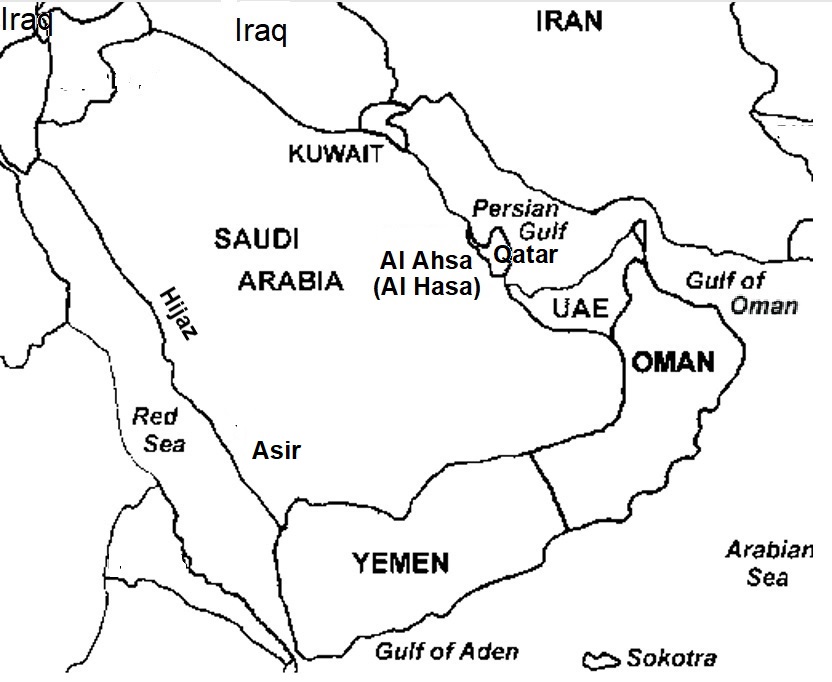
Hijaz – Yemen – Oman
エジプト・ワッハーブ戦争
Egyptian-Saudi War
ヒジャーズ(Hijaz) (حجاز)では第一次サウジ公国ワッハーブ派部隊(Wahhabi forces) (القوات الوهابية)が1802年にターイフ(Taif) (طائف)を陥落させ、メッカとマディーナ方面に進撃し、1803年からジェッダ(Jeddah) (جدة)を包囲しました。1804年にメッカ太守(Amir of Mecca) (أمير مكة)シャリーフ・ガーリブ(Sharif Ghalib) (1788~1803 & 1813~1827 (شريف غالب)は、開城して「ワッハーブ派(Wahhabi) (وهابية)への改宗者であり、その首長に臣従する」と宣言しました。これらの敗北は、聖都メッカと聖都マディーナの保護者を任じていたオスマン帝国に大きな衝撃を与え、1811年に第30代皇帝(the 30th Sultan) (1808~1839)マフムト2世(Mahmud II) (محمود الثاني)は、エジプト総督(Wali of Egypt) (1805~1848) (والي مصر)であったムハンマド・アリー(Muhammad Ali Pasha) (1769~1849) (محمد علي باشا)にワッハーブ派の鎮圧を命じました。アリーの息子トゥースーン(Tusun Pasha) (1794~1816) (طوسون باشا) 指揮下のエジプト総督軍が派遣され、1818年まで続いた「エジプト・ワッハーブ戦争(Egyptian-Saudi Wa) (1811~1818) (الحرب العثمانية السعودية)」が始まりました。1812年にもっと大掛かりな総督軍(Wali’s army)が編制され、優れた兵器や弾薬と圧倒的兵力を用いて遠征して来たので、多くの村々が抵抗する間も無く攻略されました。ムハンマド・アリーは、1813年にメッカを無血開城させ、ターイフを奪回し、続いて1815年にイエメンまでの地域を一掃してエジプトに戻って行きました。
In the Hijaz (حجاز), the first Saudi Wahhabi forces (القوات الوهابية) captured Taif (طائف) in 1802 and advanced towards Mecca and Medina. And from 1803 Wahhabite forces laid siege to Jeddah. In 1804, Amir of Mecca (أمير مكة) Sharif Ghalib (1788~1803 & 1813~1827) (شريف غالب) surrendered the city. He then proclaimed himself ”a convert to the Wahhabi (وهابية) and a vassal of its chief.”
These defeats shocked the Ottoman Empire, which was proud of itself on being the protectors of the holy cities of Mecca and Medina. In 1811, the 30th Sultan (1808-1839) Mahmud II (محمود الثاني) ordered to suppress the Wahhabists to Muhammad Ali Pasha (1769~1849) (محمد علي باشا) who was Wali of Egypt (1805-1848) (والي مصر) .
Under the command of Ali’s son Tusun Pasha (1794~1816) (طوسون محمد علي باشا) a force of the Wali’s Army was dispatched. This was the beginning of the Egyptian-Saudi War (1811~1818) (الحرب العثمانية السعودية), which lasted until 1818.
In 1812, a much larger force of the Wali’s army was formed and expedided with superior weapons and ammunition and overwhelming numbers of troops, and many villages were captured without any resistance. Muhammad Ali surrendered Mecca bloodlessly in 1813, recaptured Taif, and cleared the area as far as Yemen and then returned to Egypt in 1815
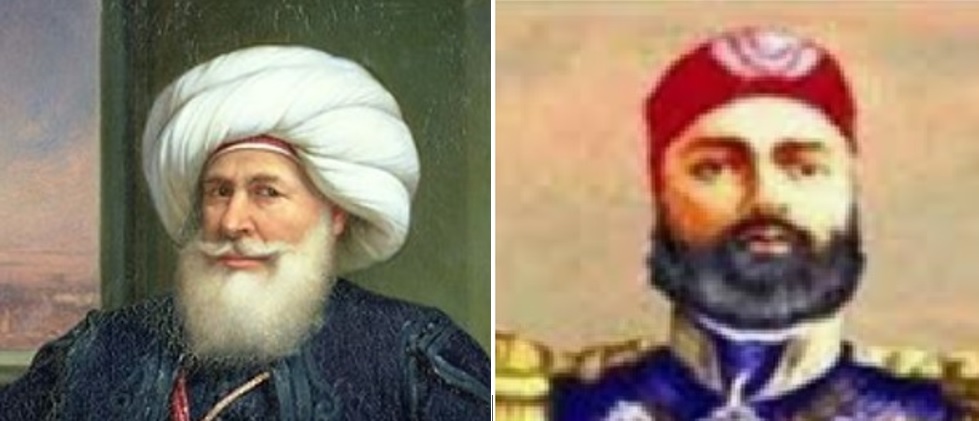
Muhammad Ali Pasha & Tusun Pasha
ディルイーヤの陥落と破壊
Diriyah fallen and razed
1814年にサウードが死亡すると、サウード家からの離反、寝返りが相次ぎました。ヒジャーズ(Hijaz) (حجاز)が奪回され、カスィーム(Qasim) (قصيم)も落ち、ナジュドの各地も次々と征服されましたが、アブドゥッラー(Abdullah ibn Saud) (r.1814~1818) (عبد الله بن سعود)が死亡した父サウードを引継いで第4代首長となりました。1816年にムハンマド・アリーは、息子イブラーヒーム(Ibrahim Pasha) (1789~1848)率いる総督軍一個師団を派遣して抵抗する村を略奪しながら攻略し、ディルイーヤを1817年初めに包囲しました。1818年9月の「血なまぐさい戦い」の後にディルイーヤは陥落して徹底的に破壊されました。アブドゥッラーが多数の捕虜となったサウード一族と共にエジプト経由でイスタンブール(Istanbul) (إسطنبول)に送られると、スルターン(Sultan) (سلطان)の命令で直ちに首を刎ねられ、その頭部はボスポラス海峡(Bosphorus) (بوسفور)に投げ込まれ、第一次サウジ公国は滅亡しました。
Saud’s death in 1814 was followed by estrangement and betrayal from the Saud family. The Hijaz (حجاز) was recaptured, the Qasim (قصيم) fell, and the regions of Najd were conquered one after another. Despite such circumstances, Abdullah ibn Saud (r.1814-1818) (عبد الله بن سعود) succeeded his deceased father Saud as the 4th Amir.
In 1816, Muhammad Ali sent a division of the Wali’s Army led by his son Ibrahim Pasha (1789-1848) (إبراهيم محمد علي باشا) to pillage and capture the resisting villages, besieging Diriyah in early 1817. After a “bloody battle” in September 1818, Diriyah fell and was razed to the ground.
When Abdullah was sent via Egypt to Istanbul (إسطنبول) with a large number of the Saud family captives, he was immediately beheaded by order of the Sultan (سلطان) and his head was thrown in the Bosphorus (بوسفور). Thus, the First Saudi State perished.
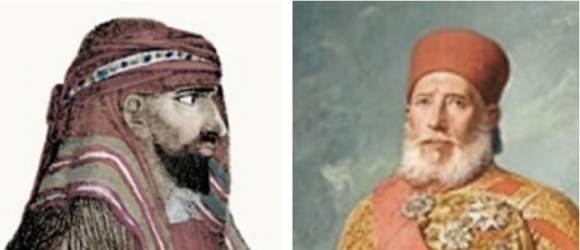
Abdullah ibn Saud & Ibrahim Pasha
第二次サウジ公国
Second Saudi State
トゥルキー・イブン・アブドゥッラー(Turki ibn Abdullah) (r. 1824~1834) (تركي بن عبد الله)が1824年にディライヤーおよびリヤードをエジプト総督軍から奪回し、リヤードに第二次サウジ公国(Second Saudi State) (1824~1891)と呼ばれるワッハーブ派国家(Wahhabi State.)を再興しました。
Turki ibn Abdullah (r. 1824~1834) (تركي بن عبد الله) recaptured Diraiyah and Riyadh from the Egyptian Wali’s Army in 1824 and re-established the Wahhabi State, called the Second Saudi State (1824-1891) (الدولة السعودية الثانية), in Riyadh.
アシールの統治
Governing Asir region
アシール地方は、ムハンマド・イブン・アウン(Muhammad ibn Awn) (1767~1858) (محمد ابن عون)率いるエジプト総督軍が制圧してマッカ太守(Sharif of Mecca) (شريف مكة) との共同統治下に入れました。
The Asir region was conquered by the Egyptian Wali’s Army, led by Muhammad ibn Awn (1767-1858) (محمد ابن عون), and was placed under joint control of the Egyptian Wali and the Sharif of Mecca (شريف مكة).
ムハンマド・イブン・アウン(Muhammad ibn Awn) (1767~1858) (محمد ابن عون): 彼は、Muhammad ibn ‘Abd al-Mu’īn ibn ‘Awn (アラビア語: محمد بن عبد المعين بن عون) としても知られており、1827 年から1851年までと1856年から1858年までメッカのシャリフおよび首長でした。
Muhammad ibn Awn (1767~1858) (محمد ابن عون): He was also known as Muḥammad ibn ‘Abd al-Mu’īn ibn ‘Awn (Arabic: محمد بن عبد المعين بن عون) was Sharif and Emir of Mecca from 1827 to 1851 and 1856 to 1858.
1822年にアシール山脈在住の少数部族(a small tribe in the Sarawat Mountains)バニー・ムガイド族(Bani Mughaid) (بني مغيد)首長サイード・イブン・ムサッラト(Said ibn Musallat Al-Mughaidi) (سعيد بن مسلط المغيدي)が総督軍を駆逐して独立を宣言しました。
1834年に再び総督軍の侵略を受け、オスマン帝国宗主権の下(under the Ottoman suzerainty)に置かれましたが、実質的にはバニー・ムガイド族子孫の首長達がアシールを統治していました。
In 1822, the Bani Mughaid (بني مغيد) Chief Said ibn Musallat Al-Mughaidi (سعيد بن مسلط المغيدي) drove out the Egyptian Wali’s Army and declared independence. The Bani Mughaid is one of the minority tribes living in the Asir (Sarawat) Mountains.
In 1834, it was again invaded by the Egyptian Wali’s Army and placed under the Ottoman suzerainty, however the Asir chieftains, descended from the Bani Mughaid tribe, were governing in effect.
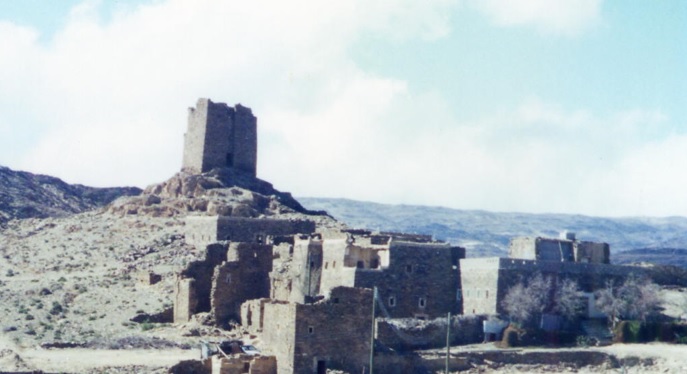
A village of Asir
ハサー地方の支配
Controlling Ahsa Region
ハサー地方(the Hasa region)は1818年に第一次サウジ公国滅亡後、イブラーヒーム率いるエジプト総督軍(the Egyptian Wali’s Army)が占拠しましたが、翌年に撤退し、フマイド一門(Humayd Clan) (حميد)が入れ替わり占拠しました。それによりバヌー・ハーリド族(Banu Khalid) (بنو خالد)が勢力を取り戻しました。しかし、1830年にバヌー・ハーリド族が第二次サウジ公国に敗退すると、ハサー地方は、第二次サウジ公国に支配される事になりました。
After the fall of the first Saudi State in 1818, the Ahsa (Hasa) region was occupied by the Egyptian Wali’s Army led by Ibrahim Pasha, but withdrew the following year. And then the occupier was replaced by the Humayd Clan. Thus the Banu Khalid (بنو خالد) regained its power. However, after the Banu Khalid were defeated by the Second Saudi State in 1830, the Ahsa (Hasa) region came under the control of the Second Saudi state.
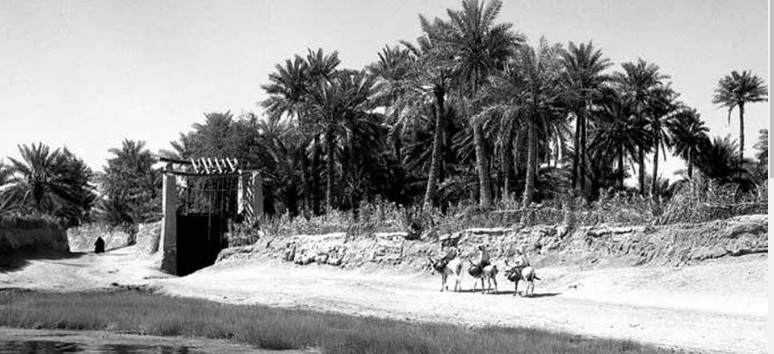
Al Ahsa (Al Hasa)
首長のエジプトに幽閉
Amir incarcerated in Egypt
第二次サウジ公国は、1834年にトルキー(Turki ibn Abdullah)が暗殺されて息子のファイサル(Faisal bin Turki Al Saud) (r.1834~1838 & 1843~1865) (فيصل بن تركي)が後を継ぎましたが、再びナジュドに侵攻したエジプト総督軍に捕らえられ、エジプトに幽閉されました。1843年、ファイサルは、エジプトを脱出、ナジュドに戻って首長に復帰しました。
After the assassination of Turki ibn Abdullah in 1834, the Second Saudi State was succeeded by his son Faisal bin Turki Al Saud (r.1834~1838 & 1843~1865) (فيصل بن تركي). However, he was captured by the Egyptian Wali’s Army, which then invaded Najd again, and was incarcerated in Egypt.
In 1843 Faisal fled Egypt, returned to Najd and was reinstated as Amir.
後継争いとオスマン帝国のハサー侵略
Internal Struggle & Turkey invasion
ファイサルは、1865年に死去するまでその座を守りましたが、ファイサル死後の後継問題で息子達の間での権力争いが始まりました。同族争いは、住民や部族を巻き込み、分裂、復讐が繰り返された。その隙に乗じて1871年にオスマン帝国が再びハサーを侵略し、その支配はイブン・サウード(1876~1953) (ابن سعود)がハサー地方を東部州としてのサウジ統治を確立する1913年まで続きました。一方、ナジュドでも内紛が激しく安定しないサウード家の覇権は、次第にハーイル(Hayil) (حائل)のラシード族(Rashid) (رشيد)に移って行きました。
Faisal held the position until his death in 1865, but after his death a struggle for power began among his sons over the question of his succession.
Taking advantage of this opportunity, the Ottoman Empire invaded Ahasa (Hasa) again in 1871 and ruled it until 1913, when Ibn Saud (ابن سعود) established Saudi rule over the Ahsa (Hasa) region as the eastern province.
On the other hand, the hegemony of the Saud family, whose internal strife was fierce and unstable in Najd, gradually shifted to the Rashid (رشيد) of Hayil (حائل).
ラシード族(Rashid Tribe) (قبيلة الرشيد):カフターン部族系譜(Qahtanian Lineage( (النسب القحطانيون)シャンマル族同盟(Shammar Tribal Confederation) (اتحاد قبائل شَمَّر) アブダフ一門(Abdah) (عبدة)の支配者のジャアファル一門(Jaafar) (جعفر)の支族。
Rashid Tribe (قبيلة الرشيد) : A branch of Jaafar clan (عشيرة جعفر) which rules Abdah clan (عشيرة عبدة) belonging Shammar Tribal Confederation (اتحاد قبائل شَمَّر) of Qahtanian Lineage (النسب القحطانيون).
シャンマル王朝によるリヤード占領
Riyadh occupied by Rashids
ラシード族はアブドゥッラー(Abdullah bin Abdulaziz Al Saud) (r.2005~2015) (عبد الله بن عبد العزيز آل سعود)前国王(the former king)母方のシャンマル族支配家族です。シャンマル族は、サウード王家を防衛する国家警備隊(Saudi Arabian National Guard) (الحرس الوطني)の中枢でした。しかし、近代にはアラビア半島の歴史的なシャンマル王朝であり、サウード家のもっとも恐るべき敵でした。
The Rashids are the Shammar ruling family on the maternal side of the former king, Abdullah bin Abdulaziz Al Saud) (r.2005~2015) (عبد الله بن عبد العزيز آل سعود). The Shammar were the nucleus of the Saudi Arabian National Guard (الحرس الوطني) that defended the Saudi royal family. In the modern period, however, it was the historic Shammar dynasty of the Arabian Peninsula and the most formidable enemy of the House of Saud.
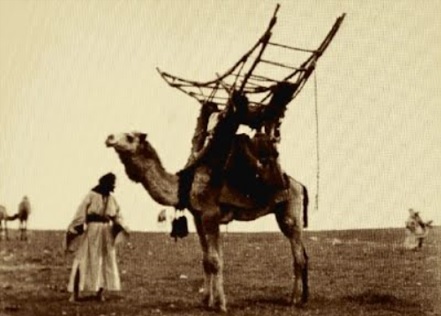
Shammal Tribe
第2代首長タラール(Ṭalal bin ʿAbdullah) (1848~1868) (طلال بن عبدالله)が1860年代のサウード家の内紛を利用、オスマン帝国と同盟して1865年にリヤードを占領しました。1890年頃にはアブドッラフマーン(Abdul Rahman ibn Faisal al Saud) (1850~1928) (عبد الرحمن بن فيصل)を除いて、サウード家一族は殺されるか、リヤードから離脱し、その領土もリヤード周辺に限られました。首長とは名目だけで、リヤードはラシード族の代官と守備隊の支配下に置かれました。
The second Amir Talal (Ṭalal bin ʿAbdullah) (1848~1868) (طلال بن عبدالله) took advantage of the Saud infighting in the 1860s and allied with the Ottoman Empire to capture Riyadh in 1865. Around 1890, with the exception of Abdul Rahman ibn Faisal al Saud (1850-1928) (عبد الرحمن بن فيصل), the Saud families were either killed or fled from Riyadh, and their only territories were limited to the surrounding area of Riyadh.
As chieftain in name only, Riyadh was placed under the control of the Rashid governor and garrison.
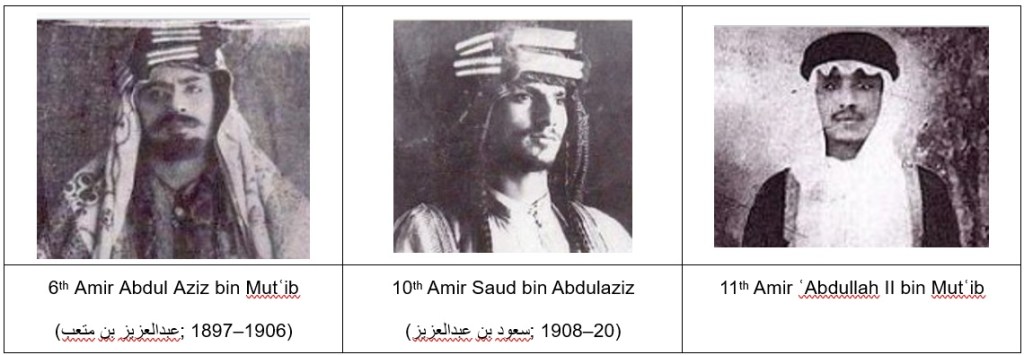
Amirs of Rashidi Emirate (إِمَارَة آل رَشِيْد) (Emirate of Jabal Shammar (إِمَارَة جَبَل شَمَّر))
サウード家の逃亡生活
Exiled life of the Saud family
アブドッラフマーンは1891年にラシード族から実権を奪還しようと、ラシード族の代官をリヤードから追い出し、カスィーム地方(the Qasim region) (منطقة القصيم)のウナイザ(Unayzah) (عنيزة)とブライダ(Buraydah) (بريدة)の両町住民、オタイバ族(‘Utaybah) (عتيبة)、アジュマーン族(Ajman) (عجمان)、ムタイル族(Mutayr) (مطير)等と同盟軍を編成し、ラシード族に反旗をひるがえしました。これに対してラシード族側は、シャンマル族をはじめハルブ族(Harb) (حرب)、ムンタフィク族(Al-Muntafiq Confederation) (تحالف قبائل المنتفق)、ザフィール族(Zafir) (ظفير)を集結させ、数週間の戦闘でサウード家同盟軍を打ち破り勝利し、第二次サウジ公国を滅亡させました(「ムライダーの戦い(Battle of Mulayda) (1891) (معركة المليداء)」)。
首長アブドッラフマーンは、10歳のイブン・サウードを含む家族を伴って、1891年にリヤードを脱出、ラシード軍追跡を逃れる為にルブア・ハーリー沙漠(Rub’ al Khali) (الربع الخالي)やクウェイト等でのサウード家の逃亡生活が始まりました。
As chieftain in name only, Riyadh was placed under the control of the Rashid governor and garrison. In 1891, Abdul-Rahman attempted to recapture power from the Rashids by driving out the Rashid governors from Riyadh. He formed an allied army with the residents of Unayzah and Buraydah in the Qasim region and also with the Otaybah (عتيبة), the Ajman (عجمان) and the Mutayr (مطير), and then rebelled against the Rashids. In response, the Rashids gathered together the Shammar, the Harbs (حرب), the Al-Muntafiq Confederation (تحالف قبائل المنتفق), and the Zafir (ظير), and held them for several weeks. In the Battle of Mulayda (1891) (معركة المليداء), the Rasids defeated the allied forces of the House of Saud and destroyed the Second Saudi State.
Amir Abdulrahman escaped Riyadh in 1891 with his family, including 10-year-old Ibn Saud, and fled to the Rub’ al Khali (الربع الخالي) and Kuwait deserts to escape Rashid’s pursuit. Thus the exiled life of the Saud family was started.
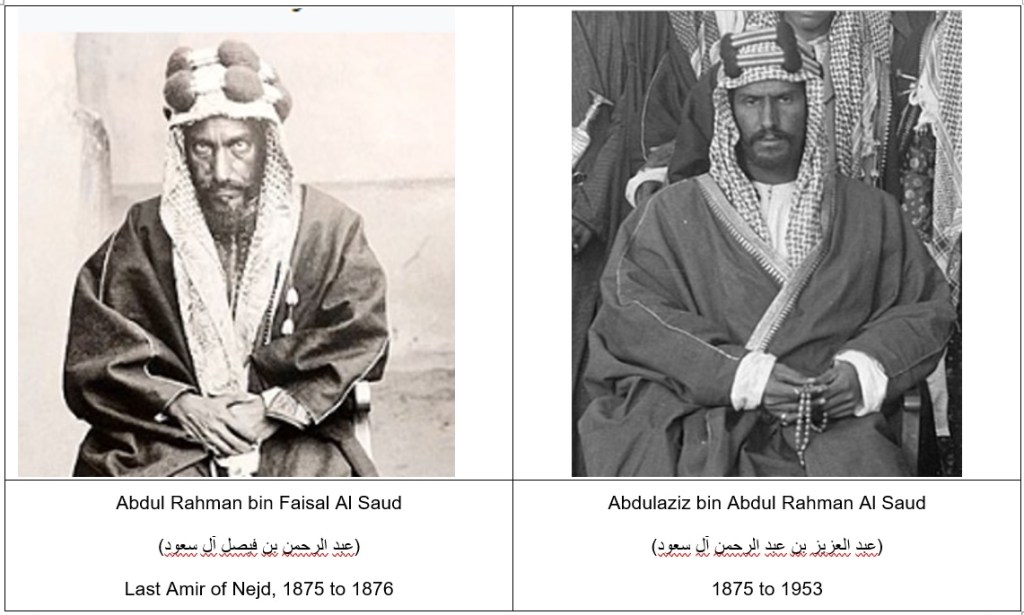
Abdul Rahman & Ibn Saud
| オタイバ族(‘Utaybah) (عتيبة) : ウタイバ族(アテバ族)とも呼ばれる部族同盟(Otaibah or ‘Utaybah Confederationで、スンニー・ムスリム族同盟、(イフワーン3部族) (Sunni Muslim Confederation (الاتحاد السني المسلم) (Three Ikhwan Tribes) (ثلاث قبائل من الإخوان))に属しています。 | ‘Utaybah (عتيبة): It is a tribal confederation, also called Otaibah or ‘Utaybah Confederation and belongs to Sunni Muslim Confederation (الاتحاد السني المسلم) (Three Ikhwan Tribes (ثلاث قبائل من الإخوان)). |
| アジュマーン族(Ajman (Ujman)) (عجمان):バヌー・ヤーム族(Banu Yam (Yam)) (بنو يام)の一門を中核としたアラビア湾岸のベトウイン部族同盟(a Bedouin Tribe)で、スンニー・ムスリム族同盟、(イフワーン3部族) (Sunni Muslim Confederation (الاتحاد السني المسلم) (Three Ikhwan Tribes) (ثلاث قبائل من الإخوان))に属しています。 | Ajman (Ujman) (عجمان): It is a Bedouin Tribal Confederation of the Arabian Gulf, with a clan of Banu Yam (بنو يام) at its core, and belongs to Sunni Muslim Confederation (الاتحاد السني المسلم) (Three Ikhwan Tribes (ثلاث قبائل من الإخوان)). |
| ムタイル族(Mutayr) (مطير):スンニー・ムスリム族同盟、(イフワーン3部族) (Sunni Muslim Confederation (الاتحاد السني المسلم) (Three Ikhwan Tribes (ثلاث قبائل من الإخوان))の1部族です。 | Mutayr (مطير):It is a tribe confederation belonging to Sunni Muslim Confederation (الاتحاد السني المسلم) (Three Ikhwan Tribes (ثلاث قبائل من الإخوان)). |
| シャンマル族(Shammar) (شَمَّر):カフターン部族系譜(Qahtanian Lineage) (النسب القحطانيون).シャンマル族同盟(Shammar Tribal Confederation) (اتحاد قبائل شَمَّر)。 | Shammar (شَمَّر): Shammar Tribal Confederation (اتحاد قبائل شَمَّر) of Qahtanian Lineage (النسب القحطانيون). |
| ハルブ族(Harb) (حرب):ヒムヤル・カフターン部族 (Himyar Qahtan Arabs) (حمير قحطان عرب)に属するクダーア族(Quda’a) (قضاعة)の1支族。 | Harb (حرب): A Subtribe of Quda’a (عرب) belonging to Himyar Qahtan Arabs (حمير قحطان عرب). |
| ハルブ族同盟(Harb Confederation) (اتحاد حرب):カフターン部族系譜部族同盟(Qahtanian Lineage Tribal Coneideration) (القبلي اتحاد النسب القحطانيون)の一つ。 | Harb Confederation (اتحاد حرب) : One of Qahtanian Lineage Tribal Coneideration (القبلي اتحاد النسب القحطانيون) . |
| ムンタフィク族同盟(Al-Muntafiq Confederation) (تحالف قبائل المنتفق):イラク中央と南部に展開するユーフラテス下流の地域部族同盟 | Al-Muntafiq Confederation (تحالف قبائل المنتفق): Regional tribal alliances of the central and southern Iraq in the lower Euphrates. |
| ザフィール族(Zafir) (ظفير):カフラーン・カフターン部族(Kahlan Qahtan Arabs) (كهلان قحطان عرب)のタイイ族(Tayy) (طيء)の支族バヌー・ハーリド族(Banu Khalid) (بنو خالد)の一門 | Zafir (ظفير): A clan of Banu Khalid branch (قبيلة الفرعية بني خالد ) belomging to Tayy Tribe (قبيلة طيء ) of Kahlan Qahtan Arabs (كهلان قحطان عرب). |
 Desert peninsula