33 Yemen since Modern Times


目次(Index)
カーシミー朝
Qasimi State
| 最も強力なザイド・イマーム国家 | Most Powerful Zayd Imam State |
| コーヒーの独占喪失 | Loss of Coffee Monopoly |
| ラヘジのスルターン国の独立 | Independence of Sultanate of Laheji |
| ワッハーブ派運動の台頭 | Rise of Wahhabi Movement |
| オスマン帝国の介入 | Ottoman Intervention |
最も強力なザイド・イマーム国家
Most Powerful Zayd Imam State
カーシミー朝(the Qasimi dynasty) (1597~1849) (الدولة القاسمية)は、これまでに存在した中で最も強いザイド・イマーム国家(the strongest Zaydi state)でした。当時は、イエメンは世界で唯一のコーヒー生産者でしたので、その収益で潤ってもいました。
The Qasimi dynasty (1597~1849) (الدولة القاسمية) was the strongest Zaydi state that ever existed. At that time, Yemen was the only coffee producer in the world. The coffee monopoly gave this state very rich profit.
コーヒーの独占喪失
Loss of Coffee Monopoly
18世紀前半、ヨーロッパ人はコーヒーの木を密輸し、東インド諸島、東アフリカ、西インド諸島、ラテンアメリカの植民地で栽培することにより、イエメンのコーヒーの独占を破りましたので、その収益には陰りが出て来ました。 イマームの座の継承問題で家族内がもめ始め、そのに部族の不服従が重なったこともあり、18世紀のカーシミー朝(the Qasimi dynasty)は、政治的に衰退してしまいました。
In the first half of the 18th century, Europeans broke Yemen’s coffee monopoly by smuggling coffee trees and cultivating them in their colonies in the East Indies, East Africa, West Indies, and Latin America. This had made a shadow on the rich earning of the Qasimi dynasty. In the 18th century, the family disputes began over the succession to the throne of the Imam. Moreover, the tribal disobediences had compounded further. As such the Qasimi dynasty had been falling into a political decline.
ラヘジのスルターン国の独立
Independence of Sultanate of Laheji
1728年から1731年頃に、ラヘジ(Lahej) (لحج)の最高代表は、カーシミー朝に反抗して独立したスルターン(Sultan)であると宣言し、アデン(Aden)を征服してラヘジのスルターン国(the Sultanate of Lahej) (728~1967) (سلطنة لحج)を設立しました。
Around 1728~1731, the supreme representative of Lahej (لحج) rebelled against the Qashmi dynasty and proclaimed himself an independent Sultan. It conquered Aden and established the Sultanate of Lahej (728~1967) (سلطنة لحج).
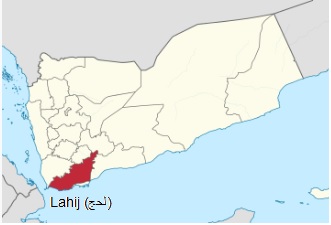
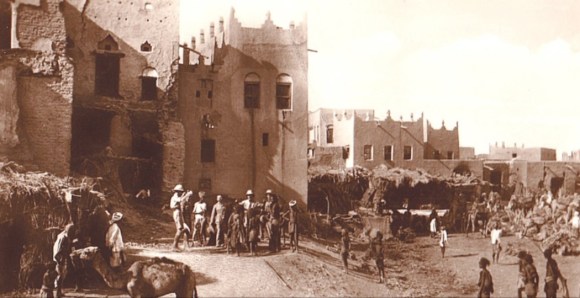
Lahij (لحج)
Lahej, Western Protectorate c. 1910
ワッハーブ派運動の台頭
Rise of Wahhabi Movement
アラビア半島での熱烈なイスラーム主義ワッハーブ派運動 (the fervently Islamist Wahhabi movement)の台頭により、1803年以降、カーシミー朝(the Qasimi dynasty)は、沿岸領地を失いました。
With the rise of the fervently Islamist Wahhabi movement in the Arabian Peninsula, the Qasimi dynasty lost its coastal territories after 1803.
オスマン帝国の介入
Ottoman Intervention
一時は取り戻したものの、1833年にはエジプトのオスマン帝国総督(the Ottoman viceroy of Egypt)による新たな介入により、カーシミー朝(the Qasimi dynasty)は、再び海岸地帯を奪われました。1835年以降、イマームは頻繁に交代し、1849年以降、ザイド・イマーム国家カーシミー朝は、数十年続いた混乱に陥りました。
Although the Qasimi dynasty briefly regained the coastal zone, in 1833 a new intervention by the Ottoman viceroy of Egypt deprived of its coastal zone once again. After 1835, imams changed frequently, and moreover since 1849, the Zayd Imam state Qasimi dynasty descended into chaos that lasted for decades.
アデンの世界都市化
Global Urbanization of Aden
| インド航路の石炭補給基地 | A Coal Refueling Base on the Indian Sea Route |
| アデンの保護領化 | Aden Protectorate |
| 9つのイギリスの保護領 | 9 British Protectorates |
| 自由貿易港宣言 | Declaration of a Free Port |
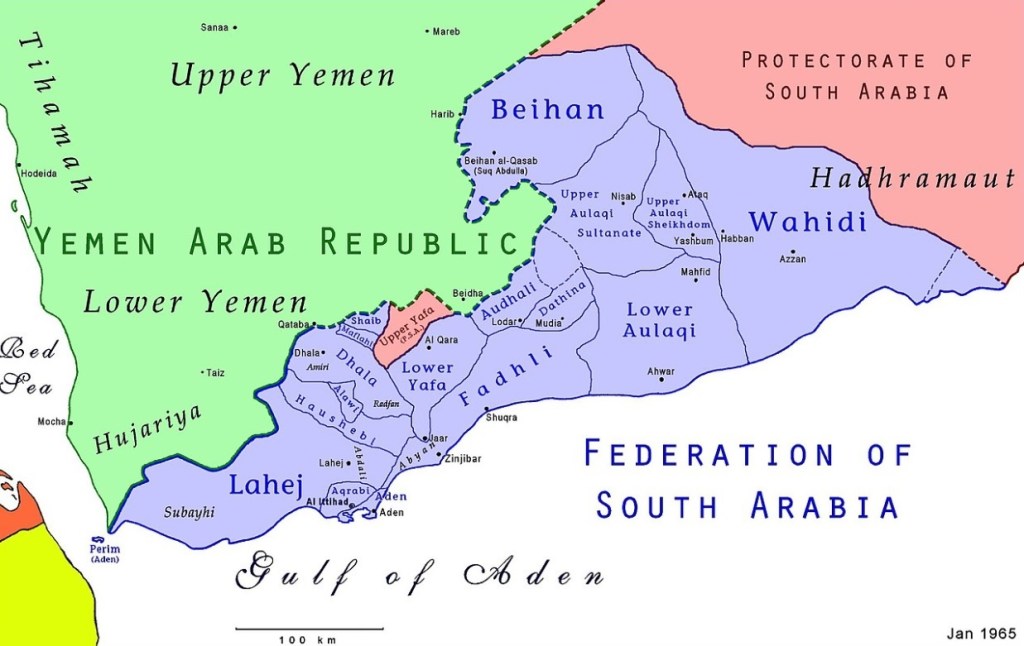
Federation of South Arabia, with Lahej
インド航路の石炭補給基地
A Coal Refueling Base on the Indian Sea Route
イギリス軍は、インドに向かう途中で汽船にサービスを提供するための石炭貯蔵所を探していました。スエズからボンベイへ(from Suez to Bombay)の往復には700トンの石炭が必要でした。 東インド会社(East India Company)の役人はアデン(Aden) (عدن)を石炭補給基地に決定し、ラヘジのスルターン(the Sultan of Lahej)から必要な合意を引き出すことが出来ました。
The British were looking for coal depots to service steamers on their way to India. A round trip from Suez to Bombay required 700 tons of coal. The East India Company officials decided to make Aden (عدن) a coal depot. This Company was able to obtain the necessary agreement from the Sultanate of Lahej (سلطنة لحج).
アデンの保護領化
Aden Protectorate
貿易目的でアデンを通過中に沈没した東インド会社の帆船にアラブの部族が乗り込み、その内容物を略奪したとき、1839年にイギリスは、圧倒的な軍事力と海軍力を用いて、アデンを占領し、ラヘジのスルターンに補償することを同意させました。さらに、イギリスはラヘジのスルターン(the Sultan of Lahej)をアデンから追い出し、アデンに「保護領(Protectorate)」に成ることを強制しました。
In 1839, an East India Company sailing ship sank while passing through Aden for trade purposes. At this time, Arab tribes boarded this wreck and looted its contents. In response, the British used overwhelming military and naval power to capture Aden and force the Sultan of Lahej to agree its indemnification. In addition, the British expelled the Sultan of Lahej from Aden and forced Aden to become a “Protectorate”.
9つのイギリスの保護領
9 British Protectorates
さらに、英国政府は、アデンを取り巻く9つの部族と「保護と友好」条約(“protection and friendship” treaties)を締結しました。この条約では、外国人(非アラブ植民地勢力)と条約を締結しない限り、英国の干渉は受けませんでした。
Additionally, the British government signed “Protection and Friendship” Treaties with the nine tribes surrounding Aden. This treaty did not allow British interference unless a treaty was signed with foreigners (non-Arab colonial powers).
自由貿易港宣言
Declaration of a Free Port
アデンは1850年にフリーゾーンと宣言されました。在住のアラブ住民の数は、制限されましたが、移民をインド、東アフリカ、東南アジアからを受け入れました。これらの移民とともに、アデンは「世界都市」に成長しました。
Aden was declared a free zone in 1850. This city limited the number of resident Arabs, but accepted immigrants from India, East Africa, and Southeast Asia. With these immigrants, Aden grew into a “World City”.
オスマン帝国の帰還
Return of Ottoman Empire
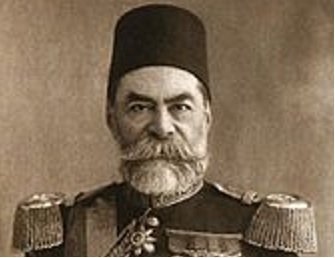
アフメド・ムフタル・パシャ(オスマン帝国の大宰相でイエメンのワーリ(知事))
Ottoman Grand Vizier and Wali (Governor) of Yemen
オスマン帝国イエメン州設立
Establishment of the Yemen Vilayet
オスマン帝国は、2世紀の不在の後、1849年にティハーマに戻り、混乱が続きました。オスマン帝国の遠征軍は、サヌアを占領しようとしたが敗北し、高地から避難しなければなりませんでした。しかしながら、1869年のスエズ運河の開通は、イエメンを確保しようとするオスマン帝国の意思を一層、強くしました。1872年、サヌアを征服するためにオスマントルコは、軍隊はコンスタンティノープル(Constantinople)から派遣しました。1873年までにイエメン北部の高地を征服することに成功、サヌアはイエメン州(Yemen Vilayet) (1872~1918) (ولاية اليمن)の行政首都になりました。
The Ottoman Empire returned to Tihama (تهامة) in 1849 after two centuries of absence, and chaos ensued. An Ottoman expeditionary force attempted to capture Sana’a but was defeated and had to evacuate from the highlands. However, the opening of the Suez Canal in 1869 further strengthened the Ottomans’ will to secure Yemen. In 1872, the Ottoman Turks sent troops from Constantinople to conquer Sana’a. By 1873, having successfully conquered the northern highlands of Yemen, Sana’a became the administrative capital of Yemen Vilayet (1872-1918) (ولاية اليمن).
イエメン州(Yemen Vilayet) (1872~1918) (ولاية اليمن):これは、オスマン帝国の第一級行政区画 (vilayet) (province)」 でした。 20 世紀初頭、その面積は 20万平方キロメートルあり、人口は、250万 人とされています。イエメン州(Yemen Vilayet)は北は北緯 20 度、南はアデン英保護領、西は紅海に囲まれていましが、東の国境の境界は曖昧なままでした。
Yemen Vilayet (1872~1918) (ولاية اليمن): This was a first-class administrative division (vilayet) (province) of the Ottoman Empire. At the beginning of the 20th century, its area was her 200,000 square kilometers, and the population was estimated at 2.5 million. The province of Yemen (Yemen Vilayet) was bounded to the north at 20 degrees north latitude, to the south by the British Protectorate of Aden, and to the west by the Red Sea, but its eastern borders remained vague.
オスマン帝国は、これまでの経験から高地地域の地元の領主の無力化に取り組みました。オスマン帝国は、反抗的な首長を許し、行政職に任命することによって部族をなだめた。彼らは国の経済福祉を強化するために一連の改革を導入しました。
The Ottomans used their experience to neutralize the local lords of the highlands. The Ottoman Empire appeased the tribes by forgiving and appointing rebellious chieftains to administrative posts. They introduced a series of reforms to strengthen the province (Vilayet)’s economic welfare.
高地部族支配の難しさ
Difficulties in Highland Tribal Control
一方、イエメンのオスマン帝国政権では汚職が蔓延し、タンジマート改革(Tanzimat) (تنظيمات)を導入しましたが、これは、ザイド派(the Zaydi tribes)によって異端と見なされました。
Meanwhile, the Ottoman regime in Yemen, plagued by corruption, introduced the Tanzimat (تنظيمات) reforms, which was considered religiously unorthodox by the Zaydi tribes.
恩恵改革(Tanzimat) (تنظيمات):1839年から1876年制定の間にオスマン帝国が行なった諸改革あるいは改革運動の総体であり、征服地域の州では、諸民族の自立・離反を押させるための一種の西欧化・近代化政策と言えます。
Tanzimat (تنظيمات): The collection of reforms or reform movements carried out by the Ottoman Empire between 1839 and 1876, in conquered provinces, to prevent the independence and secession of ethnic groups. It can be said to be a kind of westernization and modernization policy.
1876年、ハシッド族(the Hashid) (قبيلة حاشد)とバキル族(the Bakil) (قبيلة بكي) は、オスマン帝国に反抗し、トルコ人は、蜂起を終わらせるために贈り物で彼らをなだめなければなりませんでした。
In 1876, the Hashids (قبيلة حاشد) and the Bakils (قبيلة بكي) rebelled against the Ottoman Empire, and so the Turks had to appease them with gifts to end their uprising.
ハシッド族(the Hashid) (قبيلة حاشد):カフラーン・カフターン部族(Kahlan Qahtan Arabs) (كهلان قحطان عرب)ハムダーン族(Hamdan) (قبيلة همدان)の一門の名で、北部・北西部山岳が拠点とするイエメンで2番目に大きな部族同盟に付されています。
The Hashid (حاشد): It is the name of a branch of the Hamdan tribe (قبيلة همدان) of the Kahlan Qahtan Arabs (كهلان قحطان عرب). This name is attached to the second largest tribal confederation, based in the northern and northwestern mountains of Yemen.
バキル族(the Bakil) (قبيلة بكي):カフラーン・カフターン部族(Kahlan Qahtan) (كهلان قحطان عرب)ハムダーン族(Hamdan) (قبيلة همدان)の一門の名で、最北地域を拠点とするイエメン最大の部族同盟に付されています。
The Bakil) (قبيلة بكي): It is the name of a branch of the Hamdan tribe (قبيلة همدان) of the Kahlan Qahtan Arabs) (كهلان قحطان عرب). This name is attached to the largest tribal alliance in Yemen based in the northernmost regions.
高地の部族長はなだめるのが難しく、アフメド・イゼット・パシャ(Ahmed Izzet Pasha) (احمد عزت پاشا) (Grand vizier) (وزيرِ اعظم)は、ザイド派(the Zaydi tribes)に対する軍事作戦の不必要に負担を防ぐためにオスマン帝国軍(the Ottoman Military)の活動をティハーマ(Tihama) (تهامة)に限定しようとしました。オスマン帝国軍(the Ottoman Military)を疲弊させた北部高地の部族は、タンジマート(Tanzimat)に憤慨し、オスマン帝国軍が彼らに課そうとするあらゆる試みに逆らいました。
Highland tribal chieftains were difficult to appease and Ahmed Izzet Pasha (احمد عزت پاشا) (Grand vizier) (وزيرِ اعظم) was unnecessarily burdened with military campaigns against the Zaydi tribes. In order to prevent the Ottoman military burden, Ahmed Izzet Pasha tried to limit the Ottoman’s military activities only to Tihama (تهامة). Since the tribes of the northern highlands, who had exhausted the Ottoman military force, resented the Tanzimat, they defied every attempt that the Ottoman army tried to impose on them.
1890年に北部の部族は、ハミダディン家(the House of Hamidaddin) (آل حميد الدين)の指導の下で団結しました。イマーム(Imam) (إمام)・ヤヒヤ・ハミダディン(Yahya Hamidaddin) (يحيى محمد حميد الدين)は、1904年から1911年までの反乱を指導し、オスマン帝国に多大な損害を与えました。オスマン帝国は、1911年にイマーム・ヤヒヤ・ハミダディンと条約を締結し、北部高地の自治指導者として認めました。オスマン帝国は、1918年にイエメンから撤退するまで、中南部のシャフィイー派の地域(Shafi’i areas) (المناطق شافي)を支配し続けました。
In 1890 the northern tribes united under the leadership of the House of Hamidaddin (آل حميد الدين). Imam (إمام) Yahya Hamidaddin (يحيى محمد حميد الدين) led an uprising from 1904 to 1911 that inflicted great damage on the Ottoman Empire. The Ottoman Empire signed a treaty with Imam Yahya Hamidadin in 1911, recognizing him as the autonomous leader of the northern highlands. The Ottoman Empire continued to control the Shafi’i areas (المناطق شافي) in the south-central Yemen Vilayet until it withdrew from Yemen in 1918.
イドリース朝首長国とイエメンのムタワッキライト王国
Idrisid Emirate and Mutawakkilite Kingdom
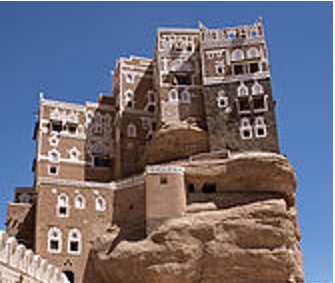
サヌアにあるイマーム・ヤヒヤ・ハミド・エドディンの家
Imam Yahya hamid ed-Din’s house in Sana’a
ムタワッキライト王国
Mutawakkilite Kingdom
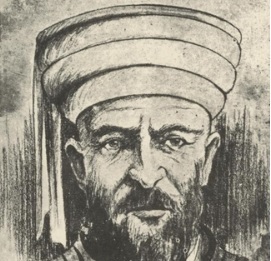
Imam Yahya
イマーム(Imam) (إمام)・ヤヒヤ・ハミド・エドディン・アル・ムタワッキル(Yahya hamid ed-Din al-Mutawakkil) (r.1904~1948) (يحيى محمد حميد الدين محمد المتوكل)は、1911年以来、北部の高地を独立して支配していました。1918年にオスマン帝国が去った後、同年10月30日にイマーム・ヤヒヤ(Imam Yahya) (إمام يحيى)は、ムタワッキライト王国(Mutawakkilite Kingdom) (1918~1962) (المملكة المتوكلية اليمنية)の設立を宣言し、自ら王位を名乗りました。そして、カーシミー朝(Qasimi dynasty) (القاسمي)の祖先の土地を取り戻そうとしました。それは、アシール(Asir) (عسير)からドファール(Dhofar) (ظفار)まで広がる大イエメンでした。
Since 1911, Imam (إمام) Yahya hamid ed-Din al-Mutawakkil (r.1904-1948) (يحيى محمد حميد الدين محمد المتوكل) had controlled the highlands independently. After the Ottoman Empire left in 1918, Imam Yahya (إمام يحيى) declared to establish the Mutawakkilite Kingdom (1918~1962) (المملكة المتوكلية اليمنية) on 30 October of the same year, and he claimed himself its throne. Then, he tried to reclaim the ancestral lands of the Qasimi dynasty (القاسمي). It was so called as the Greater Yemen, stretching from Asir (عسير) to Dhofar (ظفار).
イドリース朝、イブン・サウードおよびアデンのイギリス政府との対立
Conflict with Idrisid Dynasty, Ibn Saud and Aden British Government
この為、これら土地の事実上の支配者、すなわちイドリース朝(Idrisid dynasty) (788~791) (سلالة الأدارسة)、イブン・サウード(Ibn Saud) (ابن سعود)とアデンのイギリス政府(the British government in Aden)と対立していました。
For this reason, Imam Yahya (إمام يحيى) confronted with the de facto rulers of these lands. They were the Idrisid Dynasty (788-791) (سلالة الأدارسة), Ibn Saud (ابن سعود) and the British government in Aden.
ザイド・イマーム(Zayd Imam) (زيد إمام)は、イエメンを占領している2つの外国勢力の間で行われたという理由で、1905年のアングロ・オスマン帝国国境協定(the Anglo-Ottoman border agreement)を認めませんでした。この国境条約はイエメンを「北」と「南」に効果的に分割していました。1915年、イギリスはイドリース朝(Idrisid Dynasty)と条約に署名し、トルコ人と戦う場合の安全と独立を保証しました。1919年、イマーム・ヤヒヤ(Imam Yahya) (إمام يحيى)は南に移動し、9つのイギリスの保護領(the nine British protectorates)を解放しました。イギリス軍はティハーマ(Tihama) (تهامة)に向かって迅速に移動し、フダイダ(Hudaydah) (حديدة)を占領することで対応しました。それから、それをイドリース同盟国(Idrisi allies)に引き渡しました。
As the Anglo-Ottoman border agreement of 1905 was made only between the two foreign powers occupying Yemen, Zayd Imam (زيد إمام) did not recognize it. This border treaty effectively divided Yemen into a “north” and a “south”. In 1915, Britain signed a treaty with the Idrisid Dynasty. With it, British will guarantee security and independence if Idrisid fights with Turks. In 1919, Imam Yahya (إمام يحيى) moved south and liberated the nine British protectorates. British responded by moving swiftly towards Tihama (تهامة) and capturing Hudaydah (حديدة). British then handed Hudaydah over to the Idrisi allies.
イマーム・ヤヒヤは1922年に再び南部の保護領を攻撃しました。イギリス軍は、部族が効果的な対抗策を持っていなかった航空機で、イマーム・ヤヒヤの部族軍を爆撃しました。1925年、イマーム・ヤヒヤは、アシールがイマーム軍の支配下に置かれるまで、イドリース朝を攻撃し続けました。
Imam Yahya attacked the southern protectorate again in 1922. The British bombed Imam Yahya’s tribal forces with aircrafts, that the tribes had no effective countermeasures against them. In 1925, Imam Yahya continued to attack the Idrisid dynasty until Asir fell under the control of the Imam army.
1927年、イマーム・ヤヒヤ(Imam Yahya )の軍隊がアデンからタイズ(Ta’izz) (تعز)とイブ(Ibb) (إب)向かって50 km離れたとき、タイズ(Ta’izz) (تعز)とイブ(Ibb) (إب)は、イギリス軍に5日間爆撃されました。この為にイマームの軍隊は、そこから撤退しなければなりませんでした。
主にマリブ(Marib)に住むカフラーン・カフターン部族(the Kahlan Qahtan Arabs) (كهلان قحطان عرب)マズヒジュ族(قبيلة مذحج)を名乗る部族同盟the tibal confederation)がありました。この部族同盟からの小さなベドウィン軍は、シャブワ(Shabwah) (شبوة)を攻撃しました が、イギリス軍に爆撃され、シャブワからやむなく撤退しました。
In 1927, when Imam Yahya’s army was 50 km away from Aden towards Ta’izz (تعز) and Ibb (إب), Ta’izz and Ibb were bombed by the British force for five days. Because of this, the Imam’s army had to withdraw from there.
There was a tribal confederation calling themselves the Kahlan Qahtan Arabs (كهلان قحطان عرب) Mazuhij tribe(قبيلة مذج), who lived mainly in Marib. A small Bedouin army from this tribal alliance attacked Shabwah (شبوة), but was bombed by British forces and was forced to withdraw from Shabwa.
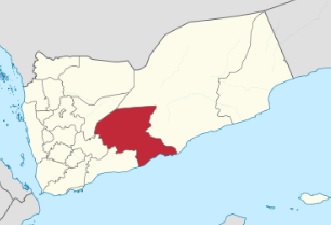
Shabwah Governorate
イタリア帝国がイエメン国王承認
Italian Empire recognized King of Yemen
イタリア帝国(the Italian Empire) (1882~1960)は、1926年にムタワッキライト王国(Mutawakkilite Kingdom)のイマーム・ヤヒヤ(Imam Yahya) (إمام يحيى)をイエメンの王として最初に認めました。イマーム・ヤヒヤ(Imam Yahya) (إمام يحيى)もイタリアの支援を受けてアデンの併合に目を向けていました。これはイギリス人にとって大きな不安を引き起こしました。
The Italian Empire (1882-1960) was the first to recognize Imam Yahya (إمام يحيى) of the Mutawakkilite Kingdom as King of Yemen in 1926. Imam Yahya (إمام يحيى) was also looking to annex Aden with Italian support. This caused the great unrest for the British.
サウジアラビア・イエメン戦争と三州の20年間割譲
Saudi–Yemeni War and ceding 3 provinces
イドリース朝(the Idrisid Dynasty)は、イマーム・ヤヒヤ(Imam Yahya)からの保護を求めてイブン・サウド(Ibn Saud)に目を向けました。しかし、1932年、イドリース朝は、イブン・サウードとの合意を破り、イマーム・ヤヒヤ(Imam Yahya)に戻り、イブン・サウード対してイマーム・ヤヒヤは、すべてのイドリース支配領土の返還を要求しました。
The Idrisid dynasty turned to Ibn Saud for protection from Imam Yahya. However, in 1932, the Idrisids broke their agreement with Ibn Saud and came back to Imam Yahya, who demanded Ibn Saud the return of all Idris-controlled territories.
同じ1932年、イエメン政府とイラク王国は、イラクでのイエメン軍将校の訓練につながる条約に署名しました。
In the same 1932, the Yemeni government and the Kingdom of Iraq signed a treaty leading to the training of Yemeni military officers in Iraq.
その同じ年、ヒジャージの自由(Hejazi liberals)のグループがイエメンに逃げ、7年前にサウジアラビアによって征服されたヒジャーズの旧ハシミテ王国(the former Hashemite Kingdom of Hejaz)からイブン・サウードを追放することを企てました。イブン・サウードはイギリスに援助を訴え、それに答えて、イギリス政府は、武器と飛行機を送りました。その時、イギリス人は、イブン・サウードの財政難がイタリア帝国に彼を救済することになるかもしれないと心配していました。
That same year, a group of the Hejazi liberals fled to Yemen, who was planning to expel Ibn Saud from the former Hashemite Kingdom of Hejaz, which had been conquered by Saudi Arabia seven years earlier. Ibn Saud appealed to Britain for help, and in response the British government sent weapons and planes. At the time the British were worried that Ibn Saud’s financial difficulties might lead to the Italian Empire bailing him out.
イブン・サウードは1933年にアシールの叛乱(the Asiri rebellion)を鎮圧し、その後イドリース朝はサヌアに逃げました。イマーム・ヤヒヤとイブン・サウードは、1934年のサウジアラビア・イエメン戦争(The Saudi–Yemeni War) (الحرب السعودية اليمنية))の後、イブン・サウードにナジュラーン(Najran) (نجران)、アシール(Asir) (عسير)、ジーザーン(Jizan) (جيزان)の3つの州を20年間割譲することで合意しました。
Ibn Saud crushed the Asiri rebellion in 1933, after which the Idrisids fled to Sana’a. After the 1934 Saudi–Yemeni War (الحرب العودية اليمنية), Imam Yahya agreed with Ibn Saud to cede Najran (نجران), Asir (عسير) and Jizan (جيزان) to him for 20 years.
アデン保護領に対する英国の主権の承認
Reorganization over British Aden Protectorate
イマーム・ヤヒヤは、1934年に英国政府とも別の条約に署名しています。この条約によって、イマーム・ヤヒヤは、40年間、アデン保護領に対する英国の主権を認めました。イマーム・ヤヒヤは、フダイダ(Hudaydah)への攻撃を恐れてサウジアラビアとイギリスの要求に服従したと、思われます。
Imam Yahya also signed another treaty with the British government in 1934. By this treaty, Imam Yahya recognized British sovereignty over the Protectorate of Aden for 40 years. Imam Yahya was believed to have submitted to Saudi and British demands for fear of an attack on Hudaydah.
都市ナショナリスト台頭
Rise of Urban Nationalists
イマーム・ヤヒヤは、アシールを失いましたが、イラクで訓練されたイエメン軍を使って北部の反政府勢力を鎮圧することができました。領土が明確に定義され、鎮静化すると、シャーフィイー派(Shafi’i) (شافعي)などを中核として都市ナショナリストが台頭し、ムスリム同胞団(the Muslim Brotherhood)やアルジェリアの民族主義者(the Algerian nationalists)とのつながりを獲得していました。それらと呼応するようにイエメンのムスリム同胞団の工作員が、都市の反対派と連携し始めました。
Despite losing Asir, Imam Yahya was able to use Yemeni forces trained in Iraq to crush rebels in the north. Once the territory was clearly defined and subdued, urban sectarian nationalists emerged with a core of the Shafi’i (شافعي) etc. They had established connections with the Muslim Brotherhood, and the Algerian nationalists. Correspondingly, Yemeni Muslim Brotherhood operatives began to link up with the urban’s opposition.
国連加盟
Accession of United Nation
イエメン王国は1945年にアラブ連盟(the Arab League) (الجامعة العربية)の創設メンバーになり、1947年9月30日に国連にも加盟しました。
The Kingdom of Yemen became a founding member of the Arab League (الجامعة العربية) in 1945 and also joined the United Nations on 30 September 1947.
1948年の叛乱と鎮圧
Revolt and Quelling in 1948
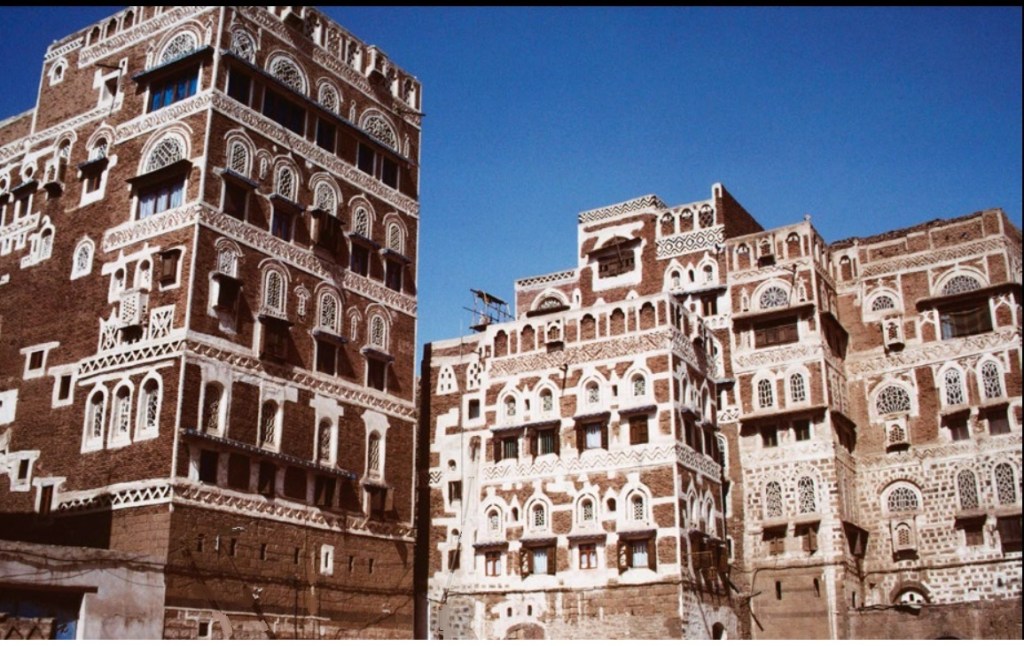
Sana’a
1948年2月17日、反対派はサヌアで反乱を起こし、イマーム・ヤヒヤを殺害しました。アフマド皇太子(Ahmad bin Yahya Hamidaddin) (r.1948~1962) (أحمد بن يحيى حميد الدين)は,
北部の部族を結集して首都を奪還し、1948年3月12日の短い包囲の後、反乱を鎮圧することができました。
On 17 February 1948, dissidents revolted in Sana’a and killed Imam Yahya. Prince Ahmad bin Yahya Hamidaddin (r.1948~1962) (أحمد بن يحيى حميد الدين) rallied the northern tribes to retake the capital and was able to put down the rebellion after a brief siege on 12 March 1948.
イマーム・アフマド
Imam Ahmad
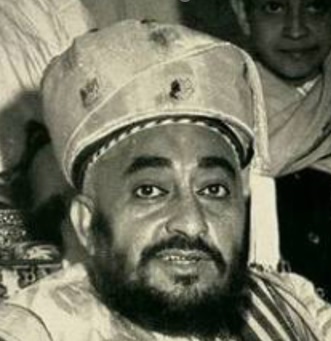
Imam Ahmad
イマーム・アフマド(Imam Ahmad) (إمام أحمد)は、父親の孤立主義政策を覆し、イエメンの経済と社会を外界に開放しました。それは、神権的で主に中世のイママテ(Imamate) (إمامة)として生き、ソビエト(Soviet)の援助を受け入れた最初のアラブ国家(the first Arab state)になりました。1955年以降、イエメンは、さまざまな友好条約を締結し、1957年から大量のソビエトの武器とソビエトと中国の軍事顧問を受け取り始めました。
Imam Ahmad (إمام أحمد) reversed his father’s isolationist policies and opened Yemen’s economy and society to the outside world. It lived primarily as a theocratic and medieval Imamate (إمامة) and became the first Arab state to accept Soviet aid. After 1955, Yemen entered into various treaties of friendship and from 1957 began to receive large quantities of Soviet weapons and Soviet and Chinese military advisers.
イマームが病気のために海外に行ったとき、皇太子ムハンマド・アル・バドル(Muhammad al-Badr) (r.1962) (محمد البدر حميد الدين)は、親ソビエト党を率い、共産主義活動が増加しました。1959年にイマームが戻ったとき、残忍な弾圧が続き、共産主義者は追放されました。
When the Imam went abroad due to illness, Crown Prince Muhammad al-Badr (r.1962) (محمد البدر حميد الدين) led the pro-Soviet party and communist activity increased. When the Imam returned in 1959, a brutal crackdown ensued and the communists were expelled.
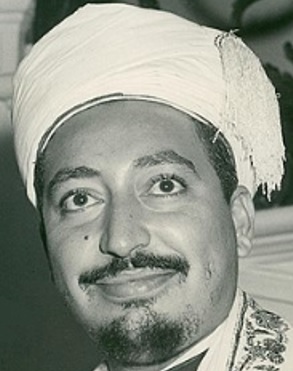
Muhammad al-Badr
アラブ連合共和国加盟
Joining United Arab Republic
1956年4月、イエメンは、シリアとエジプトとの防衛協定に参加し、1958年2月にアラブ連合共和国(the United Arab Republic) (1958~1961/1971) (الجمهورية العربية المتحدة)と連合しました。但し、この連合は、3年間しか続きませんでした。
In April 1956 Yemen joined the defense pacts with Syria and Egypt. And in February 1958 Yemen was allied with the United Arab Republic (1958~1961/1971) (الجمهورية العربية المتحدة), however this coalition lasted only three years.
イエメンアラブ共和国と南イエメン
Yemen Arab Republic and South Yemen
| イエメンアラブ共和国の形成 | Formation of the Yemen Arab Republic |
| イエメン人民民主共和国の形成 | Formation of the People’s Democratic Republic of Yemen |
| 2つのイエメン国家間の和平と敵対 | Peace and Antagonism between two Yemeni states |
イエメンアラブ共和国の形成
Formation of the Yemen Arab Republic
イマーム・アフマド・ビン・ヤヒヤ(Imam Ahmad bin Yahya)が1962年に亡くなり、息子に引き継がれました。しかし、アラブのナショナリズムの影響を受けた陸軍将校は、権力を掌握しようとし、北イエメン内戦(North Yemen Civil War) (1962~1970) (ثورة 26 سبتمبر اليمنية)を引き起こしました。ハミダッジン王党派(the Hamidaddin royalists)は、サウジアラビア、イギリス、ヨルダンから武器と財政援助だけでなく、小さな軍隊の派遣によって支援されました。一方、共和党員(the republicans)は、エジプトに支援されていました。エジプトは、共和党員に武器と財政援助を提供しただけではなく、戦闘に参加するために大規模な軍隊も派遣しました。6年間の内戦の後、共和党は、勝利し(1968年2月)、イエメンアラブ共和国(the Yemen Arab Republic) (1962~1990) (الجمهورية العربية اليمنية)を設立しました。
Imam Ahmad bin Yahya died in 1962 and was succeeded by his son. However, army officers, influenced by Arab nationalism, sparked the North Yemen Civil War (1962~1970) (ثورة 26 سبتمبر اليمنية) to try to seize power. The Hamidaddin royalists were aided by Saudi Arabia, Britain and Jordan. They supplied arms and finance as well as the dispatch of small troops.
Meanwhile, the Republicans were backed by Egypt. Egypt not only provided the Republicans with weapons and financial aid, but also sent a large army to join the battle. After a six-year civil war, the Republicans won in February 1968. And the Republicans established the Yemen Arab Republic (1962-1990) (الجمهورية العربية اليمنية).
アブドラ・アズ・サラル:アブドラ・アズ・サラル(Abdullah as-Sallal) (r.1962~1967) (عبد الله يحيى السلال)
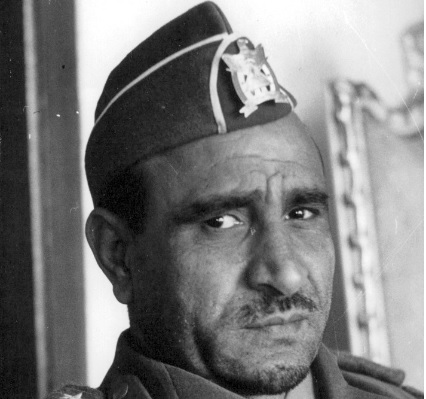
Abdullah as-Sallal
アブドラ・アズ・サラル:アブドラ・アズ・サラル(Abdullah as-Sallal) (r.1962~1967) (عبد الله يحيى السلال) は、通称北イエメンで知られるイエメン・アラブ共和国(the Yemen Arab Republic) (1962–1990) (الجمهورية العربية اليمنية)の初代大統領です。
Abdullah as-Sallal (r.1962-1967) (عبد الله يحيى السلال) : He was the first president of the Yemen Arab Republic (1962~1990) (الجمهورية العربية اليمنية). This republic had been commonly known as the North Yemen.
イエメン人民民主共和国の形成
Formation of the People’s Democratic Republic of Yemen
北部の革命は、南部でのイギリス統治の終焉を早めたアデン緊急事態(the Aden Emergency) (Radfan Uprising) (1963~1967) (ثورة 14 أكتوبر)と一致しました。1967年11月30日、アデンと旧南アラビア保護領からなる南イエメン国(the state of South Yemen) (People’s Republic of Yemen) (1967~197) (جمهورية اليمن الشعبية)が形成されました。この社会主義国家は後に正式にイエメン人民民主共和国(the People’s Democratic Republic of Yemen) (1970~1990) (جمهورية اليمن الديمقراطية الشعبية,)として知られ、国有化のプログラム(a programme of nationalisation)が開始されました。
The Northern Revolution coincided with the Aden Emergency (Radfan Uprising) (1963~1967) (ثورة 14 أكتوبر), which hastened the end of British rule in the South. On November 30, 1967, the state of South Yemen (People’s Republic of Yemen) (1967~197) (جمهورية اليمن الشعبية) was formed, consisting of Aden and the former South Arabian Protectorate. This socialist state was later officially known as the People’s Democratic Republic of Yemen (1970~1990) (جمهورية اليمن الديمقراطية الشعبية,) and a program of nationalization was initiated.
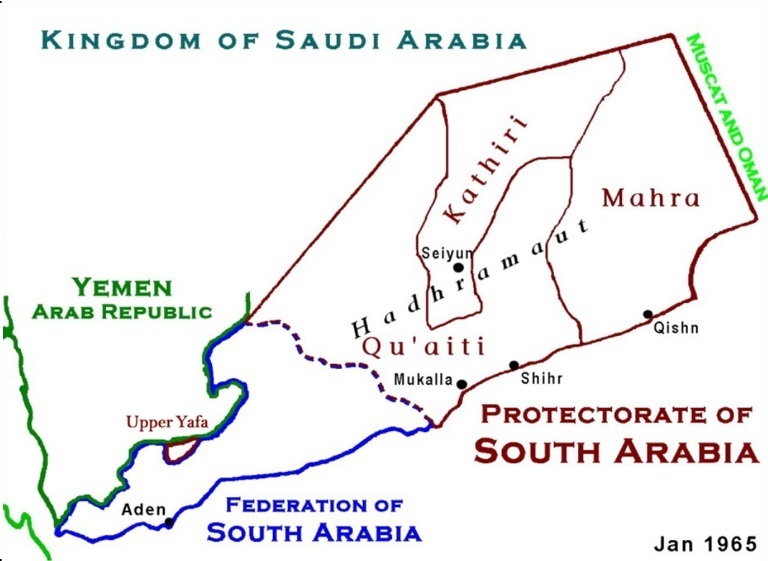
Map of South Yemen in 1965
2つのイエメン国家間の和平と敵対
Peace and Antagonism between two Yemeni states
2つのイエメン国家間の関係は、平和と敵対の間で変動しました。南部は東側諸国によって支持された。1972年、両国は戦争を戦いました(Yemenite War of 1972) (حرب 1972 اليمنية)。
Relations between the two Yemeni nations have oscillated between peace and hostility. The South was supported by the Eastern Bloc. In 1972, the two countries fought a war (Yemenite War of 1972) (حرب 1972 اليمنية).
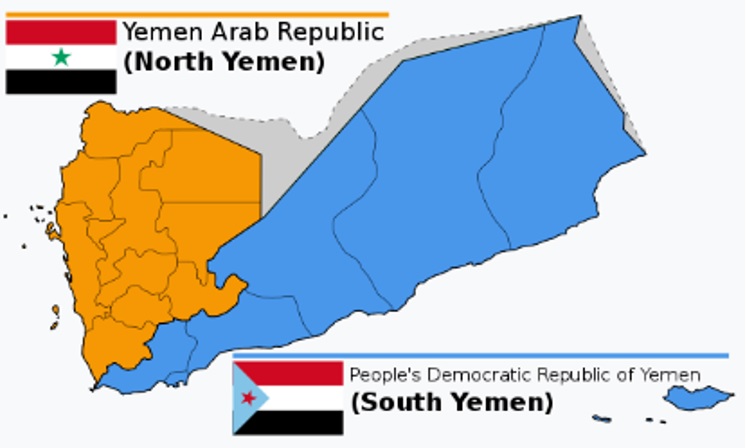
North and South Yemen
戦争は停戦とアラブ連盟(the Arab League) (جامعة الدول العربية)によって仲介された交渉で解決され、そこで統一が最終的に起こると宣言されました。1978年、アリ・アブダラ・サレハ(Ali Abdullah Saleh) (r.1978~1990, North Yemen) (r.1990~2012, Yemen) (علي عبدالله صالح) がイエメン共和国(the Republic of Yemen)の大統領に任命されました。
The war was settled with a truce and negotiations brokered by the Arab League (جامعة الدول العربية), where unification was declared to finally occur. 1978 Ali Abdullah Saleh (r.1978~1990, North Yemen) (r.1990~2012, Yemen) (علي عبدالله صالح) appointed President of the Republic of Yemen.
戦後、北は,サウジアラビアを含む外国からの南の援助について不平を持ちました。1979年、北と南の間で戦闘が勃発しました(Yemenite War of 1979) (the Second Yemenite War) (1979) (حرب 1979 اليمنية)。2つの国を統一するための新たな努力がありました。
After the war, the North complained about foreign aid to the South, including Saudi Arabia. In 1979, fighting broke out between the North and South (the Second Yemenite War) (1979) (حرب 1979 اليمنية). There was a renewed effort to unite the North and South.
1986年、アブドゥル・ファッタ・イスマーイール前大統領の支持者と彼の後継者である間で内戦が勃発したとき、南部で数千人が亡くなりました。アリ・ナーシル・ムハンマド(Ali Nasser Muhammad)は、国外に逃亡し、後に反逆罪で死刑を宣告されました。
In 1986, a civil war broke out between supporters of former President Abdul Fattah Ismail and his successor (Ali Nasir Muhammad). It resulted thousands died in the south. Ali Nasir Muhammad fled the country and was later sentenced to death for treason.
アリ・アブダラ・サレハ(Ali Abdullah Saleh) (r.1978~1990, North Yemen) (r.1990~2012, Yemen) (علي عبدالله صالح)
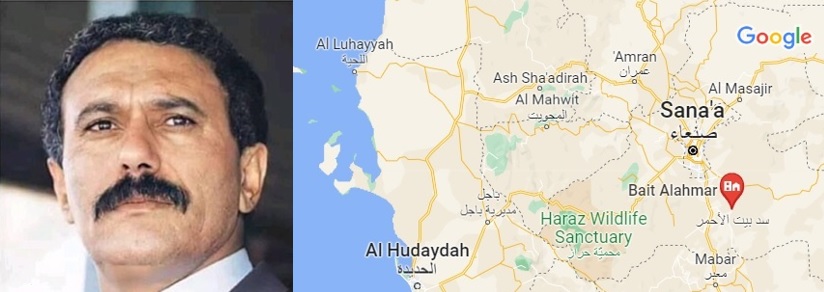
33年の長きにわたって、イエメンの大統領職にあったアリ・アブダラ・サレハ(Ali Abdullah Saleh) (r.1978~1990, North Yemen) (r.1990~2012, Yemen) (علي عبدالله صالح) について、CNNの2017年12月7日の記事を参考に簡単な表にまとめました。
This is a table summarized Ali Abdullah Saleh (r.1978~1990, North Yemen) (r.1990~2012, Yemen) (علي عبدالله صالح), Yemen’s President for 33 years with reference to CNN article on December 7, 2017.
| 19420321 | バイト・アル・アフマル(بيت الأحمر)で出生、 子供は、息子のアーメドとハレド等、小学校を卒業していない、ザイド・シーア派イスラム教徒。 | Born in Bayt al-Ahmar (بيت الأحمر), Kingdom of Yemen, Children including sons Ahmed and Khaled, Not finish elementary school, Zaydi Shiite Muslim. |
| 1958 | イエメン王国軍に入隊。 | Joined the army of the Kingdom of Yemen. |
| 1963 | 新しく設立されたイエメン・アラブ共和国(北イエメン)の陸軍に少尉として任命される。 | Was commissioned as a second lieutenant in the army of the newly established Yemen Arab Republic (North Yemen). |
| 1974 | 10人のメンバーからなる軍事司令部評議会を設置するクーデターに参加。 | Took part in a coup that installs a 10-member military command council. |
| 19780717 | アフメド・フセイン・アル・ガシュミ(Ahmed Hussein al-Ghashmi) (r.1977~1978) (أحمد حسين الغشمي)大統領の暗殺後、北イエメンの大統領に任命される。 | Was named president of the North Yemen after the assassination of President Ahmed Hussein al-Ghashmi (r.1977~1978) (أحمد حسين الغشمي). |
| 1983 | 制憲人民議会によって大統領として5年間の任期に再選される。 | Was re-elected to a five-year term as president by the Constituent People’s Assembly. |
| 198807 | 新しい諮問評議会によって大統領として5年の任期に選出されます。 | Was elected to a five year term as president by the new Consultative Council. |
| 19900522 | イエメンは北イエメンと南イエメンの統一から形成されます。サレハは統一イエメンの大統領に任命される。 | Yemen was formed from the unification of North Yemen and South Yemen. Saleh was named president of the unified Yemen. |
| 1999 | イエメン初の直接大統領選挙に勝利。 | Won Yemen’s first direct presidential election. |
| 200102 | 2月-議会は大統領の任期を5年から7年に延長することを決議した。 | Parliament voted to extend the president’s term of office from five to seven years. |
| 20011127 | サレハはワシントンで米国大統領ジョージ・W・ブッシュ、国務長官コリン・パウエル、CIA長官ジョージ・テネットと会談し、4億ドル相当のイエメンへの援助パッケージについて話し合った。 | Saleh met with United States President George W. Bush, Secretary of State Colin Powell and CIA Director George Tenet in Washington to discuss an aid package to Yemen worth $400 million. |
| 20060923 | 再選に勝ちました。 | Won re-election. |
| 201102 | 2月-ホスニ・ムバラク(Hosni Mubarak) (r.1981~2011) (محمد حسني مبارك)を追放したエジプトの革命に触発されて、イエメンで抗議行動が始まる。 | Protests began in Yemen, inspired by the revolution in Egypt that ousted Hosni Mubarak (r.1981~2011) (محمد حسني مبارك). |
| 20110310 | 抗議の中で、サーレハは議会制度を確立する新憲法を起草する計画を発表しました。 | Amid protests, Saleh announced plans to draft a new constitution establishing a parliamentary system. |
| 20110423 | 近隣の湾岸諸国が仲介した取引の一環として、辞任することに予備的に同意しましたが、彼は最終的に彼の立場を逆転させ、取引に署名することを拒否しました。 | Preliminarily agreed to leave office as part of a deal brokered by neighboring Gulf nations. He ultimately reversed his position and refused to sign the deal. |
| 20110603 | 野党軍が大統領官邸でミサイルを発射し、サレハを負傷させ、他の数人を殺害しました。 | Opposition forces launched missiles at the presidential palace, injuring Saleh and killing several others. |
| 20110604 | サレハは怪我の治療を受けるためにサウジアラビアに旅立ち、アブドゥ・ラブ・マンスール・ハーディ(Abdu Rabu Mansur Hadi) (عبدربه منصور هادي)副大統領(r.1994~2012)がイエメンを運営することになりました。 | Saleh traveled to Saudi Arabia to undergo medical treatment for his injuries. Vice President (r.1994~2012) Abdu Rabu Mansur Hadi (عبدربه منصور هادي) was left to run Yemen. |
| 20110607 | 米国当局は、サレハが体の40%を超える火傷と肺の虚脱の治療を受けていることを明らかにしました。 | US officials revealed that Saleh was being treated for burns over 40% of his body and a collapsed lung. |
| 20110923 | 政府のスポークスマンは、サウジアラビアでの治療を終えた後、サレハがイエメンに戻ったと述べていました。 | A government spokesman said that Saleh had returned to Yemen after completing medical treatment in Saudi Arabia. |
| 20111123 | 11月23日-サウジアラビアで彼の行政権をハディに移す協定に署名しました。「サーレハは、大統領の称号を3カ月保持ますが、行政権はイエメンの副大統領に引き渡す。」 | Signed an agreement in Saudi Arabia transferring his executive powers to Hadi.“Saleh will retain the title of president for three months, but hands over executive powers to Yemen’s vice president”. |
| 20120121 | イエメン議会は、サレハの起訴免除を保証する物議を醸す法律を承認しました。 | Yemen’s parliament approved a controversial law that ensures Saleh immunity from prosecution. |
| 20120227 | 引き渡し式に出席し、ハディへの権限移譲契約を固めました。この式典は、サレハの33年間の指導者としての治世を正式に終わらせるものです。 | Attended the handover ceremony, cementing a power transfer deal to his deputy, Abdurabu Mansur Hadi in Sanaa. The ceremony formally ends Saleh’s 33-year reign as leader. |
| 20171204 | フーシ派(Houthi) (حوثيون)の反政府勢力は、サヌアでの暴力から逃れようとしているサレハを殺害しました。 | Houthi (حوثيون)rebels killed Saleh as he tried to flee violence in Sanaa. |
アブドゥル・ファッタ・イスマーイール(Abdul Fattah Ismail )(r.1969~1980) (عبد الفتاح إسماعيل)
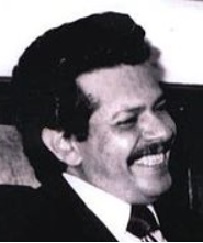
マルクス主義者(a Marxist)de,1969年から1980年までイエメン人民民主共和国(People’s Democratic Republic of Yemen)の事実上の指導者でした。彼は最高人民会議常任委員会(the Presidium of the Supreme People’s Council)の議長で国政の最高責任者(r.1969 ~1980)を務めました。
a Marxist, 1969-1980 was the de facto leader of the People’s Democratic Republic of Yemen. He was chairman of the Presidium of the Supreme People’s Council and chief executive of state affairs (r.1969 ~1980).
1934年7月にタイズ(Ta’izz) (تعز)のフガリア地区(Hugariah district)で生まれ、アデン(Aden) (عدن)で教育を受け、1956年から1959年まで石油製油所で見習いとして働いていました。労働者を政治的に扇動したとしてアデンでイギリス当局に逮捕されるまで、多くの運動細胞の結成しました。1961にアデンで教師として働き始めました。その傍ら、政治運動も続け、南イエメンのアラブ民族主義運動(National Front for the Liberation of South Yemen) (NLF)の共同創設者になりました。NLF は、イギリスの植民地支配から南イエメンを解放するための 1963 年 10 月 14 日革命(the 14 October 1963 Revolution)を開始しました。その後、イスマーイール(Ismail)は、社会主義革命に専念し、政治的指導に加えて、アデンの NLF 地下軍事部門(アラブゲリラ)(Fedayeen) (فدائيون)の指導者となり、その後の政治活動を続けました。1978年12月21日から1980年4月21日までイエメン社会党(the Yemeni Socialist Party)の主席理論家で創始者であり、初代党首を務めました。彼は1986年の南イエメン内戦(the 1986 South Yemen Civil War,)中に謎の状況で死亡ましたが、遺体は発見されませんでした。
Born in July 1934 in the Hugariah district of Ta’izz (تعز), he was educated in Aden (عدن) and worked as an apprentice in a petroleum refinery from 1956 to 1959. He formed many movement cells until he was arrested by British authorities in Aden for politically abetting workers. He started working as a teacher in Aden in 1961. Meanwhile, he continued his political activism, becoming a co-founder of the National Front for the Liberation of South Yemen (NLF). The NLF launched the 14 October 1963 Revolution to liberate South Yemen from British colonial rule. Ismail then devoted himself to the socialist revolution and, in addition to his political leadership, became the leader of his NLF Underground Military Division (Arab Guerrillas) (Fedayeen) (فدائيون) in Aden. He was the chief theorist, founder and first leader of the Yemeni Socialist Party from 21 December 1978 to 21 April 1980. He died under mysterious circumstances during the 1986 South Yemen Civil War, but his body was never found.
アリ・ナーシル・ムハンマド(Ali Nasir Muhammad Al-Husani) (r.1980~1986) (علي ناصر محمد الحسني)
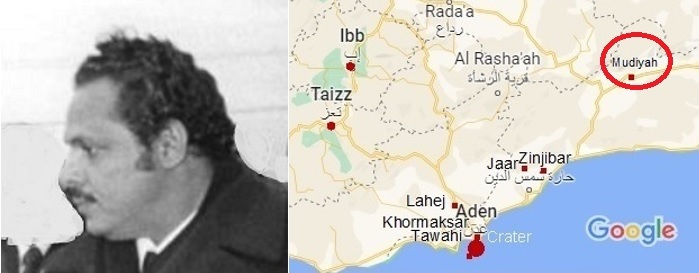
アリ・ナーシルは、1939年にムディヤ(Mudiyah) (مودية)生まれました。アリ・ナーシルは、1971年8月2日から1985年2月14日まで首相を務め、サリム・ルバイ・アリ(Salim Rubai Ali) (سالم ربيع علي) (President of South Yemen) (r.1969 ~1978)を打倒して処刑した後、1978年12月27日から大統領評議会(Presidential Council)の議長を務めました。
Ali Nasir was born on 31 December 1939, in Mudiyah (مودية), Yemen. Ali Nasir served as the Prime Minister from 2 August 1971 until 14 February 1985 and as Chairman of Presidential Council from 26 June 1978 until 27 December 1978, after overthrowing and executing Salim Rubai Ali, ) (سالم ربيع علي) (President of South Yemen) (r.1969 ~1978).
1980年4月、南イエメンのアブドゥル・ファッタ・イスマーイール大統領が健康上の理由で正式に辞任し、モスクワに移住しました。その後継者はアリー・ナーシル・ムハンマドであり、彼は一般的に前任者よりも実用的で穏健な指導者と見なされていました。モハンマドはイスマーイールほどマルクス・レーニン主義のイデオロギーに熱心ではなく、穏健な外交アプローチによって特徴づけられました。また、アリー・ナーシルは、1980年から1986年までイエメン社会党(Yemeni Socialist Party)の書記長でした。
1986年1月13日、アデンでアリ・ナーシルの支持者と帰還したイスマーイール、の支持者の間で、南イエメン内戦(January 13 ~24, 1986)と呼ばれる、激しい闘争が始まりました。 この戦闘は、数千人の死傷者、アリ・ナーシルの追放、イスマーイールの死をもたらしました。
In April 1980, South Yemeni president Abdul Fattah Ismail resigned, officially due to health reasons, and moved to Moscow. His successor was Ali Nasir, who was generally seen as a more pragmatic and moderate leader than his predecessor. His rule was also marked by his moderate approach towards foreign affairs. Ali Nasir had also served as General Secretary of the Yemeni Socialist Party between 1980 and 1986.
On January 13, 1986, a violent struggle began in Aden between Ali Nasir’s supporters and supporters of the returned Ismail, which was the South Yemen Civil War (January 13 ~24, 1986). This fighting resulted in thousands of casualties, Ali Nasir’s ouster, and Ismail’s death.
1994年のイエメン内戦中、アリ・ナーシルは支持者にサヌア政府の軍隊と一緒に、そして最近再建されたイエメン民主共和国(Democratic Republic of Yemen) に反対して活動するように促し、彼の追放に対する復讐を求めた。南部の分離は、アデンとムカラの拠点の降伏後、1994年7月に抑圧されました。
前大統領は2011年のイエメン蜂起(2011 Yemeni uprising)で野党の人物になり、アリ・アブドラ・サレハ大統領(President Ali Abdullah Saleh)が率いる権威主義体制から多元民主主義への移行中にイエメンを統治するためにいくつかの反政府派閥によって意図された17人のメンバーからなる暫定評議会(17-member transitional council)に指名されていました。しかし、この評議会には、主要野党連合である合同会議党(Joint Meeting Parties)が反対していましたが、これらの党もサレハ氏の権力の座からの追放と民主主義への移行を支持していました。
During the 1994 Civil War in Yemen, Ali Nasir pushed his supporters to operate alongside the forces of Sana’a government and against the recently re-established Democratic Republic of Yemen, seeking revenge for his ouster. The southern secession was repressed in July 1994 after the surrender of Aden and Mukalla strongholds.
The former president became an opposition figure in the 2011 Yemeni uprising, being named to a 17-member transitional council intended by some anti-government factions to govern Yemen during a prospective transition from the authoritarian regime led by President Ali Abdullah Saleh to a plural democracy. This council was opposed by the Joint Meeting Parties, the main opposition coalition, which also supported Saleh’s removal from power and a transition to democracy.
アリ・サレム・アル・ベイド(Ali Salem al-Beidh) (b.1939) (علي سالم البيض)
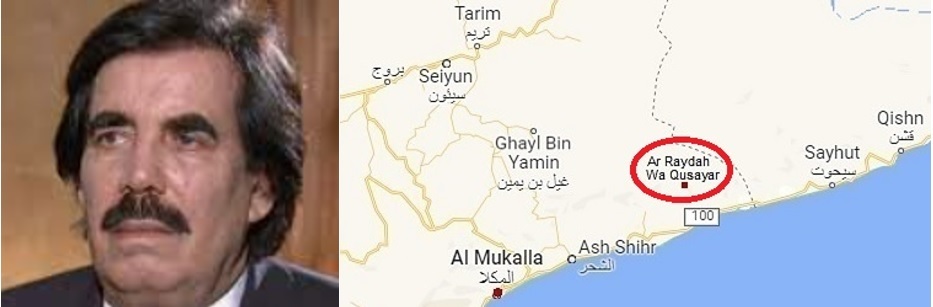
アリ・サレム・アル・ベイド(Ali Salem al-Beidh) は、ハドラマウト(Hadramawt Governorate) (محافظات حضرموت) のアル=ライダ・ワ・クサヤール(Ar Raydah Wa Qusayar) (الريدة والقصير)で1939年2月10日生まれました。
Ali Salem al-Beidh was born at Ar Raydah Wa Qusayar (الريدة والقصير) in Hadramawt Governorate (محافظات حضرموت) on February10, 1939.
アリ・サレム(Ali Salem)は、商学の学位を取得するために勉強し、1961 年にムカッラー(Mukalla) (مكلا)の学校教師になりました。
Ali Salem studied for a degree in commerce and became a school teacher of Mukalla (مكلا) in 1961.
1963 年にムカッラー(Mukalla)の地方委員会(Local Committee)創設者として国民解放戦線(National Liberation Front) (NLF)に参加し、1965 年に地下組織に潜入しました。1966 年にNLFのハドラマウト州委員会(Hadramawt Provincial Committee)の委員に認められました。南イエメンの独立後は、イエメン社会党(Yemeni Socialist Party) (YSP)に入党しました。
In 1963, Ali Salem jointed the National Liberation Front ( NLF) as the founder of its Local Committee in Mukalla and in 1965 infiltrated the underground. In 1966, Ali Salem was admitted to the Hadramawt Provincial Committee of NLF. After South Yemen’s independence, Ali Salem joined the Yemeni Socialist Party (YSP).
1971年にアリ・サレム(Ali Salem)は、ハドラマウト州委員会の書記長、1975年に中央委員会(Central Committee)の正委員に選ばれ、続いて学校教育・職業訓練担当副大臣(Deputy Minister for School Education and Vocational Training)に選ばれました。アリ・サレム(Ali Salem)は、1981年には正政治局員(a full Politburo member)となりました。
In 1971 Ali Salem was General Secretary of the Hadhramaut Provincial Committee, and in 1975 that of the Central Committee. and subsequently Ali Salem became Deputy Minister for School Education and Vocational Training. In 1981, Ali Salem became a full Politburo member.
1986年の12日間内戦(12-day 1986 civil war)」となったクーデターが勃発しました。クーデターは、アブドゥル・ファッタ・イスマーイール (Abdul Fattah Ismail)前議長に忠実な勢力と当時の議長アリ・ナーシル・ムハンマド(Ali Nasir Muhammad)との勢力の間で争われました。
A coup d’état erupted in what became “the 12-day 1986 civil war”. The coup was contested between forces loyal to former chairman Abdul Fattah Ismail and those of then-chairman Ali Nasir Muhammad.
4,000人から10,000人の命を奪われ、アリ・ナーシル(Ali Nasir)は、敗北して国外に逃亡しました。一方、イスマーイール(Ismail)は、生死が分からない失踪をしていました。アリ・サレム(Ali Salem)は、イスマーイール(Ismail)の同盟者で、生き残った数少ない高官の1人として実権を握り、1986年にイエメン社会党(Yemeni Socialist Party) (YSP)の最高責任者に成りました。
With between 4,000 and 10,000 lives lost, Ali Nasir fled the country in defeat. Ismail, on the other hand, had disappeared with no known life or death. Ali Salem came to power as an ally of Ismail and one of the few surviving high-ranking officials, and in 1986, Ali Salem became the General Secretary of the Yemeni Socialist Party (YSP).
1986年から1989年にかけてソ連(Soviet Union)からの援助の半分以上を失った。アリ・サレム(Ali Salem)政権は、南北イエメンの国境に埋蔵されている可能性のある石油への関心もあったため、北イエメン当局者らと統一に向けて努力しました。
It lost more than half of its aid from the Soviet Union between 1986 and 1989. As interest in oil reserves that may have been on the border between North and South Yemen, Ali Salem government worked with North Yemeni officials for the state unification.
1990年の統一後、アリ・サレム(Ali Salem)は、イエメン副大統領(r.1990~1994)に就任しました。1993年に統一政府を離れ、1994年にイエメン内戦(1994 Civil War in Yemen)を引き起こし、その後オマーンに亡命しました。 彼はアル=ヒラク(Al Hirak) (الحراك)として知られる南部独立運動の指導者でした。
After unification in 1990, Ali Salem became Vice President of Yemen (r.1990~1994). Ali Salem left the unification government in 1993 and was went into exile in Oman after “the 1994 Civil War in Yemen”. Then, Ali Salem had been the leader of the Southern Independence Movement known as Al Hirak (الحراك).
二つのイエメンの統一
Yemeni Unification
1990年、両国政府はイエメンの共同統治について完全な合意に達し、1990年5月22日にアリ・アブダラ・サレハ(Ali Abdullah Saleh)を大統領として合併しました。南イエメン大統領、アリ・サリム・アル・ベイド(Ali Salim al-Beidh) (علي سالم البيض)が副大統領になりました。
In 1990, the two governments reached a full agreement on joint governance of Yemen and merged on May 22, 1990 with Ali Abdullah Saleh as president. South Yemen’s president, Ali Salem al-Beidh (علي سالم البيض), became vice president.
イラクのクウェート侵攻に独自の対応
Unique Response to Iraqi Invasion of Kuwait
1990年のクウェート危機(the Iraqi invasion of Kuwait) (الغزو العراقي للكويت)の侵略後、イエメンの大統領は非アラブ諸国からの軍事介入に反対しました。1990年と1991年の国連安全保障理事会のメンバーとして 、イエメンはイラクとクウェートに関する多くの国連安保理決議を棄権し、そして「武力行使決議」に反対票を投じました。サウジアラビアは、戦争に反対したイエメンを罰するために、1990年と1991年に80万人のイエメン人を追放しました。
After the Iraqi invasion of Kuwait (الغزو العراقي للكويت) in 1990, Yemen’s president opposed military intervention from non-Arab countries. As a member of the 1990 and 1991 UN Security Council, Yemen abstained from many UN Security Council resolutions on Iraq and Kuwait. Yemen also voted against “use of force resolution.” Saudi Arabia expelled 800,000 Yemenis in 1990 and 1991 to punish Yemenis for opposing the war.
南北連立政権
South Coalition Government
1992年の主要都市での食糧暴動に続いて、1993年に旧南北イエメンの与党で構成される新しい連立政権が結成されました。しかし、アルベイド(Ali Salem al-Beidh)副大統領は1993年8月にアデンに撤退し、彼の不満が解決されるまで政府に戻らないと述べた。
これらには、彼のイエメン社会党(Yemeni Socialist Party)に対する北部の暴力、および南部の経済的疎外が含まれていました。
Following food riots in major cities in 1992, a new coalition was formed in 1993 consisting of the former ruling parties of North and South Yemen. But Vice President Ali Salem al-Beidh withdrew to Aden in August 1993, saying he would not return to government until his grievances were resolved.
These included violence in the north against his Yemeni Socialist Party, and economic marginalization in the south
南北イエメン内戦
North-South Yemen Civil War
1994年5月から7月のイエメンでのイエメン内戦(Yemeni Civil War in Yemen, May-July 1994) (الحرب الأهلية اليمنية 1994)は、南イエメン軍の敗北と多くのイエメン社会党指導者や他の南部分離主義者の亡命をもたらしました。
“1994 Yemeni Civil War) (الحرب الأهلية اليمنية 1994)” from May to July resulted in the defeat of the South Yemeni army and the defection of many Yemeni socialist leaders and other southern separatists.
直接選挙で選出された大統領
First Directly Elected President
アリ・アブダラ・サレハ(Ali Abdullah Saleh)は、1999年の大統領選挙でイエメン初の直接選挙で選出された大統領となり、投票の96.2%を獲得しました。
Ali Abdullah Saleh became Yemen’s first directly elected president in the 1999 presidential election, winning 96.2% of the vote.
サウジアラビアとの国境確定
Defining Border with Saudi Arabia
2000年6月、サウジアラビアとの国境を確定するジェッダ条約(The 2000 Treaty of Jeddah) (2000 معاهدة جدة)が調印され、1934年に遡るサウジアラビアとイエメン間の国境紛争を解決しました。
In June 2000, “the 2000 Treaty of Jeddah (2000 معاهدة الجدة)”, which established the border with Saudi Arabia, was signed, settling a border dispute between Saudi Arabia and Yemen dating back to 1934.
フーシ派反乱
Houthi Insurgency
イエメンでのシーア派の反乱(Houthi insurgency in Yemen) (2004~2014) (تمرد الحوثيين)は、2004年6月に始まりました。ザイド・シーア派(the Zaidi Shia) (الشيعة الزيديون)の長である反体制派の聖職者フセイン・バドレディン・アル=フーシ(Hussein Badreddin al-Houthi) (1959~2004)(حسين بدر الدين الحوثي)は、イエメン政府に対する蜂起を呼びかけによって起こされました。イエメン政府は、フーシ派(the Houthis) (حوثيون)がそれを打倒し、シーア派の宗教法(the Shia religious law) (قانون ديني الشيعية)を実施しようとしていると主張していたのに対して、反政府勢力は、「差別と政府の侵略からコミュニティを守っている」と反論していました。
The Houthi insurgency (2004~2014) (تمرد الحوثين) started in June 2004 for an uprising against the Yemeni government. This was caused by the call of Dissident cleric Hussein Badreddin al-Houthi (1959-2004), the head of the Zaidi Shia (الشيعة السيديون). The Yemeni government claimed that the Houthis (حوثيون) were trying to overthrow this government and implement the Shia religious law (قانون ديني الشيعية), The rebels countered that they were “protecting communities from discrimination and government aggression.”
再選された大統領
Re-elected President
2001年には、明らかにサレハ氏の統治と権限の拡大を支持する住民投票を巡る暴力行為がありました。
2005年には、燃料価格の上昇をめぐる警察と抗議者の間の全国の衝突で少なくとも36人が死亡した事などもある中、2006年9月20日に行われた大統領選挙では、サーレハは投票の77.2%で勝利しました。
それにもかかわらず、騒乱が続き、2007年7月、マアリブ州(Ma’rib Governorate) (محافظات مَأْرِب)で自爆テロ、2008年には政府、外国企業、観光の標的に対する一連の爆弾攻撃がありました。2008年9月、サヌアの米国大使館前で自動車爆破事件が発生しています。、襲撃者6人を含む18人が死亡した。2008年、選挙改革を要求するサヌアでの野党集会は、警察の銃撃に遭遇しました。
同じく2009年にイエメン軍は、サウジアラビア軍の支援を受けて、シーア派武装勢力に対して新たな攻撃を開始しました。2010年2月に新たな停戦が合意されました。しかし、年末までに、イエメンは新たな戦闘で3,000人の兵士が殺されたと主張しました。一方、シーア派の反政府勢力は、サウジアラビアがイエメンのザイド主義を抑圧するためにサラフィー主義グループ(Salafi movement) (الحركة السلفية)に支援を提供したと非難しました。サレハ政府は、反乱を起こしたフーシ一族との戦争でアル=カーイダを使用していました。
In 2001, there was violence over a referendum that clearly supported Saleh’s expanded rule and powers.
In 2005, at least 36 people were killed in clashes across the country between police and protesters over rising fuel prices. Under such circumstances, Saleh won the presidential election held on September 20, 2006 with 77.2% of the vote.
Nevertheless, unrest continued, including a suicide bombing in Ma’rib Governorate (محافظات مَأْرِب) in July 2007 and a series of bomb attacks against government, foreign business and tourism targets in 2008. In September 2008, there was a car bombing outside the US Embassy in Sana’a. Eighteen people were killed, including six of the attackers. In 2008, an opposition rally in Sanaa calling for electoral reform was met with police shootings.
Also in 2009, Yemeni forces, backed by Saudi forces, launched a new offensive against Shia militants. A new ceasefire was agreed in February 2010. By the end of the year, however, Yemen claimed 3,000 soldiers had been killed in renewed fighting. Meanwhile, Shia rebels have accused Saudi Arabia of providing support to the Salafi movement (الحركة السلفية) to suppress Zaydism in Yemen. The Saleh government was using al Qaeda in its war against the rebellious Houthi clan.
アラビア半島のアル=カーイダ
Al-Qaeda in Arabian Peninsula
2000年10月、アデンの米海軍艦艇USSコール(the U.S. naval vessel USS Cole)への自爆攻撃の後、17人の米国要員が死亡し、その後アル=カーイダ (al-Qaeda)のせいにされました。9月11日の米国への攻撃の後、サーレハ大統領はジョージW.ブッシュ米大統領(George W. Bush)に、イエメンが対テロ戦争(War on Terro)のパートナーであると保証しました。
2009年1月、サウジアラビアとイエメンのアル=カーイダ 支部が合併し、アラビア半島のアル=カーイダ (AQAP) (Al-Qaeda in the Arabian Peninsula) (تنظيم القاعدة في جزيرة العرب)を形成しました。アラビア半島のアル=カーイダ (Al-Qaeda) (القاعدة)はイエメンに拠点を置いており、そのメンバーの多くはグアンタナモ湾(Guantánamo Bay)から解放されたサウジアラビア国民でした。
In October 2000, 17 US personnel were killed after a suicide attack on the U.S. naval vessel USS Cole in Aden, subsequently blamed on al-Qaeda. After the September 11 attacks on the US, President Saleh assured US President George W. Bush that Yemen was a partner in the War on Terror.
In January 2009, al-Qaeda (القاعدة) branches in Saudi Arabia and Yemen merged to form “Al-Qaeda in the Arabian Peninsula (AQAP) (تنظيم القاعدة في جزيرة العرب)”. “Al-Qaeda in the Arabian Peninsula” is based in Yemen and many of its members were Saudi nationals liberated from Guantánamo Bay.
イエメン危機、2011年–現在
Yemen Crisis, 2011–Present
2011〜12年のイエメン革命
2011–12 Yemen Revolution
政府の不安定性によるは、「イエメン危機(2011年–現在)(Yemen Crisis, 2011–Present) (أزمة اليمنية ,2011-الآن)」は、20年以上イエメンを率いてきたアリ・アブドラ・サレハ大統領(President Ali Abdullah Saleh) (r.1999~2012) (علي عبدالله صالح)に対する「2011〜12年の革命(the 2011–12 revolution) (ثورة الشباب اليمنية)」から始まりました。
Due to government instability, the “Yemen Crisis, 2011–Present” (أزمة اليمنية ,2011-الآن) started with “the 2011–12 revolution (ثورة الشباب اليمنية)” against President Ali Abdullah Saleh (r.1999~2012) (علي عبدالله صالحية). Until then, Ali Abdullah Saleh had led Yemen for more than 20 years.
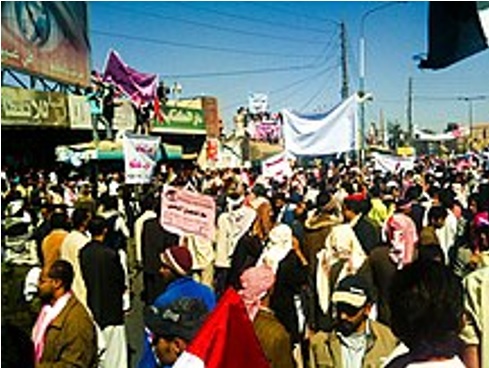
2011年2月3日、サヌアでの抗議
Protest in Sana’a, February 3, 2011
2011年のイエメン革命は、2011年初頭の他国のアラブの春(Arab Spring) (الربيع العربي)の大衆抗議に続いた蜂起でした。当初、失業、経済状況、汚職、および サーレハ(Saleh)の息子が大統領職を継承できるようにイエメン憲法を改正するという政府の提案に反対していました。
“The 2011 Yemeni Revolution” was an uprising that followed mass protests in other countries’ Arab Spring (الربيع العربي) in early 2011. Initially, this opposed unemployment, economic situation, corruption and also the government’s proposal. This proposal aimed to amend the Yemeni constitution to allow his Saleh’s son to succeed to the presidency.
2011年3月、警察の狙撃兵がサヌアの民主派キャンプ(the pro-democracy camp)に発砲し、50人以上が死亡しました。さらに、5月には、サヌアでの軍隊と部族戦闘員(tribal fighters)の衝突で数十人が死亡しました。この時点で、サレハ(Saleh)は、国際的な支持を失い始めました。
In March 2011, police snipers opened fire on the pro-democracy camp in Sana’a, killing more than 50 people. Additionally, dozens were killed in clashes between troops and tribal fighters in Sana’a in May. At this point, Saleh began to lose international support.
2011年10月、イエメンの人権活動家(Yemeni human rights activist)タワクル・カルマン(Tawakul Karman) (b.1979) (توكل كرمان)がノーベル平和賞(the Nobel Peace Prize)を受賞し、国連安全保障理事会(the UN Security Council)は、暴力を 非難し、権力の移転を求めました。
In October 2011, Yemeni human rights activist Tawakul Karman (b.1979) (توكل كرمان) was awarded the Nobel Peace Prize. The UN Security Council condemned the violence and called for a transfer of power.
2011年11月23日、サーレハ(Saleh)は、隣国サウジアラビアのリヤドに飛び、以前に拍車をかけていた湾岸協力理事会(the Gulf Co-operation Council)の政治的移行計画に署名しました。文書に署名すると、彼は大統領職と権限を彼の代理であるアブド・ラブフ・マンスール・ハーディー(Abd Rabbuh Mansur Hadi) (r.2012~2022) (عبدربه منصور هادي)副大統領に合法的に移すことに同意しました。
On 23 November 2011, Saleh flew to neighboring Saudi Arabia’s Riyadh to sign the previously spurred political transition plan of the Gulf Co-operation Council. Upon signing the document, Saleh agreed to move the presidency and powers to his deputy, Vice President Abd Rabbuh Mansur Hadi (r.2012~2022) (عبدربه منصور هادي).
アブド・ラブフ・マンスール・ハーディー政権誕生
Birth of Abd Rabhu Mansur Hadi’s Government
イエメン政府と野党グループの間の調停合意の一環としてサレハが2012年初頭に辞任しました。サレハの元副大統領アブド・ラブフ・マンスール・ハーディー(Abd Rabbuh Mansur Hadi) (2012~2022) (عبدربه منصور هادي)は、2012年2月の争われていない大統領選挙で勝利すると、2年間の任期で就任しました。ハーディーが立候補した唯一の候補者であり、野党の首相を含む統一政府が結成されました。(ハーディーは新憲法の起草を監督し、その後2014年に議会選挙と大統領選挙を監督しました。)
Saleh resigned in early 2012 as part of a mediation agreement between the Yemeni government and opposition groups.
Saleh’s former Vice President Abd Rabbuh Mansur Hadi (2012~2022) (عبدربه منصور هادي) will serve a two-year term upon winning the uncontested presidential election in February 2012. Hardy was the only candidate to stand, and a unity government was formed, including an opposition prime minister. (Hardy oversaw the drafting of a new constitution, then oversaw the parliamentary and presidential elections in 2014.)
サレハ(Saleh)は2012年2月に復帰しましたが、何千人もの街頭抗議者からの反対に直面しました。このため、議会は彼に起訴からの完全な免責を与えました。しかし、サーレハ(Saleh)の息子であるアフメド・アリ・アブドラ・サレハ(Ahmed Ali Abdullah Saleh) (b.1972) (أحمد علي عبد الله صالح)将軍は、軍と治安部隊の一部に対して強力な支配力を行使し続けていました。
Saleh returned in February 2012, but faced opposition from thousands of street protesters. Because of this, Congress gave him full immunity from prosecution. However, Saleh’s son, General Ahmed Ali Abdullah Saleh (b.1972) (أحمد علي عبد الله صالح), was a powerful for some of the army and security forces and continued to exercise power to them.
アル=カーイダ(AQAP) (Al-Qaeda in the Arabian Peninsula) (تنظيم القاعدة في جزيرة العرب)は、ハーディー大統領が宣誓した日に26人の共和国警備隊を殺害した2012年2月の大統領官邸への自爆攻撃の責任を主張しました。AQAPは、3か月後にサヌアで96人の兵士を殺害した自爆テロの背後にもいました。
2012年9月、地元のアル=カーイダ 指導者サイード・アル・シリ(Said Ali al-Shihri) (1971~2013) (سعيد الشهري)が南部で殺害されたと報告された翌日、サヌアでの自動車爆弾攻撃で11人が死亡しました。
AQAP (Al-Qaeda in the Arabian Peninsula) (تنظيم القاعدة في جزيرة العرب) had claimed responsibility for the February 2012 suicide bombing of the Presidential Palace that killed 26 Republican Guard soldiers on the day President Hadi was sworn in. AQAP was also behind the suicide bombing that killed 96 soldiers in Sana’a three months later.
In September 2012, 11 persons died in a car bomb attack of Sana’a, one day after local al-Qaeda leader Said Ali al-Shihri (1971~2013) was reported killed in the south.
2012年までに、イエメン市民に対するAQAPによるテロ攻撃の増加に対応して、CIAと「非公式に認められた」米軍の存在に加えて、「米国の特殊作戦部隊の小さな派遣団」が存在するようになりました。
新大統領アブド・ラブフ・マンスール・ハーディー(Abd Rabbuh Mansur Hadi) (r.2012~2022) (عبدربه منصور هادي)の選挙に続いて、イエメン軍はアンサール・アル・シャリア(Ansar al-Sharia) (أنصار الشريعة)を押し戻し、シャブワ県(the Shabwah Governorate) (شبوة محافظة)を奪還することができました。
By 2012, there was a “small contingent of US special operations forces” in addition to the CIA and an “unofficially recognized” US military presence in response to an increase in terrorist attacks by AQAP against Yemeni civilians.
Following the election of a new president, Abd Rabbuh Mansur Hadi (r.2012~2022) (عبدربه منصور هادي), the Yemeni army attacked and pushed back Ansar al-Sharia (أنصار الشريعة) and was able to recapture the Shabwah Governorate (شبوة محافظة).
このように、サレハの元副大統領アブド・ラブフ・マンスール・ハーディー(Abd Rabbuh Mansur Hadi) (2012~2022) (عبدربه منصور هادي)が率いる政府は、国の不安定な政治情勢を統一し、アラビア半島南西部に統治能力をもたらせましたが、アル=カーイダ(Al-Qaeda) (القاعدة)とフーシ派(the Houthis) (حوثيون)の両方過激派のからの脅威をかわすのに苦労していました。
Thus, the government headed by Saleh’s former vice-president Abd Rabbuh Mansur Hadi (2012~2022) (عبدربه منصور هادي) had united the country’s unstable political situation and brought the southwestern Arabian Peninsula the ability to govern, but struggled to fend off threats from extremists of both Al-Qaeda (القاعدة) and the Houthis (حوثيون).
2014年、フーシ派(the Houthis) (حوثيون)の戦闘員が首都サヌア(Sana’a) (صنعاء)に押し寄せ、ハーディー(Hadi)に他の政治派閥との「統一政府」の交渉を強制しました。反政府勢力は、大統領官邸と私邸が過激派グループから攻撃を受けた後、2015年1月にハーディー(Hadi)が大臣とともに辞任するまで、弱体化した政府に圧力をかけ続けました。
In 2014, Houthis (حوثيون) fighters stormed the capital Sana’a (صنعاء), forcing Hadi to negotiate a “unity government” with other political factions. Rebels continued to pressurize the weakened government until Hadi resigned along with his ministers in January 2015 after the president’s palace and private residence were attacked by extremist groups.
アブド・ラブフ・マンスール・ハーディー(Abd Rabbuh Mansur Hadi) (r.2012~2022) (عبدربه منصور هادي)
アブド・ラブフ・マンスール・ハーディー(Abd Rabbuh Mansur Hadi)
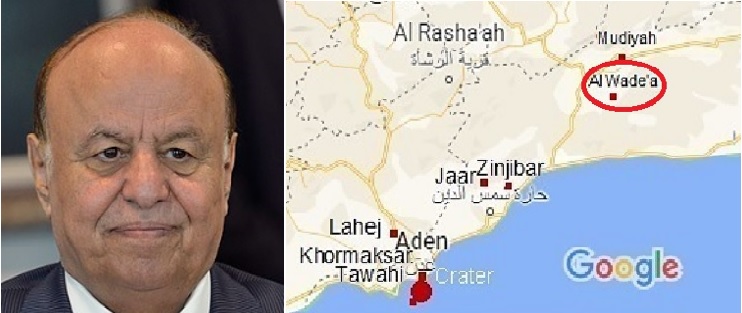
ハーディー(Hadi)は、1945年9月にアル=ワディーア(Al Wade’a) (الوديعة)で生まれのイエメンの元陸軍元帥でした。 ハーディー(Hadi)は、1994年から2012年までアリ・アブドラ・サレハ(Ali Abdullah Saleh)政権の副大統領を務め、2012年から2022年までイエメン大統領でした。サウジアラビアの求めで、ハーディー(Hadi)は、同年4月に大統領を辞任し、ラシャド・アル・アリミ(Rashad Muhammad Al-Alimi) (b.1954) (رشاد محمد العليمي)を議長とする大統領指導評議会(the Presidential Guidance Council)に行政権限を移譲しました。
Hadi was a former Yemeni Field Marshal born in September 1945 in Al Wade’a (الوديعة). Hadi served as Vice President in the government of Ali Abdullah Saleh from 1994 to 2012 and was President of Yemen from 2012 to 2022. At the request of Saudi Arabia, Hadi resigned as president in April of the same year and transferred executive authority to the Presidential Guidance Council chaired by Rashad Muhammad Al-Alimi (b.1954) (رشاد محمد العليمي).
フーシ派の乗っ取り、内戦とサウジ介入
Houthi takeover, Civil War and Saudi intervention
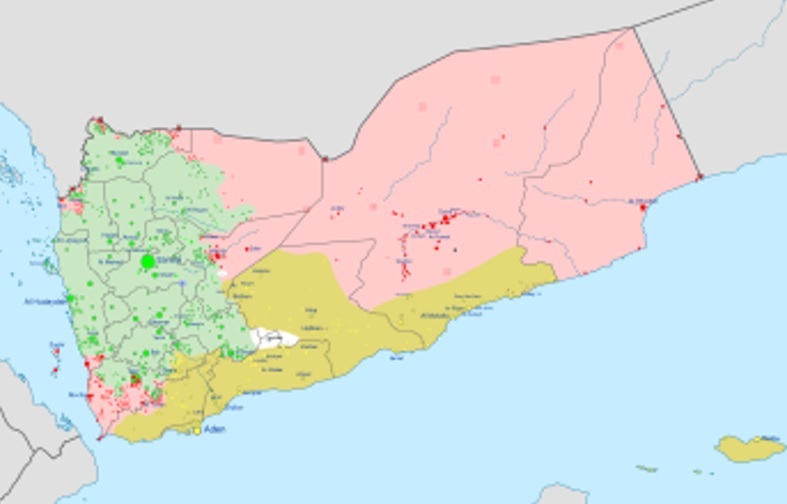
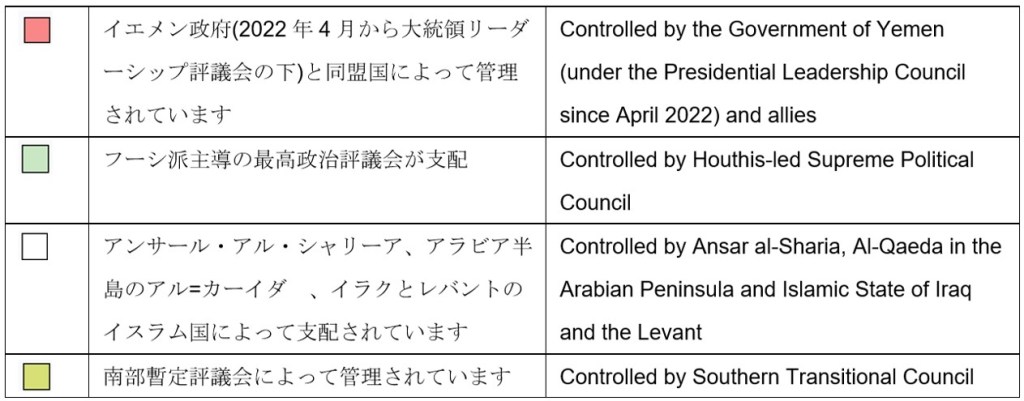
現在(2021年11月)進行中のイエメン内戦における政治的および軍事的支配(2014年〜現在)
Current (November 2021) political and military control in ongoing Yemeni Civil War (2014–present)
2014年、2004年以来イエメン政府に対して反乱を起こしていたフーシ派運動(the Houthi movement)は、アムランの戦い(the Battle of Amran) (2014) (معركة عمران)とサヌアの戦い (Battle of Sana’a) (2014) (معركة صنعاء)で政府軍を打ち負かし、イエメンの段階的な乗っ取りを開始しました。
In 2014, the Houthi movement, which had been in rebellion against the Yemeni government since 2004, launched the Battle of Amran (2014) (معركة عمران) and the Battle of Sana ‘a (2014) (معركة صنعاء). It defeated government forces on the both battles and commenced a gradual takeover of Yemen.
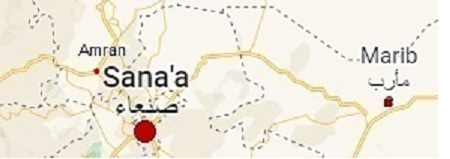
Amran & Sana ‘a
2015年2月、フーシ派は政府を支配すると宣言し、議会を解散しました。そして、モハメッド・アリ・アル・フーシ(Mohammed Ali al-Houthi) (r.2015~2016) (محمد علي الحوثي)が率いる暫定革命委員会(the Revolutionary Committee) (اللجنة الثورية)を設置しました。彼は、フーシ派の指導者アブドゥル・マリク・アル・フーシ(Abdul-Malik al-Houthi) (b.1979) (عبد الملك الحوثي)の従兄弟です。しかし、ハーディーは、自力でアデンに脱出しました。ハーディーは、「自分がイエメンの合法的な大統領であり続ける。」と宣言し、アデンを国の一時的な首都としました。その後、忠実な政府関係者と軍のメンバーに彼の下に結集するよう呼びかけました。
In February 2015, the Houthis declared control of the government and dissolved the parliament. It established the Revolutionary Committee (اللجنة الثورية) headed by Mohammed Ali al-Houthi (r.2015~2016) (محمد علي الحوثي). He is a cousin of Houthi leader Abdul-Malik al-Houthi (b.1979) (عبد الملك الحوثي). But Hardy escaped to Aden on his own. Hadi declared that he would remain the legitimate president of Yemen and made Aden the temporary capital of the country. Hadi then called on loyal government officials and members of the military to rally under him.
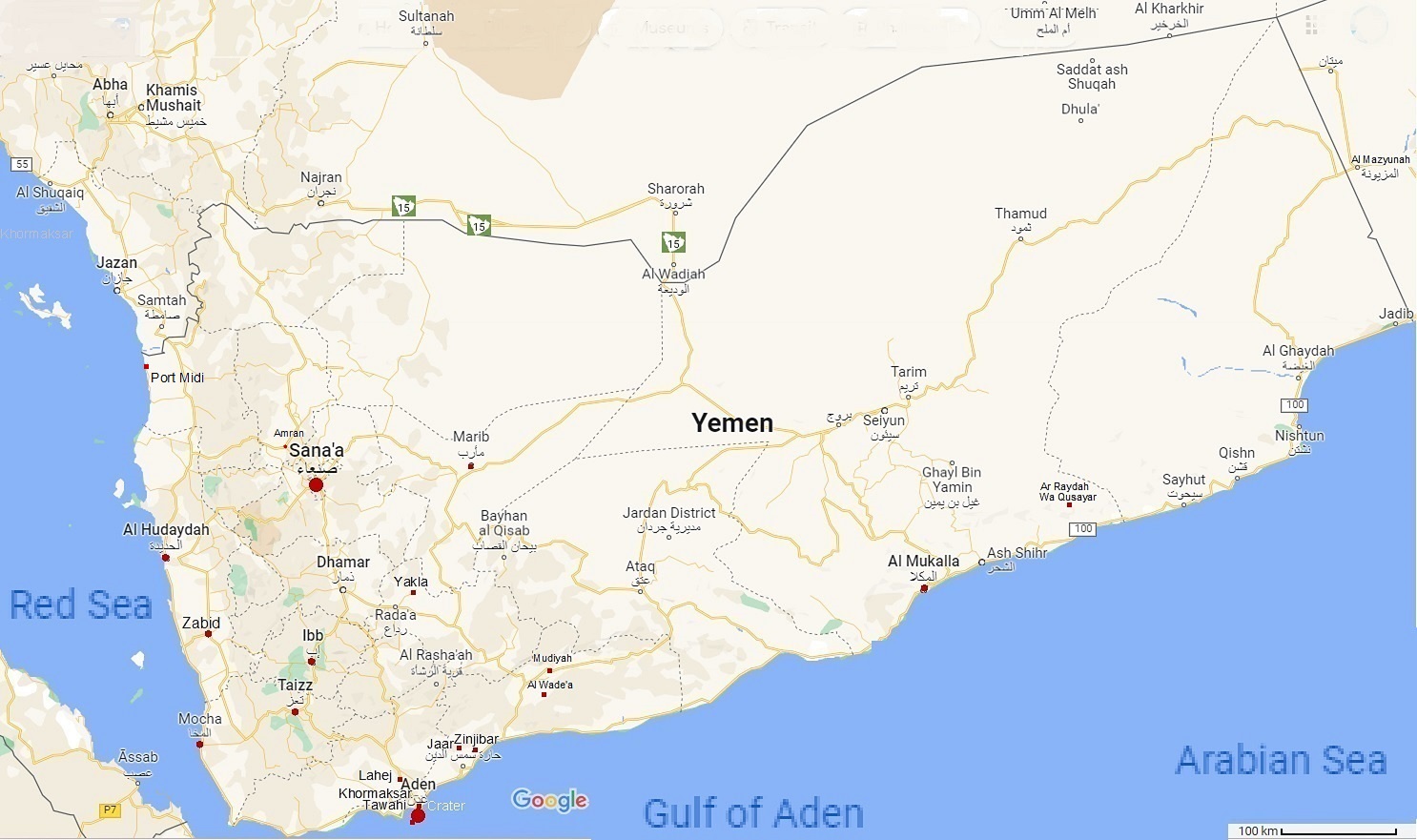
フーシ派の前進はイエメン全土で続き、サウジアラビア主導のイエメン介入(Operation Decisive Storm)の開始を促しました。フーシ派(the Houthis) (حوثيون)は、2015年3月25日にアデンを攻撃し、アデンの戦い(the Battle of Aden) (2015) (معركة عدن)を開始しました。サウジアラビアの空爆にもかかわらず、フーシ派は、なんとかタワヒ(Tawahi) (تواهي)、ホルマクサル(Khormaksar) (خورمكسر)、クレーター(Crater) (كريتر)に進出しました。
Houthi advances continued across Yemen, prompting the start of a Saudi-led intervention in Yemen (Operation Decisive Storm). The Houthis (حوثيون) attacked Aden on March 25, 2015, starting the Battle of Aden (2015) (معركة عدن). Despite Saudi airstrikes, the Houthis managed to advance into Tawahi (تواهي), Khormaksar (خورمكسر) and the Crater (كريتر).
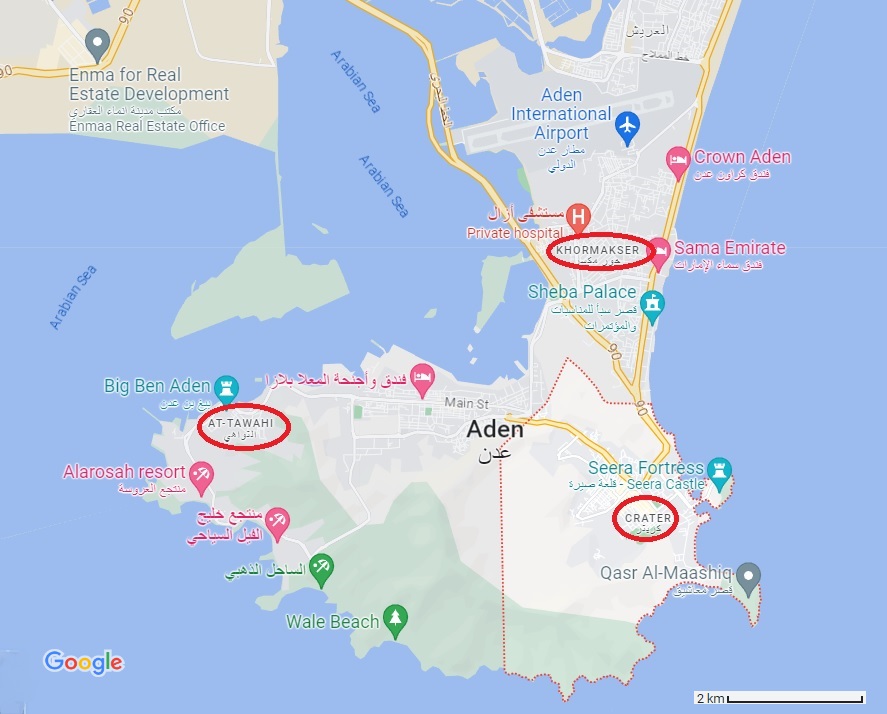
Aden
ハーディー政府の反撃
Hadi Government Counterattack
2015年7月14日、反フーシ派の反撃がなんとか半島でフーシ派を閉じ込めました。2015年8月6日までに、ハーディー政府はタイズ(Ta’izz) (تعز)の75%を占領し、ラヒジの反乱(the Lahij insurgency) (معركة لحج)は、フーシ派をラヒジ県(the Lahij Governorate) (محافظة لحج)から追放しました。しかし、8月16日、フーシ派軍がタイズ(Ta’izz) (تعز)での反撃に成功し、ハーディー軍をアル=サーリフ庭園(Al-Salih Gardens)とアル=ダバブ山岳地帯(the Al-Dabab Mountain region)から撤退させました。
On July 14, 2015, an anti-Houthi counterattack managed to trap the Houthis on the peninsula. By August 6, 2015, the Hadi government had occupied 75% of Ta’izz (تعز) and the Lahij insurgency (معركة حلج) had driven the Houthis out of the Lahij Governorate (محافظة لحج). However, on August 16, Houthi forces successfully counterattacked at Ta’izz (تعز) and Hadi forces withdrew from the Al-Salih Gardens and the Al-Dabab Mountain region.
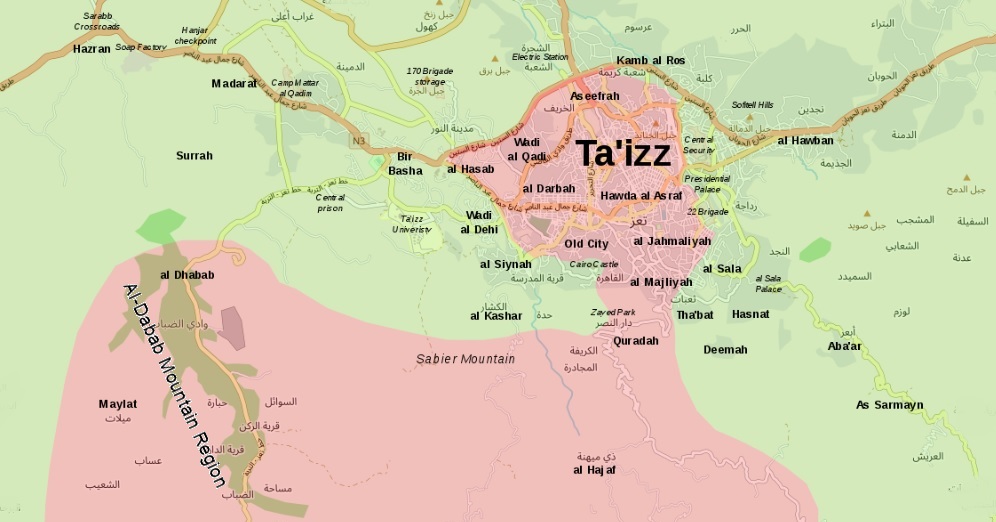
Ta’izz
ハドラマウト(Hadramawt) (حضرموت)では、アラビア半島のアルカイダ(AQAP)が2015年4月のムカッラーの戦い(the Battle of Mukalla) (معركة المكلا)勝利した後、なんとかムカッラー(Mukalla) (مكلا)を占領し、2015年12月にジンジバル(Zinjibar) (زنجبار)とジャール(Jaar) (جعار)も占領しました。
In Hadramawt (حضرموت), Al-Qaeda (AQAP) of the Arabian Peninsula managed to capture Mukkalla (مكلا) after winning the Battle of Mukkalla (معركة المكلا) in April 2015. In December 2015, it also occupied Zinjibar and Jaar.
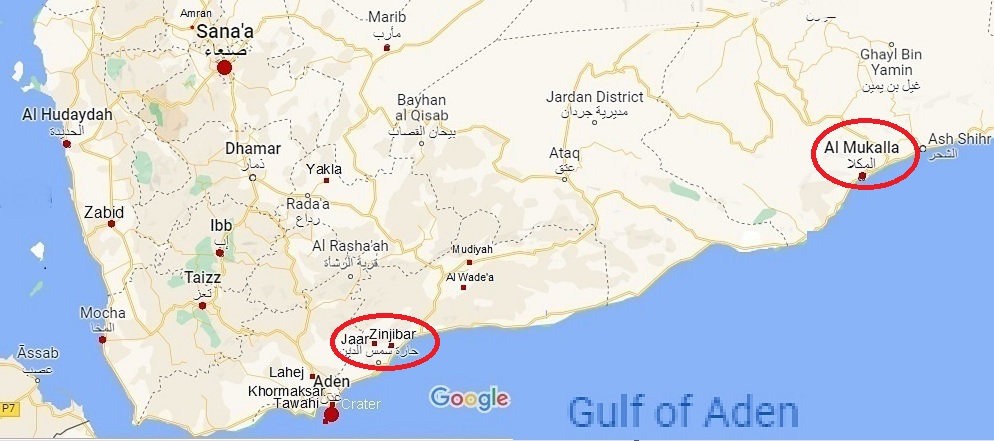
Mukalla, Zinjibar & Jaar
2016年1月、ハーディー政府は、ポートミディの戦い(the Battle of Port Midi) (معركة حجة)でフーシ派軍を打ち負かしました。続いて、2016年4月のムカッラーの戦い(the Battle of Mukalla) (معركة المكلا)で、ハーディー政府は、AQAPからムカッラー(Mukalla) (مكلا)を奪還しました。
In January 2016, the Hadi government defeated Houthi forces in the Battle of Port Midi (معركة حجة). Subsequently, in the Battle of Mukalla (معركة المكلا) in April 2016, the Hadi government recaptured Mukkalla (مكلا) from AQAP.
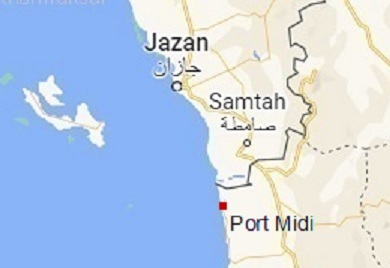
Port Midi
2017年1月、米国はAQAPに関する新しい情報を入手する試みが失敗し、ヤクラへの襲撃(the Raid on Yakla) (معركة يكلا)を実行しました。
In January 2017, the US carried out the Raid on Yakla (معركة يكلا) in an unsuccessful attempt to obtain new information on AQAP.
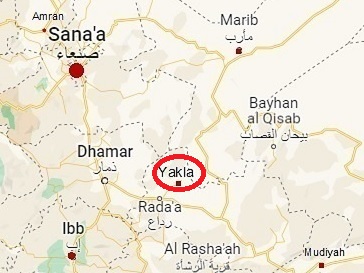
Yakla
2017年12月、ハーディー政府はフダイダ(Hudayda) (حديدة)の攻撃を開始しました。2018年6月、ハーディー政府はフダイダ(Hudayda)市自体への攻撃を開始し、サウジアラビアの介入が始まって以来、戦争で最大の戦いと見なされているフダイダの戦い(Battle of Hudaydah) (معركة الحديدة)を開始しました。
In December 2017, the Hadi government began an attack on Hudayda (حديدة). In June 2018, the Hadi government launched an attack on the city itself of Hudayda itself. This was the beginning of the Battle of Hudaydah (معركة الحديدة). This battle is considered the biggest one since the start of Saudi Arabia’s intervention.
2015年5月、アリ・アブドラ・サーレハ(Ali Abdullah Saleh)は、フーシ派(the Houthis)と公然と同盟を結びました。この同盟が、モハメッド・アリ・アル・フーシ(Mohammed Ali al-Houthi) (r.2015~2016) (محمد علي الحوثي)率いる暫定革命委員会(the Revolutionary Committee) (اللجنة الثورية)の国政実権掌握と、アブド・ラブフ・マンスール・ハーディー大統領(Abd Rabbuh Mansur Hadi)の辞任・逃亡の原因となりました。しかし、2017年12月、サーレハは、フーシ派との連合からの離脱を宣言し、代わりにかつての敵であるサウジアラビア、アラブ首長国連邦、ハーディー大統領の側に立ちました。
In May 2015, Ali Abdullah Saleh openly allied himself with the Houthis. This alliance had taken control of the state affairs under the Revolutionary Committee (الجنة الثورية) headed by Mohammed Ali al-Houthi (r.2015-2016) (محمد علي الحوثي). It caused the resignation and flight of President Abd Rabbuh Mansur Hadi. In December 2017, Saleh declared its withdrawal from the Houthi coalition and instead he sided with the former enemies such as Saudi Arabia, United Arab Emirates and President Hadi.
2017年12月、元大統領で有力者のアリ・アブドラ・サレハ(Ali Abdullah Saleh) (r.1990~2012) (علي عبد الله صالح)が殺害されました。彼は2014年からこの直前までフーシ派の同盟者でした。
イエメン内戦は、国内に戦災のみならず、コレラと飢饉をもたらしています。
In December 2017, the former president and strongman Ali Abdullah Saleh (r.1990~2012) (علي عبد الله صال) was murdered. He was a Houthi ally from 2014 to just before this incident.
The civil war in Yemen has brought not only war damage to the country, but also cholera and famine.
サウジ主導の連合支持喪失
Losing Support of Saudi-led Coalition
サウジ主導の連合の支持を失った後、イエメンのアブド・ラブフ・マンスール・ハーディー(Abd Rabbuh Mansur Hadi) (r.2012~2022) (عبدربه منصور هادي)大統領は辞任し、大統領リーダーシップ評議会(The Presidential Leadership Council) (مجلس القيادة الرئاسي)が2022年4月に権力を握りました。
After losing the support of the Saudi-led coalition, Yemen’s President Abd Rabbuh Mansur Hadi (r.2012~2022) (عبدربه منصور هادي) resigned and the Presidential Leadership Council (مجلس القيادة الرئاسي) assumed power in April 2022.
大統領指導評議会
Presidential Leadership Council
大統領指導評議会(the Presidential Leadership Council) (مجلس القيادة الرئاسي)は、国際的に認知されたイエメン政府の執行機関です。この機関は、内戦を含むイエメン問題に対する「包括的な政治的解決」を模索するため、2022年4月7日の大統領令によりサウジアラビアのリヤードに設立されました。所属評議会員は、8名で、ラシャド・ムハマド・アル・アリミ(Rashad Muhammad Al-Alimi) (رشاد محمد العليمي)が議長に就任しました。大統領と副大統領のすべての権限はこの評議会に移管されています。 議長には軍を一方的に指揮し、知事やその他の主要官僚を任命する権限を含む広範な権限が与えられています。
The Presidential Leadership Council (مجلس القيادة الرئاسي) is an internationally recognized executive body of the Yemeni government. The council was established in Riyadh (رياض), Saudi Arabia by Presidential Decree of 7 April 2022 to seek a “comprehensive political solution” to Yemen’s problems, including the civil war. The council has eight members and is chaired by Rashad Muhammad Al-Alimi (رشاد محمد العليمي). All powers of the President and Vice President are transferred to this Council. The chairman is given wide-ranging powers, including the power to unilaterally command the military and appoint governors and other key officials.
ラシャド・ムハンマド・アル=アリミ(Rashad Muhammad Al-Alimi)
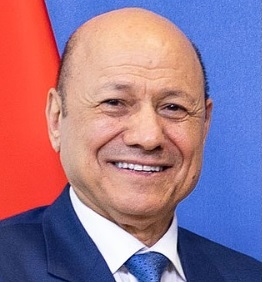
ラシャド・ムハンマド・アル=アリミ(Rashad Muhammad Al-Alimi) (b.1954) (رشاد محمد العليمي)は、イエメンの政治家であり、2022年4月7日から大統領指導評議会の議長を務めています。2011年6月3日、サヌアの戦い中で、負傷して一時国外で治療を受け、サヌワに戻りましたが、2014年のサヌアの戦いで、サヌアがフーシ派に占領されたため、2015年以降は、サウジアラビアに住んでいます。イエメンとサウジ政府の複数の関係筋によると、恒久的な停戦に同意するようフーシ派反政府勢力と交渉に先立ち、サウジアラビアがハーディー氏(Mr. Hadi)に権力をアリミ氏(Mr. Alimiに譲渡するよう強制したのではないかと言われています。
Rashad Muhammad Al-Alimi (b.1954) (رشاد محمد العليمي) is a Yemeni politician who has been the chairman of the Presidential Guidance Council since 7 April 2022. .On 3 June 2011, during the Battle of Sana’a, he was injured and returned to Sana’a after receiving treatment abroad. However, since 2015, he has been living in Saudi Arabia because Sana’a was occupied by the Houthis during the Battle of Sana’a in 2014.
It is said that, ahead of negotiations with Houthi rebels to agree to a permanent ceasefire Saudi Arabia may have forced Mr. Hadi to hand over power to Mr. Alimi.
 Desert peninsula