34 Oman since Modern Times


目次(Index)
まえがき
二つのオマーン
イスラーム以前の時代
イスラーム教の出現
ウマイヤ朝時代
オマーン・イマーム国
ナバーニ王朝
ポルトガル時代
ヤアールバ朝
アル・ブサイディ国家
選出されたイマームの受け入れ拒否
イギリスの事実上の植民地化
スルターン・サイードの治世
ジェベル・アクダル戦争
ドファール反乱
スルターン・カブースの治世
スルターン・ハイサムの治世
Introduction
Two Omans
Pre-Islamic Era
Emergence of Islam
Umayyad Caliphate Period
Imamate of Oman
Nabhani dynasty
Portuguese Era
Yaruba dynasty
Al-Busaidi State in Oman
Refusal to accept the elected Imam
British de facto colonisation
Reign of Sultan Said
Jebel Akhdar War
Dhofar Rebellion
Reign of Sultan Qaboos
Reign of Sultan Haitham
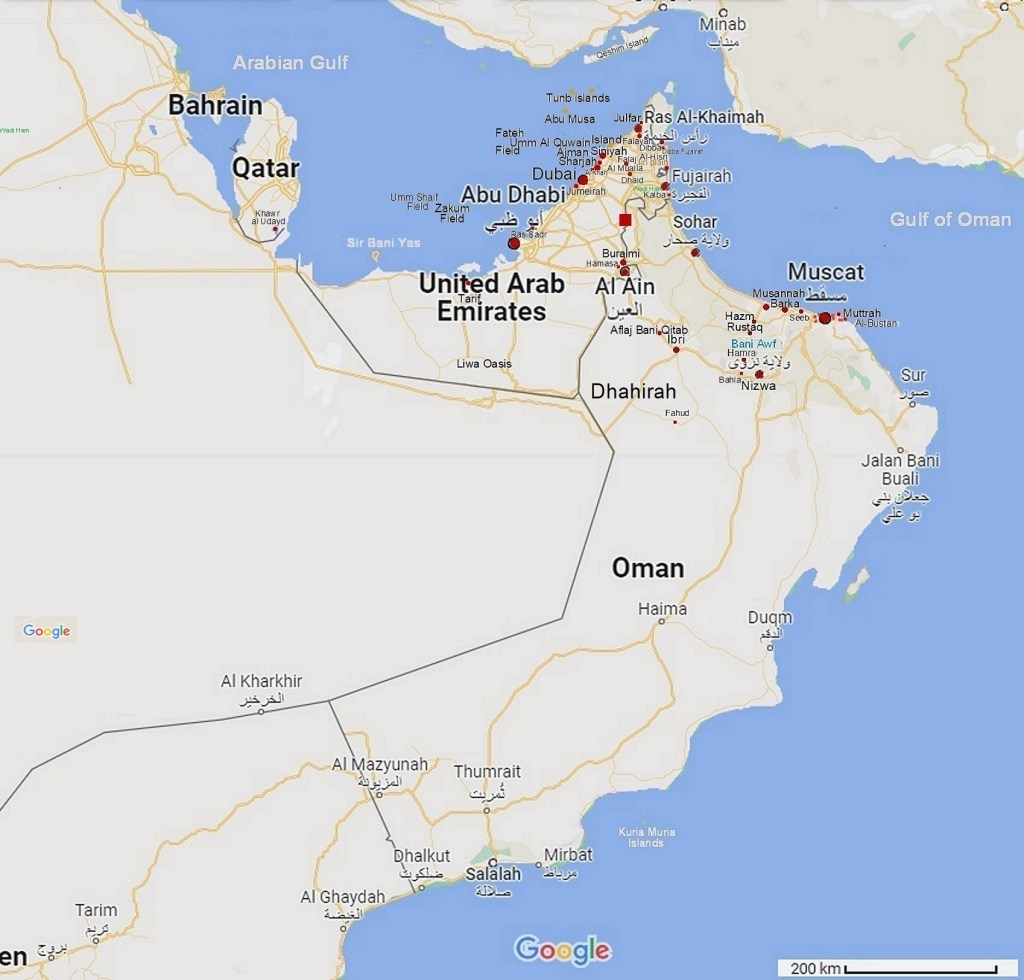
Mascat Oman and Trucial Oman
まえがき
Introduction
オマーンは、現在ではオマーン・スルターン国(Sultanate of Oman) (1970~) (سلطنة عمان)を意味していますが、元々はオマーン半島(Oman Peninsula) (شبه جزيرة عمان)とも呼ばれた地域で、現在のアラブ首長国連邦であるトゥルーシャル・オマーン(Trucial Oman) (عمان المتصالحة)と現在のオマーン・スルターン国(Sultanate of Oman)であるマスカット・オマーン(Muscat Oman) (مسقط، عمان)の総称です。
紀元前2世紀半ばの葬儀の碑文には、「ウマン(Uman)」という名前の王国がムレイハ(Mleiha) (ملَيْحَة)(現在はシャルジャ(Sharjah)領内)にが存在すると記載されています。同じ時代の同じ時期にムレイハ王国(Kingdom of Mleiha) (3rd C BC~4th C AD) (مملكة مليحة)が存在したとの考古学調査から報告されているので、この王国がウマン(Uman)でオマーンの最初の国であると考えられます。現代のアラブ首長国連邦の大部分とオマーンの北部地域を網羅していました。この王国は、ギリシャの作家プリニウス・ザ・エルダー(Pliny the Elder) (23 or 24~79 AD)とストラボン(Strabo) (64 or 63 BC~c.24 AD)によってオマナ(Omana.)として言及されています。これがオマーンの語源なのだと思われます。
Oman now means the Sultanate of Oman (1970~) (سلطنة عمان), but originally does the Oman Peninsula (شبه جزيرة عمان). The Oman Peninsula covered the Trucial Oman (عمان المتصالحة), present-day United Arab Emirates, and the Muscat Oman, present-day Sultanate of Oman (مسقط، عمان) and the Oman peninsula had seemed to be used as their generic name.
Funerary inscriptions from the mid-2nd century BC state that a kingdom named “Uman” existed in Mleiha (ملَيْحَة) (now within Sharjah). Archaeological investigations have reported that the Kingdom of Mleiha (3rd C BC~4th C AD) (مملكة مليحة) existed at the same time in the same period, so that this kingdom might be Uman. It is considered to be the first country in Oman. It covered most of the modern United Arab Emirates and the northern regions of Oman. This kingdom was written by Greek writers Pliny the Elder (23 or 24~79 AD) and was mentioned by Strabo (64 or 63 BC~c.24 AD) as Omana. This looks like to be the origin of the name of “Oman”.
二つのオマーン
Two Omans
イスラーム以降は、ルスタク(Rustaq) (الرستاق)あるいはニズワ(Nizwa) (نزوى)を首都とする内陸のオマーン・イマーム国(the Imamate of Oman) (751~1959) (إمامة عمان)がオマーンの内陸部を支配していました。
11世紀から12世紀にかけて、オマーンの海岸は、セルジューク帝国(the Seljuk Empire) (1037~1194) (الدولة السلجوقية)が勢力下に置きましたが、ナバーニ王朝(the Nabhani dynasty) (1154~1624) (أسرة بني نبهان)が権力を握り、1154年にセルジューク帝国(the Seljuk Empire)を追放しました。
After Islam, the inland Imamate of Oman (751~1959) (إمامة عمان) with its capital Rustaq (الرستاق) or Nizwa (نزوى) ruled the interior of Oman.
In the 11th and 12th centuries, the coast of Oman was under the control of the Seljuk Empire (1037~1194) (الدولة السلجوقية), but the Nabhani dynasty (1154~1624) (سلالة حاكمة النبهاني) held power and exiled the Seljuk Empire in 1154.
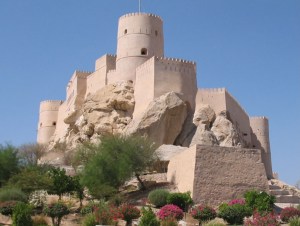
Nakhal Fort, one of the best-preserved forts in Oman
マスカットは、東西交易路上の戦略的な場所であった為に16世紀初めから17世紀の中頃まで、ポルトガル帝国(the Portuguese Empire)の支配下に置かれました。ポルトガル帝国勢力を追放した後、ヤアールバ王朝 (Yaruba dynasty (1624~1744) (دولة اليعاربة)は、その交易や植民地を引き継いで、アラビア湾からアフリカ大陸東岸をザンジバル(Zanzibar) (زنجبار)までを勢力下におく、海洋帝国を築き、オマーン帝国(the Omani Empire) (1696~1856) (الإمبراطورية العمانية)とも呼ばれました。
Due to its strategic location on the East-West trade route, Muscat was under the control of the Portuguese Empire from the early 16th century to the middle of the 17th century. After banishing the Portuguese imperial power, the Yaruba dynasty (1624~1744) (دولة اليعاربة) took over the trade and colonies of the Portuguese Empire and established a maritime empire extending from the Arabian Gulf to Zanzibar on the east coast of the African continent. The Yaruba dynasty was also called the Omani Empire (1696~1856) (الإمبراطورية العمانية).
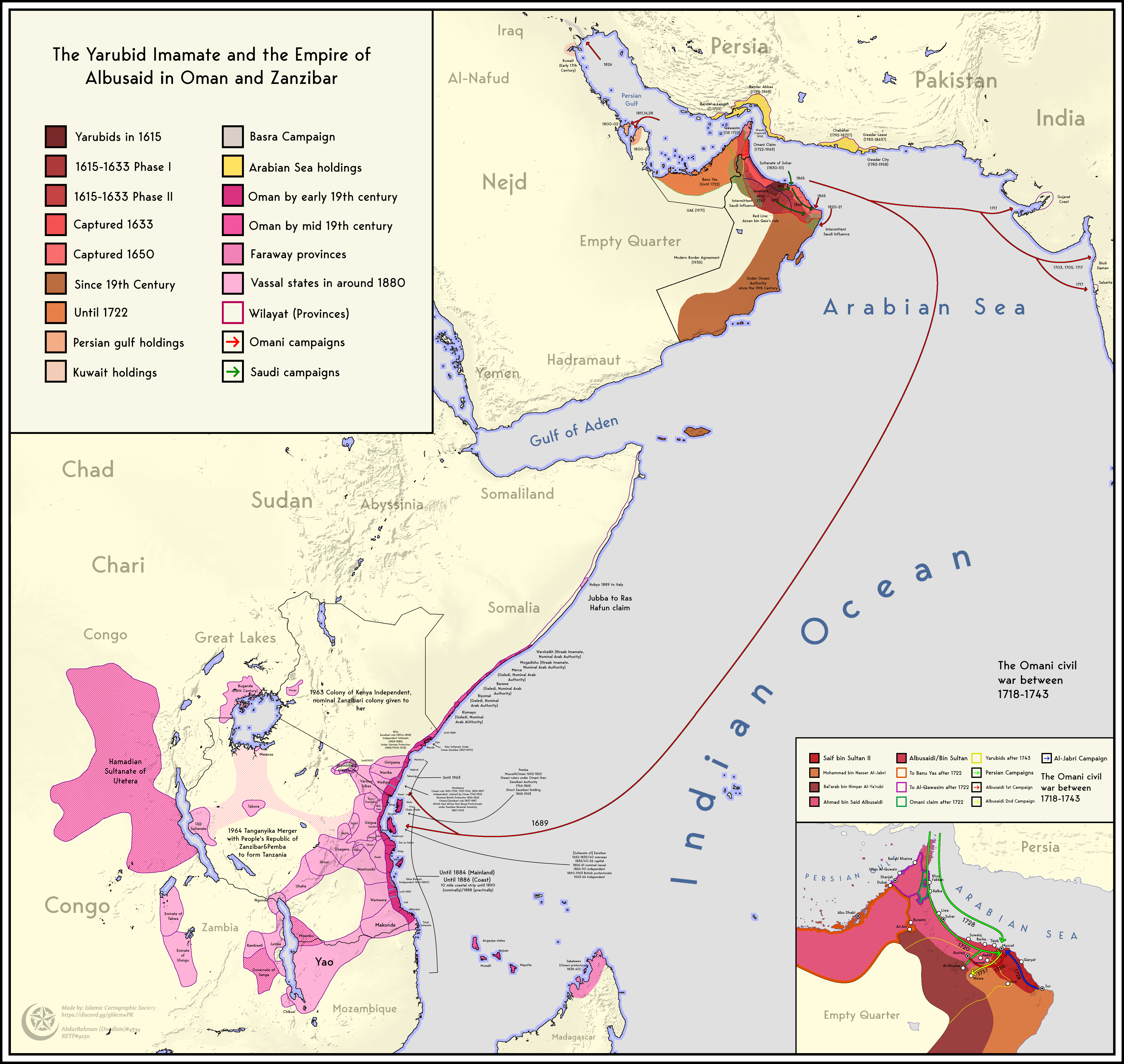
Areas under the Omani Empire prepared by Mr. AbdurRahman AbdulMoneim,
who is a Muslim cartographer from Cairo, Egypt
オマーン帝国(the Omani Empire)は、次第に弱体化し、1856年に後継者危機から、オマーン帝国(the Omani Empire)は、オマーンとマスカットのスルターン国(the Sultanate of Oman and Muscat) (1856~1970) (سلطنة مسقط وعمان)とザンジバルのスルターン国(the Sultanate of Zanzibar) (1856~1964) (سلطنة زنجبار)に分割されました。マスカットに対する英国の影響力は19世紀を通じて高まり、ついには実質的に保護国となりました。
The Omani Empire gradually weakened, and in 1856, due to a succession crisis, the Omani Empire was divided to the Sultanate of Oman and Muscat (1856~1970) (سلطنة مسقط وعمان) and the Sultanate of Zanzibar (1856~1964) (سلطنة زنجبار). British influence over the Sultanate of Oman and Muscat had grown throughout the 19th century until it became a virtual protectorate.
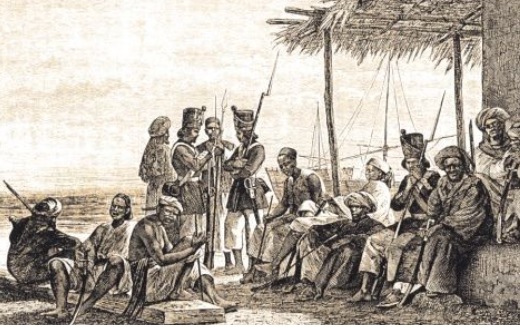
The State and the Stateless. The Sultanate of Zanzibar and the East African Mainland:
Politics, Economy and Society, 1837-1888
ブライミ紛争
Buraimi Dispute
ブライミ紛争(Buraimi Dispute) (1952~1955) (حرب البريمي)では、タワーム・オアシス(Tawam Oasis) (واحة توام)の内のブライミ・オアシス(Buraimi Oasis) (واحة البريمي)の三つの村内の一つであるハマサ(Hamasa) (حماسة)をサウジアラビア側が占拠し、サウジアラビア東部州の一部としてオアシスの領有権を主張しました。その折に、このサウジの部隊を追放するために約6,000〜8,000人の軍隊を結集させたのが、オマーンのイマーム(the Imam of Oman) (إمام عمان)でしたが、珍しくマスカット&オマーンのスルターン(the Sulṭan of Muscat & Oman) (سلطان مسقط وعُمان)も共に戦おうとしていました。
In the Buraimi Dispute (1952~1955) (حرب البريمي), the Saudi Arabian side occupied Hamasa (حماسة), one of the three villages of the Buraimi Oasis (واحة البريمي) in the Tawam Oasis (واحة توام). While the Saudi side claimed the oasis as part of the Eastern Province (لمنطقة الشرقية) of the Saudi Arabia, it was the Imam of Oman (إمام عمان) who mustered an army of about 6,000 to 8,000 men to expel the Saudi forces. Unusually, the Sultan of Muscat & Oman (سلطان مسقط وعُمان) also tried to fight alongside the Imam of Oman.
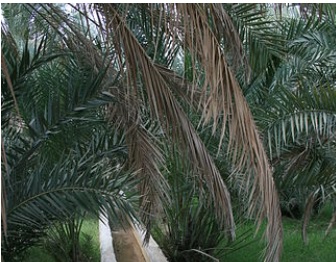
Tawam Oasis
この時に英国の仲裁による紛争の解決が試みられるまで自制するように海賊海岸の当事者として英国政府からオマーン・イマーム国(Imamate of Oman) (751~1959) (إمامة عمان)が説得を受けました。仲裁は、進まず、英国は、準軍事組織である防衛隊(Trucial Oman Levies) (قوة ساحل الإمارات المتصالحة)(後のTrucial Oman Scouts (كشافة ساحل عمان))を使って、サウジアラビア部隊を武装解除してサウジアラビアに撤退させました。
At this time, the Imamate of Oman (751~1959) (إمامة عمان) was persuaded by the British government to refrain from trying to resolve the dispute through British arbitration as a party representing the Pirate Coast. The arbitration did not proceed, then the British forced the Saudi side to disarm and withdraw using the paramilitary Trucial Oman Levies (قوة ساحل الإمارات المتصالحة). (The Trucial Oman Levies became the Trucial Oman Scouts (كشافة ساحل عمان) later.)
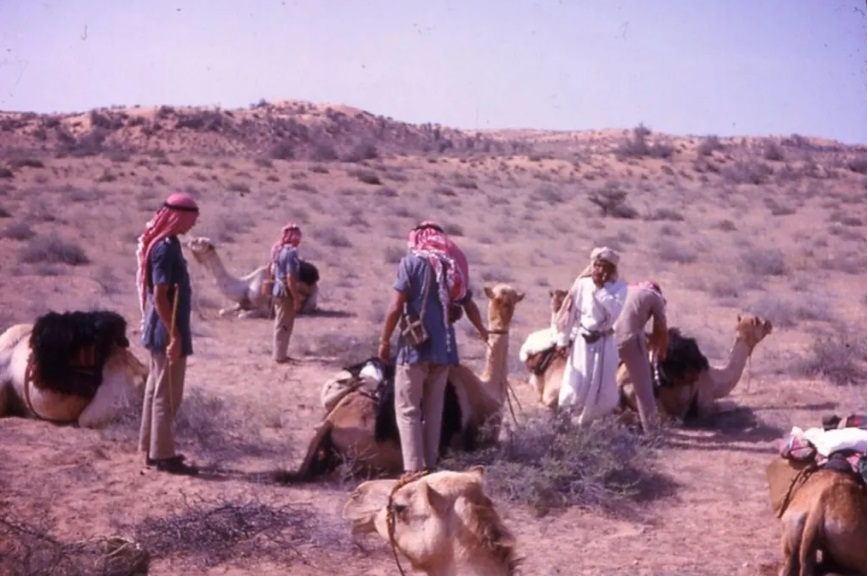
Trucial Oman Scouts
Kris Osborn, Warrior Maven – Center for Military Modernization Jun 19, 2019
石油資本の思惑もあり、英国政府の援助を得て、1959年までにマスカット・オマーン・スルターン国(the Sultanate of Muscat and Oman) (1856~1970) (سلطنة مسقط وعمان)は、オマーン・イマーム国(the Imamate of Oman) (751~1959) (إمامة عمان)を滅ぼしました。この時まで、二つのオマーンは、マスカット・オマーン・スルターン国(the Sultanate of Muscat and Oman)とオマーン・イマーム国(the Imamate of Oman)でした。
By 1959, with the aid of the British government in line with the oil capitals’ intention, the Sultanate of Muscat and Oman (1856~1970) (سلطنة مسقط وعمان) destroyed and possessed the Imamate of Oman (751~1959) (إمامة عمان). Until this time, the two Omans had been the Sultanate of Muscat and Oman and the Imamate of Oman.
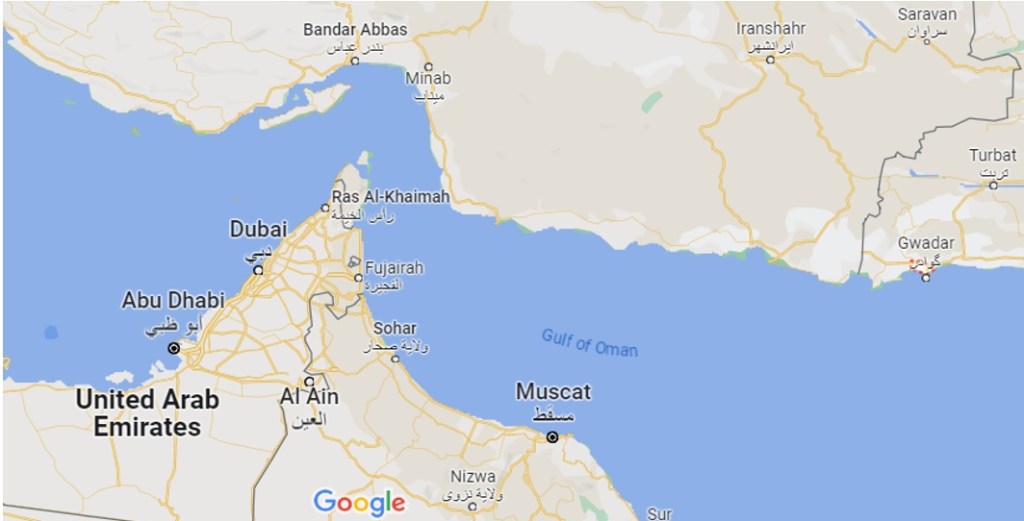
その後は、やはり石油資本の思惑もあったのか、英国政府は保護国としてマスカット・オマーン・スルターン国(the Sultanate of Muscat and Oman)を海賊海岸側の現在のアラブ首長国連邦であるトゥルーシャル・オマーン(Trucial Oman) (عمان المتصالحة)とハジャール山脈(Hajar Mountains) (خبال الحجر)より東側の海岸地帯と南側の沙漠地帯の現在のオマーン国(Sultanate of Oman) (1970~) (سلطنة عمان) であるマスカット・オマーン(Muscat Oman) (سلطنة مسقط)に分けて保護国としていたと思われます。この為、二つのオマーンとは、トゥルーシャル・オマーン(Trucial Oman)とマスカット・オマーン(Muscat Oman)と考えられるようになって来ています。
After that, it is thought that the British government divided the Sultanate of Muscat and Oman into the Trucial Oman and the Muscat Oman as a protectorate, probably because the intention of oil capitals.
The Trucial Oman is the present-day United Arab Emirates on the Pirate Coast side. The Muscat Oman is the coastal area to the east of the Hajar Mountains (خبال الحجر) and the desert area to their south, and is the current Sultanate of Oman (1970~) (سلطنة عمان).
For this reason, the two Omans have come to be considered the Trucial Oman and the Muscat Oman.
マスカット・オマーン(Muscat Oman)すなわち「オマーンとマスカットのスルターン国(the Sultanate of Oman and Muscat)」は、独立して、1970年に国名もオマーン国(the Sultanate of Oman) (سلطنة عمان)に変更しました。一方、トゥルーシャル・オマーン(Trucial Oman)は、英国が撤退した後、1971年12月2日に独立して、アラブ首長国連邦(United Arab Emirates) (UAE) (الإمارات العربية المتحدة)を設立しました。
The Muscat Oman, “the Sultanate of Oman and Muscat”, became independent and changed its name to the Sultanate of Oman (سلطنة عمان) in 1970. Meanwhile, the Trucial Oman became independent on December 2, 1971, and established the United Arab Emirates (UAE) (الإمارات العربية المتحدة). It was after the British withdrew from the Trucial Oman
イスラーム以前の時代
Pre-Islamic Era
古代、カフラーン・カフターン部族(Kahlan Qahtan Arabs) (كهلان قحطان عرب) のアズド族(the Azd tribe) (قبيلة الازد)は、ラムラト・サバアタイン(the Ramlat al-Sab’atayn) (رملة السبعتين)とも呼ばれるサイハド沙漠(the Sayhad Desert) (صحراء الصيهاد)にあったサバ王国(the Sabaean Kingdom) (1200 BC~275 AD) (السبئيون)の首都マアリブ(Ma’rib) (مأرب)に住んでいました。
In ancient times, the Azd tribe (قبيلة الازد) of the Kahlan Qahtan Arabs (كهلان قحطان عرب) lived in Ma’rib (مأرب). Ma’rib (مأرب) was the capital of the Sabaean Kingdom (1200 BC~275 AD) (السبئيون). It was in the Sayhad Desert (صحراء الصيهاد), also called the Ramlat al-Sab’atayn (رملة السبعتين).
アズド族(the Azd tribe)の土地は、その大きさのために古代世界の工学的驚異の1つであると考える人もいるマアリブ・ダム(the Ma’rib Dam) (سد مأرب)によって灌漑されました。西暦5〜6世紀にダムが3度目に崩壊したとき、アズド族(the Azd tribe)の多くは、マアリブ(Ma’rib)を離れて分散しました。
The land of the Azd tribe was irrigated by the Ma’rib Dam (سد مأرب), considered by some to be one of the engineering marvels of the ancient world because of its size. When the dam collapsed for the third time in the 5th-6th century AD, many of the Azd tribe dispersed away from Ma’rib.
イムラン・ビン・アムル(Imran bin Amr) (عمران بن عمرو)と部族の大部分はオマーンに行き、そこでアラビア東部にアズディの存在(the Azdi presence)を確立しました。その後、彼らは南ペルシャのカラマン(Karaman) (قرمان)とシーラーズ(Shiraz) (شیراز)に侵入し、これらは「アズドダバ(“Azd Uman”)」として知られるようになりました。
Imran bin Amr (عمران بن عمرو) and most of the Azd tribe went to Oman, where they established the Azdi presence in eastern Arabia. They then invaded Karaman (قرمان) and Shiraz (شیراز) in southern Persia, where they became known as “Azd Uman”.
イムラーン・イブン ・アムル族(Imran bin Amr) (عمران بن عمرو):カフラーン・カフターン部族(Kahlan Qahtan Arabs) (كهلان قحطان عرب) アズド族(Azd) (أزد) の一門。
Imran bin Amr (عمران بن عمرو):One of Clans of (Azd) (أزد) belonging to Kahlan Qahtan Arabs (كهلان قحطان عرب).
その後、別の部族グループがオマーンに入りました。現在の支配家族先祖のであるアズド族(the Azd tribe) (قبيلة الازد)の重要な部族は、アシール(Asir) (عسير)から、6世紀に移住しました。高地に定住した後、アズドは海岸を支配していたサーサーン朝ペルシャ(Sassanid Empire) (224~651) (ساسانيون)に従属して、山の住民を支配し、税金を徴収する見返りにサーサーン朝の知事からの自治権を得ていました。
Another tribal group then entered Oman from Yemen. Among them, an important clan of the Azd (قبيلة الازد) migrated to Oman from Asir (عسير) in his 6th century. This clan is the ancestor of the current rulers of Oman. After settling in the highlands, the clan was subordinated to the Sassanids (224~651) (ساسانيون). While the Sassanids ruled the coast, this clan controlled the mountain inhabitants and collected taxes from them for the Sassanids. In return, the clan was given autonomy from the Sassanid governor.
アズド部族同盟(Azd Tribal Confederation) (اتحاد قبائل أزد)の長には、初期のイスラーム教徒の歴史家が個人名として取ったサーサーン朝の行政称号である「ジュランダ(Al Julanda) (الجلندى)」という称号が与えられ、オマーンの初期のアズド族(Azd)の支配者を識別するために使用されました。
The head of the Azd Tribal Confederation (اتحاد قبائل أزد) was given the Sassanid administrative title of ‘Al Julanda’ (الجلندى). This title was used as a personal name by early Muslim historians to identify the early Azd rulers of Oman.
イスラーム教の出現
Emergence of Islam
イスラーム教の出現により、後にエジプトの征服者として有名であり、初期のイスラーム教徒コミュニティの最も重要な政治的および軍事的指導者の1人であるアムル・イブン・アース(‘Amr ibn al-‘As) (c. 573~664) (عمرو بن العاص)は、預言者ムハンマド(the Prophet Muhammad) (الرسول محمد)によってオマーンに送られました。
With the advent of Islam, ‘Amr ibn al-‘As (c. 573~664) (عمرو بن العاص) was sent to Oman by the Prophet Muhammad (الرسول محمد). He was later famous as the conqueror of Egypt. And he was also one of the most important political and military leaders of the early Muslim community.
これは、おそらく632年で、彼がオマーンにいる間に、彼は、その年にメディナ(Medina) (مدينة)でのムハンマド(Muhammad)の死を知り、急いで戻って行きました。しかし、オマーンのジュランダ(Jayfar bin Al Julanda) (جيفر بن الجلندى)の2人の息子ジャイファー(Jaifer Ibn al-Julanda) (جيفرإبني الجلندى)とアブド(Abd Ibn al-Julanda) (عبد إبني الجلندى)がイスラーム教を受け入れたので、アムル(Amr)の使命は、成功しました。
This was probably in 632, and while he was in Oman he learned of Muhammad’s death in Medina (مدينة) in that year and hurried back, however Amr’s mission was a success. It was because two sons of Jayfar bin Al-Julanda (جيفر بن الجلندى), Jayfer Ibn al-Julanda (جيفرإبنيجلندى) and Abd Ibn al-Julanda (عبد إبني الجلندى), accepted the Islam.
そして、ジュランダ(Julanda) (جلندى)の2人の息子すぐに、彼らのアズドの親族と一緒に、ペルシャ人をオマーンから追い出すことに着手しました。彼らは、ルスタク(Rustaq) (رستاق)の異教のサーサーン朝の知事に手紙を送り、彼にイスラーム教を受け入れるように勧めました。しかし、知事が拒否したので、戦いで打ち負かしました。その後、アズド族(Azd)はソハール(Sohar) (صحار)のペルシャ駐屯地を包囲し、知事が降伏してオマーンを去ることを余儀なくさせました。その後、アズド族(Azd)はイスラームの征服(the Muslim Conquests) (الفتوحات الإسلامية)に大きな役割を果たしました。
And the two sons of Julanda (جلندى) at once set about driving the Persians out of the Oman, together with their relatives of Azd. They sent a letter to the pagan Sasanian governor of Rustaq (رستاق), exhorting him to accept Islam. However, the governor refused, so they defeated him in battle. The Azds then laid siege to the Persian garrison of Sohar (صحار), forcing the governor to surrender and leave the Oman. After that, the Azd played a major role in the Muslim Conquests (الفتوحات الإسلامية).
ウマイヤ朝時代
Umayyad Caliphate Period
オマーン・アズド(Omani Azd)は、ウマイヤ朝時代(the Umayyad Caliphate) (661~750) (الدولة الأموية)、イスラーム教の中心地であったバスラ(Basra) (بصرة)に貿易のために旅行していました 。オマーン・アズド(the Omani Azd)はバスラの一部を与えられ、そこで彼らは定住し、彼らのニーズに応えることができました。バスラに定住したオマーン・アズドの一部は商人になり、彼らの指導者ムハラブ・ビン・アビ・スフラ(Muhallab bin Abi Sufrah) (c. 632~702) (المهلب بن أبي صفرة)の下で、権力の影響力をホラーサーン(Khorasan) (خراسان)に向かって東に拡大し始めました。
Omani Azd had been traveling to Basra (بصرة) for trade. Basra was the center of Islam during the Umayyad Caliphate (661~750) (الدولة الأموية). The Omani Azd were given a piece of Basra where they could settle and take care of their needs. Some of the Omani Azd who settled in Basra became merchants. Under their leader Muhallab bin Abi Sufrah (c. 632~702) (المهلب بن أبي صفرة), they began to expand their influence of power. It started to head east to Khorasan (خراسان).
イバード派(Ibadhi Islam) (الإباضية)は、西暦650年頃に創設者のアブドラ・イブン・イバド(Abdullah ibn Ibadh) (d. c.700) (عبدالله بن إباض)通じてバスラ(Basra)で始まり、イラクのオマーン・アズド(the Omani Azd)は、その後、これを彼らの支配的な信仰として採用しました。その後、イラクの知事(Umayyad governor of Iraq) (r. 694~714)であるアル=ハッジャジ(Al-Hajjaj ibn Yusuf) (c. 661~714) (الحجاج بن يوسف)は、イバード派(the Ibadhis) (الإباضية)と対立し、イバード派(the Ibadhis)は、オマーンに強制送還されました。戻ってきた人々の中には、学者のジャーベル・ビン・ザイド(Jaber bin Zaid) (جابر بن زيد)がいました。彼および他の学者の帰還は、イバード派運動(the Ibadhi movement) (الحركة الإباضية)を強化しました。
Ibadhi Islam (الإبامية) began in Basra around 650 AD through its founder Abdullah ibn Ibadh (d. c.700) (عبدالله بن إبام). The Omani Azd of Iraq have since adopted this as their dominant faith. Al-Hajjaj ibn Yusuf (c. 661~714) (الجاج بن يوسف), the Umayyad governor of Iraq (r. 694~714), then proclaimed the Ibadhis (إبانية). Because of this, the Ibadhis was deported to Oman. Among those who returned was the scholar Jaber bin Zaid (جابر بن زيد). The return of him and other scholars strengthened the Ibadhi movement (الحركة الإبانية).
当時のオマーンは、684 年にアバード・ビン・アル=ジュランダ(Abbad bin Al-Julanda) (عباد بن الجلندة)の二人の息子サイード(Said) (سعيد)とスレイマン(Suleiman) (سليمان)の指導の下、アズド・オマーン族(Azd Oman) (أزد عمان)によって設立され、この地域で最も古い首長国であるラム首長国(the Emirate of Lamu) (إمارة لامو)の治政の下にありました。
In 684 Azd Oman under the leadership of Said (سعيد) and Suleiman (سليمان), two sons of Abbad bin Al-Julanda (عباد بن الجندة) The Emirate of Lamu (إمارة لامو) was founded by the Azd Oman (أزد عمان). This was the oldest emirate in the region. Oman at that time was under the rule of the Emirate of Lamu.
アル=ハッジャジ(Al- ibn Yusuf)は、そのオマーンを征服しようと試み、ムジャア・ビン・シワー(Mujjaah bin Shiwah) (مججع بن شيوة)を派遣しました。サイード・ビン・アバード(Said bin Abbad) (سعيد بن عباد)の軍隊がムジャア(Mujjaah)と彼の軍隊と対峙しましたが、この対峙で、サイード(Said)の軍隊(Said’s army)は、壊滅状態に陥りました。その後、サイード(Said)の軍隊は、ジェベル・アクダル(the Jebel Akhdar) (الجبل الأخضر)に撤退しました。ムジャア(Mujjaah)と彼の軍隊は、サイード(Said)の軍隊を追いかけ、ワディ・マストール(Wadi Mastall) (وادي مستل)に隠れている彼らを首尾よく一掃しました。
Al-Hajjaj ibn Yusuf sent Mujjaah bin Shiwah (مججع بن شيوة) to attempt to conquer that Oman. Said bin Abbad (سعيد بن عباد)’s army confronted Mujjaah and his army, in which Said’s army was fallen into the devastation. Said’s army then withdrew to the Jebel Akhdar (الجبل الأخضر). Mujjaah and his army pursued Said’s army and successfully wiped them out of hiding in the Wadi Mastall (وادي مستل).
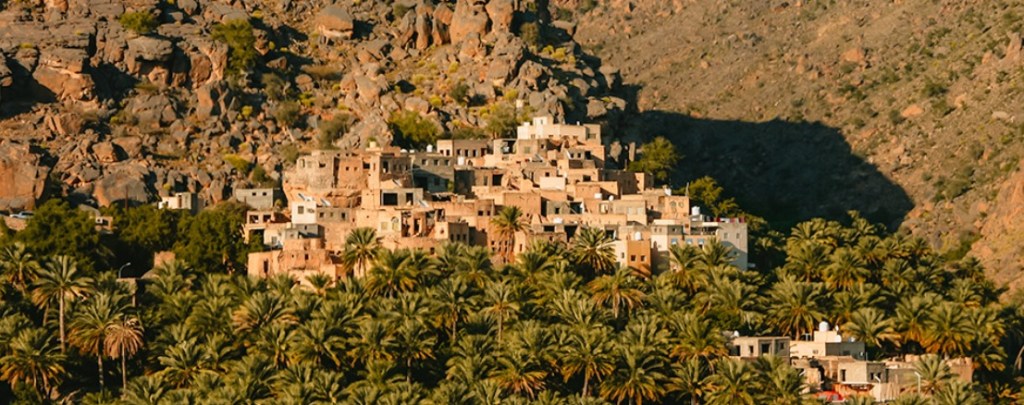
A Village in the Western Hajar Mountains
ムジャ(Mujjaah)と彼の軍隊は、その後に海岸に向かって移動しました。そこで、ムジャ(Mujjaah)と彼の軍隊は、スレイマン・ビン・アバード(Suleiman bin Abbad) (سليمان بن عباد)の軍隊と対峙しました。戦いは、スレイマン(Suleiman)の軍隊が勝利しました。アル=ハッジャジ(Al-Hajjaj)は、別の部隊をアブドゥルラフマン・ビン・スレイマン(Abdulrahman bin Suleiman) (عبدالرحمن بن سليمان)の下に派遣しました。アル=ハッジャジ(Al-Hajjaj)は、最終的に戦争に勝ち、オマーンの統治(the governance of Oman.)を掌中に納めました。
Mujjaah and his army then moved towards the coast. There Mujjaah and his army confronted the forces of Suleiman bin Abbad (سليمان بن عباد). The battle was won by Suleiman’s army. Al-Hajjaj sent another force under Abdulrahman bin Suleiman (عبدالرحمن بن سليمان). Al-Hajjaj eventually won the war and took control of the governance of Oman.
オマーン・イマーム国
Imamate of Oman
オマーン・イマーム国(Imamate of Oman) (751~1959) (إمامة عمان)の最初のイマーム(Imam) (إمام)の選任は、ウマイヤ朝(Umayyad Caliphate) (661~ 750) (الخلافة الأموية)の終焉とほぼ時を同じくして行われました。そして、アル=ジュランダ・ビン・マスード(Al-Julanda bin Masud) (r. 749~751) (الجلندى بن مسعود) が初代イマームに選ばれました。最初のイマーム国(Imamate)は、9世紀に絶頂期に達しました。イマーム国(Imamate)は、アッバース朝(Abbasid Caliphate) (750~1258) (الخلافة العباسية)、極東、アフリカとの貿易が盛んな時期に、その艦隊がアラビア湾岸を支配する海上帝国(a maritime empire)を築きました。イマームの権威(the authority of the Imams)は、権力闘争、アッバース朝の介入(he interventions of Abbasid)、セルジューク朝(Seljuq Dynasty) (1037~1194) (الدولة السلجوقية)の台頭により衰退し始めました。
The election of the first Imam (إمام) of the Imamate of Oman (751~1959) (إمامة عمان) took place almost at the same time of the end of the Umayyad Caliphate (661~750) (الخلافة الأموية). Al-Julanda bin Masud (r. 749~751) (الجلندى بن مسعود) was chosen as the first Imam. The first Imamate reached its zenith in the 9th century. The Imamate established a maritime empire whose fleet dominated the Arabian Gulf during a period of high trade with the Abbasid Caliphate (750-1258) (الخلافة العباسية), the Far East and Africa. The authority of the Imams began to decline due to internal power struggles, the interventions of the Abbasids, and the rise of the Seljuq Dynasty (1037~1194) (الدولة السلجوقية) .
ナバーニ王朝
Nabhani dynasty
11世紀から12世紀にかけて、オマーンの海岸はセルジューク帝国(the Seljuk Empire)の勢力圏にありました。彼らはナバーニ王朝(the Nabhani dynasty) (1154~1624) (أسرة بني نبهان)が権力を握った1154年に追放されました。ナバーニ(Nabhanis)は、ムルク(muluk) (ملوك)、または王(kings)として統治していましたが、イマーム(the Imams)は、主に象徴的な重要性として尊重されていました。王朝の首都はバーラ(Bahla) (هلا)でした。
During the 11th and 12th centuries, the coast of Oman was under the control of the Seljuk Empire. They were exiled in 1154 when the Nabhani Dynasty (1154~1624) (أسرة بني نبهان) came to power. While the Nabhanis ruled as muluk (ملوك), or kings, the Imams were revered primarily for their symbolic importance. The capital of the dynasty was Bahla (هلا).
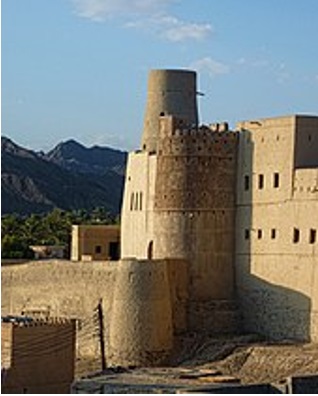
バハラ砦(Bahla Fort) (قلعة بهلاء)
ニズワ(Nizawa) (نزوى)の西30km付近にあるバハラ砦(Bahla Fort) (قلعة بهلاء)は、ナバーニ王朝(the Nabhani dynasty) (1154~1624) (النباهنة)によって12世紀から15世紀の間に建てられました。
Bahla Fort (قلعة بهلاء), located about 30 km west of Nizawa, was built between the 12th and 15th centuries by the Nabhani dynasty (1154~1624) (النباهنة).
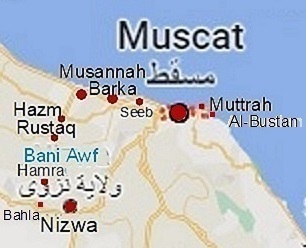
Bahla
バヌー・ナバーン(the Banu Nabhan) (بني نبهان)は、ソハール(Sohar) (صحار)を経由してヤブリーンのオアシス(the Yabrin oasis) (واحة يبرين)へ、そして北にバハレイン、バグダッド、ダマスカスへの陸路で乳香の貿易(the trade in frankincense)を管理していました。マンゴーの木(the mango-tree) (شجرة المانجو)は、ナバーニ王朝の時代(during the time of Nabhani dynasty)エルフェラ・ビン・ムーシン(El Fellah bin Muhsin) (الفلاح بن محسن)によってオマーンに紹介されました。ナバーニ王朝(the Nabhani dynasty)は、ポルトガルの植民者(Portuguese colonisers)が沿岸都市マスカット(the coastal city of Muscat)を占領した1507年に衰え始めました。ポルトガルは、海岸に沿って北へはソハール(Sohar) (صحار)まで、南東へはスール(Sur) (صور)まで徐々に支配を拡大しました。ナバーニ王朝は西暦1435年の初めにアル=ヒナウィス(Al Hinawis) (لهيناويص)すなわちイバード・ヒナウィの信条(Ibadi Hinawi Creeds) (المذاهب الإباضية الحناوي)の諸部族との間の対立が生じ、それが選択的イマーム国(the elective Imamate)の回復につながったと主張している歴史家もいます。
The Banu Nabhan (بني نبهان) controlled the trade in frankincense by land. The route was via Sohar (صحار) to the Yabrin oasis (واحة يبرين) and north to Bahrain, Baghdad and Damascus. The mango-tree (شجرة المانجو) was introduced to Oman by El Fellah bin Muhsin (الفلاح بن محسن)during the time of Nabhani Dynasty . The Nabhani Dynasty began to decline in 1507 when the Portuguese colonisers captured the coastal city of Muscat. The Portugal gradually extended its control along the coast north to Sohar (صحار) and southeast to Sur (صور). The Nabani dynasty came into conflict with the Al-Hinawis (لهيناويص) or Ibadi Hinawi Creeds (المذاهب الإبامية الحناوي) tribes in early 1435 AD. Some historians argue that it led to the restoration of the elective Imamate.
イバード・ヒナウィ派とガーフィーリー派
The Ibadi Hinawi Creeds and Sunni Ghafiris Creeds
イスラーム教が広まる前、オマーンには 2 つの異なるグループが存在しました。1 つは、イバード・ヒナウィの信条(Ibadi Hinawi Creeds) (المذاهب الإباضية الحناوي)と一致するアラビア南西部のアズド族(the Azd Tribe) (قبيلة الازد)で、もう 1 つはアラビア中部および北部のニザリ族(the Nizari Tribe) (ネジディ) (Nejdi)で、スンニ派ガーフィーリー信条(the Sunni Ghafiris Creeds) (المذاهب الغفيرية السنية)でした。ガーフィーリー族(Ghafiris Tribe) (قبيلة غفيريس) もその起源をニザリ族(the Nizari Tribe) (القبيلة النزارية)またはアドナーン部族(Adnan Arabs) (عدنان عرب)に遡ると主張していました。なお、ニザリ族(the Nizari Tribe)もアドナーン部族(Adnan Arabs)で、ラビーア族(Rabi’a) (ربيعة)、ムダル族(Mudar) (مضر)、アンマール族(Anmar) (أنمار)およびイヤード族(Iyad) (إياد)の祖先とされていますが、実在について疑問視する歴史家もいます。
8世紀のオマーンのイマーム(the Imam)の選出は、ヒナウィ派(Hinawis)とガーフィール派(Ghafiris)の指導者を含む合意によって確保されていました。
Before the spread of Islam, the two different groups existed in Oman. One was the Azd Tribe (قبيلة الازد) of the Southwestern Arabia. the Azd Tribe was consistent with the Ibadi Hinawi Creeds (المذاهب الإبامية الحناوي). The another was the Ghafiris Tribe (قبيلة غفيريس) of the Central and Northern Arabia. The Ghafiris Tribe was consistent with the Sunni Ghafiris Creeds (المذاهب الغفيرية السنية). The Ghafiris Tribe (قبيلة غفيريس) also claimed to trace their origins to the Nizari Tribe (القبيلة النزارية) (Nejdi) or the Adnan Arabs (عدنان عرب). The Nizari Tribe is also a part of the Adnan Arabs. The Nizari Tribe is said to be the ancestor of the Rabi’a (ربيعة), the Mudar (مضر), the Anmar (أنمار) and the Iyad (إياد), however, some historians question its existence. The election of the Imam of Oman in the 8th century was secured by an agreement involving leaders of the Hinawis and Ghafiris.
ポルトガル時代
Portuguese Era
1497 年から 1498 年にバスコ・ダ・ガマ(Vasco da Gama) (c.1460s~1524)が喜望峰(the Cape of Good Hope)を回ってインドに至る航海に成功しました。それから10 年後、ポルトガル人はオマーンを侵略し、1507 年から 1650 年までの 143 年間マスカット(Muscat) (مسقط)を占領しました。 沿岸航路に沿ってポルトガル人が都市を築き、要塞化しました。そこにはポルトガルの建築様式の名残が今も残っています。 その後、16 世紀初頭にはさらにいくつかのオマーンの都市がポルトガル人によって植民地化されました。これらの植民地は、バスラ(Basra) (بصرة)からホルムズ(Hormuz) (هرمز)に至る地域の要塞網の一部として利用して、ポルトガルは、アラビア湾の入り口を管理し、この地域での交易を有利に行いました。
From 1497 to his 1498 Vasco da Gama (c.1460s-1524) successfully sailed around the Cape of Good Hope to India. Ten years later, the Portuguese invaded Oman and occupied Muscat (مسقط). This occupation lasted for 143 years from 1507 to 1650. The Portuguese built and fortified cities along the coastal routes. There are still remnants of Portuguese architecture. Later, in the early 16th century, several more Omani cities were colonized by the Portuguese. Using these colonies as part of a network of fortifications in the region from Basra (بصرة) to Hormuz (هرمز), Portugal controlled the entrance of the Arabian Gulf. This gave Portugal an advantage in trading in the region.
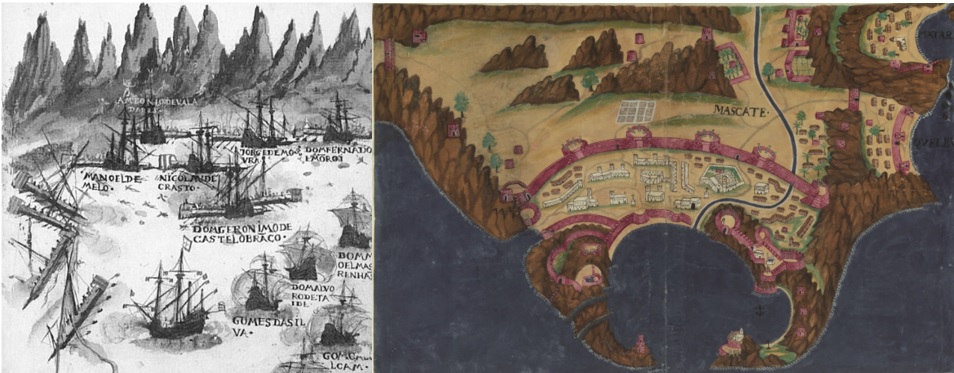
The Portuguese Empire ruled Oman for 143 years (1507–1650) & Portuguese depiction of Muscat by António Bocarro
1552年、オスマン帝国(Ottoman Empire) (1299~1923) (الدولة العثمانية)の艦隊がアラビア湾とインド洋の支配権をめぐる戦いの最中にマスカット(مسقط)の砦を一渉り占領し、要塞の周囲を破壊した後に出発しました。17世紀に入ると、オマーンの基地を使用して、ポルトガルは、アラビア湾で行われた史上最大の戦いであった「1625年のホルムズ沖海戦 (Battle off Hormuz in 1625) (معركة قبالة هرمز عام 1625)に挑みました。ポルトガル軍(the Portuguese force)は、サファヴィー朝(the Safavid empire) (1501~1736) (الدولة الصفوية)よるオランダ東インド会社(the Dutch East India Company) (VOC)とイギリス東インド会社(the English East India Company)の支援を組み合わせた艦隊と戦いました 。戦いの結果は引き分けでありましたが、アラビア湾岸におけるポルトガルの影響力の喪失をもたらしました。
In 1552, the fleets of the Ottoman Empire (1299~1923) (الدولة العثمانية) were in the midst of a battle for controlling the Arabian Gulf and Indian Ocean. The fleet swept the fortress of Muscat (مسقط), destroyed the perimeter of the fortress, and then departed. In the 17th century, using their Omani bases, Portugal fought the Battle of Hormuz in 1625, the largest battle ever fought in the Arabian Gulf. The Portuguese force fought the combined fleet of the Dutch East India Company (VOC) and the English East India Company. This fleet was organized with the support of the Safavid empire (1501~1736) (الدولة الصفوية). The battle resulted in a draw, but it derived the loss of Portuguese influence in the Arabian Gulf.
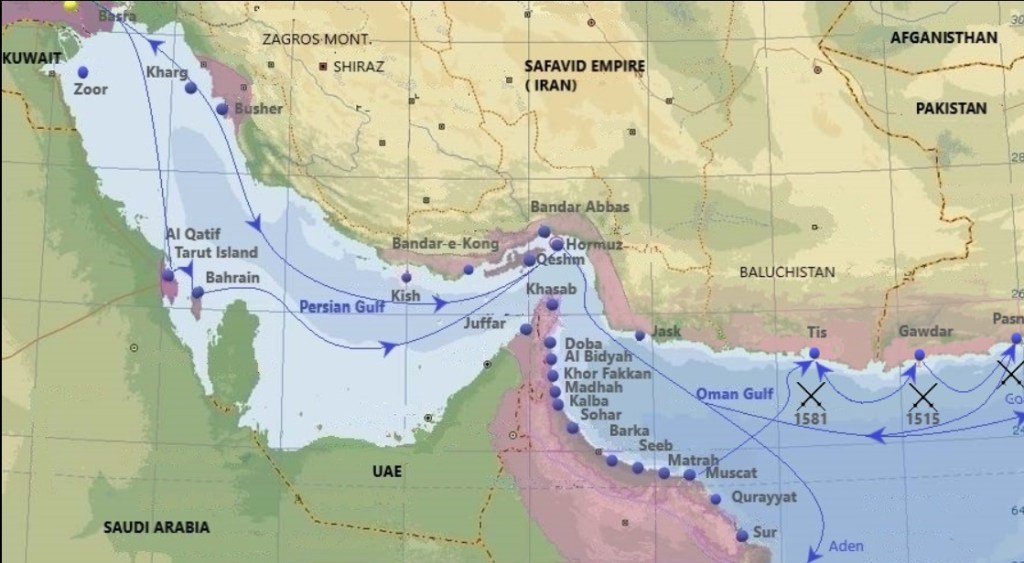
Portuguese presence in the 16th and 18th century in the Arbian Gulf (Author: Ruyandrada)
ヤアールバ朝
Yaruba dynasty
オスマン帝国(the Ottoman Empire)は1581 年に再びポルトガル人からマスカット(Muscat)を一時的に占領し、1588年まで保持しました。17世紀の間に、オマーンはヤアールバ・イマーム(the Yaarubah Imams) (اليعاربة إمام)によって再びヤアールバ朝 (Yaruba dynasty) (1624~1744) (دولة آليعرب)として統合されました。ナーシル・ビン・ムルシド(Nasir bin Murshid) (ناصر بن مرشد) (d.1649)は、1624年にルスタク(Rustaq) (رستاق)で選出された時に最初のヤアールバ・イマーム(the first Yaarubah Imam)
(أول اليعاربة إمام)になりました。
The Ottoman Empire again briefly captured Muscat from the Portuguese in 1581 and held it until 1588. During the 17th century, Oman was reunited as the Yaruba dynasty (1624~1744) (دولة آليعرب)by the Yaarubah Imams (اليعاربة إمام). Nasir bin Murshid (ناصر بن مرشد) (d.1649) became the first Yaarubah Imam (أول اليعاربة إمام) when he was elected in Rustaq (رستاق) in 1624.
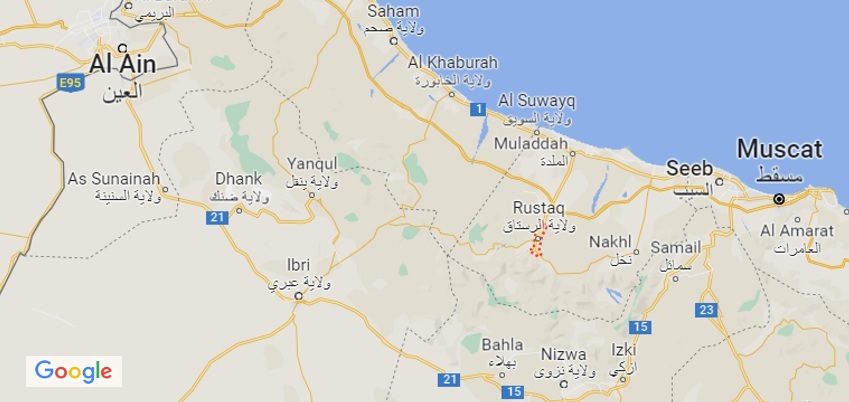
Map for the Yaruba dynasty
ナーシル(Nasir)のエネルギーと忍耐力が彼に選挙をもたらしたと考えられています。イマーム・ナーシル(Imam Nasir) (الامام ناصر)と彼の後継者は、1650年代にポルトガル人をオマーンの沿岸地域(their coastal domains in Oman)から追放することに成功しました。オマーンは時間の経過とともに、ポルトガル人を追跡し、東アフリカのすべての所有物からポルトガル人を追放し、その後、オマーンの領域に組み込まれた海上帝国(a maritime empire)を設立しました。
It is believed that Nasir’s energy and perseverance earned him the election. Imam Nasir (الامام ناصر) and his successors succeeded in expelling the Portuguese from their coastal domains in Oman in the 1650s. Over time, Oman pursued the Portuguese, expelled them from all possessions in East Africa, and then established Its own maritime empire incorporated all Portuguese possessions in East Africa into the Omani territory.
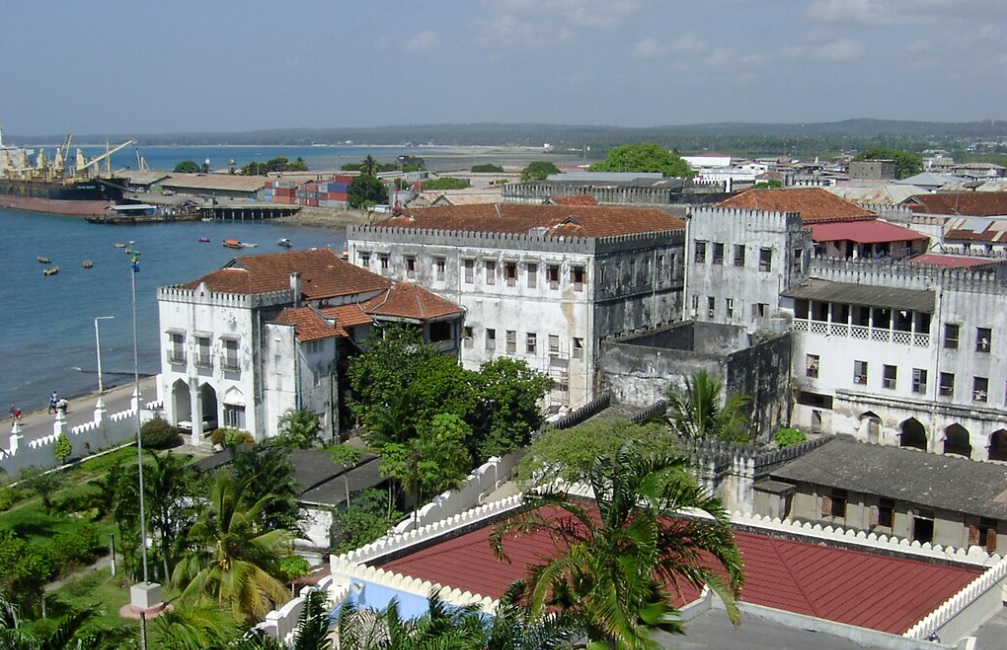
The Sultan’s Palace in Zanzibar was once the capital of Oman and the residence of the Sultan
ザンジバル(Zanzibar) (زنجبار)を占拠するために、オマーンのイマーム(the Imam of Oman)であるサイフ・ビン・スルターン(Saif bin Sultan) (سیف بن سلطان یعربی) (r. 1692~1711)は、スワヒリ海岸(the Swahili Coast) (الساحل السواحلي)を南下しました。彼の進軍の障害は、モンバサ(Mombasa)のポルトガル人入植地の駐屯地を収容するイエス砦(Fort Jesus)でした。2年間の包囲の後、砦は1698年にイマーム(Imam)のサイフ・ビン・スルターン(Saif bin Sultan) (سيف بن سلطان) (r.1692~1711)に陥落しました。サイフ・ビン・スルターンは1700年にバハレイン(Bahrain) (بحرين)も占領しました。
The Imam of Oman (إمام عمان), Saif bin Sultan (سیف بن سلطان) (r.1692~1711), was trying to occupy Zanzibar (Zanzibar). For this purpose, he went down to the South along the Swahili Coast (الساحل السواحلي) with his army. An obstacle to their march was the Fort Jesus, which housed the garrison of the Portuguese settlement of Mombasa. After a two-year siege, the fort fell to Imam Saif bin Sultan in 1698. Saif bin Sultan also captured Bahrain (بحرين) in 1700.
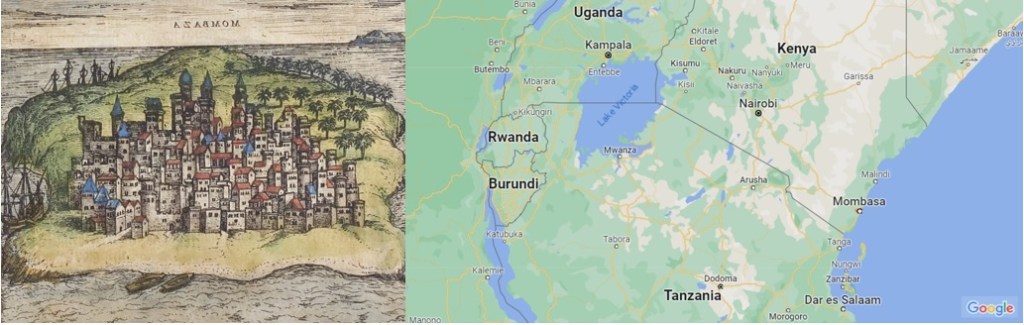
Mombasa was under Portuguese rule from 1593 to 1698 and again from 1728 to 1729
1718年にイマーム・スルターン(Imam Sultan)が亡くなった後の権力をめぐる内紛がヤアールバ家(the house of Yaruba) (سرة آل يعرب)内で起こりました。この内紛は、ヤアールバ朝(the Yaruba Dynasty) (1624~1742) (دولة آليعرب)を弱体化させました。ヤアールバ朝(the Yaruba Dynasty)の力が衰退するにつれて、イマーム・サイフ・ビン・スルターン2世((Imam Saif bin Sultan II) ) (سيف بن سلطان الثاني)は、スルターン2世(Sultan II)自身で内部の敵に対抗することが出来なくなりました。最終的に、スルターン2世(Sultan II)は、ペルシャ・アフシャール朝(Persia Afsharid dynasty) (1736~1796) (افشاریان)のナーディル・ビンシャー(Nader Shah) (r.1736~1747) (نادر شاه)に自身の敵に対抗する為に助けを求めました。
The infighting for power after the death of the Imam Sultan in 1718 broke out within the house of Yaruba (سرة آل يعرب). This infighting weakened the Yaruba Dynasty (1624~1742) (دولة آليعرب). As the power of the Yaruba Dynasty dwindles, Imam Saif bin Sultan II (سيف بن سلطان الثاني) had not able to confront his internal enemies by himself. Finally, Sultan II sought help from Nader Shah (r.1736-1747) (نادر شاه) of Persia Afsharid dynasty (1736~1796) (افشاریان) to counter his enemies.
スルターン2世(Sultan II)は、4 回イマームに就任していました(1718~1719, 1720~1722, 1723~1724 & 1728–1742)。
Sultan II served as Imam four times (1718-1719, 1720-1722, 1723-1724 & 1728–1742).
ペルシャ軍(A Persian force)はスルターン2世(Sultan II)を支援するために1737年3月にオマーンに到着しました。ジュルファー(Julfar) (جلفار)の基地から、ペルシャ軍は最終的に1743年にヤアールバ朝(the Yaruba Dynasty) (دولة آليعرب)に反乱を起こしました。その後、ペルシャ帝国(the Persian empire)は1747年までオマーンの海岸(the coast of Oman)を占領しようとしました。
A Persian force arrived in Oman in March 1737 to assist Sultan II. From their base at Julfar (جلفار), the Persian army eventually revolted against the Yaruba Dynasty (دولة آليعرب) in 1743. The Persian empire then attempted to occupy the coast of Oman until 1747.
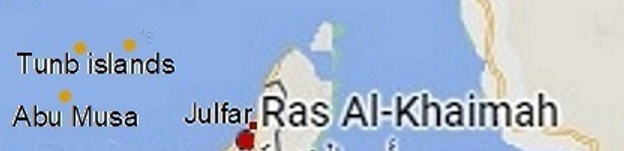
Julfar
アル・ブサイディ国家
Al-Busaidi State in Oman
オマーン人がペルシャ人(the Persians)を追放した後、1749年にアフマド・ビン・サイード・アル=ブサイディ(Ahmed bin Sa’id Al Busaidi) (r.1744~1783) (أحمد بن سعيد البوسعيدي)は、オマーンの選出されたイマームになり、ルスタグ(Rustaq) (رستاق)を首都に定めました。ヤアールバ朝(the Yaruba dynasty)によるイマーム国(the Imamate) (إمامة)の復活以来、オマーンは選択制度(the elective system)を継続し、その人が資格があると見なされた場合、支配家族の一員を優先しました。
The Omanis exiled the Persians. Afterwards, in 1749 Ahmed bin Sa’id Al Busaidi (r.1744~1783) (أحمد بن سعيد البوسعيدي) became the elected Imam of Oman. He made Rustaq (رستاق) his capital. Since the revival of the Imamate (إمامة) by the Yaruba dynasty, Oman continued the elective system. However, preference was given to members of the ruling family if the person was deemed eligible.
アフメド・ビン・サイード・アル・ブサイディ(Ahmed bin Saeed Al-Busaidi) (r.1744~1783) (أحمد بن سعيد البوسعيدي)は、オマーンにアル・ブサイディ国家(Al-Busaidi State in Oman) (الدولة البوسعيدية في عمان)を創設しました。彼はアル・ムタワキル(Al-Mutawakkil)(المتوكل)というあだ名でも呼ばれていました。
Ahmed bin Saeed Al-Busaidi (r.1744-1783) (أحمد بن سعيد البوسعيدي) had founded of the Al-Busaidi State in Oman (الدولة البوسعيدية في عمان). He was nicknamed Al-Mutawakkil (المتوكل).
1783年のイマーム・アフマド(Imam Ahmed) (r.1744~1783) (الإمام أحمد)の死後、彼の息子であるサイード・ビン・アフマド(Said bin Ahmed) (r.1783~1786) (سعيد بن أحمد البوسعيدي)が選出されたイマームになりました。
After the death of Imam Ahmed (r.1744-1783) (الإمام أحمد) in 1783, his son Said bin Ahmed (r.1783-1786) (سعيد بن أحمد البوسعيدي) became the elected Imam.
彼の息子、セイイド・ハメド・ビン・サイード(Seyyid Hamed bin Said) (1786~1792) (سيد حامد بن سعيد)は、マスカットで父親のイマームの代表を倒し、マスカット要塞の所有権を獲得しました。ハメド(Hamed)は「セイイド”Seyyid (سيد)”.」として支配した。その後、セイイド・ハメド(سيد حامد)の叔父であるセイイド・スルターン・ビン・アフマド(Seyyid Sultan bin Ahmed) (r.1792~1804) (سيد سلطان بن أحمد)が権力を引き継ぎました。セイイド・サイード・ビン・スルターン(Seyyid Said bin Sultan) (سعيد بن سلطان البوسعيدي) (r.1804~1856)は、スルターン・ビン・アフメド(Sultan bin Ahmed)の後を継ぎました。
His son, Seyyid Hamed bin Said (1786~1792) (سيد حامد بن سعيد) overthrew his father’s imam representatives in Muscat and took possession of the Muscat fortress. Hamed ruled as “Seyyid”. Seyyid Sultan bin Ahmed (r.1792~1804) (سيد سلطان بن أمد), uncle of Seyid (حامد) then assumed power. Seyyid Said bin Sultan (سعيد بن سلطان البوسعيدي) (r.1804~1856) succeeded Sultan bin Ahmed.
選出されたイマームの受け入れ拒否
(アル・ブサイディ国家の継続)
Refusal to accept the elected Imam
(Continuation of Al-Busaydi State)
19世紀全体を通して、1803年に亡くなるまで称号を保持したイマーム・サイード・ビン・アフマド(Imam Said bin Ahmed)に加えて、アッザン・ビン・カイス(Azzan bin Qais) (1868~1871) (عزان بن قيس بن عزان)は、オマーンの唯一の選出されたイマームでした。彼の支配は1868年に始まりました。イギリス人(the British)は、イマーム・アッザン(Imam Azzan) (الامام عزان)が彼らの利益に反すると見なしました。このため、イギリス人(the British)は、イマーム・アッザン(Imam Azzan)支配者として受け入れることを拒否しました。
Throughout the 19th century, in addition to Imam Said bin Ahmed, who held the title until his death in 1803, Azzan bin Qais (1868-1871) (عزان بن قيس بن عزان) was the only elected Imam of Oman. His rule began in 1868. The British considered Imam Azzan to be against their interests. For this reason, the British refused to accept Imam Azzan as their ruler.
この見解は、サイード・トゥルキー(Sayyid Turki) (Turki bin Said) (r.1871~1888) (تركي بن سعيد بن سلطان)による 1871 年のイマーム・アザン(Imam Azzan)の退位宣誓証言を支持する上で重要な役割を果たしました。サイード・トゥルキー(Sayyid Turki)は、イマーム・アザン(Imam Azzan)が退位した後、1888年までイマームに就いていました。サイード・トゥルキー(Sayyid Turki)は、イマーム・アザン(Imam Azzan)の従兄弟で、故サイード・ビン・スルターン(Seyyid Said bin Sultan)氏の息子であり、英国がより受け入れられると判断したザンジバル(Zanzibar)のスルターン・バルガシュ(Sultan Barghash) (Sayyid Barghash bin Said al-Busaidi) (r.1870~1888) (برغش بن سعيد)の兄弟でもあります。
This view played an instrumental role in supporting the deposition of Imam Azzan in 1871 by Sayyid Turki, who is Turki bin Said (r.1871~1888) (تركي بن سعيد بن سلطان). Sayyid Turki remained Imam until 1888 after Imam Azzan abdicated. Sayyid Turki is a cousin of Imam Azzan, a son of the late Sayyid Said bin Sultan, and a brother of Sultan Barghash of Zanzibar, who Britain deemed to be more acceptable. Sultan Barghash is Sayyid Barghash bin Said al-Busaidi) (r.1870~1888) (برغش بن سعيد).
マスカットの敗北した支配者であるオマーンのイマーム・スルターン(Oman’s Imam Sultan)は、後にパキスタン領有地域であるグワダル(Gwadar)の主権を与えられました。(筆者には、特定のイマームを指しているのか、一般論なのか探求できませんでした。)グワダル(Gwadar)は、1783年から1958年までオマーンの一部でした。この沿岸都市は、後にパキスタンの南西端、後にイランの国境近く、オマーン湾の湾口にあるマクラン地域(the Makran region)にあります。
Oman’s Imam Sultan, the defeated ruler of Muscat, was given sovereignty over Gwadar, a region that later became Pakistan. (The writer have not been able to ascertain whether it referred to a specific Imam or had been general.) Gwadar was part of Oman from 1783 to 1958. This coastal city lies in the Makran region, at the mouth of the Gulf of Oman, near the southwestern tip of what was later Pakistan and later the Iranian border.
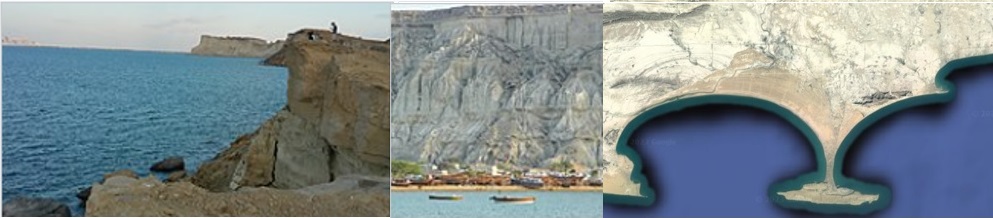
Gwadar
イギリスの事実上の植民地化
British de facto colonisation
大英帝国(the British empire)、他のヨーロッパ諸国の成長する力を抑制し、17世紀に成長したオマーンの海事力を抑制するために、アラビア南東部を支配することに熱心でした。大英帝国は、18世紀から始まり、スルターン(the sultans)に軍事的保護を与えながら、マスカット(Muscat)に対する英国の政治的および経済的利益を促進することを目的として、スルターンとの一連の条約を確立し始めました。 1798年、イギリス東インド会社(the British East India Company)とアール・ブ・サイディ朝(Al Bu Sa’id Dynasty) (آل بوسعيد)の間の最初の条約は、サイイド・スルターン・ビン・アフマド(Sayyid Sultan bin Ahmed) (r.1792~1804) (سلطان بن أحمد)によって署名されました。この条約は、フランスとオランダの商業競争を阻止し、バンダル・アッバース(Bandar Abbas) (بندر عباس)に英国の工場を建設するための譲歩を得ることを目的としていました。 1800年に2番目の条約(a second treaty)が調印され、英国の代表がマスカット港(the port of Muscat)に居住し、他の国とのすべての外交を管理することを規定していました。オマーン帝国(the Omani Empire)が弱体化するにつれて、マスカットに対するイギリスの影響力は19世紀を通じて高まりました。
The British empire was intent on controlling southeastern Arabia to curb the growing power of other European nations and curb Oman’s growing maritime power in the 17th century. Beginning in the 18th century, the British Empire entered into a series of treaties with the Sultans aimed at furthering Britain’s political and economic interests in Muscat while giving them military protection. In 1798, the first treaty between the British East India Company and the Al Bu Sa’id Dynasty (آل بوسعيد) was signed by Sayyid Sultan bin Ahmad (r.1792~1804) (سلطان بن أحمد). The treaty was intended to prevent commercial competition between France and the Netherlands and to obtain concessions for the construction of a British factory at Bandar Abbas (بندر عباس). A second treaty was signed in 1800 providing for British representatives to reside in the port of Muscat and to control all diplomatic relations with other countries. British influence over Muscat grew throughout the 19th century as the Omani Empire weakened.
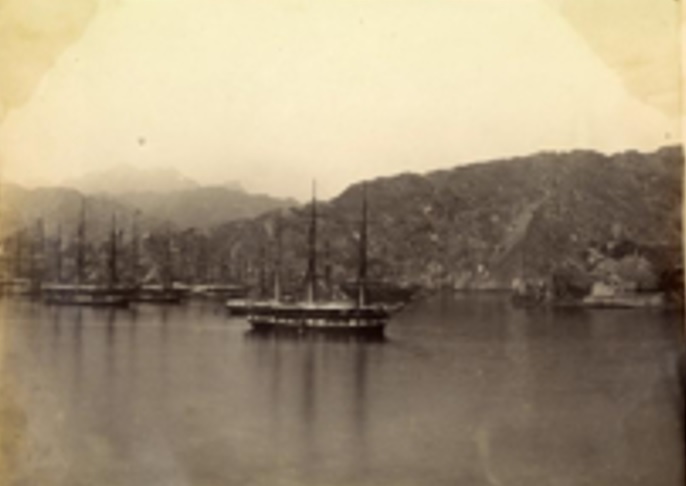
マスカットのイギリス海軍戦隊(British naval squadron in Muscat)
1854年、オマーンのクリア・ムリア諸島(the Kuria Muria islands) (جزر خوريا موريا)のイギリスへの割譲証書(a deed of cession)がマスカットのスルターン(the Sultan of Muscat)とイギリス政府によって署名されました。英国政府はマスカットに対する一方的な支配を達成し、それはほとんどの場合、他国との競争を妨げました。1862年から1892年の間に、政治居住者のルイス・ペリー(Lewis Pelly)とエドワード・ロス(Edward Ross)は、間接統治システムによってアラビア湾とマスカットに対するイギリスの覇権を確保する上で重要な役割を果たしました。19世紀の終わりまでに、そしてそのアフリカの領土とその収入の喪失とともに、イギリスの影響力は、増大しました。スルターンがイギリスのローンに依存するようになり、すべての重要な問題についてイギリス政府に相談するための宣言に署名するようになりました。したがって、スルターン朝は事実上イギリスの支配下にはいりました。
In 1854, a deed of cession of the Kuria Muria islands (جزر خوريا موريا) of Oman to Britain was signed by the sultan of Muscat and the British government. The British government achieved dominant control over Muscat, which for the most part prevented it from competing with other countries. Between 1862 and 1892 political residents Lewis Pelly and Edward Ross played a key role in securing British hegemony over the Arabian Gulf and Muscat through a system of indirect rule. By the end of the 19th century, and with the loss of its African territories and its income, British influence increased. The Sultan became dependent on British loans and signed a proclamation to consult the British government on all important matters. Thus, the Sultanate was effectively under British control.
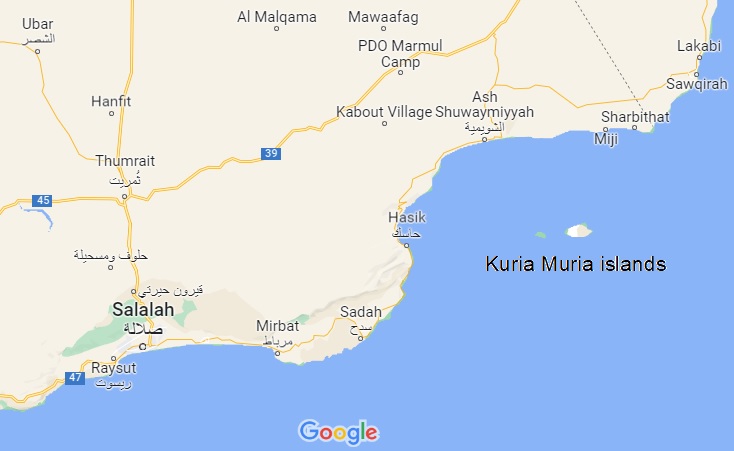
Kuria Muria islands
ザンジバル(Zanzibar)は、スワヒリ海岸(the Swahili Coast)の主要な奴隷市場(the main slave market)としての財産であり、クローブ(cloves)の生産者でした。ザンジバル(Zanzibar)は、時と共にオマーン帝国のますます重要な部分になりました。そのことは、1837年にサイイド(Sayyid) (سيد)サイード・ビン・スルターン(Sa’id bin Sultan) (1804~1856) (سعيد بن سلطان) がザンジバル(Zanzibar)をオマーン帝国の首都にするという決定に反映されています。サイード(Sa’id)は、ザンジバル(Zanzibar)に宮殿と庭園を建てました。サイード(Sa’id)の2人の息子の間の競争は、強力な英国外交の助けを借りて解決されました。その結果、マジッド(Majid bin Saïd al-Busaidi) (r.1856~1870) (ماجد بن سعيد البوسعيد)は、ザンジバル(Zanzibar)とスワヒリ海岸(the Swahili Coast)のオマーンの領土を継承し、もう一人の息子、トゥワイニ(Thuwaini bin Said al-Busaidi) (r. 1856~1866) (ثويني بن سعيد ال سعيد)は、オマーンとアジアの領域を継承しました。インド洋のコモロ諸島(the Comoros archipelago)におけるザンジバル(Zanzibar)の影響は、間接的にオマーンの習慣をコモロ文化(the Comorian culture)に導入しました。これらの影響には、衣服の伝統や結婚式が含まれます。1856年、英国の仲裁の下で、ザンジバル(Zanzibar)とマスカット(Muscat)は2つのスルターン国になりました。
Zanzibar was property as the main slave market on the Swahili Coast and a producer of cloves. Zanzibar became an increasingly important part of the Omani Empire over time. It was reflected to that in 1837, Sayyid (سيد) Sa’id bin Sultan (1804-1856) (سعيد بن سلطان) decided to make Zanzibar the capital of the Omani Empire. Sa’id also built a palace and gardens in Zanzibar. The rivalry between Sa’id’s two sons was resolved with the help of the strong British diplomacy. As a result, Majid bin Saïd al-Busaidi (r.1856~1870) (ماجد بن سعيد البوسعيد) inherited the Omani territories of Zanzibar and the Swahili Coast, and another A son, Thuwaini bin Said al-Busaidi (r. 1856~1866) (ثويني بن عيد السعيد), inherited territories in Oman and Asia. Zanzibar’s influence on the Comoros archipelago in the Indian Ocean indirectly introduced Omani customs into the Comorian culture. These influences were included in clothing traditions and weddings. In 1856, under British arbitration, Zanzibar and Muscat became two Sultanate states.
ゼーブ条約
Treaty of Seeb
ジェベル・アクダル山脈(Al Jabal Al Akhdar) (الجبل الأخضر)もその一部であるハジャル山脈(the Hajar Mountains) (جبال الحجر)は、オマーンを 2 つの異なる地域、内陸部と首都マスカットが支配する沿岸地域に分けています。
The Hajar Mountains (الجبال الحجر), of which Al Jabal Al Akhdar (الجبل الأخضر) is also a part, divide the country Oman into two distinct regions, the interior and the coastal region dominated by the Capital, Muscat.
19世紀のマスカットとオマーンに対する大英帝国の発展は、1,200年以上にわたって周期的に現れてきたオマーンの内部でのイマーム国(the Imamate)の大義の新たな復活につながりました。マスカットに住んでいた英国の政治代理人(the British Political Agent)は、「オマーン内陸部の離反はマスカットに対する英国政府の多大な影響力のせいであり、その影響力は完全に私利私欲的であり、オマーンの社会的、政治的状況を全く考慮していない」と述べていました。
The development of the British Empire against Muscat and Oman in the 19th century led to a renewed revival of the Imamate cause within Oman, which had cyclically emerged for over 1,200 years. “The secession of the Omani interior is due to the British government’s great influence over Muscat. That influence is entirely self-interested, and does not take into account the social and political situation in Oman at all.” was said by The British Political Agent, who lived in Muscat.
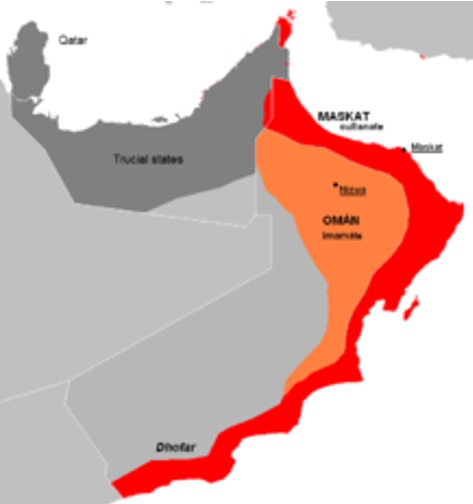
オマーンとマスカットの内陸部(オレンジ色)と沿岸部(赤)の分断
(The split between the interior region (orange) and the coastal region (red) of Oman and Muscat)
1913年、イマーム・サリム・アル=カルーシー(Imam Salim al-Kharusi) (الإمام سالم الخروصي)は、反マスカット反乱(an anti-Muscat rebellion) (r.1913–1920)を扇動しました。この反乱は、スルターン国がシーブ条約(the treaty of Seeb) (اتفاقية السيب 1920)に署名して、和平を確立した1920年まで続きました。この条約は、その時点でオマーンの内部に経済的利益を持っていなかった英国によって仲介されました。この条約では、オマーン内部(the interior of Oman)のイマーム国(the Imamate) (إمامة)に自治権を与え、マスカット・スルターン国(the Sultanate of Muscat)であるオマーンには海岸の主権を認めました。1920年、イマーム・サリム・アル=カルーシー(Imam Salim al-kharusi)が亡くなり、ムハンマド・アル=カリーリ(Muhammad bin Abdullah al-Khalili) (r.1920~1954) (محمد بن عبد الله الخليلي)が後継者に選出されました。
In 1913, Imam Salim al-Kharusi (الإمام سالم الخروصي) instigated an anti-Muscat rebellion (r.1913–1920). This rebellion lasted until 1920 when the Sultanate signed the treaty of Seeb (اتفاقية السيب 1920) to establish peace. This treaty was brokered by the British, who at that time had no economic interests inside Oman. The treaty gave autonomy to the Imamate (إمامة) in the interior of Oman and recognized coastal sovereignty for Oman, the Sultanate of Muscat. In 1920, Imam Salim Al Kharusi died, and Muhammad bin Abdullah al-Khalili (r.1920~1954) (محمد بن عبد الله الخليلي) was elected as his successor.
1923年1月10日、スルターン国と英国政府の間で協定が調印され、スルターン国は、マスカットに居住する英国の政治代理人と相談し、スルターン国で石油を抽出するためにインド高官(the High Government of India)の承認を得る必要がありました。1928年7月31日、アングロ・ペルシャ会社(Anglo-Persian Company)(後にブリティッシュ・ペトロリアム(British Petroleum)に改名)、ロイヤル・ダッチ・シェル(Royal Dutch/Shell,)、コンパニー・フランセーズ・デ・ペトロル(Compagnie Française des Pétroles)(後にトタル(Total)に改名)、近東開発公社(Near East Development Corporation)(後にエクソンモービル(ExxonMobil))に改名)、カルースト・グルベンキアン(Calouste Gulbenkian)(アルメニアのビジネスマン(an Armenian businessman)の間でレッドライン協定(the Red Line Agreement)が調印され、オスマン帝国崩壊後の旧帝国領内での石油をまとめて生産しました。 アラビア半島を含む地域では、4社がそれぞれ23.75%の株式を保有し、カルースト・グルベンキアン(Calouste Gulbenkian)が残りの5%の株式を保有していました。
On January 10, 1923, an agreement was signed between the Sultanate and the British government. This agreement required the Sultanate to obtain approval from the High Government official of India to extract oil in the Sultanate. To do so, the Sultanate had to consult with a British political agent residing in Muscat.
On July 31, 1928, the Anglo-Persian Company (later renamed British Petroleum), Royal Dutch/Shell, Compagnie Française des Pétroles (later renamed Total), Near East Development Corporation (later renamed ExxonMobil), Calouste Gulbenkian (an Armenian businessman) signed the Red Line Agreement to collectively produce oil in the former Ottoman territory. In the region that includes the Arabian Peninsula, the four companies each held a 23.75% stake, with Calouste Gulbenkian holding the remaining 5% stake.
カルースト・グルベンキアン(Calouste Gulbenkian) (1869~1955):「ミスター・ファイブ・パーセント」の愛称で知られるイギリス系アルメニア人の実業家で慈善家でした。 彼は、イラクの石油を最初に開発した人物であり、中東に埋蔵された石油を西側諸国が開発する上で重要な役割を果たしました。彼の遺志により 1956 年に設立され、ヨーロッパ最大の財団の一つとなったカルースト グルベンキアン財団(the Calouste Gulbenkian Foundation)は、世界中で芸術、慈善活動、教育、科学の促進を続けています。
Calouste Gulbenkian (1869-1955): Nicknamed “Mr. Five Percent”, was an English-Armenian businessman and philanthropist. He was the first to exploit Iraqi oil and played a key role in the Western exploitation of oil reserves in the Middle East. In his will, he founded the Calouste Gulbenkian Foundation in 1956, one of Europe’s largest foundations, which continues to promote the arts, philanthropy, education and science around the world.
協定は、署名者のいずれも、他のすべての利害関係者を含めずに、合意された地域内で石油利権の確立を追求することを許可されていないと規定しました。1929年、協定のメンバーはイラク石油会社(Iraq Petroleum Company) (IPC)を設立しました。1932年2月10日、スルターン(Sultan)タイムール・ビン・ファイサル(Taimur bin Faisal) (r.1913~1932) (تيمور بن فيصل)は退位しました。
The agreement stipulated that any of the signatories was not permitted to pursue the establishment of oil concessions within the agreed territory without including all other stakeholders. In 1929, the members of the agreement established the Iraq Petroleum Company (IPC). Meanwhile, on February 10, 1932, Sultan Taimur bin Faisal (r.1913~1932) (تيمور بن فيصل) abdicated.
スルターン・サイードの治世
Reign of Sultan Said
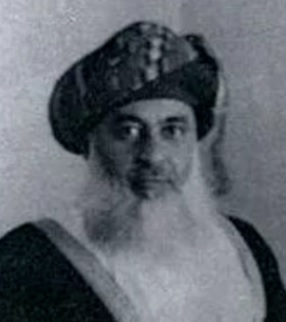
Sultan Said bin Taimur
サイード・ビン・タイムール(Said bin Taimur) (r.1932~1970) (سعيد بن تيمور)は、1932年2月10日に正式にマスカットのスルターンになりました。スルターンのサイード・ビン・タイムール(Said bin Taimur)の支配は英国政府によって支援されており、封建的(feudal)、反動的(reactionary)、孤立主義的(isolationist)であると特徴付けられてきました。イギリス政府は、国防長官兼諜報部長、スルターンの最高顧問としてスルターン朝の行政管理を維持し、1人を除くすべての大臣はイギリス人でした。1937年、スルターンとイラク石油会社(Iraq Petroleum Company) (IPC)、英国が23.75%所有する石油会社のコンソーシアムとの間の協定が署名され、IPCに石油利権が付与された。スルターン国で石油の発見に失敗した後、IPCは、オマーンの内部のイマーム国(the Imamate)内にある地域であるファフド(Fahud)近くのいくつかの有望な地層に興味を持っていました。
Said bin Taimur (r.1932~1970) (سعيد بن تيمور) officially became the Sultan of Muscat on February 10, 1932. Sultan Said bin Taimur’s rule was backed by the British government and has been characterized as feudal, reactionary and isolationist. The British government maintained administrative control of the Sultanate as the Secretary of Defense and Chief of Intelligence, Chief adviser for the Sultan, and all but one minister were British persons. In 1937, an agreement was signed between the Sultan and the Iraq Petroleum Company (IPC), a consortium of oil companies 23.75% owned by the British, granting the IPC an oil concession. After failing to find oil in the Sultanate, the IPC was interested in several promising formations near Fahud, an area within the Imamate inside Oman.
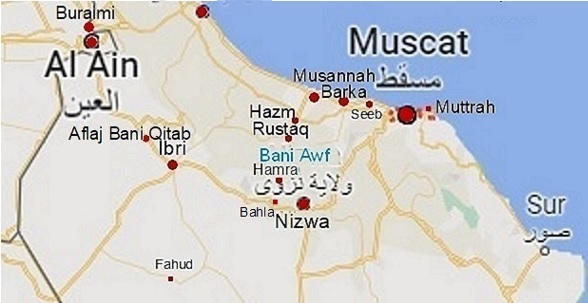
Fahud
IPCは、イマーム国(the Imamate) (إمامة)による潜在的な抵抗に対して軍隊を調達するためにスルターンに財政的支援を提供しました。
1955年、飛び地のマクラン地区(the exclave coastal Makran strip)はパキスタンに加盟し、バロチスタン州(the Balochistan province)の地区になりましたが、グワダル(Gwadar)は、オマーンに留まりました。1958年9月8日、パキスタンはオマーンからグワダル飛び地を300万米ドルで購入しました。
The IPC provided financial support to the Sultan to raise an army against the potential resistance by the Imamate.
In 1955 the exclave coastal Makran strip joined Pakistan and became a district of the Balochistan province of Pakistan, while Gwadar remained in Oman. On September 8, 1958, Pakistan purchased the Gwadar enclave from Oman for US$3 million.
ジェベル・アクダル戦争
Jebel Akhdar War
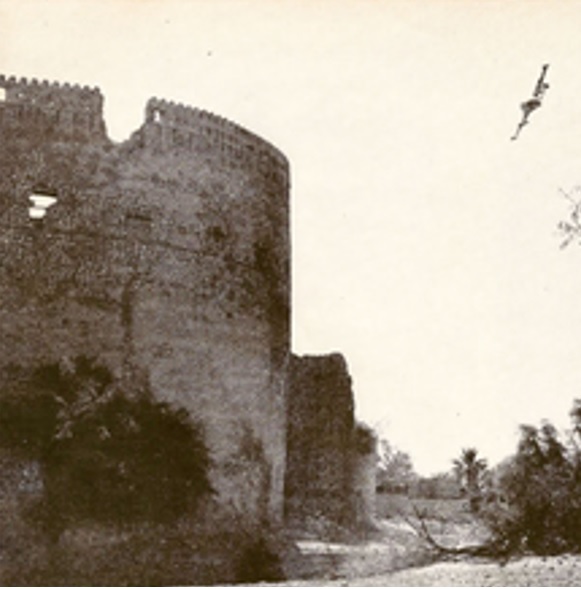
ジェベル・アクダル戦争中にイギリス空軍の攻撃機 に攻撃されたニズワ砦
Nizwa Fort attacked by British Royal Air Force strike aircraft during Jebel Akhdar War
スルターン(Sultan)サイード・ビン・タイムール(Said bin Taimur)は、イマーム・アル=カリーリ(Imam al-khalili) (r.1920~1954) (الإمام الخليلي)の死後のイマーム選挙の予定時にイマーム国(the Imamate)内で発生する可能性のある不安定性を利用してイマーム国(the Imamate) (إمامة)の権利(the Imamate right)を奪い取ろうとしていました。スルターンは、そのことをイギリス政府に表明しました。マスカットのイギリスの政治代理人は、内部の石油埋蔵量にアクセスする唯一の方法は、スルターンを支援して、イマーム国(the Imamate)を引き継がせることであると、信じていました。1946年、英国政府は、スルターンがオマーンの内部を攻撃する準備をするために、武器と弾薬、補助物資、将校を提供しました。
An unsettled situation may arise within the Imamate at the time of the Imam elections after the death of Imam al-khalili (r.1920~1954) (الإمام الخليلي). Sultan Said bin Taimur intended to use it to usurp the Imamate right. The Sultan expressed his intention to the British government. British political agents in Muscat believed that the only way to access internal oil reserves was to help the Sultan to take over the Imamate right. In 1946, the British government provided arms and ammunition, aid, and officers to prepare the Sultan for an attack the Omani interior.
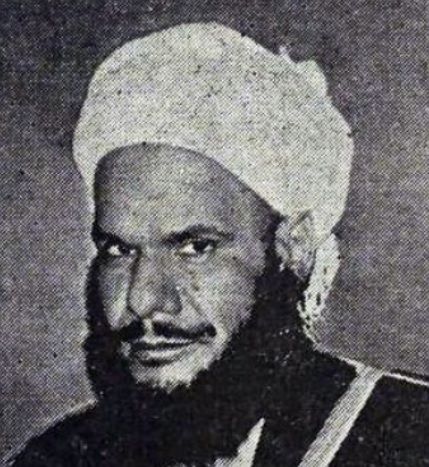
Ghalib al-Hinai
1954年5月、イマーム・アル=カリーリ(Imam al-khalili)が亡くなり、ガリブ・アル=ヒナイ(Ghalib al-Hinai) (r.1954~1959) (غالب بن علي الهنائي)がイマームに選出されました。スルターン(Sultan)サイード・ビン・タイムール(Said bin Taimur)とイマーム(Imam)ガーリブ・アル=ヒナイ(Ghalib al-Hinai)との関係は、石油利権を巡る争いで険悪になりました。 1920年のシーブ条約(the 1920 treaty of Seeb)の条項に基づき、英国政府の支援を受けたスルターンは石油会社とのすべての取引を自分の特権として主張しました。 一方、イマーム(Imam)は、石油はイマームの領土内にあったので、それに関するものはすべてイマーム国(the Imamate)内部問題であると主張しました
In May 1954, Imam al-Khalili died and Ghalib al-Hinai (r.1954~1959) (غالب بن علي الهنائي) was elected Imam. Relations between Sultan Said bin Taimur and Imam Ghalib al-Hinai had soured in a dispute over oil interests. Under the terms of the 1920 treaty of Seeb, the British government-backed Sultan claimed all dealings with the oil companies as his prerogative. The Imam, on the other hand, claimed that the oil was in Imam’s territory, therefore anything related to it was an internal affair of the Imam.
1955年12月、スルターン(Sultan)サイード・ビン・タイムール(Said bin Taimur)はマスカット・オマーン野戦軍(the Muscat and Oman Field Force)を派遣して、オマーン・イマーム国(Imamate of Oman)の首都ニズワ(Nizwa)とイブリ(Ibri)を含むセンターを占領しました。イマーム・ガリブ・アル=ヒナイ(Imam Ghalib Alhinai)、イマームの兄弟でありルスタク(Rustaq)のワリー(Wali) (知事)のタルブ・アル=ヒナイ(Talib Alhinai) (طالب الهنائي)、およびジェベル・アクダル(Jebel Akhdar)のワリー(Wali) (知事)であったスレイマン・ビン・ハミヤル(Suleiman bin Hamyar) (سليمان بن حمير)が率いる内部のオマーン(the Omanis in the interior)は、ジェベル・アクダル戦争(the Jebel Akhdar War)でイギリスが支援するスルターン朝による攻撃からイマーム国(the Imamate) を防護していました。
In December 1955, Sultan Said bin Taimur sent the Muscat and Oman Field Force to Nizwa, the capital of the Imamate of Oman and occupied the centers including Ibri. The Omanis interior forces, led by Imam Ghalib Alhinai, Talib al-Hinai (طالب الهنائي) and Suleiman bin Hamyar (سليمان بن حمير), defended the Imamate from the attacks by the British-backed Sultanate forces during the Jebel Akhdar War. Talib al-Hinai was the imam’s brother and Wali (governor) of Rustaq. Suleiman bin Hamyar was the Wali (governor) of Jebel Akhdar.
1957年7月、スルターンの軍隊(Sultan’s forces)は撤退しましたが、繰り返し待ち伏せされ、多くの死傷者を出しました。しかし、スルターン・サイード(Sultan Said)は、イギリス歩兵部隊、イギリス陸軍装甲車分遣隊とイギリス空軍(Royal Air Force)の介入により、イマーム国(the Imamate)の反乱を鎮圧することができました。イマーム国の軍隊(the Imamate’s forces)は、近づき難いジェベル・アクダル(Jebel Akhdar) (الجبل الأخضر)に撤退しました。
In July 1957, the Sultan’s forces withdrew, but were repeatedly ambushed and suffered heavy casualties. However, Sultan Said was able to put down the Imamate rebellion through the intervention of British infantry, British Army armored car detachment and Royal Air Force. The Imamate’s forces withdrew to the inaccessible Jebel Akhdar (الجبل الأخضر).
スルターンの軍隊を組織するために出向していたデビッド・スマイリー大佐(Colonel David Smiley,)は、1958年秋に山を孤立させ、ワディ・バニー・カルース(Wadi Bani Kharus) (وادي بني خروص)から高原へのルートを見つけました。1957年8月4日、英国外務大臣は、オマーンの内部に住む地元の人々に事前の警告なしに空爆を実施することを承認しました。1958年7月から12月の間に、イギリス空軍は1,635回の襲撃を行い、1,094トンの爆弾を投下し、反乱軍、山頂の村、水路、作物を標的にオマーンの内部に900発のロケットを発射しました。1959年1月27日、スルターン朝の軍隊(the Sultanate’s forces)は、奇襲攻撃で山を占領しました。
Colonel David Smiley had been seconded to organize the Sultan’s army. He isolated the mountain in the fall of 1958 and found a route to the plateau from Wadi Bani Kharus (وادي بني خروص). On August 4, 1957, the British Foreign Secretary authorized airstrikes to be carried out without prior warning on locals living inside Oman. Between July and December 1958, the Royal Air Force carried out 1,635 raids, dropped 1,094 tons of bombs and launched 900 rockets inside Oman, targeting rebels, mountaintop villages, waterways and crops. On January 27, 1959, the Sultanate’s forces captured the mountain in a surprise attack.
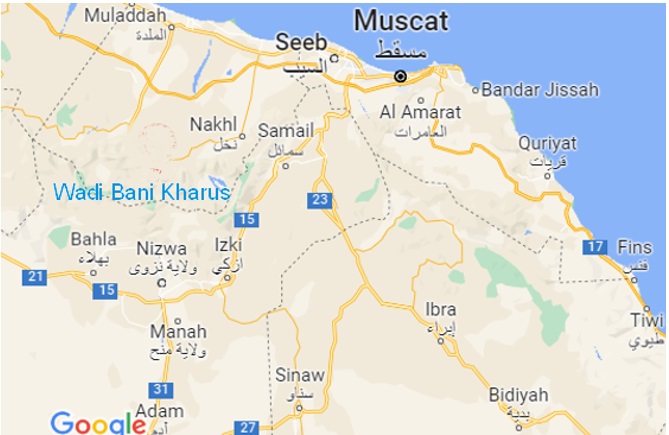
Wadi Bani Kharus
イマーム・ガリブ(Imam Ghalib)、彼の兄弟タリブ(Talib)、スライマン(Sulaiman)は、なんとかサウジアラビアに逃げることができ、そこでイマーム国の大義(the Imamate’s cause)は、1970年代まで維持されました。オマーンの廃止されたイマーム国(the abolished Imamate)の追放された支持者(partisans)は、オマーンの事件をアラブ連盟(t he Arab League)と国連(the United Nations)に提訴しました。 1963年12月11日、国連総会は、「オマーンの問題」を研究し、総会に報告するために、オマーンに関する特別委員会を設立することを決定した。国連総会は、1965年、1966年、そして1967年に「オマーンの問題」決議を採択し、英国政府に地元住民に対するすべての抑圧的行動を停止し、オマーンに対する英国の支配を終わらせ、オマーンの人々の自己決定と独立という不可侵の権利を再確認するように求めました
Imam Ghalib, his brother Talib and Sulaiman managed to escape to Saudi Arabia, where the Imamate’s cause was maintained until the 1970s. Exiled partisans of the Oman’s abolished Imamate had brought the Omani case to the Arab League as well as the United Nations. On December 11, 1963, the General Assembly of the United Nations decided to establish a special commission to study the “Omani problem”. The commission reported its result to the General Assembly. In 1965, 1966 and 1967, the United Nations General Assembly adopted “The Problem of Oman” resolutions, asking the British government to cease all repressive actions against the local population, end British rule over Oman, and reaffirm the inalienable right of Oman people to self-determination and independence.
ドファール反乱
Dhofar Rebellion
ドファール反乱(the Dhofar Rebellion) (1963~1976) (ثورة ظفار)は、ドファール戦争(the Dhofar War)またはオマーン内戦(the Omani Civil War)としても知られています。ドファール反乱(the Dhofar Rebellion) は、1963年から1976年までドファール州(the Dhofar Governorate) (محافظة ظفار)でマスカット・オマーン・スルターン国(the Sultanate of Muscat and Oman) (1856~1970) (سلطنة مسقط وعمان)に対して行われました。 この戦争は、オマーンのスルターン(the Omani Sultan) (r.1932~1970) (السلطان العماني)、サイード・ビン・タイムール(Said bin Taimur) (سعيد بن تيمور)の支配から解放され、ドファールに独立国家を創設することを目的としていました。この目的のためにマルクス主義団体(a Marxist group)であるドファール解放戦線(the Dhofar Liberation Front)が結成されました。 反政府勢力はまた、アラビア湾岸地域におけるイギリスの影響力を終わらせることを含む、アラブ民族主義のより広範な目標も掲げていました。
The Dhofar Rebellion (1963~1976) (ثورة ظفار) was also known as the Dhofar War or the Omani Civil War. The Omani Civil War was fought in the Dhofar Governorate (محافظة ظفار) against the Sultanate of Muscat and Oman (1856~1970) (سلطنة مسقط وعمان) to liberate Dhofar under the rule of the Omani Sultan (r.1932~1970) (السلطان العماني), Said bin Taimur (سعيد بن تيمور) and aim to create an independent state in Dhofar. For this purpose, a Marxist group, the Dhofar Liberation Front, was formed by the communists. The rebels also set the broader goals of Arab nationalism, including ending the British influence in the Arabian Gulf region.
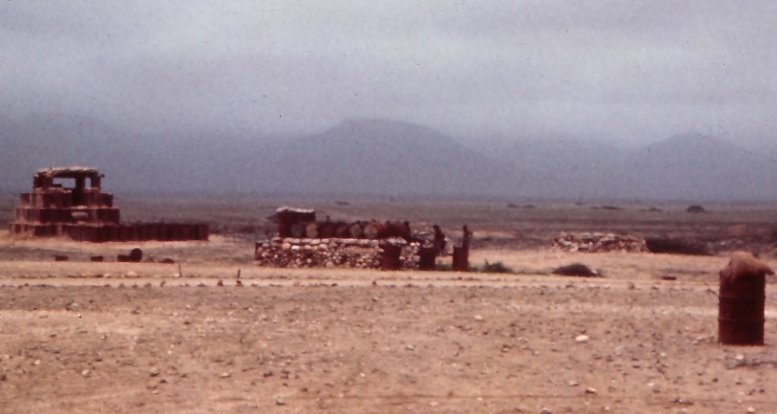
A “hedgehog” defensive sangar, made from oil drums filled with sand,
protecting Salalah airfield
この戦争は当初、オマーン軍と国内の外国駐留者に対してのゲリラ戦で行われていました。 その後、イギリスのアデンからの撤退や中国とソ連からの支援などが反乱軍を増大させ、共産主義者は1960年代後半までには山岳地域(the Jebel region)全体を支配下に置きました。 1970年のオマーンのクーデター(the 1970 Omani coup d’état) (انقلاب 1970 في سلطنة عمان)が勃発しました。紛争への大規模な英国軍事介入の支援を受けた改革派の息子カブース・ビン・サイード(Qaboos bin Said) (r.1970~2020) (قابوس بن سعيد آل سعيد)が、父親で、封建的(feudal)、反動的(reactionary)、孤立主義的(isolationist)であるスルターン(the Omani Sultan)サイード・ビン・タイムール(Said bin Taimur)を追放しました。 英国は共産主義反政府勢力に対抗するための「心と精神」作戦を開始し、オマーン国軍の近代化を開始しました。同時に反乱軍に対する対反乱作戦を実施するために特別空軍を配備しました。 この対策は反政府勢力に対する一連の勝利をもたらしました。さらに、1973年にイラン国王モハンマド・レザー・シャー・パフラヴィー(Mohammad Reza Pahlavi) (r.1941~1979) (محمد رضا بهلوي)がオマーン国を支援するために紛争に介入したことで、オマーン国軍は、勢いが増しました。戦争は1976年の反乱軍の最終的な敗北で終結しました。
The war was initially waged in guerrilla warfare against the Omani army and foreign expatriates within the region. Britain’s withdrawal from Aden and the supports from China and the Soviet Union increased the power of the rebels, and then the communists took control of the entire Jebel region by the late 1960s.
The 1970 Omani coup d’état (انقلاب 1970 في سلطنة عمان) broke out.
The reformist son Qaboos bin Said (r.1970~2020) (قابوس بن سعيد آل سعيد) overthrew his father, the feudal, reactionary, and isolationist Sultan Said bin Taimur, under the auspices of Britain. Britain had made a large-scale military intervention in this conflict with the Rebellion. Britain launched Operation “Mind and Spirit” to counter the communist rebels and began modernizing the National Army of Oman. At the same time deployed a special air force to conduct counterinsurgency operations against the rebels. This measure led to a series of victories over the rebels. In 1973, the Iranian King Mohammad Reza Pahlavi (r.1941~1979) (محمد رضا بهلوي) intervened in the conflict to support the State of Oman. The war ended with the final defeat of the rebels in 1976.
スルターン・カブースの治世
Reign of Sultan Qaboos
1970年に父親を退位させた後、スルターン・カブース(Sultan Qaboos) (r.1970~2020) (السلطان قابوس)は国を開放し、経済改革に着手し、健康、教育、福祉への支出の増加を特徴とする近代化政策に従いました。 かつて国の貿易と発展の基礎であった奴隷制(Slavery)は、1970年に非合法化されました。
After his father was dethroned in 1970, Sultan Qaboos (r.1970~2020) (السلطان قابوس) opened up the country, embarked on economic reforms, and followed a modernization policy characterized by increased spending on health, education and welfare. Slavery, once the basis of the country’s trade and development, was outlawed in 1970
1981年、オマーンは6カ国の湾岸協力会議(the Gulf Cooperation Council) (مجلس التعاون لدول الخليج العربية)の創設メンバーになりました。政治改革は最終的に導入されました。歴史的に、国家諮問評議会(the State Consultative Council) 後のマジュリス・アル=シュラ(Majlis Al-Shura) (مجلس الشورى)への参政権を持つ限られた有権者は、部族の有力人、知識人、学位取得者、およびビジネスマンの中から選ばれました。
In 1981, Oman became a founding member of the Gulf Cooperation Council (مجلس التعاون لدول الخليج العربية). Political reforms were eventually introduced. Historically, a limited number of voters with suffrage in the Majlis al-Shura (مجلس الشورى) ,the State Consultative Council, were selected from among tribal magnates, intellectuals degree holders, as well as businessmen.
1997年、女性に選挙権を与え、オマーンの諮問議会であるマジュリス・アル=シュラ(Majlis Al-Shura)に立候補する権利を与える勅令が発行されました。2人の女性が正式に議員に選出されました。
In 1997, a royal decree was issued granting women the right to vote and run for a candidacy of Majlis al-Shura, Oman’s advisory council. Two women were officially elected to the deputies.
2002年には、投票権が21歳以上のすべての市民に拡大され、新しい規則に基づく諮問議会の最初の選挙が2003年に行われました。
In 2002, the right to vote was extended to all citizens over the age of 21, and the first election of an advisory council under the new rules was held in 2003.
2004年、スルターンは、オマーン初の女性大臣であるオマーン工芸産業公社総裁(the president of the Omani Public Authority for Craft Industries)にシェイカ・アイシャ・ビント・カルファン・ビン・ジャミール・アル=サヤビヤ(Sheikha Aisha bint Khalfan bin Jameel al-Sayabiyah) (عائشة بنت خلفان بن جميل)を任命しました。これは、オマーンの伝統工芸を保存および促進し、産業を刺激することを試みる事務所である産業職人技のための国家当局のポストでした。これらの変化にもかかわらず、政府の実際の政治的構成にはほとんど変化がありませんでした。スルターンは法令によって支配し続けた。
In 2004, Sultan Qaboos named the president of the Omani Public Authority for Craft Industries, Oman’s first female minister, Sheikha Aisha bint Khalfan bin Jameel al-Sayabiyah (عائشة بنت خلفان بن جميل). This was the post of the National Authority for Industrial Artisany, an office that attempts to preserve and promote Oman’s traditional crafts and stimulate industries. Despite these changes, there was little change in the actual political composition of the Oman government. The Sultan continued to rule Oman by decree.
2005年には100人近くのイスラーム主義者 容疑者(suspected Islamists)が逮捕され、31人が政府を転覆させようとしたとして有罪判決を受けた。彼らは最終的に同じ年の6月に赦免されました。
In 2005, nearly 100 suspected Islamists were arrested and 31 were convicted of attempting to overthrow the government. They were eventually pardoned in June of the same year.
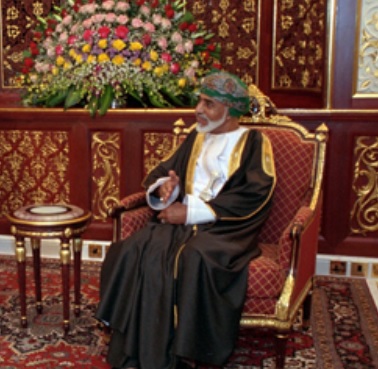
Sultan Qaboos
アラブ地域全体で起こっていた「アラブの春の蜂起(the Arab Spring Uprisings) (انتفاضات الربيع العربي)」に触発されて、2011年の初めにオマーンで抗議行動が発生しました。彼らは政権の追放を要求しませんでしたが、デモ隊は政治改革、生活条件の改善、そしてより多くの雇用の創出を要求しました。彼らは2011年2月に機動隊によって解散させられました。スルターン・カブース(Sultan Qaboos)は、有望な仕事と利益によって対応しました。
Inspired by the Arab Spring Uprisings (انتفاضات الربيع العربي), which were taking place throughout the Arab world, Protest movement broke out in Oman at the beginning of 2011. The protesters did not demand the ouster of the regime, but did demand political reform, improved living conditions and the creation of more jobs through the demonstrations. The demonstrators were dispersed by riot police in February 2011. Sultan Qaboos responded with promising jobs and profits.
2011年10月、スルターン・カブース(Sultan Qaboos)がより大きな権限を約束した諮問議会(the Consultative Assembly)の選挙が行われました。翌年、政府はインターネットによる政府批判の取り締まりを開始しました。2012年9月、政府に対する「虐待的で挑発的な」批判をオンラインで投稿したとして告発された「活動家」の裁判が始まりました。6人は12〜18か月の懲役とそれぞれ約2,500ドルの罰金を科されました。
In October 2011, elections were held for the Consultative Assembly, in which Sultan Qaboos promised greater powers. The following year, the government began cracking down on criticism of the government via the Internet. In September 2012, the trial of an “activist” accused of posting “abusive and provocative” criticism of the government online began. Six were sentenced to 12~18 months in prison and fines of about $2,500 each.
オマーンは、2015年にサウジアラビア主導によるフーシ派(the Houthis) (حوثيون)に対するイエメンへの介入には参加せず、2017年にサウジアラビアとその同盟国がカタールに通商禁止措置を課したアラビア湾紛争(Qatar diplomatic crisis) (2017~2021) (الأزمة الدبلوماسية مع قطر)にも味方しませんでした。
Oman did not participate in the Saudi-led intervention in Yemen against the Houthis (حوثيون) in 2015. In 2017 Saudi Arabia and its allies imposed an embargo on Qatar in the Arabian Gulf conflict ( Qatar diplomatic crisis) (2017~2021) (الأزمة الدبلوماسية مع قطر) , however Oman did not join this embargo.
2018年10月、カブース氏はイスラエルのベンヤミン・ネタニヤフ(Benjamin Netanyahu)首相を、イスラエルと正式な国交を結んでいないオマーンを訪問するよう招待した。 ネタニヤフ首相は1996年のシモン・ペレス(Shimon Peres)首相以来、初めてオマーンを訪問したイスラエル首相となりました。
In October 2018, Qaboos invited Israeli Prime Minister Benjamin Netanyahu to visit Oman. which does not have formal diplomatic relations with Israel. Prime Minister Benjamin Netanyahu became the first Israeli prime minister to visit Oman since Prime Minister Shimon Peres in 1996.
アラブ世界で最も長く在任した統治者であるカブースは2020年1月10日に亡くなり、翌日埋葬されました。政府は40日間の国民の喪を宣言しました。
Qaboos, the longest-serving ruler in the Arab world, died on January 10, 2020, and was buried the following day. The government declared 40 days of national mourning.
スルターン・ハイサムの治世
Reign of Sultan Haitham
2020年スルターン・カブース(Sultan Qaboos)には子供がいなかったので、1月11日、カブースの最初のいとこであるハイサム・ビン・タリク(Haitham bin Tariq Al Said) (r.2020~) (هيثم بن طارق)が王室とカブースの遺言によってオマーン・スルターンに指名され、アル=ブスタン(Al-Bustan) (البستان)で行われたオマーン評議会(the Council of Oman) (مجلس عُـمان)の緊急会議で宣誓を行い,スルターンを引き継ぎました。2020年8月18日に外相を任命するまで、首相、国軍最高司令官、国防大臣、財務大臣、外務大臣の役職も務めました。
In 2020, Sultan Qaboos had no children, therefore on January 11, Qaboos’ first cousin, Haitham bin Tariq Al Said (r.2020~) (هيثم بن طارق) was nominated as the Oman Sultan by the royal family and Qaboos’ will. Haitham bin Tariq took over the Sultan in the emergency meeting of the Oman Council held at Al Bustan (البستان). He also held the positions of Prime Minister, Commander-in-Chief of the Armed Forces, Minister of Defense, Minister of Finance, and Minister of Foreign Affairs until his appointment of New Foreign Minister on August 18, 2020.
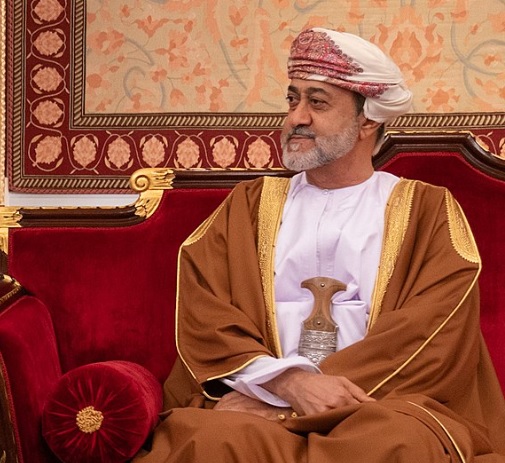
Sultan Haitham
2021年1月12日、スルターンは長男のサイード・テアジン(Theyazin bin Haitham Al Said) (r.2021~) (ذي يزن بن هيثم آل سعيد)を初代皇太子に任命する勅令を出しました。 また、オマーン基本法(the Basic Statute of the Stat) (النظام الأساسي للدولة، سلطنة عمان)を改正して国民と住民に表現と意見の自由を認め、私的な電話での会話、ソーシャル・メディア、郵便通信を国家が監視することを認める法律を削除し、公序良俗に反しない限り、認められた慣習に従って宗教儀式を実践する自由を認めました。
On January 12, 2021, the Sultan issued the edict that he appointed his eldest son, Theyazin bin Haitham Al Said) (r.2021~) (ذي يزن بن هيثم آل سعيد), as the first Crown Prince. The Sultan also amended the Basic Law of Oman (the Basic Statute of the State) (النظام الأساسي للدولة، سلطنة عمان) to allow citizens and residents freedom of expression and opinion. and allowed freedom to practice religious ceremonies in accordance with recognized customs, as long as they were not contrary to public order and morals. For these purposes, the Sultan removed the various laws allowing state surveillance of private telephone conversations, social media and postal communications.
2023年5月28日、スルターン・ハイサムはテヘランを訪問し、イランのエブラヒム・ライシ大統領と会談しました。
On May 28, 2023, Sultan Haitham visited Tehran and met with Iranian President Ebrahim Raisi.
2023年5月31日、スルターン・ハイサムは「オマーン・ビジョン2040」等のためのオマーン未来基金と名付けられた投資ファンドを設立し、スルターン・ハイサム・シティ・プロジェクトを開始した。 この都市は、スルターン国の現代生活と若者の願望を提供する、持続可能な都市を設立するための新しいモデルを目指しています。
On MAY 31, 2023, Sultan Haitham established an investment fund, to be named Oman Future Fund for “Oman Vision 2040”, etc. and inaugurated Sultan Haitham City Project. This city aims to be a new model for establishing a sustainable city, offering modern life and aspirations of the Sultanate’s youth.
 Desert peninsula