35 United Arab Emirates since Modern Times



目次(Index)

United Arab Emirates & Northen Oman
まえがき
Introduction
現在のアラブ首長国連邦の領土は、トゥルーシャル・オマーン(Trucial Oman) (عمان المتصالحة)とも呼ばれていました。この地方は、イスラーム時代は、サーサーン朝(Sasanian Empire) (224~651) (الإمبراطورية الساسانية)の追放とそれに続くディバの戦い(the Battle of Dibba) (632~634) (معركة دبا)から始まりました。ジュルファー(Julfar) (جلفار)として知られていた現在のラアス・アル=ハイマ(Ras Al Khaimah) (رأس الخيمة)の歴史は 7,000 年の文明と遺産にまで遡ります。
The territory of present-day United Arab Emirates was also known as Trucial Oman (عمان المتصالحة). The Islamic period began with the expulsion of the Sasanian Empire (224~651) (الإمبراطورية الساسانية) and the subsequent Battle of Dibba (632~634) (معركة دبا).
The history of present-day Ras Al=Khaimah (إمارة رأس الخيمة), having known as Julfar (جلفار), dates back to 7,000 years of civilization and heritage.
637年、ジュルファル(Julfar) (جلفار)(現在のラアス・アル=ハイマ(Ras Al Khaimah) (رأس الخيمة)の地域)は、サーサーン朝(the Sasanian Empire) (224~651) (الإمبراطورية الساسانية)に対する攻撃の通過点として使用された重要な港でした。これはイスラーム教徒のペルシャ征服(Muslim conquest of Persia) (632~654)(الفتح الإسلامي لبلاد فارس)の一部でした。
アル=アイン/ブライミ・オアシス(the Al Ain/Buraimi Oasis) (واحة العين / البريمي)の地域もトゥアム(Tawam) (توام)として知られており、海岸とアラビアの内部の間のラクダルート(camel routes)の重要な交易所でした。
In 637, Julfar (جلفار) (in today’s Ras Al Khaimah (رأس الخيمة) was an important port used as a transit point for attacking against the Sasanian Empire (224~651) (الإمبراطورية الساسانية). It was a part of the Muslim Conquest of Persia (632~654) (الفتح الإسلامي لبلاد فارس). The region of Al Ain/Buraimi Oasis (واحة العين / البريمي), known as the Tawam Oasis (واحة توام) was also an important trading post on the camel routes between the coast and the interior of the Arabian Peninsula.
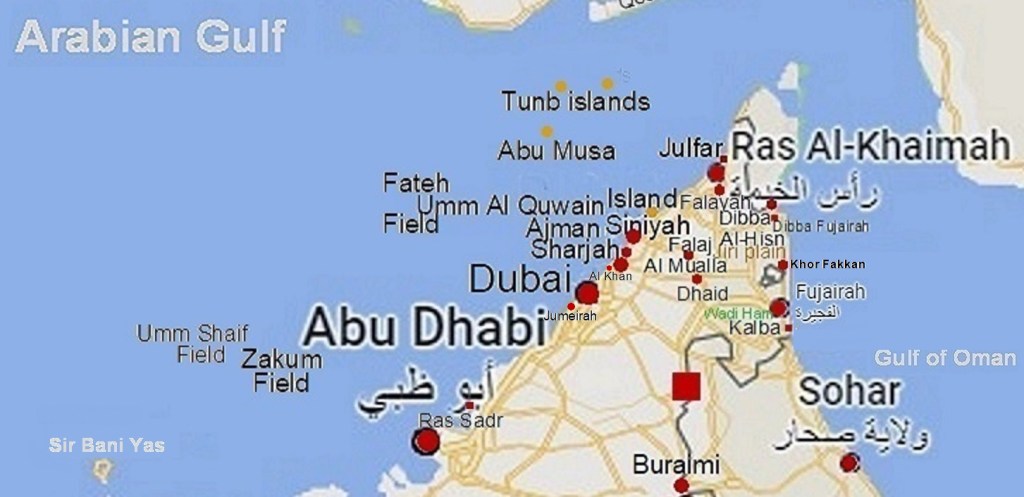
Nortern United Arab Emirate (Julfar, Dibba Al-His, Buraimi, etc.)
アラブ首長国連邦(UAE) (the United Arab Emirates) (الإمارات العربية المتحدة)で最も初期のキリスト教遺跡(the earliest Christian site)は、1990年代に最初に発見されました。それは、現在シール・バニー・ヤス島(Sir Bani Yas) (صير بني ياس)として知られている場所にある広大な修道院の複合施設で、7世紀にまでさかのぼります。ネストリウス派(Nestorian)と考えられています。キリスト教は、交易路に沿って、西暦50年から350年にかけて半島全体に広がったと考えられてます。この教会は、その遺産のまれな実例として残っていました。確かに、5世紀までに、オマーンにはジョン(John)という名前の司教がいました–オマーンの最後の司教(the last bishop)は西暦676年のエティエンヌ(Etienne)でした。
The earliest Christian site in the United Arab Emirates (الإمارات العربية المتحدة) was first discovered in the 1990s. It is a sprawling monastic complex on what is now known as Sir Bani Yas (صير بني ياس), dating back to the 7th century. This church is considered to belong to the Nestorians. This church appears to have been built in 600 AD and peacefully abandoned in 750 AD. Christianity is thought to have spread throughout the peninsula between 50 and 350 AD along with trade routes. This church remained a rare illustration of its heritage. Indeed, by the 5th century, Oman had a bishop named John. Also, the last bishop of Oman was Etienne in 676 AD.
13世紀から14世紀には地域貿易と海事の中心となる商業港として繁栄しました。アラブの商人によるアラビア湾の海上支配は、ポルトガル帝国や大英帝国を含むヨーロッパの大国との紛争につながりました。
In the 13th and 14th centuries it flourished as the commercial port that became a center for regional trade and maritime. Maritime control of the Arabian Gulf by Arab merchants led to conflicts with European powers, including the Portuguese and British Empires.
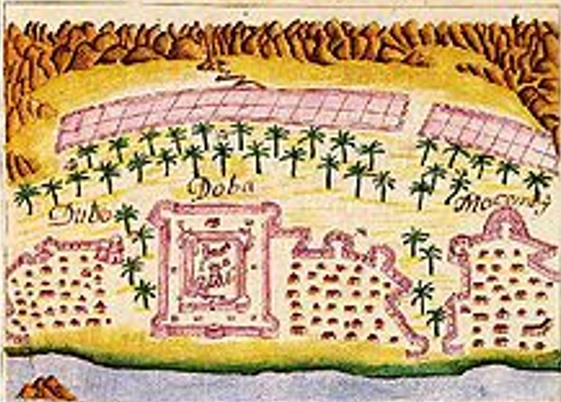
1620年のディバアルヒスンのポルトガル帝国ドバ要塞の絵
A painting of the Portuguese Empire Doba Fortress in Dibba Al-Hisn (دبا الحصن) in 1620.
何十年にもわたる海上紛争の後、沿岸首長国は1820年にイギリスとの一般海事条約に署名し (1853年と1892年に批准)、休戦国をイギリスの保護領として確立した休戦オマーン(Trucial Oman) (عمان المتصالحة)として知られるようになりました。この取り決めは、英国が条約上の義務から撤退した後、1971年12月2日に独立とアラブ首長国連邦の設立で終了しました。1971年に6つの首長国がUAEに加わりました。7番目のラアス・アル=ハイマ(Ras Al Khaimah)は、1972年2月10日に連盟に加わりました。
After decades of maritime conflict, the coastal emirates signed the General Maritime Convention with Great Britain in 1820 (ratified in 1853 and 1892). This coastal region was then established as a British protectorate and became known as Trucial Oman (عمان المتصالحة).
This arrangement ended with independence and the establishment of the United Arab Emirates on December 2, 1971 after the United Kingdom withdrew from its treaty obligations. Six emirates joined the UAE in 1971. The seventh, Ras Al Khaimah, joined the federation on February 10,1972.
イスラーム教
Islam
アラビア半島(the Arabian Peninsula)の北東端へのイスラーム教(Islam) (اسلام)の広がりは、ヒジュラ(the hijrah) (622) (الهجرة)から9年後の西暦630年にイスラーム教の預言者ムハンマド(the Islamic prophet) (النبوة في الإسلام), (Muhammad) (محمد)がオマーン(Oman) (عمان)の支配者(the rulers of Oman) に送られた手紙に直接従ったと考えられています。これにより、支配者のグループがメディナ(Medina) (مدينة)に旅行し、イスラーム教に改宗し、その後、当時海岸を支配していた人気のないサーサーン朝(The Sasanian Empire) (224~651) (الإمبراطورية الساسانية)に対する蜂起が成功しました。
The spread of Islam (اسلام) to the northeastern tip of the Arabian Peninsula is believed that the rulers of Oman (عمان) directly followed the letter sent by the Islamic prophet (النبوة في الإسلام), (Muhammad) (محمد) to him. It was in 630 AD, which is 9 years later of the hijrah (622) (الهجرة). This led to a group of rulers who traveled to Medina (مدينة) and converted to Islam, and then a uprising against the unpopular Sasanian Empire (224~651) (الإمبراطورية الساسانية), who ruled the coast at the time, did succeed.
ムハンマドの死後、アラビア湾の南にある新しいイスラーム・コミュニティ(the new Islamic communities)は、イスラーム教徒の指導者(the Muslim leaders) (قادة المسلمين)に対する反乱で崩壊すると脅迫した。カリフ(Caliph)アブー・バクル(Abu Bakr) (r.632~634) (أبو بكر الصديق)は首都メディナ(Medina) (مدينة)から軍隊を派遣し、10,000人の命が失われたと考えられているディバの戦い(the Battle of Dibba) (632~634)で領土の再征服(リッダ戦争(the Ridda Wars) (632~633) (حروب الردة))を完了しました。これにより、カリフ制(Caliphate) (خِلافة)の完全性と、新たに出現したラシドゥン・カリフ制(the Rashidun Caliphate) (632~661) (الخلافة الراشدة)の下でのアラビア半島の統一が保証されました。
After Muhammad’s death, the new Islamic communities in the south of the Arabian Gulf threatened to collapse in a revolt against the Muslim leaders (قادة المسلمين). Caliph Abu Bakr (r.632~634) (أبو بكر الصديق) sent troops from the capital Medina (مدينة). The Battle of Dibba (632~634), which is believed to have claimed 10,000 lives, completed the reconquest of territory. It was a part of the Ridda Wars (632~633) (حروب الردة). This gives the completeness of the Caliphate (خِلافة) and the newly emerging Rashidun Caliphate (632~661) (الخلافة الراشدة) was ensured to unify the entire Arabian Peninsula under its control.
部族集団と首長国起源
Tribal Group & Emirate Origin
目次(Index)
概説
General
過酷な砂漠環境は、畜産業、農業、狩猟を含むさまざまな経済活動のために生き残った遊牧民グループである「多目的な部族(the versatile tribesman)」の出現につながりました。これらのグループの季節的な動きは、グループ間の頻繁な衝突だけでなく、季節的および半季節的な集落とセンターの設立にもつながりました。
これらは、アブダビ(Abu Dhabi) (أبو ظبي)、アル=アイン(Al Ain) (العين)、リーワー(Liwa) (ليوا)およぼ西海岸(the west coast) (الساحل الغربي)のバニー・ヤース(Bani Yas) (بنو ياس)とアール・ブー・ファラー(Al Bu Falah) (آل بو فلاح)、
内陸部のダワーヒル(Dhawahir) (الظواهر)、アワーミル(Awamir) (العوامر)、アル=アリー(Al Ali) (آل علي)およびマナーシール(Manasir) (المناصير)、
東海岸のシャルキーイン(Sharqiyin) (الشرقيون)、そして
北のカワーシム(the Al Qasimi) (القواسم)などです。
これらが現代の首長国によって名前が付けられている部族グループを形成しました。
The harsh desert environment led to the emergence of the “versatile tribesman”, nomadic groups that survived for various economic activities, including animal husbandry, agriculture, and hunting. The seasonal movements of these groups led not only to frequent clashes between them, but also to the establishment of seasonal and semi-seasonal settlements and centers.
These are Bani Yas (بنو ياس) and Al Bu Falah (آل بو فلاح) in Abu Dhabi (أبو ظبي), Al Ain (العين), Liwa (ليوا) and the west coast, Dhawahir (الظواهر),
Awamir (العوامر), Al Ali (آل علي) and Manasir (المناصير) in the interior,
Sharqiyin (الشرقيون) on the east coast, and
the Al Qasimi (القواسم) in the north.
Theses formed tribal confederations named by each of the modern 7 emirates.
支配者家族および出身部族
Ruling families and Tribes
アラブ首長国連邦を構成する7つの首長国と支配者家族および出身部族
The seven emirates and their ruling families and tribes of origin that make up the United Arab Emirates
| 首長国(Emirate) (إمارة) | 首長家族(Amir Family) (عائلة أمير) | 部族(Tribe) (القبيلة) |
| アブダビ(Abu Dhabi) (أبو ظبي) | アール・ナヒヤーン家(House of Nahyan) (آل نهيان) | ファラーヒー家 (House of Al Falahi) (بيت الفلاحي) |
| ドバイ(Dubai) (دبي) | アール・マクトゥーム家(House of Maktoum) (آل مكتوم) | ファラーヒー家 (House of Al Falahi) (بيت الفلاحي) |
| シャルジャ(Sharjah) (الشارقة) | アール・カシミ家(Al Qasim) (القواسم) | カワーシム族(Qawasim) (القواسم) |
| アジュマーン(Ajman) (عجمان) | アール・ヌアイミ家(Al Nuaimi) (النعيمي)) | アル=ナイム族(Al Na’im) (النعيم) |
| ラアス・アル=ハイマ(Ras Al Khaimah) (رأس الخيمة) | アール・カシミ家(Al Qasim) (القواسم) | カワーシム族(Qawasim) (القواسم) |
| ウンム・アル=カイワイン(Umm Al Quwain) (أم القيوين) | アール・ムアラ家(Al Mualla) (المعلا) | アル=アリー族(Al Ali) (آل علي) |
| フジャイラ(Fujairah) (الفجيرة) | アール・シャルキー家(Al Sharqi) (الشرقي) | シャルキーイン族(Sharqiyin) (الشرقيون) |
トゥルーシャル・オマーンの部族
Tribes of Trucial Oman (قبائل عمان المتصالحة)
小目次(Detail Index)
アール・アリー族(Al Ali) (آل علي)
もともとウンム・アル=カイワイン(Umm Al Quwain) (أم القيوين)沖のシーニヤ島(Siniyah Island) (جزيرة السينية)に定住しましたが、その後本土に移住し、1700年代後半にそこに砦と防御壁を建設し、ウンム・アル=カイワイン(Emirate of Umm Al Quwain) (أم القيوين)を設立しました。この首長国は、沿岸都市ウンム・アル・カイワイン((Umm Al Quwain))の中心部と、海岸から約 30 km 離れた内陸部のオアシスの町ファラジ・アル=ムアッラ(Falaj Al Mualla) (فلج المعلا) (originally called Falaj Al Ali)で構成されています。
Al Ali (آل علي)
Originally settled on Siniyah Island (جزيرة السينية) off the coast of Umm Al Quwain (أم القيوين), they later migrated to the mainland and built forts and defensive walls there in the late 1700s. and established the Emirate of Umm Al Quwain (أم القيوين). The emirate consists of the coastal city of Umm Al Quwain and the inland oasis town of Falaj Al Mualla (فلج المعلا), which was originally called Falaj Al Ali (فلج العلي), about 30 km from the coast.
アル=クバイサート族(Al Qubaisiat) (القبيسات)
アブダビ(Abu Dhabi) (أبو ظبي)のバニー・ヤース族(Bani Yas) (بنو ياس)の支族です。アル=クバイシ(Al Qubaisi) (القبيسي)とも呼ばれます。アラブ首長国連邦(the United Arab Emirates) (الإمارات العربية المتحدة)の創設者であるシェイク・ザイード・ビン・スルタン・アール・ナヒヤーン(Sheikh Zayed bin Sultan Al Nahyan) (r.1971~2004) (زايد بن سلطان آل نهيان)の母方部族なので、アラブ首長国連邦の主要な王室と緊密な関係を共有しています。
Al Qubaisiat (القبيسات)
It is a branch of Bani Yas (بنو ياس) of Abu Dhabi (أبو ظبي). It is also called Al Qubaisi (القبيسي). Sheikh Zayed bin Sultan Al Nahyan (r.1971~2004) (زايد بن سلطان آل نهيان) was the founder of the United Arab Emirates. Al Qubaisiat (القبيسات) is his maternal tribe, therefore it shares close ties with the major royal families of the United Arab Emirates.
アル=ナイム族(Al Na’im) (النعيم)
この部族の伝統的な中心は、ブライミ・オアシス(Buraimi Oasis) (واحة البريمي)でした。アル=ナイム(Al Na’im)の拡大は、同じタワム・オアシス(Tawam Oasis) (واحة توام)内で隣合うアイン・オアシス(Al Ain Oasis) (واحة العين)を中心とするダワーヒル族(Dhawahir) (الظواهر)の所領を侵食して行われました。同時にバニー・ヤース(Bani Yas) (بنو ياس)と同盟関係にあるマナーシール(Manasir) (المناصير)とも衝突していました。 アル=ナイム(Al Na’im)は、ブライミ・オアシス(Buraimi Oasis)で増大するワッハーブ派(Wahhabi) (وهابية)の影響力と結びつき、その教義を採用していましたが、その後、他の勢力と同盟してブライミ・オアシス(Buraimi Oasis)からワッハーブ派(Wahhabi)を追い出しました。
Al Na’im (النعيم)
The traditional center of this tribe was Buraimi Oasis (واحة البريمي). Within the same Tawam Oasis (واحة توام), Al Ain Oasis (واحة العين) is adjacent. The expansion of Al Na’im was carried out by encroaching on the possessions of Dhawahir (الظواهر), centered on Al Ain Oasis. At the same time, it clashed with Manasir (المناصير), an ally of Bani Yas (بنو ياس). Al Na’im was associated with and adopted the growing influence of Wahhabi (وهابية) in Buraimi Oasis. However, they then allied with other powers to drive Wahhabi out of Buraimi Oasis.
アール・ブー・シャミス族(Al Bu Shamis) (آل بو شامس)
アル=ナイム(Al Na’im) (النعيم)は、アール・ブー・カライバン(Al Bu Kharaiban) (آل بو خريبان)、カワティール(Khawatir) (خواطر?)、アール・ブー・シャミス(Al Bu Shamis) (آل بو شامس)の 3 つのセクションに分かれています。 アジュマーン(Ajman) (عجمان)の統治者たちはアル=ブー・カライバン(Al Bu Kharaiban)のセクションの出です。 3つのセクションのうち、アル=シャワミス(Al Shawamis) (الشوامس)とも呼ばれるアル=ブー・シャミス(Al Bu Shamis)は事実上独立しており、ドバイ(Dubai) (دبي)のアール・ブー・ファラサ(Al Bu Falasah) (لبوفلاسة) (now known as Al-Falasi (بيت الفلاسي)と密接に連携しています。アール・ブー・シャミス(Al Bu Shamis) (آل بو شامس)は、主にアラビア半島の南東部の主にオマーン北部、アラブ首長国連邦に居住しています。そして程度は少ないですが、クウェート、カタール、サウジアラビア東部、バーレーン、イラクに散らばっています。
Al Bu Shamis (آل بو شامس)
Al Na’im (النعيم) is divided into three sections, Al Bu Kharaiban (آل بو خريبان), Khawatir (خواطر), and Al Bu Shamis (آل بو شامس). The rulers of Ajman (إمارة عجمان) are from the section of Al Bu Kharaiban. Among the three sections, Al Bu Shamis, also known as Al Shawamis (الشوامس), is effectively independent and closely aligned with Al Bu Falasah (now known as Al-Falasi (بيت الفلاسي) of Dubai (إمارة دبي).
Al Bu Shamis (آل بو شامس) lives mainly in the southeastern Arabian Peninsula, mainly in the northern Oman and the United Arab Emirates. And to a lesser extent, it scattered in Kuwait, Qatar, eastern Saudi Arabia, Bahrain and Iraq.
アール・ブー・ファラー族(Al Bu Falah) (آل بو فلاح)
バニー・ヤース(Bani Yas) (بنو ياس)の強力な支族で、アブダビ(Abu Dhabi) (أبو ظبي)首長のナヒヤーン家(House of Nahyan) (آل نهيان)やドバイ(Dubai) (دبي)首長マクトゥーム家(House of Maktoum) (آل مكتوم)の母体となりました。今では、アル=ファラーシー家(House of Al Falasi)とも呼ばれています。
Al Bu Falah (آل بو فلاح)
Al Bu Falah (آل بو فلاح) is a powerful branch of Bani Yas (بنو ياس), and it became the mother bodies of the emir families both for the House of Nahyan (آل نهيان) of Abu Dhabi (أبو ظبي) and the House of Maktoum (آل مكتوم) of Dubai (دبي). Now it is also called the House of Al Falasi (بيت الفلاسي).
アワーミル族(Awamir) (العوامر)
アワーミル(Awamir)は、現在のアラブ首長国連邦(UAE)とオマーンに住むベドウィン・アラブ部族(a Bedouin Arab tribe)です。勇敢で好戦的であり、略奪を目的とする狡猾で、危険な襲撃者でもありました。他部族からは、極端に独立しており、1960年代に定住する前には、すでにラクダのブリーダーやデーツ農民(date farmers)と成った者もいました。アワーミル(Awamir)は、マスカット(Muscat) (مسقط)とニズワ(Nizwa) (نزوى)からアブダビ(Abu Dhabi) (أبو ظبي)とリーワー(Liwa) (ليوا)まで、オマーン半島(the Oman peninsula)全体を歩き回りました(roamed across)。ハドラマウト(Hadhramaut) (حضرموت)の北にある草原で始まり(originated)、500年以上にわたって行われた移住の過程(a process of migration)で北に定住しました。バニー・ヤース(Bani Yas) (بنو ياس)とは友好関係にあり、部族連合軍の一部を形成し、ブライミ・オアシス(Buraimi Oasis) (واحة البريمي)からのワッハーブ派(Wahhabi) (وهابية)勢力を排除にも貢献しました。1950年代頃までブライミとアブダビの町周辺の部族間の多くの紛争の中心となり、マナーシール族(Manasir) (المناصير)、ドゥルー族(Duru) (لدروع)、バニー・キタブ族(Bani Qitab) (بني كتب)と戦っていました。
Awamir (العوامر)
The Awamir were a Bedouin Arab tribe living in present-day United Arab Emirates (UAE) and Oman. This tribe was brave and warlike, as well as cunning, and dangerous raiders aiming at plunder. They were extremely independent of other tribes, and some had already become camel breeders and date farmers before settling in the 1960s. The Awamir had moved around the whole area in the Oman Peninsula, from Muscat (مسقط) and Nizwa (نزوى) to Abu Dhabi (أبو ظبي) and Liwa (ليوا). It originated in the steppes north of Hadhramaut (حضرموت) and settled in the northern Oman Peninsula during the process of migration, which took place for more than 500 years. It had friendly relations with the Bani Yas (بنو ياس) and formed a part of the tribal confederation. It also contributed to the elimination of Wahhabi (وهابية) forces from Buraimi Oasis (واحة البريمي). Until about the 1950s, it was the center of many conflicts between tribes around the towns of Burami and Abu Dhabi, and was the center of many conflicts fighting against the Manasir (المناصير), the Duru (لدروع), and Bani Qitab (بني كتب).
カワーシム族(Qawasim) (القواسم)
シャルジャ(Sharjah) (الشارقة)とラス・アル=ハイマ(Ras Al Khaimah) (رأس الخيمة)を統治しています。イスラーム教の預言者ムハンマドの子孫であると主張し、湾岸地域のムワッヒドゥーン(Muwahhidun) (الموحدون)の教義を強く擁護して「スンニー派部族連合(a confederation of Sunni tribes)」となりました。ディルイーヤ(Dir’iyah) (الدرعية)のワッハーブ派首長国(the Wahhabi Emirate) (إمارة الدرعية)すなわち 第一次サウード公国(the First Saudi State) (الدولة السعودية الأولى) とは、緊密な同盟国になり、アラビア湾のディルイーヤ(Dir’iyah)の海上利益を保護するためのワッハーブ派(Wahhabi) (وهابية)の私掠船(Privateers) (قرصنة تفويضية)として行動し、ラアス・アル=ハイマ(Ras Al Khaimah) (رأس الخيمة)を始め、ペルシャ側のゲシュム(Qeshm) (قشم)、バンダル・アッバース(Bandar Abbas) (بندر عباس) およびレンゲ(Lingeh) (لنجة)に基地を持つ、海事大国(a maritime power)となりました。この為に、アラビア湾沿いの海軍支配をめぐって、ディルイーヤ首長国のライバルで、イギリスと同盟関係にあるオマーン帝国(the Omani Empire) (الإمبراطورية العمانية)との強い競争に直面、戦いになりました。その結果、大英帝国(the British Empire)がカワーシム族(Qawasimを「海賊(pirates)」として、1809年と1819年に2つの主要な軍事作戦に踏み切りました。これにより、アラビア湾の南岸は「海賊海岸(the Pirate Coast)」として特定されました。1820年の一般海事条約(the General Maritime Treaty of 1820)と1853年の永久海上平和(the 1853 Perpetual Maritime Peace) の調印後は、この地域の沿岸首長国は休戦国又は休戦オマーン(the Trucial States or the Trucial Oman)として知られるようになりました。
Qawasim (القواسم)
The Qawasim (القواسم) has been governing Sharjah (إمارة الشارقة) and also Ras Al Khaimah (إمارة رأس الخيمة). Claiming to be descendants of the Islamic prophet Muhammad and strongly defending the doctrine of Muwahhidun (الموحدون) in the Gulf region, it became “a confederation of Sunni tribes.” It became one of the close allies with the Wahhabi Emirate (إمارة الدرعية) i.e. the First Saudi State(1727~1818) (الدولة السعودية الأولى) in Dir’iyah (الدرعية). To protect the maritime interests of the Emirate of Dir’iyah (1727~1818) (إمارة الدرعية) in the Arabian Gulf, it acted as Privateers of Wahhabi (وهابية) and became a maritime power with its bases not only in Ras Al Khaimah (إمارة رأس الخيمة) on the Arabian Side but also in Qesh (قشم), Bandar Abbas (بندر عباس) and Lingeh (لنجة) on the Persian Side. For this reason, it faced a strong competition with the Omani Empire (الإمبراطورية العمانية), who was one of allies of the British Empire, for the naval dominance along the Arabian Gulf. As a result, the British Empire regarded the Qawasim as”pirates” and embarked on two major military campaigns in 1809 and 1819. Afterwards, the southern shore of the Arabian Gulf was identified as “the Pirate Coast.” After the signing of the General Maritime Treaty of 1820 and the 1853 Perpetual Maritime Peace, the coastal emirates in the region became known as the Trucial States or the Trucial Oman. It is also transcribed as Al Qasimi.
シャルキーイン族(Sharqiyin) (الشرقيون)
トゥルーシャル・オマーン(Trucial Oman) (المتصالحة عمان)で、 19世紀初頭頃にはバニー・ヤース族(Bani Yas) (بنو ياس)に次いで2番目に多い部族でした。カルバ(Kalba) (كلباء)からデバー(Dibba Fujairah) (دبا الفجيرة)までの東海岸全体、および涸れ谷ハーム(Wadi Ham) (وادي حام)とジリ平原(Jiri plain)等の北部地方(Shamaliyah) (الشمالية)で、支配的な部族でした。1952年には、フジャイラ首長国(the Emirate of Fujairah) (إمارة الفجيرة)として英国(Britiain)の承認を得られました。シャルキーイン族(Sharqiyin)は、農業、真珠採取、漁業で生活していたので、土侯国(Emirate)入りしても苦しい生活は続きました。
Sharqiyin (الشرقيون)
The Sharqiyin (الشرقيون) was the second largest tribe after the Bani Yas (بنو ياس) in the early 19th century of the Trucial Oman (المتصالحة عمان). It was the dominant tribe in the entire east coast of the Trucial Oman from Kalba (كلباء) to Dibba Fujairah (دبا الفجيرة) and also in the Shamaliyah (الشمالية) (the northern region) such as Wadi Ham (وادي حام), Jiri plain etc. In 1952, it was approved by the Britain as the Emirate of Fujairah (إمارة الفجيرة). The Sharqiyin lived on farming, pearl fishing, and fishing, so life continued to be difficult after it joined with the United Arab Emirates.
ダワーヒル族(Dhawahir) (الظواهر)
ダワーヒル(Dhawahir)は、アイン・オアシス(Al Ain Oasis) (واحة العين)を中心として、ブライミー村 (Buraimi) (البريمي)を除くタワム・オアシス(Tawam Oasis) (واحة توام)を占有していました。ナヒヤーン家(House of Nahyan) (آل نهيان)とは長い間、連帯関係にありました。
Dhawahir (الظواهر)
The Dhawahir (الظواهر) occupied Tawam Oasis (واحة العين), centered on Al Ain Oasis (واحة العين), excluding the village of Buraimi (البريمي). The Dhawahir had been a long solidarity relationship with the House of Nahyan (آل نهيان).
ドゥルー族(Duru) (لدروع)
小さな部族であったにもかかわらず、彼らは 20 世紀に休戦オマーン(the Trucial States) (إمارات الساحل المتصالح)全域で勃発した数多くの領土紛争に何らかの介入をしていました。ドゥルー族(Duru)はアール・ブー・シャミス族(Al Bu Shamis) (آل بو شامس)と良好な関係にあり、自らをドバイ(Dubai) (دبي)の属国であると考えていましたが、好戦的なアワーミル(Awamir) (العوامر)とは敵対していました。
Duru (لدروع)
Despite being a small tribe, the Duru (لدروع) intervened in the numerous territorial disputes that erupted throughout the Trucial States (إمارات الساحل المتصالح) in the 20th century. The Duru had good relations with the Al Bu Shamis (آل بو شامس) and considered itself a vassal state of Dubai (دبي), but it had been hostile with the belligerent Awamir (العوامر).
バニー・カアブ族(Bani Ka’ab) (بني كعب)
バニー・カアブ族(Bani Ka’ab) (بني كعب)は、ムダル・アドナーン部族(Mudar Adnan Arabs) (مضرعدنان عرب)のカイス族(Qais)(قيس)・ハワージン族(Hawazin) (هوازن)・バニー・アミール族(Bani ‘Amir) (بنو عامر)の支族で、アラビア半島のナジュド地方(the Najd region)を起源とするアラブの遊牧部族(a nomadic Arab tribe)です。その一部が現在のオマーンおよびアラブ首長国連邦に定住していました。18世紀半ば、バニー・カアブ族(Bani Ka’ab)は、強力な海軍を保有し、時には英国船を攻撃し、オスマン帝国(Ottoman Empire) (1299~ 1923)やペルシア人に味方したり敵対したりして戦いました。1812年、ムハンマラ首長国(the Emirate of Muhammara) (1812~1925) (امارة المحمرة)がバニー・カアブ族(Bani Ka’ab)の下で自治首長国として誕生した後、アル=リッカ(Al Riqqa)と呼ばれるクウェイト海軍(Kuwaiti naval force) (القوة البحرية الكويتية)とも小競り合いを起こしました。 バニー・カアブ族(Bani Ka’ab)のシェイク・バラカート(Sheikh Barakat) (شيخ بركات)は、クウェートのシェイクの娘(Kuwait sheikh’s daughter)との結婚を求めました。シェイクがこれを拒否したため、シェイク・バラカット(Sheikh Barakat)は、激怒し、クウェイト(Kuwait) (كويت)を攻撃させました。しかしながら、浅瀬のため船が砂にはまって立ち往生しました。 この小競り合いでは死者は出ませんでしたが、クウェイト側は、バニー・カアブ族(Bani Ka’ab)の立ち往生した船から可能な限りの物資を奪い取ったので、実質的には勝利しました。 シェイク・バラカット(Sheikh Barakat)は、クウェイトを攻撃するためにさらに兵力を集めようとしましたが、彼の無能さと些細なことで部族民の命を危険にさらす独善を理由に国民に殺されてしまいました。
Bani Ka’ab (بني كعب)
The Bani Ka’ab (بني كعب) is a branch of the Bani ‘Amir (بنو عامر) of the Hawazin (هوازن) of the Qais (قيس) tribe of the Mudar Adnan Arabs (مضرعدنان عرب) and, it is a nomadic Arab tribe originating from the Najd region of the Arabian Peninsula. Some of them settled in the present-day Oman and the United Arab Emirates. In the mid-18th century, the Bani Ka’ab possessed a powerful navy, sometimes attacking British ships. Sometimes the Bani Ka’ab was fighting on the side of the Ottoman Empire (1299~1923) and the Persians, but the other time the Bani Ka’ab was fighting on the side against them. In 1812, after the Emirate of Muhammara (1812~1925) (امارة المحمرة) was born as an autonomous emirate under the Bani Ka’ab, the Bani Ka’ab had a skirmish with the Kuwaiti Naval Force (القوة البحرية الكويتية) called as Al Riqqa (الرقة). It was because Sheikh Barakat (شيخ بركات) of the Bani Ka’ab sought marriage to Kuwait Sheikh’s daughter, but Kuwait Sheikh refused it. Sheikh Barakat enraged and ordered to attack Kuwait (كويت). However, due to shallow water, the battle ships got stuck in the sand in front of Kuwait. There were no fatalities in this skirmish, but the Kuwaiti side effectively won as they snatched as much supplies as possible from the stranded ships of the Bani Ka’ab. Sheikh Barakat tried to gather more troops to attack again to Kuwait, but was killed by his tribesmen who thought that his incompetence and self-righteousness will endanger their lives.
バニー・キタブ(Bani Qitab) (ني كتب)
定住した南部と遊牧民の北部からなる部族は、トゥルーシャル・オマーン(Trucial Oman) (المتصالحة عمان) の内部での活動に長い間影響を与えていました。北部支部は、ブライミ(Buraimi Oasis) (واحة البريمي)の南からハジャル山脈(the Hajar Mountains) (جبال الحجر)の東麓にかけての地域やジーリー平原(Jiri plain) (جيري)からシャルジャ(Sharjah) (الشارقة)の北にかけての地域に広がり、さらにシャルジャの内陸のオアシスの町(Dhaid) (الذيد) 周辺の肥沃な地域やラアス・アル=ハイマ(Ras Al Khaimah) (رأس الخيمة)のアル=ファラヤ砦(Al Falayah Fort) (قلعة الفلاية)の周辺地域にも広がっていました。南支部は、ザーヒラ地域(the Dhahirah area) (محافظة الظاهرة)のアフラジ・バニー・キタブ(Aflaj Bani Qitab) (أفلاج بني قتب)村の周りに定住しました。時が経つにつれて、これらは部族の北部から分離し、20世紀にザーヒラ(the Dhahirah area)はオマーンのザーヒラ行政区(Al Dhahirah Governorate) (محافظة الظاهرة)として認識されるようになりました。バニー・キタブ(Bani Qitab) (ني كتب)は非常に影響力のある部族であり、トゥルーシャル・オマーン(Trucial Oman)の支配者間の政治的争いにしばしば関与していました。
Bani Qitab (ني كتب)
The Bani Qitab (ني كتب) is a tribe consisting of a settled southern branch and a nomadic northern branch. This tribe had long influenced the activities inside the Trucial Oman (المتصالحة عمان).
The northern branch is expanded such areas from the south of Buraimi Oasis (واحة البريمي) to the eastern foot of the Hajar Mountains (جبال الحجرر) and from Jiri plain (جيري) to the north of Sharjah (إمارة الشارقة). It also expanded in the fertile area around the inland oasis town of Dhaid (الذيد) of Sharjah and in the surround area around Al Falayah Fort (قلعة الفلاية) of Ras Al Khaimah (إمارة رأس الخيمة).
The South Branch settled around the village of Aflaj Bani Qitab (أفلاج بني قتب) in the Dhahirah area (الظاهرة).
Over time, these tribes of the south Branch separated from the northern branch, and in the 20th century the Dhahirah area came to be recognized as the Dhahirah Governorate (محافظة الظاهرة) of Oman. The Bani Qitab (ني كتب) was a very influential tribe and was often involved in the political strifes among the rulers of the Trucial Oman.
バニー・ヤース族(Bani Yas) (بنو ياس)
UAEにおけるナジュド(Najd) (نجد)出身の部族同盟で、ドバイ(Dubai) (دبي)からカタール(Qatar) (قطر) 南部カウル・アル=ウダイド(Khawr al Udayd) (خور العديد)までの部族で構成されています。アイン・オアシス(Al Ain Oasis) (واحة العين)を中心とするダワーヒル族(Dhawahir) (الظواهر)とは、長く連帯関係にありました。しかし、ブライミ・オアシス(Buraimi Oasis) (واحة البريمي)のアル・ナイミ(Al Na’im) (النعيم)やバニー・カアブ(Bani Ka’ab) (بني كعب)とは伝統的に対立していました。
この部族は、アブダビ(Abu Dhabi) (أبو ظبي)首長家のナヒヤーン家(House of Nahyan) (آل نهيان)に率いられて来ました。ナヒヤーン家(House of Nahyan)は、ファラーヒー家 (House of Al Falahi) (بيت الفلاحي)の出身です。血筋は、ドバイ(Dubai) (دبي)首長家のマクトゥーム家(House of Maktoum) (آل مكتوم)と深い関係にあります。なお、マクトゥーム家(House of Maktoum)は、今ではアル=ファラーシー家(House of Al Falasi) (بيت الفلاسي)とも呼ばれるアール・ブー・ファラー家(Al Bu Falah) (آل بو فلاح)の出身です。
Bani Yas (بنو ياس)
The Bani Yas (بنو ياس) is a tribal Confederation of Najd (نجد) origin in the UAE. It consists of the various tribes in the wide corridor zone stretching from Dubai (دبي) to Khawr al Udayd (خور العديد) of Qatar) (قطر). It had a long relationship of solidarity with the Dhawahir (الظواهر) which centers Al Ain Oasis) (واحة العين). However, it was traditionally at odds with the Al Na’im (النعيم) and the Bani Ka’ab (بني كعب) in Buraimi Oasis (واحة البرييمي).
The Bani Yas was led by the House of Nahyan (آل نهيان) of the emir family of the Abu Dhabi (أبو ظبي). The House of Nahyan is from the House of Al Falahi (بيت الفلاحي). The blood lineage is closely related to the House of Maktoum (آل مكتوم) of the emir family of Dubai (دبي). The House of Maktoum is from Al Bu Falah (آل بو فلاح), which is also known as the House of Al Falasi (بيت الفلاسي) today.
マナーシール族(Manasir) (المناصير)
遊牧民で好戦的で独立心が旺盛なマナーシール族(Manasir)は、ブライミ・オアシス(Buraimi Oasis) (واحة البريمي)とカタール(Qatar) (قطر)、アラビア湾岸からリーワー・オアシス(Liwa Oasis) (واحة ليوا)の間を遊牧し、アブダビ(Abu Dhabi) (أبو ظبي)、ブライミ・オアシス(Buraimi Oasis) (واحة البريمي)、アル・カーン(Al Khan) (الخان)、ジュメイラ(Jumeirah) (جميرا)にも定住しました。 彼らは、ラクダの繁殖だけでなく、ナツメヤシ農業(date farming)、真珠の採取(pearling)、ラクダの育成(camel breeding)や駱駝を使役した物資の搬送で生計を立てていました。特にアブダビ首長国(the Emirate of Abu Dhabi) (إمارة أبو ظبي)ではバニー・ヤース(Bani Yas) (بنو ياس)と緊密の連携していました。バニー・ヤース(Bani Yas)が定住者がおおいのに対し、マナーシール族(Manasir)は、遊牧民が圧倒していました。
Manasir (المناصير)
The nomadic, warlike and independent-minded Manasir (المناصير) had been wandering in the region between the Buraimi Oasis (واحة البريمي) and Qatar (قطر), and also the region between Liwa Oasis (واحة ليوا) and the Arabian Gulf Coast. Some of the Manasir settled down in Abu Dhabi (أبو ظبي), Buraimi Oasis (واحة البريمي), Al Khan (الخان) and also Jumeirah (جميرا). They made a living not only by breeding camels, but also by date farming, pearling and transporting goods using camels. In the Emirate of Abu Dhabi (إمارة أبو ظبي), the Manasir had particularly kept the close relation with the Bani Yas (بنو ياس). While the Bani Yas was dominated by settling clans, the Manasir was dominated by nomadic clans.
植民地帝国
Colonial Empires
ヨーロッパの植民地帝国(Colonial empires)の拡大に伴い、ポルトガル、イギリス、オランダの軍隊がアラビア湾地域に現れました。18世紀までに、 バニー・ヤース族(Bani Yas) (بنو ياس)は、現在アブダビとして知られている地域のほとんどで支配的な勢力でした。 一方、北部のカワーシム族(Qawasim) (القواسم)は、海上商取引を支配していました。ポルトガル帝国(the Portuguese Empire) (1415–1999)は、沿岸集落への影響力を維持し、アフォンソ・デ・アルブケルケ(Afonso de Albuquerque) (r.1509~1515)と彼に続くポルトガルの司令官(the Portuguese commanders) による沿岸集落の血なまぐさい16世紀の征服(the bloody 16th-century conquests of coastal communities)をきっかけに、特にマスカット(Muscat) (مسقط), スハール(Sohar) (صحار)やコール・ファッカーン(Khor Fakkan) (خورفكان)の東海岸に砦を建設しました。
With the expansion of the European Colonial empires, Portuguese, British and Dutch armies appeared in the Arabian Gulf region. By the 18th century, the Bani Yas (بنو ياس) was the dominant force in the most area now known as Abu Dhabi. Meanwhile, the Qawasim (القواسم) in the northern Trucial Oman, dominated the maritime commerce. The Portuguese Empire (1415–1999) maintained its influence over coastal settlements. Afonso de Albuquerque (r.1509~1515) and the following Portuguese commanders conducted “the bloody 16th-century conquests against coastal communities”. They built Portuguese forts especially at Muscat (مسقط), Sohar (صحار) and Khor Fakkan (خورفكان) on the east coast.
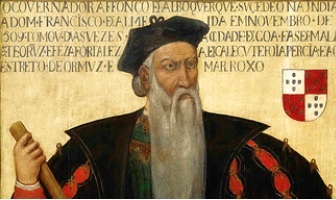
Afonso de Albuquerque
アラビア湾の南海岸はイギリス人に「海賊海岸 (Pirate Coast)」として知られていたカワーシム族同盟(the Al Qawasim federation)の舟が17世紀から19世紀にかけてイギリス船籍の船に嫌がらせをしました(harassed)。海賊行為の容疑に対しては、現在のアラブ首長国連邦側からはシャルジャ(Sharjah)の支配者であるシェイク(Sheikh) (شيخ)スルターン・アル=カーシミー(Sultan bin Muhammad Al-Qasimi) (سلطان بن محمد القاسمي)の著書「湾岸におけるアラブ海賊行為の神話(The Myth of Arab Piracy in the Gulf)」等の様に異議も唱えられています。
The southern coast of the Arabian Gulf was known to the British as the “Pirate Coast” because the boats of the Al Qawasim federation harassed British-flagged ships in the 17th through 19th centuries. The United Arab Emirates currently raises objections to the suspicion of piracy, as described in “The Myth of Arab Piracy in the Gulf.” This book was written by Sheikh (شيخ) Sultan al-Qasimi (سلطان بن محمد القاسمي), ruler of Sharjah (إمارة الشارقة).
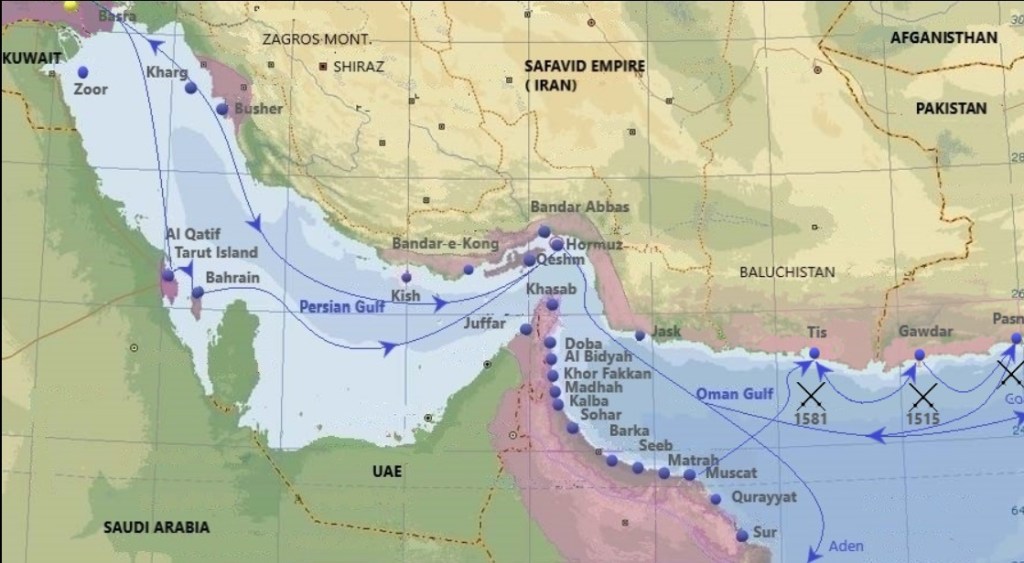
16世紀と17世紀でのアラビア湾およびオマーン湾におけるポルトガル船が寄稿する主要都市、港、航路など
Major cities, ports, routes, etc. of Portuguese ships in the Arabian Gulf and Gulf of Oman during the 16th and 17th centuries
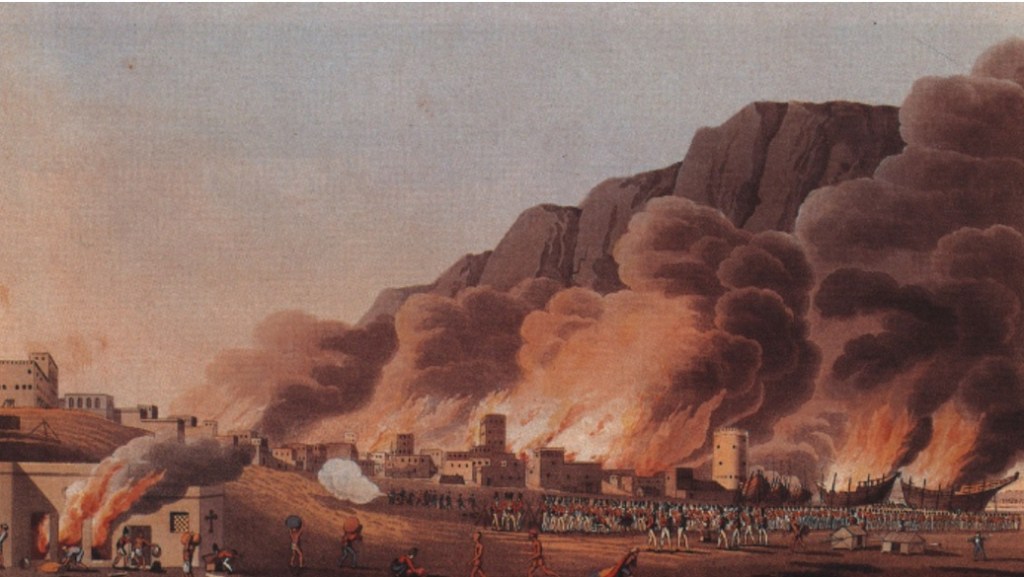
1809年のアラビア湾キャンペーン(the Persian Gulf campaign of 1809) (حملة الخليج العربي 1809)中にラアス・アル=ハイマ首長国(the Emirate of Ras Al Khaimah) (إمارة رأس الخيمة)の海岸沿いの町と港の焼失を描いた絵画。
A painting depicting the burning of the coastal town and port of the Emirate of Ras Al Khaimah) (إمارة رأس الخيمة) during the Persian Gulf campaign of 1809 (R Temple – The Myth of Arab Piracy in the Gulf).
休戦オマーン誕生
Establishing Trucial Oman
インドの交易路を保護するためのイギリスの遠征は、「1809年のアラビア湾キャンペーン(the Persian Gulf campaign of 1809) (حملة الخليج العربي 1809)」や「1819年のアラビア湾キャンペーン(the Persian Gulf campaign of 1819) (حملة الخليج العربي 1819)」のより成功したキャンペーンを含む、ラアス・アル=ハイマ首長国(the Emirate of Ras Al Khaimah) (إمارة رأس الخيمة)や海岸沿いの他の港に対する遠征につながりました。翌年、イギリスと多くの地元の支配者が「1820年の一般海事条(the General Maritime Treaty of 1820) (المعاهدة العامة للسلام 1820)」に署名し、沿岸首長国の地位を定義するようになった「休戦国(the Trucial States) 又は休戦オマーン(the Trucial Oman) (1820~1971) (إمارات الساحل المتصالح)」という用語を生み出しました。「1843年にさらなる条約(A further treaty)」が調印され、1853年に「永久海上休戦(the Perpetual Maritime Truce)」が合意されました。これに1892年に署名された「独占協定(the Exclusive Agreements)」が追加され、休戦国(the Trucial States)はイギリスの保護領(a British protectorate)になりました。
The British expeditions to protect India’s trade routes were such as “the Persian Gulf campaign of 1809 (حملة الخليج العربي 1809) “and “the Persian Gulf campaign of 1819 (حملة الخليج العربي 1819)” . Those campaigns resulted the more successful campaigns against the Emirate of Ras Al Khaimah) (إمارة رأس الخيمة) and other ports along the coast.
The following year, the British and many local rulers signed the General Maritime Treaty of 1820 (المعاهدة العامة للسلام 1820), which came to define the status of those coastal emirates, located in the Trucial Oman (1820~1971) (إمارات الساحل المتصالح). A further treaty was signed in 1843, and the Perpetual Maritime Truce was agreed in 1853. In addition, the Exclusive Agreement was signed in 1892, then the Trucial States of the Trucial Oman became the British protectorates.
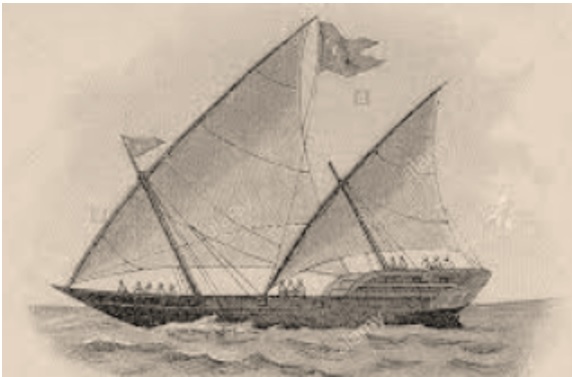
Arabian Pirate Dhow (القرصان داو العربي)
1892年の条約の下で、休戦シェイク(the Trucial Sheikhdoms)はイギリス以外の領土を処分せず、彼らの同意なしにイギリス以外の外国政府との関係を結ばないことに同意しました。その見返りに、イギリス軍は休戦海岸(the Trucial Coast) (الساحل المتصالح)を海上によるすべての攻撃から保護し、陸上攻撃の場合に支援することを約束しました。独占協定は、1892年3月6日から8日の間に、アブダビ(Abu Dhabi) (أبو ظبي)、ドバイ(Dubai) (دبي)、シャルジャ(Sharjah) (إمارة الشارقة)、アジュマーン(Ajman) (عجمان)、ラス・アル=ハイマ(Ras Al Khaimah) (رأس الخيمة)、ウンム・アル=カイワイン(Umm Al Quwain) (أم القيوين)の支配者によって署名されました。その後、インド総督(the Governor-General of India)とロンドンの英国政府(the British Government in London)によって批准されました。英国の海上警察(British maritime policing)は、真珠漁船団(pearling fleets)が比較的安全に活動できることを意味しました。しかし、イギリスが奴隷貿易(the slave trade)を禁止したことで、一部のシェイク(some sheikhs)や商人(merchants)に重要な収入源が失われたことを意味しました。
Under the 1892 treaty, the Trucial Sheikhdoms (the Trucial States) agreed not to dispose of any territory other than the Britain and not to enter into relations with foreign governments other than the Britain without its consent. In return, the British promised to protect the Trucial Coast (الساحل المتصالح) from all attacks by sea and to assist in the event of any land raid. The exclusive agreements were made and signed from 6 to 8 March 1892 between the Britain and each of ruler respectively of the Abu Dhabi (أبو ظبي), Dubai (دبي), Sharjah (الشارقة), Ajman (عجمان), Ras al Khaimah (رأس الخيمة) and Um al Qaiwain (أم القيوين).
Then the Governor-General of India and the British Government in London ratified those agreements. British maritime policing meant that pearling fleets could operate in relative safety. However, the British ban on the slave trade meant that some sheikhs and merchants lost an important source of income.
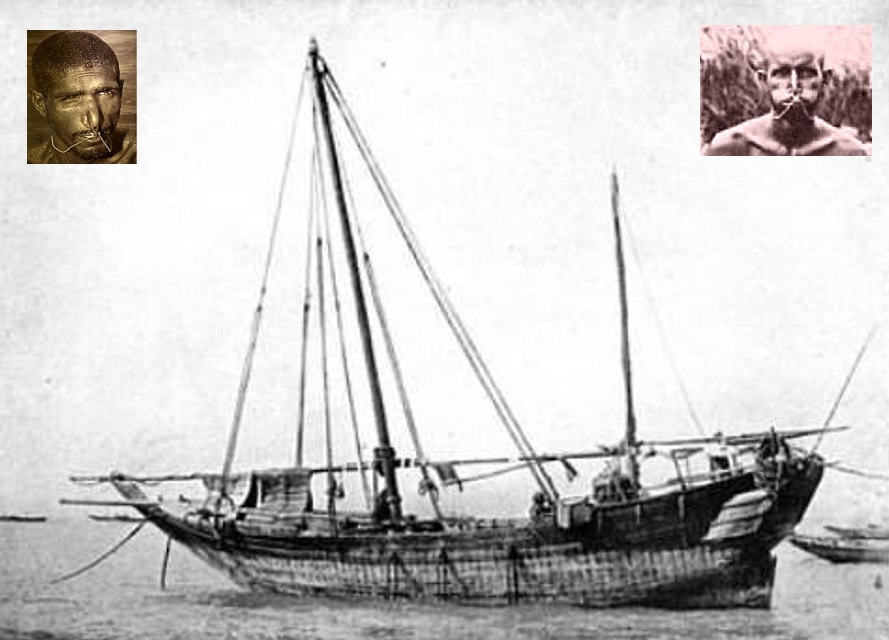
Pearl Fishing Dhow (داو صيد اللؤلؤ)
1869年、アル=クバイサート(Al Qubaisiat) (القبيسات)は、カウル・アル=ウダイド(Khawr al Udayd) (خور العديد)に定住し、オスマン帝国(the Ottoman Empire) (1299~1923) (الدولة العثمانية)の支援を求めようとしました。カウル・アル=ウダイド(Khawr al Udayd) (خور العديد)は、当時アブダビによって主張され、イギリスによって支持された主張でした。1906年、英国の政治居住者であるパーシー・コックス(Percy Cox) (1864~1937)は、アブダビの支配者であるザイード・ビン・カリファ・アール・ナヒヤーン(Zayed bin Khalifa Al Nahyan) (زايد بن خليفة آل نهيان)「ザイード大王(Zayed the Great)」)に書面でカウル・アル=ウダイド(Khawr al Udayd)が彼のシェイクダム(his sheikhdom) (مشيخة)に属していることを確認しました。
In 1869, the Al Qubaisiat (القبيسات) settled in Khawr al Udayd (خور العديد) and tried to get the support of the Ottoman Empire (1299~1923) (الدولة العثمانية). Khawr al Udayd (خور العديد) was claimed by Abu Dhabi at the time and it was supported by the British. In 1906, British political resident Percy Cox (1864~1937) confirmed to Zayed bin Khalifa Al Nahyan, ruler of Abu Dhabi (زايد بن خليفة آل نهيان) ” Zayed the Great”) that Khawr al Udayd was belonging to his sheikhdom (مشيخة) by written.
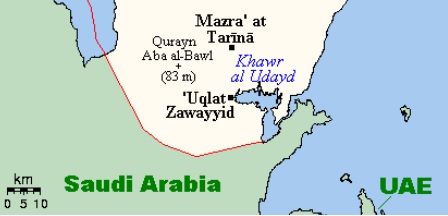
カウル・アル・ウデイドは、ほぼカタール半島の付け根に位置します。
Kaur Al-Udeid is located almost at the base of the Qatar Peninsula.
英国保護領時代
British Protectorate Era
目次(Index)
| 石油の発見 | Discovery of Oil |
| 休戦国家評議会の形成 | Trucial States Council |
| 海洋油田開発 | Offshore Oil Development |
| 陸上石油と領土問題 | Onshore Oil and Territorial Issue |
| ブライミ紛争 | Buraimi Dispute |
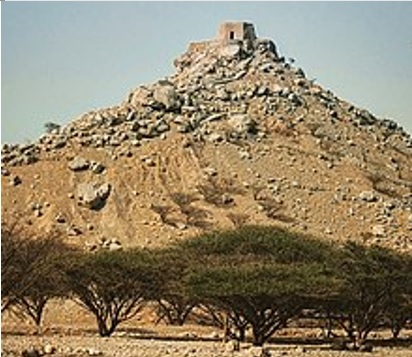
丘の頂上にあるダーヤ砦(Dhayah Fort) (قلعة ضاية)。 1819年には、1819年のアラビア湾キャンペーン1819年のアラビア湾キャンペーン(the Persian Gulf campaign of 1819) (حملة الخليج العربي 1819)で陥落した最後のカワーシム族(Al Qawasim or Al Qasimi) (القواسم)の拠点でした。ダーヤ砦の陥落は、1820年の一般海事条約の調印への道を開くことでした。
Dhayah Fort (قلعة ضاية) was installed at the top of the hill. Dhayah Fort was the last Al Qasimi (Al Qawasim) (القواسم) stronghold to fall in “the Persian Gulf campaign of 1819”. The fall of Dhayah Fort derived the way for the signing of “the General Maritime Treaty of 1820”.
石油の発見
Establishing Trucial Oman
19世紀から20世紀初頭にかけて、真珠産業(the pearling industry)は繁栄し、アラビア湾の人々に収入と雇用の両方を提供しました。第一次世界大戦(the First World War)は、業界に深刻な影響を及ぼしたが、貿易を一掃したのは、養殖真珠(the cultured pearl)の発明と相まって、1920年代後半から1930年代初頭の経済不況(the economic depression)であった。生き残った貿易量(the remnants of the trade)は、第二次世界大戦後(the Second World War)まもなく、新しく独立したインド政府がアラビア湾のアラブ諸国から輸入された真珠に重い課税を課したときに、最終的に消えていきました。真珠採取の減少は、休戦国(the trucial Oman)に極度の経済的困難をもたらしました
In the 19th and early 20th centuries, the pearling Industry flourished, providing both income and employment for the people of the Arabian Gulf. The First World War had a serious impact on this industry, but what wiped out the pearl trade was the cultured pearl invention together with the economic depression in the late 1920s and early 1930s. The remnants of the Trade finally faded away when the heavy taxation was imposed by the Government of India on pearls imported from the Sheikhdoms (the States) in the Arabian Gulf. The Government of India was newly independent after the Second World War. Decline in the pearl fishing was brought extreme economic difficulties for these Sheikhdoms.
1922年、英国政府は休戦国(the trucial Oman)の支配者から、同意なしに外国企業との譲歩に署名しないという約束を確保しました。ペルシャでは、1908年から、メソポタミアでは1927年からの石油などの天然資源発見に続いて、休戦国(the Trucial Oman)でもそれらの開発の可能性を認識し、英国主導の石油会社であるイラク石油会社(the Iraq Petroleum Company) (IPC)がこの地域に関心を示しました。アングロペルシャ石油会社(the Anglo-Persian Oil Company) (APOC)、後の英国石油(the British Petroleum) (BP)は、イラク石油会社(IPC)で23.75%のシェアを持っていました。
In 1922, the British government made the armistice with the Sheikhdom rulers of the southeastern Arabian Gulf. This armistice secured the promise not to sign concessions with foreign companies without the British consent. In Persia, from 1908 and in Mesopotamia from 1927, the discovery of natural resources such as oil had continued. Even in the Trucial Oman, the potential of such development was recognized the UK-led Iraqi Oil Company (IPC). The Iraqi Oil Company (IPC) expressed interest in the region. The Anglo-Persian Oil Company (APOC), (later the British Petroleum (BP)), had a 23.75% share of Iraqi Oil Company (IPC).
1935年から、石油を探査するための陸上利権(the onshore concessions)が地元の支配者によって付与され、アングロペルシャ石油会社(APOC)は、イラク石油会社(IPC)の関連会社である石油利権会社(Petroleum Concessions Ltd) (PCL)に代わって最初の利権協定(the Concession Agreement)に署名しました。アングロペルシャ石油会社(APOC)は、イラク石油会社(IPC)を通じて運営することを要求したレッドライン協定(the Red Line Agreement) (July 31, 1928)の制限のために、この地域を単独で開発することを妨げられていました。
From 1935, the onshore concessions to explore oil was granted by the local rulers. The Anglo-Persian Oil Company (APOC) signed these concession agreements on behalf of the Petroleum Concessions Ltd (PCL), which was an affiliate of Iraqi Oil Company (IPC).
The Anglo-Persian Oil Company (APOC) was prevented from developing the area alone due to restrictions in the Red Line Agreement (July 31, 1928) which required the participants to operate through the Iraqi Petroleum Company (IPC).
石油利権会社(PCL)と休戦国(the Trucial Oman)の支配者の間で、多くのオプションが署名され、真珠貿易の崩壊後に貧困を経験している地域社会(the communities)に有益な収入を提供しました。しかし、支配者がイラン(Iran)、バハレイン(Bahrain)、クウェート(Kuwait)、カタール(Qatar)、サウジアラビア(Saudi Arabia)などの周辺国に発生する収入から見ることができた石油の富は、とらえどころのないままでした。
アブダビでの最初に出油した井戸は、1950年にイラク石油会社(IPC)の運営会社である海賊海岸石油開発会社(Petroleum Development (Trucial Coast) Ltd) (PDTC)によってラアス・サドル(Ras Sadr) (رأس صدر)で掘削され、深さ13,000フィート(4,000メートル)の油井は掘削に1年かかり、当時では莫大な100万ポンドもの掘削費を掛けましたが、空井戸でした。
Many options signed between the Petroleum Concessions Ltd (PCL) and the Sheikhdoms of the Trucial Oman. These options offered an useful income to their communities experiencing poverty after the collapse of the pearl trade. However, the oil wealth, which could be seen from the revenues generated in neighboring countries such as Iran, Bahrain, Kuwait, Qatar and Saudi Arabia, remained elusive. The first well in Abu Dhabi was drilled by the Petroleum Development (Trucial Coast) Ltd (PDTC), an operating company of the Iraqi Oil Company (IPC) at Ras Sadr (رأس صدر) in 1950. This bottom hole had reached up to the depth of 13,000 feet (4,000 meters). The well took a year to drill such a depth with a huge expense of £1 million at the time, but unfortunately it was a dry well.
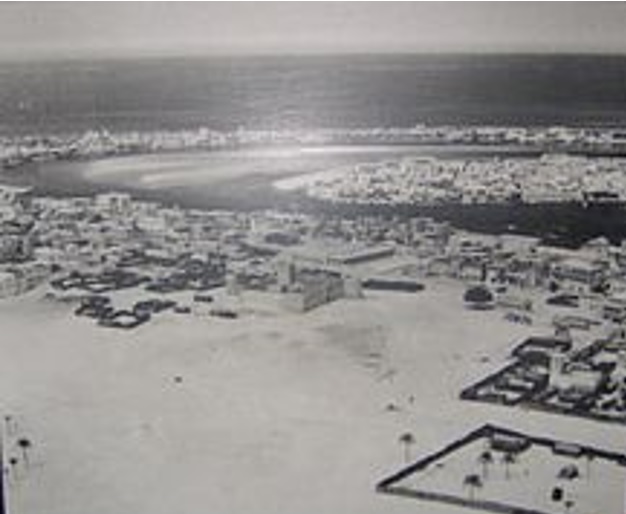
1950年のドバイ(Dubai)の写真。ファヒーディ砦(Al Fahidi Fort) (حصن الفهيدي)を中心に手前のバール・ドバイ(Bur Dubai) (بر دبي)を示しています。 クリーク(the creek)の反対側の右中央は、デイラ(Deira) (ديرة)市街地です。 デイラ市街地から再びクリークを渡った背景は、左側の伝統的な中心市街地アル=シンダガ(Al Shindagha) (الشندغة)で、右側はデイラ(Deira)の西端にある古くからの集落アル=ラアス(Al Ras) (اَلـرَّأْس)です。
Dubai Photo 1950:This photo shows Bur Dubai centered on Al-Fahidi Fort in the front. A urban area of Deira (ديرة) is shown in middle-right on the other side of the creek. In the background across the creek again from Deira, the left side is the traditional city center of Al Shindagha (الشندغة)and the right side is Al Ras (اَلـرَّأْس) which is the one of the oldest communities located the westmost end of Deira (ديرة).
休戦国家評議会の形成
Trucial States Council
イギリスは、首長国連邦のいくつかの小さな開発を支援する開発事務所を設立しました。その後、首長国の7人のシェイク(Sheikhs) (شيوخ)は、彼らの間の問題を調整するための評議会を形成することを決定し、開発事務所を引き継ぎました。1952年、彼らは休戦国家評議会(the Trucial States Council)を結成し、ドバイのシェイク・ラシッド(Sheikh Rashid) (r.1958~1990) (شيخ راشد)の法律顧問であるアディ・ビータール(Adi Bitar) (عدي البيطار) (1924~1973)を事務局長および評議会の法律顧問に任命した。アラブ首長国連邦(the United Arab Emirates) (الإمارات العربية المتحدة)が結成されると、評議会は終了しました。社会の部族的性質と首長国間の国境の定義の欠如は、調停またはまれに力のいずれかによって解決された紛争にしばしばつながりました。
The British had put an oil development office to support the development of several small oil projects in the Sheikhdoms (مشيخة). Then the seven Sheikhs (شيوخ) decided to form a council to coordinate the affairs between them and took over the British oil development office. In 1952, they announced to establish the Trucial States Council. They also appointed Adi Bitar (1924~1973) (عدي البيطار) as the secretary general and the general counsel of this Council. Adi Bitar was the regal adviser of the Sheikh Rashid (r.1958~1990) (شيخ راشد) of Dubai. This council ended its roll when the United Arab Emirates (الإمارات العربية المتحدة) was established in 1971. The tribal nature of society and the lack of definition of borders between the Sheikhdoms often led to disputes which were resolved either by mediation or, in rare cases, by force.
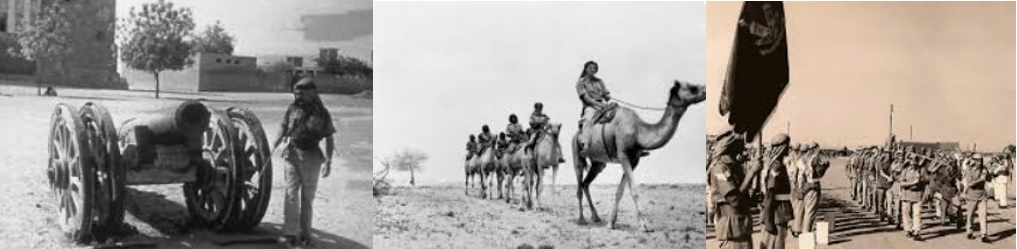
Trucial Oman Scouts) (كشافة ساحل عمان)
休戦オマーン・スカウト(the Trucial Oman Scouts) (كشافة ساحل عمان)は、平和を維持するためにイギリスが使用した小さな軍事力でした。
The Trucial Oman Scouts) (كشافة ساحل عمان) was a small military power used by the British to maintain peace among the Sheikhdoms.
Offshore Oil Development
海洋油田開発
1953年、英国石油(BP)の子会社であるダーシー開発会社(D’Arcy Exploration Ltd)は、アブダビの支配者から沖合開発利権(an offshore concession)を取得しました。英国石油(BP)はフランス石油会社(Compagnie Française des Pétroles) (後のTotal)と合併し、事業会社であるAbu Dhabi Marine Areas Ltd (ADMA)とDubai Marine Areas Ltd (DUMA)を設立しました。多くの海底石油調査が実施されました。その中には有名な海洋探検家ジャック・クストー(Jacques Cousteau) (1910~1997)が率いる海底調査も含まれていました。1958年、ドイツのハンブルク(Hamburg)から浮遊式掘削リグ(a floating platform rig)が曳航され、掘削が始まったアブダビ海域(Abu Dhabi waters)のウンム・シャイフ(Umm Shaif) (أم الشيف)真珠床(pearl bed)の上に配置されました。3月には、多くの貴重な石油発見を提供する岩層であるタママ(the Upper Thamama)上部層で石油を発見しました。これは休戦海岸(the Trucial Coast)の最初の商業的発見であり、1962年に最初の石油輸出につながりました。ADMAはザクム(Zakum) (حقل زاكوم)や他の場所でさらに沖合で発見し、他の企業はドバイ沖(Offshore Dubai)のファテ油田(the Fateh oilfield)やシャルジャ沖(Offshore Sharjah)のムバラク油田(the Mubarak field)(イランと共有)などの商業的発見を行いました。
In 1953, the D’Arcy Exploration Ltd, a subsidiary of BP got an offshore oil development concession from the Sheikh (Amir) of Abu Dhabi. The British Petroleum (BP) and the French Petroleum Company (Compagnie Française des Pétroles) (later Total) jointly formed an operating company, which were the Abu Dhabi Marine Areas Ltd (ADMA) and the Dubai Marine Areas Ltd (DUMA). By both companies, many of the offshore oil exploration surveys were conducted. Among them was the famous marine explorer Jacques Cousteau (1910~1997). In 1958 a floating platform rig was towed from Hamburg and positioned on the pearl bed of Umm Shaif (أم الشيف) in offshore Abu Dhabi for the exploratory drilling. In March, this exploratory well hit oil in the Upper Thamama formation. This was the first commercial oil discovery in Offshore Trucial Oman. It led to the first oil export in 1962. Afterwards, this rock formation has provided many valuable oil discoveries.
The Abu Dhabi Marine Areas Ltd (ADMA) had found further offshore oil fields such as the Zakum Oil Field (حقل زاكوم) and others. Meanwhile, the other commercial discoveries had been found offshore, for examples the Fateh Oil Field) (حقل فتح) in Offshore Dubai, the Mubarak Oil Field in Offshore Sharjah, etc. (The Mubarak Oil Field is sharing with Iran.)
陸上石油と領土問題
Onshore Oil and Territorial Issue
一方、陸上探査は領土紛争によって妨げられました。1955年、英国はブライミ・オアシス(the Buraimi Oasis)をめぐるサウジアラビアとの紛争でアブダビとオマーンを代表しました。アブダビとサウジアラビアの間の1974年の合意は、アブダビとサウジアラビアの国境紛争を解決したように見えましたが、これは批准されていません。アラブ首長国連邦とオマーンの国境は2008年に批准されました。
は紛争地域から離れて陸上探査を続け、さらに5つのボアホールを掘削しましたが、これも乾燥していました。しかし、1960年10月27日、同社はタリフ(Tarif) (طريف)近くの海岸にあるマーバン第3油井(the Murban No. 3) (بئر مربان رقم 3)で商業的な量の石油を発見しました。1962年、海賊海岸石油開発会社(PDTC)はアブダビ石油会社(the Abu Dhabi Petroleum Company)になりました。石油収入が増加するにつれて、アブダビの支配者であるザイード・ビン・スルターン・アール・ナヒヤーン(Zayed bin Sultan Al Nahyan) (r.1971~2004) (زايد بن سلطان آل نهيان)は、学校、住宅、病院、道路を建設する大規模な建設プログラムに着手しました。
On the other hand, Onshore exploration was hampered by territorial disputes. In 1955, British represented Abu Dhabi and Oman in the dispute with Saudi Arabia over the Buraimi Oasis (واحة البريمي). The 1974 agreement between Abu Dhabi and Saudi Arabia was signed by the Abu Dhabi and Saudi Arabia for this dispute. This appeared to have been settled, but this agreement has not been ratified. The border dispute between the United Arab Emirates and Oman was agreed and then ratified in 2008.
The Pirate Coast Oil Development Company (PDTC) continued onshore exploration away from the conflict zone. PDTC had drilled five more exploratory wells, however all of them were dry wells. PDTC had not yet seen any oil outflow until then. However, on October 27, 1960, PDTC discovered commercial quantities of oil at the Murban No. 3 well (بئر مربان رقم 3) on the coast near Tarif (طريف). In 1962, the Pirate Coast Oil Development Company (PDTC) became the Abu Dhabi Petroleum Company. As oil revenues increased, the Sheikh (شيخ) of Abu Dhabi, Zayed bin Sultan Al Nahyan (r.1971~2004) (زايد بن سلطان آل نهيان), embarked on a large-scale construction program to build schools, houses, hospitals, and roads. When
ドバイの石油輸出が1969年に始まったとき、ドバイの支配者であるシェイク(Sheikh) (شيخ)ラシッド・ビン・サイード・アール・マクトゥーム(Rashid bin Saeed Al Maktoum) (r.1958~1990) (راشد بن سعيد آل مكتوم)は、限られた埋蔵量からの収入を投資して、現代のグローバル都市ドバイを創造する多様化の推進口火を切ることができました。
Dubai’s oil exports began in 1969, Dubai’s Sheikh (شيخ) Rashid bin Saeed Al Maktoum (Rashid bin Saeed Al Maktoum) (r.1958~1990) (راشد بن سعيد آل مكتوم) was able to invest income from its limited reserves to spark the drive for diversification to create the modern global city of Dubai.
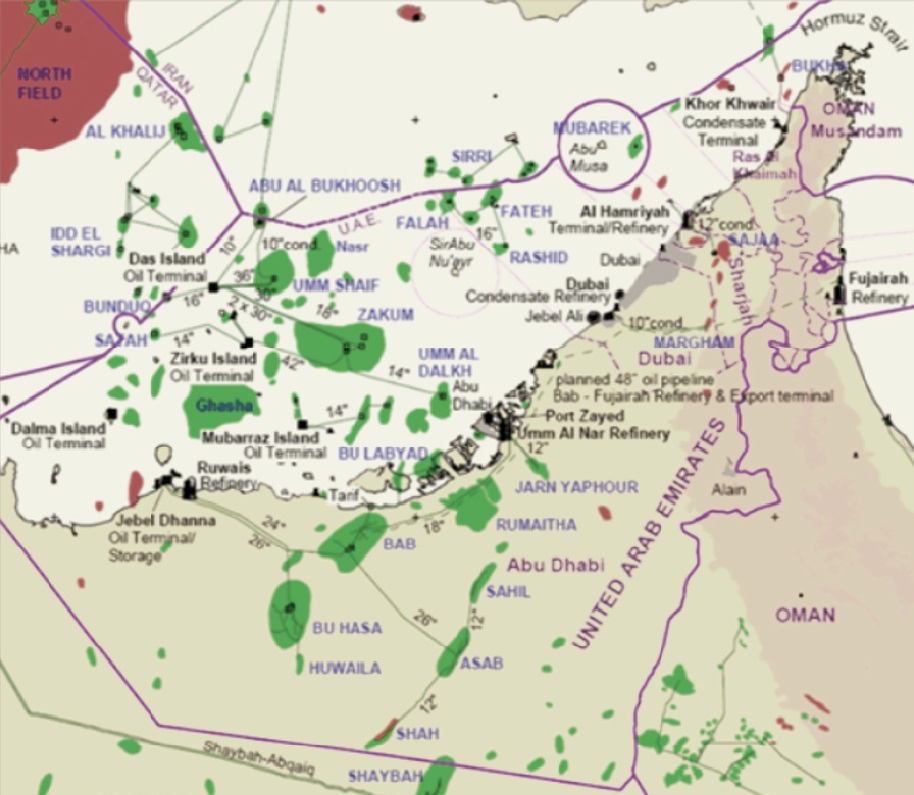
June 13, 2014 by Ralf Klein Breteler published on Energy Dubai
ブライミ紛争
Buraimi Dispute
ブライミ紛争(Buraimi Dispute) (1952~1955) (حرب البريمي)は、1949年に行われたサウジアラビアの長年の主張から、石油が存在する疑いのあるアブダビ領土の大部分と、ブライミ・オアシス(Buraim Oasis) (واحة البريمي)の中心を囲む20マイルの円の地域に対する主権から生じました。この主張は、アラビアン・アメリカン石油会社(the Arabian American Oil Company) (Aramco))の地質調査隊が「リヤド線」を越えた後に生じました。「リヤド線」は、1935年に英国がオマーンとアブダビに代わってサウジアラビアと交渉した国境線でしたが、サウジアラビアは拒否していました。
The Buraimi Dispute (1952~1955) (حرب البريمي) was a long-standing claim by Saudi Arabia in 1949. That resulted for Saudi Arabia to have probable sovereignty over a large part of Abu Dhabi territory having potential oil and a part of Buraim Oasis (واحة البريمي). A part of Buraim Oasis was the area of a 20-mile circle surrounding its center. This claim arose after the Geological Survey of the Arabian American Oil Company (Aramco) crossed the Riyadh Line. The “Riyadh Line” was the border line that British negotiated with Saudi Arabia on behalf of Oman and Abu Dhabi in 1935, which the Saudis had refused.
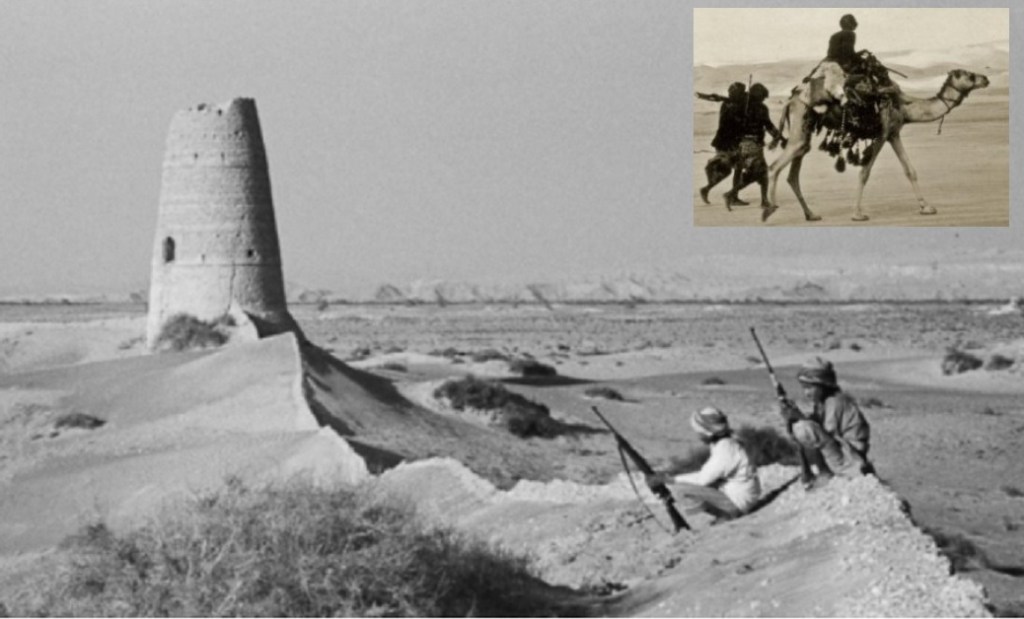
Al Buraimi War
1952年、ラアス・タヌーラの首長(Emir of Ras Tanura) (أمير رأس تنورة)トゥルキ・アブドラ・アル・オタイシャン(Turki bin Abdullah Al Otaishan) (تركي بن عبدالله العطيشان)率いる半数が武装サウジアラビア警備員約80人の部隊がアブダビ領土を越え、オアシス(Buraimi Oasis) (واحة البريمي)にあるオマーンの3つの村のうちの1つであるハマサ(Hamasa) (حماسة)を占拠し、サウジアラビア東部州の一部としてオアシスの領有権を主張しました。マスカットのスルタン(the Sulṭan of Muscat & Oman) (سلطان مسقط وعُمان)とオマーンのイマーム(the Imam of Oman) (إمام عمان)は、サウジアラビア人を追放するために約6,000〜8,000人の軍隊を結集しましたが、仲裁による紛争の解決が試みられるまで自制するよう英国政府から説得されました。仲裁は、進まず、英国は準軍事組織である防衛隊(Trucial Oman Levies) (قوة ساحل الإمارات المتصالحة)(後のTrucial Oman Scouts (كشافة ساحل عمان))を使って、サウジアラビア部隊を武装解除してサウジアラビアに撤退させました。しかし、防衛隊(Trucial Oman Levies)の軍事力が十分ではなく、地元部族の叛乱も含めて紛争は続き、サウジアラビア軍と防衛隊(Trucial Oman Levies)の双方の小部隊がハマサ(Hamasa)に駐在することになりました。
In 1952, a half-armed force of about 80 Saudi guards, half of whom are armed, led by the Emir of Ras Tanura (أمير رأس تنورة) Turki bin Abdullah Al Otaishan (تركي بن عبدالله العطيشان) crossed Abu Dhabi territory and captured Hamasa (حماسة), which was one of three Omani villages in Buraimi Oasis (واحة البريمي). They claimed this oasis as part of the Eastern Province of Saudi Arabia. The Sulṭan of Muscat & Oman (سلطان مسقط وعُمان) and the Imam of Oman (إمام عمان) sought to expel the Saudis and rallied an army of about 6,000~8,000 men, However, they were persuaded by the British government to exercise restraint until an attempt was made to resolve the dispute through arbitration. The arbitration did not proceed, and then British used a paramilitary organization, the Trucial Oman Levies (قوة ساحل الإمارات المتصالحة) (later Trucial Oman Scouts (كشافة ساحل عمان)) to disarm Saudi troops and let them to withdraw to Saudi Arabia. Since the military strength of the Trucial Oman Levies was not enough, the conflict continued, including the rebellion of the local tribes.
As a tentative measure, a small unit of both the Saudi army and the Trucial Oman Levies was stationed in Hamasa.
1955年、ジュネーブで仲裁手続きが始まりましたが、決裂しました。この為、英国政府は、一方的に、1955年10月25日にこのオアシスを占領することを決定しました。10月25日、防衛隊(Trucial Oman Levies)は、すぐにオアシスを占領し、サウジアラビア軍は、シャルジャ(Sharjah) (الشارقة)まで、空輸され、そこから海路でサウジアラビアに送り返されました。サウジアラビア軍の降伏後も、約200人のベドウィン軍(Bedouin Force) (القوة البدوية)が抵抗しましたが、まもなく鎮圧されました。その後、英国はブライミ・オアシス(Buraimi Oasis) (القوة البدوية)の領土を分割することを決定し、アル=ナイム族(Al Na’im) (النعيم)とアール・ブー・シャミス族(Al Bu Shamis) (آل بو شامس)の支配地域、およびブライミ(Buraimi Oasis) (واحة البريمي)とハマサ(Hamasa)をオマーンに譲渡し、シェイク・ザイード(Sheikh Zayed) (شيخ زايد)の支配地域を含むアルアイン(Al Ayn Oasis) (واحة العين)をアブダビ(Abu Dhabi) (أبو ظبي)に譲渡しました。
In 1955, arbitration proceedings began in Geneva, but broke down. For this reason, the British government unilaterally decided to occupy this oasis on October 25, 1955. On October 25, Trucial Oman Levies immediately occupied the oasis, and Saudi troops were airlifted to Sharjah (الشارقة) and from there sent back by sea to Saudi Arabia . After the surrender of the Saudi army, about 200 Bedouin forces (القوة البدوية) resisted, but were soon subdued.
The British then decided to divide the territory of Buraimi Oasis (القوة البدوية). Buraimi Oasis (واحة البريمي) and Hamasa were ceded to Oman together with the areas controlled by Al Na’im (النعيم) and Al Bu Shamis (آل بو شامس). On the other hand, Al Ayn Oasis (واحة العين) were ceded to Abu Dhabi (أبو ظبي) together with the area controlled by Sheikh Zayed) (شيخ زايد).
紛争は、1974年にUAE大統領シェイク(Sheikh) (شيخ) ザイード・ビン・スルターン・アール・ナヒヤーン(Zayed bin Sultan Al Nahyan) (r.1971~2004) (زايد بن سلطان آل نهيان)とサウジアラビア国王のファイサル・ビン・アブドゥルアズィーズ・アール・サウード(Faisal ibn Abdul Azizi) (r.1964~1975) (فيصل بن عبد العزيز)の間のジェッダ条約(the 1974 Treaty of Jeddah) (اتفاقية جدة 1974)として知られる合意によって解決されるまで、何年にもわたって紛争が治まりませんでした。
For years the conflict did not subside until it was resolved by an agreement known as the 1974 Treaty of Jeddah (اتفاقية جدة). It was consent between Saudi King Faisal ibn Abdul Azizi (r.1964~1975) (فيصل بن عبد العزيز) and UAE President Sheikh (شيخ) Zayed bin Sultan Al Nahyan (r.1971~2004) (زايد بن سلطان آل نهيان).
独立への諸懸案
Concerns over Independent
目次(Index)
英国保護条約の終了
Ending British Treaty
1966年までに、英国政府(the British government)は、もはやトゥルーシャル・オマーン(the Trucial Oman)、現在のアラブ首長国連邦を管理および保護する余裕がないことが明らかになりました。英国の国会議員(MP)は、シェイクダム(the sheikhdoms) (مشيخة)を守るためのイギリス海軍の準備について議論しました。デニス・ヒーリー国防長官(Secretary of State for Defence Denis Healey)は、「イギリス軍は深刻に過剰に拡大しており、いくつかの点でシェイクダム(the sheikhdoms)を守るためには危険なほど装備が不十分である」と報告していました。1968年1月24日、英国のハロルド・ウィルソン首相(British Prime Minister Harold Wilson)は、1971年3月にエドワード・ヒース首相(Prime Minister Edward Heath)によって再確認された政府の決定を発表し、バハレイン(Bahrain)とカタール(Qatar)と共に英国の保護下にあった7つの休戦シェイクダム(the seven Trucial Sheikhdoms)との条約関係を終了しました。
By 1966, it became clear that the British Government could no longer afford to manage and protect the Trucial Oman (Current United Arab Emirates). British parliamentarians had discussed the readiness of the Royal Navy for the protection of these sheikhdoms (مشيخات). Secretary of State for Defense Denis Hearey reported that “The British army is seriously overextended, and in some respects the British army is too dangerously poor equipped to protect the sheikhdoms (مشيخات).” On 24 January 1968, British Prime Minister Harold Wilson announced the decision of the government, reaffirmed by Prime Minister Edward Heath in March 1971 and ended the treaty relations with the seven Trucial Sheikhdoms that were under British protection along with Bahrain and Qatar.
9首長国連邦結成への試み
Attempts to Form United 9 Emirates
発表の数日後、アブダビの支配者であるシェイク(Sheikh) (شيخ)ザイード・ビン・スルタン・アール・ナヒヤーン(Zayed bin Sultan Al Nahyan) (r.1971~2004) (زايد بن سلطان آل نهيان)は、脆弱性を恐れて、英国軍を首長国連邦に維持するための全費用を支払うことを申し出ることによって、保護条約を尊重するように英国を説得しようとしました 。英国労働党政府(The British Labour government)は、この申し出を拒否しました。[労働党議員のゴロンウィ・ロバーツ(Goronwy Roberts)がシェイク・ザイード(Sheikh Zayed)にイギリス撤退のニュースを知らせた後、9つのアラビア湾のシェイクダム(the nine Arabian Gulf sheikhdoms)は、アラブ首長国(a union of Arab emirates)の連合を結成しようとしました。しかしながら、1971年半ばまでに、イギリスの条約関係がその年の12月に期限切れになることになっていたにもかかわらず、彼らはまだ組合の条件に同意することが出来ないでいました。
A few days after the announcement, the ruler of Abu Dhabi, Sheikh (شيخ) Zayed bin Sultan Al Nahyan (r.1971~2004) (زايد بن سلطان آل نهيان) tried to persuade Britain to respect the Protectorate Treaty. As he was afraid of national vulnerability, he offered to pay the full cost of keeping British troops in the Emirates. The British Labour government rejected this offer. Goronwy Roberts, who was a member of the parliament belonging to the labour party, informed Sheikh Zayed of the news of the British withdrawal from the nine Arabian Gulf sheikhdoms. Then, an attempt was made to form the United Arab Emirates. However, by mid-1971, they were still unable to agree to the terms of the union, even though the British treaty relationship was due to expire in December of that year.
イラン駆逐艦隊の侵略
Invasion of Iranian Destroyer Fleet
国家としての脆弱性の恐れは、独立の前日に現実になりました。イランの駆逐艦隊は、アラビア湾南部での演習からの編成を破り、トゥンブ諸島(the Tunb islands) (جزر طنب)に向けて航海し始めました。島々は強制的に占領され、民間人と同様にアラブの守備隊も逃げることを許されました。この間、イギリスの軍艦は、イランの侵略を放置していました。イランの駆逐艦隊は、アブー・ムーサー島(Abu Musa) (ابوموسی)にも接近し始めました。しかし、そこでは、シェイクダム・シャールジャ(the Sheikhdom of Sharjah) (مشيخة الشارقة)のシェイク(Sheikh) (شيخ) (r. 1965~1972) ハリド・ビン・モハメッド・アル=カーシミー(Khalid bin Mohammed Al Qasimi) (خالد بن محمد القاسمي)がすでにイランのシャー(the Iranian Shah)と交渉しており、島はすぐに年間300万ドルでイランに貸し出されていました。一方、サウジアラビアもアブダビに対して広範囲(swathes)な領有権を主張していました。
Fears of national vulnerability became a reality on the day before independence. Iranian destroyer flotilla broke the formation from exercises in Southern Arabian Gulf and began sailing for the Tunb islands (جزر طنب). The islands were forcibly occupied, and the soldiers of Arab garrison were also allowed to flee together with civilians. During this time, British warships neglected this Iranian invasion. Iranian destroyer flotilla began to approach also the island of Abu Musa (ابوموسی). But there, Sheikh (شيخ) (r. 1965~1972) of Sheikhdom of Sharjah (مشيخة الشارقة) had negotiated with Iranian Shah, and the island had already been leased to Iran for $3 million a year. This Sheikh was Khalid bin Mohammed Al Qasimi (خالد بن محمد القاسمي). Saudi Arabia, on the other hand, also had its extensive claims over Abu Dhabi.
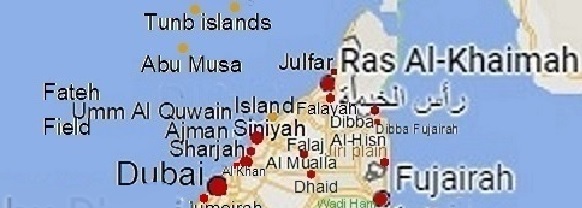
Tunb islands & Abu Musa Island
バハレインとカタールの独立
Independence of Bahrain and Qatar
バハレイン(Bahrain)とカタール(Qatar)は、もともとは提案されたアラブ首長国連邦の一部となることを目指していましたが、バハレイン(Bahrain)は、1971年8月に、カタール(Qatar)は、同年9月にそれぞれ独立しました。1971年12月1日に「英国と休戦オマーンのシェイクダムとの条約(the British-Trucial Sheikhdoms treaty)」が失効したとき、両首長国は完全に独立しました。
Bahrain and Qatar originally intended to become a member of the proposed United Arab Emirates, but Bahrain became independent in August 1971 and Qatar in September of the same year. When British-Trucial Sheikhdoms treaty expired on December 1, 1971, both Sheikhdoms became fully independent
アラブ首長国連邦の成立
Formation of United Arab Emirates
1971年12月2日、ドバイゲストハウス(現在はユニオンハウス(Union House)として知られている)において、六つの首長国がアラブ首長国連邦と呼ばれる連邦(union)に入ることに合意しました。六つの首長国とは、アブダビ(Abu Dhabi) (أبو ظبي)、アジュマーン(Ajman) (عجمان)、ドバイ(Dubai) (دبي)、フジャイラ(Fujairah) (الفجيرة)、シャルジャ(Sharjah) (الشارقة)、ウンム・アル=カイワイン(Umm Al Quwain) (أم القيوين)です。ラアス・アル=ハイマ(Ras Al Khaimah) (رأس الخيمة)は、1972年1月10日にこの連邦に加わりました。
On December 2, 1971, at a guest house in Dubai (now known as Union House), the six Sheikhdom agreed to join the union called the United Arab Emirates. The six Sheikhdom are Abu Dhabi (أبو ظبي), Ajman (عجمان), Dubai (دبي), Fujairah (الفجيرة), Sharjah (الشارقة) and Umm Al Quwain (أم القيوين). Ras Al Khaimah (رأس الخيمة) joined this federation on January 10, 1972.
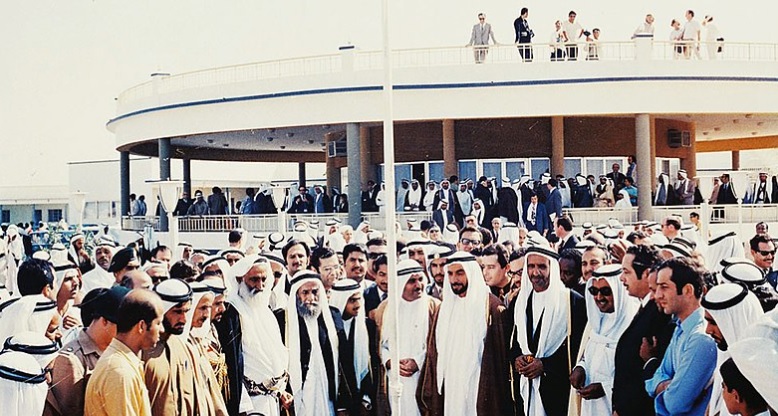
1971年12月2日にドバイのユニオンハウスで首長国支配者によるアラブ首長国連邦旗の最初の掲揚式
Ceremony for hoisting of the United Arab Emirates flag by the rulers of the emirates at he Union House, Dubai on 2 December 1971
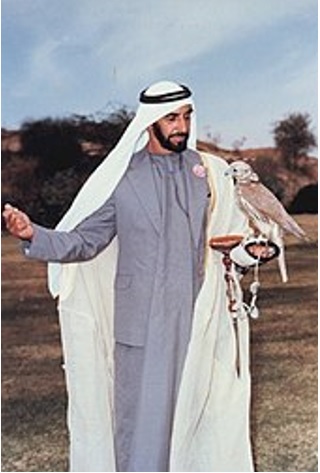
ザイード・ビン・スルターン・アール・ナヒヤーン(Zayed bin Sultan Al Nahyan)はアラブ首長国連邦の初代大統領であり、国の父として認められています。
Zayed bin Sultan Al Nahyan is the first president of the United Arab Emirates and is recognized as the father of the United Arab Emirates.
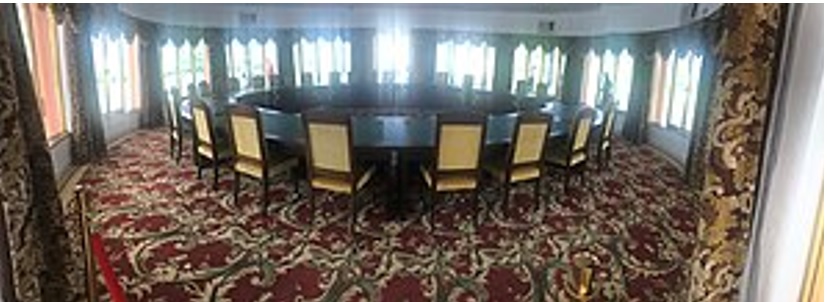
1971年12月2日にドバイで最初の憲法が署名された会議室(エティハド博物館 (متحف الاتحاد)の一部)。
The conference room where the first constitution was signed in Dubai on December 2, 1971.(A part of the Etihad Museum (متحف الاتحاد))
連邦国民評議会創設
Creation of Federal National Council
1972年2月に連邦国民評議会(the Federal National Council) (FNC)が創設されました。この評議会は、7人の支配者によって任命された40人の諮問機関(a consultative body)でした。UAEは1971年12月6日にアラブ連盟(the Arab League)に加盟し、12月9日には国連(the United Nations)に加盟しました。アラブ首長国連邦(UAE)は、湾岸協力会議(the Gulf Cooperation Council) (GCC)の創設メンバーにもなりました。1981年5月、アブダビが最初の湾岸協力会議サミット(GCC summit)を主催しました。
Federal National Council (FNC) was created in February 1972. This council was a consultative body of 40 appointed by seven rulers. United Arab Emirates (UAE) joined Arab League on December 6,1971 and United Nations on December 9, 1971. United Arab Emirates (UAE) also became a founding member of Gulf Cooperation Council (GCC). In May 1981, Abu Dhabi hosted the first GCC summit.
アラブ首長国連邦の国旗
Flag of United Arab Emirates
アブダビ出身の19歳の首長国民、アブドラ・モハメッド・アル=マーイナ(Abdullah Mohammed Al Maainah) (عبدالله محمد المعينة)が、1971年にUAEの旗をデザインしました。旗の4色は、赤、緑、白、黒の汎アラブ色(the Pan-Arab colour)であり、アラブ諸国の団結を表しています。1971年12月2日に採択されました。アル・マーイナ閣下(Mr. Al Maainah)は、後にチリ(the Republic of Chile)UAE大使を務める等の外交官になりました。
Abdullah Mohammed Al Maainah (عبدالله محمد المد المعينة), a 19-year-old emirate from Abu Dhabi, designed the UAE flag in 1971. The four colors of the flag are the Pan-Arab colour of red, green, white and black, representing the unity of the Arab countries. It was adopted on December 2, 1971. Mr. Al Maainah later became such a diplomat as UAE ambassador to the Republic of Chile.
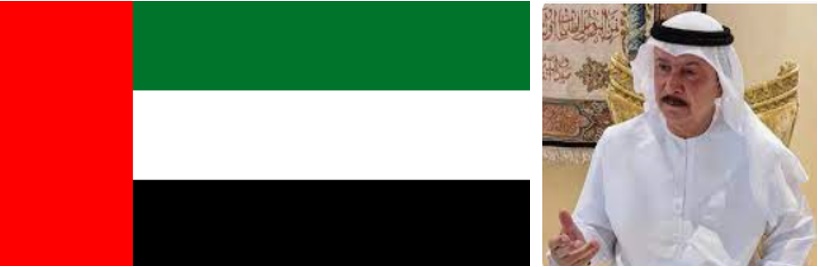
UAE flag and Mr. Abdullah Mohammed Al Maainah
UAE結成後の出来事
Incidents after UAE formation
目次(Index)
| サクル・アル=カースィミーの叛乱 | Rebellion of Saqr al-Qasimi |
| シャルジャとフジャイラのカルバー紛争 | Kalba Conflict of Sharjah-Fujairah |
| 1972年のカタール宮殿クーデター | Qatar Palace Coup d’état of 1972 |
サクル・アル=カースィミーの叛乱
Rebellion of Saqr al-Qasimi
1972年1月24日、シャルジャの廃位された支配者シェイク(Sheikh) (شيخ) サクル・ビン・スルタン・アル=カースィミー(Saqr bin Sultan Al Qasimi) (r.1951~1965) (صقر بن سلطان القاسمي)は、ラアス・アル・ハイマ(Ras Al Khaimah)の支援を受けた武装部隊とともに、シャルジャ(Sharjah)の支配者シェイク・カリド・ビン・モハメッド・アル=カースィミー(Khalid bin Mohammed Al Qasim) (r.1965~1972) (خالد بن محمد القاسمي)の宮殿に押しいって占領し、カリド・ビン・モハメッドは、自分をシャルジャの唯一の支配者として認めるよう要求しました。
On January 24, 1972, the deposed former ruler of Sharjah, Sheikh (شيخ) Saqr bin Sultan Al Qasimi (r.1951~1965) (صقر بن سلطان القاسمي), with an armed group supported by Ras Al Khaimah broke into the palace of Sharjah’s ruler Sheikh (شيخ) Khalid bin Mohammed Al Qasimi (r.1965~1972) (خالد بن محمد القاسمي), occupied it. Khalid bin Mohammed demanded to be recognized him as the sole ruler of Sharjah.
カリド・ビン・モハメッド(Khalid bin Mohammed)は、当時英国が反対していたアラブ連盟(the Arab League)を支持していました。そして、アラブ連盟から支援を受けていました。このため、1965年に英国によって廃位されていました。彼は、英国(British)が休戦オマーン(the Trucial Oman)から撤退して、シャルジャ(Sharjah)も英国の保護領(a British protectorate)ではなくなるので、自分が復位する好機と考えていました。
Khalid bin Mohammed supported the Arab League, which Britain opposed at the time. And he had support from the Arab League. As a result, it was deposed by the British in 1965. He saw an opportunity for himself to be reinstated as the British withdrew from the Trucial Oman and Sharjah would no longer be a British protectorate.
この事件により、UAE国防軍(the United Arab Emirates Armed Forces) (تبديل عرض جدول المحتويات القوات المسلحة لدولة الإمارات العربية المتحدة)が初めて動員されました。アブダビ国防軍(the Abu Dhabi Defence Force)は、シャルジャ(Sharjah)での首長国国民の抵抗とも協力して、状況を制御下に置きました。さらにラアス・アル=ハイマ(Ras Al-Khaimah)からの物資の供給を遮断することに成功しました。宮殿が包囲された後、カリド・ビン・モハメッド(Khalid bin Mohammed)は、彼の武装グループと共に連邦当局に降伏しました。しかし、シャルジャ(Sharjah)の支配者(the ruler of Sharjah)シェイク・カリド(Sheikh Khalid)は、宮殿内ですでに殺されていました。
The incident marked the first mobilization of the United Arab Emirates Armed Forces (تبديل عرض جدول المحتويات القوات المسلحة لدولة الإمارات العربية المتحدة). This force and the Abu Dhabi Defense Force jointly brought the situation under control together. The citizens’ resistance of the Emirate of Sharjah (إمارة الشارقة) also supported them. In addition, they succeeded in cutting off supplies from Ras Al-Khaimah. After the palace was besieged, Khalid bin Mohammed surrendered with his armed group to the federal authorities. But the ruler of Sharjah, Sheikh Khalid, had already been killed within the palace.
この事件は、UAE加盟国首長国の権威に対する直接攻撃であり、統治者と最高評議会のメンバーの殺害であり、3島の占領によって引き起こされた傷がまだ治癒していないときに、新しい組合のテストを構成しました。1972年1月25日、シャルジャの支配家族は首長国の新しい支配者を選ぶために会合し、故支配者の兄弟であるシェイク(Sheikh) (شيخ)スルタン・ビン・ムハンマド・アル=カースィミー(Sultan bin Muhammad Al Qasimi) (1972~) (سلطان بن محمد القاسمي)が満場一致で彼の後継者に選ばれました。最高評議会は状況を検討するために緊急会議で会合し、シェイク・カーリドの死亡記事を発行するだけでなく、シャルジャの加盟を公式に宣言しました。
The incident was a direct attack on the authority of a member emirate of the UAE and the murder of a ruler com a Supreme Council member. It was a constitutional test for the new UAE at a time when the shoch had still remained from the sudden Iranian occupation of the three islands. On January 25, 1972, Sheikh (شيخ) Sultan bin Muhammad Al-Qasimi (1972~) (سلطان بن محمد القاسمي), the brother of the late ruler, was unanimously chosen to succeed him. The Supreme Council met in emergency session to consider the situation, and besides issuing an obituary of Sheikh Khalid, officially proclaimed the Sharjah’s accession to the UAE.
シャルジャとフジャイラのカルバー紛争
Kalba Conflict of Sharjah-Fujairah
UAEを結成する動きは、1972年のカルバー(Kalba) (كلباء)を巡るシャルジャ(Sharjah) (الشارقة)とフジャイラ(Fujairah) (الفجيرة)間の紛争で22人が死亡した戦いや1972年1月のシャルジャ(Sharjah) (الشارقة)でのクーデターなど、この地域で前例のない不安定さの時代に行われました。
The move to form the UAE took place at a time of unprecedented instability in the region, with a border dispute, between Sharjah and Fujairah, that resulted 22 deaths in Kalba, and a coup in Sharjah in January 1972.
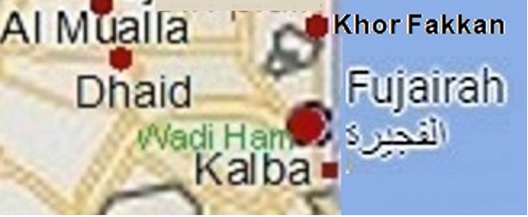
Kalba
1972年のカタール宮殿クーデター
Qatar Palace Coup d’état of 1972
さらに、当時のカタール首長シェイク(Sheikh) (شيخ) アフマド・ビン・アリ・アール・サーニー(Ahmad bin Ali Al Thani) (r.1960 ~1972) (أحمد بن علي آل ثاني),は、1972年2月にいとこシェイク(Sheikh) (شيخ) カリーファ・ビン・ハマド・アール・サーニー(Khalifa bin Hamad Al Thani) (r.1972 ~1995) (خليفة بن حمد آل ثاني)によって退位されて、交代させられていました。
Meanwhile, the then emir of Qatar, Sheikh (شيخ) Ahmad bin Ali Al Thani) (r.1960 ~1972) (أحمد بن علي آل ثاني), was deposed and succeeded by his cousin, Sheikh (شيخ) Khalifa bin Hamad Al Thani (r.1972 ~1995) (خليفة بن حمد آل ثاني) ,in February 22, 1972.
21世紀の情勢
21st Century Affairs
目次(Index)
テロ資金の取り締まり
Terrorist Money Crackdown
米国に対するアメリカ同時多発テロ事件(September 11 attacks) (هجمات 11 سبتمبر)の後、UAEはアルカイダ(Al-Qaeda) (القاعدة)が乗っ取り犯に送金する際に使用する主要な金融センターとして特定されました。UAEはすぐに米国と協力し、テロ容疑者に関連する口座を凍結し、資金洗浄を強力に取り締まりました。UAEは、すでに 1994年に米国と、1977年にフランスと軍事防衛協定に署名していました。
After the September 11 attacks (هجمات 11 سبتمبر) against the United States, the UAE was identified as a major financial center used by Al-Qaeda (القاعدة) to send money to hijackers . The UAE quickly joined forces with the US to freeze accounts linked to terrorism suspects and crack down on money laundering. The UAE had already signed military defense agreements with the United States in 1994 and France in 1977.
アル=ダフラ空軍基地の提供
Courtesy of Al-Dhafra Air Base
UAEは、2001年末の米国アフガニスタン侵攻(United States invasion of Afghanistan) (October 7~December 17, 2001)と2003年イラク侵攻(2003 invasion of Iraq) (March 20~May1, 2003) (غزو العراق)に従事する米国およびその他の連合国からの軍事作戦、およびアブダビ郊外にあるアル=ダフラ空軍基地(Al Dhafra Air Base) (قاعدة الظفرة الجوية)でのアフリカの角のための対テロ世界戦争(the Global War on Terrorism for the Horn of Africa) (الحرب العالمية على الإرهاب في القرن الأفريقي)を支援する作戦を支援しています。空軍基地はまた、1991年の湾岸戦争(Gulf War) (August 2, 1990~February 28, 1991) (حرب الخليج الثانية)とノーザンウォッチ作戦(Operation Northern Watc) (January 1, 1997~March 17, 2003) (عملية المراقبة الشمالية)中の連合国の作戦を支援しました。
The UAE supported military operations conducted by the United States and other coalition nation engaged in the United States invasion of Afghanistan (October 7~December 17, 2001) and the 2003 invasion of Iraq (March 20~May1, 2003) (غزو العراق). The UAE also assisted such operations supporting the Global War on Terrorism for the Horn of Africa (الحرب العالمية على الإرهاب في القرن الأفريقي) by utilized Al Dhafra Air Base (قاعدة الظفرة الجوية), located outside of Abu Dhabi. The air base also supported the Allied operations during the Gulf War (August 2, 1990~February 28, 1991) (حرب الخليج الثانية) and the Operation Northern Watc) (January 1, 1997~March 17, 2003) (عملية المراقبة الشمالية).
第2代大統領カリファ・ビン・ザーイド
Second president Khalifa bin Zayed
2004年11月2日、UAEの初代大統領シェイク(Sheikh) (شيخ)ザイード・ビン・スルタン・アール・ナヒヤーン(Zayed bin Sultan Al Nahyan) (r.1971~2004) (زايد بن سلطان آل نهيان)が亡くなりました。彼の長男、シェイク(Sheikh) (شيخ)カリファ・ビン・ザーイド・アール・ナヒヤーン(Khalifa bin Zayed Al Nahyan) (r.2004~2022) (خليفة بن زايد آل نهيان)は、アブダビの支配者として後を継ぎました。憲法に従って、UAEの最高統治者評議会はカリファを大統領に選出しました。シェイク(Sheikh) (شيخ) モハンマド・ビン・ザーイド・アール・ナヒヤーン(Mohamed bin Zayed Al Nahyan) (r.2004~2022) (محمد بن زايد آل نهيان)は、アブダビの皇太子として兄カリファ(Khalifa)を引き継ぎました。
On 2 November 2004, the UAE’s first president, Sheikh(شيخ) Zayed bin Sultan Al Nahyan (r.1971~2004) (زايد بن سلطان آل نهيان), died. His eldest son, Sheikh(شيخ) Khalifa bin Zayed Al Nahyan (r.2004~2022) (خليفة بن زايد آل نهيان), succeeded the ruler of Abu Dhabi. In accordance with the constitution, the UAE’s Supreme Council of Rulers (the Federal Supreme Council (المجلس الأعلى للاتحاد)) elected Khalifa as president. Sheikh(شيخ) Mohammad bin Zayed Al Nahyan (r.2004~2022) (محمد بن زايد آل نهيان) succeeded his elder brother Khalifa as Crown Prince of Abu Dhabi.
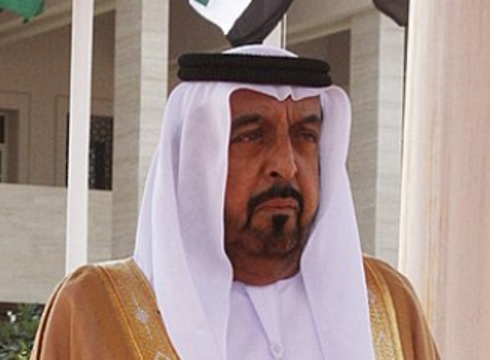
カリファ・ビン・ザーイド・アール・ナヒヤーン(Khalifa bin Zayed Al Nahyan)
第2代首相モハメッド・ビン・ラシッド
2nd Premier Mohammed bin Rashid
2006年1月、アラブ首長国連邦の首相でドバイの支配者であるシェイク(Sheikh) (شيخ)マクトゥーム・ビン・ラシッド・アール・マクトゥーム(Maktoum bin Rashid Al Maktoum) (r.1971~1979 & 1990~2006) (مكتوم بن راشد آل مكتوم)が亡くなり、シェイク(Sheikh) (شيخ) モハメッド・ビン・ラシッド・アル・マクトゥーム(Mohammed bin Rashid Al Maktoum) (r. 2006~) (محمد بن راشد آل مكتوم)皇太子が兄の後を継ぎました。
In January 2006, Sheikh Maktoum bin Rashid Al Maktoum (r.1971~1979 & 1990~2006) (مكتوم بن راشد آل مكتوم), the prime minister of the UAE and the ruler of Dubai, died. Crown Prince Sheikh Mohammed bin Rashid Al Maktoum (r. 2006~) (محمد بن راشد آل مكتوم) succeeded his elder brother Maktoum.
ポートワールドに対する放棄問題
Abandonment Issues for Portworld
2006年3月、米国政府はドバイ国営の国際物流会社、ドバイポートワールド(Dubai Ports World) (موانئ دبي العالمية)に、アメリカの6つの主要港のターミナルの管理を放棄することを強制しました。これは、2001年に発生したアメリカ同時多発テロ事件(September 11 attacks) (هجمات 11 سبتمبر)のハイジャック犯のうちの2人の故郷がUAEであり、テロ攻撃のリスクが高まることを恐れた為です。
In March 2006, the US government forced Dubai Ports World (موانئ دبي العالمية), Dubai’s state-owned international logistics company, to relinquish control of terminals in six major US ports. Two of the hijackers in the 2001 September 11 attacks (هجمات 11 سبتمبر) were from the UAE, therefore the US government was afraid of an increased risk of terrorist attacks by permitting Dubai Ports World to control any of port-terminals.
連邦国民評議会初回選挙
First FNC Election
2006年12月、UAEは、450人の候補者からUAEの連邦国民評議会(the Federal National Council) (FNC) (المجلس الوطني الإتحادي)のメンバーの半数を決定するための最初の選挙の準備をしました。しかし、首長国の人口の1%未満である7000人の首長国市民だけが選挙に投票する権利を与えられました。正確な選択方法は、公開さ得ていません。女性も有権者に含まれていましたが、女性がビジネス、公共サービス、教育の分野で注目度の高い役割を担うことが増えているUAEでは、特に、それが問題になることは、ありませんでした。
In December 2006, the UAE prepared its first elections to determine half of the members of the Federal National Council (FNC) (المجلس الوطني الإتحادي) from 450 candidates. However, only 7,000 Emirati citizens, less than 1% of the Emirati population, were entitled to vote in elections. The exact method was not made public to select voters. Women were also included in the voters, however it has never been a problem, because women are increasingly taking high profile roles in business, public service and education in the UAE.
フランス軍基地設置許可
Permit Install French Military Base
フランス軍基地設置許可Permit Install French Military Base
2008年1月、フランスとアラブ首長国連邦は、UAE訪問中のフランス大統領Nicolas Sarkozyとがアブダビ首長国に恒久的な軍事基地を設立することを許可する契約(A deal allowing France to set up a permanent military base in the emirate of Abu Dhab)に署名しました。
In January 2008, France and the United Arab Emirates signed a deal allowing France to set up a permanent military base in the Emirate of Abu Dhabi during a visit to the UAE by French President Nicolas Sarkozy.
リビアでの国際軍事作戦に参加
Jointed Military Intervention in Libya
アラブ首長国連邦は、2011年3月にリビアでの国際軍事作戦(the international military operations in Libya)に参加しました。目的は、リビアの反政府勢力であるリビア国民軍(LNA)を支援するためです。UAEは、武器や訓練を提供し、空爆や偵察任務する等、フランスやカタールとともNATO主導の軍事介入に参加しています。。
The United Arab Emirates participated in the international military operations in Libya in March 2011. The purpose is to support the Libyan rebel group, the Libyan National Army (LNA). The UAE participates in NATO-led military interventions with France and Qatar, providing weapons and training, conducting airstrikes and conducting reconnaissance missions.
アラブの春問題
Arab Spring Issue
2011年8月、中東では、一般にアラブの春(the Arab Spring) (December 17, 2010~ December 2012) (الربيع العربي)として知られている多くの民主的な蜂起が見られました。UAEでは、比較的騒乱は、多くありませんでしたが、反政府見解を表明する反政府ウェブサイトの運営を通じて、国家元首を侮辱した名誉毀損の容疑で5人の政治活動家が逮捕されました。侮辱の対象となったのは、UAEのカリファ・ビン・ザーイド・アル・ナヒヤーン大統領(UAE president Khalifa bin Zayed Al Nahyan)、モハメッド・ビン・ラシッド・アル・マクトゥーム副大統領(UAE vice president Mohammed bin Rashid Al Maktoum)、アブダビ皇太子のムハンマド・ビン・ザーイド・アル・ナヒヤーン(Abu Dhabi crown prince Mohammed bin Zayed Al Nahyan)でした。5人の政治活動家の裁判 は、「5人の男性を良心の囚人(the five men prisoners of conscience)」に指名したアムネスティ・インターナショナル(Amnesty International)を含む多くの人権団体からの国際的な訴えと抗議を集めたした。被告立は、有罪判決を受け、2011年11月27日に2年から3年の懲役刑を宣告されました。
August 2011 saw a number of democratic uprisings in the Middle East commonly known as the Arab Spring (December 17, 2010~ December 2012) (الربيع العربي). In the UAE, where there had been relatively little unrest, five political activists had been arrested on defamation charges for insulting the head of state through running an anti-government website expressing anti-government views. Those targeted were UAE president Khalifa bin Zayed Al Nahyan and UAE vice president Mohammed bin Rashid. Al Maktoum) and Abu Dhabi crown prince Mohammed bin Zayed Al Nahyan. The trial of five political activists had been met with international propaganda from many human rights groups, including the Amnesty International, which had named them “the five men prisoners of conscience”, and garnered protests. The accused was found guilty and sentenced to two – three years in prison on November 27, 2011.
社会指導協会クーデター未遂
Al Islah Coup Attempt
2012年から2013年にかけて、ムスリム同胞団(the Muslim Brotherhood) (الإخوان المسلمون)の一部と考えられる社会指導協会(アル=イスラー)(Al Islah) (جمعية الإصلاح والتوجيه الاجتماعي)の93人の首長国活動家が、クーデターの試みとUAEでのイスラーム主義国家(an Islamist state) (ISIS) (تنظيم الدولة الإسلامية)の樹立の試みの疑いで逮捕されました。2013 年 7 月 2 日、94 人の裁判で評決が下され、94 人のうち、56 人の容疑者が 3 年から 10 年の懲役刑を受けました。 容疑者8人には欠席裁判で懲役15年の判決が下され、26人は無罪となりました。
In 2012-2013, 94 emirate activists from the Al Islah (جمعية الإصلا والتوجحيه الاجتماعي), considered part of the Muslim Brotherhood (الإخوان المسلمون), were arrested on suspicion of attempting a coup and establishing an Islamic state (ISIS) (تنظيم الدولة الإسلامية) in the UAE. On July 2, 2013, a verdict was handed down in a trial of 94 people, out of which 56 suspects received 10 years’ imprisonment from 3 years on him. Eight suspects were sentenced in absentia to 15 years in prison, and 26 were acquitted.
ソーシャルメディア抗議の非合法化
Outlawed Protests on Social Media
2012年11月、近くのバハレイン(Bahrain)での抗議を念頭に置いて、UAEは自国政府のオンライン嘲笑(online mockery)やソーシャルメディアを通じた公の抗議を組織しようとする試みを非合法化しました。
In November 2012, with protests in nearby Bahrain in mind, the UAE outlawed online mockery of its government and attempts to organize public protests through social media.
イエメン内戦への軍事介入
Military Intervention in Yemen
2015年からUAEは、サウジアラビア主導の連合軍(Saudi Arabian–led intervention in Yemen) (التدخل لعسكري السعودية في اليمن)の一員として、イエメン内戦に軍事介入を始めました。しかし、2019年には部隊の大半を撤収し、イエメン内戦から距離を置く姿勢を見せてきました。その後も一部の部隊や武器は残されていますが、イエメン内戦への関与は低下しています。
Since 2015, the UAE had intervened in the Yemeni civil war as part of the Saudi Arabian–led intervention in Yemen (التدخل لعسكري السعودية في اليمن). However, in 2019, it withdrew most of its troops and has been showing a posture to distance itself from the civil war in Yemen. Although some troops and weapons have remained since then, their involvement in the Yemeni civil war has declined.
イエメン南部暫定評議会を支援
Supporting Yemeni STC
2018年頃から、UAEは、イエメンでは南部暫定評議会(Southern Transitional Council) (STC) (المجلس الانتقالي الجنوبي)を政治的、軍事的に支援しています。この評議会は、南部分離独立派にょって、2017年に設立されました。イエメン南部暫定評議会(Southern Transitional Council) (STC)の議長(president)は、アイドルース・アッ=ズバイディー(Aidarous Qassem Abdulaziz Al-Zubaidi) (r. 2017) (عيدروس قاسم عبد العزيز الزبيدي)です。彼は、2022年4月7日の前大統領アブド・ラッボ・マンスール・ハーディー(Abd Rabbuh Mansur Hadi) (r.2012~2022) (عبدربه منصور هادي)による大統領令によりサウジアラビアのリヤードに設立されたThe Presidential Leadership Council (PLC) (مجلس القيادة الرئاسي)に副議長を務め、フーシ派(Houthi) (حوثيون)との和平交渉に参加しています。ただし、南部分離独立派の代表であり、イエメン統一を図るこの交渉がまとめることには、彼自身は、積極的ではありません。
Since around 2018, the UAE has politically and militarily supported the Southern Transitional Council (STC) (المجلس الانتقالي الجنوبي) in Yemen. The council was established in 2017 by Southern separatists. The president of the Southern Transitional Council (STC) is Aidarous Qassem Abdulaziz Al-Zubaidi) (r. 2017) (عيدروس قاسم عبد العزيز الزبيدي). He assumed the post of Vice-Chairman of the Presidential Leadership Council (PLC) (مجلس القيادة الرئاسي), established in Riyadh, Saudi Arabia by Presidential Decree of April 7, 2022 issued by the former president Abd Rabbuh Mansur Hadi (r.2012-2022) (عبدربه منصور هادي). Aidarous Qassem (عيدروس قاسم) participates in peace talks with the Houthi (حوثيون), however, he himself is a representative of the southern separatists and has been reluctant to conclude this deal to unify Yemen.
COVID-19感染対策
COVID-19 Infection Control
2020年1月29日、73歳の中国人女性がこの病気の検査で陽性となったため、COVID-19のパンデミックがUAEに到達したことが確認されました。2か月後の3月、政府は24時間の夜間外出禁止令を課し、すべてのエミレーツ航空(طيرانالإمارات)の旅客便を停止し、ショッピングモール、学校、礼拝所を閉鎖しました。
On 29 January 2020, the COVID-19 pandemic was confirmed to have reached the UAE as a 73-year-old Chinese woman tested positive for the disease. Two months later, in March, the government imposed a 24-hour curfew, suspending all Emirates Airlines (طيران الإمارات) passenger flights, as well as closing shopping malls, schools and places of worship.
モハメッド・ビン・ラシッド娘監禁問題
MBR’s Daughters Confinement
2020年3月に英国の裁判所は、シェイク(Sheikh) (شيخ) モハメッド・ビン・ラシッド・アル・マクトゥーム(Mohammed bin Rashid Al Maktoum) (r. 2006~) (محمد بن راشد آل مكتومが二人娘を誘拐して投獄したとの判決を下しました。判決では、シェイク・モハメド(Sheikh Mohammed) (شيخ محمد)が、2000年に19歳だったプリンセス・シャムサ(Shamsa bint Mohammed bin Rashid Al Maktoum) (b. 1981) (شمسة بنت محمد بن راشد آل مكتوم)をケンブリッジから、2018年に32歳だったプリンセス・ラティファ(Latifa bint Mohammed Al Maktoum) (b.1985) (لطيفة بنت محمد بن راشد آل مكتوم)をインド洋から、それぞれ強制的にドバイに連れ戻したことが明らかにされました。この事件は、プリンセス・ハヤ(Princess Haya bint Al Hussein) (b.1974) (الأميرة هيا بنت الحسين)が2019年4月に2人の子供とともにロンドンに逃亡したことで表面化しました彼女はシェイク・モハメドが自分の娘をサウジアラビアの皇太子(the Crown Prince of Saudi Arabia)ムハンマド・ビン・サルマーン(Mohammed bin Salman (r.2017~) (محمد بن سلمان آل سعود)と結婚させようとしていると主張し、強制結婚防止命令を求めました。
In March 2020, a British court ruled that Sheikh (شيخ) Mohammed bin Rashid Al Maktoum (r. 2006~) (محمد بن راشد آل مكتوم) kidnapped and imprisoned his two daughters.
In the judgment, Sheikh Mohammed (شيخ محمد) seized Shamsa bint Mohammed bin Rashid Al Maktoum (b. 1981) (شمسة بنت محمد بن راشد آل مكتوم), who was 19 years old in 2000, was forcibly taken back from Cambridge to Dubai. And also, Latifa bint Mohammed Al Maktoum (b.1985) (لطيفة بنت محمد بن راشد آل مكتوم) , who was 32 years old in 2018, was forcibly taken back from the Indian Ocean to Dubai.
The incident surfaced when Princess Haya bint Al Hussein (b.1974) (الأميرة هيا بنت الحسين) fled to London with her two young children in April 2019. She claimed that Sheikh Mohammed (شيخ محمد) wanted to marry his daughter to the Crown Prince of Saudi Arabia Mohammed bin Salman (r.2017~) (محمد بن سلمان آل سعود). She asked British court to issue an anti-forced marriage order.
アブラハム合意
Abraham Accords
2020年8月29日、UAEは、米国の助けを借りて、イスラエルと通常の外交関係を確立する為に」、アブラハム合意(the Abraham Accords) (اتفاقيات إبراهيم)に署名しました。この合意にバハレインも共に署名しました。
On August 29, 2020, the UAE, with the help of the United States, signed the Abraham Accords (اتفاقيات إبراهيم) to establish normal diplomatic relations with Israel. Bahrain also signed this agreement.
アブラハム合意(the Abraham Accords) (اتفاقيات إبراهيم):アブラハム合意(the Abraham Accords)は、米国の仲介によって、イスラエル(Israel)、アラブ首長国連邦(the United Arab Emirates)、バハレイン(Bahrain)の間で、交わされた一連の正常化共同声明です。アブラハム合意の調印式は、2020年9月15日に米国の主催でホワイトハウスで行われ、双方の担当者が署名しました。 二重協定の一環として、アラブ首長国連邦(the United Arab Emirates)とバハレイン(Bahrain)の両国は、イスラエル(Israel)の主権を認め、完全な外交関係の確立が可能となりました。
The Abraham Accords (اتفاقيات إبراهيم): The Abraham Accords, mediated by the United States, between Israel, the United Arab Emirates, and Bahrain, A series of joint normalization statements exchanged. The signing ceremony for the Abraham Accords was hosted by the United States at the White House on September 15, 2020 and signed by officials from both sides. As part of the dual agreement, both the United Arab Emirates and Bahrain recognized Israeli sovereignty and were able to establish full diplomatic relations.
刑法と民法の見直し
Review of Criminal and Civil Laws
2020年代初頭、UAEは刑法と民法の見直しを開始しました。それはアルコールを合法化し、名誉殺人に対するより軽い罰を認めることをやめ、レイプとセクハラに対するより厳しい罰を制定し、外国人が地元のシャリーア法(Shariah) (شريعة)ではなく結婚と相続について母国の家族法に従うことを許可し、麻薬に対する罰則を減らし、未婚の間に子供を産むことに対する罰則を減らし、未婚のカップルが一緒に暮らすことを許可しました。
In the early 2020s, the UAE launched a review of its criminal and civil laws. It legalized alcohol, stopped allowing lighter penalties for honor killings, enacted harsher penalties for rape and sexual harassment, and allowed foreigners to obey family laws in their home country about marriage and inheritance rather than local Shariah (شريعة), reduced penalties for drugs, reduced penalties for having children while out of wedlock, and allowed unmarried couples to live together.
経済の変化により、外国人もUAEパートナーを持たずに事業を所有することが出来る様になりました。仕事と生活のバランスを改善し、経済的な競争力を高めるため、2022年の初めから金曜日を半日勤務として土曜日と日曜日を休日とする週末に移行しました。
同性愛は依然として違法であり、新しい21歳以上の観客に対しては、無修正映画の上映が可能になりました。
但し、言論の自由は保証されておらず、政府の批評家は他の人権上の懸念を持ち続けています。
The changing economy has made it possible for foreigners to own a business without having a UAE partner. From the beginning of 2022, UAE government shifted to weekends of 2 holidays of Saturdays and Sundays with half-days on Fridays, in order to improve work-life balance and increase economic competitiveness. Homosexuality is still illegal, and uncensored films are now available to the new 21+ audience. However, freedom of speech is not guaranteed, and government critics continue to raise other human rights concerns.
火星探査機ホープ
Mars Probe Hope
2021年2月9日、アラブ首長国連邦(UAE)は、ホープ(Hope) (الأمل)と名付けられた探査機が火星の軌道に到達することに成功したという歴史的なマイルストーンを達成しました。アラブ首長国連邦は、アラブ世界で火星に到達した最初の国、火星への到達に成功した5番目の国、そしてインドの探査(an Indian probe)の後、処女の試みで火星を周回した2番目の国になりました。
On February 9, 2021, the United Arab Emirates (UAE) achieved a historic milestone when a spacecraft named Hope (الأمل) successfully reached the orbit of Mars. The United Arab Emirates is the first country in the Arab world to reach Mars, the fifth country to successfully reach Mars, and became the second country orbiting Mars in its maiden attempt after an Indian probe.
フーシ派のドローン攻撃
Houthi Drone Attack
2022年1月17日、フーシ派(Houthi) (حوثيون)はUAEのアブダビでを実行し、3人が死亡しました 。フーシ派は、空港や石油精製所なども標的にしたと主張しています。
On January 17, 2022, the Houthi (حوثيون) carried out a drone strike in Abu Dhabi, UAE, killing three people. The Houthis also claimed to have targeted airports and oil refineries.
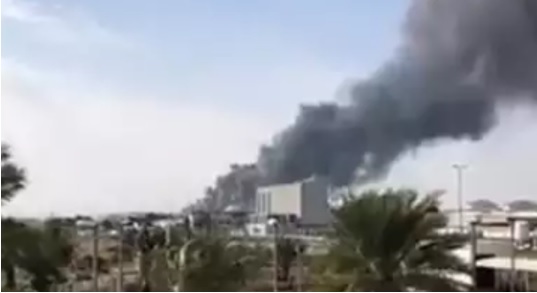
On January 17, 2022, the Houthi (حوثيون) carried out a drone strike in Abu Dhabi
第3代大統領モハンマド・B・ザーイド
3rd President Mohammad B Zayed
2022年5月14日、シェイク(Sheikh) (شيخ) カリファ・ビン・ザーイド・アール・ナヒヤーン(Khalifa bin Zayed Al Nahyan) (r.2004~2022) (خليفة بن زايد آل نهيان)の死後、シェイク(Sheikh) (شيخ) モハンマド・ビン・ザーイド・アール・ナヒヤーン(Mohamed bin Zayed Al Nahyan) (r. 2022~) (محمد بن زايد آل نهيان)がアブダビの支配者として後を継ぎ、UAEの第三代大統領に選出されました。
On May 14, 2022, after the death of Sheikh (شيخ) Khalifa bin Zayed Al Nahyan) (r.2004~2022) (خليفة بن زايد آل نهيان), Sheikh (شيخ) Mohamed bin Zayed Al Nahyan (r. 2022~) (محمد بن زايد آل نهيان) succeeded the ruler of Abu Dhabi and was elected as the third president of the UAE.
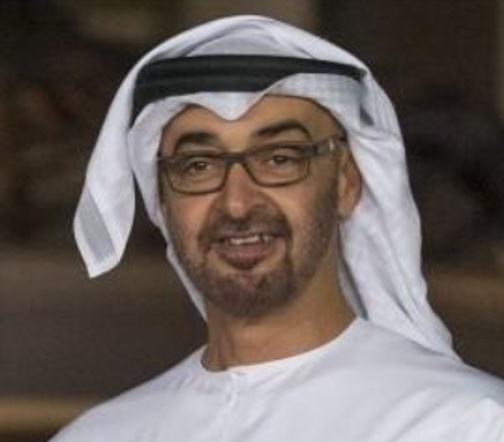
モハンマド・ビン・ザーイド・アール・ナヒヤーン(Mohamed bin Zayed Al Nahyan)
 Desert peninsula