36.1 Kuwait since Modern Times Part 2


湾岸戦争に至るまで
Leading up to Gulf War
節索引(Section Index)
イラク債務免除拒否と領土問題再燃
Denial of Iraqi debt forgiveness and recurrence of territorial Issues
イラン・イラク戦争(Iran–Iraq War)が終わった後、クウェイトは650億ドルの債務を免除するというイラクの要求を拒否しました。クウェイトが石油生産を40%増加させた後、両国間の経済的競争が続きました。イラクとクウェイトの紛争には、クウェイトの領土に対する歴史的な主張も含まれていました。クウェイトは、オスマン帝国(Ottoman Empire)のバスラ州(Basra Vilayet) (ولاية البصرة)の一部であり、イラクは、「クウェイトを正当なイラク領土である」と主張しました。
After the Iran–Iraq War ended, Kuwait rejected Iraq’s request to forgive $65 billion in debt. After Kuwait increased its oil production by 40%, economic competition between the two countries continued.The Iraq-Kuwait conflict also included historical claims to Kuwait’s territory. Kuwait was a part of Ottoman Empire’s Basra Vilayet (ولاية البصرة), therefore Iraq claimed that Kuwait was “legitimate Iraqi territory.”
海岸線確保の願望
Desire to secure coastline
クウェイトの支配王朝であるサバーハ家(House of Sabah) (آل صباح)は、1899年に保護協定を締結し、クウェイトの外交の責任を英国に割り当ててていました。英国は、1922年にクウェイトとイラクの国境を引き、アラビア湾の海岸線へのアクセスを制限することにより、イラクをほぼ完全に内陸国にしました。これに長年にわたって反発していたイラクは、内陸国から脱極する為に、この地域でさらなる海岸線を確保しようと、主張しましたが、クウェイトは、拒否しました。
The House of Sabah (آل صباح), the ruling dynasty of Kuwait, signed a protection agreement in 1899 that assigned responsibility for Kuwaiti’s diplomacy to the British. Britain made Iraq almost entirely landlocked by drawing the Kuwait-Iraq border in 1922 and restricting access to the Arabian Gulf coastline. Iraq, which had long been opposed to this, insisted on securing more coastlines in the region to break away from landlocked countries, but Kuwait refused.
OPEC割当量違反
OPEC Quota Violation
イラクは、又、クウェイトが石油生産のためのOPEC割当量を超えたと非難しました。カルテルがバレルあたり18ドルの望ましい価格を維持するためには、規律が必要でしたが、クウェイトは、一貫して過剰生産でした。それは、部分的には、クウェイトに対するイラン・イラク戦争攻撃によって引き起こされたインフラの損失を修復し、経済スキャンダルの損失を支払うためでした。
Iraq also accused Kuwait of exceeding its OPEC quota for oil production. Discipline was needed for the cartel to maintain the desired price of $18 per barrel, but Kuwait was consistently overproduced. It was, in part, to repair the infrastructure losses caused by the Iran–Iraq War attack on Kuwait and to pay for the losses of the economic scandal.
不十分な石油収入と傾斜掘りへの不信感
Inadequate oil revenues plus mistrusted directional drilling
石油価格は、1バレルあたり10ドルまで下落し、その結果、イラクは1989年の国際収支赤字に匹敵する年間70億ドルの損失を被りました。結果として生じる収入では、イラクの損傷したインフラを修復することは言うまでもなく、政府の基本的な費用を支えるのにも難しい状態でした。イラクは、より多くの規律を求めたが、ほとんど成功しませんでした。イラク政府は、それを経済戦争の一形態として説明していました。その状態は、国境を越えてイラクのルマイラ油田(Rumaila oil field) (حقل الرميلة)へのクウェイトの傾斜掘りによってさらに悪化したと主張しました。
Oil prices fell to $10 per barrel, resulting in Iraq losing $7 billion a year, comparable to the 1989 balance of payments deficit. With the resulting revenues, it was difficult to support the basic costs of the government, let alone repair Iraq’s damaged infrastructure. Iraq sought more discipline but had little success. The Iraqi government had described it as a form of economic warfare. It claimed that the condition was further exacerbated by Kuwait’s Directional drilling, across the border to the Rumaila oil field (حقل الرميلة) in Iraq.
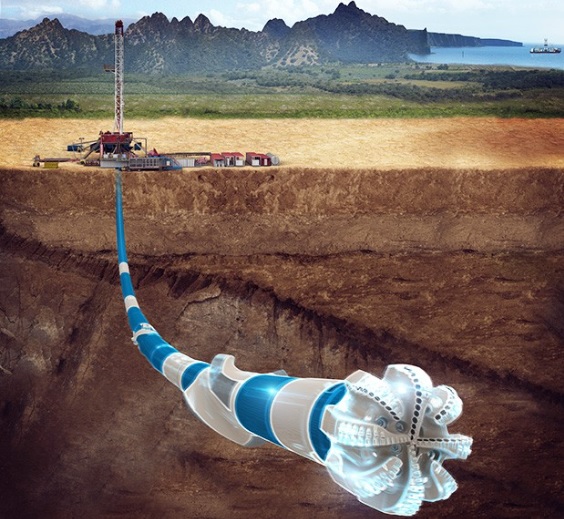
掘削の改善が石油・ガス産業の効率化の鍵 – コンコルディア大学
Why better drilling could be the key to a more efficient oil and gas industry – Concordia University
アラブ諸国との緊密な関係模索
Seeking closer ties with Arab states
同時に、サッダーム・フセイン(Saddam Hussein) (1979~2003) (صدام حسين)は、戦争でイラクを支持したアラブ諸国(Arab States)とのより緊密な関係を模索しました。この動きは、イラクと親欧米の湾岸諸国との関係がイラクを米国の勢力圏内に持ち込み、維持するのに役立つと信じていた米国によって支持されました。
At the same time, Saddam Hussein (1979~2003) (صدام حسين) sought closer ties with the Arab States, which supported Iraq in the war. The move was supported by the United States, which believed that Iraq’s relations with the pro-Western Gulf states would help bring Iraq within and keep it within the U.S. sphere of influence.
非干渉と非侵略の協定
Non-interference and non-aggression agreement
1989年には、戦争中に強いイラクとクウェイトの関係が維持されるように見えました。両国間で非干渉と非侵略の協定が調印され、続いてイラクがクウェイトに飲料水と灌漑用の水を供給するというクウェイトとイラクの取引が行われましたが、クウェイトがイラクのウンム・カスル(Umm Qasr) (أم قصر)をリースする要求は、拒否されました。
In 1989, it looked like strong Iraq-Kuwait relations would be maintained during the war. A non-interference and non-aggression agreement was signed between the two countries, followed by a Kuwait-Iraqi deal in which Iraq supplied Kuwait with drinking water and irrigation water, but Kuwait’s request to lease Iraq’s Umm Qasr (أم قصر) was rejected.
GCC支援開発プロジェクトの低迷
Slumps on GCC Support Development Project
GCCが支援する開発プロジェクトは、20万人の兵士の動員解除があっても、イラクの多額の債務によって妨げられました。イラクはまた、輸出国になるために武器生産を増やすことを目指しましたが、これらのプロジェクトの成功は、イラクの義務不履行によっても抑制されました。イラクでは、OPECの統制に対する憤慨が高まっていました。
GCC-backed development projects were hampered by Iraq’s heavy debt, even with the demobilization of 200,000 troops. Iraq also sought to increase arms production to become an exporter, but the success of these projects was also suppressed by Iraq’s default of obligations. In Iraq, indignation against OPEC control was growing.
イラクの失業者の増加
Increasing in Iraqi unemployment
イラクと他のアラブの隣人との関係は、戦争中に十分に雇用されていた外国人駐在員グループに対するイラクでの暴力の高まりや、動員解除された兵士を含むイラク人失業者の増大によって悪化しました。これらに関しては、東ヨーロッパでの共産主義の崩壊に直接関連する動きの速い出来事に世界の注目が集まっていた為、アラブ世界の外ではほとんど注目されませんでした。
Iraq’s relations with its other Arab neighbors were soured by growing violence in Iraq against expatriate groups that were well employed during the war and by the growing Iraqi unemployed, including demobilized soldiers. These received little attention outside the Arab world, as the world’s attention was focused on fast-moving events directly related to the collapse of communism in Eastern Europe.
イラクの人権問題と米国への不信感
Human Rights Issues in Iraq and Distrust of the United States
一方、米国は、よく知られている拷問の使用を含む、イラクの人権記録を非難し始めました。英国はまた、英国の新聞オブザーバー紙(the Observer)で働いていたジャーナリストであるファルザド・バゾフト(Farzad Bazoft) (1958~1990) (فرزاد بازفت)の処刑を非難しました。イスラエルがイラクに対して軍事力を行使した場合、イスラエルに「二種混合型化学兵器(Binary Chemical Weapons)」が使用されるというサッダーム・フセイン(Saddam Hussein)の宣言に続いて、ワシントンは、その資金提供の一部を停止しました。暴動がパレスチナ人の死をもたらしたイスラエル占領地への国連使節団は、米国によって拒否され、イラクは、中東のエネルギー埋蔵量への米国の依存と相まって、この地域における米国の外交政策の目的に深く懐疑的になりました。
Meanwhile, the United States began to condemn Iraq’s human rights record, including the well-known use of torture. The British also condemned the execution of Farzad Bazoft (1958~1990), a journalist who worked for the British newspaper the Observer.(فرزاد بازفت) . Following Saddam Hussein’s declaration that “Binary Chemical Weapons” would be used against Israel if Israel used military force against Iraq, Washington suspended some of its funding. A UN mission to the Israeli-occupied territories, where the riots resulted in the death of Palestinians, was rejected by the United States. Coupled with the U.S. dependence on Middle Eastern energy reserves, Iraq became deeply skeptical of U.S. foreign policy objectives in the region.
軍事行動への公然脅迫
Open threat to take military action
イラクがルマイラ油田(Rumaila oil field)の傾斜掘削によって国境近くの油田から石油を盗んでいると主張してOPECに不平を言った後、1990年の夏に緊張はさらに高まりました。1990年7月初旬、イラクは割り当て(quota)を尊重しないなどのクウェイトの行動について不満を述べ、軍事行動を取ると公然と脅迫しました。
Tensions escalated further in the summer of 1990 after Iraq complained to OPEC alleging that it was stealing oil from oil fields near the border by Directional drilling at Rumaila oil field. In early July 1990, Iraq complained about Kuwait’s actions, including not respecting quotas, and openly threatened to take military action.
米海軍艦隊警戒下での反イラク陰謀阻止
Thwarted anti-Iraq conspiracy under US Navy fleet on alert
1990年7月23日、CIAは、イラクが30,000人の軍隊をイラクとクウェイトの国境に移動させ、アラビア湾の米海軍艦隊が警戒態勢に入ったと報告しました。サッダーム・フセイン(Saddam Hussein)は、反イラクの陰謀が発展していると、信じていました。クウェイトはイランとの交渉を開始し、イラクのライバルシリアはエジプトへの訪問を手配しました。国防長官による検討の結果、シリアは実際に数日中にイラクに対する攻撃を計画していることが判明しました。サッダーム・フセイン(Saddam Hussein)は、すぐに資金を使って中央情報をシリアに組み込み、最終的に差し迫った空爆を防ぎました。
On July 23 1990, the CIA reported that Iraq had moved 30,000 troops to the Iraqi-Kuwait border and that the U.S. Navy fleet in the Arabian Gulf was put on alert. Saddam Hussein believed that an anti-Iraqi conspiracy was developing. Kuwait began negotiations with Iran, and Iraqi rival Syria arranged a visit to Egypt. After consideration by the Secretary of Defense, it turned out that Syria is actually planning an attack on Iraq in the coming days. Saddam Hussein quickly used the funds to incorporate central intelligence into Syria, ultimately preventing impending air strikes.
アラブの利益と安全を損なう一部のアラブ支配者
Some Arab rulers undermining Arab interests and security
1990年7月15日、サッダーム・フセイン(Saddam Hussein)政権は、政策の動きがイラクに年間10億ドルの費用がかかっていること、クウェイトが依然としてルマイラ油田(Rumaila oil field)を使用していること、UAEとクウェイトによる融資は「アラブの兄弟」への債務とは見なされないことなど、アラブ連盟に対する複合的な反対を表明した。彼はクウェイトとUAEに対して武力行使で脅かし、「一部のアラブの支配者の政策はアメリカ人である…彼らはアラブの利益と安全を損なうためにアメリカに触発されている。」と言いました。
On July 15, 1990, the administration of Saddam Hussein expressed compound opposition to the Arab League, including that the policy move cost Iraq $1 billion a year, that Kuwait still uses the Rumaila oil field, and that loans by the UAE and Kuwait are not considered debts to “Arab brothers.” He threatened with the use of force against Kuwait and the UAE, saying, “The policy of some Arab rulers is American… They are inspired by America to undermine Arab interests and security.”
米国警戒態勢強化とエジプトの平和的な進路模索
Reinforcing US vigilance and Egypt’s search for a peace
米国は、これらの脅威に対応して、空中給油機と戦闘艦をアラビア湾に送りました。エジプトのホスニ・ムバラク(Hosni Mubarak) (1981~2011) (محمد حسني مبارك)大統領がアラブ連盟に代わって仲介したジェッダでの議論は7月31日に開催され、ムバラクは平和的な進路(a peaceful course)を確立できると信じるようになりました。
The United States, in response to these threats, sent tanker aircraft and combat ships to the Arabian Gulf. Egyptian President Hosni Mubarak (1981~2011) (محمد حسني مبارك) mediated discussions in Jeddah on behalf of the Arab League on July 31, and Mubarak came to believe that a peaceful course could be established.
サッダーム・フセインと駐イラク米国大使会談
Meeting with Saddam Hussein, US Ambassador to Iraq
1990年7月25日、サッダーム・フセイン(Saddam Hussein)はバグダッド(Baghdad) (بغداد)でエイプリル・グラスピー(April Glaspie)駐イラク米国大使と会談しました。これに対してイラクの指導者は、クウェイトとUAEに関するアメリカの政策を攻撃しました。
サッダーム・フセイン(Saddam Hussein)は、クウェイト人との最後の交渉を試みると述べた一方で、イラクは「死を受け入れない」とも宣言していました。
On July 25 1990, Saddam Hussein met with U.S. Ambassador to Iraq April Glaspie in Baghdad (بغداد). In response, Iraqi leaders attacked U.S. policy regarding Kuwait and the UAE.
While Saddam Hussein said he would try to make one last deal with the Kuwaitis, he also declared that Iraq would “not accept death.”
湾岸戦争(1990~1991)
Gulf War (1990~1991)
節索引(Section Index)
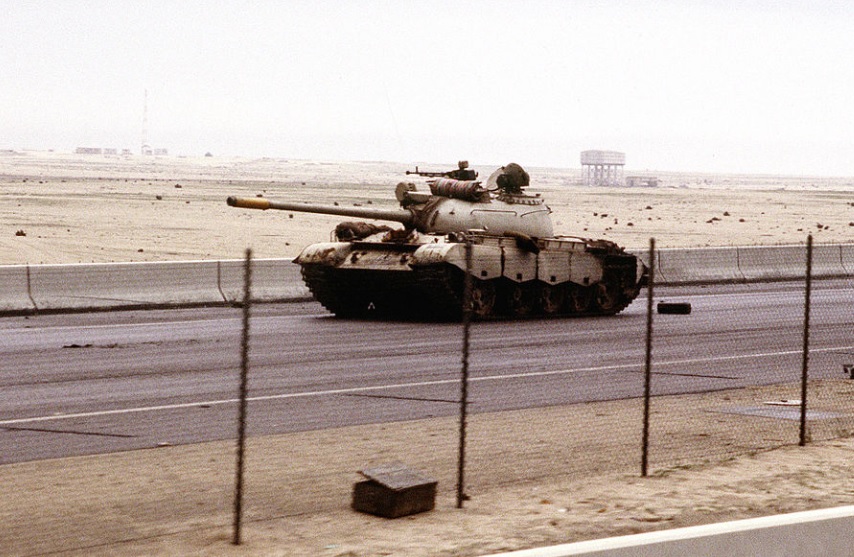
湾岸戦争中にクウェイト市への道を進んでいるイラクのタイプ69戦車
Iraqi Type 69 tanks on the road to Kuwait City during the Gulf War
8月8日イラクのクウェイト併合
August 8 Iraq annexed Kuwait
クウェイトの侵略とイラクによる併合は1990年8月2日に行われました。最初の開戦事由は、サバーハ家(House of Sabah)に対するクウェイトの反乱への支援であると主張されました。
イラクが支援するクウェイトの傀儡指導者アラア・フセイン・アリ(Alaa Hussein Ali) (علاء حسين علي جبر الخفاجي)が「自由クウェイト臨時政府(Provisional Government of Free Kuwait)」の長に就任しましたが、イラクは8月8日にクウェイトを併合しました。
The invasion of Kuwait and its annexation by Iraq took place on August 2, 1990. The first casus belli was claimed to be support for the Kuwaiti rebellion against the House of Sabah.
Iraqi-backed Kuwaiti puppet leader Alaa Hussein Ali (علاء حسين علي جبر الخفاجي) became head of the “Provisional Government of Free Kuwait”, but Iraq annexed Kuwait on August 8.
クウェイト人の武装抵抗と国外逃亡
Kuwaiti civilian resistance and flight
クウェイトの民間人は、イラクによるクウェイト占領に続いて、地元の武装抵抗運動を設立しました。クウェイトのレジスタンスの死傷者は、連合軍と西側の人質のそれをはるかに上回っていた。抵抗は主に、いかなる形の訓練と監督も欠いていた一般市民で構成されていました。
地下レジスタンスは即決処刑と拷問によって罰せられました。当時のクウェイト人のほとんど全員が家族を失っていました。さらに、クウェイト国民および外国生まれを含む人口の半分は、迫害から逃れるためにクウェイトから逃げ出しました。
Kuwaitis at that time had lost their families. Moreover, half of the population, including Kuwaiti nationals and foreign-born, fled Kuwait to escape persecution.
Kuwaiti civilians established a local armed resistance movement following the Iraqi occupation of Kuwait. Kuwait’s resistance casualties far outweighed those of the Allied forces and Western hostages. The resistance consisted mainly of civilians who lacked any form of training and supervision.
34カ国のアメリカ主導の連合
American-led coalition of 34 nations
ジョージH.W.ブッシュ(George H. W. Bush) (1989~1993)は、侵略を非難し、イラク軍を追い出す努力を主導しました。国連安全保障理事会によって承認された、34カ国のアメリカ主導の連合は、クウェイトを解放するために湾岸戦争を戦いました。空爆は1991年1月17日に始まり、数週間後、米国主導の国連(UN)連合が1991年2月23日に地上攻撃を開始し、4日間でクウェイトからイラク軍を完全に撤去させました。
George H. W. Bush (1989~1993) condemned the invasion and led efforts to drive out Iraqi troops. Endorsed by the UN Security Council, the American-led coalition of 34 nations fought the Gulf War to liberate Kuwait. The airstrikes began on January 17, 1991, and a few weeks later, the U.S.-led United Nations (UN) coalition launched a ground offensive on February 23, 1991, completely removing Iraqi forces from Kuwait in four days.
歴史上最大の油流出
Biggest oil spill in history
1991年1月23日、イラクは、150万立方メートルの原油をアラビア湾に投棄し、史上最大の沖合油流出を引き起こしました。これは、米海兵隊が上陸するのを防ぐための意図的な天然資源攻撃として報告されていました。これらの約30〜40%は、イラクの沿岸標的に対する連合軍の襲撃によるものでもありました。
陸上のクウェイト原油流出は、、記録された歴史の中で最大の油流出となりました。
On January 23, 1991, Iraq dumped 1.5 million cubic meters of crude oil into the Arabian Gulf, causing the largest offshore oil spill in history. This had been reported as a deliberate natural resource attack to prevent U.S. Marines from landing. About 30-40% of these were caused by coalition raids on coastal targets in Iraq.
The onshore Kuwait oil spill was the largest oil spill in recorded history.
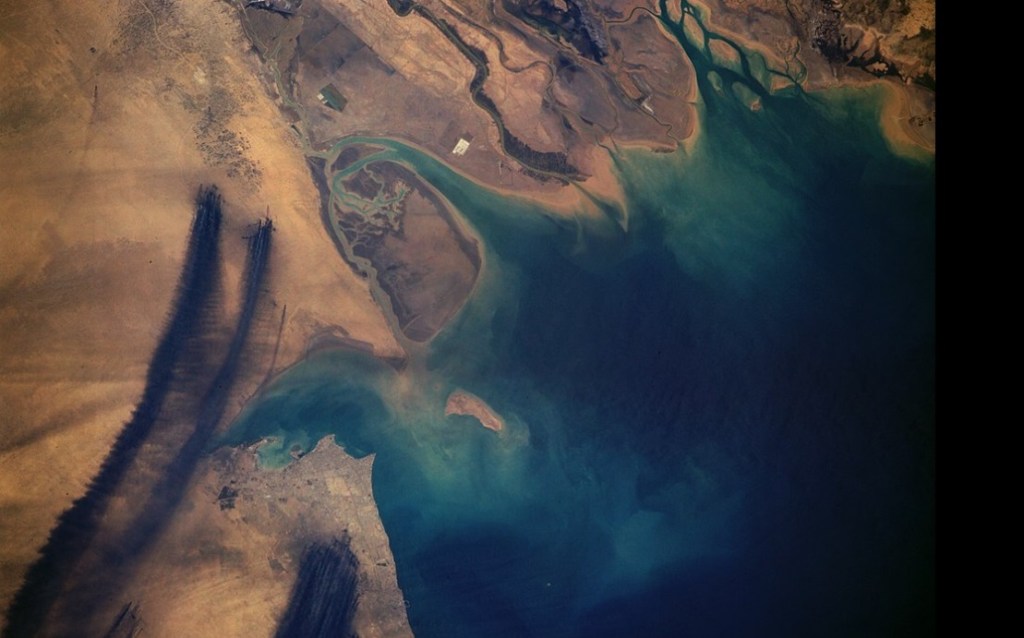
1991年4月7日、STS-37飛行中のスペースシャトルから見た、クウェートのいくつかの石油流出と火災からの煙。
Smokes from several oil spill and fires in Kuwait, seen from the Space Shuttle during flight STS-37, April 7, 1991.
1991年のクウェイトでの石油火災
1991 oil fire in Kuwait
1991年のクウェイトでの石油火災は、クウェイトから撤退するイラク軍の焦土作戦の結果でした。1991年にクウェイトを征服し、連合軍によって追い出された後、クウェイトから撤退する際にイラク軍は、700の油井に火を放ち、これによって引き起こされた火災は1991年1月と2月に始まり、11月にやっと最後の火災が消火されました。時間の掛かった主な理由は、油井周辺には地雷が設置されており、消防隊員が火を消す為に接近する前に軍の地雷撤去作業が必要でした。この火災では、毎日約600万バレルの石油が失われました。最終的に、民間契約の作業員がクウェイトに総額15億米ドルの費用をかけて消火しましたが、火事は約10か月間燃え続けた為、クウェイトで広範囲にわたる汚染を引き起こしました。流出した原油と火災による煤が沙漠の砂と混じった混合物は、陸地の5パーセントを覆う硬い「タルクリート」の層を形成させることで一応処理されました。汚染地域の殆どの植生は1990年代半ばまでに回復し始めました。
The 1991 oil fire in Kuwait was the result of a scorched earth policy of Iraqi forces withdrawing from Kuwait. When withdrawing from Kuwait after conquering Kuwait in 1991 and being driven out by coalition forces, Iraqi forces set fire to 700 oil wells, the fires caused by which began in January and February 1991, and the last fire was finally extinguished in November. The main reason for the time taken was that there were mines around the well, and military mine removal work was required before firefighters could approach to put out the fire. The fire lost about 6 million barrels of oil every day. Eventually, privately contracted crews extinguished the fire in Kuwait at a total cost of US$1.5 billion, but the fire continued to burn for about 10 months, causing widespread contamination in Kuwait. The mixture of oil spill and fire soot mixed with desert sand was treated by forming a hard layer of “tarcrete” that covered 5 percent of the land. Most vegetation in the contaminated area began to recover by the mid-1990s.
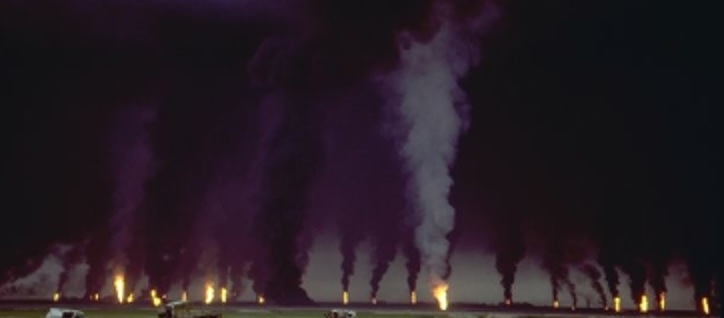
Kuwait oil fires during Gulf war
死の高速道路
Highway of Death
1991年2月26日から27日の夜、いくつかのイラク軍がアル=ジャフラ(Al Jahra) (الجهراء)の北の主要高速道路で約1,400台の車両の列でクウェイトを離れ始めました。パトロール中のE-8 Joint STARS航空機が退却部隊を観察し、サウジアラビアのDDM-8航空作戦センターに情報を中継しました。その後、これらの車両と退却する兵士は2機のA-10 Thunderbolt II航空機に攻撃され、その結果、破片が散らばった60kmの高速道路、つまり死の高速道路が生じました。
On the night of February 26-27, 1991, several Iraqi forces, which were deployed on a major highway in the north of Al-Jahra (الجهراء), began leaving Kuwait with a line of about 1,400 vehicles. A patrolling E-8 Joint STARS aircraft observed the retreating force and relayed information to the DDM-8 Air Operations Center in Saudi Arabia. These vehicles and the retreating soldiers were then attacked by two A-10 Thunderbolt II aircraft, resulting in a 60 km highway littered with debris – the Highway of Death.
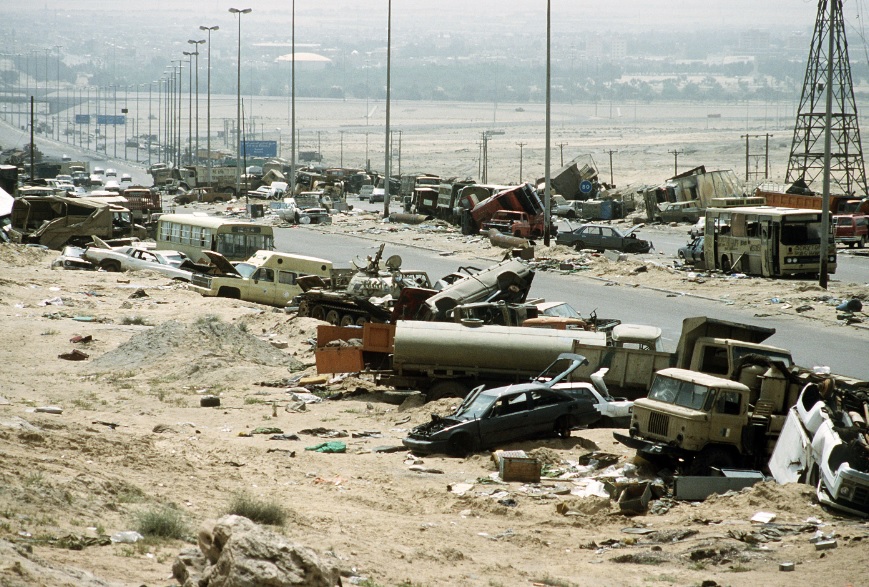
死のハイウェイで破壊された軍用車両
Destroyed Military Vehicles on the Highway of Death
クウェイトからのパレスチナ人の脱出
Palestinian exodus from Kuwait
湾岸戦争前、パレスチナ人は、クウェイトの人口220万人のうち40万人を数えていました。イラクによるクウェイト占領中や戦後のクウェイトから、20万人のパレスチナ人が恐怖、迫害、食糧不足、医療困難、財政不足、逮捕の恐れ、道路封鎖、居住規制等さまざまな理由で自発的に湾岸戦争中逃げました(1990~1991)。クウェイトから逃げたパレスチナ人はほとんどがヨルダン市民だったので、2012年、関係が再開されると、8万人のパレスチナ人がクウェイトに戻りました。
Before the Gulf War, Palestinians numbered 400,000 out of Kuwait’s population of 2.2 million. During the Iraqi occupation of Kuwait and after the war, 200,000 Palestinians voluntarily fled from Kuwait during the Gulf War (1990~1991) for various reasons such as fear, persecution, food shortages, medical difficulties, financial shortages, fear of arrest, road blockades, and residence restrictions. Most of the Palestinians who fled Kuwait were Jordanian citizens, therefore in 2012, when relations resumed, 80,000 Palestinians returned to Kuwait.
湾岸戦争解放の余波(1992–2005)
Aftermath of Gulf War liberation (1992–2005)
節索引(Section Index)
イラクとクウェイトの境界を画定
Demarcated boundaries between Iraq and Kuwait
1991年の解放直後、国連は安全保障理事会決議687(United Nations Security Council Resolution 687)の下で、1932年と1963年の両国間の合意に基づいてイラクとクウェイトの境界を画定しました。1994年11月、イラクは、安全保障理事会決議(United Nations Security Council resolution)の773 (1992)および833 (1993)で、さらに詳しく説明されていたクウェイトとの国連境界を正式に受け入れました。
Shortly after liberation in 1991, the United Nations, under the United Nations Security Council Resolution 687, demarcated the boundaries between Iraq and Kuwait under agreements between the two countries in 1932 and 1963. In November 1994, Iraq formally accepted the UN boundary with Kuwait, which had been further elaborated in 773 (1992) and 833 (1993) of the United Nations Security Council resolution.
サバーハ家に対する批判
Criticism of House of Sabah
サバーハ家(House of Sabah)は、イラク侵略中にクウェイトから最初に逃げ出しましたため、サバーハ家(House of Sabah) (آل صباح) に対する批判(Criticism of the Al Sabah Family)は、1991年に国が主権を復帰した後、より顕著になりました。
The House of Sabah (آل صباح) was the first to flee Kuwait during the invasion of Iraq, so the criticism on the Al Sabah Family over the House of Sabah became more prominent after the country’s return to sovereignty in 1991.
1992年10月の議会選挙
October 1992 parliamentary elections
1992年初頭、クウェイトでは多くの報道規制が解除され、1992年10月の議会選挙が実施されると、国会は、議会が解散している間に公布されたすべてのアミール(Amir)法令を検討する憲法上の権利を行使しました。これには、米国が1991年のクウェイトの解放の条件として、より「民主的な」政治システムを実施するように著しく圧力をかけたことが示唆されています。
In early 1992, many press restrictions were lifted in Kuwait, and once the October 1992 parliamentary elections were held, the National Assembly exercised its constitutional right to consider all the Amir decrees promulgated while the parliament was being dissolved. This suggests that the United States significantly pressured Kuwait to implement a more “democratic” political system as a condition of its liberation in 1991.
国連安全保障理事会決議678
UN Security Council Resolution 678
国連安全保障理事会は、1990年のイラクのクウェイト侵攻以来、イラクとクウェイトに関する60近くの決議を可決してきました。この問題に最も関連するのは、1990年11月29日に可決された決議678です。それは「クウェイト政府と協力する加盟国…(1)イラクによるクウェイト占領の終結とクウェイト領土からのイラク軍の撤退を求める安保理決議660号およびその他の決議を履行し、(2)「この地域の国際平和と安全を回復する」ために必要なすべての手段を使用する。決議678は、後続の決議によって取り消されたり無効にされたりしておらず、イラクは1991年以降、クウェイトに侵攻したり、そうすると脅したりしていません。
The UN Security Council has passed nearly 60 resolutions on Iraq and Kuwait since the Iraqi invasion of Kuwait in 1990. Most relevant to this issue is Resolution 678, passed on November 29, 1990. It is “member states that cooperate with the Kuwait government … (1) Implement Security Council Resolution 660 and other resolutions calling for an end to Iraq’s occupation of Kuwait and the withdrawal of Iraqi troops from Kuwaiti territory, and (2) use all necessary means to “restore international peace and security in the region.” Resolution 678 has not been revoked or invalidated by subsequent resolutions, and Iraq has not invaded or threatened to invade Kuwait since 1991.
2003年イラク攻撃
2003 attack on Iraq
2003年3月、クウェイトは米国主導のイラク侵攻の出発点となった。侵攻に備えて、2月18日までに10万人の米軍がクウェイトに集まっていました。
In March 2003, Kuwait became the starting place for the US-led invasion to Iraq. By February 18, 100,000 US troops had gathered in Kuwait in preparation for the invasion.

A convoy of U.S. Marine Corps
2003年イラク侵攻
2003 invasion of Iraq
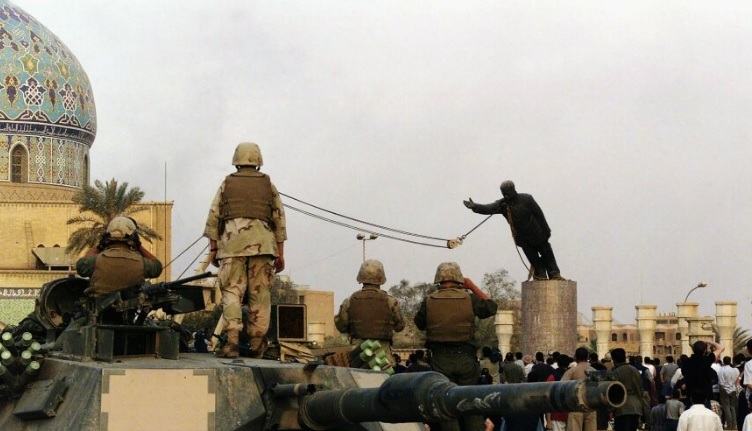
2003年のイラク侵攻(2003 invasion of Iraq) (2003 غزو العراق)は、「イラクの大量破壊兵器[WMD]を武装解除し、サッダーム・フセイン (Saddam Hussein) (صدام حسين)のテロ支援を終わらせ、イラク国民を解放する」ことを目的としていました。この侵攻は、米国主導のイラク共和国侵攻で、2011年12月まで続いたイラク戦争の最初の段階でした。
侵攻段階は2003年3月19日に空爆が始まり、続いて2003年3月20日に16万人の合同部隊(United States-led Coalition Force)による地上攻撃が始まりました。地上攻撃の主な起点はクウェイトでした。侵攻に備えて、2月18日までに10万人の米軍がクウェートに集結していました。戦闘は、1か月強続き、地上部隊がイラクに侵攻した26日間の主要な戦闘作戦が含まれていました。侵略の初日から22日後、首都バグダッドは、6日間のバグダッドの戦いの後、2003年4月9日に連合軍に占領されました。この侵攻は、2003年5月1日にジョージW.ブッシュ(George W. Bush) (r.2001~2009)米国大統領(President of the United States)がミッション達成演説で「主要な戦闘作戦の終了」を宣言したときに正式に終了しました。しかし、イラクには大量破壊兵器の証拠はなく、サッダーム・フセイン(Saddam Hussein)政権の打倒が主な目的に変わっていました。連合国暫定当局(Coalition Provisional Authority) (CPA)がすぐに設立されました。これは、2005年1月の最初のイラク議会選挙に至るまでのいくつかの連続した暫定政府の最初のものでした。米軍は、そイラク戦争が2011年に終了するまでイラクに留まりました。
なお、「イラクの大量破壊兵器(WMD)の武装解除」という目標の背景には、国際テロへの恐怖とその撲滅に向けた動きがありました。 これは、2001 年 9 月 11 日にイスラム過激派テロ組織アルカイダ (القاعدة) によって実行された米国に対する 9 月 11 日の攻撃後に特に顕著になっていました。
The 2003 invasion of Iraq was intended for “disarms Iraq’s weapons of mass destruction (WMD), ends Saddam Hussein’s (صدام حسين) support for terrorism, and liberates the Iraqi people.” The was a U.S.-led invasion of the Republic of Iraq, that was the first phase of the Iraq War.
The invasion phase began on March 19, 2003, with air strikes, followed by ground attacks by the United States-led Coalition Force of 160,000 men on March 20, 2003. The main starting point of the ground attack was Kuwait. For that, by February 18, 100,000 U.S. troops had massed in Kuwait. The fighting, which lasted just over a month, included 26 days of major combat operations in which ground forces invaded Iraq. Twenty-two days after the first day of the invasion, the capital Baghdad was occupied by the Coalition Force on April 9, 2003, after a six-day battle of Baghdad. This invasion was officially ended on May 1, 2003, when U.S. President of the United States George W. Bush(r.2001~2009) delivered a mission accomplishment speech titled “End of Major Combat Operations.” However, there was no evidence of the weapons of mass destruction (WMD) in Iraq, and the main objective had been changed to overthrow the regime of Saddam Hussein. Soon after, the Coalition Provisional Authority (CPA) was established. It was the first of several successive interim governments leading up to the first Iraqi parliamentary elections in January 2005. U.S. troops then remained in Iraq until December 2011 when the Iraq War was completely ended.
Behind the goal of “disarming Iraq’s weapons of mass destruction (WMD)” was the fear of international terrorism and the movement to eradicate it. This had become especially apparent after the September 11 attacks against the United States carried out by the Islamic extremist terrorist organization al-Qaeda (القاعدة) on September 11, 2001
2003 invasion of Iraq
政治危機と経済混乱(2006年〜現在)
Political crisis and economic turmoil (2006–present)
2006年以降、クウェイトは慢性的な政治的行き詰まりと長年にわたる内閣改造と解散に苦しんでいます。これは、クウェイトへの投資と経済改革を著しく妨げ、国の経済を石油に大きく依存させています。
Since 2006, Kuwait had suffered from a chronic political impasse and years of cabinet reshuffles and dissolutions. This had severely hampered investment and economic reforms in Kuwait, making the country’s economy heavily dependent on oil.
節索引(Section Index)
シェイク・サバーハ・アル=アハメド首長就任
Inauguration of Amir of Sheikh Sabah Al-Ahmad Al-Jaber Al-Sabah
2006年1月15日、首長だったシェイク・ジャーベル・アル=アフメド(Sheikh Jaber al-Ahmad Al-Sabah) (R.1977~2006) (الشيخ جابر الأحمد الجابر الصباح)が亡くなり、彼の皇太子であるサーリム家(Salim Branch)のシェイク・サアド・アル=アブドラ(Sheikh Saad Al-Abdullah Al-Salim Al-Sabah) (r.2006) (الشيخ سعد العبد الله السالم الصباح)が首長に指名されました。2006年1月23日、議会は満場一致で重病のシェイク・サアド・アル=アブドゥッラー(Sheikh Saad Al-Abdullah)がシェイク・サバーハ・アル=アハメド(Sheikh Sabah Al-Ahmad Al-Jaber Al-Sabah) (r.2006~2020) (الشيخ صباح الأحمد الجابر الصباح)を支持して退位することに賛成票が投じられました。
On January 15, 2006, Sheikh Jaber al-Ahmad Al-Sabah (R.1977~2006) (الشيخ جابر الأحمد الجابر الصباح) died and his crown prince, Sheikh Saad Al-Abdullah Al-Salim Al-Sabah ( r.2006) (الشيخ سعد العبد الله السالم الصباح) of Salim Branch was named the ruler (Amir). On January 23, 2006, the parliament voted unanimously in favor of the seriously ill Sheikh Saad Al-Abdullah’s abdication and his recommendation of Sheikh Sabah Al-Ahmad Al-Jaber Al-Sabah (r.2006~2020) (الشيخ صباح الأحمد الجابر الصباح) for the next ruler (Amir).
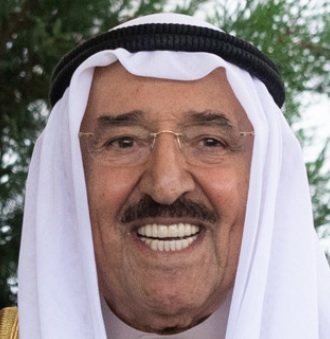
シェイク・サバーハ・アル=アハメド
Sheikh Sabah Al-Ahmad Al-Jaber Al-Sabah) (r.2006~2020)
皇太子と首相の指名
Nomination of Crown Prince and Prime Minister
慣例に従ってサーリム家(Salim Branch)の後継者を指名する代わりに、シェイク・サバーハ・アル=アフメド(Sheikh Sabah Al-Ahmad)は、彼の異母兄弟シェイク・ナワーフ・アル=アフメド(Sheikh Nawaf Al-Ahmad Al-Jaber Al-Sabah) (r.2006~2020) (الشيخ نَوَّاف الأَحمَد الْجَابِر الصَّباح)を皇太子に、彼の甥のシェイク・ナーセル・アル=ムハンマド(Sheikh Nasser Al-Mohammed Ahmad Al-Jaber Al-Sabah) (الشيخ ناصر المحمد الأحمد الجابر الصباح)を首相(r.2006~2011)に指名しました。
Instead of naming his successor from Salim Branch as custom, Sheikh Sabah Al-Ahmad nominated his half-brother Sheikh Nawaf Al-Ahmad Al-Jaber Al-Sabah (r.2006~2020) (الشيخ نَوَّاف الأَحمَد الْجَابِر الصَّباح) as Crown Prince. And he also nominated his nephew Sheikh Nasser Al-Mohammed Ahmad Al-Jaberas Al-Sabah (الشيخ ناصر المحمد الأحمد الجابر الصباح) as Prime Minister (r.2006~2011).

シェイク・ナワーフ・アル=アフメドとシェイク・ナーセル・アル=ムハンマド
Sheikh Nawaf Al-Ahmad Al-Jaber Al-Sabah and Sheikh Nasser Al-Mohammed Ahmad Al-Jaber Al-Sabah
シェイク・アフメド・アル=ファハドとフィンタス・グループ事件
Sheikh Ahmed Al-Fahad and Fintas Group case
クウェイト史上最大の政治汚職スキャンダル
Largest political corruption scandal in Kuwaiti history
2011年8月、シェイク・アフメド・アル=ファハド・アル=アフメド・アル=サバーハ(Sheikh Ahmed Al-Fahad Al-Ahmed Al-Sabah) (from 1991 to 2021, 2nd President of the Olympic Council of Asia)の支持者は、クウェイト史上最大の政治汚職スキャンダルとなったクウェイトの政治家の最大3分の1を有罪とする文書を「発見」しました。2011年10月までに、16人のクウェイトの政治家が政府の政策を支持する見返りに3億5000万ドルの支払いを受け取ったと主張されていました。
In August 2011, Sheikh Ahmed Al-Fahad Al-Ahmed Al-Sabah Supporters of (from 1991 to 2021, 2nd President of the Olympic Council of Asia) “discovered” documents convicting up to one-third of Kuwaiti politicians in what became the largest political corruption scandal in Kuwaiti history. By October 2011, it had been claimed that 16 Kuwaiti politicians had received a payment of $350 million in return for supporting government policies.
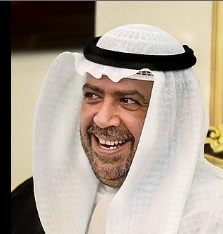
シェイク・アフメド・アル=ファハド Sheikh Ahmed Al-Fahad
シェイク・アフメド・アル=ファハドの主張
Sheikh Ahmed Al-Fahad’s Claim
2013年12月、シェイク・アフメド・アル=ファハド(Sheikh Ahmed Al-Fahad)の同盟者は、首相シェイク・ナーセル・アル=ムハンマド(Sheikh Nasser Al-Mohammed)とジャーセム・アル=カラーフィー(Jassem Al-Kharafi) (1940~2015) (جاسم محمد عبدالمحسن الخرافي)がクウェイト政府を倒す計画について話し合っていたことを示すテープを所有していると主張していました。シェイク・アフメド・アル=ファハド(Sheikh Ahmed Al-Fahad)は、彼の主張を説明するローカルチャンネルAl-WatanTVに出演しました。
In December 2013, Sheikh Ahmed Al-Fahad’s allies claimed to be in possession of tapes showing that Prime Minister Sheikh Nasser Al-Mohammed and Jassem Al-Kharafi) (1940~2015) (جاسم محمد عبدالمحسن الخرافي) were discussing plans to overthrow the Kuwaiti government. Sheikh Ahmed Al-Fahad appeared on the local channel Al-Wattan TV explaining his claims.
シェイク・アフメド・アル=ファハド謝罪とフィンタス・グループ拘束
Sheikh Ahmed Al-Fahad’s apology and detention of Fintas group
2015年3月、クウェイトの検察官はクーデター計画の疑いに関するすべての調査を中止し、シェイク・アフメド・アル=ファハド(Sheikh Ahmed Al-Fahad)は、クウェイト国営テレビでクーデターの疑惑を放棄する公の謝罪を読みました。それ以来、彼の仲間の多くがさまざまな容疑でクウェイト当局によって標的にされ、拘留されて来ていました。最も顕著なのは、偽のクーデタービデオの最初の回覧者であったとされるいわゆる「フィンタスグループ(Fintas Group) (مجموعة الفنطاس)」のメンバーでした。このグループには4名のサバーハ家(House of Sabah)家族を含めて弁護士2名、ジャーナリスト2名等13名が関与していました。内務省に統治制度や司法などの国家機関を侵害したとして彼らを告訴され、逮捕令状も発行され、刑事裁判所(Criminal Court)での審査も始まりましたが、その後、容疑者は、さまざまな保釈条件で釈放されています。
In March 2015, Kuwaiti prosecutors called off all investigations into the alleged coup plot, and Sheikh Ahmed al-Fahad read a public apology on Kuwaiti state television abandoning allegations of a coup. Since then, many of his associates have been targeted and detained by Kuwaiti authorities on various charges. Most notably, were members of the so-called “Fintas Group (مجموعة الفنطاس)”, who allegedly were the first circularists of fake coup videos.
The group involved 13 people, including four House of Sabah families, two lawyers and two journalists. The Interior Ministry sued them with violating state institutions such as the governing system and the judiciary, the Public Prosecution issued warrants to arrest them, and the Criminal Court began their trials, after which the suspects were held on various bail conditions have been released.
シェイク・アフメド・アル=ファハドの有罪判決とその後の無罪放免
Conviction and subsequent acquittal of Sheikh Ahmed Al-Fahad
2015年12月、シェイク・アフメド・アル=ファハド(Sheikh Ahmed Al-Fahad)は、「検察官を軽視し、首長宮廷からの特別な許可なしに国の支配者の発言とした。」として有罪判決を受け、執行猶予付きの6か月の懲役刑と1,000クウェイトディナールの罰金を科されました。2016年1月、クウェイト控訴裁判所は以前の判決を覆し、シェイク・アフメド・アル=ファハド(Sheikh Ahmed Al-Fahad)のすべての容疑を無罪としました。
In December 2015, Sheikh Ahmed Al-Fahad was sentenced to six months in prison with a suspended term and a fine of 1,000 Kuwaiti dinars after being convicted of “disrespecting the prosecutor and making the statements of the ruler of the country without Amir’s special permission.” In January 2016, the Kuwait Court of Appeal overturned the previous ruling and acquitted Sheikh Ahmed Al-Fahad of all charges.
シェイク・アフメド・アル=ファハドに対するスイスでの起訴
Swiss prosecution against Sheikh Ahmed Al-Fahad
2018年11月、シェイク・アフメド・アル=ファハド(Sheikh Ahmed Al-Fahad)は、他の4人の被告とともに、偽のクーデタービデオに関連する偽造でスイスで起訴されました。その後まもなく、シェイク・アフメド・アル=ファハド(Sheikh Ahmed Al-Fahad)は、倫理委員会が申し立てを聴聞するまで、国際オリンピック委員会(International Olympic Committee)での彼の役割を一時的に辞任しました。
In November 2018, Sheikh Ahmed Al-Fahad, along with four other defendants, was charged in Switzerland with forgery related to fake coup videos. Shortly thereafter, Sheikh Ahmed Al-Fahad temporarily resigned from his role on the International Olympic Committee until the hearing of the Ethics Committee.
シェイク・アフメド・アル=ファハドに対するスイス裁判所の有罪判決
Swiss court conviction of Sheikh Ahmed Al-Fahad
2021年8月、シェイク・アフメド・アル=ファハド・アル=アフメド・アル=サバーハ(Sheikh Ahmed Al-Fahad Al-Ahmed Al-Sabah)は、他の4人の被告のうち3人と一緒にスイスの法廷に出席しました。2021年9月、スイスの裁判所は、シェイク・アフメド・アル=ファハド(Sheikh Ahmed Al-Fahad)を他の4人の被告とともに、偽造で有罪判決を下した。彼は、不正行為を否定し、上訴する予定です。
In August 2021, Sheikh Ahmed Al-Fahad Al-Ahmed Al-Sabah appeared before a Swiss court with three of the other four defendants. In September 2021, a Swiss court convicted Sheikh Ahmed Al-Fahad Al-Ahmed Al-Sabah of forgery along with four other defendants. He has denied any wrongdoing and plans to appeal.
クウェイトのテロに資金提供問題
Accusation to Kuwait of financing terrorism
2014年3月、当時、米国のテロ・金融情報担当財務次官(Under Secretary of the Treasury for Terrorism and Financial Intelligence)だったデビッド・S・コーエン(David S. Cohen) (b.1963)は、クウェイトがテロに資金を提供していると非難していました。1991年の湾岸戦争の終結以来、クウェイトがテロに資金を提供しているという告発は、非常に一般的であり、諜報報告、西側政府当局者、学術研究、有名なジャーナリストなど、さまざまな情報源から来ていました。2014年から2015年まで、クウェイトは、特にISIS (Islamic State) (تنظيم الدولة الإسلامية)とアルカイダ(Al-Qaeda) (القاعدة)にとって、世界最大のテロ資金源として頻繁に説明されていました。2014 年 4 月、クウェート政府はこの問題に関するあらゆる報道や議論を禁止するため、全面的な報道管制を敷きました。
In March 2014, David S. Cohen (b.1963), then U.S. Under Secretary of the Treasury for Terrorism and Financial Intelligence, accused Kuwait of financing terrorism. Since the end of the Gulf War in 1991, the accusations, that Kuwait was funding terrorism, had been very common and came from a variety of sources, including intelligence reports, Western government officials, academic researches, and well-known journalists. From 2014 to 2015, Kuwait was frequently described as the world’s largest source of terrorist financing, especially for ISIS (Islamic State) (تنظيم الدولة الإسلامية) and Al-Qaeda (القاعدة). In April 2014, the Kuwaiti government imposed a blanket media blackout to ban all media coverage or discussion of the issue.
クウェイト・テロ事件
Terrorist attacks in Kuwait
2015年6月26日、クウェイトのシーア派イスラーム教徒のモスクで自爆テロが発生しました。イラク・レバントのイスラーム国(Islamic State in Iraq and the Levant) (لدولة الإسلامية في العراق والشام)は、攻撃の責任を主張していました。この自爆テロでは27人が死亡、227人が負傷しました。その後、クウェイト政府の過失とテロ攻撃の直接の責任を非難する訴訟が提起されました。
On June 26, 2015, a suicide bombing occurred at a Shia Muslim Mosque in Kuwait. Islamic State in Iraq and the Levant (لدولة الإسلامية في العراق والشام) had claimed responsibility for the attack. The suicide bombing killed 27 people and injured 227. A lawsuit was then filed accusing the Kuwaiti government of its negligence and direct responsibility for the terrorist attack.
2016年7月4日、クウェイト政府は、イスラーム国による計画攻撃の内の3度の先制作戦を阻止しました。
On July 4, 2016, the Kuwaiti government thwarted three pre-emptive operations of the Islamic State’s offensive plan.
シェイク・ナワーフ・アル=アフメドの首長後継
Sheikh Nawaf Al-Ahmad’s succession of Amir
2020年9月、クウェイトのシェイク・ナワーフ・アル=アフメド(Sheikh Nawaf Al-Ahmad Al-Jaber Al-Sabah) (R.2020~) (الشيخ نَوَّاف الأَحمَد الْجَابِر الصَّباح)皇太子は、クウェイトの第16代首長となり、91歳で亡くなったシェイク・サバーハ・アル=アハメド(Sheikh Sabah Al-Ahmad Al-Jaber Al-Sabah) (r.2006~2020) (الشيخ صباح الأحمد الجابر الصباح)首長(Amir) (أمير)の後継者となりました。2020年10月、シェイク・ミシャル・アル・アフマド・アル・ジャーベル・アル・サバーハ(Mishal Al-Ahmad Al-Jaber Al-Sabah) (r.2020) (الشيخ مشعل الأحمد الجابر الصباح)が皇太子に任命されました。
In September 2020, Crown Prince Sheikh Nawaf Al-Ahmad Al-Jaber Al-Sabah (R.2020~) (الشيخ نَوَّاف الأَحمَد الْجَابِر الصَّباح) became the 16th Amir (أمير) of Kuwait. He succeeded Sheikh Sabah Al-Ahmad Al-Jaber Al-Sabah ( r.2006~2020) (الشيخ صباح الأحمد الجابر الصباح), who had died at the age of 91.
In October 2020, Sheikh Mishal Al-Ahmad Al-Jaber Al-Sabah (r.2020) (الشيخ مشعل الأحمد الجابر الصباح) was appointed as Crown Prince.

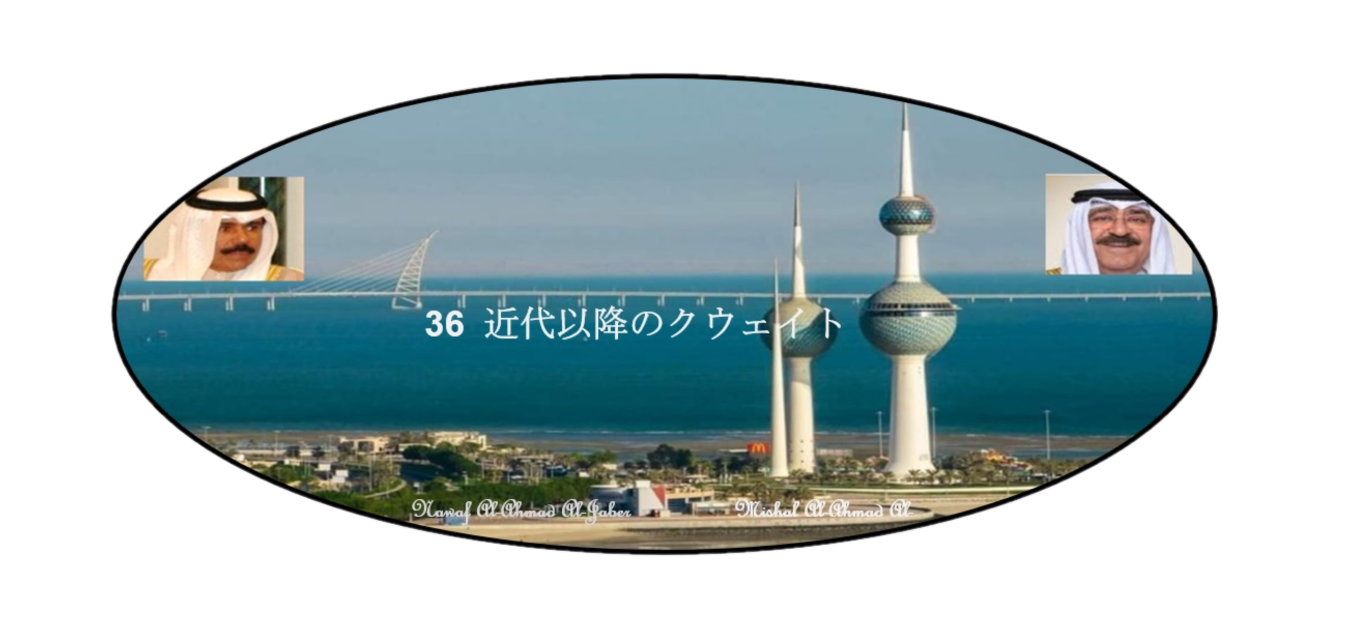
Sheikh Nawaf Al-Ahmad and Sheikh Mishal Al-Ahmad Al-Jaber
中東地域で最大の米軍駐留
Largest U.S. military presence in the region
クウェイトは現在、中東地域で最大の米軍駐留を行っています。 この国には14,000人以上の米軍人が駐留して居り、 キャンプ・アリフィジャン(Camp Arifjan) (معسكر عريفجان)はクウェイト最大の米軍基地です.
Kuwait currently has the largest U.S. military presence in the region. With more than 14,000 U.S. military personnel stationed there, Camp Arifjan (معسكر عريفجان) is the largest U.S. military base in Kuwait.
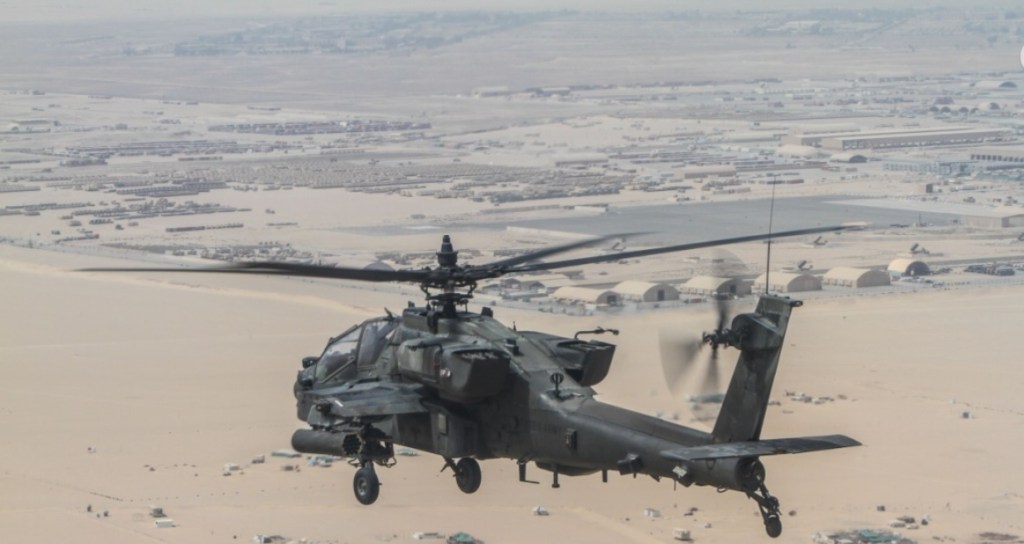
A US Army AH-64 Apache over Camp Arifjan

Camp Arifjan
クウェイトの収賄問題
Kuwait’s bribery problems
政府高官のファハド・アル=ラジャアーンの事件
Case of government official Fahad Maziad Al Rajaan
2019年6月、政府高官のファハド・アル=ラジャアーン(Fahad Maziad Al Rajaan) (1948~2022) (فهد مزيد رجعان الرجعان)と彼の配偶者は、クウェイト刑事裁判所(Kuwait criminal court) (محكمة الجنايات الكويتية) (Minstry of Justice (وزارة العدل)の一部門と思われます。)から欠席裁判で終身刑を言い渡されました。動産は没収され、彼らは8200万ドルの返済を命じられ、「その2倍の金額」の罰金が科せられました。
In June 2019, the government official Fahad Maziad Al Rajaan (1948~2022) (فهد مزيد رجعان الرجعان) and his spouse were sentenced to life imprisonment in absentia by the Kuwait criminal court (محكمة الجنايات الكويتية). Movable property was confiscated. They were ordered to repay $82 million, and fined “twice that amount.” (Kuwait criminal court (محكمة الجنايات الكويتية) might be a branch of Minstry of Justice (وزارة العدل). )
シェイク・カーリド・アル=ジャラーフの訴えとその後の解任
Sheikh Khaled Al Jarrah complaint and subsequent removal
2019年11月、元副首相兼内務大臣(Former deputy prime minister and minister of interior)のシェイク・カーリド・アル=ジャラーフ・アル=サバーハ(Sheikh Khaled Al Jarrah Al Sabah) (b.1953) (الشيخ خالد الجراح الصباح)は、シェイク・ナーセル・サバーハ・アル=アフメド・アル=サバーハ(Sheikh Nasser Sabah Al-Ahmad Al-Sabah) (1948~2020) (الشيخ ناصر صباح الأحمد الصباح)国防相が、カーリド(Khaled)の国防大臣在任中に2億4000万クウェイトディナール(7億9,450万ドル)のクウェイト政府資金の横領が行われたと主張してクウェイト検事総長(Kuwait Attorney General) (رأس النيابة العامة الكويتية)に苦情を申し立てた後、解任されました。
In November 2019, Khaled Al Jarrah Al Sabah (b.1953) (الشيخ خالد الجراح الصباح) was dismissed after filing a complaint with Kuwait Attorney General (رأس النيابة العامة الكويتية).
Khaled Al Jarrah Al Sabah was formerly Deputy Prime Minister and Minister of Interior.
His allegations are that “embezzlement of Kuwaiti government funds took place during his tenure.”
According to his allegations, Defense Minister Sheikh Nasser Sabah Al-Ahmad Al-Sabah (1948~2020) (الشيخ ناصر صباح الأحمد الصباح) embezzled 240 million Kuwaiti dinars ($794.5 million) of Kuwaiti government funds.
陸軍基金の不正口座化問題
Fraudulent problems on Army fund account
2020年7月、米国司法省(US Department of Justice)は、シェイク・カーリド・アル=ジャラーフ・アル=サバーハ(Khaled Al Jarrah Al Sabah)を含む3人のクウェイト当局者のグループが「陸軍基金(Army Fund)」として知られるロンドンの駐在武官事務所(Military Attache Office)の名前で不正なアカウントを設定したと主張して、マウンテン・ビバリー・ヒルズ(Mountain Beverly Hills)および米国の他の不動産に対して資産没収請求を提出しました。彼らは1億ドル以上のクウェイトの公的資金で口座に資金を提供し、それを彼ら自身の目的のために使用したと言われています。
In July 2020, the US Department of Justice alleged that a group of three Kuwaiti officials, including Khaled Al Jarrah Al Sabah, set up a fraudulent account in the name of London’s Military Attaché Office, known as the “Army Fund.” And this Department filed property forfeiture claims against Mountain Beverly Hills and other real estate in the United States. They are said to have funded the account with over $100 million in Kuwaiti public funds and used it for their own purposes.
シェイク・カーリド・アル=ジャラーフの拘禁と投獄
Detention and imprisonment of Sheik Khaled Al Jarrah
2021年3月、クウェイトのMinisterial Court (المحكمة الوزارية)は、シェイク・カーリド・アル=ジャラーフ・アル=サバーハ(Sheik Khaled Al Jarrah Al Sabah)の拘禁を命じ、その後、彼は逮捕されて投獄されました。
In March 2021, the Ministerial Court of Kuwait (المحكمة الوزارية) ordered the detention of Sheik Khaled Al Jarrah Al Sabah, after which he was arrested and imprisoned.
2021年4月13日、クウェイトの裁判所は、「陸軍基金」に関連する汚職容疑でシェイク・ジャーベル・ムバーラク・アル=ハマド・アル=サバーハ(Sheikh Jaber Al-Mubarak Al-Hamad Al-Sabah) (r.2011~2019) (الشيخ جابر مبارك الحمد الصباح)元首相の拘禁を命じた。彼は、汚職容疑で裁判前の拘留に直面した最初の元クウェイト首相です。犯罪は、彼の2001年から11年の国防相としての任期中に起こったとされています。
On April 13, 2021, a Kuwaiti court ordered the detention of former Prime Minister Sheikh Jaber Al-Mubarak Al-Hamad Al-Sabah (r.2011~2019) (الشيخ جابر مبارك الحمد الصباح) on corruption charges related to the “Army Fund”. He is the first former Kuwaiti Prime Minister to face pretrial detention on corruption charges. The crime allegedly took place during his 2001~2011 term as Defense Minister.
クウェイトの政治経済危機
Kuwait’s political and economic crisis
COVID-19のパンデミックは、クウェイトの経済危機を悪化させました。
The COVID-19 pandemic has exacerbated Kuwait’s economic crisis.
2020年に、クウェイトの経済は、460億ドルの財政赤字に直面しました。これは、1995年以来初の財政赤字の経験でした。クウェイトは、S&Pグローバル・レーティング (S&P Global Ratings) によって石油収入の減少と財政改革の遅れにより、2年足らずで2回格下げされました。
In 2020, Kuwait’s economy faced a budget deficit of $46 billion. This was the first budget deficit experience since 1995. Kuwait was downgraded twice in less than two years by S&P Global Ratings due to declining oil revenues and delays in fiscal reforms.
2021年1月以来、クウェイトは何十年にもわたって最悪の政治危機を経験しています。
さまざまなメディア筋によると、クウェイトも迫り来る債務危機に直面しています。クウェイトは、経済の多様化が最も少ない、この地域で最も石油に依存する国と広く見なされています。世界経済フォーラム(World Economic Forum)によると、クウェイトは最も経済的に開発が遅れている湾岸諸国です。クウェイトは、インフラストラクチャがGCC地域全体で最も弱い国です。
Since January 2021, Kuwait has experienced its worst political crisis in decades.
According to various media sources, Kuwait is also facing a looming debt crisis. Kuwait is widely regarded as the most oil-dependent country in the region with the least diversified economy. According to the World Economic Forum, Kuwait is the most economically underdeveloped Gulf country. Kuwait is the weakest country in the entire GCC region in infrastructure.
クウェイト・ビジョン2035
Kuwait Vision 2035
2010年にシェイク・サバーハ・アル=アハメド(Sheikh Sabah Al-Ahmad Al-Jaber Al-Sabah)は、クウェイト・ビジョン2035 (Kuwait Vision 2035)を発表しました。
In 2010, Sheikh Sabah Al-Ahmad Al-Jaber Al-Sabah introduced the Kuwait Vision 2035.
クウェイト・ビジョン2035概略
Outline of Kuwait Vision 2035
このビジョンは、クウェートを地域的・国際的に金融・貿易のハブに変え、投資家に魅力的な国にするという目標を掲げた国家開発計画です。民間部門が経済を主導し、競争力と生産効率を高めることを目指しています。また、政府機関の役割を強化し、国家資源を開発目標に向けて活用することも重視しています。
This vision is a national development plan with the goal of transforming Kuwait into a regional and international financial and trade hub and making it an attractive country to investors. The private sector aims to lead the economy, increasing competitiveness and production efficiency. It also emphasizes strengthening the role of government agencies and harnessing national resources for development goals.

Kuwait Vision 2035
このビジョンは、効率的な公共行政、多様で持続可能な経済、高品質な医療、強固で進歩的なインフラ、持続可能な生活環境、創造的な人的資本、グローバルな地位という7つの柱に基づいています。
The vision is based on seven pillars: efficient public administration, diverse and sustainable economy, high-quality healthcare, robust and progressive infrastructure, sustainable living environments, creative human capital, and global status.
このビジョンでは、新しい空港、港湾、道路、鉄道などの経済インフラの改善や、ビジネス環境を整備するための適切な法制度の整備などの取り組みが含まれています。
このビジョンは、国連の持続可能な開発目標(SDGs)2030アジェンダにも適合しています。
The vision includes efforts to improve economic infrastructure, such as new airports, ports, roads and railways, and to develop appropriate legal systems to improve the business environment.
This vision also aligns with the United Nations Sustainable Development Goals (SDGs) 2030 agenda.
このビジョンでは、石油関連輸出収入への依存度を低下させるために、非石油分野の経済活動や産業活動を国内で探求し、生産性と開発を高めることを目指しています。また、革新的な技術や産業やデジタルプロジェクトを支援し、国内で大きな利益を生み出し、国家の変革を実現することも目指しています。
The vision aims to explore non-oil economic and industrial activities domestically to increase productivity and development in order to reduce dependence on oil-related export revenues. It also aims to support innovative technology, industry and digital projects to generate significant profits in the country and realize national transformation.
中国「一帯一路構想」との経済関係
Economic relationship with China’s “One Belt, One Road Initiative”
2016年以来、中国は、クウェイトの最大の貿易相手国となっています。近年、クウェイトは中国との経済関係に多額の投資を行っています。「一帯一路(Belt and Road Initiative)」構想に基づき、クウェイトと中国は現在ジャハラー(Jahra) (جهراء)で建設中40万人規模の宅地計画の南アル=ムトラーア(South al-Mutlaa) (جنوب المطلاع)を含む様々な協力プロジェクトを行っています。
Since 2016, China had been Kuwait’s largest trading partner. In recent years, Kuwait had invested heavily in economic relations with China. Under the “Belt and Road Initiative”, Kuwait and China were then undertaking various cooperation projects, including South al-Mutlaa (جنوب المطلاع), a 400,000-person residential land project then under construction in Jahra (جهراء).
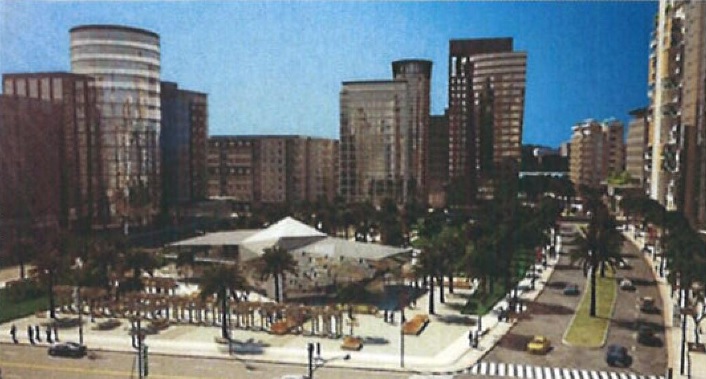
南アル=ムトラーア(South al-Mutlaa) (جنوب المطلاع)
サバーハ・アル=アハマド・シーシティ
Sabah Al Ahmad sea city
2016 年半ばにサバーハ・アル=アハマド・シーシティ(Sabah Al Ahmad Sea City) (مدينة صباح الأحمد البحرية)が発足しました。
In mid-2016, Sabah Al Ahmad Sea City (مدينة صباح الأحمد البحرية) was inaugurated.
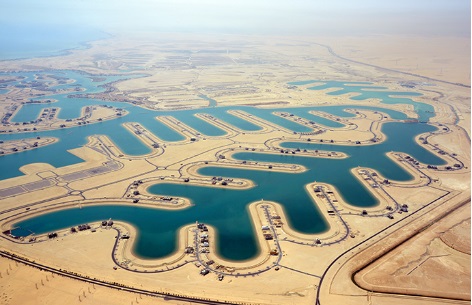
サバーハ・アル=アハマド・シーシティ(Sabah Al Ahmad Sea City) (مدينة صباح الأحمد البحرية)
200 キロメートルの人工海岸線を形成する運河で建設されたクウェートのアハマディ(Ahmadi) (أحمدي)にある都市です。 この都市には最大 250,000 人の住民が住んでいます。この地域を構成する人工島は珍しいもので、埋め立て地を利用するのではなく、沙漠の土地に大きな水路を掘って造られました。 この都市は、環境に配慮した持続可能な建設技術により、この地域の先駆的なプロジェクトとみなされています。プロジェクトの第 1 段階は 2004 年に海に開通しました。数十億ドル規模の開発は、10 段階にわたる 25 年の建設期間内に行われます。
It is a city in Kuwait’s Ahmadi (أحمدي), built with canals that form 200 kilometers of artificial coastline. The city is home to up to 250,000 residents. The artificial islands that made up this area were unusual and were built by digging large channels in desert land, rather than using landfills. The city is considered a pioneering project in the region due to its environmentally friendly and sustainable construction technology. The first phase of the project was opened to sea in 2004. The multi-billion dollar development will take place within 10 phases and 25 years of construction.
シェイク・ジャーベル・アル=アフマド・アル=サバーハ・コーズウェイ
Sheikh Jaber Al-Ahmad Al-Sabah causeway
2019年5月にシェイク・ジャーベル・アル=アフマド・アル=サバーハ・コーズウェイ(Sheikh Jaber Al-Ahmad Al-Sabah Causeway) (جسر الشيخ جابر الأحمد الصباح)が開通しました。このコーズウェイは、シルク・シティ・プロジェクト(Silk City Project)(ハリール都市計画(Madinat al-Hareer) (مدينة الحرير))の第一段階の一部です。 この土手道はクウェイト・ビジョン2035の一環としてクウェイト市とクウェイト北部を結んでいます。
In May 2019, Sheikh Jaber Al-Ahmad Al-Sabah Causeway (جسر الشيخ جابر الأحمد الصباح) was opened. This causeway is part of the first phase of Madinat al-Hareer (مدينة الحرير) under the Silk City Project. This causeway connects Kuwait City with Northern Kuwait as part of Kuwait Vision 2035.

シェイク・ジャーベル・アル=アフマド・アル=サバーハ・コーズウェイ(Sheikh Jaber Al-Ahmad Al-Sabah Causeway) (جسر الشيخ جابر الأحمد الصباح)
ムバラク・アル=カビール港完成
Completion of Mubarak Al Kabeer port
2021年4月にブビヤーン島(Bubiyan Island) (جزيرة بوبيان)で建設中だった(Mubarak Al Kabeer Port) (ميناء مبارك الكبير)が完成しました。これも、中国の一帯一路構想 (Belt and Road Initiative)との一環としての協力プロジェクトです。
In April 2021, Mubarak Al Kabeer Port(ميناء مبارك الكبيرر) was completed. This is also a cooperative project as part of China’s Belt and Road Initiative
 Desert peninsula