37 Qatar since Modern Time



目次(Index)
まえがき
Introduction
628年、ムハンマド(Muhammad) (محمد)が東アラビアのサーサーン朝(Sassanid Empire) (224~651) (الإمبراطورية الساسانية)の知事であったムンジル・イブン・サーワー・アル=タミーミー(Munzir ibn Sawa Al Tamimi) (المنذر بن ساوى التميمي)に使節を送ったので、それ以降、人々は、イスラーム教を取り入れるようになりました。8世紀までにカタールは、真珠取引の中心地(a pearl trading center)になっていました。アッバース朝(Abbasid Caliphate) (750~1258) (الدولة العباسية)時代には、いくつかの集落が台頭しました。 1783年にバニー・ウトバ族(Bani Utbah) (بني عتبة)と他のアラブ部族がバハレイン(Bahrain)を征服した後、アル=カリーファ族(Al Khalifa) (الخليفة)は、バハレイン(Bahrain)とカタール本土に彼らの権威を行き渡らせました。その後何世紀にもわたって、カタールは、ナジュド(Najd) (نجد)のワッハーブ派(Wahhabi) (وهابية)とアル=カリーファ族(Al Khalifa)の間の論争の場所でした。オスマン帝国(Ottoman Empire) (1299~1923) (الدولة العثمانية)は1871年に帝国を東アラビアに拡大し、第一次世界大戦の開始後、1915年にこの地域から撤退しました。
In 628, Muhammad (محمد) sent an envoy to Munzir ibn Sawa Al Tamimi (المنذر بن ساوى التميمي), the governor of the Sassanid Empire (224~651) (الإمبراطورية الساسانية) in Eastern Arabia. Since then, people had adopted Islam. By the 8th century, Qatar had become a pearl trading center for pearl fishing. During the Abbasid Caliphate (750~1258) (الدولة العباسية) period, several settlements emerged. After the conquest of Bahrain by Bani Utbah (بني عتبة) and other Arab tribes in 1783, Al Khalifa (الخليفة) extended their authority over Bahrain and the mainland Qatar. In the following centuries, Qatar had been the site of a dispute between Wahhabi (وهابية) in Najd (نجد) and Al Khalifa.
Ottoman Empire (1299~1923) (الدولة العثمانية) expanded its empire into Eastern Arabia in 1871 and withdrew from the region in 1915 after the start of World War I.
1916年、カタールはイギリスの保護領になり、アブドゥッラー・ アール・サーニー(Abdullah Al Thani) (r.1913~1949) (عبد الله بن جاسم آل ثاني)は、海上によるすべての侵略からの保護と陸上攻撃に対する支援と引き換えに、領土をイギリスに譲渡することしかできないことを規定する条約に署名しました
In 1916, Qatar became a British protectorate and Abdullah Al Thani (r.1913~1949) (عبد الله بن جاسم آل ثاني) signed a treaty stipulating that it could only cede territory to Great Britain in exchange for protection from all invasions by sea and support to protect against any of land attacks.
アール・サーニー(House of Thani) (آل ثاني) :ムダル・アドナーン部族(Mudar Adnan Arab) (مضر عدنان عرب) バニー・タミーム族(Bani Tamim) (بني تميم)の一家族。
House of Thani (آل ثاني): A family of Bani Tamim (بني تميم) belonging to Mudar Adnan Arab (مضر عدنان عرب).
1934年の条約は、より広範な保護を保証していました。1935年、カタールエナジー(QatarEnergy) (قطر للطاقة)に75年間の石油利権が付与され、1940年にドゥカーン(Dukhan) (دخان)で高品質の石油が発見されました。
The 1934 treaty had guaranteed broader protection. In 1935, Qatar Energy (قطر للطاقة) was granted a 75-year oil concession, and in 1940, high-quality oil was discovered in Dukhan (دخان).
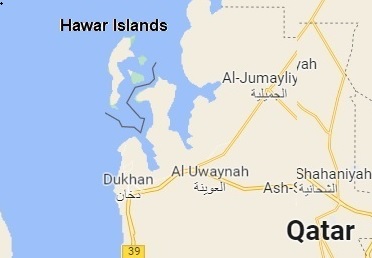
ドゥカーン(Dukhan)
1950年代から1960年代にかけて、石油収入の増加が繁栄、急速な移民、実質的な社会的進歩、そして国の近代史の始まりをもたらしました。英国が1968年にアラビア湾の首長国(Arabian Gulf sheikdoms) (مشيخات الخليج العربي)との条約関係を終了する方針を発表した後、カタールはアラブ首長国連邦(United Arab Emirates) (الإمارات العربية المتحدة)を形成する計画で英国の保護下にあった他の8つ首長国(sheikdoms) に加わりました。
During the 1950s and 1960s, rising oil revenues led to prosperity, rapid immigration, substantial social progress, and the beginning of the country’s modern history.
After the United Kingdom announced in 1968 its policy of ending its treaty relationships with the Arabian Gulf sheikdoms (مشيخات الخليج العربي), Qatar was under British protection in plans to form the United Arab Emirates (الإمارات العربية المتتحدة) with the other 8 sheikdoms.
1971年半ばまでに、英国の条約関係の終了日が近づいたとき、9首長国(sheikdoms)はまだ連邦の条件に合意していませんでした。この為、カタールは、1971年9月3日に自らの独立を宣言しました。1995年6月、副首長(Vice Amir) (نائب أمير)のハマド・ビン・カリーファ(Hamad bin Khalifa) (r.1995~2013) (حمد بن خليفة)は、無血クーデターで父親のカリーファ・ビン・ハマド(Khalifa bin Hamad) (r.1972~1995) (خليفة بن حمد)に続いて新しい首長(Amir) (أمير)になりました。首長(Amir)は、議会選挙の前兆として、よりリベラルな報道機関と地方選挙を許可しました。新憲法は2003年4月に国民投票で承認され、2005年6月に発効しました。2013年6月、7番目のアミール(7th Amir) (r.1995~2013)ハマド・ビン・カリーファ(Hamad bin Khalifa)は、平和的に退位し、息子の8番目のアミール(8th Amir) (r.2013~present)タミーム・ビン・ハマド(Tamim bin Hamad) (تميم بن حمد)が統治者としての地位を引き継ぎました。
By mid-1971, when the end date of Britain’s treaty relations approached, the nine sheikdoms had not yet agreed on the terms of the United Arab Emirates. For this reason, Qatar declared its independence on September 3, 1971. In June 1995, Hamad bin Khalifa (r.1995~2013) (حمد بن خليفة) of Vice Amir (نائب أمير) became the new Amir (أمير) following his father Khalifa bin Hamad (r.1972~1995) (خليفة بن حمد) in a bloodless coup. The new Amir allowed a more liberal press and local elections as a precursor to parliamentary elections. The new constitution was approved in a referendum in April 2003 and entered into force in June 2005. In June 2013, 7th Amir (r.1995~2013) Hamad bin Khalifa abdicated peacefully and his son 8th Amir (r.2013~present) Tamim bin Hamad (تميم بن حمد) succeeded his position as ruler.
バニー・ウトバ族(Bani Utbah) (بني عتبة):ムダル・アドナーン部族(Mudar Adnan Arab) (مضر عدنان عرب) バニー・スライム・ビン・マンスール族(Bani Sulaim bin Mansoor) (بني سليم بن منصور)のカファーフ一門(Khafaf) (خفاف)の支族
Bani Utbah (بني عتبة): A Branch of Khafaf (خفاف) clan of Bani Sulaim bin Mansoor(بني سليم بن منصور) belonging to Mudar Adnan Arab (مضر عدنان عرب).
アル=カリーファ族(Al Khalifa) (الخليفة):ムダル・アドナーン部族(Mudar Adnan Arab) (مضر عدنان عرب) バニー・スライム・ビン・マンスール族(Bani Sulaim bin Mansoor) (بني سليم بن منصور)のカファーフ一門(Khafaf) (خفاف)のバニー・ウトバ支族(Bani Utbah) (بني عتبة)の一門のウトゥーブ族(Utub) (العتوب)から分かれた家族
Al Khalifa (الخليفة): A Family branched from ‘Utub (لعتوب) clan of Bani Utbah) (بني عتبة) which is a branch of Khafaf (خفاف) clan of Bani Sulaim bin Mansoor(بني سليم بن منصور) belonging to Mudar Adnan Arab (مضر عدنان عرب).
イスラーム帝国の支配
Caliphate rule
節索引(Section Index)
| カタールアラブ部族のイスラーム教への改宗 | Conversion of Qatari Arab tribes to Islam |
| ウマイヤ朝時代 | Umayyad period |
| アッバース朝時代 | Abbasid Caliphate |
カタールアラブ部族のイスラーム教への改宗
Conversion of Qatari Arab tribes to Islam
ムハンマド(Muhammad) (محمد)は、イスラーム教徒の使節であるアル=アラーア・アル=ハドラミー(Al-Ala al-Hadrami) (d.635/642) (العلاءالحضرمي)をアラビア半島のティハーマ(Tihama) (تهامة)の反対側の東海岸に送り、東アラビアの歴史的なバハレイン(Bahrain)のペルシャ・サーサーン朝(Sassanid Empire) (224~651) (الإمبراطورية الساسانية)の知事ムンジル・イブン・サーワー・アル=タミーミー(Munzir ibn Sawa Al Tamimi) (المنذر بن ساوى التميمي) に対して、彼と彼の人々にイスラーム教を受け入れるよう要求しました。ムンジル・イブン・サーワー(Munzir ibn Sawa)は、ムハンマド(Muhammad)の要求を人々に義務付けたので、カタールのほとんどのアラブ部族はイスラーム教に改宗しました。ムンジル・イブン・サーワー(Munzir ibn Sawa)の政権はカタールのムルワブ(Murwab) (مروب)またはウム・アル・マーア(Umm al-Ma’a) (امالماء)地域に存在したとの説も有力です。
Muhammad (محمد) sent his Muslim envoy Al-Ala al-Hadrami (d.635/642) (العلاءالحضرمي) to the east coast opposite Tihama (تهامة) in the Arabian Peninsula to Munzir. His purpose was to meet with the governor of the Persian-Sassanid Empire (224~651) (الإمبراطورية الساسانية) Munzir ibn Sawa Al Tamimi (المنذر بن ساوى التميمي) for him to accept Islam with his people. Munzir ibn Sawa obliged the people to Muhammad’s demands, therefore most Arab tribes in Qatar converted to Islam. Munzir ibn Sawa’s regime might have existed in the Murwab (مروب) or Umm al-Ma’a (امالماء) region of Qatar.
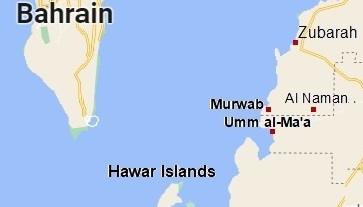
ムルワブおよびウム・アル・マーア(Murwab and um al-Ma’a)
イスラーム教の採用後、アラブ人はイスラーム教徒によるペルシャ征服(Muslim conquest of Persia) (632–654) (الفتحالإسلاميلفارس)を主導し、サーサーン朝(Sassanid Empire)(224~651)(الإمبراطوريةالساسانية)の崩壊をもたらしました。しかし、カタールの一部のキリスト教定住者は、すぐにイスラーム教に改宗しなかった可能性があります。
It was after their adoption of Islam, that the Arabs led the Muslim conquest of Persia (632–654) (الفتحالإسلاميلفارس), resulting in the collapse of the Sassanid Empire (224~651) (الإمبراطوريةالساسانية). However, some Christian settlers in Qatar might not have converted to Islam immediately.
ウマイヤ朝時代
Umayyad period
カタールは、ウマイヤ朝時代(Umayyad Caliphate) (661~750) (لدولة الأموية)に有名な馬とラクダの繁殖地として知られていました。8世紀にアラビア湾での商業戦略的な地位の恩恵を受け始め、真珠取引の中心地になりました。
Qatar was known as a famous horse and camel breeding ground during the Umayyad Caliphate (661~750) (لدولة الأموية). It began to benefit from its commercial-strategic position in the Arabian Gulf in the 8th century and became a center of pearl trading.
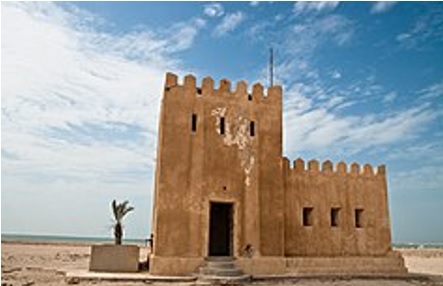
ウム・アル・マーア(Umm al-Ma’a) (امالماء)の歴史的な砦
A historic fort in Umm al-Ma’a.
第二次内乱(Second Fitna) (680~692) (الفتنة الثانية)の間、カタリー・イブン・アル=フジャーア(Qatari ibn al-Fuja’a) (d.694~695)(قطري بن الفجاءة)という有名な司令官は、最も人気があり、賞賛され、強力なハワーリジュ派(Khariji) (الخوارج)の指導者と言われ、ハワーリジュ派(Khariji)のサブ宗派であるアザーリカ(Azariqa) (أزارقة)の人々を数多くの戦いに導きました。彼は、「イスラーム共同体の最高指導者を指すアミール・アル=ムーミニーン(Amir al-Mu’minin) (أميرالمؤمنين)の称号」を保持し、過激なアザーリカ(Azariqa)運動を10年以上統治しました。カタールのアル=クワイル(Al Khuwayr) (الخوير)で生まれた彼は、688年または689年にさかのぼる最初の既知のカルジット硬貨(Kharjite coins) (خوارج)も鋳造しました。
During Second Fitna (680~692) (الفتنة الثانية), a famous commander named Qatari ibn al-Fuja’a (d.694~695)(قطري بن الفجاءة) was said to be the leader of the most popular, admired, and powerful Khariji (الخوارج) faction. the people of Azariqa) (أزارقة), which is a sub-sect of the Khariji, were led to numerous battles by him. He held “the title of Amir al-Mu’minin (أميرالمؤمنين), referring to the supreme leader of the Islamic community” and had ruled the radical Azariqa movement for more than 10 years. Born in Al Khuwayr (الخوير), Qatar, he also minted the first known Kharjite coins (خوارج), dating back to 688 or 689.
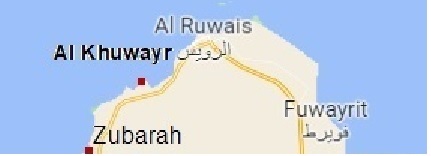
アル=クワイル(Al Khuwayr)
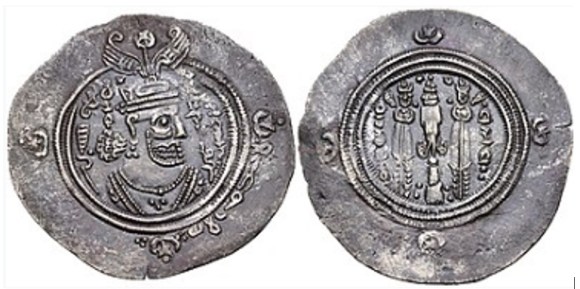
Silver Dirham minted in the name of Qatari (694~695)
ウマイヤ朝(Umayyad Caliphate)は、7世紀後半から西アジアに多くの政治的および宗教的変化をもたらしました。その結果、7世紀の終わりに、特にカタールとバハレイン(Bahrain)で、ウマイヤ朝(Umayyad Caliphate)に対する多くの反乱がありました。カタリー・イブン・アル=フジャーア(Qatari ibn al-Fuja’a)は、20年以上にわたってウマイヤ朝(Umayyad Caliphate)のカリフ(Caliphs) (خلفاء)に対する蜂起を主導しました。
750年、カリフへの不満は、ウマイヤ朝の非アラブ市民の扱いにより危機的なレベルに達しました。アッバース革命(Abbasid Revolution) (747~750) (الثورة العباسية)は、ウマイヤ朝の打倒をもたらし、アッバース朝(Abbasid Caliphate) (750~1258) (الدولة العباسية)の到来を告げました。アッバース革命(Abbasid Revolution)は、「黒服の人々の運動Movement of the Men of the Black Raiment (حركة رجال الثياب السوداء)」とも呼ばれます。
Umayyad Caliphate brought many political and religious changes to West Asia from the late 7th century. As a result, at the end of the 7th century, there were many revolts against the Umayyad Caliphate, especially in Qatar and Bahrain. Qatari ibn al-Fuja’a led the uprising against the Caliphs (خلفاء) of Umayyad Caliphate for more than 20 years.
In 750, dissatisfaction with Caliph reached critical levels due to the treatment of non-Arab citizens by Umayyad Caliphate. Abbasid Revolution (747~750) (الثورة العباسية) led to the overthrow of Umayyad Caliphate and ushered in Abbasid Caliphate (750~1258) (الدولة العباسية). Abbasid Revolution is also called “Movement of Men of Black Raiment (حركة رجال الثياب السوداء)”.
アッバース朝時代
Abbasid Caliphate
ムルワブ(Murwab) (مروب)を含むいくつかの集落は、アッバース朝(Abbasid Caliphate) (750~1258) (الدولة العباسية)時代に開発されました。この時代にムルワブ(Murwab)には、100を超える石造りの家屋、2つのモスク、アッバース朝(Abbasid Caliphate)の砦が建設されました。ムルワブ砦(Murwab fort)は、国内で最も古い無傷の砦であり、火事で破壊された以前の砦の廃墟の上に建てられました。
Several settlements, including Murwab (مروب), were developed during the Abbasid Caliphate (750~1258) (الدولة العباسية) period. During this period, more than 100 stone houses, two mosques and the fort of Abbasid Caliphate were built in Murwab. Murwab fort is the oldest intact fort in Qatar, built on the ruins of an earlier fort that was destroyed by fire.
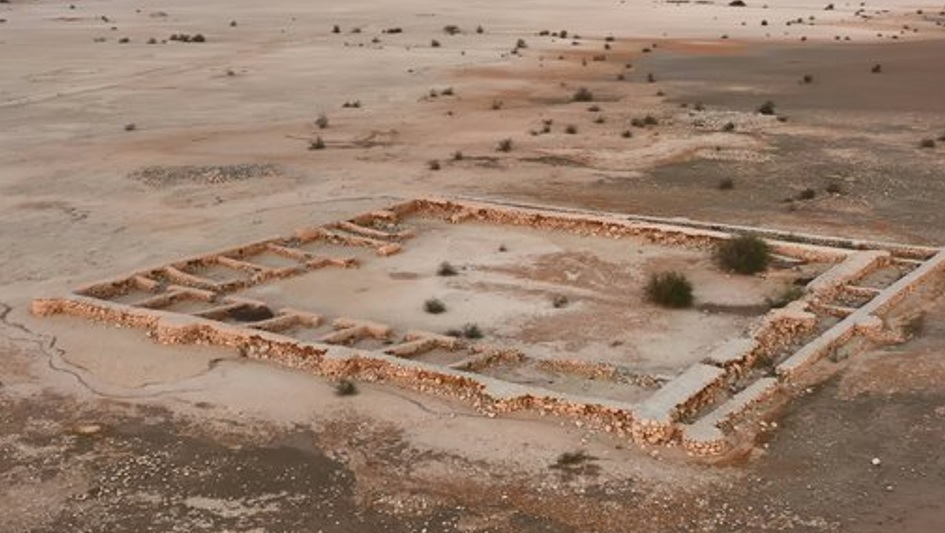
マーワブ砦は8世紀にまでさかのぼります。写真:カタールの美術館
Murwab Fort dates back to the eighth century. Photo: Qatar Museums
町は、カタールの沿岸地域に設立された最初の大規模な集落の場所でした。唐石器(T’ang stoneware) (磁器の一種で、唐時代(618–690, 705–907)の炻器)を含み、9世紀と10世紀にさかのぼる同じ様な場所が、ズバーラ(Zubarah) (زبارة)の南南東のアル=ナアマーン(Al Naman) (النعمان))でも発見されました
The town was the site of the first large settlement established in the coastal region of Qatar. A similar site dating back to the 9th and 10th centuries, including T’ang stoneware, which is a type of porcelain from Tang dynasty (618–690, 705–907), was also found at Al Naman (النعمان) located in south-southeast of Zubarah (زبارة).
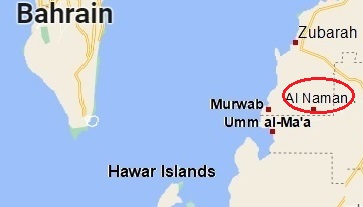
アル=ナアマーン(Al Naman)
カタール半島周辺の真珠産業の実質的な発展は、アッバース朝(Abbasid Caliphate)時代に起こりました。インドと中国に向かう途中のバスラ(Basra) (بصرة)からの船は、この期間中にカタール港(Port of Qatar) (ميناء قطر)に立ち寄ります。中国の磁器、西アフリカの硬貨、タイの作品がカタールで発見されました。9世紀の考古学的遺跡は、カタールの住民が、おそらく真珠貿易からのより大きな富を使用して、より高品質の家や公共の建物を建設したことを示唆しています。しかし、イラクでカリフ制の繁栄(caliphate’s prosperity)が衰退したとき、カタールも衰退しました。
東アラビアの大部分、特にバハレイン(Bahrain)とカタール半島は、868年頃にアッバース朝(Abbasid Caliphate)に対する反乱の場所でした。革命家のモハメッド・イブン・アリー(Mohammed ibn Ali) (d.883)(محمد بن علي)は、バハレイン(Bahrain)とカタールの人々を反乱に駆り立てましたが、反乱は失敗し、彼はバスラ(Basra)に移住しました。彼は後にザンジュの乱(Zanj Rebellion) (869~883) (ثورة الزنج)(黒人奴隷の反乱)を扇動することに成功しました。
カルマティア派(Qarmatians) (899~1077)(قرامطة)と呼ばれる過激なイスマーイリ(Isma’ili) (إسماعيلية)グループは、899年に東アラビアにユートピア共和国(a utopian republic)を設立しました。彼らはメッカ(Mecca) (مكة)への巡礼を迷信と見なし、バハレイン(Bahrain)国家を支配すると、アラビア半島を横断する巡礼ルートに沿って襲撃を開始しました。906年、彼らはメッカ(Mecca)から戻ってきた巡礼者のキャラバンを待ち伏せし、20,000人の巡礼者を虐殺しました。
カタールは、13世紀のイスラーム教徒の学者ヤークート・アル=ハマウィー(Yaqut al-Hamawi) (1179~1229) (ياقوت الحموي)の著書Mu’jam Al-Buldan (Dictionary of Countries) (معجم البلدان)で言及されています。カタール人の細かい縞模様の織りのマントと、カッティヤ(khattiyah) (خطية)の槍として知られる槍の改善と仕上げの伎倆をほのめかしています。 槍は、現在のカティーフ(Qatif) (قطيف)、ウカイル(Uqair) (عقير)、カタールQatar (قطر)を含むアル=カット(Al-Khatt) (الخط) 地域の誉(an homage)としてその名前を取得しました。
The substantial development of the pearl industry around the Qatar Peninsula occurred during the Abbasid Caliphate era. Ships from Basra (بصرة) en route to India and China stop at Port of Qatar (ميناء قطر) during this period. Chinese porcelains, West African coins and Thai pieces were found in Qatar. Archaeological remains from the 9th century suggest that Qatar residents built higher-quality homes and public buildings, possibly using greater wealth from the pearl trade. But when the Abbasid Caliphate’s Prosperity declined in Iraq, so as did Qatar.
Much of eastern Arabia, especially Bahrain and the Qatari peninsula, was the site of a rebellion against the Abbasid Caliphate around 868. The revolutionary Mohammed ibn Ali (d.883) (محمد بن علي) provoked the people of Bahrain and Qatar to revolt, but the rebellion failed and he moved to Basra. He later succeeded in inciting Zanj Rebellion (869~883) (ثورة الزنج) (black slave revolt).
The radical Isma’ili (إسماعيلية) group, called the Qarmatians (899~1077) (قرامطة), founded a utopian republic in Eastern Arabia in 899. They regarded the pilgrimage to Mecca (مكة) as superstition and, once they took control of the Bahrain state, launched raids along the pilgrimage route across the Arabian Peninsula. In 906, they ambushed a caravan of pilgrims returning from Mecca and massacred 20,000 pilgrims.
Qatar is mentioned in the book Mu’jam Al-Buldan (Dictionary of Countries) (معجم البلحموي) by the 13th-century Muslim scholar Yaqut al-Hamawi (1179~1229) (ياقوت الحموي). It alludes to the finely striped woven cloak of the Qatari people and the improvement and finishing of the spear known as the khattiyah (خطية) spear. The spear took its name as an homage of the Al-Khatt (الخط) region, which includes the present-day Qatif (قطيف), Uqair (عقير), and Qatar (قطر).
イスラーム後の黄金時代
Post-Islamic Golden Age
節索引(Section Index)
ウスフリッドとホルムスの支配
Usfurids and Hormuz control
(1253~1515)
アラビア東部の大部分は、1253年にウスフリッド(Usfurids) (1253~1320)(لدولة العصفورية)によって支配されていましたが、この地域の支配権は後に1320年にホルムズ(Hormuz)(オルムス(Ormus))(11th century ~1622) (مملكة هرمز)の君主(prince)によって掌握されました。カタールの真珠は、君主にその主要な収入源の1つを提供していました。ポルトガル人(Portuguese)は、ポルトガル・インド総督(Viceroy of Portuguese India) (r.1509~1515)だったアフォンソ・デ・アルブケルケ(Afonso de Albuquerque)の軍隊によってホルムズ(Hormuz)の艦隊を破壊した後、1507年までにホルムズ(Hormuz)を打ち負かしました。しかし、アフォンソ(Afonso)指揮下の船長達は、反抗的になり、彼はホルムズ(Hormuz)島を放棄することを余儀なくされました。
1507年のポルトガル軍の撤退後、若い君主がサファヴィー朝(Safavid Empire) (1502~1736) (الدولة الصفوية صفوين) の強力な宰相(Safavid Empire Vizier)レイス・ハメド(Reis Hamed)の影響下で統治していました。君主がレイス・ハメド(Reis Hamed)を大いに恐れていたことをポルトガル側は、知っていました。 この為、アフォンソ(Afonso)は、ホルムズ(Hormuz)の実効征服を完了することを決意しました。1515年3月にホルムズ(Hormuz)でアフォンソ(Afonso)は、君主に会い、レイス・ハメド(Reis Hamed)にも出席するよう求めました。 その後、すぐさま側近たちにレイス・ハメド(Reis Hamed)を刺殺させ、恐怖に駆られた若い君主を「解放」したため、アラビア湾にある島は抵抗なくマヌエル1世(Manuel I) (King of Portugal) (r.1495~1521)に降伏し、ポルトガル帝国(Portuguese Empire) (1415~1999)の属国(vassal state)のままとなりました。 ホルムズ(Hormuz)は、1622 年にイギリスとペルシャの同盟(English-Persian alliance)が最終的にポルトガル人を追放するまで、1 世紀近く、ペルシャの領土ではありませんでした。
Most of eastern Arabia was ruled by the Usfurids (1253~1320) (لدولة العصفورية) in 1253, but control of the region was later was seized by the Prince of Hormuz (Ormus) (11th century ~1622) (مملكة هرمز) in 1320. The Pearl of Qatar provided the monarch with one of its main sources of income. Portuguese destroyed Hormuz’s fleet by the army of Afonso de Albuquerque, who was Viceroy of Portuguese India (r.1509~1515), and by 1507 he defeated Hormuz. However, the captains under the command of Afonso became rebellious, and he was forced to abandon the island of Hormuz.
After the withdrawal of the Portuguese army in 1507, a young monarch ruled under the influence of Reis Hamed of the powerful vizier of Safavid Empire (1502~1736) (الدولة الصفوية صفوين). The Portuguese knew that the monarch was very afraid of Reis Hamed. For this reason, Afonso decided to complete the effective conquest of Hormuz. In March 1515 Afonso met the monarch in Hormuz and he asked the monarch that Reis Hamed also attend with him. Afonso then immediately had his aides to stab Reis Hamed to death and “liberate” the terrified young monarch, so that the island in the Arabian Gulf surrendered to Manuel I (King of Portugal) (r.1495~1521) without resistance. And it remained as the vassal state of Portuguese Empire (1415~1999). Hormuz was not Persian territory for nearly a century until the English-Persian alliance finally expelled the Portuguese in 1622.
ポルトガルとオスマン帝国の支配
Portuguese and Ottoman control
バハレイン(Bahrain)とカタール(Qatar)本土は、1521年にポルトガル人に強奪されました。ポルトガル人が支配権を主張した後、彼らはアラビア海岸に沿って一連の要塞を建設しました。しかし、カタールでは重要なポルトガルの遺跡は、発見されていません。ポルトガル人は、アラビア東部に商業帝国を築くことに焦点を当て、金、銀、絹、丁子、琥珀、馬、真珠を輸出しました。アハサー(Al-Hasa)の住人は、1550年にオスマン帝国(Ottoman Empire)の支配に自発的に服従し、ポルトガル人よりも彼らを好みました。
ポルトガル人が1602年にオランダとイギリスによってこの地域から追放された後、オスマン帝国(Ottoman Empire)は、アハサー(Al-Hasa)地域で軍事的プレゼンスを維持する必要性をほとんど感じませんでした。その結果、オスマン帝国(Ottoman Empire)は、1670年にバニー・カーリド族(Bani Khalid) (بنيخالد)によって追放されました。
Bahrain and the Qatar mainland were usurped by the Portuguese in 1521. After the Portuguese claimed control, they built a series of fortifications along the Arabian Gulf coast. However, no significant Portuguese remains have been found in Qatar. The Portuguese focused on building a commercial empire in eastern Arabia, exporting gold, silver, silk, dingzi, amber, horses, and pearls. The inhabitants of Al-Hasa voluntarily submitted to the rule of the Ottoman Empire in 1550, preferring them to the Portuguese.
After the Portuguese were expelled from the region by the Dutch and British in 1602, the Ottoman Empire felt little need to maintain a military presence in the Al-Hasa region. As a result, the Ottoman Empire was expelled by the Bani Khalid (بنيخالد) in 1670.
バニー・カーリド族(Bani Khalid) (بنو خالد):カフラーン・カフターン部族(Kahlan Qahtan Arabs) (كهلان قحطان عرب)のタイイ族(Tayy) (طيء)の支族
Banu Khalid branch (قبيلة الفرعية بني خالد): A branch belonging to Tayy Tribe (قبيلة طيء ) of Kahlan Qahtan Arabs (كهلان قحطان عرب).
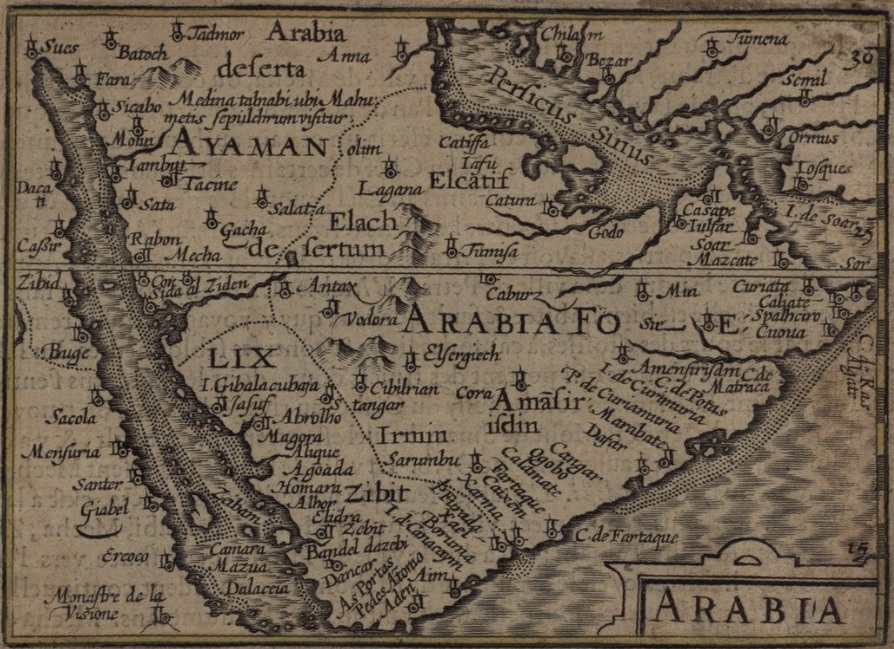
ヨドクス・ホンディウスによるアラビアの1598年の地図
A 1598 map of Arabia by Jodocus Hondius
バニー・ウトバ族の起源
Origin of Bani Utbah Tribe
節索引(Section Index)
バニー・ウトバ族
Bani Utbah
アール・ビン・アリー族(Al Bin Ali) (ل بن علي)は、バニー・ウトバ族(Bani Utbah) (بني عتبة)の生粋の子孫であり、早くも1699年からバハレイン(Bahrain)のナツメヤシ農園(Palm gardens)の所有権の文書でアール・ビン・アリー族(Al Bin Ali)の名前を持ち、受け継いできた唯一の部族です。彼らは、特に曽祖父の子孫である曽祖父アリー・アル=ウトビ(Ali Al-Utbi) (علي العتبي)の子孫であるため、ウトバ(Utbah) (عتبة)の息子を意味するバニー・ウトバ(Bani Utbah) (بني عتبة)という名前が付けられています。ウトバ(Utbah)は、アドナーン(Adnan) (عدنان)のムダール(Mudar) (مضر)のバニー・スライム・ビン・マンスール(Bani Sulaim bin Mansoor) (بني سليم بن منصور)のカファーフ(Khafaf) (خفاف)の一部であるバニー・ウトバ (Bani Utbah) (بني عتبة)の曽祖父です。アル・ウトビ(Al-Utbi) (العتبي)の複数形は、ウトゥブ(Utb) (عتب)であり、部族の名前は、バニー・ウトバ族(Bani Utbah) (بني عتبة)です。
Al Bin Ali (ل بن علي) is the native descendants of Bani Utbah (بني عتبة) and the only tribe to bear and inherit the name of Al Bin Ali in documents of ownership of the Palm gardens in Bahrain as early as 1699. They are specifically descended from their great-grandfather Ali Al-Utbi (علي العتبي), hence the name Bani Utbah (بني عتبة), which means son of Utbah (عتبة). Utbah is the great-grandfather of Bani Utbah (بني عتببة), part of Khafaf (خفاف) of Mudar (مضر) of Adnan (عدنان). The plural form of Al-Utbi (العتبي) is Utb (عتب), and the name of the tribe is Bani Utbah (بني عتبة).
アール・ビン・アリー族(Al Bin Ali) (ل بن علي):ムダル・アドナーン部族(Mudar Adnan Arab) (مضر عدنان عرب) バニー・スライム・ビン・マンスール族(Bani Sulaim bin Mansoor) (بني سليم بن منصور)のカファーフ一門(Khafaf) (خفاف)の支族のバニー・ウトバ族(Bani Utbah) (بني عتبة)に属する1家族
Al Bin Ali (ل بن علي): A family of the Bani Utbah (بني عتبة) of the Khafaf (خفاف) clan of the Bani Sulaim bin Mansoor (بني سليم بن منصور) belonging to Mudar Adnan Arab (مضر عدنان عرب).
バニー・カーリド族の支配
Rule of Bani Khalid
オスマン帝国(Ottoman Empire)を追放した後、バニー・カーリド族(Bani Khalid)は、1670年以降カタールを掌握しました。1766年、アル=ジャラフマ又はアル=ジャラヒマ(Al Jalahma or Al Jalahima)とアル=カリーファ族(Al Khalifa)のバニー・ウトバ族(Bani Utbah)は、クウェートからカタールのズバーラ(Zubarah) (زبارة)に移住しました。ズバーラ(Zubarah)に到着するまでに、バニー・カーリド族(Bani Khalid)は、カタールに対して弱い権力を行使しましたが、最大の村は、バニー・カーリド族(Bani Khalid)の遠い親族によって支配されていました。1777年にペルシャがバスラを占領した後、多くの商人や家族がバスラとクウェートからズバーラ(Zubarah)に移りました。この動きの後、町は、アラビア湾地域の貿易と真珠採取の中心地として繁栄しました。
After expelling the Ottoman Empire, Bani Khalid seized Qatar after 1670. In 1766, Al Jalahma or Al Jalahima and Bani Utbah of Al Khalifa migrated from Kuwait to Zubarah (زبارة) in Qatar. By the time it arrived in Zubarah, Bani Khalid exercised weak power over Qatar, but the largest village was controlled by distant relatives of Bani Khalid. After the Persian occupation of Basra in 1777, many merchants and families moved to Zubarah from Basra and Kuwait. After this move, the town prospered as a center of trade and pearling in the Arabian Gulf region.
バニー・カーリド族(Bani Khalid) (بنو خالد):カフラーン・カフターン部族(Kahlan Qahtan Arabs) (كهلان قحطان عرب)のタイイ族(Tayy) (طيء)の支族。
Banu Khalid branch (قبيلة الفرعية بني خالد): A branch belonging to Tayy Tribe (قبيلة طيء ) of Kahlan Qahtan Arabs (كهلان قحطان عرب).
アル=ジャラフマ又はアル=ジャラヒマ(Al Jalahma or Al Jalahima) (الخليفة):ムダル・アドナーン部族(Mudar Adnan Arab) (مضر عدنان عرب) バニー・スライム・ビン・マンスール族(Bani Sulaim bin Mansoor) (بني سليم بن منصور)のカファーフ一門(Khafaf) (خفاف)のバニー・ウトバ支族(Bani Utbah) (بني عتبة)から分かれた家族。
Al Jalahma or Al Jalahima (الجلاهمة): A Family branched from Bani Utbah) (بني عتبة) which is a branch of Khafaf (خفاف) clan of Bani Sulaim bin Mansoor(بني سليم بن منصور) belonging to Mudar Adnan Arab (مضر عدنان عرب).
1775年から1776年のオスマン・ペルシャ戦争(Ottoman–Persian War) (1775~1776) (احتلال البصرة 1775)は、オスマン帝国(Ottoman Empire)とペルシャのザンド王朝(Zand dynasty) (1751~1794) (دودمان زندیان)の間で戦われました。カリム・カーン(Karim Khan) (r.1751~1779) (كريم خان زند)が統治し、弟のサーディク・カーン・ザンド(Sadeq Khan Zand) (r.1779~1781) (صادقخان زند)が率いるペルシャ人はイラク南部に侵攻し、バスラを1年間包囲した後、1776年にオスマン帝国(Ottoman Empire)から都市を奪いました。軍隊を送ることができなかったオスマン帝国(Ottoman Empire)は、その地域を守るために奴隷階級の知事(Mamluk governors)に依存していました。
また、隣接するアハサー(Al-Hasa)のバニー・カーリド族(Bani Khalid)支配は、1795年に正式に終了した程、弱っていました。
その状況であったので、アル=カリーファ族(Al Khalifa)は、1783年までにカタールとバハレイン(Bahrain)の領有を主張することが出来ました。
The Ottoman–Persian War (1775~1776) (احتلال البصرة 1775) was the fight between the Ottoman Empire and the Persian Zand dynasty (1751~1794) (دودمان زندیان). Karim Khan (r.1751~1779) (كريم خان زند) ruled and the Persians led by his brother Sadeq Khan Zand (r.1779~1781) (صادق خان زند) invaded Southern Iraq and besieged Basra for one year before taking the city from Ottoman Empire in 1776. Unable to send troops, the Ottoman Empire relied on Mamluk governors to defend the area.
Also, Bani Khalid rule in neighboring Al-Hasa was so weak that it officially ended in 1795.
As such, by 1783 Al Khalifa was able to claim possession of Qatar and Bahrain.
アル=カリーファ族とサウジ支配
Al Khalifa and Saudi control
(1783~1868)
節索引(Section Index)
アル=カリーファ族のバハレイン領有
Al-Khalifa’s possession of Bahrain
ズバーラ(Zubarah)に対するペルシャの侵略に続いて、バニー・ウトバ族(Bani Utbah) と他のアラブ部族は、1783年にバハレイン(Bahrain)からペルシャ人を追い出しました。アル=ジャラフマ(Al Jalahma) は、1783年にバニー・ウトバ族(Bani Utbah) がバハレイン(Bahrain)を併合し、ズバーラ(Zubarah)に戻る前に、バニー・ウトバ族(Bani Utbah) 同盟から離脱しました。
Following the Persian invasion against Zubarah, Bani Utbah and other Arab tribes drove the Persians out of Bahrain in 1783. Al Jalahma broke away from the Bani Utbah alliance before Bani Utbah annexed Bahrain in 1783 and returned to Zubarah. This made Al Khalifa the undisputed possession of Bahrain, and Al Khalifa moved its power base from Zubarah to Manamah (منامة).
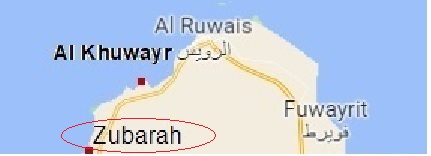
これにより、アル=カリーファ族(Al Khalifa)は、バハレイン(Bahrain)を誰もが認める所有領とし、バハレイン(Bahrain)は権力基盤をズバーラ(Zubarah)からマナーマ(Manamah) (منامة)に移しました。アル=カリーファ族(Al Khalifa)は、本土に対して権威を行使し続け、カタールへの挑戦を避けるためにワッハーブ派(Wahhabi)に敬意を表しました。
This made Al Khalifa the undisputed possession of Bahrain, and Al Khalifa moved its power base from Zubarah to Manamah (منامة). Al Khalifa paid tribute to Wahhabi to continue exercising authority over the mainland and avoid a challenge to Qatar.
ズバーラのワッハーブ派への恭順
Submission of Zubarah to Wahhabi
しかし、カタールは、アル=カリーファ族(Al Khalifa)がバハレイン(Bahrain)に焦点を向けたため、中央集権的な権威を持ちませんでした。その結果、カタールは多くの「一時的なシャイフ(Shaykh) (الشيخ)」の期間を経験しましたが、最も注目すべきは、「海賊として、彼は無慈悲で恐れ知らずである」という評判のあったラフマ・イブン・ジャーベル・アル=ジャラヒマ(Rahmah ibn Jabir al-Jalahimah) (رحمة بن جابرالجلاهمة)です。1790年までに、ズバーラ(Zubarah)は、完全な保護と関税を享受していない商人にとって安全な避難所として説明されました。
However, Qatar did not have a centralized authority because Al Khalifa turned its focus to Bahrain. As a result, Qatar experienced many “temporary shaykhs” (الشيخ) eras. Among them, the most notably shaykh was Rahmah ibn Jabir al-Jalahimah (رحمة بن جابرالجلاهمة), who had a reputation for being ruthless and fearless as a pirate. By 1790, Zubarah was described as a safe haven for merchants who did not enjoy full protection and customs duties.
チャールズ・エルムズが描いた海賊ラフマ・イブン・ジャーベル・アル=ジャラヒマのスケッチ。 この絵は、1837 年にボストンで出版されたエルムの著書『The Pirates Own Book』に掲載されています
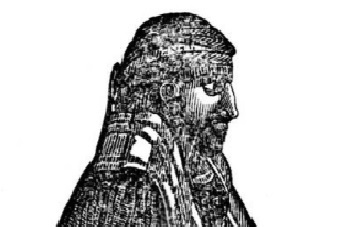
A sketch of the pirate Rahmah ibn Jabir al-Jalahimah drawn by Charles Ellms. The drawing appeared in Ellm’s book The Pirates Own Book, first published in Boston in 1837.
ズバラ要塞 – Dohaの西 100 km に位置するズバーラ(Zubarahの町は、古い砦で有名な重要な遺跡です。 この砦から博物館となったこの博物館は、シャイフ(Shaykh) (الشيخ)アブドゥッラー・ビン・ジャーシムAbdullah bin Jasim (r.1913~1949) (عبد الله بن جاسم بن) の治世中の 1938 年に建設され、隣接する砦の廃墟の上に建てられました。
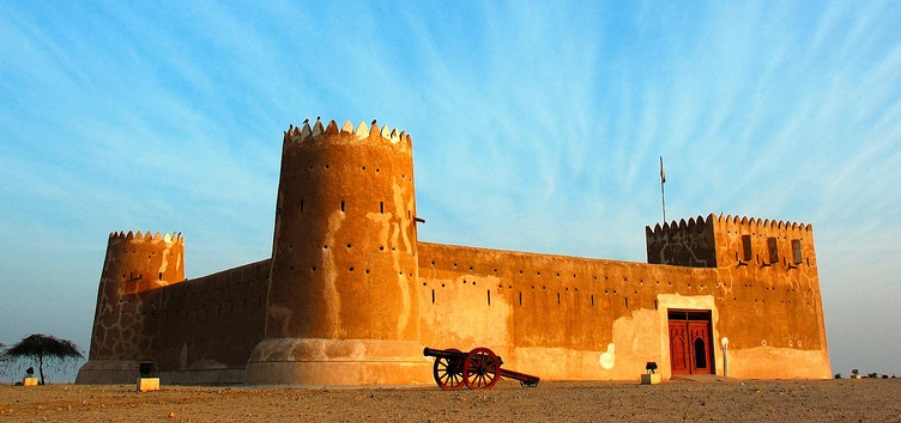
ズバラ要塞(Zubara Fort)
Zubara Fort – Situated just 100 km west of Doha lies the town of Al Zubara, an important archeological site famous for its old fort. This fort-turned-museum was constructed in 1938 during the reign of Shaikh (الشيخ) ’Abdullah bin Jasim (r.1913~1949) (عبد الله بن جاسم) and was erected on the ruins of a neighbouring fort.
1780年以降、アハサー(Al-Hasa)にあるバニー・カーリド族(Bani Khalid)の拠点を断続的にワッハーブ派(Wahhabi)が襲撃したため、ズバーラ(Zubarah)もワッハーブ派の脅威にさらされるようになりました。ワッハーブ派(Wahhabi)は、ズバーラ(Zubarah)の住民がバニー・カーリド族(Bani Khalid)の助けを借りて彼らの政権に対して陰謀を企てるだろうと推測していました。彼らはまた、その住民がワッハーブ派(Wahhabi)の教義に反する教えを実践していると信じており、ズバーラ(Zubarah)をアラビア湾への重要な玄関口と見なしていました。ワッハーブ派(Wahhabi)の将軍スライマン・イブン・ウファイサン(Sulaiman ibn Ufaysan) (سليمان بن عفيصان)は、1787年にズバーラ(Zubarah)に対する襲撃を主導しました。5年後、大規模なワッハーブ派(Wahhabi)軍がアハサー(Al-Hasa)を征服し、多くの難民がズバーラ(Zubarah)に逃げることを余儀なくされました。ワッハーブ派(Wahhabi)軍は、亡命希望者を受け入れたことに対する罰として、1794年にズバーラ(Zubarah)といくつかの近隣の入植地を包囲しました。地元の首長(Amir)は、支配を継続することは、許可されましたが、税金を支払う必要がありました。
From 1780 onwards, intermittent Wahhabi raids on the Bani Khalid stronghold in Al-Hasa had put Zubarah under threat as well. Wahhabi speculated that the inhabitants of Zubarah would conspire against Wahhabi’s regime with the help of Bani Khalid. They also believed that its inhabitants practiced teachings contrary to Wahhabi doctrine. Moreover, they regarded Zubarah as their important gateway to the Arabian Gulf. Wahhabi’s general Sulaiman ibn Ufaysan (سليمان بن عفيصان) led a raid on Zubarah in 1787. Five years later, a large Wahhabi army conquered Al-Hasa, forcing many refugees to flee to Zubarah. Wahhabi besieged Zubarah and several neighboring settlements in 1794 as punishment for accepting asylum seekers. The local Amir was allowed to continue their rule, but had to pay taxes.
アル=カリーファ族のズバーラ奪回
Recapture of Zubarah by Al-Khalifa
1795年にバニー・カーリド族(Bani Khalid)を破った後、ワッハーブ派(Wahhabi)は、2方面からの攻撃にさらされました。オスマン帝国(Ottoman Empire)とそのエジプト人部隊は西部戦線を攻撃し、バハレイン(Bahrain)のアル=カリーファ族(Al Khalifa)とオマーンは、東部戦線に対する攻撃を開始しました。ワッハーブ派(Wahhabi)は、カタールのアル=ジャラフマ(Al Jalahma) 族と同盟を結び、カタールは、東部の戦線でアル=カリーファ族(Al Khalifa)とオマーン人と交戦しました。
After defeating Bani Khalid in 1795, Wahhabi was attacked from two fronts. The Ottoman Empire and its Egyptian units attacked the Western Front, while Bahrain’s Al Khalifa and Oman launched an offensive against the Eastern Front. Wahhabi allied with the Al Jalahma tribe of Qatar, and Qatar engaged Al Khalifa and the Omanis on the eastern front.
1811年、西部戦線でのエジプト人部隊による前進に気づいたワッハーブ派(Wahhabi)のアミール(Amir)は、軍隊を再配置するためにバハレイン(Bahrain)とズバーラ(Zubarah)の駐屯地を減らしました。オマーン帝国スルターン(Sultan of the Omani Empire)のサイード・ビン・スルターン(Said bin Sultan)(1804~1856) (سعيد بن سلطان)は、この機会を利用して、バハレイン(Bahrain)とズバーラ(Zubarah)のワッハーブ派(Wahhabi)駐屯地を攻撃しました。ズバーラ(Zubarah)の砦は炎上し、アル=カリーファ族(Al Khalifa)が事実上権力を握りました。
In 1811, Amir of Wahhabi, noticing the advance by Egyptian units on the Western Front, reduced the garrisons of Bahrain and Zubarah to redeploy his troops. Said bin Sultan (1804~1856) (سعيد بن سلطان) ,who was Sultan of the Omani Empire, took this opportunity to attack the Wahhabi garrisons of Bahrain and Zubarah. The fort of Zubarah went up in flames, and Al Khalifa effectively took power.
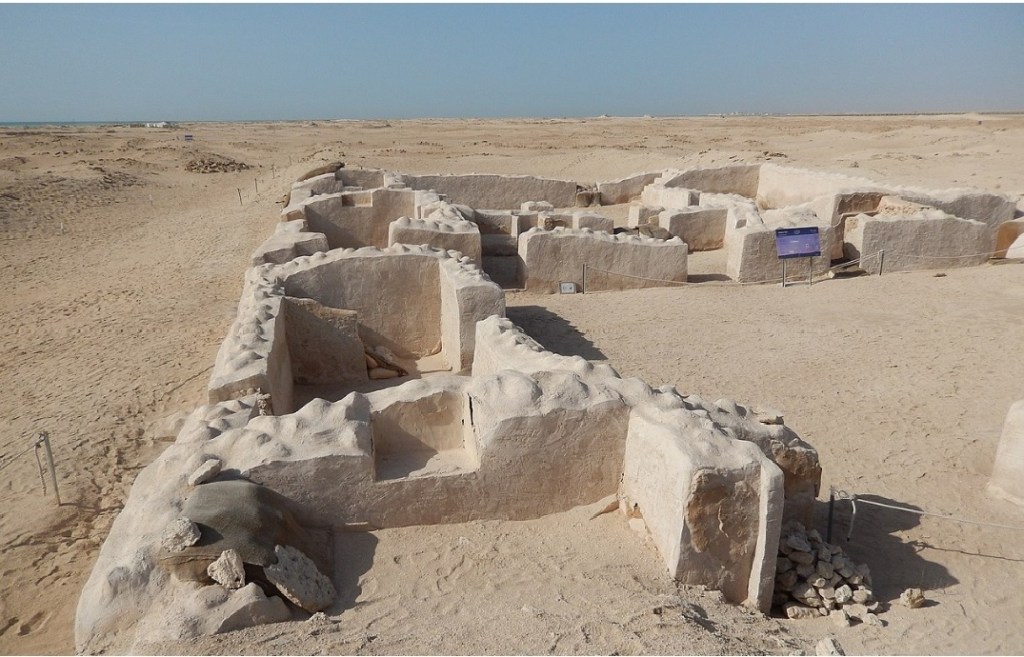
ズバーラ(Zubarah)の廃墟の街(Ruined city in Zubarah)
イギリスの関与
British involvement
東インド会社(East India Company)の船の安全な通過に対する英国の願望は、アラビア湾に独自の命令を行き渡らせることにつながりました。1820年に東インド会社(East India Company)と沿岸地域(後に休戦海岸(Trucial Coast)と呼ばれた)のシャイフ(Shaykh) (الشيخ)の間で一般海事条約として知られる協定が調印されました。英国は、これらの協定で、アラビア湾における英国の権威を認めさせ、海賊行為と奴隷貿易を終わらせようとしました。バハレイン(Bahrain)は、条約の締約国となり、属領としてのカタールも条約の締約国であると想定されていました。
Britain’s desire for the safe passage of East India Company ships led to the spread of Britain’s own orders in the Arabian Gulf. In 1820 the agreements known as the General Maritime Convention were signed between the East India Company and Shaykhs (الشيخ) of the coastal region (later called the Trucial Coast). Britain sought to get Britain’s authority in the Arabian Gulf recognized with these agreements and to end piracy and slave trade. Bahrain became a party to the treaty, and Qatar was assumed that as its dependent territory would also be a party to this treaty
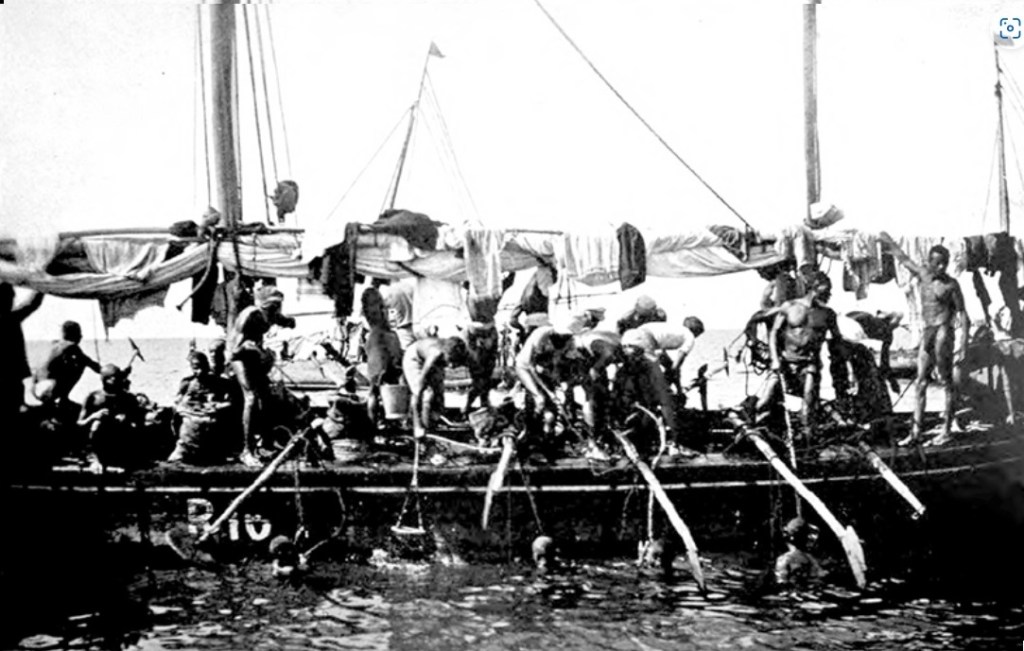
20世紀初頭のアラビア湾での真珠漁
Pearl fishing in the Persian Gulf, early 20th century
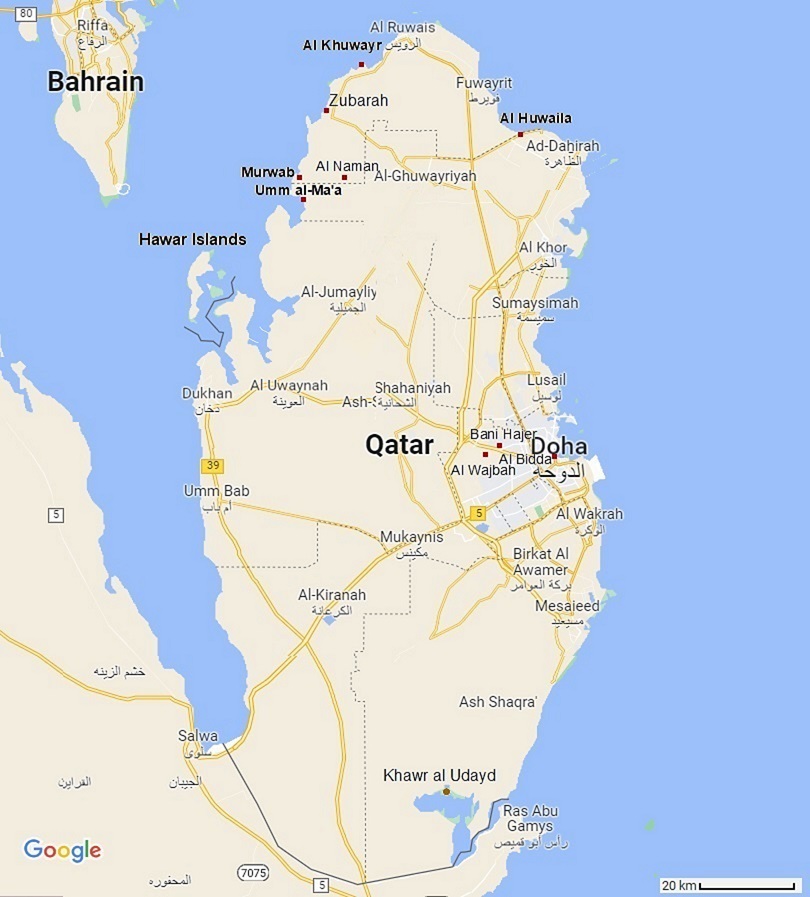
1820年にコールブルック少佐(Major Colebrook)によって編集された報告書は、カタールの主要な町の最初の説明を行っています。彼の報告書で言及されているすべての沿岸都市は、アラビア湾の真珠産地の近くにあり、何千年もの間真珠漁を実践して来ました。18世紀後半まで、アル=フワイラ(Al Huwaila) (الحويلة)、フワイリット(Fuwayrit) (فويرط)、アル=ビッダ(Al Bidda) (البدع)、ドーハ(Doha) (دوحة)を含むカタールのすべての主要な町が東海岸に位置していました。ドーハ(Doha) は、これらの中で最大のアル=ビッダ(Al Bidda)を中心に発展しました。(頁冒頭の目次のに続くカタール全図を参照して下さい。)人口は遊牧民と定住したアラブ人と東アフリカから連れてこられた奴隷のかなりの割合で構成されていました。ドーハ(Doha) の住民が犯した海賊行為の罰として、1821年に東インド会社(East India Company)の船が町を砲撃しました。彼らは町を破壊し、300人から400人の原住民を逃げさせました。
The report, compiled by Major Colebrook in 1820, gave the first description of the main towns in Qatar. All the coastal cities mentioned in his report were located near the pearl fields of the Arabian Gulf and had been practicing pearl fishing for thousands of years. Until the late 18th century, all major towns in Qatar were located on the east coast, including Al Huwaila (الحويلة), Fuwayrit (فويرط), Al Bidda (البدع) and Doha (دوحة). Doha developed around Al Bidda, the largest of these. (Please refer to the map of Qatar following the index at the beginning of this page.) The population consisted of nomads and settled Arabs and also a significant percentage of slaves brought from East Africa. As punishment for piracy committed by the inhabitants of the Doha, in 1821 ships of the East India Company bombarded this town. They destroyed the town and forced 300 to 400 natives to flee.
1825年にイギリスが実施した調査によると、カタールには中央政府がなく、それぞれに地元のシャイフ(Shaykh) (الشيخ)によって統治されていました。ドーハ(Doha) は、アール・ブ・アイニン(Al-Bu Ainain) (آل بو عينين)族がシャイフ(Shaykh)として統治していました。1828年、アール・ブ・アイニン(Al-Bu Ainain)族 のメンバーがバハレイン(Bahrain)の原住民を殺害し、バハレイン(Bahrain)のシャイフ(Shaykh) (الشيخ)は、犯罪者を投獄しました。アール・ブ・アイニン(Al-Bu Ainain) 族は、反乱を起こし、アル=カリーファ族(Al Khalifa)に対して、彼らの砦を破壊し、ドーハ(Doha) から追放すると、挑発しました。アル=カリーファ族(Al Khalifa)は、逆にアール・ブ・アイニン(Al-Bu Ainain)を追放し、これによりドーハ(Doha) に対するより多くの管轄権を獲得しました。
According to a study conducted by the British in 1825, Qatar had no central government, while each town governed by each local Shaykh (الشيخ). Doha was ruled by the Al-Bu Ainain (آل بو عينين) as Shaykh. In 1828, members of the Al-Bu Ainain murdered the natives of Bahrain, and Shaykh (الشيخ) of Bahrain imprisoned the criminals. The Al-Bu Ainain revolted and provoked the Al Khalifa by destroying their fort and expelling them from the Doha. The Al Khalifa, on the contrary, expelled the Al-Bu Ainain, thereby gaining more jurisdiction over the Doha.
アール・ブ・アイニン(Al-Bu Ainain) (آل بو عينين) :ムダール・アドナーン部族(Mudar Adnan Arab) (مضر عدنان عرب) バニー・タミーム族(Bani Tamim) (بني تميم)の一家族。
Al-Bu Ainain (آل بو عينين): A family of (ani Tamim (بني تميم) belonging to Mudar Adnan Arab (مضر عدنان عرب).
アブドラ・ビン・アフメドとフワイリットの戦い
Abdullah bin Ahmad and Battle of Fuwayrit
ワッハーブ派(Wahhabi)の動向を監視し続けることを望んで、バハレイン(Bahrain)は、早くも1833年にカタール沿岸にバハレイン(Bahrain)の首長(r.1821~1843)であるシャイフ(Shaykh) (الشيخ)アブドゥッラー・ビン・アハマド・アル=カリーファ(Abdullah bin Ahmad Al-Khalifa) (عبد الله بن أحمد آل خليفة)を共同首長として駐留させました。(「バハレイン(Bahrain)とカタール(Qatar)は、為政者をシャイフ(Shaykh)と呼んでいた」との説もありますが、ここでは、尊称としてのシャイフ(Shaykh)と区別したいので首長(Amir)と呼んでいます。)
Hoping to continue to monitor the movements of Wahhabi, Bahrain sent the joint Amir to Qatari coast as early as 1833. This joint Amir was Shaykh (الشيخ) Abdullah bin Ahmad Al-Khalifa (عبد الله بن أحمد آل خليفة), who was the Amir of Bahrain (r.1821~1843). (There is a theory that the rulers of Bahrain and Qatar were called Shaykh, but here the writer call them Amir to distinguish them from Shaykh as an honorific title. )

シャイフ・アブドラ・ビン・アフメド・アル=カリーファ
Shaykh Abdullah bin Ahmad Al Khalifa (r.1821~1843)
(الشيخ عبد الله بن أحمد آل خليفة)
バハレイン(Bahrain)に背を向けて、彼は、アル=フワイラ(Al Huwailah) (الحويلة)の人々に「アル=カリーファ族(Al Khalifa)に対する反乱を起こし、1835年にワッハーブ派(Wahhabi)との通信を開始する」ように扇動しました。反乱の直後、オマーン帝国スルターン(Sultan of the Omani Empire)サイード・ビン・スルターン(Said bin Sultan)の息子の調停の下で和平協定が両当事者によって署名されました。協定の一環として、アル=フワイラ(Al Huwailah) は取り壊され、その住民は、バハレイン(Bahrain)に移されました。しかし、アブドゥッラー・ビン・アハマド (Abdullah bin Ahmad)の甥たちは、地元のアル=クワリ(Al Kuwari) (الكواري)族のメンバーにアル=フワイラ(Al Huwailah) を攻撃するよう扇動、この合意に違反しました。
Turning his back on Bahrain, he incited the people of Al Huwailah (الحويلة) to “revolt against Al Khalifa and begin correspondence with Wahhabi in 1835”. Immediately after the rebellion, a peace agreement was signed by both parties under the mediation of the son of Said bin Sultan of the Omani Empire. As part of the agreement, Al Huwailah was demolished, and its inhabitants were moved to Bahrain. However, Abdullah bin Ahmad’s nephews violated this agreement, inciting members of the local Al Kuwari (الكواري) to attack Al Huwailah.
カタール半島の住民は、バハレイン(Bahrain)の首長(Amir)の軍隊とアハサー(Al-Hasa)のエジプト軍司令官の間の小競り合いの影響を受け易い状況にありました。1839年の終わりか1840年の初めに、アハサー(Al-Hasa)の知事は、要求された貢物を支払うことをズバーラ(Zubarah)のアル=ヌアイム(Al Nuaim) (النعيم)族(a bedouin trib)が拒否した後、カタールを荒廃させるために軍隊を派遣しました。ホフーフ(Hofuf) (هفوف)での知事の暗殺によって、軍隊がカタールに到着する前に遠征は、途中で終了しました。
The inhabitants of the Qatari Peninsula were in a situation susceptible to skirmishes between the troops of Amir in Bahrain and Egyptian military commander in Al-Hasa. At the end of 1839 or the beginning of 1840, the governor of Al-Hasa sent troops to devastate Qatar after Al Nuaim (النعيم) (a bedouin trib) of Zubarah refused to pay the demanded tribute. The assassination of the governor at Hofuf (هفوف) ended the expedition prematurely before the troops reached Qatar.
1847年、アブドゥッラー・ビン・アハマド・アル=カリーファ(Abdullah bin Ahmad Al-Khalifa)とカタールの首長(Amir) シャイフ(Shaykh) (الشيخ)イーサー・ビン・タリフ(Isa Bin Tarif Al Bin Ali) (1790~1847)( عيسى بن طريف ال بن علي)は、バハレイン(Bahrain)の首長であるムハンマド・ビン・カリーファ(Mohammed bin Khalifa) (r.1843~1868) (محمد بن خليفة بن سلمان آل خليفة)に対して連立を結成しました。11月、ムハンマド・ビン・カリーファ(Mohammed bin Khalifa)は、500人の軍隊とカティーフ(Qatif) (قطيف)とアハサー(Al-Hasa) (الأحساء)の知事からの軍事支援を受けてアル=ホール(Al Khor) (الخور)に上陸しました。反対勢力は600人の軍隊を数え、イーサー・ビン・タリフ(Isa Bin Tarif)によって率いられました。11月17日、連合軍とバハレイン(Bahrain)軍の間でフワイリットの戦い(Battle of Fuwayrit) (معركة الفويرط)として知られるようになった決定的な戦いが行われました。連合軍は、イーサー・ビン・タリフ(Isa Bin Tarif)と彼の部下の80人が殺された後、敗北しました。レジスタンス軍(resistance troop)を打ち負かした後、ムハンマド・ビン・カリーファ(Mohammed bin Khalifa)は、アル=ビッダ(Al Bidda) を破壊し、その住民をバハレイン(Bahrain)に移しました。彼は兄弟のアリー・ビン・カリーファ(Ali bin Khalifa) (علي بن خليفة)をアル=ビッダ(Al Bidda)への使節として派遣しました。しかし、アリー・ビン・カリーファ(Ali bin Khalifa)は、管轄権(jurisdiction)を行使しなかったので、地元の部族指導者(local tribal leaders)がカタールの内政に責任を持ち続けました。
In 1847, Abdullah bin Ahmad Al-Khalifa and Amir of Qatar Shaykh (الشيخ) Isa Bin Tarif Al Bin Ali (1790~1847)( عيسى بن طريف ال بن علي) formed a coalition against Amir of Bahrain Mohammed bin Khalifa (r.1843~1868) (محمد بن خليفة بن سلمان آل خليفة). In November, Mohammed bin Khalifa landed at Al Khor (الخور) with 500 troops and military support from the governors of Qatif (قطيف) and Al-Hasa (الأحساء). The opposition numbered 600 troops and was led by Isa Bin Tarif. On 17 November, a decisive battle took place between the Allied and Bahrain forces that became known as the Battle of Fuwayrit (معركة الفويرط). The Allies were defeated after Isa Bin Tarif and 80 of his men were killed. After defeating the resistance troop, Mohammed bin Khalifa destroyed Al Bidda and moved its inhabitants to Bahrain. He sent his brother Ali bin Khalifa (علي بن خليفة) as an envoy to Al Bidda. However, Ali bin Khalifa did not exercise jurisdiction, so that the local tribal leaders remained responsible for Qatar’s internal affairs.
バハレインとサウジアラビアの争い
Bahraini–Saudi contention
バハレイン(Bahrain)侵攻計画を練り上げた後、ワッハーブ派(Wahhabi) 首長(Amir) (r.1843~1865) ファイサル・ビン・トゥルキー・アール・ サウード (Faisal bin Turki Al Saud) (فيصل بن تركي آل سعود)は、1851年2月に小隊と共にナジュド(Najd)の本部を出発しました。ムハンマド・ビン・カリーファ(Mohammed bin Khalifa)に代わっていくつかの宥和政策の申し出がなされましたが、これらは、ファイサル(Faisal)によって拒否されました。差し迫った侵略を見越して、アリー・ビン・カリーファ(Ali bin Khalifa)は、カタールに軍事支援を求めるために動きましたが、カタール首長(Amir of Qatar) シャイフ(Shaykh) (الشيخ) ムハンマド・ビン・サーニー(Mohammed bin Thani) (r.1847~1878) (محمد بن ثاني)は、5月にアル=ビッダ(Al Bidda)に到着したファイサル(Faisal)の軍隊に支援を与えるように説得されました。6月8日、アル=サーニー(Al Thani)に忠実な軍隊は、アル=ビッダ(Al Bidda) 砦にあるアリー・ビン・カリーファ(Ali bin Khalifa)の住居の近くにある重要な塔を占拠しました。これにより、バハレイン(Bahrain)は、ファイサル(Faisal)の前進を阻止するためにイギリスとの保護条約の交渉を開始しました。彼らは、当初そうすることに失敗しましたが、イギリスは紛争に関する諜報報告を受け取った後、彼らの立場を再考し、急いでマナーマ(Manama) (منامة)に海上封鎖を配置しました。1851年7月25日の平和条約に伴い、バハレイン(Bahrain)の首長(Amir)は、バハレイン(Bahrain)占領下のアル=ビッダ(Al Bidda) 砦の修復とカタールの住民からのワッハーブ派(Wahhabi)の分離と引き換えに、4,000ドイツクローネの料金を支払うことに同意しました。
After planning the invasion of Bahrain, Wahhabi Amir (r.1843~1865) Faisal bin Turki Al Saud (فيصل بن تركي آل سعود) departed from Najd’s headquarters with his platoon in February 1851. Several appeasements offers were made on behalf of Mohammed bin Khalifa, but these were rejected by Faisal. In anticipation of an imminent invasion, Ali bin Khalifa moved to seek military support from Qatar, but Amir of Qatar Shaykh (الشيخ) Mohammed bin Thani ( r.1847~1878) (محمد بن ثاني) was persuaded to give support to Faisal’s army, which arrived at Al Bidda in May. On June 8, troops loyal to Al Thani seized an important tower near Ali bin Khalifa’s residence at Fort Al Bidda. This led Bahrain to begin negotiating a treaty of protection with the British to stop Faisal’s advance. They initially failed to do so, but the British reconsidered their position after receiving intelligence reports on the conflict and hastily placed a naval blockade at Manama (منامة). With the peace treaty of 25 July 1851, Amir of Bahrain agreed to pay a fee of 4,000 Deutsches kroner in exchange for the restoration of the Bahrain-occupied Al Bidda fort and the separation of Wahhabi from the Qatari population.
経済的影響
Economic repercussions
ムハンマド・ビン・カリーファ(Mohammed bin Khalifa)を怒らせた動きで、ファイサル・ビン・トゥルキー(Faisal bin Turki)は、1852年にダンマーム(Dammam) (دمام)でアブドゥッラー・ビン・アハマド・アル=カリーファ(Abdullah bin Ahmad Al-Khalifa)の息子たちに安全な避難所を提供しました。その結果、バハレイン(Bahrain)は、真珠狩りに従事することを妨げる経済封鎖を課すことによって、ワッハーブ派(Wahhabi)に忠実であると疑われたアル=ビッダ(Al Bidda) とドーハ(Doha) の住民を追い払おうとしました。この経済封鎖は、年末まで続きました。1853年2月、ワッハーブ派(Wahhabi)は、アハサー(Al-Hasa)からアル=ホール(Al Khor) (カタール東岸北部)への進軍を開始しました。バハレイン(Bahrain)は、ワッハーブ派(Wahhabi)が国境を越えても、ワッハーブ派(Wahhabi)軍に協力しないという保証をカタールから受け取った後、アリー・ビン・カリーファ(Ali bin Khalifa) を本土に派遣し、地元のレジスタンスとの協力者として行動させました。1853年に英国が仲介した和平合意が両当事者間で達成されました。
In a move that angered Mohammed bin Khalifa, Faisal bin Turki provided safe shelter for the sons of Abdullah bin Ahmad Al-Khalifa at Dammam (دمام) in 1852. As a result, Bahrain attempted to drive away the inhabitants of Al Bidda and Doha, who were suspected of being loyal to Wahhabi, by imposing an economic blockade that prevented them from engaging in pearl hunting. This economic blockade lasted until the end of the year. In February 1853, Wahhabi began their march from Al-Hasa to Al Khor (a northern part of Qatar east coast) . After Bahrain received assurances from Qatar that Qatar would not cooperate with the Wahhabi army if they crossed the border, Bahrain sent Ali bin Khalifa to the mainland to act as a collaborator with local rebels. A British-brokered peace agreement was reached between the two parties in 1853.
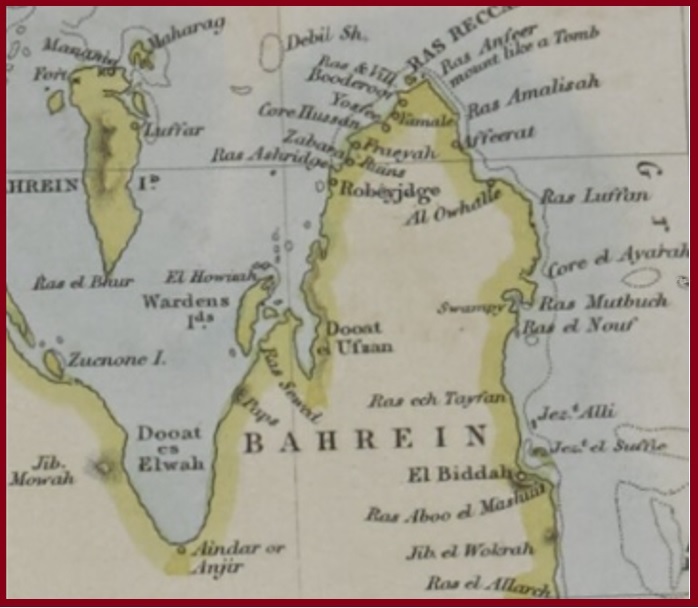
1849年のバハレイン(Bahrain)と現在のカタールの地図
1849 map of Bahrain and present-day Qatar
ダンマーム(Dammam)にバハレイン(Bahrain)の逃亡者を収容されたことに応えて、バハレイン(Bahrain)の首長(Amir)が1859年にワッハーブ派(Wahhabi)のアミールに貢物を支払うのをやめ、カタールの部族にその民を攻撃するように扇動し始めた後、敵対行為が再び引き起こされました。ナジュド(Najd)のアミール(r.1876~1889)アブドゥッラー・ビン・ファイサル(Abdullah bin Faisal) (عبد الله بن فيصل آل سعود)がバハレイン(Bahrain)を攻撃すると脅迫した後、イギリス海軍は攻撃を防ぐためにダンマーム(Dammam)沖に船を派遣しました。状況は1860年5月にエスカレートし、アブドゥッラー (Abdullah)は、毎年の貢物が支払われるまでカタールの海岸を占領すると脅迫しました。1861年5月、バハレイン(Bahrain)は英国政府と条約に署名し、英国政府は保護を提供し、カタールをバハレイン(Bahrain)の扶養家族として認めることに同意しました。1862年2月、条約はインド政府によって批准されました。
In response to Dammam accommodating of Bahrain’s fugitives, Amir of Bahrain suspended his payment of tribute to Amir of Wahhabi in 1859. After ceasing to pay and inciting the Qatari tribes to attack its people, hostilities were provoked again. After the Najd Amir (r.1876~1889) Abdullah bin Faisal (عبد الله بن فيصل آل سعود) threatened to attack Bahrain, the Royal Navy sent ships off Dammam to prevent the attack. The situation escalated in May 1860, when Abdullah threatened to occupy the Qatari coast until the annual tribute was paid. In May 1861, Bahrain signed a treaty with the British government, which agreed for British to provide protection and for Bahrain to recognize Qatar as a dependent of Bahrain. In February 1862, the treaty was ratified by the Government of India.
イギリスの関与を進めると、アル=カリーファ族(Al Khalifa)がカタールの問題に対して抱いていた影響力は減少し始めました。ムハンマド・ビン・サーニー(Mohammed bin Thani)は、1863年にギフォード・パルグレイブ(Gifford Palgrave) (1826~1888)によってカタール半島の認められた知事として説明されました。アル=ワクラ(Al Wakrah) (الوكرة)の住民の一部は、ワッハーブ派(Wahhabi)との関係が疑われるため、1863年4月にバハレイン(Bahrain)の首長(Amir)によって町を明け渡すことを余儀なくされました。
As British engagement progressed, the influence Al Khalifa had on Qatar’s affairs began to diminish. Mohammed bin Thani was described by Gifford Palgrave (1826~1888) in 1863 as the recognized governor of the Qatar Peninsula. Some of the inhabitants of Al Wakrah (الوكرة) were forced to vacate the town in April 1863 by Amir of Bahrain due to suspected ties to Wahhabi.
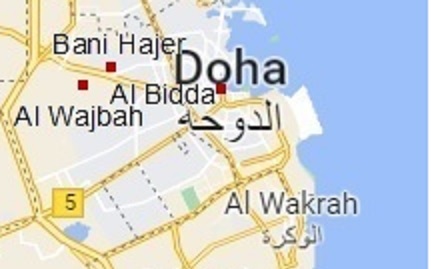
Al Bidda & Al Wakrah
アル=ワクラ(Al Wakrah)の首領(Chief)であるムハンマド・ブ・クワーラ(Mohammed Bu Kuwara) (محمد بن كوارة)(バニー・タミーム族(Bani Tamim)のアール・ブ・アリー(Al Bu Ali) (آل بو علي)族に属するサーニー(Thani)家の家臣)も同様の容疑で拘留されました。1866年、イギリスの報告は、カタールが1861年のイギリスの条約に違反して、ワッハーブ派(Wahhabi)に年間4,000ドイツクローネのザカートを支払っていたことを明らかにしました。報告書はまた、アル=カリーファ族(Al Khalifa)が同じ年払いでカタールの人々に課税していると主張していました。
Mohammed Bu Kuwara (محمد بن كوارة), Chief of Al Wakrah, who was vassal of the Thani family belonging to the Al Bu Ali (آل بو علي) tribe of Bani Tamim) was detained on similar charges. In 1866, a British report revealed that Qatar was paying 4,000 German kroner a year of Zakat to Wahhabi in violation of the 1861 British Treaty. The report also claimed that Al Khalifa was taxing the people of Qatar on the same annual payment.
カタール・バハレイン戦争
Qatari–Bahraini War
1867年6月、ムハンマド・アル=カリーファ(Mohammed Al Khalifa) (r.1843~1868) (محمد بن خليفة)の代表がアル=ワクラ(Al Wakrah)からベドウィンを捕縛し、バハレイン(Bahrain)に強制送還しました。ムハンマド・ビン・サーニー(Mohammed bin Thani)は、そのベドウィンの釈放を要求しましたが、代表は、拒否しました。これにより、ムハンマド・ビン・サーニー(Mohammed bin Thani)は、その代表をアル=ワクラ(Al Wakrah)から追放するようになりました。このニュースを受け取ると、ムハンマド・アル=カリーファ(Mohammed Al Khalifa)は、ベドウィンの囚人を釈放し、新たな和平交渉の希望を表明しました。ムハンマド・ビン・サーニー(Mohammed bin Thani)の息子であるジャーシム・ビン・ムハンマド・アール・サーニー(Jassim bin Mohammed Al Thani) (r.1878~1913) (جاسم بن محمد آل ثاني)は、彼に代わって交渉するためにバハレイン(Bahrain)に旅行しました。
In June 1867, representatives of Mohammed Al Khalifa (r.1843~1868) (محمد بن خليفة) captured the Bedouins from Al Wakrah and deported them to Bahrain. Mohammed bin Thani demanded the release of those Bedouins, but the delegates refused. This prompted Mohammed bin Thani to expel its representatives from Al Wakrah. Upon receiving this news, Mohammed Al Khalifa released the Bedouin prisoners and expressed hope for new peace negotiations. Jassim bin Mohammed Al Thani) (r.1878~1913) (جاسم بن محمد آل ثاني), son of Mohammed bin Thani, traveled to Bahrain to negotiate on his behalf.
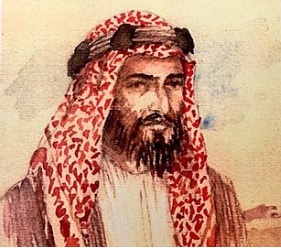
ジャーシム・ビン・ムハンマド・アール・サーニー
(Jassim bin Mohammed Al Thani)
彼は到着時に投獄され、アル=ワクラ(Al Wakrah)とアル=ビッダ(Al Bidda) の人々を罰するために多数の船と軍隊がすぐに派遣されました。アブダビ(Abu Dhabi)は、アル=ワクラ(Al Wakrah)がオマーンからの逃亡者の避難所として機能したと考えていたので、バハレイン(Bahrain)の代表として派遣部隊に参加しました。その年の後半、合同部隊は、カタール・バハレイン戦争(Qatari–Bahraini War) (1867~1868) (لحرب القطرية البحرينية)として知られるようになる2,000人の兵士で前述の2つのカタールの都市を略奪しました
He was imprisoned on arrival, and numerous ships and troops were immediately sent to punish the people of Al Wakrah and Al Bidda. As Abu Dhabi believed that Al Wakrah served as a refuge for fugitives from Oman, it joined the contingent as a representative of Bahrain. Later that year, the combined forces plundered the two aforementioned Qatari cities with 2,000 soldiers that became known as the Qatari–Bahraini War (1867~1868) (لحرب القطرية البحرينية).
英国の記録は後に「(…)ドーハ(Doha) とアル=ワクラ(Al Wakrah)の町は、1867年の終わりに一時的に消滅し、家は解体され、住民は国外追放されました。」と述べています。
1868年6月、カタールの部族がバハレイン(Bahrain)に報復し、60隻のボートが沈没し、1000人の男性が殺された戦いが続きました。その後、バハレイン(Bahrain)の首長(Amir)は、捕らえられたバハレイン(Bahrain)の囚人と引き換えにジャーシム・ビン・ムハンマド(Jassim bin Mohammed)を解放することに同意しました。
British records later said “(…) The towns of Doha and Al Wakrah briefly ceased to exist at the end of 1867, their homes were demolished and their inhabitants were deported.”
In June 1868, Qatari tribes retaliated against Bahrain and a battle, ensued in which 60 boats were sunk and 1000 men were killed. Amir of Bahrain then agreed to free Jassim bin Mohammed in exchange for the captured prisoners of Bahrain.
バハレイン(Bahrain)とアブダビ(Abu Dhabi)の共同侵攻とカタールの反撃により、英国の政治行政官(British political agent)であるルイス・ペリー大佐(Colonel Lewis Pelly)は、1868年に和解を課しました。バハレイン(Bahrain)とカタールに対するペリー(Pelly)の任務と、その結果生じた平和条約は、カタールの歴史における節目(milestone)でした。それは暗黙のうちにカタールとバハレイン(Bahrain)の区別を認め、半島の部族の重要な代表としてのムハンマド・ビン・サーニー(Mohammed bin Thani) (1847~1878) (محمد بن ثاني)の地位を明確に認めました。
With the joint invasion of Bahrin and Abu Dhabi and the Qatari counterattack, Colonel Lewis Pelly, a British political agent in Britain, imposed a settlement in 1868. Pelly’s mission to Bahrin and Qatar and the resulting peace treaty were milestones in Qatar’s history. It implicitly recognized the distinction between Qatar and Bahrain and explicitly recognized the status of Mohammed bin Thani (1847~1878) (محمد بن ثاني) as an important representative of the tribes of the peninsula.
オスマン帝国東アラビア進出
Ottoman advance to east Arabia
(1871~1913)
節索引(Section Index)
オスマン帝国のカタール進出
Ottoman Empire advance to Qatar
オスマン帝国(Ottoman Empire)は、1871年に東アラビアに拡大しました。アハサー(Al-Hasa)海岸に定着した後、彼らは、カタールに向かって進出し始めました。やがてアル=ビッダ(Al Bidda)は、南部のオスマン帝国(Ottoman Empire)軍を悩ませるベドウィン対策の作戦拠点となりました。クウェートのアブドゥッラー2世アル=サバーハ(Abdullah II Al-Sabah) (r.1866~1892) (عبد الله الثاني الصباح)がオスマン帝国(Ottoman Empire)軍の上陸を確保するためにこの町に派遣されました。彼は、カタールで最も影響力のある人物のために4つのオスマン帝国(Ottoman Empire)の旗を持ってきました。ムハンマド・ビン・サーニー(Mohammed bin Thani)は、旗の1つを受け取って受け入れましたが、彼は、それをアル=ワクラ(Al Wakrah) (الوكرة)に送り、自分の家の上にはこれまで通りに地元の旗を掲げ続けました。
Ottoman Empire expanded into Eastern Arabia in 1871. After settling on the Al-Hasa coast, they, began to advance towards Qatar. Eventually Al Bidda became a base of operations against the Bedouins that plagued the Ottoman Empire army in the south. Abdullah II Al-Sabah (r.1866~1892) (عبد الله الثاني الصباح) of Kuwait was sent to the town to secure the landing of the Ottoman Empire troops. He brought four Ottoman Empire flags for the most influential figures in Qatar. Mohammed bin Thani received one of the flags and accepted it, but he sent it to Al Wakrah (الوكرة) and continued to fly the local flag over his house as before.
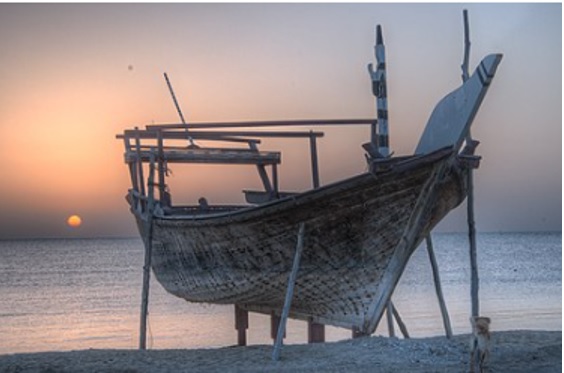
アル=ワクラの海岸線に置かれた漁船
(A fishing boat on the shores of Al Wakrah)
ジャーシム・ビン・ムハンマド(Jassim bin Mohammed)は、旗を受け取り、それを自分の家の上に掲げました。3番目の旗は、アル=ホール(Al Khor) (الخور)の支配者であるアリー・ビン・アブドゥルアジズ(Ali bin Abdul Aziz) (علي بن عبد العزيز)に与えられました。
イギリス人は、彼らの利益が危機に瀕していると感じたので、オスマン帝国(Ottoman Empire)の進出に否定的でした。この異議に対する返答を受け取らず、イギリスの砲艦ヒューローズ(Hugh Rose)は、1871年7月19日にカタールに到着しました。状況を調査した後、アラビア湾の駐在行政官補佐(the assistant political resident)であるシドニー・スミス(Sidney Smith)は、カタールが喜んで旗を掲げたことを発見しました。この期間中に父親の役割を引き受けていた息子のジャーシム・ビン・ムハンマド(Jassim bin Mohammed)が「1871年12月にオスマン帝国(Ottoman Empire)が100人の軍隊と装備をアル=ビッダ(Al Bidda) に送ること」を許可したことで、イギリス側の不安は、さらに高まりました。1872年1月までに、オスマン帝国(Ottoman Empire)は、カタールを彼らの支配下に組み入れました。ナジュド・サンジャク(Sanjak of Najd) (1871~1915)(نجد سنجق)の支配下にあるナジュド(Najd)の州に指定されました。ジャーシム・ビン・ムハンマド(Jassim bin Mohammed)は、地区のカイマカム(قایمقام)(副知事)に任命され、他のほとんどのカタール人は、新政府での地位を維持することを許可されました。
Jassim bin Mohammed received the flag and hoisted it over his house. The third flag was given to Ali bin Abdul Aziz (علي بن عبد العزيز), Chief of Al Khor (الخور).
The British were negative about the advance of the Ottoman Empire because they felt that their interests were at stake. Not receiving a response to this objection, the British gunboat Hugh Rose arrived in Qatar on 19 July 1871. After investigating the situation, Sidney Smith, the assistant political resident in the Arabian Gulf, found that Qatar was willing to fly the flag. The British unrest was further heightened when Jassim bin Mohammed, who had assumed the role of his father during this period, allowed in December 1871 that the Ottoman Empire to send 100 troops and equipment to Al Bidda. By January 1872, the Ottoman Empire had incorporated Qatar under their control. It was designated as a province of Najd under the control of Sanjak of Najd (1871~1915) (نجد سنجق). Jassim bin Mohammed was appointed Kaymakam (قایمقام) (vice-governor) of the district, and most other Qatari were allowed to maintain their positions in the new government.
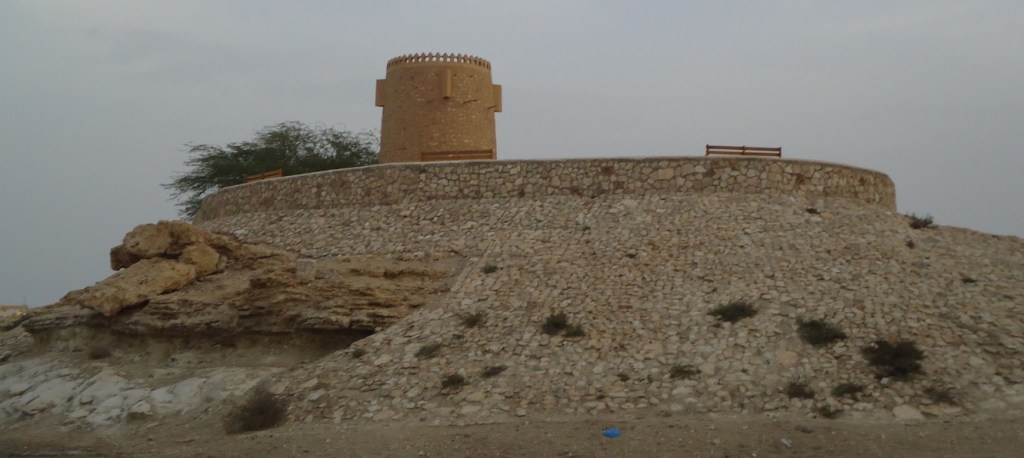
アル・ホールの砦(A fort in Al Khor)
英国によるのカタールでのバハレイン主権の否定
British denial of Bahrain sovereignty in Qatar
駐在行政官補佐(the assistant political resident)チャールズ・グラント(Charles Grant)は、オスマン帝国(Ottoman Empire)が1873年8月にホセイン・エフェンディ(Hossein Effendi) (حسينأ فندي)の指揮下でカティーフ(قَطِيف)からズバーラ(Zubarah)(زبارة)に100人の部隊を派遣したと誤って報告しました。バハレイン(Bahrain)の首長(Amir)は、ズバーラ(Zubarah)に住んでいたアル=ヌアイム(Al Nuaim) (النعيم)族(a bedouin tribe)が彼の臣下(subjects)であることに同意する条約に署名してたため、これに否定的でした。首長(Amir)と対峙すると、グラント(Grant)は、彼を駐在行政官エドワード・ロス(Edward Ross)に紹介しました。ロス(Ross)は、首長(Amir)に「首長(Amir)には、カタールに住む部族を保護する権利はないと信じている」と伝えました。9月、首長(Amir)は、この町と部族に対する主権を繰り返しました。グラント(Grant)は、バハレイン(Bahrain)と署名した条約にはアル=ヌアイム(Al Nuaim)やズバーラ(Zubarah)についての特別な言及はなかったと主張して答えました。英国政府当局者は、ロス(Ross)の見解に同意し、バハレイン(Bahrain)の首長(Amir)は「「可能な限り本土での複雑な事態に干渉することを控えるべきだ」と述べました。
The assistant political resident Charles Grant) erroneously reported that Ottoman Empire had sent 100 troops from Qatif (قَطِيف) to Zubarah (زبارة) in August 1873 under the command of Hossein Effendi (حسينأ فندي). Amir of Bahrain was negative about this because he had signed a treaty agreeing that the Al Nuaim (النعيم) tribe (a bedouin tribe) ,who lived in Zubarah, were his subjects. When confronted, Grant introduced him to the Political Resident Edward Ross. Ross told Amir: “I believe that Amir has no right to protect the tribes living in Qatar.” In September, Amir reiterated his sovereignty over this town and tribe. Grant replied, claiming that the treaty signed with Bahrain had no special mention of Al Nuaim or Zubarah. British government officials agreed with Ross’ view, saying “Bahrain’s Amir should refrain from interfering in complex affairs on the mainland as much as possible”.
ナシル・ビン・ムバラク(Nasir bin Mubarak) (ناصربن المبارك)という反対勢力の指導者がカタールに引っ越した後、1874年にアル=カリーファ族(Al Khalifa)がズバーラ(Zubarah)に対する主張を更新する別のチャンスが生じました。彼らは、ムバラク(Mubarak)がジャーシム・ビン・ムハンマド(Jassim bin Mohammed)の支援を受けて、侵略の前触れとしてズバーラ(Zubarah)に住むアル=ヌアイム(Al Nuaim)族を標的にすると信じていました。その結果、バハレイン(Bahrain)の援軍部隊がズバーラ(Zubarah)に派遣されました。首長(Amir)が複雑な事態に関与していることを知ったイギリスは、これを承認しませんでした。エドワード・ロス(Edward Ross)は、政府評議会の決定が首長(Amir)に「カタールの問題に干渉すべきではない」と助言したことを明らかにしました。アル=カリーファ族(Al Khalifa)は、アル=ヌアイム(Al Nuaim)と一貫して連絡を取り合い、その部族員の100人を軍隊に徴兵し、財政援助を提供しました。ジャーシム・ビン・ムハンマド(Jassim bin Mohammed)は、1878年にアル=ビッダ(Al Bidda) 近くの船を攻撃した後、アル=ヌアイム(Al Nuaim)部族員の何人かを追放しました。
After the leader of the opposition named Nasir bin Mubarak (ناصربن المبارك) moved to Qatar, another chance arose for Al Khalifa to renew its claim to Zubarah in 1874. They believed that Mubarak, with the support of Jassim bin Mohammed, would target the Al Nuaim tribe living in Zubarah as a harbinger of an invasion. As a result, reinforcements from Bahrain were sent to Zubarah. The British, having learned that Bahrain’s Amir was involved in a complicated situation, did not approve of this. Edward Ross revealed that the decision of the Council of Government advised Amir that ” Bahrain’s Amir should not interfere in the affairs of Qatar”. Al Khalifa consistently communicated with Al Nuaim and recruited 100 of its tribal members into its army and provided financial aid. Jassim bin Mohammed expelled some of the Al Nuaim tribesmen after attacking a ship near Al Bidda in 1878.
オスマン帝国との関係悪化
Deteriorating relation with Ottoman Empire
多くの有力なカタール部族の反対にもかかわらず、ジャーシム・ビン・ムハンマド(Jassim bin Mohammed)は、オスマン帝国(Ottoman Empire)への支持を示し続けました。しかし、両者の協力関係には改善の兆候は、なく、オスマン帝国(Ottoman Empire)が1882年にアブダビ(Abu Dhabi)占領下のカウル・アル=ウダイド(Khawr al Udayd) (خورالعديد)の遠征でジャーシム・ビン・ムハンマド(Jassim bin Mohammed)を支援することを拒否したとき、関係は、さらに悪化しました。これに加えて、オスマン帝国(Ottoman Empire)は、1888年にジャーシム・ビン・ムハンマド(Jassim bin Mohammed)に取って代わろうとしたオスマン帝国(Ottoman Empire)の配下だったムハンマド・ビン・アブドゥル・ワッハーブ(Muhammad ibn Abd al-Wahhab) (1703~1792) (محمد بن عبد الوهاب)を支持しました。
Despite the opposition of many influential Qatari tribes, Jassim bin Mohammed continued to show support for Ottoman Empire. However, there was no sign of improvement in the cooperation between the two sides, and relations deteriorated further when Ottoman Empire refused to support Jassim bin Mohammed in the expedition of Khawr al Udayd (خورالعديد) under the occupation of Abu Dhabi in 1882. In addition, Ottoman Empire supported Muhammad ibn Abd al-Wahhab (1703~1792) (محمد بن عبد الوهاب), a subordinate of Ottoman Empire who attempted to replace Jassim bin Mohammed in 1888.
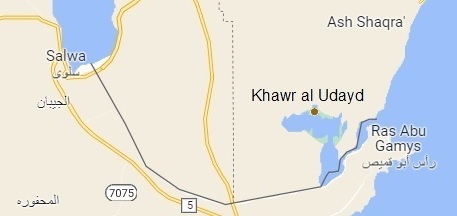
カウル・アル=ウダイド(Khawr al Udayd)
アル=ワジバの戦い
Battle of Al Wajbah
1893年2月、バスラ総督(Governor of Basra) (والي البصرة)(r.1892~1893)メフメト・ハフィズ・パシャ(Mehmed Hafiz Pasha) (محمد حافظ باشا)が、未払いの税金を求め、オスマン帝国(Ottoman Empire)の行政改革案に対するジャーシム・ビン・ムハンマド(Jassim bin Mohammed)の反対を非難するためにカタールに到着しました。ジャーシム・ビン・ムハンマド(Jassim bin Mohammed)は、死刑や投獄に直面することを恐れて、ドーハ(Doha) の西10マイルにあるアル=ワジバ(Al Wajbah) (الوجبة)に移動していました。彼は数人の部族員を伴っていました。メフメト(Mehmed)は、彼が軍隊を解散し、オスマン帝国(Ottoman Empire)への忠誠を誓うことを要求しました。しかし、彼は、オスマン帝国(Ottoman Empire)の権威に従うことを拒否したままでした。1893年3月、メフメト(Mehmed)は、弟のアーメド・ビン・ムハンマド・アル・ターニー(Ahmed bin Mohammed Al Thani) (أحمد بن محمد بن ثاني)と、オスマン帝国(Ottoman Empire)のコルベット「メリク」(Ottoman corvette ‘Merrikh’)に乗った13人の著名なカタール部族指導者を投獄しました。メフメト(Mehmed)は1万リラの料金で捕虜を解放するという申し出を断った後、約200人のオスマン帝国(Ottoman Empire)軍の隊列に、ユスフ・エフェンディ(Yusuf Effendi) (يوسف أفندي)の指揮下でアル=ワジバ(Al Wajbah)のジャーシム・ビン・ムハンマド(Jassim bin Mohammed)の要塞に向かって前進するように命じました。
In February 1893, the Governor of Basra (والي البصرة) (r.1892~1893) Mehmed Hafiz Pasha (محمد حافظ باشا) arrived in Qatar to sought unpaid taxes and also to denounce Jassim bin Mohammed who opposed Ottoman Empire’s proposed administrative reforms. Jassim bin Mohammed had moved to Al Wajbah (الوجبة), which is located 10 miles west of Doha, fearing to face death or imprisonment. He was accompanied by several tribal members. Mehmed demanded that he disband the army and swear allegiance to the Ottoman Empire. However, he remained refusing to obey the authority of the Ottoman Empire. In March 1893, Mehmed imprisoned his brother Ahmed bin Mohammed Al Thani (أحمد بن محمد بن بن ثاني) in addition to 13 prominent Qatari tribal leaders on the Ottoman corvette ‘Merrikh’. After Mehmed declined an offer to release the prisoners for a fee of 10,000 lire, he ordered a column of about 200 Ottoman Empire troops to advance towards the fortress of Al Wajbah Jassim bin Mohammed under the command of Yusuf Effendi (يوسف أفندي).
アル=ビッダ(Al Bidda) の要塞:当時、カラ‘アット・アル=アスカル(Qal’at Al-Askar) (قلعة العسكر)と呼ばれ、シャイフ(Shaykh) (الشيخ)の政庁として使われていました。現在は、アミ―リー・ディーワーン(Amiri Diwan) (الديوان الأميري القطري)と呼ばれるカタール首長の政庁に成っています。
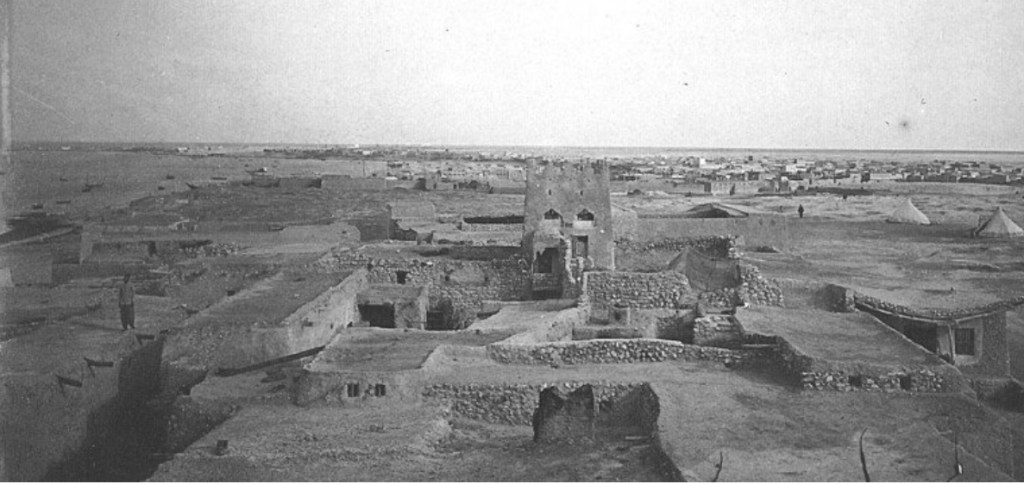
ドーハ(Doha) 旧市街、1904年1月
(Old city of Doha, January 1904)
Fortress of Al Bidda: At that time, it was called Qal’at Al-Askar (قلعة العسكر) and was used as the administration office of the Shaykh (الشيخ). Today it is the official working office of the Emir of Qatar called Amiri Diwan (الديوان الأميري القطري).
アル=ワジバ(Al Wajbah)に到着して間もなく、総勢3,000人から4,000人と成っていたエフェンディ(Effendi)の部隊は、カタールの歩兵と騎兵隊から激しい銃撃を受けました。エフェンディ(Effendi)の部隊は、シェバカ要塞(Shebaka fortress)(詳細不明)に撤退しましたが、そこでも再びカタールの侵入により、死傷者を出しました。エフェンディ(Effendi)の部隊がアル=ビッダ(Al Bidda) の要塞に撤退した後、ジャーシム・ビン・ムハンマド(Jassim bin Mohammed)の前進部隊は、要塞を包囲し、近くの水源からの給水を遮断しました。オスマン帝国(Ottoman Empire)は敗北を認め、メフメト(Mehmed)の騎兵隊が陸路でホフーフ(Hofuf) (هفوف)に安全に通過する見返りに、カタールの捕虜を放棄することに同意しました。 カタールは、オスマン帝国(Ottoman Empire)から完全に独立しませんでしたが、アル=ワジバの戦い(Battle of Al Wajbah) (معركة الوجبة)の結果、オスマン帝国(Ottoman Empire)は、後にカタールが帝国内の自律的な独立国として浮上する基礎を形成する条約を締結することを余儀なくされました。
Shortly after arriving at Al Wajbah, Effendi’s force, numbering between 3,000 and 4,000 men, came under heavy fire from Qatari infantry and cavalry. Effendi’s forces withdrew to Shebaka fortress (unspecified), where they again suffered casualties due to the Qatari invasion. After Effendi’s forces withdrew to the fortress of Al Bidda, Jassim bin Mohammed’s advance force besieged the fortress and cut off water supply from nearby sources. Ottoman Empire admitted defeat and agreed to abandon Qatari prisoners of war in return for Mehmed’s cavalry safely passing overland to Hofuf (هفوف).
Qatar did not become fully independent of the Ottoman Empire, but as a result of Battle of Al Wajbah (معركة الوجبة), the Ottoman Empire was forced to conclude a treaty that would later form the basis for Qatar to emerge as an autonomous independent country within the Empire.
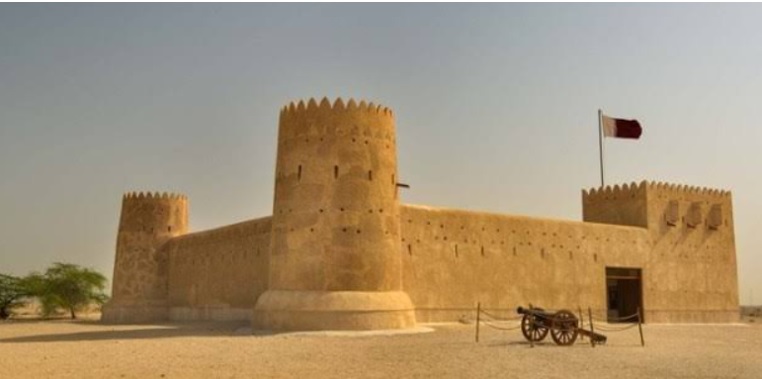
この要塞は、国家としてのカタールの独立を象徴する歴史的建造物です。
This fort is a historical landmark symbolizing Qatar’s independence as a nation.
オスマン帝国撤退期のカタールの状況
Situation in Qatar at Ottoman withdrawal
バハレイン(Bahrain)島の東にあるカタール半島は、首長(Amir)アブドゥッラー・ビン・ジャーシム(Abdullah bin Jasim) (r.1913~1949) (عبد الله بن جاسم)によって統治されていました。
The Qatar Peninsula to the east of Bahrain Island was ruled by Amir Abdullah bin Jasim (r.1913~1949) (عبد الله بن جاسم).
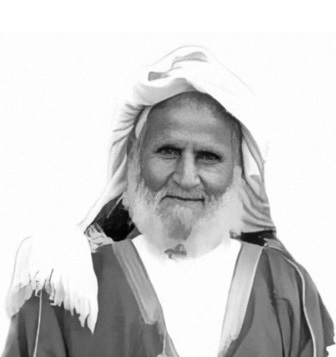
シャイフ・アブドゥッラー・ビン・ジャーシム(Shaykh Abdullah bin Jasim)
彼は、約2,000人の信奉者を持つ裕福で強力な首長(Amir)でした。数年前、彼の父親は、トルコ人と敵対しており、トルコ人は激しい戦いの後、半島の東側で、現在のドーハ(Doha)にあったアル=ビッダ(Al Bidda)の砦の中に駐屯地を設けていましたが、ジャーシム(Jasim)は、オスマン帝国(Ottoman Empire)への服従を名目上だけとすることに成功していました。彼は、その頃にオスマン帝国政庁(Sublime Porte) (مقر الباب العالي)の配下の半島のカイムマカーム(governor) (qaim-maqam) (قائم مقام)として振る舞い、トルコの旗を掲げていますが、支配者を嫌い、支配者を取り除くことを望んでいました。周辺のバニー・ハジャル(Bani Hajar) (بني هاجر)の部族民からは約4,500人の戦闘員を集めることができ、首長(Amir)配下の戦闘員が2,000人いるので、合わせると首長(Amir)の戦闘員6,500人になります。しかし、この4,500人は、彼がこれまでに集める可能性が高いのと同じくらい大きな力を表しています。
He was a wealthy and powerful chieftain (Amir) with about 2,000 followers. A few years earlier, his father had been at enmity with the Turks. After fierce fighting, the Turks had established a garrison in the eastern part of the peninsula, in the fort of Al Bidda in present-day Doha, but Jasim had outwardly submitted to the Ottoman Empire but it was only nominal. He then acted as a governor (qaim-maqam) (قائم مقام) on the peninsula under Sublime Porte (مقر الباب العالي), flying the Turkish flag, but hated the ruler and wanted to get rid of the Turk. About 4,500 fighters were able to gathered from the surrounding Bani Hajar (بني هاجر) tribes, and since there were 2,000 fighters under Jasim, the total number of Jasim’s fighters were 6,500. But these 4,500 represented as much power as he was likely to ever muster.
1900年頃から、オスマン帝国政庁(Sublime Porte)は、カタール半島の他の地域で主権を主張するためにさまざまな試みを行い、1910年にはトルコ人ムディール(Turkish mudir) (مديرين تركيين)がズバーラ(Zubarah)、カウル・アル=ウダイド(Khawr al Udayd)、アル=ワクラ(Al Wakrah)、アブー・アリー島(Abu ’Ali Island) (جزيرة أبوعلي)に派遣されることになっていました。しかし、英国政府はこれに抗議し、実際、カタールでのトルコの支配を認めたことはありません。1913年、トルコはカタールから駐屯地を撤去することに同意しました。しかし、その協定はまだ署名されていなかったため、駐屯地は残っていました。
From around year of 1900, Sublime Porte made various attempts to assert sovereignty in other parts of the Qatar Peninsula, and in 1910 the Turkish mudirs (مديرين تركيين) were scheduled to be dispatched to Zubarah, Khawr al Udayd, Al Wakrah, Abu ‘Ali Island (جزيرة أبوعلي) , etc. However, the British government protested it and, in fact, moreover the British had never recognized Turkish rule in Qatar. In 1913, Turkey agreed to remove the garrison from Qatar. Since that agreement had not yet been signed, the garrison had remained as it was.
バニー・ハージル族(Bani Hajer) (بني هاجر):アル=ハワジール族(al-Hawajir)とも呼ばれ、影響力のある部族とされ、アラビア湾岸に広く分散しています。カフターン・アラブ(Qahtan Arabs) (قحطان عرب)生粋の血統に近く、ダハラーン・ジャヌーブ(Dhahran Al Janoub) (ظهران الجنوب)北北西70km付近のアル=ヒルジャ(al-hirja) (الحرجة)とも呼ばれたサラート・アビーダ(Sarat Abidah) (سراة عبيدة)に長年住み、そこからアラビア湾沿岸に移住して来ています。
Bani Hajer (بني هاجر): Also known as al-Hawajir, they are considered an influential tribe and are widely dispersed across the Arabian Gulf. Bani Hajer tribe are said to be close to the original lineage of Qahtan Arabs (قحطان عرب). They had lived for many years in Sarat Abidah (سراة عبيدة), also known as al-hirja (الحرجة), about 70km north-northwest of Dhahran Al Janoub (ظهران الجنوب), before migrating to the coast of the Arabian Gulf.
トルコの駐屯地は、アル=ビッダ(Al Bidda)の砦です。この砦は、ドーハ(Doha)の町の中心部にあり、海から少し離れています。駐屯部隊は最大でも100人くらいの歩兵で構成されており、2つの古い大砲を担当する12人の砲手がいると言われています。砦から約1マイルのムシャイリブ(Mushayrib) (مشيرب)の井戸の上の塔には、8人のトルコ兵の前哨基地がありました。
The Turkish garrison was the fort of Al Bidda. This fort was located in the center of the town of Doha, a little far from the sea. The garrison consisted of a maximum of 100 or so infantrymen, and it was said that there were 12 gunners in charge of the two old cannons. The well Mushayrib (مشيرب) for potable water was located at about a mile from the fort. The tower above this well was an outpost of eight Turkish soldiers.
1913年にカタールの首長(Amir)を継承したシャイフ(Shaykh) (الشيخ)・アブドゥッラー (Abdullah)(الشيخعبدالله)は、英国に対して友好的ですが、イブン・サウード(Ibn Saud) (ابن سعود)を恐れていました。彼は間違いなくトルコ人排除、そして結果的にはイブン・サウードの排除を喜んでいました。
Shaykh (الشيخ) Abdullah (الشيخعبدالله), who succeeded Amir of Qatar in 1913, was friendly towards the British but afraid of Ibn Saud (ابن سعود). He was definitely delighted with the elimination of the Turks and consequently that of Ibn Saud.
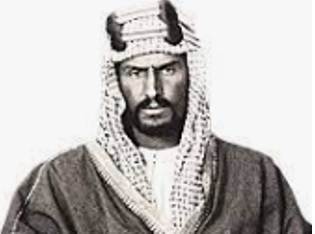
イブン・サウード(Ibn Saud)
 Desert peninsula