42-2 純粋のアラブ族その3




ページ内目次(In-page table of contents)
| B.3.4.a | バヌー・ハーリド族 | Banu Khalid |
| B.3.4.b | バヌー・ラーム族 | Banu Lam |
| B.3.4.b.1 | カスィーリー族 | Al Kathiri |
| B.3.4.b.2 | フドゥール族 | Fudhool |
| B.3.4.b.3 | ムギーラ族 | Al Mughira |
| B.3.4.c | ファドル族 | Al-Fadl |
| B.3.4.c.1 | アムル族 | Al-‘Amr |
| B.3.4.d | ザフィール一門 | Al Zafir (Al Dhafeer) |
| B.3.4.e | バヌー・ジャラーフ族 | Banu-Jarrah |
| B.3.5 | ラフム族 | Lakhm |
| ditto | バヌー・ラフム族 | Banu Lakhm |
| ditto | ラフム朝(266 – 602) | Lakhmid Kingdom |
| B.3.6 | シャフラーン族 | Shahran |
| B.3.7 | ムナーズィラ族 | Muntherids |
| B.3.8 | ガーミド族 | Ghamid |
| B.3.8.1 | サラート族 | Sarat |
| B.3.8.2 | トゥハーマ族 | Tohm |
| B.3.8.3 | バーディヤ族 | Badyah |
| B.3.9 | アーミラ・ジュザーム族 | ‘Amila Judham |
| B.3.9.1 | バヌー・アーミラ族 | Banu ‘Amila |
| B.3.9.2 | バヌー・ジュザーム族 | Banu Judham |
| B.3.10 | ハムダーン・マズヒジュ族 | Hamdaan Madhhij or Hamdan Madhhij |
| B.3.11 | その他のカフラーン族 | Miscellaneous Kahlan |
| B.3.11.a | ハサ’モ族 | Khath’am |
| B.3.11.b | バジフラ族 | Bajflah |
| B.3.11.c | マズヒジュ族 | Madhhij or Madhhaj |
| B.3.11.c.1 | ナハア族 | Nakha |
| B.3.11.c.2 | ムラード族 | Murad |
| B.3.11.d | アシュアル族 | Ash’ar |
| B.3.11.e | ズバイド族 | Zubaid |
| B.3.11.f | バヌー・マ‘アキル族 | Banu Ma’qil |
| B.4 | その他のカフターン部族 | Miscellaneous Qahtan Arabs |
| B.4.1 | アルマア族 | Alma’ |
| ditto | リジャール・アルマア族 | Rejal Al-Ma’a Tribe |
| B.4.2 | アルマア・アドナーン・バニー・ハーリサ | Alma’ ‘Adnan Bani Harithah Tribe |
| B.4.3 | アサド族 | Azad Tribe or Assad Tribe |
| B.4.4 | アルマア・イブン・ イディ族 | Alma’ ibn ‘Idi |
B.3.4.a バヌー・ハーリド族
B.3.4.a Banu Khalid Tribe
バヌー・ハーリド族(Banu Khalid) (بنو خالد)は、東アラビアおよび中央アラビアのアラブ部族同盟の中核となった部族です。バヌー・ハーリド族(Banu Khalid)は、アドナーン部族と称しており、タイイ族(Tayy) (طيء)を祖先とするのは、バヌー・ハーリド族同盟(Banu Khalid Tribal Confederation) (اتحاد قبائل بني خالد)の1部の部門のみと考えられます。(D.2.3バヌー・ハーリド族同盟(Banu Khalid Tribal Confederation)を参照。)
Banu Khalid Tribe (بنو خالد) is a tribe that formed a core of Arab Tribal Confederation of Eastern and Central Arabia. Banu Khalid Tribe called itself Adnan Arabs, and Tribes, whose ancestor is Tayy Tribe (طيء) is considered to be only one division of Banu Khalid Tribal Confederation (اتحاد قبائل بني خالد). (See D.2.3 Banu Khalid Tribal Confederation.)
B.3.4.b バヌー・ラーム族
B.3.4.b Banu Lam Tribe
バヌー・ラーム族(Banu Lam) (بنو لام)は、中央アラビアおよびイラク南部にいる部族で、「古代アラブ部族(Ancient Arabs)タイイ族(Tayy) (طيء)の子孫である」と称し、15世紀以前にはメディナ(Madinah)とヤマーマ(Yamama)の間の西ナジュド(Western Najd)を支配していました。バヌー・ラーム族(Banu Lam)は、次第にナジュド(Najd)を離れ、その多くはイラク南部に移住しました。そこでスンナ派(Sunni Islam) (الإسلام السني)からシーア派(Shia Islam) (الإسلام الشيعي)に改宗しています。その一方でバヌー・ラーム族(Banu Lam)の多くの部門は、ナジュド(Najd) (نجد)に残り都市に定住しました。
Banu Lam Tribe (بنو لام) is a tribe in Central Arabia and Southern Iraq, claiming to be “a descendant of Tayy Tribe (طيء) of Ancient Arabs.” Before 15th century it ruled Western Najd between Madinah and Yamama. Banu Lam Tribe had gradually left Najd, many of whom migrated to Southern Iraq. It converted there from Sunni Islam (الإسلام السني) to Shia Islam (الإسلام الشيعي). On other hand, many divisions of Banu Lam Tribe have still remained in Najd (نجد) and settled in its cities.

バヌー・ラーム族(Banu Lam Tribe)
B.3.4.b.1 カスィーリー族
B.3.4.b.1 Al Kathiri Tribe
カスィーリー族(Al Kathiri) (الكثيري)は、サウジアラビア北部、クウェートやイラクに移住し、アル=カトラン(Al Kathra) (الكثران)、アル=ムギラ(Al Mughira) (المغيرة)、アル=ファドゥオル(Al Fadhuol) (الفظول)、アル=ダフィール(Al Dhafeer) (الظفير)に分かれています。
なお、ハムダーン族(Hamdan Tribe) (همدان)支族のバヌー・カスィール族(Banu Kathir tribe) (بنو كثير)と名が似ている上に、バヌー・カスィール族(Banu Kathir tribe) (بنو كثير)の支配者家族がカスィーリー一門(Al Kathiri) (الكثيري)なので注意が必要です。
Al Kathiri (الكثيري) migrated to Northern Saudi Arabia, Kuwait and Iraq and branched to Al Kathran Tribe (الكثران), Al Mughira Tribe ( المغيرة), Al Fadhuol Tribe (الفظول) and Al Dhafeer Tribe (الظفير).
It should be noted that its name is similar to Banu Kathir tribe (بنو كثير), a branch of Hamdan Tribe (همدان) (B.3.2.b), and ruling family of Banu Kathir tribe (بنو كثير) is same name as Al Kathiri Clan (الكثيري).
B.3.4.b.2 フドゥール族
B.3.4.b.2 Fudhool Tribe
フドゥール族(Fudhool Tribe) (الفضول)は、18世紀に最後にナジュド(Najd)を離れたバヌー・ラーム族(Banu Lam) (بنو لام)の一門です。
Fudhool Tribe (الفضول) is last branch of Banu Lam (بنو لام), that left Najd in 18th century.
B.3.4.b.3 ムギーラ族
B.3.4.b.3 Al Mughira Tribe
ムギーラ族 (Al Mughira) (المغيرة)については、詳細が不明です。
As for Al Mughira (المغيرة), its details are unknown.
B.3.4.c ファドル族
B.3.4.c Al-Fadl Tribe
ファドル族(Al-Fadl) (الفضل)は、タイイ族(Tayy)支族で13世紀から18世紀までジャウフ(Jawf or Jouf) (جوف)を支配していたアムル族(Al-‘Amr) (آل عمرو)の親部族です。
Al-Fadl Tribe (الفضل) is a branch of Tayy Tribe (طيء) and parent tribe of Al-‘Amr (آل عمرو), who ruled Jawf (Jouf) (جوف) from 13th to 18th century.
B.3.4.c.1 アムル族
B.3.4.c.1 Al-‘Amr Tribe
アムル族(Al-‘Amr) (آل عمرو)は、カフターニ部族(Qahtan Arabs)カフラーン族(Kahlan Tribe)傘下のタイイ族(Tayy Tribe)支族ファドル族(Al-Fadl Tribe)の一門です。10世紀にはナフード沙漠(An Nafud Al Kabir) (النفود الكبير)の覇権は、カルブ族(Kalb) (كلب)からタイイ族(Tayy) (طيء)に渡りました。タイイ族(Tayy)の支配する地域は、広がり続けジャウフ(Jawf) (Jouf) (جوف)にまで及びました。ジャウフ(Jawf)は、タイイ族(Tayy)支族のファドル族(Al-Fadl Tribe)の流れであるアムル族(Al-‘Amr)に支配され、ジャウフ・アル・アムル(Jawf al ‘Amr)と呼ばれました。アムル族(Al-‘Amr)は、13世紀以前にジャウフ(Jawf)での生活を手に入れました。
Al-‘Amr Tribe (آل عمرو) is a branch of Al-Fadl Tribe (الفضل). Al-Fadl Tribe is a subtribe of Tayy Tribe (طيء) belonging to Kahlan Tribe (كهلان) of Qahtan Arabs (العرب قحطان). In 10th century, supremacy of An Nafud Al Kabir desert (صحر النفود الكبير) passed from Kalb Tribe (كلب) to Tayy Tribe (طيء). Territory, controlled by Tayy Tribe, was extended to Jawf (Jouf) (جوف). Jawf was ruled by Al-‘Amr Tribe, one of Al-Fadl branch of Tayy tribe, and was called Jawf al ‘Amr. Al-‘Amr Tribe acquired its life in Jawf before 13th century.
アムル族(Al-‘Amr)の影響は、カルブ族(Kalb) (كلب)が衰退した後に半島北部で増大してファドル族(Al-Fadl Tribe)やその親部族であるタイイ族(Tayy)がシリアから涸れ谷スィルハーン(Wadi’l-Sirhan) (وادي السرحان)とジャウフ(Jawf)に広がる地域での覇権を握りました。タイイ族(Tayy)の覇権は、13世紀から15世紀まで続きました。その後もジャウフ(Jawf)においてはアムル族(Al-‘Amr)の覇権が18世紀末まで残っていました。
Influence of Al-‘Amr Tribe increased in Northern Desert Peninsula (Arabian Peninsula) after decline of Kalb Tribe, and Al-Fadl Tribe and its parent tribe, Tayy Tribe, moved from Syria to region spreading from Wadi’l-Sirhan (وادي السرحان) to Jawf. And they held their hegemonies there. Tayy Tribe’s hegemony lasted from 13th to 15th centuries. Even thereafter Al-‘Amr had remained in Jawf until end of 18th century.
B.3.4.d ザフィール一門
B.3.4.d Al Zafir Clan
ザフィール一門(Al Zafir) (الظفير)は、タイイ支族(Tayy) (طيء)の一門であり、サウジ北東やクウェイト方面に多いとされています。
Al Zafir Clan (الظفير) is a branch of Tayy (طيء) tribe and is said that many live in Northeastern Saudi Arabia and Kuwait.
B.3.4.e バヌー・ジャラーフ族
B.3.4.e Banu-Jarrah Tribe
バヌー・ジャラーフ族(Banu al-Jarrah) (قبيلة بنو جراح)は、タイイ族(Tayy tribe) (قبيلة طيء)の支配者一族であり、10世紀にはカルブ族(Kalb tribe) (قبيلة كلب)とキラブ族(Kilab tribe) (قبيلة كلاب)と共にシリア(Syria) (سوريا)の3つの有力な部族の1つでした。
Banu-Jarrah
Banu al-Jarrah tribe (بنو جراح)were a ruling clan of Tayy tribe (قبيلة طيء), and was one of three leading tribes of Syria (سوريا) together with Kalb tribe (قبيلة كلب) and Kilab tribe (قبيلة كلاب) in 10th century.
10世紀後半から11世紀初頭にかけてアラブ族王朝(Arab dynasty) (سلالة عربية)ジャラーフ朝(Jarrahids) (بنو الجراح)を樹立し、ファーティマ朝(Fatimid Caliphate) (909~1171) (الخلافة الفاطمية)やビザンツ帝国(Byzantines Empire) (330~1453) (الإمبراطورية البيزنطية)そしてシリア(Syria)の個々のイスラーム教徒支配者(regional individual Muslim rulers) (حاكم إقليمي فردي مسلم)と攻防を繰り返しながらトランスヨルダン(Transjordan) (شرق الأردن)と北アラビア(northern Arabia)を支配し、また、断続的にパレスチナ(Palestine) (فلسطين)を支配していました。
Banu al-Jarrah tribe established an Arab dynasty (سلالة عربية) called Jarrahids (بنو الجراح). Repeating offense and defense against Fatimid Caliphate (909~1171) (الخلافة الفاطمية) and Byzantine Empire (330~1453) (الإمبراطورية البيزنطية) and also regional individual Muslim rulers (حاكم إقليمي فردي مسلم), Jarrahids controlled Transjordan (شرق الأردن) and northern Arabia and intermittently ruled Palestine (فلسطين) in late 10th and early 11th centuries.
B.3.5 ラフム族
B.3.5 Lakhm Tribe
ラフム族(Lakhm Tribe) (لخم)は、カフターン部族(Qahtan Arabs) (العرب قحطان)カフラーン族(Kahlan) (كهلان)の支族で、バヌー・ラフム族(Banu Lakhm Tribe) (بنو لخم)とも呼ばれます。キリスト教を信仰していたラフム族(Lakhm Tribe)は、二世紀に苦難していたイエメンからサマーワ(Samawah) (سماوة)に移住してきました。イラク南部に住んでいた同族のムナーズィラ族(Muntherids) (مناذرة)を含むアラブ・キリスト教徒のグループを統合し、西暦266年にヒーラ(Hirah) (حيرة)を首都するラフム朝(Lakhmid Kingdom) (266~602) (مناذرة)を建国しました。その民は、ほとんどキリスト教に改宗しラフム族(Lakhm Tribe)と呼ばれました。
Lakhm Tribe (لخم) was a branch of Qahtan Arabs (العرب قحطان) Kahlan Tribe (كهلان), also known as Banu Lakhm Tribe (بنو لخم). Lakhm Tribe, a Christian believer, emigrated to Samawah (سماوة) from Yemen in 2th century. It united a group of Arab Christians, including its cognate Muntherids (مناذرة) who lived in Southern Iraq, and founded Lakhmid Kingdom (266~602) (مناذرة) with its capital in Hirah (حيرة) in 266 AD. People mostly converted to Christianity and were called Lakhm Tribe.
当時は、ラフム朝は、アラビア語では、”مملكة اللخم”とは呼ばれずに”مناذرة”と呼ばれています。「ラフム朝(Lakhmid Kingdom)は、アラブ族の王(King of Arabs)を意味するマナーディラ(Manadhirah) (مناذرة)では無く、ムナーズィラ族(Muntherids) (مناذرة)との融和を図って、自らをMuntherids (مناذرة)と呼んでいた。」と筆者は、推測しています。
At that time, Lakhm dynasty did not call itself “مملكة اللخم” in Arabic, but “مناذرة”. Writer presume that Lakhmid Kingdom did not intend to call itself Manadhirah (مناذرة), which means King of Arabs, but it seeked to reconcile itself with Muntherids (مناذرة) by calling itself Muntherids (مناذرة).
ラフム朝(Lakhmid Kingdom)は、統一アラブの王国を目指して陸軍大部隊を編成し、アラビア湾で活動する海軍力も発展させました。アラビアの多くの都市を奪い取ると共にペルシアの海岸都市も襲撃しました。サーサーン朝(Sassanid Empire) (224~651) (ساسانيون)は、これに対して6万の軍でラフム朝(Lakhmid Kingdom)に侵攻しました。ラフム朝(Lakhmid Kingdom)は、ローマに援軍を求めましたが、その援軍は、間に合いませんでした。
Lakhmid Kingdom formed a large army force towards a unified Arab kingdom and also developed a naval force operating in Arabian Gulf. Lakhmid Kingdom seized many Arabian cities and also attacked Persian coastal cities. Against this, Sassanid Empire invaded Lakhmid Kingdom with an army of 60,000. Lakhmid Kingdom sought reinforcements from Rome, but Roman reinforcements did not arrive in time.
サーサーン朝(Sassanid Empire)は、ラフム朝(Lakhmid Kingdom)陸軍を壊滅させ、ヒーラ(Hirah) (حيرة)を占領しました。サーサーン朝(Sassanid Empire)は、ラフム朝(Lakhmid Kingdom)に新しい王を擁立し、ペルシア帝国本土とアラビア半島の他のアラブ部族の間の緩衝地帯としました。ラフム族(Lakhm Tribe)は、2年後(330年)に反乱して王位を回復しましたが、その後の主な敵国は、東ローマ(Eastern Roman Empire)(ビザンティン帝国(Byzantine Empire) (330~1453))に従属していたガッサーン朝(Ghassanids) (3rd C~636) (غساسنة)となりました。
Sassanid Empire (224~651) (ساسانيون) destroyed Lakhmid Kingdom army and captured Hirah (حيرة). Sassanid Empire installed a new king in Lakhmid Kingdom, making it a buffer between Persian mainland and other Arab tribes in Arabian Peninsula. Lakhm Tribe rebelled and restored its throne two years later (330), but its main enemy thereafter was Ghassanids (3rd C~636) (غساسنة) who was submissive to Eastern Roman Empire (Byzantine Empire) (330~1453).
五世紀の後半から勢力を拡大してきたキンダ王国(Kingdom of Kinda) (c. 450~c. 550) (مملكة كندة)が六世紀の始めにラフム朝(Lakhmid Kingdom)を征服し、首都のヒーラ(Hirah)も占領しました。ラフム朝(Lakhmid Kingdom)は、528年頃までにはサーサーン朝の援助でその領土を奪回し、勢力を取り戻しました。
Kingdom of Kinda (c. 450~c. 550) (مملكة كندة), which had been expanding its power since second half of 5th century, conquered Lakhmid Kingdom at beginning of 6th century and also captured its capital Hirah. Lakhmid Kingdom regained its power by about 528 with Sassanid Empire’s help.
ラフム朝(Lakhmid Kingdom)は、その勢力を六世紀末までは維持し、キリスト教ネストリウス派(Nestorian Christianity)の主要な中心ともなりました。しかしながら602年その王がサーサーン朝(Sassanid Empire)から裏切りの疑惑をもたれて、死刑に処せられ、サーサーン朝(Sassanid Empire)に併合されて滅亡しました。
Lakhmid Kingdom maintained its power until end of 6th century and became main center of Nestorian Christianity. However, in 602, its king was suspected of betrayal by Sassanid Empire, was put to death, and was annexed to Sassanid Empire and destroyed.
B.3.6 シャフラーン族
B.3.6 Shahran Tribe
シャフラーン族(シャーラン族)(Shahran) (شهران)はカフターン部族(Qahtan Arabs) (العرب قحطان)カフラーン族(Kahlan) (كهلان)の有力部族です。「その起源は、カフターン(Qahtan)の直接の子孫である」とも云われますが、アズド族(Azd) (أزد)一門と扱われる事もあります。アシール(Asir) (عسير)内陸部では最大の部族の1つでカフターン部族(Qahtan) (قحطان)と勢力を二分し、サウジアラビア建国まで部族間戦争をしていました。
Shahran (شهران) was a powerful branch of Qahtan Arabs (العرب قحطان) Kahlan Tribe (كهلان). It is said that its origin is a direct descendant of Qahtan, but it is sometimes treated as a branch of Azd Tribe (أزد). It was one of the largest tribes in interior of Asir (عسير) region. It split its power with Qahtan Tribes(قحطان) and fought inter-tribal wars until Saudi Arabia’s founding.
シャフラーン族(Shahran)領内でもっとも大きく主要な都市は、人口63万人のハミース・ムシャイト(Khamis Mushayt) (خميص مشيط)です。この市は、サウジアラビアの第4の交易センターであると共に、国際級の軍事基地があります。シャハラーン(Shahran)のアラビア語の意味は「広い」です。この部族構成員は25万人と推定され、アラビアで最も大きな部族の1つです。シャフラーン族(Shahran)の指導者は400年来、ムシャイト家(Mushayt) (مشيط)が担ってきています。
The largest and most major city in Shahran Tribe territory is Khamis Mushayt (خميص مشيط) with a population of 630,000. This city is Saudi Arabia’s fourth largest trading center and home to an international military base. Arabic meaning of Shahran is “wide”. This tribal member is estimated at 250,000 and is one of the largest tribes in Arabia. Shahran Tribe has been led by Mushayt Family (مشيط) for 400 years.

アシール南部(Southern Asir)
B.3.7 ムナーズィラ族
B.3.7 Muntherids
ムナーズィラ族(Muntherids) (مناذرة)は、キンダ族(Kindah) (كندة)とガッサーン族(Ghassan) (غسان)と共にカフターン部族(Qahtan Arabs) (العرب قحطان)カフラーン族(Kahlan) (كهلان)に属し、シバ王国(Sheba Kingdom) (c. 8th C BC~AD275) (مملكة سبأ)の一翼を担っていました。
Muntherids (مناذرة) belongs to Qahtan Arabs (العرب قحطان) Kahlan Tribe (كهلان) along with Kindah Tribe (كن؆دة) and Ghassan Tribe (غسان). It was a part of Sheba Kingdom (c. 8th C BC~AD275) (مملكة سبأ).
紀元前25年にシバ王国(Sheba Kingdom)がヒムヤル王国(Himyarite Kingdom) (110BC~AD525) (مملكة الحمير)によって最初に征服された後、ムナーズィラ族(Muntherids)は、アラビア半島を北上してイラク南部に移住しました。そこでムナーズィラ族(Muntherids)は、キリスト教に改宗しました。2世紀にイエメンから移住してきたバヌー・ラフム族(Banu Lakhm) (بنو لخم)出身のアムル・イブン・アディー(‘Amr ibn Adi) (عمرو بن عدي)によってイラク南部に住んでいたアラブ族キリスト教徒は、バヌー・ラフム族(Banu Lakhm)と統合されました。
After Sheba Kingdom was first conquered by Himyarite Kingdom (110BC~AD525) (مملكة الحمير) in 25 BC, Muntherids migrated north across Arabian Peninsula to Southern Iraq. Muntherids converted to Christianity, there. Arab Christians living in Southern Iraq were integrated with Banu Lakhm Tribe by ‘Amr ibn Adi (عمرو بن عدي) of Banu Lakhm Tribe (بنو لخم) who migrated from Yemen in 2nd century.
西暦266年にはヒーラ(Hirah) (حيرة)を首都するラフム朝(Lakhmid Kingdom) (266~602) (مناذرة)が建国されました。この王朝は、アムル・イブン・アディー(‘Amr ibn Adi)の出身部族の名に因んでラフム朝(Lakhmid Kingdom)と名付けられ、その民は全員ラフム族(Lakhm Tribe) (قبيلة لاخم)と呼ばれる様になりました。ラフム朝(Lakhmid Kingdom)のアラビア語の呼称については、B.3.5 ラフム族(Lakhm Tribe)を参照して下さい。
In 266 AD, Lakhmid Kingdom (266~602) (مناذرة) was founded, with its capital at Hirah (حيرة). This dynasty was named Lakhmid Kingdom after tribe from which ‘Amr ibn Adi came, and all its people were called Lakhm Tribe (قبيلة لاخم). For Arabic name of Lakhmid Kingdom, see B.3.5 Lakhm Tribe.
B.3.8 ガーミド族
B.3.8 Ghamid Tribe
ガーミド族(Ghamid Tribe) (غامد)は、全員がサウジ南西部でアシール山脈(Asir Mountains) (جبال عسير)北部のバーハ(Bahah) (باحة)地方の町や農村に居住し、この地方を故郷とするアラブ族です。この部族は、カフターン部族(Qahtan Arabs) (العرب قحطان)カフラーン族(Kahlan) (كهلان)に属していますが、隣のザハラーン族(Zahran) (زهران)と密接な親戚関係があります。
Ghamid Tribe (غامد) is an Arab tribe who lived in towns and farming villages in Bahah (باحة) region of Northen Asir Mountains (جبال عسير) in Southwestern Saudi Arabia. This tribe belongs to Qahtan Arabs (العرب قحطان) Kahlan Tribe (كهلان) but was closely related to neighboring Zahran Tribe (زهران).
多くのガーミド族(Ghamid Tribe)は、早期のムスリム帝国軍(Muslim forces of Rightly Guided Caliphate) (قوات المسلمين من الخلافة الراشدة)に参加しました。ガーミド族(Ghamid Tribe)は、山岳部族のサラート族(Sarat) (سراة)、東の沙漠を遊牧するバーディヤ族(Badyah) (بادية)およびティハーマ平地(Tihama Plain) (سهل تهامة)に住むトゥハーマ族(Tohm) (تهامة)に分かれています。宗派は皆、スンニー派(Sunni Islam) (لإسلام السني)です。最近になって他の南西アラビア部族と同じ様にリヤード、ジェッダおよびダンマーム等の都会に教育と就職を求めて移住しています。
Many of Ghamid Tribe participated in Muslim forces of Rightly Guided Caliphate (قوات المسلمين من الخلافة الراشدة). Ghamid Tribe was divided into Sarat Tribe (سراة), a mountain tribe, Badyah Tribe (بادية), a nomadic tribe in eastern desert, and Tohm Tribe (تهامة), living in Tihama Plain (سهل تهامة). All branches were Sunni Islam (لإسلام السني). Recently, like other Southwest Arabian tribes, they have migrated to cities such as Riyadh, Jeddah and Dammam in search of education and employment.
B.3.8.1 サラート族
B.3.8.1 Sarat Tribe
サラート族(Sarat Tribe) (سراة)は、ガーミド族(Ghamid Tribe) (غامد)の山岳部族(A mountainous branch)です。
Sarat Tribe (سراة) is a mountainous branch of Ghamid Tribe (غامد).
B.3.8.2 トゥハーマ族
B.3.8.2 Tohm Tribe
トゥハーマ族(Tohm Tribe) (تهامة)は、ガーミド族(Ghamid Tribe) (غامد)のティハーマ平地(Tihama Plain) (سهل تهامة)に住む一門です。
Tohm Tribe (تهامة) is a branch of Ghamid Tribe (غامد) living in Tihama Plain (سهل تهامة).
B.3.8.3 バーディヤ族
B.3.8.3 Badyah Tribe
バーディヤ族(Badyah Tribe) (البادية)は、ガーミド族(Ghamid Tribe) (غامد)のアシール山脈(Asir Mountains) (جبال عسير) 東の沙漠を遊牧する一門です。
Badyah Tribe (البادية) is a nomadic branch of Ghamid Tribe (غامد) in deserts east of Asir Mountains (جبال عسير).
B.3.9 アーミラ・ジュザーム族
B.3.9 ‘Amila Judham
カフターン部族(Qahtan Arabs) (العرب قحطان)カフラーン族(Kahlan) (كهلان)の5主要支族は、アズド族(Azd) (أزد)、ハムダーン族(Hamdan) (همدان)、キンダ族(Kindah) (كندة)、タイイ族(Tayy) (طيء)およびラフム族(Lakhm) (لخم)です。但し、「カフラーン族は、タイイ族(Tayy)、アズド族(Azd)、アーミラ・ジュザーム族(‘Amila Judham) (بنو عاملة جذام)およびハムダーン・マズヒジュ族(Hamdaan Madhhij) (همدان مذحج)の4支族から構成されていたとの説もあります。
Five main tribes of Qahtan Arabs (العرب قحطان) Kahlan Tribe (كهلان) are Azd Tribe (أزد), Hamdan Tribe (همدان), Kindah Trbe (كندة), Tayy Tribe (طيء) and Lakhm Tribe (لخم). However, there is also a sentence that states “Kahlan Tribe consisted of four tribes: Tayy Tribe, Azd Tribe, ‘Amila Judham Tribe (بنو عاملة جذام) and Hamdaan Madhhij Tribe (همدان مذحج).”
アズド族(Azd)は、オマーンを侵略し、アーミラ・ジュザーム族(‘Amila Judham)は、パレスチナへ移住し、ハムダーン・マズヒジュ族(Hamdaan Madhhij)は、そのほとんどがイエメンに残っていました。」と記述している文章もあります。しかしながらアーミラ・ジュザーム族(‘Amila Judham) (بنو عاملة جذام)とハムダーン・マズヒジュ族(Hamdaan Madhhij) (همدان مذحج)についてのこの記述に関するそれ以上の詳細は,分かりません。
It further states “Azd Tribe invaded Oman, and ‘Amila Judham Tribe (بنو عاملة جذام) emigrated to Palestine, and most of Hamdaan Madhhij Tribe Tribe ( همدان مذحج) remained in Yemen.”
There are not any more details about ‘Amila Judham Tribe (بنو عاملة جذام) and Hamdaan Madhhij Tribe (همدان مذحج) regarding this sentence.
B.3.9.1 バヌー・アーミラ族
B.3.9.1 Banu ‘Amila Tribe
バヌー・アーミラ族(Banu ‘Amila) (بنو عاملة)は、レバノン南部の歴史的なアーミル山(Jabal Amil) (جبل عامل,)に住んでいた南アラビア出身の部族です。レバノンのシーア派教徒(Lebanese Shia Muslims) (الشيعة في لبنان)からは、シーア派(Shia Islam) (الإسلام الشيعي)をこの地に受け入れ、発展させた祖先として称えられています。バヌー・アーミラ族(Banu ‘Amila)は、紀元前200年にマアリブ・ダム(Marib Dam) (سد مأرب) で洪水が起きた後、北西アラビアに移住しました。
Banu ‘Amila Tribe (بنو عاملة) was a tribe of Southern Arabia origin. It moved and lived in historic Jabal Amil (جبل عامل,) in Southern Lebanon. Lebanese Shia Muslims (الشيعة في لبنان) honor Banu ‘Amila Tribe as their ancestor who accepted and developed Shia Islam (الإسلام الشيعي) there. Banu ‘Amila Tribe migrated to Northwest Arabia after a flood at Marib Dam (سد مأرب) in 200 BC.
バヌー・アーミラ族(Banu ‘Amila)がカフラーン族(Kahlan Tribe) (كهلان)であることは、アーミラ(‘Amila)の本名”al-Harith son of ‘Afirah son of ‘Udi son of Murrah son of ‘Add son of Zayd son of Yashgub son of Zayd son of Kahlan (عاملة بن الحارث بن بن مُرة بن أدد بن زيد بن يشجب بن عريب بن مالك بن زيد بن كهلان)”から明らかです。
It is clear from ‘Amila’s real name that Banu ‘Amila Tribe belongs to Kahlan Tribe (كهلان). ‘Amila’s real name is “al-Harith son of ‘Afirah son of ‘Udi son of Murrah son of ‘Add son of Zayd son of Yashgub son of Zayd son of Kahlan (عاملة بن الحارث بن بن مُرة بن أدد بن زيد بن يشجب بن عريب بن مالك بن زيد بن كهلان)”.
ナバテア王国(Nabataean kingdom) (BC4th Century~106AD) (مملكة الأنباط)の連合に加盟していたことは、ほぼ確実です。その後は、ビザンチン帝国(Byzantine Empire) (330~1453) (الإمبراطورية البيزنطية)の同盟部族(foederati)としてアラビア半島のアラブ族やラフム朝(Lakhmid Kingdom) と戦っていました。「レバントに対するイスラームの征服(Muslim Arab conquests of Levant (634~638))」以前にも名目的にはキリスト教徒ではあっても強いアラブ族意識を持っていました。敗戦後イスラームに改宗し、その後の数世紀の間にシーア派(Shia Islam)としての地位は、原シーア派(proto-Shia)と呼ばれる程に固まりました
It is almost certain that Banu ‘Amila Tribe was a member of confederation of Nabataean kingdom (4th Century~106AD) (مملكة الأنباط). After that, Banu ‘Amila Tribe fought against Arab tribes of Arabian Peninsula and Lakhmid Kingdom as a Foederati of Byzantine Empire (330~1453) (الإمبراطورية البيبية). Even before “Muslim Arab conquests of Levant (634~638)”, Banu ‘Amila Tribe was nominally Christian but had a strong Arab identity. After this defeat, it converted to Islam, and in centuries that followed, his status as Shia Islam was solidified to point where it was called Proto-Shia.
フォエデラティ(Foederati): フォエドゥス(foedus)として知られる古代ローマとの条約によって結ばれた民族と都市。
Foederati : Peoples and cities bound by a treaty, known as foedus, with Ancient Rome.
B.3.9.2 バヌー・ジュザーム族
B.3.9.2 Banu Judham Tribe
バヌー・ジュザーム族Banu Judham Tribe (بنو جذام)は、古代末期(Late antiquity)から 早期イスラーム時代(early Islamic era, 5th~8th centuries)に南レバント(Southern Levant) (جنوب بلاد المشرق)と北西アラビア(North-western Arabia)に居住していた大きなアラビア部族でした。ビザンチン帝国(Byzantine Empire) (330~1453) (الإمبراطورية البيزنطية)の統治下で、名目上は、キリスト教徒であり、629年から636年の間、ヤルムークの戦い(Battle of the Yarmuk) (August 15~20, 636) (معركة اليرموك)で敗北するまでビザンチン帝国軍(Byzantine army)としてムスリム軍(Muslim army)と戦いました。
Banu Judham Tribe (بنو جذام) was a large Arabian tribe that settled in Southern Levant (جنوب بلاد المشرق) and North-Western Arabia between Late antiquity and Early Islamic era (5th~8th centuries). It was nominally Christian under reign of Byzantine Empire (330~1453) (الإمبراطورية البيبية), and it fought against Muslim army as Byzantine until defeat at Battle of Yarmuk (August 15~20, 636) (معركة اليرموك).
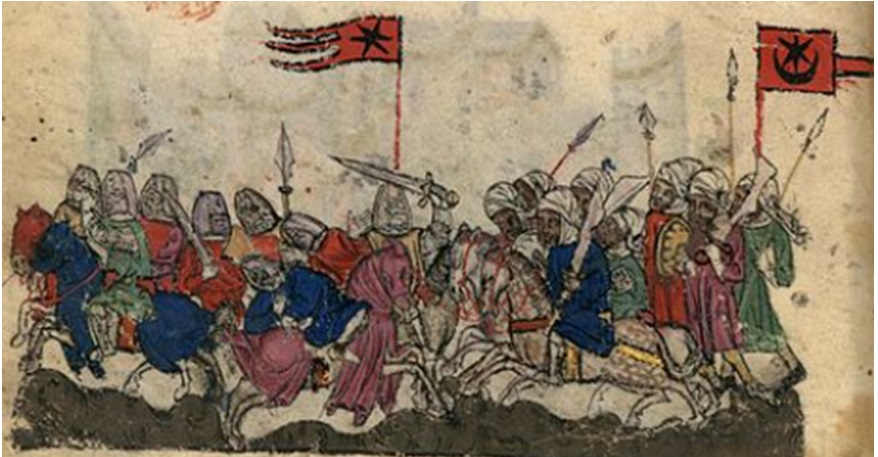
ヤルムークの戦い(Battle of the Yarmuk)
その後、イスラームに改宗し、パレスチナ軍管区(Palestine military district)ジャンド・フィルサティーン (Jund Filastin) (جند فلسطين)の最大の部族閥(tribal faction)と成っていました。バヌー・ジュザーム族(Banu Judham)は、アドナーン・アラブ(Adnan Arabs) (العرب العدنانية)の出であるとの説も有力です。しかし、緊密に同盟していたこともあって、アーミラ・ジュザーム族(Amila Judham Tribe)に分類されています。
Later, Banu Judham Tribe converted to Islam and became the largest tribal faction of Palestine military district (Jund Filastin) (جند فلسطين). Banu Judham Tribe is also believed to be origin of Adnan Arabs (العرب العدنانية), however, they are classified as Amila Judham Tribe, because they were closely allied with it.
B.3.10 ハムダーン・マズヒジュ族
B.3.10 Hamdaan Madhhij Tribe
ハムダーン・マズヒジュ族(Hamdaan Madhhij) (همدان مذحج)に関してはアーミラ・ジュザーム族(‘Amila Judham Tribe)を参照してください。
For Hamdaan Madhhij (همدان مذحج), see ‘Amila Judham Tribe (بنو عاملة جذام).
B.3.11 その他のカフラーン族
B.3.11 Other Kahlan Subtribes
カフターン・アラブ(Qahtan Arabs) (العرب قحطان)カフラーン族(Kahlan) (كهلان)の支族(Subtribes)としてはその他にはハサ‘モ族(Khath’am) (خثعم)、バジフラ族(Bajflah) (بجفلاء)、マズヒジュ族(Madhhij or Madhhaj) (مذحج)、ムラード族(Murad) (مراد)、アシュアル族 (Ash’ar) (أشعر)、ズバイド族(Zubaid) (زبيد)、ナハア族(Nakha) (نخع)、バヌー・マ‘アキル(Banu Ma’qil) (بنو معقل)等の名前を挙げられていますが、いずれも詳細については、あまり分かりません。
Other subtribes of Kahlan Tribe (كهلان) of Qahtan Arabs (العرب قحطان) include Khath’am Tribe (خثعم), Bajflah Tribe (بجفلاء), Madhhij (Madhhaj) (مذحج), Ash’ar Tribe) (بنو أشعر), Zubaid Tribe (زبيد), Nakha Tribe (نخع), Banu Ma’qil Tribe (بنو معقل) are mentioned, but details of any of them are not well known.
| B.3.11.a | ハサ‘モ族(カサ’モ族) | Khath’am | خثعم |
| B.3.11.b | バジフラ族 | Bajflah | بجفلاء |
| B.3.11.c | マズヒジュ族 | Madhhij or Madhhaj | مذحج |
| B.3.11.c.1 | ナハア族 | Nakha | نخع |
| B.3.11.c.2 | ムラード族 | Murad | مراد |
| B.3.11.d | アシュアル族 | Ash’ar | بنو أشعر |
| B.3.11.e | ズバイド族 | Zubaid | زبيد |
| B.3.11.f | バヌー・マ‘アキル族 | Banu Ma’qil | بنو معقل |
B.3.11.a ハサ‘モ族
B.3.11.a Khath’am
ハサ‘モ族(カサ’モ族) (Khath’am) (خثعم)は、象の年(Year of the Elephant) (عام الفيل)にアクスム王国(Kingdom of Aksum) (c.150 BC~c.960 AD) (مملكة أكسوم)将軍アブラハ(Abraha) (d.570) (أبرهة الحبشي)のメッカ(Mecca) (مكة)に攻撃側か防御側か不明ですが関わり、早期イスラムの征服(Early Muslim Conquests) (622~750) (فتوحات إسلامية)では、630年代に活躍しました。なお、アドナーン・アラブ(Adnan Arabs) (عدنانية العرب)のアンマール族(Anmar) (أنمار)の支族との説も有力です(C.5.2.a バヌー・ハサ‘モ族(カサ’モ)族(Banu Khath’am) (بنو خثعم)参照)。
Khath’am tribe (خثعم) was around Mecca when General Abraha (d.570) (أبرهة الحبشي) of Kingdom of Aksum (c.150 BC~c.960 AD) (مملكة أكسوم) attacked Mecca in Year of the Elephant (عام الفيل). It is not known whether Khath’am tribe was on the side of the attackers or defenders, but Khath’am tribe did actively participate to Early Muslim Conquests (622~750) (فتوحات إسلامية) in the 630s.
There is also a strong theory that it is a branch of Anmar tribe (أنمار) of Adnan Arabs (عدنانية العرب) (see C.5.2.a Banu Khath’am (بنو خثعم)).
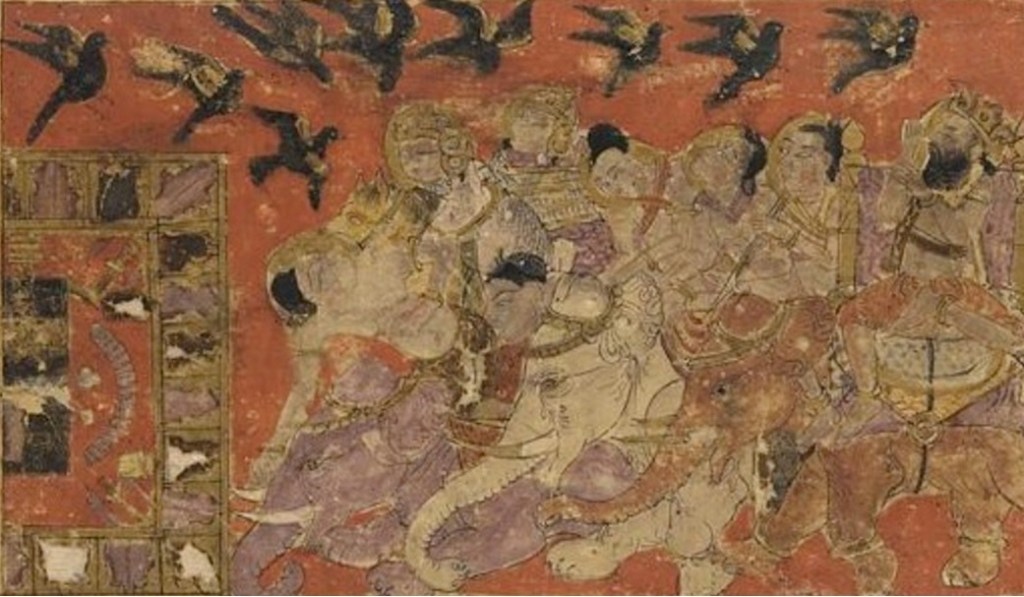
カアバ神殿の外のアブラハ(Abraha outside Ka’bah)
B.3.11.b バジフラ族
B.3.11.b Bajflah Tribe
バジフラ族(Bajflah) (بجفلاء)は、イスラーム以前からメッカ南の山岳地帯に在住していましたが、その後各地に分散しています。7世紀半ばのイラクへの早期イスラムの征服(Early Muslim Conquests)には酋長の一人Chieftains ジャリール・イブン・アブドゥッラー(Jarir ibn Abd Allah) (d.697) (جابر بن عبدالله)が大きな役割を果たしています。
Bajflah Tribe (بجفلاء) lived in mountainous regions in South of Mecca since Pre-Islamic period, but had since dispersed to various places. One of its Chieftains, Jarir ibn Abd Allah (d.697) (جابر بن عبداله), played a major role in Early Muslim Conquests (622~750) (فتوحات إسلامية) to Iraq in mid-7th century.
B.3.11.c マズヒジュ族
B.3.11.c Madhhij Tribe
マズヒジュ族(Madhhij tribe) (قبيلة مذحج)は、カフターン部族(Qahtan Arabs) (العرب قحطان)に属するカハラーン族(Kahlan tribe) (قبيلة كهلان)の一部です。マズヒジュ族(Madhhij tribe)の名前は、アラビア南部と中央部における大規模な部族同盟「カフターン部族同盟(Qahtanite Arab Confederation) (التحالف القبلي القحطان عرب)」の名称として使われていました。この同盟は初期イスラームの征服(Early Muslim Conquests) (622~750年)(فتوحات إسلامية)に参加し、ムスリムによるペルシア征服(Muslim conquest of Persia) (632~654) (الفتح الإسلامي لفارس)やローマ帝国(Roman empire)(ビザンティン帝国 (Byzantine Empire) (330/395~1453) (الإمبراطورية البيزنطية))との戦いに大きな貢献をしました。
Madhhij tribe (قبيلة مذحج) is part of Kahlan tribe (قبيلة كهلان) belonging to Qahtan Arabs (العرب قحطان). Madhhij tribe’s name was used as that of a large tribal alliance “Qahtanite Arab Confederation (التحالف القبلي القحطان عرب)” in south and central Arabia. This confederation participated in Early Muslim Conquests (622~750) (فتوحات إسلامية) and contributed greatly as a major factor in Muslim conquest of Persia (632~654) (الفتح الإسلامي لفارس) and also in fighting against Roman empire (Byzantine Empire) (330/395~1453) (الإمبراطورية البيزنطية).
いくつかの報告によると、イスラーム教(Islam) (الإسلام)の預言者ムハンマド(Prophet Muhammad) (الرسول محمد)は、楽園のほとんどの人々はマズヒジュ族(Madhhij tribe)の出身であると言いました。マズヒジュ族(Madhhij tribe)は、アラブ人の中で最も高貴な民族であり、名誉、勇敢さ、勇気、正義、知恵、騎士道、理性、謙虚さなど、イスラーム教(Islam)が大切にしている美徳を掲げていると説明されています。
According to some reports, Islamic Prophet Muhammad said that the most people in Paradise will be from Madhhij tribe (قبيلة مذحج). Madhhij tribe was described as being the noblest in nature amongst Arabs, holding up virtues Islam holds dear, such as honour, bravery, valour, courage, justice, wisdom, chivalry, reasoning and humility.
マズヒジュ族(Madhhij tribe)は、ナマラの碑文(Namara inscription) (نقش النمارة)に言及されており、これは「すべてのアラブ人の王」であったアル=ヒーラ(الحيرة) のラフム朝の王(Lakhmid king) (الملِك اللخميون) イムルー・アル=カイス・ビン・アムルー) (Imru al-Qays bin ‘Amr) (d.328) (امرؤ القيس بن عمرو)の記念碑であり、マズヒジュ族(Madhhij tribe)に対して襲撃を開始し、ナジラーン都市(Najran city) (مدينة نجران)シャンマル(Shammar) (شمر) (ヒムヤル王(Himyarite king) (الملكا لحميري)シャンマル・ヤフリシュShammar Yahri’sh (شمر يهرعش))に到達したことを自慢しています。ナマラの碑文(Namara inscription)は、マズヒジュ族(Madhhij tribe)が規律正しく経験豊富な戦士であり、乗馬技術を持ち、馬に乗って最も熟練した射手であると説明しています。
Madhhij tribe is mentioned on Namara inscription (نقش النمارة), a memorial of Lakhmid king (الملِك اللخميون) of al-Hira (الحيرة) Imru al-Qays bin ‘Amr (d.328) (امرؤ القيس بن عمرو), who was “king of all the Arabs”, boasted of having launched a raid against Madhhij tribe, reaching Najran city of Shammar (شمر) (Himyarite king) (الملك الحميري) Shammar Yahri’sh (شمر يهرعش)). Namara inscription describes Madhhij tribe as being disciplined and experienced warriors, possessing riding skills, and being the most skilled archers on horseback.

ナマラ碑文(イムルー・アル=カイス・ビン・アムルーの墓碑銘)
Namara inscription (Epitaph of Imru’ al-Qays ibn ‘Amr)
B.3.11.c.1 ナハア族
B.3.11.c. 1 Nakha Tribe
ナハア族(Nakha Tribe) (نخع)は、マズヒジュ族(Madhhij or Madhhaj) (مذحج)の支族です。ナハア族(Nakha Tribe)は、教友(Companions of the Prophet) (الصحابة) ムアド・イブン・ジャバル(Muadh ibn Jabal) (605~639) (معاذ بن جبل)によって、7世紀にイスラームに改宗し、早期イスラムの征服(Early Muslim Conquests) (622~750) (فتوحات إسلامية)に参戦しています。
Nakha Tribe (نخع) is a branch of Madhhij Tribe (Madhhaj Tribe) (مذحج). Nakha Tribe converted to Islam in 7th century by Muadh ibn Jabal (605~639) (معاذ بن جبل) who is one of Companions of Prophet (أحد أصحاب النبي). Then, Nakha Tribe participated in Early Muslim Conquests (622~750) (فتوحات إسلامية).
この部族は、教友(Companion) (صحابة) マリク・イブン・アシュタル(Malik al-Ashtar or Malik ibn al-Harith) (586~658) (مالك بن الحارث الأشتر)、著名な宗教学者(a well-known scholar)アルカマ・ビン・カイス(Alqama ibn Qays) (d.681/682) (علقمة بن قيس النخعي)やイスラム神学者で法学者(Islamic theologian and jurist) (عالم دين وفقيه إسلامي)のイブラーヒーム・アル=ナカ’イー(Ibrahim al-Nakha’i) (c.670~c.717) (إبراهيم بن يزيد النخعي)等を傑出しています。
Malik al-Ashtar (Malik ibn al-Harith) (586~658) (مالك بن الحارث الأشتر) was from this tribe. He was one of Companion (صحابيٌّ). Alqama ibn Qays (d.681/682) (علقمة بن قيس النخعي) was also from this tribe. He was a well-known scholar. Ibrahim al-Nakha’i (c.670~c.717) (إبراهيم بن يزيد النخعي) was from this tribe, as well. He was a Islamic theologian and jurist (عالم دين وفقيه إسلامي).
B.3.11.c.2 ムラード族
B.3.11.c.2 Murad Tribe
ムラード族(Murad Tribe) (مراد)もマズヒジュ族(Madhhij or Madhhaj) (مذحج)の支族です。ムラード族(Murad Tribe) (مراد)は、典型的なベドウィンの性格(Bedouin character) (الطابع البدويون)を持ち、ビラード・ムラード(Bilad Murad)と呼ばれる領土を北イエメンの一部に保持しています。
Murad Tribe (مراد) is also a branch of Madhhij (Madhhaj) (مذحج). Murad Tribe (مراد) had a typical Bedouin character (الطابع البدويون) and held a territory called Bilad Murad in part of North Yemen.
B.3.11.d アシュアル族
B.3.11.d Ash’ar Tribe
アシュアル族(Ash’ar Tribe) (أشعر)は、バヌー・アシュアル族(Banu Ash’ar Tribe) (بنو أشعر)とも呼ばれています。もともとは、南西アラビアのザビード(Zabid) (زبيد)に居住していましたが、イスラーム帝国(Rashidun Caliphate) (632~661) (الخلافة الراشدة)の下での早期イスラムの征服(Early Muslim Conquests) (622~750) (فتوحات إسلامية)の後、当時は、ビラド・アル=シャーム(Bilad al-Sham) (بلاد الشام)と呼ばれたレバント(Levant) (مشرق)および当時は、アル=アンダルス(Al-Andalus) (الأندلس)と呼ばれたイスラーム帝国(Rashidun Caliphate)領イベリア半島(Iberian Peninsula) (شبه الجزيرة الإيبيرية)に移住し、定住しました。
Ash’ar Tribe (أشعر) is also known as Banu Ash’ar Tribe (بنو أشعر). Originally inhabited in Zabid (زبيد) in Southwestern Arabia. It moved and settled Levant (مشرق), and Al-Andalus (الأندلس) in Iberian Peninsula under Rashidun Caliphate (632~661) (الخلافة الراشدة) after Early Muslim Conquests (622~750) (فتوحات إسلامية) .
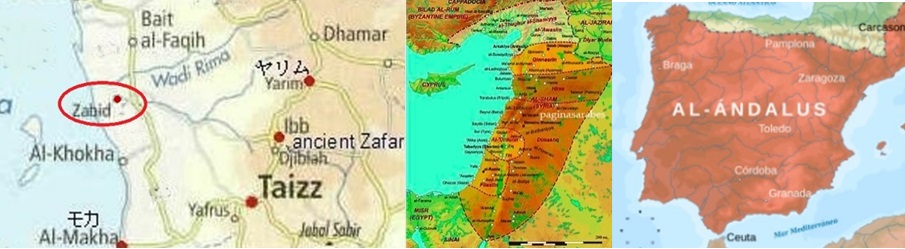
ザビード、ビラド・アル=シャームおよびアル=アンダルス(Zabid, Bilad al-Sham and Al-Andalus)
預言者の 教友(One of Companions of Prophet) (أحد أصحاب النبي) のアブー・ムーサー・アル=アシュアリーAbu Musa al-Ash’ari (أبو موسى الأشعري)は、アシュアル族(Ash’ar Tribe) (أشعر)の一員です。アシュアル族(Ash’ar Tribe) (أشعر)の祖先は、アル・アシャール(al-Ash’ar) (موسى الأشعر)としても知られるナバート・イブン・ウダド(Nabat ibn Udad) (نبط بن عودة)です。彼の本名は、Nabat ibn Udad ibn Zayd ibn Yashjub ibn Arib ibn Zayd ibn Kahlan ibn Saba’ ibn Yashjub ibn Ya’rub ibn Qahtan (نبط بن عودة بن زيد بن يشجوب بن غريب بن زيد بن كهلان بن سبأ بن يشجوب بن يعرب بن قحطان)なので、アシュアル族(Ash’ar Tribe)がカフラーン族(カハラーン族)(Kahlan Tribe) (كهلان)系譜の部族であることが分かります。
Abu Musa al-Ash’ari (أبو موسى الأشعري), who is one of Companions of Prophet (أحد أصحاب النبي), is a member of Ash’ar Tribe (أشعر). Ancestor of Ash’ar Tribe (أشعر) is Nabat ibn Udad (نبط بن عودة), also known as al-Ash’ar (موسى الأشعر). His real name is Nabat ibn Udad ibn Zayd ibn Yashjub ibn Arib ibn Zayd ibn Kahlan ibn Saba’ ibn Yashjub ibn Ya’rub ibn Qahtan (نبط بن عودة بن زيد بن يشجوب بن غريب بن زيد بن كهلان بن سبأ بن يشجوب بن يعرب بن قحطان). This name reveals that Ash’ar Tribe is a tribe of Kahlan Tribe (كهلان) lineage.
B.3.11.eズバイド族
B.3.11.e Zubaid Tribe
ズバイド族(Zubaid Tribe)(زبيد)は、早期イスラムの征服(Early Muslim Conquests) (622~750) (فتوحات إسلامية)に貢献し、アラブ世界最大の一つと云われたマズヒジュ・カフターン・アラブ同盟(Madhhij Qahtanite Arab Confederation)に属する強力な部族でした。
Zubaid Tribe (زبيد) belonged to Madhhij Qahtanite Arab Confederation (الاتحاد العربي مذحج القحطاني) which contributed to Early Muslim Conquests (622~750) (فتوحات إسلامية). Zubaid Tribe was a powerful one belonging to this Confederation.
イスラーム帝国(Rashidun Caliphate) (632~661)とサーサーン朝ペルシア(Sasanian Empire) (224~651)の間のカーディシーヤの戦い(Battle of al-Qadisiyyah) (636) (معركة القادسية)に至る経緯の中で、ズバイド族(Zubaid Tribe)からアブ・バクル・アル=ズバイディ(Abu Bakr al-Zubaydi) (أبو بكر الزبيدي)、偉大な教友(Great companion)のアル=ハリス・ビン・オマイル・アル=ズバイディ(Al-Harith bin Omair Al-Zubaidi) (الحارث بن عمير الزبيدي)や偉大な教友(Great companion)で、戦闘指揮官アムル・ビン・マーディ・アル・ズバイディ(Amr bin Ma’di al-Zubaydi) (عمرو بن معديكرب الزبيدي)が輩出しました。
In process leading up to Battle of al-Qadisiyyah (636) (معركة القادسية) between Rashidun Caliphate (632~661) and Sasanian Empire (224~651), Zubaid Tribe had produced Abu Bakr al-Zubaydi (أبو بكر الزبيدي), Al-Harith bin Omair Al-Zubaidi (الحارث بن عمير الزبيدي) and also Amr bin Ma’di al-Zubaydi (عمرو بن معديكرب الزبيدي).
Al-Harith and Amr were great companions (الصحابي الجليل). Amr was also a famous Arabic warrior and one of leaders at Battle of Al-Qadisiyah.
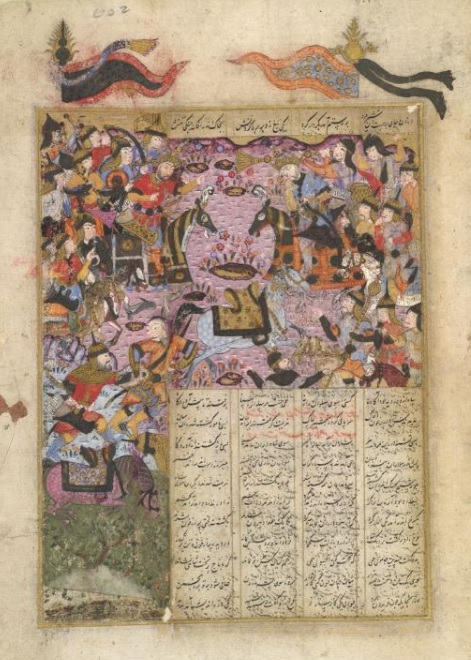
アスタラーバードのペルシャ叙事詩シャー・ナーメの写本からのカーディシーヤの戦いの描写.
Depiction of Battle of al-Qadisiyyah from a manuscript of Persian epic Shah-nameh from Astarabad
早期イスラムの征服(Early Muslim Conquests)と前後してズバイド族(Zubaid Tribe)は、イラク、シリア、アフワーズ(Ahvaz) (أهواز)等に移住しています。
Around time of Early Muslim Conquests, Zubaid Tribe migrated to Iraq, Syria, and Ahvaz (أهواز) in Persia.
B.3.11.f バヌー・マ‘アキル族
B.3.11.f Banu Ma’qil Tribe
バヌー・マ‘アキル族(Banu Ma’qil Tribe) (بنو معقل)は、11世紀に支族であるバヌー・ヒラール族(Banu Hilal Tribe) (بنو هلال)およびバヌー・スライム族(Banu Sulaym Tribe) (نو سُليم)と共に北西アフリカ(Northwestern Africa)のマグリブ地方(Maghreb) (مغرب)へ移住し、定住しています。 彼らは、ハーシム家(Hashemites) (هاشميون)の子孫を自認していますが、部族名からは、明らかに南アラビアの出身です。それが、カフラーン族(Kahlan Tribe) (كهلان)の系譜であるかどうかについては、議論もあります。
Banu Ma’qil Tribe (بنو معقل) settled to Maghreb (مغرب) of Northwestern Africa. It identifies itself as descendants of Hashemites (هاشميون), but its tribal name reveals that it is clearly from South Arabia. There is also debate as to whether it is a genealogy of Kahlan Tribe (كهلان).
B.4 その他のカフターン部族
B.4 Miscellaneous Qahtan Arabs
その他のカフターン・アラブ(Miscellaneous Qahtan Arabs) (متفرقات العرب قحطان)としてはアルマア族(Alma’) (ألمع)、アルマア・アドナーン・バニー・ハーリサ族(Alma’ ‘Adnan Bani Harithah) (ألمع عدنان بني حارثة)、アサド族(Al-Azad or Al-Assad) (آل أسد)およびアルマア・イブン・イディ族(Alma’ ibn ‘Idi) (ألمع بن عدي)の名が挙げられています。
Alma’ Tribe (ألمع), Alma’ ‘Adnan Bani Harithah Tribe) (ألمع عدنان بني حارثة) and Al-Azad (Al-Assad) Tribe (آل أسد), its branch Alma’ ibn ‘Idi Tribe (ألمع بن عدي), etc. are mentioned as Miscellaneous Qahtan Arabs (متفرقات العرب قحطان).
| B.4.1 | アルマア族 | Alma’ | ألمع |
| ditto | リジャール・アルマア族 | Rejal Al-Ma’a Tribe | رجال ألمع |
| B.4.2 | アルマア・アドナーン・バニー・ハーリサ | Alma’ ‘Adnan Bani Harithah | ألمع عدنان بني حارثة |
| B.4.3 | アサド族 | Al-Azad or Al-Assad | آل أسد |
| B.4.4 | アルマア・イブン・ イディ族 | Alma’ ibn ‘Idi | ألمع بن عدي |
B.4.1 アルマア族
B.4.1 Alma’ Tribe
アルマア族(Alma’) (ألمع)とは、リジャール・アルマア族(Rejal Al-Ma’a Tribe) (رجال ألمع)でほぼ、間違いありません。アルマア (Alma’) (ألمع)と名付けられた部族は、アズド族(Azd) (أزد)の分かれと考えている系譜学者も少なくありません
Alma’ (ألمع) is almost certainly Rejal Al-Ma’a Tribe (رجال ألمع). Many genealogists believe that tribe named Alma’ (ألمع) is a branch tribe of Azd (أزد).
リジャール・アルマア族(Rejal Al-Ma’a Tribe)は、サラワート山脈(Sarawat Mountains) (جبال السروات)からティハーマ(Tihama) (تهامة)に至る涸れ谷ハリー(Wadi Hali) (وادي حلي)の支流沿い居住していました。カーディシーヤの戦い(Battle of al-Qadisiyyah) (636) (معركة القادسية)では最も著名と成った部族の一つでした。その名は、リジャール・アルマア族同盟(Rejal Al-Ma’a Confederation) (رجال المع)としても後世に残っています。
Rejal Al-Ma’a Tribe has lived along a tributary of Wadi Hali (وادي حلي) from Sarawat Mountains (جبال السروات) to Tihama (تهامة). It was one of the most prominent tribes in Battle of al-Qadisiyyah (636) (معركة القادسية). Its name has also survived as Rejal Al-Ma’a Confederation (رجال المع).

リジャール・アルマア村と涸れ谷ハリー(Rejal Al-Ma’a and Wadi Hali)
残念ながら、アメリカ同時多発テロ事件(September 11 Attacks) (هجمات 11 سبتمبر)には、この部族の多くの若者が関わりました。
Unfortunately, September 11 Attacks (هجمات 11 سبتمبر) involved many young tribesmen from this tribe.
B.4.2 アルマア・アドナーン・バニー・ハーリサ族
B.4.2 Alma’ ‘Adnan Bani Harithah Tribe
アルマア・アドナーン・バニー・ハーリサ族(Alma’ ‘Adnan Bani Harithah Tribe) (ألمع عدنان بني حارثة)については、現在、関連する資料は、見つかりませんでした。ただ、アルマア (Alma’) (ألمع)と名付けられた部族は、アズド族(Azd) (أزد)の分かれと考えている系譜学者も少なくありません。
Any details for Alma’ ‘Adnan Bani Harithah Tribe (ألمع عدنان بني حارثة) has not been found by Writer, however many genealogists believe that tribe named Alma’ (ألمع) is a branch tribe of Azd (أزد).
B.4.3 アサド族
B.4.3 Azad Tribe or Assad Tribe
「アサド族(Azad Tribe or Assad Tribe) (آل أسد)は、南アラビアのマアリブ(Ma’rib or Marib) (مأرب)からヒジャーズ南部(Southern Hijaz) (جنوب الحجاز)の移り住んだ後、バーハ(Bahah) (باحة)に移住しています。「バーハ(Bahah)の人口50万人の大部分は、アザド・シェヌーア族(Azad Shenou`a) (أزد شنؤة)の子孫だ。」と考えている系図学者も居ます。
Azad Tribe (آل أسد) migrated to Bahah (باحة) after its migration to Southern Hijaz (جنوب الحجاز) from Ma’rib (Marib) (مأرب) in South Arabia. There are also genealogists who think “Most of Bahah’s population of 500,000 are descendants of Azad Shenou’a (أزد شنؤة).”
アサド族(Azad Tribe or Assad Tribe) (آل أسد)は、アザド・シェヌーア族(Azad Shenou`a) (أزد شنؤة)、アズド・サラート族(Azad Al Sarat) (أزد صلاة)、アザド・ガサーン族(Azad Ghassan) (أزد غسان)およびアザド・アマーン(Azad Aman) (أزد أمان)の4支族があります。アサド族(Azad Tribe or Assad Tribe)は、この4支族からさらに24の部族が生まれています。ザハラーン族(Zahran Tribe) (زهران)の曽祖父となったアブドゥッラー・ビン・アブドゥッラー(Abdullah bin Zahran) (زهران بن عبد الله)もこの部族の出です。
Azad Tribe (آل أسد) consists of four tribes: Azad Shenou’a Tribe (أزد شنؤة), Azad Al Sarat Tribe (أزد صلاة), Azad Ghassan Tribe (أزد غسان) and Azad Aman Tribe (أزد أمان). Azad Tribe has 24 more subtribes from these four tribes. Abdullah bin Zahran (زهران بن عبد الله), great-grandfather of Zahran Tribe (زهران), also came from this tribe.
| B.4.3.a | アザド・シェヌーア族 | Azad Shenou’a | أزد شنؤة |
| B.4.3.b | アズド・サラート族 | Azad Al Sarat | أزد صلاة |
| B.4.3.c | アザド・ガサーン族 | Azad Ghassan | أزد غسان |
| B.4.3.d | アザド・アマーン | Azad Aman | زد أمان |
B.4.4 アルマア・イブン・イディ族
B.4.4 アルマア・イブン・イディ族
アルマア・イブン・イディ族(Alma’ ibn ‘Idi Tribe) (ألمع بن عدي) については、現在関連する資料は、見つかっていません。ただ、アルマア (Alma’) (ألمع)と名付けられた部族は、アズド族(Azd) (أزد)の分かれと考えている系譜学者も少なくありません。また、上記アサド族(Azad Tribe or Assad Tribe)の支族との説もあります
As for Alma’ ibn ‘Idi Tribe (ألمع بن عدي), no relevant documentation has been found at present. Not little number of genealogists believe that tribe named Alma’ (ألمع) is a branch tribe of Azd (أزد). There is also a saying that it is a branch of above-mentioned Azad Tribe or Assad Tribe
 Desert peninsula