43 アラブ化したアラブ族




ページ内目次(In-page table of contents)
C アラブ化したアラブ族
C Arabized Arabs
アドナーン部族(Adnani Arabs) (العرب عدنان)は、一神教の偉大な長老で聖典の民の始祖アブラハム(Abraham) (إبراهيم)の子イシュマエル(Ishmael)(イスマーイール(Ismail))(إسماعيل)を始祖とするアラブ化したアラブ族(Arabized Arabs) (العرب المستعربة)で、イシュマエル(Ishmael)の12人の息子で最初に生まれたナービト(Nabit)(ネバイオス(Nebaioth)) (نابت بن إسماعيل)の子孫アドナーン(Adnan) (عدنان)を祖とし、北部、中部および西部アラビアに勢力を持ったアラム人(Aramaeans) (آراميون)血統の部族です。
Adnani Arabs (العرب عدنان) are Arabized Arabs (العرب المستعربة) whose founder is Ismail (إسماعيل). Ismail is a son of Abraham (إبراهيم), who is a great monotheistic elder and Progenitor of People of Holy Scriptures. Adnan (عدنان) is an offspring of Navit (نابت بن إسماعيل), who is the first-born of Ishmael’s twelve sons (Nabit is also called as Nebaioth). Adnani Arabs (العرب عدنان) are descendants of Adnan (عدنان) with Bloodline of Aramaeans (آراميون). They had power in northern, central and western Arabia.
アドナーン部族(Adnani Arabs)は、純粋のアラブ族(Pure Arabs) (العرب العاربة)と呼ばれるカフターン部族(Qahtan Arabs) (عرب قحطان)と対峙していました。カフターン部族(Qahtan Arabs)は、ノア(Noah) (نوح)の息子セム(Shem) (سام)の子孫ヨクタン(Joktan) (يقطان)と同一視されているカフターン(Qahtan) (قحطان)の子孫で南部および南西部アラビアに勢力を持っていました。アラブ化したアラブ族(Arabized Arabs)にはケダール族(Qedar Tribe) (قيدار)およびナバテア人(Nabataeans) (الأنباط)を含みますが、これらは、アドナーン部族(Adnani Arabs) (العرب عدنان)ではありません。
Adnani Arabs had confronted Qahtan Arabs (عرب قحطان), who are also called Pure Arabs (العرب العاربة). Qahtan Arabs were descendants of Qahtan (قحطان), (Qahtan is identified with Joktan (يقطان)), a offspring of Shem (سام) who is a son of Noah’s (نوح). Qahtan Arabs had power in Southern and Southwestern Arabia. Arabized Arabs include Qedar Tribe (قيدار) and Nabataeans (الأنباط), but they are not Adnani Arabs (العرب عدنان).
アドナーン部族(Adnani Arabs)に属する部族は、ニザール・イブン・マアド・イブン・アドナーン(Nizar ibn Ma’ad ibn Adnan) (نزار بن معد بن عدنان)の息子達ムダル(Mudar) (مضر)、ラビーア (Rabi’ah) (ربيعة)、イヤード(Iyad) (إياد)およびアンマール(Anmar) (أنمار)の子孫です。しかしながら、実際は、アドナーン部族(Adnani Arabs)の殆どがムダル(Mudar)とラビーア (Rabi’ah)の子孫です。
Tribes belonging to Adnani Arabs are descendant of sons of Nizar ibn Ma’ad ibn Adnan (نزار بن معد بن عدنان). Those sons are Mudar (مضر), Rabi’ah (ربيعة), Iyad (إياد) and Anmar (أنمار). In reality, however, the most of Adnani Arabs are descendants both of Mudar and Rabi’ah.
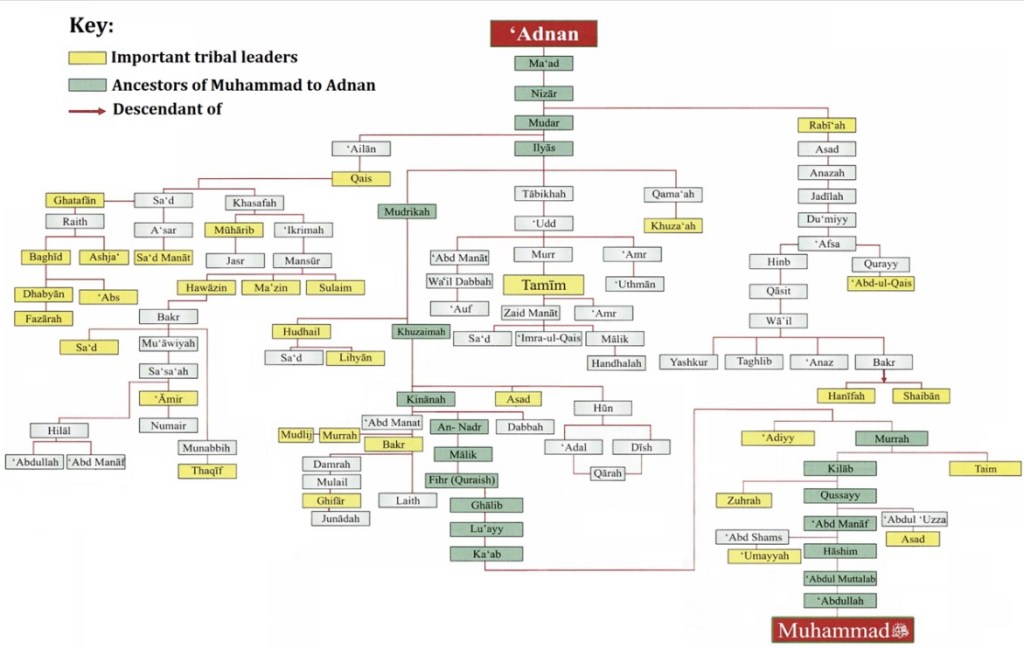
アドナーンの子孫(Descendants of Adnan)
主要2部族の1つムダル族(Mudar Tribe) (مضر)にはカイス族(Qays Tribe) (قيس)、キナーナ族(Kinana Tribe) (كنانة)、タミーム族(Tamim Tribe) (تميم)とバニー・スライム・ビン・マンスール族(Bani Sulaim bin Mansoor Tribe) (بني سليم بن منصور)が属しています。
One of two main tribes is Mudar Tribe (مضر), to whom Qays Tribe (قيس), Kinana Tribe (كنانة), Tamim Tribe (تميم) and Bani Sulaim bin Mansoor Tribe (بني سليم بن منصور) belong.
もう一つのラビーア族(Rabi’ah Tribe) (ربيعة)にはアナザ族 (‘AnazahTribe) (عنزة)、タグリブ族(Taghlib Tribe) (بنو تغلب)、バクル族(Bakr Tribe) (بكر)とアブドゥルカイス族(Abd al-Qays Tribe) (عبد القيس)が属しています。
Another of two main tribes is Rabi’ah Tribe (ربيعة) who includes ‘AnazahTribe (عنزة), Taghlib Tribe (بنو تغلب), Bakr Tribe (بكر) and Abd al-QaysTribe (عبد القيس).
預言者ムハンマド(Prophet Muhammad) (ca.570~632) (محمد رسول الله)もアドナーン部族(Adnani Arabs) (العرب عدنان)の子孫です。
Prophet Muhammad (ca.570~632) (محمد رسول الله) is also a descendant of Adnani Arabs (العرب عدنان).
C.1 ケダール族
C.1 Qedar tribe
旧約聖書には「ケダール族(Qedar Tribe) (قيدار)は、イシュマエル(Ishmael) (إسماعيل)の次男ケダール(Qedar) (قيدار)の名に因んで付けられた」と記述され、何度も引用されています。アラビア語の部族名は、アラビア文字がまだ無かったので、アッシリア語(Assyrian language) (للغة الآشورية)で紀元前8世紀に最初に書き残されました。アラム語(Aramaic) (الآرامية)でも紀元前6世紀に文字に書き表されました。アッシリア(Assyria) (آشور)の碑文には紀元前8~7世紀にかけて叛乱したり貢物を送ったりしたケダール族(Qedar Tribe)の王達の名前が記述されています。その中には女王ザビーベ(Queen Zabibe) (738BC~733BC) (زبيبة)の名も含まれています。
In Old Testament, it is stated that “Qedar Tribe (قيدار) was named after Qedar (قيدار), second son of Ishmael (إسماعيل),” and it is quoted many times. Arabic tribal names were first written down in 8th century BC in Assyrian language (للغة الآشورية), as there was no Arabic script yet. It was also written down in Aramaic (الآرامية) in 6th century BC. Inscription on Assyria (آشور) mentions names of kings of Qedar Tribe who rebelled and paid tribute during 8th~7th centuries BC. Among them is name of Queen Zabibe (738BC~733BC) (زبيبة).
ケダール族(Qedar Tribe)に関する記述は、アラム語(Aramaic) (الآرامية)や古代南アラビア語碑文(Inscription of Ancient South Arabian) (نقش اللغة العربية الجنوبية القديمة)にも見られ、ヘロドトス(Herodotus) (c.484BC~420BC)、プリニウス(Pliny the Elder) (AD23~79)やディオドロス(Diodorus Siculus) (d. c.21BC)等の古代ギリシアやローマの歴史家の記述にも見られます。
References to Qedar Tribe are also found in Aramaic (الآرامية) and Inscription of Ancient South Arabian (نقش اللغة العربية الجنوبية القديمة). They are also found in writings of Ancient Greek and Roman historians such as Herodotus (c.484BC~420BC), Pliny Elder (AD23~79) and Diodorus Siculus (d. c.21BC).
アラブ系図学者は、「アラブ族の祖先イシュマエル(Ishmael)の長男ナービト(Nabit) (نابت بن إسماعيل)又は次男ケダール(Qedar) (قيدار)のどちらかがイスラーム教創始者(Messenger of God to mankind and jinn in Islam) (رسول الله إلى الإنس والجن في الإسلام)ムハンマド(Muhammad) (محمد)の先祖になるのか」と、とりわけ重要視しています。紀元前8世紀にアッシリア(Assyria) (آشور)の碑文は、「ケダール族(Qedar Tribe)はバビロン国境の東の地域に住み紀元前7世紀にもっと東のトランスヨルダンやシリア南部に移動し、紀元前5世紀までにシナイから遠くナイル三角州まで広がった」と述べています。
Arab genealogists placed particular importance on which son was ancestor of Muhammad (محمد) either Navit (نابت بن إسماعيل) or Qedar (قيدار). They are eldest son and second son of Arab ancestor Ishmael. Muhammad is Messenger of God to mankind and jinn in Islam (رسول الله إلى الإنس والجن في الإسلام). In 8th century BC, an inscription from Assyria (آشور) states that “Qedar Tribe, lived in eastern area of border of Babylon, moved farther east into Transjordan and Southern Syria in 7th century BC, and by 5th century BC extended to Sinai Peninsula and as far as Nile Delta.
ケダール族(Qedar Tribe)は、ケダール族同盟(Qedar Tribal Confederation) (اتحاد قبائل قيدار)を組織し今日のドゥーマ・ジャンダル(Dumat al-Jundal) (دومة الجندل)であるドゥーマ(Dumah) (دومة)を中心に北アラビア一帯に影響力を持ち、最盛期の紀元前6世紀にはアラビア湾とシナイ半島の間の大きな地域を支配していました。
Qedar Tribal Confederation (اتحاد قبائل قيدار) was formed by Dumah (دومة), which is today’s Dumat al-Jundal (دومة الجندل). It had influence throughout Northern Arabia, and at its peak in 6th century BC, it controlled a large area between Arabian Gulf and Sinai Peninsula.
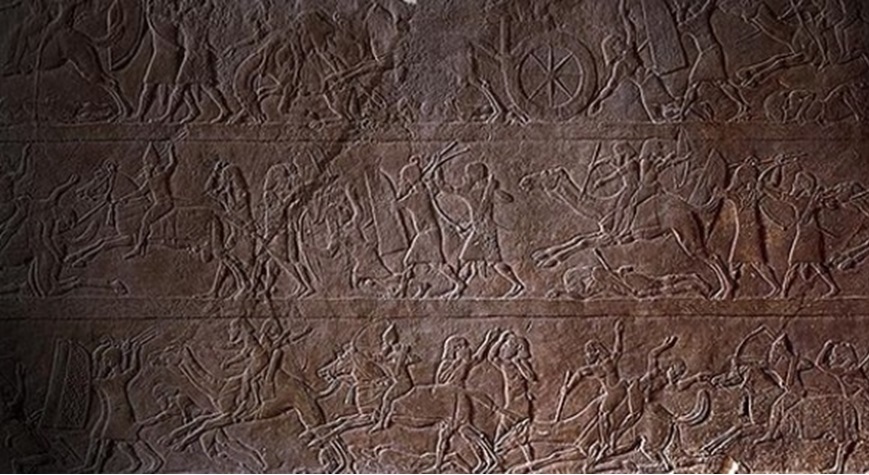
アッシリアの兵士とケダール族アラブ人戦士の戦いを描いたアッシリアのレリーフ.
Assyrian relief depicting a battle between Assyrian soldiers and Qedarite Arab warriors.
C.2 ナバテア人
C.2 Nabataeans
アラビア語ではアンバート(Anbat) (أنباط)と呼ばれるナバテア人(Nabataeans) (الأنباط)の出身地については、ナジュド(Najd) (نجد)、アラビア湾北岸、ヒジャーズ(Hijaz) (حجاز)あるいはエドム(Edom) (إدوم)等、諸説あります。アシール(Asir) (عسير)地方の言い伝えでは「サラート(Sarat) (سراة)山地には古代から人が住み続けて来ており、ナバテア人(Nabataeans)がシリア沙漠(Syrian Desert) (بادية الشام)へ移住したのは、この地からであった」と云われています。
Regarding to Native place of Nabataeans (الأنباط), also known as Anbat (أنباط) in Arabic, there are various theories, such as Najd (نجد), Northern coast of Arabian Gulf, Hijaz (حجاز) or Edom (إدوم). (Edom locates in Southern Levant (مشرق)).
According to the legend of Asir (عسير) region, “As Sarat (سراة) Mountains have been inhabited since ancient times, Nabataeans immigrated from Sarat Mountains to Syrian Desert (بادية الشام), as well.
また「アラブ化したアラブ族(Arabized Arabs) (العرب المستعربة)の祖先イシュマエル(Ishmael)の長男ナービト(Nabit)がナバテア人 (Nabataeans)の始祖である」との記述もあります。「中央アラビア(ナジュド(Najd))から来た」と云う学者もいれば、「アラビア湾の北岸から来た」と云う学者もいます。その他に「ヒジャーズ(Hijaz)あるいは南レヴァント(Levant) (مشرق)のエドム(Edom) (إدوم)から来た」と云う学者もいてナバテア人(Nabataeans)の起源はハッキリしていません。
There is another legend saying “Origin of Nabataeans is Nabit, who is eldest son of Ishmael”. Ismael is Founder of Arabized Arabs (العرب المستعربة). Some scholars say that they came from Central Arabia (Najd), while others say that they came from Northern coast of Arabian Gulf. Other scholars say that they came from Hijaz or Edom (إدوم). Like these, Native place of Nabataeans is not clear.
いずれにしてもナバテア人(Nabataeans)の祖先は、アラム語(Aramaic) (آرامية)の方言であるナバテア語 (Nabataean Langauge) (اللغة النبطية)を話していました。遊牧生活を送りながら羊の放牧や盗賊稼業や交易などを行い、紀元前2世紀頃から紀元2世紀にかけて栄えました。ナバテア人(Nabataeans)は紀元前1世紀ごろから現在のヨルダンにあるペトラ(Petra) (بتراء)を拠点としていたエドム人(Edumaea) (إدوميون)を南に追い払って都とすると共に、アラビア付近の交易を独占していました。
In any case, Ancestors of Nabataeans spoke Nabataean Language (اللغة النبطية), a dialect of Aramaic (آرامية). While living a nomadic life, they grazed sheep, traded with occasionally committing thievery, and flourished from around 2nd century BC to 2nd century AD. Nabataeans drove Edumaea (إدوميون), who was based at Petra (بتراء) in present-day Jordan, to South from around 1st century BC. Nabataeans made Petra their capital, and had been a monopoly on trade in vicinity of Arabia.
106年にはローマ皇帝(Roman Emperor) (إمبراطور روماني)トラヤヌス(Trajan) (r. AD98~AD 117) (تراجان)によりペトラ(Petra)とナバテア人(Nabataeans)は、ローマ帝国(Roman Empire) (27BC~AD 395) (الإمبراطورية الرومانية)のアラビア属州(Arabia Petraea) (البتراء العربية)としてローマ帝国(Roman Empire)に完全に組込まれ、ナバテア人(Nabataeans)支配は、滅びました。
In 106, Roman Emperor (إمبراطور روماني) (r. AD98~AD 117) Trajan (تراجان) fully incorporated Petra and Nabataeans into Roman Empire (27BC~AD 395) (الإمبراطورية الرومانية) as its Arabia Petraea (البتراء العربية), and destroyed Nabataean rule.

ナバテアの首都ペトラ(Nabataean Capital Petra)
C.3 ムダル族
C.3 Mudar tribe
ムダル族(Mudar Tribe) (مضر)は、ラビーア族(Rabi’ah Tribe) (ربيعة)と共にアドナーン部族(Adnan Arabs) (العرب العدنانية)に属する主要2支族の1つです。その主な一門にはカイス族(Qays Tribe) (قيس)、キナーナ族(Kinana Tribe) (كنانة)、タミーム族(Tamim Tribe) (تميم)が挙げられます。
Mudar Tribe (مضر) is one of two main tribes belonging to Adnan Arabs (العرب العدنانية) along with Rabi’ah Tribe (ربيعة). Its main sub-tribes are Qays Tribe (قيس), Kinana Tribe (كنانة) and Tamim Tribe (تميم).
C.3.1 カイス族
C.3.1 Qais tribe
アドナーン部族(Adnani Arabs)のムダル族(Mudar Tribe)から分かれたカイス族(Qais Tribe) (قيس)は、カイス・アイラーン族(Qais Ailan Tribe) (قيس عيلان)とも呼ばれます。また、カイス族(Qais Tribe)は、英語ではKais やQaysとも綴られます。カイス族(Qais Tribe)にはガタファーン族(Ghatafan Tribe) (غطفان)、ハワージン族(Hawazin Tribe) (هوازن)とバヌー・スライム族(Banu Sulaym Tribe) (بنو سليم)の3つの主要支族があります。3支族とも7世紀まで東ヒジャーズ(Hijaz)に留まっていました。
Branched from Mudar Tribe of Adnani Arabs, Qais Tribe (قيس) is also called Qais Ailan Tribe (قيس عيلان). Qais Tribe is also spelled Kais or Qays in English. Qais Tribe has three main branches: Ghatafan Tribe (غطفان), Hawazin Tribe (هوازن) and Banu Sulaym Tribe (بنو سليم). All three tribes remained in Eastern Hijaz until 7th century.
イスラーム(Islam) 以前の時代にはカイス族(Qais Tribe)は、ナジュト(Najd)やヒジャーズ(Hijaz)を通過する隊商にとって脅威として高い悪名がありました。クライシュ族(Quraysh Tribe) (قريش)は、ヤスリブ(Yathrib) (يثرب)(メディナ(Madinah) (مدينة)の旧名)のムスリム(Muslim) (مسلم)を排除するためにそのデーツ(Date) (تمر)(ナツメ椰子の実)の収穫の3分の1を支払っていました。バドルの戦い(Battle of Badr) (624) (غزوة بدر)の後にムスリム軍(Muslim army) (جيش المسلمين)は、ヤスリブ(Yathrib)を攻撃する準備をしていたカイス族一門(a branch of Qais Tribe)のバヌー・スライム族(Banu Sulaym Tribe) (بنو سليم)を襲い500頭の駱駝を奪いました。
In pre-Islamic times, Qais Tribe was notorious as a threat to caravans passing through Najd and Hijaz. Quraysh Tribe (قريش) paid one-third of its harvested date (تمر) (jujube palm fruit) for excluding Muslims (مسلم) from Yathrib (يثرب). (Yathrib was the old name of Madinah (مدينة)). After Battle of Badr (624) (غزوة بدر) Muslim army (جيش المسلمين) attacked Banu Sulaym Tribe (بنو سليم), who was preparing to attack Yathrib, and plunder 500 camels. (Banu Sulaym Tribe is a main branch of Qais Tribe).

バドルの戦い(14世紀初頭、バドルの戦いの前にムハンマドが家族を励ます様子)
Battle of Badr (Early 14th century depiction of Muhammad encouraging his family before the Battle of Badr)
しかしながら、塹壕の戦い(Battle of Trench) (627) (غزوة الخندق)ではカイス族(Qais Tribe)は、クライシュ族(Quraysh Tribe)に次いで大きな功績をあげました。この戦いで背信したユダヤ教徒(Jewish)は、メディナ(Madinah)北140kmにあるハイバル(Khaybar) (خيبر)に砦を構え、カイス族(Qais Tribe)一門のガタファーン族(Ghatafan Tribe)と防衛同盟を結んでいました。629年にムスリム軍(Muslim army)の攻撃に対してガタファーン族(Ghatafan Tribe)兵士4,000人をユダヤへの援軍に派遣していましたが、説明のつかない脅威を感じて引き返しました。(根拠地と家族をムスリム軍(Muslim army)に襲われるのを恐れたとの説もあります。)
Nevertheless, in Battle of Trenches (627) (غزوة الخندق), Qais Tribe made great military contribution next to Quraysh Tribe. Jews, who had betrayed in this battle, set up a fort at Khaybar (خيبر), where is 140 km north of Medina, and formed a defensive alliance with Ghatafan Tribe, which is a branch of Qais Tribe. In 629, 4,000 Ghatafan Tribe soldiers were sent to reinforce Jewish against Muslim army’s attack, but they turned back because they felt an unexplained threat. There is also a theory that they feared that Muslim army would attack their base and families.
そしてカイス族(Qais Tribe)は一門のハワージン族(Hawazin Tribe)がサキーフ族(Thaqif Tribe) (ثقيف)と共にムスリム軍(Muslim army)に敗北したフナインの戦い(Battle of Hunayn) (630) (غزوة حنين)の後にイスラーム(Islam) (إسلام)に改宗しました。ウマイヤ朝(Umayyad Caliphate) (661~750) (الخلافة الأموية)の時代にカイス族(Qais Tribe)は、さらに多くの支族に分かれて行きました。
After Battle of Hunayn (630) (غزوة حنين), in which Hawazin Tribe was defeated by Muslim army along with Thaqif Tribe (ثقيف), Qais Tribe converted to Islam (إسلام). (Hawazin Tribe is a main branch of Qais Tribe). During reign Umayyad Caliphate (661~750) (الخلافة الأموية), Qais Tribe had been divided into many more tribes.
ジャウフ(Jawf) (الجوف)地方のドゥーマ・ジャンダル(Dumat al-Jundal) (دومة الجندل)は、北西へと涸れ谷シルハーン(Wadi Sirhan) (وادي السرحان) を抜けてシリアおよびパレスチナへ向う隊商路と、北東へとイラクへ向かう隊商路との2つの交易ルートの分岐点でした。周囲の沙漠に住むベドウイン(Bedouin) (بدو)にとっては信仰の中心でもありましました。年一度開かれる市の場所でもあったので、イスラーム(Islam)前のジャーヒリーヤ時代(Jahiliyyah) (جاهلية)には名声や繁栄を謳歌していました。
Dumat al-Jundal (دومة الجندل) in Jawf (الجوف) region was junction between a caravan route to northwest through Wadi Sirhan (وادي السرحان) to Syria and Palestine and another caravan route to northeast to Iraq. It was also a center of worship for Bedouin (بدو) who lived in surrounding desert. During pre-Islamic Jahiliyyah (جاهلية), Dumat al-Jundal enjoyed fame and prosperity as it was also a market site held once a year.
ドゥーマ・ジャンダル(Dumat al-Jundal)は、イスラーム教国(Caliphate) (خلافة إسلامية)への併合によって信仰の中心を失って衰亡しました。アッバース朝(Abbasid Caliphate) (750~1258) (الخلافة العباسية)がバグダード(Baghdad) (بغداد)に遷都すると、主要な隊商路がクーファ(Kufah) (كوفة)(バクダット(Baghdad)南170km)から聖なる都市であるメッカ(Mecca) (مكة)およびメディナ(Madinah) へ通じる様になってドゥーマ・ジャンダル(Dumat al-Jundal)は交易の分岐ではなくなり、さらに衰亡しました。それに加えて沙漠化が進んで住環境が悪化したことも衰亡に拍車をかけました。
Dumat al-Jundal lost its center of worship and declined due to its annexation to Caliphate (خلافة إسلامية). When Abbasid Caliphate (750~1258) (الخلافة العباسية) moved its capital to Baghdad (بغداد), main caravan route was established from Kufah (كوفة) located 170 km south of Baghdad to holy cities of Mecca (مكة) and Madinah. Since Dumat al-Jundal had not been a junction of caravan routes, anymore, its fame and prosperity became even more declining. In addition, deterioration of living environment due to progress of desertification also spurred its decline.

ドゥーマ・ジャンダル(Dumat al-Jundal)
ジャウフ(Jawf)を支配していたのは、カルブ族(Kalb Tribe) (كلب)とカイス族(Qais Tribe) (قيس)でした。カルブ族(Kalb Tribe)は、カフターン部族(Qahtan Arabs) (عرب قحطان)ヒムヤル族(Himyar Tribe) (حمير)の支族クダーア族(Quda’a Tribe) (قضاعة)の一門であり、カイス族(Qais Tribe)は、アドナーン部族(Adnan Arabs) (العرب العدنانية) ムダル族(Mudar Tribe) (مضر)の支族でした。カリフ(Caliph) (خِلافة)継承を巡る第二次ムスリム内戦(Second Fitna) (683~692) (الفتنة الثانية)中の684年7月にダマスカス(Damascus) (دمشق)近郊でマルジ・ラヒトの戦い(Battle of Marj Rahit) (684) (معركة مرج راهط)が起きました。この戦闘ではカルブ族(Kalb Tribe)は、ウマイヤ朝(Umayyad Caliphate) (661~750) (الدولة الأموية)アブドゥルマリク・イブン・マルワーン(Abd al-Malik ibn Marwan (647~705) (عبد الملك بن مروان)率いるウマイヤ朝軍(Umayyad Army)の中核を成しており、カイス族(Qais Tribe)は、カリフ(Caliph) 継承の競争相手であるイブン・ズバイル(‘Abd Allah ibn al-Zubayr) (624~692) (عبد الله بن الزبير)に味方していました。
Jawf was ruled both by Kalb Tribe (كلب) and Qais Tribe (قيس). Kalb Tribe is a branch of Quda’a Tribe (قضاعة) belonging to Himyar Tribe (حمير) of Qahtan Arabs (عرب قحطان), and Qais Tribe is a branch of Mudar Tribe (مضر) of Adnan Arabs (العرب العدنانية). During Second Fitna) (683~692) (الفتنة الثانية) over succession of Caliph (خِلافة), Battle of Marj Rahit (684) (معركة مرج راهط) occurred in July 684 near Damascus (دمشق). In this battle, Kalb Tribe formed core of Umayyad Army led by Umayyad Caliphate (661~750) (الدولة الأموية) Abd al-Malik ibn Marwan (647~705) (عبد الملك بن مروان). In other hand, Qais Tribe sided with ‘Abd Allah ibn al-Zubayr (624~692) (عبد الله بن الزبير), a competitor to Caliph succession.
マルジ・ラヒトの戦い(Battle of Marj Rahit)は、ウマイヤ朝(Umayyad Caliphate)側が勝利し、アブドゥルマリク(Abd al-Malik)は、第5代カリフ(5th caliph) (r.685~705) (الخليفة الخامس)を継承しました。カルブ族(Kalb Tribe)は、アブドゥルマリク(Abd al-Malik)の助けに成っていました。一方のカイス族(Qais Tribe)は、壊滅的な敗北を被った為にマルジ・ラヒトの戦い(Battle of Marj Rahit)以降は、カルブ族(Kalb Tribe)とカイス族(Qais Tribe)との反目が一層激しくなりました。恒久的な憎しみと血みどろの敵対関係は、カルブ族(Kalb Tribe)を領地を維持出来ずに暫くはパレスチナの地に移住しなければ成らない程まで疲弊させました。カイス族(Qais Tribe)は、カフラーン族(Kahlan Tribe) (كهلان)支族のアズド族(Azd Tribe) (أزد)(ウズード族(Uzud Tribe) (أزود))とも多神教徒であった時代から戦い、改宗とは関係なくこの戦いは18世紀まで続いていました。
Battle of Marj Rahit was won by Umayyad Caliphate, and Abd al-Malik succeeded to 5th Caliph (r.685~705) (الخليفة الخامس). Kalb Tribe became help to Abd al-Malik. Qais Tribe, on other hand, suffered a devastating defeat, and after Battle of Marj Rahit, feud between Kalb Tribe and Qais Tribe became even more intense. Permanent hatred and bloody hostilities exhausted Kalb Tribe to extent where they could not sustain their territory and had to relocate to Palestine for a while. Qais Tribe also fought against Azd Tribe (أزد) of Kahlan Tribe (كهلان) tribe since its polytheistic days. (Azd Tribe was also called Uzud Tribe (أزود)). Regardless of religious conversion, this battle continued until 18th century.
C.3.1.a ガタファーン族
C.3.1.a Ghatafan tribe
ガタファーン族(Ghatafan Tribe) (غطفان)は、バヌー・ガタファーン族(Banu Ghatafan Tribe) (بنو غطفان)とも呼ばれます。マディーナ(Madinah) (مدينة)北方の大きな古代部族でアドナーン部族(Adnan Arabs) (العرب العدنانية)ムダル族(Mudar Tribe) (مضر)に属するカイス・アイラーン族(Qays ‘Aylan Tribe) (قيس عيلان)の1支族です。イスラーム(Islam)に改宗した後は、ムハンマド(Muhammad)に協力したアラブ族の1つとなりました。627年4月の塹壕の戦い(Battle of the Trench)ではクライシュ族(Quraysh Tribe)と同盟して名を挙げました。
Ghatafan Tribe (غطفان) is also known as Banu Ghatafan Tribe (بنو غطفان). It is a large ancient tribe north of Madinah (مدينة) and is a branch of Qays ‘Aylan Tribe (قيس عيلان) belonging to Mudar Tribe (مضر) of Adnan Arabs (العرب العدنانية). After its conversion, it became one of Arab tribes that cooperated with Muhammad. In Battle of Trench in April 627, it made a name for itself by allying with Quraysh Tribe.
有力な支族にはバヌー・アブス族(Banu Abs Tribe) (بنو عبس)等が挙げられます。「629年のハイバルの戦い(Battle of Khaybar) (غزوة خيبر)で、ムスリム側ではなく、ユダヤの側に味方しているのは、この時点ではまだムスリム軍(Muslim army)には加わっていなかったのだ。」と筆者は、思っています。後世のスンニー・ムスリム族同盟(Sunni Muslim Confederation) (تحاد المسلمين السنة)イフワーン3部族(3 Ikhwan tribes) (ثلاث قبائل من الإخوان)の1つムタイル族(Mutayr Tribe) (مطير)の核と成ったカイス族(Qays Tribe) (قيس)の支族でもあります。
Its influential branches include Banu Abs Tribe (بنو عبس). In Battle of Khaybar in 629 (غزوة خيبر), it supported Jews, but not Muslims. Writer believes that it had not yet joined Muslim army then. Mutayr Tribe (مطير) is one of three Ikhwan tribes (ثلاث قبائل من الإخوان) that formed Sunni Muslim Confederation (تحاد المسلمين السنة) in later. Core of Mutayr Tribe (مطير) was Banu Abs Tribe, a branch of Ghatafan Tribe belonging to Qays ‘Aylan Tribe.

メッカ人がヤスリブを包囲し、塹壕が防御となるメディナの塹壕の戦い。
Battle of Trench of Medina with Meccans laying sieges on Yathrib and t trench being a defense
C.3.1.a.1 バヌー・アブス族
C.3.1.a.1 Banu Abs tribe
バヌー・アブス族(Banu Abs Tribe) (بنو عبس)は、アドナーン部族(Adnan Arabs) (العرب العدنانية)ムダル族(Mudar Tribe) (مضر)に属するカイス・アイラーン族(Qays ‘Aylan Tribe) (قيس عيلان)ガタファーン族(Ghatafan) (غطفان)(バヌー・ガタファーン族(Banu Ghatafan))の有力な支族であり、中央アラビア出身の古代ベドウイン(Bedouin) (بدو)でした。
Banu Abs Tribe (بنو عبس) is an influential branch of Ghatafan Tribe (غطفان) of Qays ‘Aylan Tribe (قيس عيلان) belonging to Mudar Tribe (مضر) of Adnan Arabs (العرب العدناننية). It was an ancient Bedouin (بدو) from Central Arabia.
C.3.1.b ハワージン族
C.3.1.b Hawazin Tribe
ハワージン族(Hawazin Tribe) (هوازن)は、イスラーム(Islam)以前の強力なアラブ部族で北アラビア系譜アドナーン部族(Adnan Arabs) (العرب العدنانية)ムダル族(Mudar Tribe) (مضر)から分かれたカイス・アイラーン族(Qays ‘Aylan Tribe) (قيس عيلان)に属し、ターイフ(Taif) (الطائف)の周辺に集中して居住していました。
Hawazin Tribe (هوازن) was a powerful pre-Islamic Arab tribe that belonged to Qays ‘Aylan Tribe (قيس عيلان), which branched from Mudar Tribe (مضر) of Adnan Arabs (العرب العدنانية). It lived in vicinity of Taif (الطائف).
630年に預言者ムハンマド(Prophet Muhammad)側のムスリム軍(Muslim army)は、サキーフ族(Thaqif Tribe)に対するターイフ(Taif)近傍でのフナインの戦い(Battle of Hunayn) (630) (غزوة حنين)で決定的に勝利し、莫大な戦利品を獲得しました。そのフナインの戦い(Battle of Hunayn)ではハワージン族(Hawazin Tribe)は、敗戦したサキーフ族(Thaqif Tribe)の同盟軍でした。
In 630, Muslim army of Prophet Muhammad won a decisive victory at Battle of Hunayn (630) (غزوة حنين) near Taif against Thaqif Tribe, and gained a huge amount of booty. In Battle of Hunayn, Hawazin Tribe was an ally of defeated Thaqif Tribe.
その後はイスラーム(Islam)に改宗し、多くのハワージン族(Hawazin Tribe)構成員がシリア、イラク、エジプト、モロッコ、スパイン等への早期イスラムの征服(Early Muslim Conquests) (622~750) (فتوحات إسلامية)に参戦していました。
After that, Hawazin Tribe converted to Islam, and many Hawazin Tribe members participated in Early Muslim Conquests (622~750) (فتوحات إسلامية) in Syria, Iraq, Egypt, Morocco, Spain, etc.

ムハンマド・バラミ(d.992/997)著作の偉大な歴史『タリフナマ』に描かれたフナインの戦い
Folio from Tarikhnama by Muhammad Bal’ami with Battle of Hunayn
C.3.1.b.1 アーミル族
C.3.1.b.1 ‘Amir tribe
アーミル族(‘Amir Tribe) (عامرية)は、アーミル・イブン・サウサア族(‘Amir ibn Sa’sa’ah Tribe) (عامر بن صعصعة)、バヌー・アーミル族(Banu ‘Amir Tribe) (بنو عامر)又は、バニー・アミール族(Bani ‘Amir Tribe) (بني عامر)とも呼ばれています。
アーミル族(‘Amir Tribe)は、中央および南西アラビア出身の古代の大きな部族同盟でした。この部族は、アドナーン部族(Adnan Arabs) (العرب العدنانية)ムダル族(Mudar Tribe) (مضر)の支族カイス・アイラーン族(Qays ‘Aylan Tribe) (قيس عيلان) ハワージン族(Hawazin Tribe) (هوازن)一門の北部アラビア部族であり、バヌー・キラーブ族(Banu Kilab Tribe) (بنو كلاب)、バヌー・ヌマイル族(Banu Numayr Tribe) (بنو نمير)、バヌー・カアブ族(Banu Ka’b Tribe or Banu Kaab Tribe) (بنو كعب)およびバヌー・ヒラール族(Banu Hilal Clan) (بنو هلال)で構成されています。
‘Amir Tribe (عامرية) is also called as ‘Amir ibn Sa’sa’ah Tribe (عامر بن صعصعة), Banu ‘Amir Tribe (بنو عامر) or Bani ‘Amir Tribe (بني عامر).
‘Amir Tribe was an ancient and large tribal alliance from Central and Southwestern Arabia. This tribe is a northern Arabian tribe and belongs to Hawazin Tribe (هوازن) of Qays ‘Aylan Tribe (قيس عيلان) appertaining to Mudar Tribe (مضر) of Adnan Arabs (العرب العدنانية). It consists of Banu Kilab Tribe (بنو كلاب), Banu Numayr Tribe (بنو نمير), Banu Ka’b Tribe (Banu Kaab Tribe) (بنو كعب) and Banu Hilal Clan (بنو هلال).
その出身地は、ビーシャ(Bisha) (بيشة)に近いナジュド(Najd) (نجد)とヒジャーズ(Hijaz) (حجاز)の境でしたが、東に移住し、アフラージュ(Aflaj) (أفلاج)を拠点にしていました。アーミル族(‘Amir Tribe)は、イスラーム(Islam)以前にはクライシュ族(Quraysh Tribe)と長年にわたって戦っていましたが、ムハンマド(Muhammad)とその直系の継承者に対して忠誠でした。アーミル族(‘Amir Tribe)は、ムハンマド(Muhammad)没後のリッダ戦争(Ridda Wars)(棄教の戦い(Wars of Apostasy))(632~634) (حروب الردة)では反ムスリムの背信者と同盟しました。再びイスラーム(Islam)に改宗してからは数世紀にわたってナジュド(Najd)で覇権を握っていました。
Its birthplace was on border between Najd (نجد) and Hijaz (حجاز), close to Bisha (بيشة), but it migrated east and was based in Aflaj (أفلاج). ‘Amir Tribe, having fought Quraysh Tribe for many years before Islam, but it was loyal to Muhammad and his direct heirs. During Ridda Wars (Wars of Apostasy) (632~634) (حروب الردة) after Muhammad’s death, ‘Amir Tribe allied with Anti-Muslim apostates. After converting to Islam again, it ruled in Najd for several centuries.
アーミル族(‘Amir Tribe)は、ハワーリジュ派(Kharijites) (خوارج)の反乱の中で勢力を失い、バヌー・ハニーファ一門(Banu Hanifa Clan) (بنو حنيفة)よって7世紀終わりにアフラージュ(Aflaj)から南西に追われ、740年代に再びバヌー・ハニーファ一門(Banu Hanifa Clan)の領土拡大の矛先として攻撃されました。744年のヤウム・ナッシャーシュの戦い(Battle of Yawm al-Nashshash) (معركة يوم النشاش)でバヌー・ハニーファ一門(Banu Hanifa Clan)が決定的に敗北すると、ウマイヤ朝(Umayyad Caliphate) (661~750) (الخلافة الأموية)が崩落し、イラクのアッバース朝(Abbasid Caliphate) (750~1258) (الخلافة العباسية)が支配者となったことで、アフラージュ(Aflaj)のアーミル族(‘Amir Tribe)は、勢力を取り戻しました。
‘Amir Tribe lost its power during Rebellion of Kharijites (خوارج) and was driven to Southwest from Aflaj at end of 7th century by Banu Hanifa Clan (بنو حنيفة), and in 740s it was attacked again by Banu Hanifa Clan as a target of territorial expansion. After decisive defeat of Banu Hanifa Clan at Battle of Yawm al-Nashshash) (معركة يوم النشاش) in 744 Umayyad Caliphate (661~750) (الخلافة الأموية) collapsed, and Iraqi Abbasid Caliphate (750~1258) (الخلافة العباسية) became ruler of Arabia and then ‘Amir Tribe had regained its strength at Aflaj.
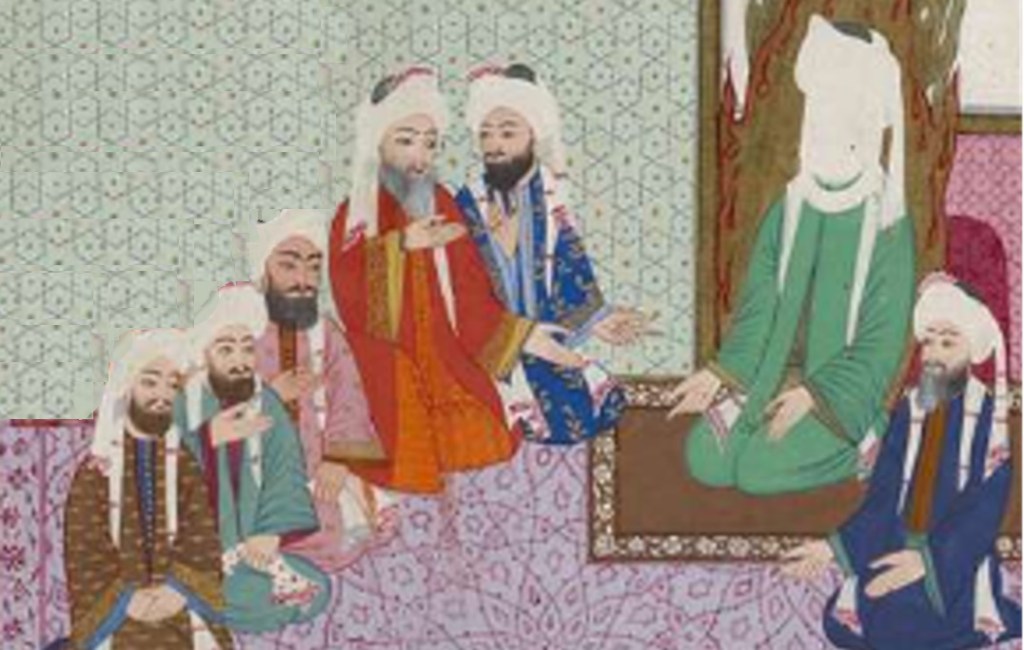
ムハンマドがアーミル・イブン・サウサア族の指導者らとイスラム教について語っている場面
Muhammad discusses Islam with Leaders of Banî Sa’sa’ah Tribe
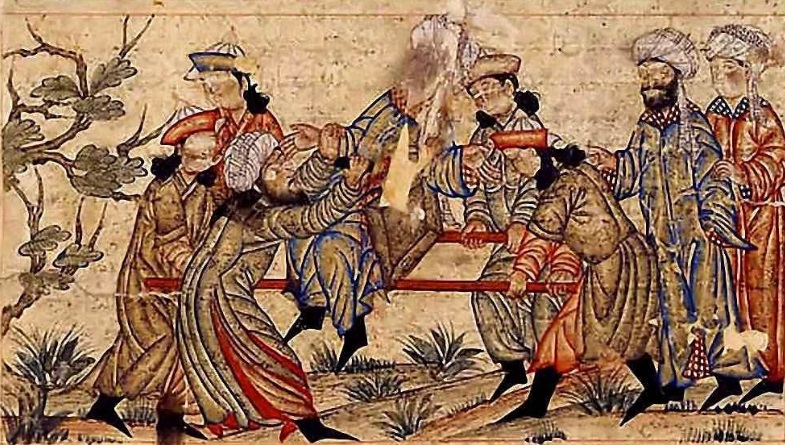
9世紀および10世紀になると、アーミル族(‘Amir Tribe)の一部が南ナジュド(Najd) から東アラビア、イラクおよびシリアへ移動を始めました。ハサー(Hasa) (حسا)への移住は、アッバース朝(Abbasid Caliphate)支配が崩壊し始めた9世紀の後半にそこでのカルマト派(Qarmat) (قرمط)(カラーミタ派(Qaramita) (قرامطة))出現と同時であり、アーミル族(‘Amir Tribe)は、カルマト派(Qarmat)の覇権がアラビア半島の多くの場所やそれ以上に急速に拡大するのに貢献しました。アーミル族(‘Amir Tribe)は、この征服の機会を利用して南ナジュド(Najd) 地域からシリアおよびイラクの国境に支配を確立しました。
In 9th and 10th centuries, parts of ‘Amir Tribe’ began to migrate from Najd to Eastern Arabia, Iraq and Syria. Migration to Hasa (حسا) coincided with emergence of Qarmat (قرمط) there in second half of 9th century, when Abbasid Caliphate rule began to crumble. ‘Amir Tribe contributed to rapid expansion of Qarmat’s hegemony to many places in Arabian Peninsula and beyond. ‘Amir Tribe’ took advantage of this conquest opportunity to establish control from Southern Najd to the borders of Syria and Iraq.
11世紀にカルマト派(Qarmat)が衰退し、アブドゥルカイス族(Abd al-Qays Tribe) が樹立したウユーニード朝(Uyunid dynasty)(1073~1253 AD) (لأسرة العيونية)に打ち破れた後もアーミル族(‘Amir Tribe) は、その支配を奪われませんでした。アーミル族(‘Amir Tribe) の同盟が13世紀には東アラビアばかりでは無く、ヤマーマ(Yamamah) (يمامة)でも台頭しました。アーミル族(‘Amir Tribe) 一門のバヌー・ウカイル族(Banu Uqayl Tribe) (بنو عقيل)が同族のバヌー・キラーブ族(Banu Kilab Tribe)からヤマーマ(Yamamah)の支配権を引き継ぎました。(バヌー・ウカイル族は、バヌー・キラーブ族(بنو كلاب) の兄弟部族バヌー・カアブ族 (بنو كعب) の支族です)。一方、ウユーニード朝(Uyunid dynasty)は、1253年にウスフーリー朝(Usfurids) (1253~1320) (الدولة العصفورية)に打倒され、支配を奪われました。そのウスフーリー朝(Usfurids)もジャルワーン朝(Jarwanid dynasty) (1310~1417) (الجروانيون)に敗れて、1320年に支配を奪われました。(「中世の東アラビア王朝」参照)
Even after decline of Qarmat in 11th century, and its defeat to Uyunid Dynasty (1073~1253 AD) (لأسرة العيونية) which was founded by Abd al-Qays Tribe, ‘Amir Tribe did not lose its control. In 13th century, alliance of ‘Amir Tribe’ emerged not only in Eastern Arabia but also in Yamamah (يمامة). Banu Uqayl Tribe (بنو عقيل) of ‘Amir Tribe took over control of Yamamah from Banu Kilab Tribe. (Banu Uqayl Tribe is a branch of Banu Kaab Tribe (بنو كعب) which is a brother tribe of Banu Kilab Tribe (بنو كلاب)). On other hand, Uyunid Dynasty was overthrown and deprived of control by Usfurids (1253~1320) (الدولة العصفورية) in 1253. Usfurids were also defeated by Jarwanid Dynasty (1310~1417) (الجروانيون) and lost control in 1320. (Refer to “Medieval Eastern Arabian Dynasty”.)
14世紀と15世紀の涸れ谷ハニーファ(Wadi Hanifa) (وادي حنيفة)とハルジュ(Kharj) (خرج)は、アーミル族(‘Amir Tribe) から続くハサー(Hasa) (حسا)の為政者に支配されていました。15世紀半ばにはアーミル族(‘Amir Tribe) 一門のバヌー・ウカイル族(Banu Uqayl Tribe)のジャブリー朝(Jabrids Emirate) (1417~1524) (الإمارة الجبرية)がジャルワーン朝(Jarwanid dynasty)を打倒して、支配を受け継ぎました。(「詳細は、「中世の東アラビア王朝」を参照して下さい。)ジャブリー朝(Jabrids Emirate)は、殆どハルジュ(Kharj)周辺のムガイラ族(Al Mughirah Tribe) (المغيرة)、ダワースィル族(Dawasir Tribe) (دواسر)、ファドル族(Fadl Tribe) (فضل)、アイド族(Aidh Tribe) (الأيض)およびスバイウ族(Subai Tribe or Subay Tribe) (سبيع)族等の遊牧民に向けて戦闘を行い、アーミル族(‘Amir Tribe) 一門の放牧地を新たらしく入って来た部族から守り、隊商路、巡礼路の安全を保障しました。
In 14th and 15th centuries Wadi Hanifa (وادي حنيفة) and Kharj (خرج) were controlled by Hasa’s ruler that followed from ‘Amir Tribe. In middle of 15th century, Jabrids Emirate (1417~1524) (الإمارة الجبرية) of Banu Uqayl Tribe (الإمارة الجبرية) overthrew Jarwanid Dynasty and took over rule. (Banu Uqayl Tribe belongs to ‘Amir Tribe.) (For more information, see “Eastern Arabian Dynasties in the Middle Ages.”) Jabrids Emirate fought against nomads such as Al Mughirah Tribe (المغيرة), Dawasir Tribe (دواسر), Fadl Tribe (فضل), Aidh Tribe (الأيض) and Subai Tribe (Subay Tribe) (سبيع) around Kharj. Thus, it protected grazing land of ‘Amir Tribe families from the new arriving tribes, and ensured the safety of caravan and pilgrimage routes.
カルマト派(Qarmatians)
C.3.1.b.1.1 キラーブ族
C.3.1.b.1.1 Kilab tribe
キラーブ族(Kilab Tribe) (كلاب)は、バヌー・キラーブ族(Banu Kilab Tribe) (بنو كلاب)とも呼ばれます。バヌー・キラーブ族(Banu Kilab Tribe)は、西ナジュド(Western Najd) (نجد الغربية) に住んでいたベドウイン部族(BedouinTribe)であり、イスラーム(Islam)以前は、バヌー・アーミル族同盟(Banu ‘Amir Confederation) (تحاد بنو عامر)を率いていました。他のアーミル族(‘Amir Tribe)と同様にバヌー・キラーブ族(Banu Kilab Tribe)は、東アラビアのカルマト派(Qarmat) (قرمط)派運動と同盟していました。カルマト派(Qarmat)が終焉した後は、中央アラビアの覇権を握りました。やがてこの部族は、北のシリアへ移住し、一時的にミルダーシード朝(Mirdasid dynasty) (1024~1080) (مرداسيون)を樹立しましたが、マムルーク朝(Mamluk Sultanate) (1250~1517) (الدولة المملوكية)の時代にこの部族は、現住民の中に埋没してしまいました。
Kilab Tribe (كلاب) is also known as Banu Kilab Tribe (بنو كلاب). Banu Kilab Tribe was a Bedouin Tribe who lived in Western Najd and led Banu ‘Amir Confederation (تحاد بنو عامر) before Islam. Like other ‘Amir Tribes, Banu Kilab Tribe was allied with Qarmat (قرمط) faction movement in Eastern Arabia. After the demise of Qarmat, it assumed hegemony of Central Arabia. Eventually, this tribe migrated north to Syria and temporarily established Mirdasid Dynasty (1024~1080) (مرداسيون), but during rule of Mamluk Sultanate (1250~1517) (الدولة المملوكية), this tribe was buried among native population.
C.3.1.b.1.2 ヌマイル族
C.3.1.b.1.2 Numayr tribe
ヌマイル族(Numayr Tribe) (نمير)は、バヌー・ヌマイル族(Banu Numayr Tribe) (بنو نمير)とも呼ばれます。バヌー・ヌマイル族(Banu Numayr Tribe)は、ヤマーマ(Yamamah) (يمامة)の西境住んでいて、そのほとんどがベドウイン部族(Bedouin Tribe)であり、ウマイヤ朝(Umayyad Caliphate)を支持していました。9世紀にはアッバース朝(Abbasid Caliphate)がヤマーマ(Yamamah)でバヌー・ヌマイル族(Banu Numayr Tribe)掃討作戦を展開したのでイラクのユーフラテス川(Euphrates river) (نهر الفرات)岸に向けてヤマーマ(Yamamah)を後にしました。
Numayr Tribe (نمير) is also known as Banu Numayr Tribe (بنو نمير). Banu Numayr Tribe lived on western border of Yamamah (يمامة), most of whom were Bedouin Tribe, who supported Umayyad Caliphate. In 9th century, Abbasid Caliphate carried out a campaign to wipe out Banu Numayr Tribe in Yamamah. So, it left Yamamah for banks of Euphrates River (نهر الفرات) in Iraq.

ユーフラテス川(Euphrates river
C.3.1.b.1.3 バヌー・カアブ族
C.3.1.b.1.3 Banu Ka’b tribe or Banu Kaab tribe
バヌー・カアブ族(Banu Ka’b Tribe or Banu Kaab Tribe) (بنو كعب)は、アーミル族(‘Amir Tribe) でもっと大きい一門であり、バヌー・ウカイル族(Banu Uqayl Tribe) (بنو عقيل)、バヌー・ジャアダ族(Banu Ja’dah Tribe) (نو جعدة)、バヌー・クシャイル族(Banu Qushayr Tribe) (نو قشير)およびハーリシュ族(Al-Harish Tribe) (الهريش)の4族に分かれていました。
Banu Ka’b Tribe (Banu Kaab Tribe) (بنو كعب) is a larger branch of ‘Amir Tribe, and branches to 4 Sub-Tribes. They are Banu Uqayl Tribe (بنو عقيل), Banu Ja’dah Tribe (نو جعدة), Banu Qushayr Tribe (نو قشير) and Al-Harish Tribe (الهريش).
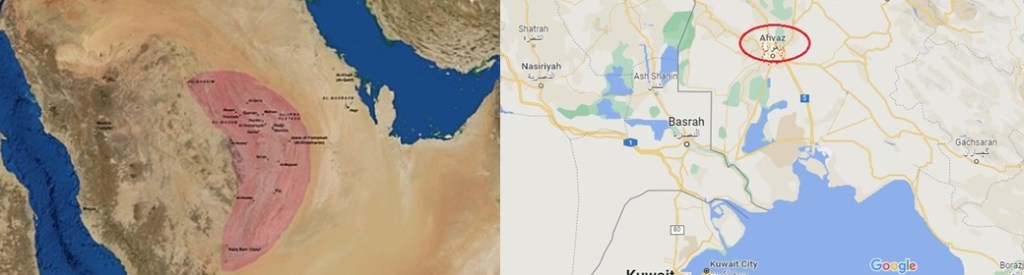
4族ともヤマーマ(Yamamah) (يمامة)の南部の出身で遊牧のベドウイン(Bedouin)部門と定住の農業部門を含んでいました。4族のそれぞれについては以下に述べてありますが、バヌー・カアブ族(Banu Ka’b Tribe or Banu Kaab Tribe)の他の部門は、後にヤマーマ(Yamamah)とナジュド(Najd) を離れてアラビア湾の両岸に沿って定住しました。これらの部族は、バニー・カアブ族(Bani Ka’b Tribe or Bani Kaab Tribe)と呼ばれ、そのほとんどは、イランのアフヴァーズ(Ahwaz) (أهواز)地方に住んでいます。(D.3.6.a参照)
All four tribes hailed from Southern Yamamah and they included a nomadic Bedouin division and a settled agricultural sector. Each of four tribes is described below. Other divisions of Banu Kaab Tribe later left Yamamah and Najd and then settled along both shores of Arabian Gulf. These tribes are called Bani Ka’b Tribe (Bani Kaab Tribe) and most of them live in Ahwaz (أهواز) region of Iran. (See D.3.6.a)
ヤマーマとアフヴァーズ(Yamamah and Ahwaz)
C.3.1.b.1.3.1 バヌー・ウカイル族
C.3.1.b.1.3.1 Banu Uqayl tribe
バヌー・ウカイル族(Banu Uqayl Tribe) (بنو عقيل)は、古代のアラブ族で東アラビアとイラクの歴史上で重要な役割を演じました。この部族は、バヌー・アーミル族同盟(Banu ‘Amir Confederation) (تحاد بنو عامر)のバヌー・カアブ族(Banu Ka’b Tribe or Banu Kaab Tribe) (بنو كعب)に属する4族では特に大きく勢力がありました。
Banu Uqayl Tribe (بنو عقيل) was an ancient Arab tribe who played an important role in history of Eastern Arabia and Iraq. This tribe was particularly powerful among four tribes belonging to Banu Ka’b Tribe (Banu Kaab Tribe) (بنو كعب) of Banu ‘Amir Confederation (تحاد بنو عامر).
バヌー・ウカイル族(Banu Uqayl Tribe)は、バヌー・アーミル族同盟(Banu ‘Amir Confederation)の出身地であるヒジャーズ(Hijaz) (حجاز)とナジュド(Najd) (نجد)の境の西アラビアから南に移動して涸れ谷アキーク(Wadi al Aqiq) (وادي العقيق)に定住しました。後にバヌー・ウカイル族(Banu Uqayl Tribe)は、預言者ムハンマド(Prophet Muhammad) (محمد رسول الله)によってその領有を保証されました(現在、涸れ谷アキーク(Wadi al Aqiq)は、涸れ谷ダワースィル(Wadi al Dawasir) (وادي الدواسر)と呼ばれています)。
Banu Uqayl Tribe moved south from Western Arabia on border between Hijaz (حجاز) and Najd (نجد), where is birthplace of Banu ‘Amir Confederation, and settled in Wadi al Aqiq (وادي العقيق). Later, Banu Uqayl Tribe was secured its possession by Prophet Muhammad (محمد رسول الله) (Now Wadi al Aqiq is called as Wadi al Dawasir (وادي الدواسر).
アッバース朝(Abbasid Caliphate)の治世の間にバヌー・アーミル族(Banu ‘Amir Tribe)の多くは、ナジュド(Najd) からイラクやシリアに移住しました。バヌー・ウカイル族(Banu Uqayl Tribe)は、バヌー・アーミル族(Banu ‘Amir Tribe)の中では最後(西暦11~12世紀頃)にナジュド(Najd) を離れました。北部イラクのユーフラテス(Euphrates river) (نهر الفرات) 川岸に移住してモスル(Mosul) (الموصل)にシーア派(Shia Islam) (الإسلام الشيعي)のウカイル朝(Uqaylid dynasty) (990~1096) (العقيليون)を樹立しました。バヌー・ウカイル族(Banu Uqayl Tribe)は、モスル(Mosul)や北メソポタミア(Upper Mesopotamia) (بلاد ما بين النهرين العليا)の他の地域を支配しましたが、多くは、遊牧民のままでした。
During reign of Abbasid Caliphate, many of Banu ‘Amir Tribes migrated from Najd to Iraq and Syria. Banu Uqayl Tribe was last of Banu ‘Amir Tribes to leave Najd in c.11~12th century AD. Migrated to banks of Euphrates River (نهر الفرات) in Northern Iraq and moved to Mosul (الموصل) and established Uqaylid Dynasty (990~1096) (العقيليون) of Shia Islam (الإسلام الشيعي). Banu Uqayl Tribe ruled Mosul and other parts of Northern Mesopotamia (بلاد ما بين النهرين العليا), but many of its members remained nomadic.

上部メソポタミアは、北東からクルディスタン高地、北北西はトゥールース山脈、南はシリア砂漠に接していることを示す歴史地図(1923年)
Historical Atlas (1923) showing Upper Mesopotamia is bordered from northeast by Kurdistan Highlands, north-northwest by Taurus mountains and south by Syrian desert
ウカイル朝(Uqaylid dynasty)が倒されると、バヌー・ウカイル族(Banu Uqayl Tribe)は、ハファージャ族(Khafajah Tribe) (خفاجة)、ウバーダ族(‘Ubadah Tribe) (عبادة)およびムンタフィク族(Muntafiq Tribe) (منتفق)を含む幾つかの部族に分かれました(D.3.6.a1.1~3参照)。これらの一門は、南イラクに定住して今でもそこに住んでいます。
When Uqaylid Dynasty was overthrown, Banu Uqayl Tribe branched into several tribes, including Khafajah Tribe (خفاجة), ‘Ubadah Tribe (عبادة), and Muntafiq Tribe (منتفق) (see D.3.6.a1.1~3). These tribes settled in Southern Iraq and still live there.
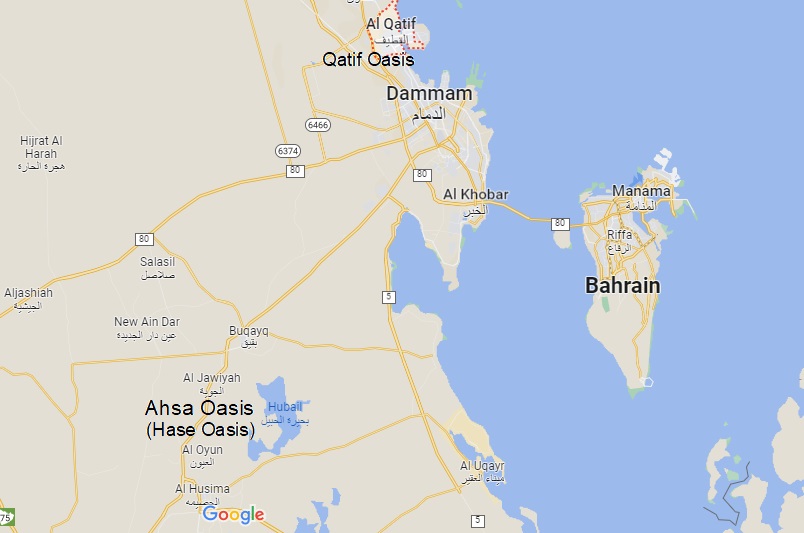
一部は、イラクから再移住して来てハサー・オアシス(Ahsa Oasis) (واحة الأحساء)周辺の東アラビアの沙漠を奪いました。ハサー・オアシス周辺に定住したバヌー・ウカイル族(Banu Uqayl Tribe)の一部は、その後にバハレイン(Bahrain) (بحرين)を含めて東アラビアを支配したアラブ部族王朝ウスフーリー朝(Usfurids) (1253~1320) (الدولة العصفورية)を樹立しました。
Some of them re-migrated from Iraq and seized desert around Ahsa Oasis (واحة الأحساء) of Eastern Arabia. Some of Banu Uqayl Tribe, who settled around Hasa Oasis (Ahsa Oasis), subsequently established Arab Tribal Dynasty Usfurids (1253~1320) (الدولة العصفورية) that ruled Eastern Arabia including Bahrain (بحرين).
カティーフ(Qatif) (قطيف)に根拠を置き、ウスフーリー朝(Usfurids)を打ち破って、一部受け継いだジャルワーン朝(Jarwanid dynasty) (1310~1417) (الجروانيون)もバヌー・ウカイル族(Banu Uqayl Tribe)に帰属するとの説があります(但し、バヌー・クダーア族(Banu Quda’a)やアブドゥルカイス族(Abd al-Qays Tribe)に属するという説もあり、これは定説ではありません。「詳細は、「中世の東アラビア王朝」を参照して下さい。)。ジャルワーン朝(Jarwanid dynasty)は、15世紀末まで続き、バヌー・ウカイル族(Banu Uqayl Tribe)ベトウィン(Bedouin)一門のジャブリー朝(Jabrids Emirate) (1417~1524) (الإمارة الجبرية)によって終焉させられました。(D.3.6.a.1参照
Jarwanid Dynasty (1310~1417) (الجروانيون), which was based on Qatif (قطيف), defeated Usfurids, and partly inherited it. There is a theory that Jarwanid Dynasty belongs to Banu Uqayl Tribe, however this is not a definite theory because there is also an another theory that it belongs to Banu Quda’a or Abd al-Qays Tribe. For more information, see “Eastern Arabian Dynasties in Middle Ages”). Jarwanid Dynasty lasted until end of 15th century, when it was brought to an end by Jabrids Emirate (1417~1524) (الإمارة الجبرية) of Bedouin clan belonging to Banu Uqayl Tribe. (See D.3.6.a.1)
カティーフとハサー・オアシス(Qatif Oasis and Ahsa Oasis)
C.3.1.b.1.3.2 バヌー・ジャアダ族
C.3.1.b.1.3.2 Banu Ja’dah tribe
バヌー・ジャアダ族(Banu Ja’dah tribe) (قبيلة نو جعدة)は、バヌー・カアブ族(Banu Ka’b tribe) (قبيلة بنو كعب)の4つの分族の一つであり、他の支族同様にヤマーマ(Al-Yamamah) (اليمامة)、特にその地区の南部地域に居住し、ベドウィン(Bedouin) (بدو)の牧畜民と定住農耕民の両方が含まれていました。
Banu Ja’dah tribe (قبيلة نو جعدة) is one of four branches of Banu Ka’b tribe (قبيلة بنو كعب), and like other branches, it inhabited Al-Yamamah ( اليمامة), especially in its southern regions and it included both Bedouin (بدو) pastoralists and sedentary farmers.
C.3.1.b.1.3.3 バヌー・クシャイル族
C.3.1.b.1.3.3 Banu Qushayr tribe
バヌー・クシャイル族(Banu Qushayr tribe) (قبيلة نو قشير)は、バヌー・カアブ族(Banu Ka’b tribe) (قبيلة بنو كعب)の4つの分族の一つであり、歴史的にアラビア半島中央部に居住し、後にイラク(Iraq) (عراق)のホラーサーン(Khorasan) (خراسان)、上メソポタミア(Upper Mesopotamia) (شمال بلاد ما بين النهرين)に広がりました。
Qushayr tribe (قبيلة نو قشير) was one of the four branches of Banu Ka’b tribe (قبيلة بنو كعب), historically inhabiting central Arabian Peninsula and later Khorasan (خراسان) and Upper Mesopotamia (شمال بلاد ما بين النهرين).
アラブの系譜ではバヌー・カアブ族(Banu Ka’b tribe) (قبيلة بنو كعب)は、ムダル・アドナーン部族(Mudar-Adnan Arabs) (مضر-عدنانية العرب)に属するカイス族 (Qais tribe) (قبيلة قيس)のアーミル族(‘Amir tribe) (قبيلة عامرية)の支族です。イスラーム以前の時代(pre-Islamic era) (عصر ما قبل الإسلام)には、バヌー・クシャイル族(Banu Qushayr tribe)は、親部族であるアーミル族(‘Amir tribe)に所属し、ヤマーマ(Al-Yamamah) (اليمامة)地域に居住していました。
In Arab genealogy, Banu Ka’b tribe (قبيلة بنو كعب) is a branch of ‘Amir tribe (قبيلة عامرة) of Qais tribe (قبيلة قيس), which belongs to Mudar-Adnan Arabs (مضر-عدنانة العرب). Pre-Islamic era (عصر ما قبل الإسلام), Banu Qushayr tribe belonged to parent tribe, ‘Amir tribe, and inhabited Al-Yamamah (اليمامة) region.
彼らは、アーミル族(‘Amir tribe)の宿敵部族、特にバヌー・タミーム族(Banu Tamim tribe) (قبيلة بنو تميم)とバヌー・シャイバーン一門(Banu Shayban clan) (عشيرة بنو شيبان)との間のすべての戦争に関与していました。早期イスラームの征服(Early Muslim Conquests) (622~750) (فتوحات إسلامية)のおけるシリアとメソポタミアの征服(Muslim Conquest of Syria and Mesopotamia) (فتوحات إسلامي لسوريا وبلاد الرافدين)の際、バヌー・クシャイル族(Banu Qushayr tribe)は、参加しましたが、目立った役割を果たしませんでした。
They were involved in all wars between nemesis tribes of ‘Amir tribe, especially Banu Tamim tribe (قبيلة بنو تميم) and Banu Shayban clan (عشيرة بنو شيبان). Banu Qushayr tribe participated Muslim Conquest of Syria and Mesopotamia (فتوحات إسلامي لسوريا وبلاد الرافدين) of Early Muslim Conquests (622~750) (فتوحات إسلامية), but did not play a prominent role.
征服後、彼らは主にホラーサーン(Khorasan)などのカリフ制の東部地方(Eastern region of Caliphate) (المنطقة الشرقية من الخلافة)に定住しました。ウマイヤ朝時代(Umayyad period) (661~750) (العصر الأموي)の間、彼らはその州で大きな数と権力を維持し、多くの総督は、バヌー・クシャイル族(Banu Qushayr tribe)の支配者家族サラマ・アール・ハイル家(Salama al-Khayr family) (عائلة سلامة ال خير)の出身でした。
After Conquest, they mainly settled in eastern region of Caliphate (المنطقة الشرقية من الخلافة), such as Khorasan. During the Umayyad period (661~750) (العصر الأموي), they maintained large numbers and power in state, and many governors were appointed from Salama al-Khayr family (عائلة سلامة ال خير) that is ruling family of Banu Qushayr tribe.
C.3.1.b.1.3.4 ハーリシュ族
C.3.1.b.1.3.4 Al-Harish tribe
ハーリシュ族(Al-Harish tribe) (قبيلة الهريش)は、バヌー・カアブ族(Banu Ka’b tribe) (قبيلة بنو كعب)の4つの分族の一つであり、他の支族同様にヤマーマ(Al-Yamamah) (اليمامة)、特にその地区の南部地域に居住し、ベドウィン(Bedouin) (بدو)の牧畜民と定住農耕民の両方が含まれていました。
Al-Harish tribe (قبيلة الهريش) is one of four branches of Banu Ka’b tribe (قبيلة بنو كعب), and like other branches, it inhabited Al-Yamamah (اليمامة), especially in its southern regions and it included both Bedouin (بدو) pastoralists and sedentary farmers.
C.3.1.b.1.4 バヌー・ヒラール族
C.3.1.b.1.4 Banu Hilal or Bani Hilal
バヌー・ヒラール一門(Banu Hilal Clan) (بنو هلال)は、アドナーン・アラブ族(Adnan Arabs) (العرب العدنانية)ムダル族(Mudar Tribe)(مضر)の支族のカイス族 (Qays Tribe) (قيس) の支族のハワージン族(Hawazin Tribe) (هوازن) の分かれのバヌー・アーミル族(Banu ‘Amir Tribe) (بنو عامر)の一門で、バヌー・アーミル族(Banu ‘Amir Tribe) (بنو عامر)では叙情詩にうたわれた一番有名な一門です。アラビア半島(Arabian Peninsula)のヒジャーズ(Hijaz)およびナジュド(Najd) 出身のベドウイン(Bedouin)部族でした。
Banu Hilal Clan (بنو هلال) is a branch of Banu ‘Amir Tribe (بنو عامر) of Hawazin Tribe (هوازن) appertaining to Qays Tribe (قيس) belonging to Mudar Tribe(مضر) of Adnan Arabs (العرب العدنانية). It is the most famous clan among Banu ‘Amir Tribe as it was sung in lyrics. Banu Hilal Clan was a Bedouin tribe from Hijaz and Najad in Arabian Peninsula.
カルマト派(Qarmat) (قرمط)のアッバース朝(Abbasid Caliphate) (750~1258) (الخلافة العباسية)対する反乱に加わった後にエジプトの沙漠に移住しました。さらに東リビア砂漠に移住していた同じアドナーン・アラブ族(Adnan Arabs) (العرب العدنانية)ムダル族(Mudar Tribe) (مضر)の支族カイス族(Qais Tribe)の一門バヌー・スライム族(Banu Sulaym Tribe) (بنو سليم)に従ってチュニジアのメディナ(Madinah) に定住しました。両部族は、時折アルジェリアを襲撃し、ベルベル人(Berbers) (بربر)イスラーム王朝(Islamic dynasty) (السلالة الإسلامية)ハンマード朝(Hammadid Dynasty) (1014~1152) (حماديون)をムシーラ(M’Sla) (مسيلة)からベジャイア(Bejaija) (بجاية)へ追い出しました。この歴史物語は、アルジェリア、チニジアやエジプトでは叙情詩として語られています。
This tribe migrated to Egyptian desert after joining Qarmatian (قرمط) rebellion against Abbasid Caliphate (750~1258) (الخلافة العباسية). In addition, it migrated to Eastern Libyan desert and settled in Madinah in Tunisia, following Banu Sulaym Tribe (بنو سليم), a branch of Qais Tribe (قيس) belonging to Mudar Tribe (مضر) of Adnan Arabs (العرب العدنانية). Both tribes occasionally raided Algeria, and banished Hammadid Dynasty (1014~1152) (حماديون) of Berbers (بربر) from M’Sla (مسيلة) to Bejaija (بجاية). (It is a Islamic dynasty (السلالة الإسلامية). This historical tale is told as a lyric poem in Algeria, Tunisia and Egypt.
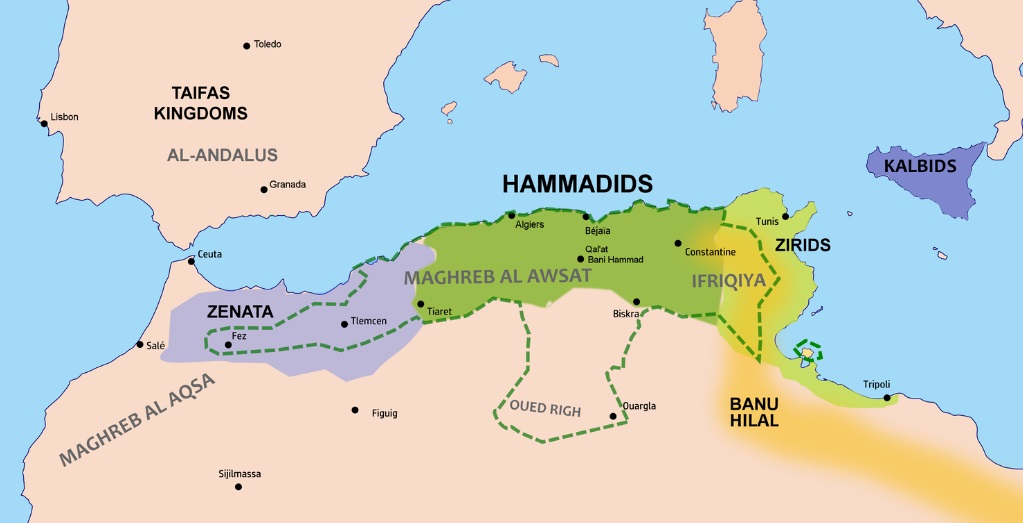
1050年頃のハンマード朝の領土(緑色)と、特定の時期に支配された拡張領土(点線)
Hammadid territory circa 1050 (in green), and extended territories (dotted line) controlled in certain periods
バヌー・ヒラール族(Banu Hilal Clan)は、この他に11世紀にファーティマ朝(Fatimid Caliphate) (909-1171) (الدولة الفاطمية)によってシーア派(Shia Islam) (الإسلام الشيعي)を遺棄したベルベル人(Berbers)のイスラーム王朝(Islamic dynasty)であるズィール朝(Zirid Dynasty) (972~1148) (زيريون)を懲らしめるために上エジプトから北アフリカに移住させられました。
Banu Hilal Clan (بنو هلال) was relocated from Upper Egypt to North Africa in 11th century by Fatimid Caliphate (909-1171) (الدولة الفاطمية) intending for Banu Hilal Clan to punish Zirid Dynasty (972~1148) (زيريون), an Islamic dynasty of the Berbers who had abandoned Shia Islam (الإسلام الشيعي).
バヌー・ヒラール族(Banu Hilal Clan)は、速やかにズィール朝(Zirid Dynasty)を打ち破り、隣のハンマード朝(Hammadid Dynasty) (1014~1152) (حماديون)に深刻な打撃を与えたとの説もあります。この部族の移住は、マグリブ地方の言語、文化、人種のアラブ化の大きな要因となり、以前はほとんど農地として利用されていた地方に遊牧がひろがりました(バヌー・ヒラール族(Banu Hilal Clan)によって沙漠化されたとの説もあります)。
Banu Hilal Clan quickly defeated Zirid Dynasty. And there is a saying that it caused a serious blow to the neighboring Hammadid Dynasty (1014~1152) (حماديون). This tribal migration was a major factor in Arabization of the language, culture, and race of Maghreb, and the spread of nomadism to the areas previously used mostly for agricultural land. Some say that these areas were desertified by Banu Hilal Clan.
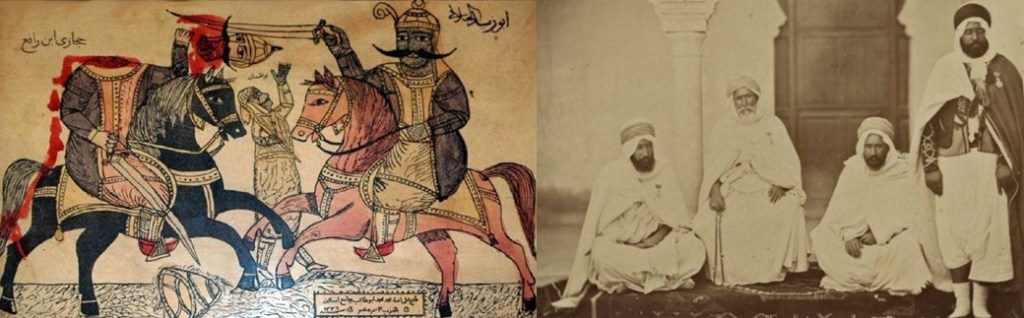
アブー・ザイドがヒジャーズ・ビン・ラーファを斬首
Abu Zeyd beheads Hijazi bin Rafa(أبو زيد يقطع رأس حجازي بن رافع)
1856年頃のマスカラ(Mascara) (معسكر)でバヌー・ヒラール一門の司令官兼アミール
Commander and Amir of Banu Hilal in Mascara circa 1856
C.3.1.b.1.5 スバイウ族
C.3.1.b.1.5 Subai tribe or Subay tribe
スバイウ族(Subai tribe or Subay tribe) (سبيع)は、スンニー派(Sunni Islam) (لإسلام السني)で北アラビア系譜アドナーン・アラブ族(Adnan Arabs) (العرب العدنانية)ムダル族(Mudar tribe) (مضر)から分かれたカイス族(Qais Tribe) (قيس)(カイス・アイラーン族(Qays ‘Aylan tribe) (قيس عيلان))のハワージン族(Hawazin tribe) (هوازن)に属し、中世にナジュド(Najd) (نجد)で覇権を握っていたアーミル・イブン・サウサア族(‘Amir ibn Sa’sa’ah tribe) (عامر بن صعصعة)として知られる古代の大部族バヌー・ アーミル族(Banu ‘Amil tribe) (بنو عامر)の一門です。
Subay tribe (Subai tribe) (سبيع) was a branch of Amir ibn Sa’sa’ah tribe (عامر بن صعصعة) (Banu ‘Amil tribe (بنو عامر)) appertaining to Hawazin tribe (هوازن) of Qays ‘Aylan tribe (قيس عيلان) (Qays tribe (قيس)) belonging to Mudar tribe (مضر) of Adnan Arabs (العرب العدنانية). Subay tribe (Subai tribe) (سبيع) adhered to Sunni Islam (لإسلام السني). Its parent tribe, Banu ‘Amil tribe, was an ancient great tribe known as ‘Amir ibn Sa’sa’ah tribe (عامر بن صعصععة), which was hegemonic ruler of Najd (نجد) in Middle Ages.
この部族は、ナジュド(Najd) の中央部および西部に居所を定め多くは、遊牧民であり、20世紀になっても遊牧民と定住民から構成されていました。もともとの遊牧地は、ナジュド(Najd) とアシール(Asir) (عسير)の境のランヤ(Ranyah) (رنية)やフルマ(Khurmah) (الخرمة)でしたが、リヤード周辺の中央ナジュド(Najd) までも遊牧して来ており、さらに北に向かいルマーフ(Rumah) (رماح)の町を創設した者達もいますし、クウェイトに移住した者達もいます。定住した部族は、数世紀にわたりほとんどナジュド(Najd) に住んでおり、ナジュド(Najd) のどの町でも不釣合いな割合で見受けられます。定住した者達は、スバイウ族(Subai tribe or Subay tribe) (سبيع)と云う部族名を使っています。
This tribe settled in Central and Western Najd, and was mostly nomadic, and remained partly nomadic and partly settled even in 20th century.
Original nomadic lands were Ranyah (رنية) and Khurmah (الخرمة) on border between Najd and Asir (عسير), but they also came to Central Najd around Riyadh, and some founded town of Rumah (رماح) further north. And some of them have emigrated to Kuwait. Settled tribes have mostly lived in Najd for several centuries, and are found in disproportionate proportions in every town of Najd. Its settlers use its tribal name Subai (Subay) (سبيع).
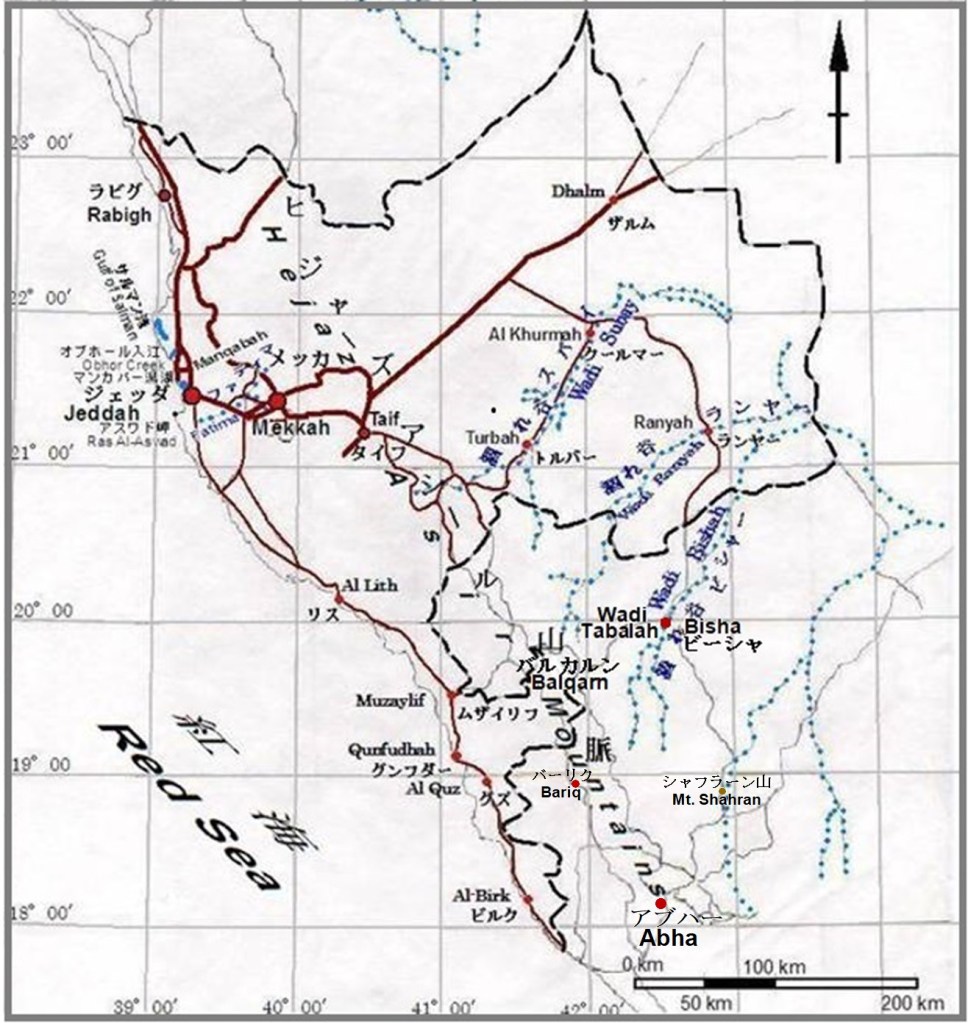
ランヤtとフルマ(Ranyah and Khurmah)
C.3.1.c バヌー・スライム族
C.3.1.c Banu Sulaym Tribe
バヌー・スライム族(Banu Sulaym Tribe) (بنو سليم)は、バニー・スライム・ビン・マンスール族(Bani Sulaim bin Mansoor Tribe) (بني سليم بن منصور)とも呼ばれ、バヌー・ガタファーン族(Banu Ghatafan Tribe) (بنو غطفان)およびハワージン族(Hawazin Tribe) (هوازن)と共にムダル・アドナーン部族(Mudar-Adnan Arabs) (مضر-عدنانية العرب)に属するカイス・アイラーン族(Qays ‘Aylan Tribe) (قيس عيلان)の主要3支族の1つです。
Banu Sulaym Tribe (بنو سليم) is also called as Bani Sulaim bin Mansoor Tribe (بني سليم بن منصور) and one of three main branches of Qays ‘Aylan Tribe (قيس عيلان) belonging to Mudar-Adnan Arabs (مضر-عدنانية العرب). Other two are Banu Ghatafan Tribe (بنو غطفان) and Hawazin Tribe (هوازن).
同族と共に塹壕の戦い(Battle of Trench) (627) (غزوة الخندق)で敗れた後にイスラーム(Islam) (إسلام)に改宗しました。フナインの戦い(Battle of Hunayn) (630) (غزوة حنين)ではバヌー・ヒラール族(Banu Hilal Clan) (بنو هلال)やハワージン族(Hawazin Tribe) (هوازن)を打ち負かせました。11世紀にはバヌー・ヒラール族(Banu Hilal Clan)に次いで北アフリカに移住しました(C.3.1.b.1.4. バヌー・ヒラール族(Banu Hilal Clan)参照)。
Banu Sulaym Tribe and its kin tribes were defeated in Battle of Trench (627) (غزوة الخندق) and then they converted to Islam (إسلام). In Battle of Hunayn (630) (غزوة حنين), it defeated Banu Hilal Clan (بنو هلال) and Hawazin Tribe (هوازن). In 11th century, it migrated to North Africa following to Banu Hilal Clan (see C.3.1.b.1.4. Banu Hilal Clan).
筆者は、これまでバヌー・スライム族(Banu Sulaym) (بنو سليم)とバニー・スライム・ビン・マンスール族(Bani Sulaim bin Mansoor) (بني سليم بن منصور)は、別々に考えていましたが、今回、次の様にバヌー・スライム族(Banu Sulaym)の系譜を入手でき、この両族は、同一であるとの結論を得ました。この為、この両族に関しては、バヌー・スライム族(Banu Sulaym)に統合致しました。
Writer has considered Banu Sulaym (بنو سليم) and Bani Sulaim bin Mansoor (بني سليم بن منصور) separately until now. However, this time, Writer was able to obtain genealogy of Banu Sulaym tribe as follows, and Writer came to conclusion that these two tribes are one same tribe. For this reason, these two tribes have been merged into Banu Sulaym tribe in this web site.
Quote
نسب قبيلة بني سليم
تنسب إلى سُليم بن منصور بن عكرمة بن خصفة بن قيس عيلان بن مضر بن نزار بن معد بن عدنان من ذرية إسماعيل بن إبراهيم.
“Lineage of Banu Sulaym tribe
It is attributed to Salim bin Mansour bin Ikrimah bin Khasfa bin Qais Aylan bin Mudar bin Nizar bin Maad bin Adnan, from the descendants of Ismail bin Ibrahim.”
「バヌー・スライム族の系譜
これは、イスマイル・ビン・イブラヒムの子孫のうち、サリム・ビン・マンスール・ビン・イクリマ・ビン・カスファ・ビン・カイス・アイラン・ビン・ムダル・ビン・ニザール・ビン・マード・ビン・アドナンと考えられている。」
Unquote
「バヌー・スライム族(Banu Sulaym tribe) (قبيلة بنو سليم)には、イムル・アル=カイス族(Imru’ al-Qays tribe)、ハリス族(Harith tribe) およびタラバ 族 (Tha’laba tribe)の三つの分族があり、イムル・アル=カイス族(Imru’ al-Qays tribe)の支族にカファーフ一門(Khafaf clan) (عشيرة خفاف)が含まれる。」との説がありますが、カファーフ一門(Khafaf clan)を除くといずれもアラビアの個人名ですが、部族として詳細は不詳なので、ここでは系譜に関する資料の明確なカファーフ一門(Khafaf clan)だけをバヌー・スライム族(Banu Sulaym tribe)の支族として紹介するに留めています。
There is a theory that Banu Sulaym tribe (قبيلة بنو سليم) includes three sub-tribes which are Imru’ al-Qays tribe, Harith tribe and Tha’laba tribe, and then Khafaf clan (عشيرة خفاف) is a branch of Imru’ al-Qays tribe .” However, except for Khafaf clan, all of them are individual names of Arabia, but their details are unknown as tribe. Only Khafaf clan is introduced here just as a branch of Banu Sulaym tribe because it has clear genealogical materials.
C.3.1.c.1 カファーフ一門
C.3.1.c.1 Khafaf Clan
カファーフ一門(Khafaf Clan) (خفاف)は、ムダル・アドナーン部族(Mudar-Adnan Arabs) (مضر-عدنانية العرب)に属するカイス・アイラーン族(Qays ‘Aylan Tribe) (قيس عيلان)の支族バニー・スライム・ビン・マンスール族(Bani Sulaim bin Mansoor Tribe) (بني سليم بن منصور)の一門ですが、詳細は、不明です。
Khafaf Clan (خفاف) is a branch of Bani Sulaim bin Mansoor Tribe (بني سليم بنن منصور) belonging to Qays ‘Aylan Tribe (قيس عيلان) of Mudar-Adnan Arabs (مضر-عدنانية العرب) but further details are not available.
C.3.1.c.1.a バニー・ウトバ族
C.3.1.c.1.a Bani Utbah tribe
バニー・ウトバ族(Bani Utbah Tribe) (بني عتبة)は、ムダル・アドナーン部族(Mudar-Adnan Arabs) (مضر-عدنانية العرب)に属するカイス・アイラーン族(Qays ‘Aylan Tribe) (قيس عيلان)の支族バニー・スライム・ビン・マンスール族(Bani Sulaim bin Mansoor Tribe) (بني سليم بن منصور)のカファーフ一門(Khafaf Clan) (خفاف)の子孫です。
Bani Utbah Tribe (بني عتبة) is a descendant of Khafaf Clan (خفاف) of Bani Sulaim bin Mansoor Tribe (بني سليم بن منصور) belonging to Qays ‘Aylan Tribe (قيس عيلان) of Mudar-Adnan Arabs (مضر-عدنانية العرب).
その支族にはウトゥーブ族(‘Utub Tribe) (العتوب)やアール・ビン・アリー族(Al Bin Ali Tribe) (آل بن علي)があります。南ナジュド(South Najd) (جنوب نجد)地方 のアフラージュ(Aflaj) (أفلاج)(現在のライラ(Layla) (ليلى))をダワースィル族(Dawasir Tribe) (دواسر)の圧力で離れ、アラビア湾岸に移動し、その勢力の中心はカタール半島北西部(Northwestern Qatar Peninsula) (شمال غرب شبه جزيرة قطر)のズバーラ(Zubarah) (الزبارة)地方でした。
Its branches include ‘Utub Tribe (العتوب) and Al Bin Ali Tribe (آل بن علي). It left Aflaj (أفلاج) (now Layla (ليلى)) in South Najd (جنوب نجد) under pressure of Dawasir Tribe (دواسر) and moved to Arabian Gulf coast. It settled in Zubarah region (منطقة الزبارة) of Northwestern Qatar Peninsula (شمال غرب شبه جزيرة قطر), and put its power center at Zubarah (الزبارة).
C.3.1.c.1.a.1 ウトゥーブ族
C.3.1.c.1.a.1 ‘Utub Tribe
ウトゥーブ族(‘Utub Tribe) (العتوب)は、ムダル・アドナーン部族(Mudar-Adnan Arabs) (مضر-عدنانية العرب)に属するカイス・アイラーン族(Qays ‘Aylan Tribe) (قيس عيلان)の支族バニー・スライム・ビン・マンスール族(Bani Sulaim bin Mansoor Tribe) (بني سليم بن منصور)のカファーフ一門(Khafaf Clan) (خفاف)の子孫のバニー・ウトバ族(Bani Utbah Tribe) (بني عتبة)の支族です。
‘Utub Tribe (العتوب) is a branch of Bani Utbah Tribe (بني عتبة) which is a descendant of Khafaf Clan (خفاف) of Bani Sulaim bin Mansoor Tribe (بني سليم بن منصور). Bani Sulaim bin Mansoor Tribe belongs to Qays ‘Aylan Tribe (قيس عيلان) of Mudar-Adnan Arabs (مضر-عدنانية العرب).
ウトゥーブ族(‘Utub Tribe) (العتوب)の語源は、アラビア語の放浪者です。16 世紀にナジュド(Najd) (نجد)のアラブ族が東アラビアに移住した時に形成されたウトゥーブ族(‘Utub Tribe)を名乗った部族連盟に加わったアナザ族(‘Anazah) (عنزة)系譜の部族も少なくありません。
Etymology of ‘Utub Tribe’ (العتوب) comes from Arabic word for wanderer. Tribal confederation, called ‘Utub Tribe, was formed in 16th century when Arab tribes of Najd (نجد) migrated to Eastern Arabia on a large scale. A lot of tribes of ‘Anazah (عنزة) lineage joined with this confederation
18世紀からクウェイト(Kuwait) (كويت)を確保したバニー・ウトバ族(Bani Utbah Tribe) (بني عتبة)がその勢力の中心をズバーラ(Zubarah) (الزبارة)地方にも設け、最終的に18世紀末からバハレイン(Bahrain) (بحرين)も支配下に置きました。
Bani Utbah Tribe (بني عتبة), who had secured Kuwait (كويت) from 18th century, established its another control center in Zubarah region (منطقة الزبارة) in Qatar, and finally it also ruled Bahrain (بحرين) from End 18th century.
イギリスの保護領(British protectorate)と成っていた休戦オマーン(Trucial Oman) (1820~1971) (إمارات الساحل المتصالح)に所属した各湾岸諸国の設立には当時の大英帝国(British Empire) (الإمبراطورية البريطانية)の意向が強く働いていました。この為、ズバーラ(Zubarah) (الزبارة)地方の領有は諦めなければなりませんでした。
When Gulf states belonging to Trucial Oman (1820~1971) (إمارات الساحل المتصالح) established their own independences, intentions of British Empire (الإمبراطورية البريط انية) were strongly at work because Trucial Oman was formed as British protectorate. So, Bani Utbah Tribe had to abandon its intention to occupy Zubarah in addition to Bahrain.

1867年の休戦国(休戦オマーン)
Trucial States (Trucial Oman) in 1867
C.3.1.c.1.a.1.1 カリーファ家
C.3.1.c.1.a.1.1 Al Khalifa Family
バハレイン(Bahrain) (بحرين)首長国は、1783年に樹立され、ウトゥーブ族(‘Utub Tribe) (العتوب)出身のカリーファ家(Al Khalifa Family) (الخليفة)が首長家を継承してきました。2002年からバハレイン王国(Kingdom of Bahrain) (مملكة البحرين)となっています。
(「38 近代化以降のバハレイン」を参照してください。)
Emirate of Bahrain (بحرين) was established in 1783 and has inherited by Al Khalifa Family (الخليفة) of ‘Utub Tribe (العتوب). Since 2002 it has been Kingdom of Bahrain (مملكة البحرين).
(Please refer to “38 Bahrain since Modern Time”.)
アナザ族同盟(Anazzah Confederation) (تحالف قبائل عنزة)に属するウトゥーブ族(‘Utub Tribe) (العتوب)とされているので系譜的には必ずしもムダル・アドナーン部族(Mudar-Adnan Arabs) (مضر-عدنانية العرب)に属するカイス・アイラーン族(Qays ‘Aylan Tribe) (قيس عيلان)の支族バニー・スライム・ビン・マンスール族(Bani Sulaim bin Mansoor Tribe) (بني سليم بن منصور)のカファーフ一門(Khafaf Clan) (خفاف)のバニー・ウトバ族(Bani Utbah Tribe) (بني عتبة)のウトゥーブ族(‘Utub Tribe) (العتوب)に属してはいない可能性もあります。
Generally, it is considered to be ‘Utub Tribe (العتوب) belonging to Anazzah Confederation (تحالف قبائل عنزة), so genealogically it does possibly not belong to ‘Utub Tribe (العتوب) of Bani Utbah Tribe (بني عتبة). Bani Utbah Tribe is a descendant of Khafaf Clan (خفاف) of Bani Sulaim bin Mansoor Tribe which belongs to Qays ‘Aylan Tribe (قيس عيلان) of Mudar-Adnan Arabs (مضر-عدنانية العرب).
C.3.1.c.1.a.1.2 サバーハ家
C.3.1.c.1.a.1.2 House of Sabah
サバーハ家(House of Sabah) (آل صباح)は、アナザ族同盟(Anazzah Confederation) (تحالف قبائل عنزة)に属するウトゥーブ族(‘Utub Tribe) (العتوب)とされているので系譜的には必ずしもムダル・アドナーン部族(Mudar-Adnan Arabs) (مضر-عدنانية العرب)に属するカイス・アイラーン族(Qays ‘Aylan Tribe) (قيس عيلان)の支族バニー・スライム・ビン・マンスール族(Bani Sulaim bin Mansoor Tribe) (بني سليم بن منصور)のカファーフ一門(Khafaf Clan) (خفاف)のバニー・ウトバ族(Bani Utbah Tribe) (بني عتبة)のウトゥーブ族(‘Utub Tribe) (العتوب)に属してはいない可能性もあります。
House of Sabah (آل صباح) is considered to be ‘Utub Tribe (العتوب) belonging to Anazzah Confederation (تحالف قبائل عنزة), so genealogically it does possibly not belong to ‘Utub Tribe (العتوب) of Bani Utbah Tribe (بني عتبة). Bani Utbah Tribe is a descendant of Khafaf Clan (خفاف) of Bani Sulaim bin Mansoor Tribe which belongs to Qays ‘Aylan Tribe (قيس عيلان) of Mudar-Adnan Arabs (مضر-عدنانية العرب).
17世紀末から18世紀初頭頃に、バニー・ウトバ族(Bani Utbah) (بني عتبة)がバニー・カーリド首長国(Bani Khalid Emirate) (إمارة بني خالد)の許可を得て、その傘下でクウェイト(Kuwait) (كويت)に定住しました。サバーハ家(House of Sabah) (آل صباح)を指導者に選び、地方的な首長国として歩み始めました。
Around end 17th century and beginning 18th century, Bani Utbah (بني عتبة) settled in Kuwait (كويت) under permission of Bani Khalid Emirate (إمارة بني خالد). House of Sabah (آل صباح) was chosen as its leader, and it began its journey as a provincial emirate.
18世紀末にバニー・ウトバ族(Bani Utbah)は、バヌー・ハーリド族(Banu Khalid Tribe) (بنو خالد)の合意を得て、自主独立のクウェイト・シェイクドム(Sheikhdom of Kuwait) (1752~1961) (مشيخة الكويت)を設立しました。それから間もなく、バニー・ウトバ族(Bani Utbah)の支配者家族であるカリーファ家(Al Khalifa Family) (الخليفة)およびジャラフマ家(Al Jalahma Family) (الجلاهمة)がクウェイトを離れたので、クウェイト首長(Emir of Kuwait) (أمير الكوي)としてのサバーハ家(House of Sabah)支配は一層安定しました。
At end 18th century, Bani Utbah established Independent Sheikhdom of Kuwait (1752~1961) (مشيخة الكويت) with agreement of Banu Khalid Tribe (بنو خالد).
Not long after, as other ruling families of Bani Utbah, Al Khalifa Family (الخليفة) and Al Jalahma Family (الجلاهمة) left Kuwait, House of Sabah’s rule as Emir of Kuwait (أمير الكوي) became more stable.
貿易・造船・真珠採集からの歳入で当初は、裕福でしたが、20世紀初めにはイブン・サウード(Ibn Saud) (1876~1953) (ابن سعود)による貿易封鎖と世界的経済の不況のためにその卓越性は失われました。クウェイト・ナジュド戦争(Kuwait–Najd War) (الحرب النجدية الكويتية)後のウカイア議定書(Uqair Protocol)で一応の決着はしてますが、イブン・サウード(Ibn Saud)による貿易封鎖の継続で、ほとんどのクウェイト家族が困窮状態に陥っていました。救いは1937年に発見された石油で、1946年から1980年代初めにかけて「黄金時代」と呼ばれる繁栄を経験しました。その間の1961年6月、クウェイト(Kuwait) (كويت)は、英国の保護領の終了(End of British Protectorate)とともに独立しています。
(「36 近代以降のクウェイト」を参照してください。)
Initially Kuwait was wealthy with revenues from trade, shipbuilding and pearl extraction, however it lost its prominence in early 20th century due to trade blockade done by Ibn Saud (1876~1953) (ابن سعود) and global economic recession. Kuwait–Najd War (الحرب النجدية الكويتية) was settled by Uqair Protocol for time being, but Ibn Saud’s ongoing trade blockade had left most Kuwaiti families in dire straits. Its salvation was Oil discovery in 1937, which experienced prosperity from 1946 to early 1980s, which is called “Golden Age”. In meantime, in June 1961, Kuwait (كويت) became independent with end of British Protectorate.
Please refer to “36 Kuwait since Modern Times”.)
C.3.1.c.1.a.1.3 ジャラフマ家
C.3.1.c.1.a.1.3 Al Jalahma Family
アナザ族同盟(Anazzah Confederation) (تحالف قبائل عنزة)に属するウトゥーブ族(‘Utub Tribe) (العتوب)とされているので系譜的には必ずしもムダル・アドナーン部族(Mudar-Adnan Arabs) (مضر-عدنانية العرب)に属するカイス・アイラーン族(Qays ‘Aylan Tribe) (قيس عيلان)の支族バニー・スライム・ビン・マンスール族(Bani Sulaim bin Mansoor Tribe) (بني سليم بن منصور)のカファーフ一門(Khafaf Clan) (خفاف)のバニー・ウトバ族(Bani Utbah Tribe) (بني عتبة)のウトゥーブ族(‘Utub Tribe) (العتوب)に属してはいない可能性もあります。
Since it is said to be Al Jalahma Family (الجلاهمة) is a part of Utub Tribe (العتوب) of Anazzah Confederation (تحالف قبائل عنزة), genealogically it does possibly not belong to ‘Utub Tribe (العتوب) of Bani Utbah Tribe (بني عتبة). Bani Utbah Tribe is a descendant of Khafaf Clan (خفاف) of Bani Sulaim bin Mansoor Tribe which belongs to Qays ‘Aylan Tribe (قيس عيلان) of Mudar-Adnan Arabs (مضر-عدنانية العرب).
17世紀末から18世紀初頭頃に、バニー・ウトバ族(Bani Utbah Tribe) (بني عتبة)の幾つかの部族が、クウェイト(Kuwait) (كويت)に定住しました。1766年、その内のジャラフマ家(Al Jalahma Family) (الجلاهمة)とカリーファ家(Al Khalifa Family) (الخليفة)は、クウェイト(Kuwait) (كويت)からカタール(Qatar) (قطر)のズバーラ(Zubarah) (الزبارة)に移住しました。1783年にカリーファ家(Al Khalifa Family)指導のバニー・ウトバ族同盟(Bani Utbah Confederation) (تحالف قبائل بني عتبة)がバハレイン(Bahrain) (بحرين)を併合して、ズバーラ(Zubarah)に戻る前に、ジャラフマ家(Al Jalahma Family)は、バニー・ウトバ族同盟(Bani Utbah Confederation)から離脱しました。
Around end 17th century and beginning 18th century, several sub-tribes of Bani Utbah Tribe (بني عتبة) settled in Kuwait (كويت). In 1766, Al Jalahma Family (الجلاهمة) and Al Khalifa Family (الخليفة) migrated from Kuwait (كويت) to Zubarah (الزبارة) in Qatar (قطر). In 1783, Bani Utbah Confederation (تحالف قبائل بني عتبة), under the Al Khalifa Family’s leadership, annexed Bahrain (بحرين) and was returning back to Zubarah. Before they arrived Zubarah, Al Jalahma Family left Bani Utbah Confederation.
ワッハーブ派(Wahhabi) (وهابية)が1795年にバニー・カーリド族(Bani Khalid Tribe) (بنو خالد)を破った後、オスマン帝国(Ottoman Empire) (1299~1923) (لدولة العثمانية)に西側から、バハレイン(Bahrain)のカリーファ家(Al Khalifa Family)とオマーン(Oman) (عمان)に東から攻められました。この時にジャラフマ家(Al Jalahma Family)は、ワッハーブ派(Wahhabi)と同盟して、カリーファ家(Al Khalifa Family)とオマーン(Oman) (عمان)と戦いました。オスマン帝国(Ottoman Empire)がバハレイン(Bahrain)とズバーラ(Zubarah)のワッハーブ派(Wahhabi)駐屯地を攻撃したので、ズバーラ(Zubarah)の砦は炎上し、カリーファ家(Al Khalifa Family)が事実上権力を握りました。
After Wahhabi (وهابية) defeated Bani Khalid Tribe (بنو خالد) in 1795, Ottoman Empire (1299~1923) (لدولة العثمانية) attacked Qatar from west. It was also attacked from east by Al Khalifa Family of Bahrain, and Oman (عمان). At this time, Al Jalahma Family, allied with Wahhabi, fought against Al Khalifa Family, and Oman (عمان). As Ottoman Empire attacked Wahhabi garrisons in Bahrain and Zubarah, Zubarah fort went up in flames, and Al Khalifa Family effectively came to power.
C.3.1.c.1.a.2 アール・ビン・アリー族
C.3.1.c.1.a.2 Al Bin Alim Tribe
アール・ビン・アリー族(Al Bin Alim Tribe) (آل بن علي)は、ムダル・アドナーン部族(Mudar-Adnan Arabs) (مضر-عدنانية العرب)に属するカイス・アイラーン族(Qays ‘Aylan Tribe) (قيس عيلان)の支族バニー・スライム・ビン・マンスール族(Bani Sulaim bin Mansoor Tribe) (بني سليم بن منصور)のカファーフ一門(Khafaf Clan) (خفاف)のバニー・ウトバ族(Bani Utbah Tribe) (بني عتبة)のウトゥーブ族(‘Utub Tribe) (العتوب)に属しています。
Al Bin Alim Tribe (آل بن علي) is a branch of Bani Utbah Tribe (بني عتبة) which is a descendant of Khafaf Clan (خفاف) of Bani Sulaim bin Mansoor Tribe (بني سليم بن منصور). Bani Sulaim bin Mansoor Tribe belongs to Qays ‘Aylan Tribe (قيس عيلان) of Mudar-Adnan Arabs (مضر-عدنانية العرب).
バニー・ウトバ族(Bani Utbah Tribe) (بني عتبة)がその勢力の中心をカタール半島北西部(Northwestern Qatar Peninsula) (شمال غرب شبه جزيرة قطر)のズバーラ(Zubarah) (الزبارة)地方に置いた後、アール・ビン・アリー族(Al Bin Alim Tribe) (آل بن علي)は、バハレイン(Bahrain) (بحرين)、カタール(Qatar) (قطر)、クウェイト(Kuwait) (كويت)、サウジアラビア(Kingdom of Saudi Arabia) (المملكة العربية السعودية)およびアラブ首長国連邦(United Arab Emirates) (رئيس الإمارات العربية المتحدة)に広がりました。
After Bani Utbah Tribe (بني عتبة) placed its center of power in Zubarah region (منطقة الزبارة) of Northwestern Qatar Peninsula (شمال غرب شبه جزيرة قطر), then Al Bin Alim Tribe (آل بن علي) expanded into Bahrain (بحرين), Qatar (قطر), Kuwait (كويت), Kingdom of Saudi Arabia (المملكة العربية السعودية) and United Arab Emirates (رئيس الإمارات العربية المتحدة).
 Desert peninsula