39 アラブ族の発祥




目次(Index)
1.1 アラブ族とは
1.1 What are Arabs?
紀元前9世紀から紀元前6世紀に掛けてのアッシリア(Assyria) (الآشورية)やバビロニア(Babylonia) (بلاد بابل)の碑文には「アルブ(Arubu) (عرب)は、部族的に組織され駱駝に騎乗し北および北西アラビアのアドゥーマートゥー(Adummatu) (أدوماتو、タイマー(Tayma) (تيماء)、ディーダーン(Dedan) (ديدان)(ウラー(`Ula) (علا))等の主要なオアシス集落を結んで交易を行う民族である。」と記録されています。これらの碑文からは南西アラビアからレヴァント(Levant) (المشرق)へ香辛料、香料等の物資を輸送する上でのアラブ民族が商業的に重要な役割を担っていた事がわかります。今日ではアラビア語を母国語として話す民族をアラブとしていますが、古代には肥沃な三日月地帯に定住していた人々が北アラビアやシリア沙漠に住み、部族的に組織され好戦的な駱駝牧畜民を呼ぶのにアラブと云う用語を使っていました。
Inscriptions of Assyria (الآشورية) and Babylonia (بلاد بابل) from 9th century BC to 6th century BC read: “Arubu (عرب) were tribally organized and were known to mount on camels. They were making trades by connecting major oasis settlements. Those settlements were Adummatu (أدوماتو),Tayma (تيماء), Dedan (ديدان), etc. in Northern and Northwestern Arabia.” Dedan (ديدان) is `Ula (علا) today. These inscriptions show that Arab peoples played an important commercial role in transporting spices, incensements and other goods from Southwestern Arabia to Levant (المشرق). Today, Arabic-speaking peoples are Arabs, but in ancient times this term had been used to refer to people, who were tribally organized warlike camel-pastoralists, by people who settled in Fertile Crescent lived in northern Arabia and the Syrian desert.

Battle with Camel Rider from Kalhu (Nimrud)( British Museum)
又、イエメンのサイハド沙漠(Sayhad desert) (صحراء سيهد)周辺に定住した民族は、4世紀までアラブと云う用語を中央および西アラビアの部族的な牧畜遊牧民を呼ぶのに使っていました。やがて、アラブと云う呼称は、拡張されて中央アラビアや西アラビアの定住部族も意味する様に成り、次いで遊牧民と定住民両方を意味する様になりました。古代ギリシアの時代までに沙漠の半島全体がギリシア・ローマにアラビアとして知られる様に成り、現在もアラビア半島と云う名が使われています。但し、「遊牧牧畜民を示すのにアラブ」と云う用語を使うのはイスラーム時代に入っても続いて居り、今日でも遊牧民(ベドウイン(Bedouin) (بدو))に対する呼称として残っています。
Until 4th century, ethnic groups that settled around Sayhad desert (صحراء سيهد) in Yemen used term Arab to refer to tribal pastoral nomads of central and western Arabia. Eventually, term Arab was expanded to include settled tribes in central and western Arabia, and then to mean both nomads and settlers. By time of Ancient Greece, entire Desert Peninsula became known to Greece and Rome as Arabia, and name Arabian Peninsula is still used today. However, use of term “Arab” to describe nomadic pastoralists continued into Islamic period and its use has remained to designate for Bedouin (بدو) today.
1.2 古代アラビアのセム族
1.2 Semitic tribes of Ancient Arabia
セム族(Semites) (ساميون)は、南西アジア出身のセム語を話す民族(Semitic-speaking people)です。アラビア人、エチオピア人、ユダヤ人が含まれ、ユダヤ教、キリスト教およびイスラーム教を生みました。旧約聖書の創世記によれば「セム族(Semites)は、ハム(Ham) (حام)とヤペテ(ヤフェト)(Japheth) (يافث)と共にノアの方船(Noah’s Ark) (سفينة نوح),で知られるノアの3人の息子の1人セム(Shem) (سام)の子孫である。」と考えられています。なお、セム語は、アフロ・アジア語族に属し、アラビア語(Arabic) (اللغة العربية)、アムハラ語(Amharic) (اللغة الأمهرية)(エチオピアの公用語)、ヘブライ語(Hebrew) (اللغة العبرية),等を含んでいます。
Semites (ساميون) are a Semitic-speaking people from Southwest Asia. It included Arabs, Ethiopians, and Jews, giving birth to Judaism, Christianity and Islam. According to Book of Genesis in Old Testament, “Shem (سام) was known through Noah’s Ark (سفينة نوح), along with Ham (حام) and Japheth (يافث). Semites is believed to be a descendant of Shem (سام). Shem is one of Noah’s three sons.
Semitic languages belong to Afroasiatic languages, which contain Arabic (اللغة العربية), Amharic (اللغة الأمهرية) (Official language of Ethiopia), Hebrew language (اللغة العبرية), etc.
南アラビアではセム族が紀元前23世紀にカフターン部族(Qahtanite) (قحطانيون)によって統合され、サイハド沙漠(Sayhad desert) (صحراء سيهد)のマアリブ地区(Ma’rib district) (منطقة مأررب)に簡単な土塁のダムや灌漑水路を利用する農業をすでに営んでいました。交易もティハーマ地方(Tihama region) (منطقة تهامة)の紅海岸に沿った隊商路が開かれ、繁栄し始めていました。紀元前8世紀まで続いたカフターン部族支配の南セム族社会は、中東ではもっとも旧い文明の中心でした。しかしながら、メソポタミア・セム族(Mesopotamia Semites)とは広大なアラビア沙漠で隔てられ、そのうえ自分達の歴史を記録する文字を持っていなかったのでその文明は、ほとんど知られていませんでした。
In South Arabia, Semites were consolidated by Qahtanite (قحطانيون) in 23rd century BC. They were already engaged in agriculture using simple earthwork dams and irrigation canals in Ma’rib district (منطقة مأررب) of Sayhad desert (صحراء سيهد). Trade was also beginning to flourish with opening of caravan routes along the Red Coast in Tihama region (منطقة تهامة). Qahtanite (قحطانيون) dominated South Semitic society, which was center of oldest civilization in Middle East and lasted until 8th century BC. However, their civilization was largely unknown because they were isolated from Mesopotamia Semites by a vast Arabian Desert and did not have a written record of their own history.

Bronze man found in Al-Bayda’ (Louvre Museum)
北西アラビアのパレスチナ(Palestine)からメソポタミア(Mesopotamia)に至る地域ではセム族に属する北西セム語(Northwest Semitic language)を話す諸部族がこの地域を征服して紀元前3000年紀後半にユーフラテス川(Euphrates)西域で権力を握りました。これらの諸部族は、総称してアモリ人(Amorites)と呼ばれていましたが、その主神の名がアムル(Amurru)であったのでアムル人(Amurru)とも呼ばれていました。さらにシュメール人(Sumerians)からはマールツウ(MAR.TU)と呼ばれていました。遊牧民アモリ人(Nomadic Amorite(アムル人(Nomadic Amurru) )の領土は、もともとアラビア半島でしたが、紀元前約2400年の初めにはシリア(Syria)およびカナン(Canaan)を含むユーフラテス川西域を占めていました。そして「アモリ人の山(Mountain of Amorites)」と呼ばれるシリアのビシュリー山岳地方(Syrian Jebel Bishr mountain region) (منطقة جبل البشري السورية)と特別なつながりがありました。
From Palestine in northwest Arabia to Mesopotamia, Semite tribes, who spoke Northwest Semitic language, conquered the region and took power of Western region of Euphrates in late 3000 BC. These tribes were collectively called Amorites. Sometimes, they were called Amurru because their chief god was Amurru. They were also called MAR.TU by Sumerians.
Territory of Nomadic Amorites (Amurru) was originally Desert Peninsula (Arabian Peninsula), but at the beginning of 2400’s BC occupied the whole western Euphrates region, including Syria and Canaan. Amorites had a special connection with Syrian Jebel Bishr mountain region (منطقة جبل البشري السورية) called “Mountain of Amorites”.

Destruction of Army of Amorites by Gustave Doré
紀元前21~20世紀に掛けてメソポタミアを支配したウル第三王朝(Third Dynasty of Ur) (c.2112BC~c.2004BC)の最後の王イッビーシン(Ibbi-Sin)の治世の間に旱魃の為にメソポタミアへ大規模な移住をしたアモリ人は、多くの地方で力を蓄えました。イシン(Isin)、ラルサ(Larsa)およびバビロン(Babylon)を含む様々な場所で権力を掌握し、ウルに度々侵攻しました。ウル第三王朝は、同じ様に侵攻を繰り返していたエラム人(Elamite)によって紀元前1940年頃に最終的に滅ぼされました。その少し後でバビロンのハンムラビ王(Babylon’s Hammurabi) (c.1795BC~c.1750BC)が台頭しました。
During reign of Ibbi-Sin, last king of Third Dynasty of Ur (c.2112BC~c.2004BC), that ruled Mesopotamia in 21~20th centuries BC, Amorites made extensive migrations to Mesopotamia due to drought, and amassed strength in many provinces. They seized power in various places, including Isin, Larsa and Babylon, and frequently invaded Ur. Third Dynasty of Ur was finally destroyed around 1940 BC by similarly invading Elamite. A little later, Babylon’s Hammurabi (c.1795 BC~c.1750 BC) emerged.
およそ紀元前2000~1600年の間は、アモリ王朝群(Amori dynasties)が覇権を握っていました。この時代は、メソポタミア歴史の中ではアモリ時代(Amori period)と呼ばれています。主なアモリ王朝は、マリ(Mari)、ヤムハード(Yamhad)、カトナー(Qatna)、アッシュール(Ashur)、イシン(Isin)、ラルサ(Larsa)およびバビロン(Babylon)で台頭しました。しかしながら、このアモリ時代は、紀元前約1595年のヒッタイト(Hittites) (c.1650BC~c 1190BC)によるバビロンの制圧で終焉しました。アモリ人が使っていたアモリ語(Amorite language)は、アフロ・アジア語族(Afroasiatic languages)のセム語派の北西セム語方言(Northwest Semitic language)と推定されています。
Between about 2000~1600 BC, Amori dynasties reigned in Mesopotamia. This period is called Amori period in Mesopotamian history. Main Amorite kingdoms rose in Mari, Yamhad, Qatna, Ashur, Isin, Larsa and Babylon. However, this Amoritic period ended with conquest of Babylon by Hittites (c.1650BC~c 1190BC) in about 1595 BC. Amorite language used by Amorites is presumed to be Northwest Semitic language of Afroasiatic languages.
1.3 アラム人
1.3 Arameans
アモリ人(Amorites)が征服したパレスチナ(Palestine)からメソポタミア(Mesopotamia)に至る地域から同じ北西セム語(Northwest Semitic language)を話す牧畜部族アラム人(Arameans)が出現しました。アッシリア(Assyria) (الآشورية)の書字板では「アラム人(Arameans)の名は、もっと昔の部族名マールツウ(MAR.TU)(アムル人(Amurru)、(アモリ人(Amorites))、西方の人)の方が正確である。」との記述もあり、「同じ民族が異なる名前で呼ばれた。」との説が有力です。アラム人(Arameans)は、肥沃な三日月地帯(メソポタミア(Mesopotamia))の文明化した都市の住人からは、恐れと侮蔑を持って見られていました。しかしながら、紀元前2,000年紀に入ると、駱駝による遊牧や隊商貿易の恩恵で、経済的・軍事的に強力な部族となりました。
Within area conquered by Amorites from Palestine to Mesopotamia, pastoral tribes Arameans, who spoke same Northwest Semitic language, had emerged. A writing board of Assyria (الآشورية) says, “It will be rather accurate that name Arameans is derived from earlier tribal names such as MAR.TU (Amurru or Amorites), People from West, etc., and theory that ” same people were called by different names” is prevalent. Arameans was viewed with fear and contempt by inhabitants of civilized cities of Fertile Crescent (Mesopotamia). However, in 2000 BC, they became economically and militarily powerful tribes with grace of nomadic camels and caravan trade.

石灰岩の石碑。紀元前11世紀にチューリップを持ち、もう一方の手で杖か槍を握っているアラム王の中の誰かを描いた珍しい石碑です。(ダマスカス、テル・エス・サリヒエ出土。)
Limestone relief; stele. This unusual stele depicts an unidentified Aramaean king holding a tulip in one hand while grasping a staff or a spear in the other hand. 11th century BCE. From Tell es-Salihiyeh, Damascus
紀元前2,000年紀が終わりに近づくと密集放牧によって悪化した環境条件の為に農業に移行するか、半島部から伝わって来た駱駝遊牧に移行して行かざるを得ませんでした。そう成るに連れてセム語を話す遊牧部族は、西アラビアと中央アラビアを通して広がりました。紀元前15~14世紀までにアラビア半島の北西とシナイ半島で南セム族文字(South Semitic Script)が現れ、南セム語(South Semitic languages)を話す部族が確立しました。その後の数世紀の間に進化しながら南セム族文字と南セム語は、半島を通って南へと伝わり、紀元前1,000年紀半ばには南アラビアにまで浸透しました。
Near the end of 2,000 BC, environmental conditions deteriorated by dense grazing forced them to shift to agriculture or to camel-nomadic pasture that had been introduced from Arabian Peninsula. As it happened, nomadic tribes that spoke Semitic languages spread through Western and Central Arabia. By 15th~14th centuries BC, South Semitic Script appeared in Northwestern Arabian Peninsula and Sinai Peninsula, establishing tribes that spoke South Semitic languages. Over next few centuries, South Semitic script and South Semitic language had extended through Arabian Peninsula to South, reaching into South Arabia by the mid-1,000 BC.
アマルナ文書(Amarna letters)には放浪者を意味するアフラームー人(Akhlamu)が紀元前14世紀頃の出来事に登場しており、その存在は、アッシリア(Assyria)のニップル(Nippur)やバハレイン(Bahrain)のディルムーン(Dilmun)から出土した遺物でも証明されています。紀元前13世紀にアフラームー人(Akhlamu)は、バビロン(Babylon)からヒッタイト帝国(Hittie Empire) (c.1650BC~c.1190 BC)の首都ハットゥシャ(Hattusas)への道を分断したのでアッシリア(Assyria)のトゥクルティ・ニヌルタ1世(Tukulti Ninurta I) (r.1244BC~1208BC)は、討伐に出かけてユーフラテス(Euphrates)川沿いのマリ(Mari)、ハナ(Hana)、ラピクム(Rapiqum)およびシリアのビシュリ山(Jebal Bishri)を占拠しました。
In an Amarna letter, Akhlamu, meaning wanderer, appeared in events around 14th century BC, and its existence was evidenced by the artifacts excavated from Nippur in Assyria and Dilmun in Bahrain. In 13th century BC Akhlamu made road impassable from Babylon to Hattusas, capital of Hittie Empire (c.1650BC~c.1190 BC), therefore Tukulti Ninurta I (r.1244BC~1208BC) of Assyria went on an expedition. He subdued and captured Mari, Hana, Rapiqum and Jebal Bishri in Syria along Euphrates River.
アッシリア(Assyria)では紀元前11世紀に刻まれたティグラト・ピレセル1世(Tiglath Pileser I) (r.1115BC~1077BC)の碑文が最初にアフラームー人(Akhlamu)を引用していました。しかし、その直ぐ後にアフラームー人(Akhlamu)はアラム人(Arameans)に取って代わられました。「この二つの部族は、何も共通では無く、たまたま同じ地域で活躍していただけなのかも知れない」との説もありますが、現在ではほぼ「同一部族である」と解釈されています。
Inscription in 11th century BC, for Tiglath Pileser I (r.1115BC~1077BC) of Assyria, had first quoted Akhlamu. Shortly after, however, Akhlamu was replaced by Arameans. There is a theory that “these two tribes have nothing in common and may just happen to be active in same area”, but now it is almost interpreted as “they were same tribe”.

Amarna letter EA 153 from Abimilku
1.4 アラブ部族の祖先
1.4 Ancestors of Arab tribes
紀元前11世紀頃までにアラム人(Aramaeans)は、ユーフラテス(Euphrates)川上流に定住しました。その拠点としては、ティル・バルスィプ(Til Barsip)、サマル(Sam’al)(現在のジンシルリ・ホユク(Zincirli Höyük))、アルパド(Arpad)、ビト・アディニ(Bit-Adini)などが挙げられます。その後、シリアに進出して新たな都市国家を形成し、当初はハマー(Hama)、後にはダマスカス(Damascus)がアラム人(Aramaeans)勢力の中心となりました。紀元前1,000年紀中頃までにはアラム語(Aramaic Language)は、肥沃な三日月地帯全体の共通語(Lingua Franca)に成ってきました。駱駝を用いてシリア沙漠(Syrian Desert)などを通過した隊商貿易は、さらに拡大してアラム語(Aramaic Language)は、古代オリエント世界の商業語として定着しました。フェニキア文字(Phoenician Alphabet)からアラム文字(Aramaic Alphabet)が作られ、西アジア・南アジア・中央アジアの様々な文字に影響を与えました。一方、特化された駱駝放牧者集団は、やがてアラブ部族の祖先となりました。
By about 11th century BC Aramaeans had settled in Upper reaches of Euphrates River. These included Til Barsip, Sam’al (now Zincirli Höyük), Arpad and Bit-Adini. They then advanced into Syria and formed new city-states. Initially, Hama (حماة) was center of power for Aramaeans, but later Damascus (دمشق) became their center. By mid-1,000 BC, Aramaic Language had gradually come to be used as Lingua Franca of entire Fertile Crescent (Mesopotamia). Caravan trade, which used camels to cross Syrian Desert and elsewhere, further expanded and Aramaic language became established as commercial language of ancient Orient. Aramaic Alphabet was created from Phoenician Alphabet and influenced a variety of scripts in West, South and Central Asia. Meanwhile, specialized camel-herding populations eventually became ancestors of Arab tribes.
1.5 アラブ民族(Arabs)(アルブ(Arubu))出現
1.5 Emergence of the Arabs (Arubu)
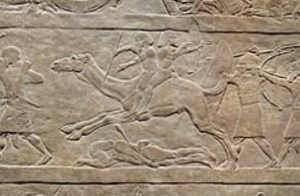
紀元前9世紀から7世紀の間の北アラビア戦役についてのアッシリアの記録(Assyrian records)でも「部族的に組織されたアルブ(Arubu)すなわちアラブ(Arabs)が北および北西アラビアの沙漠とオアシスを占拠していた」と述べられています。アルブ(Arubu)は、戦場に大勢の駱駝騎乗戦士を送り込む能力を持ち、南西アラビアとの交易に従事していました。紀元前6世紀までに北西アラビアのアドゥーマートゥー(Adummatu) (أدوماتو)、タイマー(Tayma) (تيماء)、ディーダーン(Dedan) (ديدان) (現在のウラー(`Ula) (علا))等が隊商町(caravan towns)として十分にその機能が確立し、遊牧民と定住民は、物資だけでは無く、儲けの多い陸上交易の運営に対して相互依存する様に成って来ました。この様にアラブ民族が南西アラビアから現在のレバノン(Lebanon) (لبنان)であるレヴァント(Levant) (مشرق)へ物資を輸送する上での商業的に重要な役割を担っていた事を示していました。
Assyrian records of Northern Arabian campaign between 9th and 7th centuries BC also stated that “Tribally organized Arubu, or Arabs, occupied the deserts and oases of Northern and Northwestern Arabia.” Arubu had the ability to send large numbers of camel-mounted warriors to the battlefields and was engaged in trade with southwestern Arabia. By 6th century BC, Caravan towns in northwestern Arabia, such as Adummatu (أدوماتو), Tayma (تيماء), and Dedan (ديدان) (now ‘Ula (علا), had become so well established that nomads and settlers had become interdependent not only on goods but also on the management of lucrative overland trade. Thus, the Arabs played an important commercial role in transporting goods from Southwestern Arabia to Levant (مشرق), which is now Lebanon (لبنان).
或るアッシリアの記録(One of Assyrian records)
この時代にはアラム人(Aramaeans)と南セム族(South Semites)との間の区別は、厳格ではありませんでした。紀元前9~6世紀のアッシリア(Assyrian)やバビロニア(Babylonia)の碑文に記述の見られる北アラビアの部族は、疑いもなくこの二つのグループから特徴を分け合っていました。例えばタイマー(Tayma)の碑文は基本的には北アラビアでのサムード文字(Thamudic)言語の地域からの出土でしたが、紀元前6~5世紀にそこで両方の碑文が見つかっている様にその地域ではアラム語(Aramaic Language)も使われ、その影響も受けていました。紀元前2世紀から紀元4世紀の北西アラビアのナバティア人(Nabataeans)は、自分達の言葉を書くのにアラム語(Aramaic Language)に極めて近い文字を使っていました。この文字は、アラビア語(Arabic Language) (اَلْعَرَبِيَّةُ)とアラム語の合成でした。しかしながら、ナジュド(Najd) (نجد)ではアラム人文化(Armaean Culture)との繋がりは余り強くはありませんでした。
In this era distinction between Aramaeans and South Semites was not rigid. Northern Arabian tribes, that were described in inscriptions of Assyrian and Babylonia in 9th~6th centuries BC, undoubtedly shared characteristics from these two groups. For example, Tayma inscription was excavated basically Thamudic language region of North Arabia, but Aramaic language was also used and influenced in this region, as both inscriptions were found there in 6th~5th century BC. Nabataeans of Northwestern Arabia from 2nd century BC to 4th century AD used a script very close to Aramaic Alphabet to write their language. This script was a composite of Arabic Language (اَلْعَرَبِيَّةُ) and Aramaic Language. However, Najd (نجد) did not have a very strong connection to Armaean Culture.
紀元前500年から西暦500年の間は、西および中央アラビア全体で北の強い北西セム語(Northwestern Semitic Language)を話す地域と南の強い南セム語(Southern Semitic Language)を話す地域を結んでいました。古代アラビア語が多面な背景を持つ特徴のある中央および西アラビアで発展したのは、疑いも無いようです。南セム語(Southern Semitic Language)と北西セム語(Northwestern Semitic Language)は、両方の特徴を共有する様に互いに混じり合いました。
Between 500 BC and 500 AD, the whole of Western and Central Arabia connected the strong Northwestern Semitic Language-speaking regions in the north with the strong Southern Semitic Language-speaking regions in the south. There seems to be no doubt that ancient Arabic developed in central and western Arabia, which had a distinctive multifaceted background. Southern Semitic Language and Northwestern Semitic Language were blended with each other with keeping the characteristics of both.
これらの言語範囲の中で最終的には古代アラビア語(Old Arabian Language)を作り出した多くのアラビア語の特徴を持つ母体が確認できます。従って、「言語学的呼称でアラブと云う用語を当てはめるのであれば、これらの言語を話す人達は早期アラブ部族である」との見解もあります。この為に紀元前1,000年期の半島のアラブ部族は、文字と言語では二つの関連する伝統に属していました。この二つの伝統は、ナジュドと西アラビアで混じり合っていました。南と北の構成要素の観念は、アラブ部族の伝統の中に非常に頑固に残っていましたし、現在も残っています。
Within these language ranges, many Arabic parent bodies can be seen and these eventually created Old Arabian language. Therefore, there is also view that “if term Arab is applied in linguistic terms, then people who spoke these languages are early Arab tribes.” For this reason, Arab tribes of this peninsula in 1st millennium BC belonged to two related traditions in writing and language. These two traditions were mixed in Najd (نجد) and Western Arabia. Yet notion of components of “South” and “North” has remained very stubbornly in traditions of Arab tribes until today.
アラブ部族は、自分達を地理的にカフターン部族(Qahtani Arabs)出身の南グループとアドナーン部族(‘Adnani Arabs)出身の北グループに常に分けて来ました。紀元前1000年紀の巨大国家群からなるイエメンのサイハド文明(Sayhad Civilization)を担ったのはカフターン部族(Qahtani Arabs)の子孫と考えられて来ましたし、「純粋のアラブ族(Pure Arabs)」と呼ばれています。アドナーン部族(‘Adnani Arabs)は、半島北部の出身だと考えられ、「アラブ化したアラブ族(Arabized Arabs)」と呼ばれて北部、中部および西部アラビアに勢力を持っていました。
Arab tribes have always divided themselves geographically into southern group from Qahtani Arabs and northern group from ‘Adnani Arabs. It is thought that descendants of Qahtani Arabs were responsible for Yemeni Sayhad Civilization, which consisted of a huge group of states in 1st millennium BC, and is called ‘Pure Arabs.’ It is believed that ‘Adnani Arabs originated in Northen Arabia. They was known as “Arabized Arabs” and was powerful in Northern, Central and Western Arabia.
カフターン部族(Qahtani Arabs)は、南西アラビアの定住耕作者であり、アドナーン部族(‘Adnani Arabs)は、中央および北部アラビアの遊牧民でした。この部族の血筋での基本的な区別は、その起源をアラブ部族の早期歴史の中で南セム族血統(South Semitic Lineage)とアラム人血統(Aramaic Lineage)に遡ります。さらにカフターン部族は、南西部の古代南セミ語を話し、アドナーン部族は、北部アラビアのアラム語の影響を受けた方言を話していたのでアラブ族は二分化していました。
Qahtani Arabs were sedentary cultivators of Southwest Arabia, and ‘Adnani Arabs were nomads of Central and Northern Arabia. Basic distinction in lineage of this tribe traces its origins back to South Semitic Lineage and Aramaic Lineage in early history of Arab tribes. In addition, Qahtan tribes spoke ancient South Semi in Southwest Arabia, and ‘Adnan tribes spoke dialects influenced by Aramaic in Northern Arabia, therefore Arabs were divided into two parties.

 Desert peninsula