Ancient Arabian Alphabet #2
スクリプト(文字)
Script
(アラビア語のアルファベットの伝統)
アラビア語と北西セム語のアルファベットの伝統は、古代近東の 2 つの偉大なアルファベット文字体系です。一般に、それらは北部の共通の源から生じ、紀元前 2 千年紀に分離したと考えられています。それぞれに独自の伝統的なアルファベット順 (北西セム語ɔbgd とアラビア語 hlḥm)) があり、どちらもウガリット(Ugarit) で発見されています。
(ウガリット(Ugarit)は、シリア(Syria)西部の都市(Latakia)北数kmのラス・シャムラ(Ras Shamra)(رأس شمرة)にあった古代港湾都市です。)
もちろん、これ自体は、両方の文字順序が紀元前 12 世紀の初めより前に使用されていたことを示す証拠にすぎません。 hlḥm は、地元のアルファベット順 (ɔbghd) が十分に証明されているウガリット原産ではなかったようであり、他の場所で使用されていたことが推測されます。
(Tradition of the Arabic alphabet)
The Arabic and Northwest Semitic alphabetic traditions are his two great alphabetic scripts of the ancient Near East. It is generally believed that they originated from a common northern source and separated in the 2nd millennium BC. Each has its own traditional alphabetical order (Northwest Semitic ɔbgd and Arabic hlḥm), both found in Ugarit.
(Ugarit is an ancient port city in Ras Shamra(رأس شمرة), a few kilometers north of Latakia in western Syria.)
Of course, this in itself is just evidence that both letter sequences were in use prior to the beginning of the 12th century BC. hlḥm does not appear to have been native to Ugarit, where the local alphabetical order (ɔbghd) is well documented, suggesting that it was used elsewhere.
通常使用されていたと思われる唯一の地域は古代の南アラビアですが、証拠はずっと後の時代のものです。確かに、イエメンにあるジョーフ(Jawf)の遺跡では、南アラビア文字の断片的な碑文が炭素(Carbon) 14 から紀元前 9 世紀から 13 世紀までの年代のレベルで発見されています。興味をそそられますが、アラビアのアルファベティックの伝統の起源を特定する確固たる根拠はまだありません。アラビア語グループ内の個々のスクリプトは次のとおりです:
The only area that appears to have been in regular use is ancient South Arabia, but the evidence is much later. Indeed, at the site of Jawf in Yemen, fragmentary inscriptions in South Arabic script have been found at the level of dates from Carbon 14 to the 9th to 13th century BC. Although intriguing, there is still no solid evidence to identify the origin of the Arabic alphabetic tradition. The individual scripts within the Arabic group are:
A.北アラビア語のスクリプト
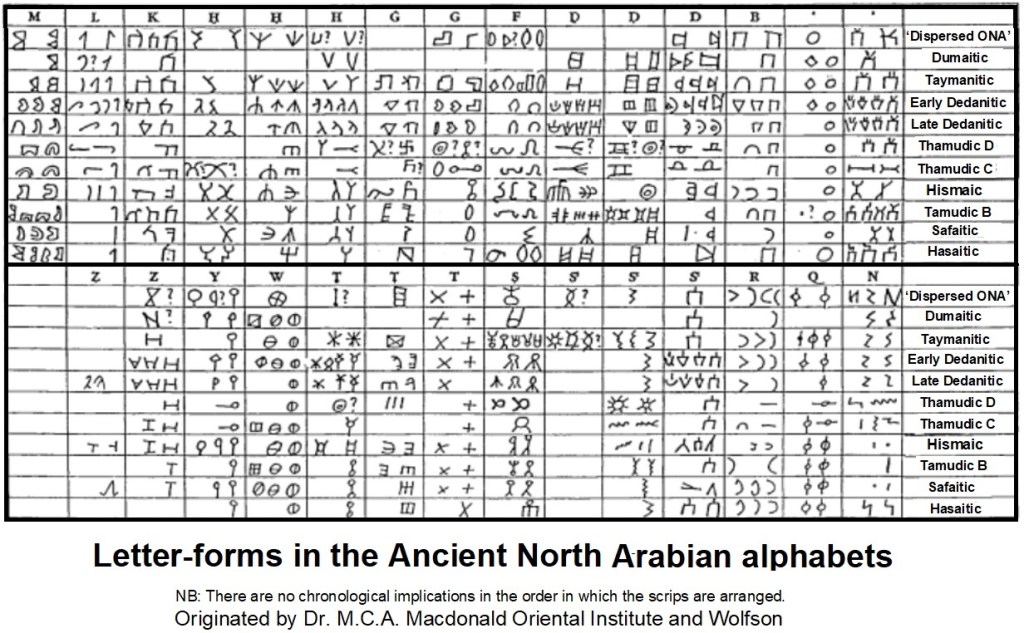
北アラビア語のスクリプト(North Arabian scripts)は、タイマー語(Taymanic) 、ディーダーン語(Dadanitic) 、ドゥーマ語(Dumaitic)、 分散したオアシス北アラビア語(Dispersed Oasis North Arabian)、 サファー語(Safaitic) 、 ヒスマー語(Hismaic)およびサムード語(Thamudic)です。サムード語(Thamudic)は、アラビア半島全体に散在する約 11,000 の落書きに表されている文字等で、まだ完全には特定されておらず、区別されていない多くの異なる文字があります。
A. North Arabian scripts
North Arabian scripts are Taymanic, Dadanitic, Dumaitic, Dispersed Oasis North Arabian, Safaitic, Hismaa Hismaic and Thamudic. Thamudic has many different scripts that are not yet fully identified and differentiated, including some 11,000 graffiti scripts scattered throughout the Arabian Peninsula.
B. 南アラビア語のスクリプト
南アラビア語のスクリプトは記念碑的な南アラビア語で、シバ語(Sabaic)、マザーブ語(Madhabic)、カタバーン語(Qatabanic)、ハドラマウト語(Hadramitic)の碑文には比較的小さなバリエーションがあります。さらにシバ語(Sabaic) から発展したハサー語(Hasaitic)、zabūr または「極めて小さい(minuscule)」スクリプト、そしておそらくドファール碑文(Dhofar dipinti)のスクリプトも含みます。
B. South Arabian scripts
The South Arabic script is monumental South Arabic, with relatively minor variations in Sabaic, Madhabic, Qatabanic and Hadramitic inscriptions. It also includes the Hasaitic language, which evolved from Sabaic, the zabūr or ‘minuscule’ script, and possibly the Dhofar dipinti script.
C. エチオピア語の音節文字
エチオピア語の音節文字(Ethiopic syllabary) または音声化されたアルファベットは、今日でも使用されているアラビア文字の伝統の唯一の形式です。
C. Ethiopic syllabary
The Ethiopic syllabary or vocalized alphabet is the only form of the Arabian alphabetic tradition still in use today.
言語と文字の命名法
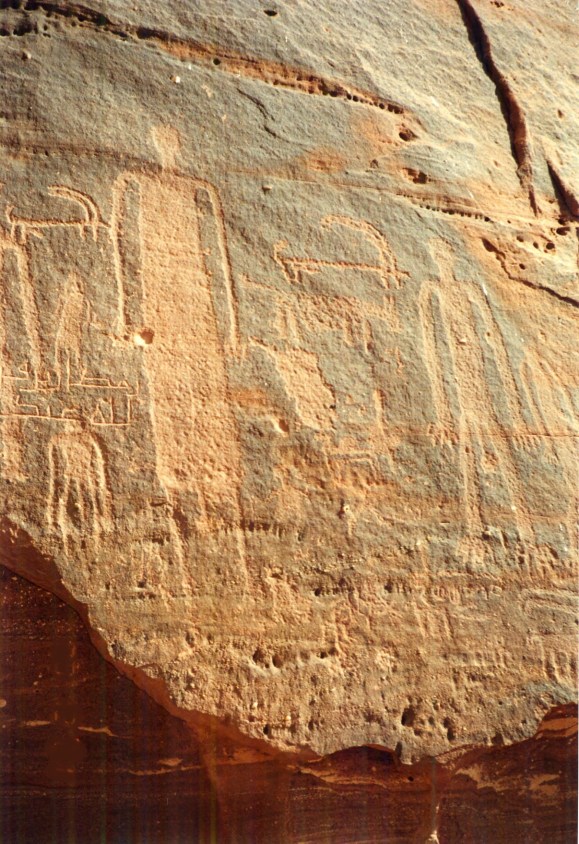
Nomenclature for languages and scripts
さまざまな北アラビア語(the North Arabia)のアルファベットは、相互に、また南アラビア語(the South Arabia)のアルファベットと、まだ完全には理解されていない方法で関連付けられていました。
北アラビア文字(the North Arabian scripts)の中には、再定義が必要なサブカテゴリー(redefinition)がいくつかあります。古代北アラビア語(Ancient North Arabian (ANA)の碑文の大部分は短く、名前、さまざまな長さの系図(genealogies of varying lengths)、導入助詞(introductory particles)のみで構成されていることが非常に多いため、現状ではやむを得ず、スクリプトの名前をテキストが書かれた言語に適用するのが通例になっています。
しかし、「ディーダーン(Dedanite)」スクリプトと「リヒヤーン(Lihyanite) (لحيان)」スクリプに関しては、スクリプトが開発されたオアシスにちなんで、「ディーダーン語(Dadanitic)」と呼ばれるようになりました。同様に、タイマー(Tayma)とドゥーマ(Dumah) (現代のアルジャウフ(Al-Jawf)) のオアシスで発達したスクリプトを、それぞれ「タイマー語(Taymanitic)」と「ドゥーマ語(Dumaitic)」と呼ばれます。
これらの用語は、これらのアルファベット(alphabets)によって通常表現される方言も指しています。初期のディーダーン語(Dadanitic)、タイマー語(Taymanitic)、ドゥーマ語(Dumaiticのテキストのスクリプトは、いわゆる「カルデア語(Chaldaean)」のテキストのスクリプトと共に、形式が非常に似ており、短いテキストを 1 つまたは他のタイプに割り当てることはしばしば困難です。
北アラビアの 3 つの主要なオアシスの町であるディーダーン(Dadan) (ديدان)、タイマー(Tayma) (تيماء)とドゥーマ(Dumah) (دومة) そして、おそらくバビロニア(Babylonia)やその他の場所に定住したアラブ人コミュニティ(the Arab community)の間で、文字の形式(letter-form)と正書体の慣習(orthographic practice)にわずかな地域的変化を加えて採用された「オアシス北アラビア語(Oasis North Arabian (ONA))」という用語を採用しました。
したがって、これらの言語スクリプトを、この「北アラビアのオアシス」(ONA) の観点から考えることが有用であるように思われます。オアシス北アラビア(Oasis North Arabian (ONA))は、正当化する明確な証拠がある場合にのみ、ディーダーン語(Dadanitic)、タイマー語(Taymanitic)などに細分化されます。
メソポタミア(Mesopotamia)のさまざまな場所や他の場所で発見されたオアシス北アラビア語(Oasis North Arabian (ONA)) スクリプトの短いテキストや印章(seal)、陶器、レンガなどの中の、いわゆる「カルデア語(Chaldaean)」の碑文にも新しい名前が必要ですが、当面は「分散したオアシス北アラビアの碑文(Dispersed Oasis North Arabian inscription)」と名付けた、説明的な用語に収めてあります。
The various North Arabian Language alphabets were related to each other and to the South Arabian Language alphabet in ways that were not yet fully understood.
Within North Arabian Scripts there are some redefinitions that need to be re-defined. The majority of the inscriptions in the Ancient North Arabian (ANA) are short and so often consist only of names, genealogies of varying lengths, and introductory particles, that it is unavoidable in the current situation. It is customary to apply the name of a script to the language in which the text is written.
However, with regard to Dedanite scripts and Lihyanite) (لحيان) scripts, they came to be called Dadanitic after the oasis in which the both scripts were developed. Similarly, the scripts developed in the oasis of Tayma and Dumah (Jawf of modern Saudi Arabia) are called respectively Taymanitic and Dumaitic.
These terms also refer to the dialects normally expressed by these alphabets. Early Dadanitic, Taymanitic, and Dumaitic text scripts, along with the so-called Chaldaean text scripts, are very similar in form, and it is often difficult to assign short text to one or the other.
Among the three major oasis towns of northern Arabia: Dadan) (ديدان), Tayma) (تيماء) and Dumah (دومة) ,and the Arab communities, who settled possibly Babylonia or other areas, they were adopted the Oasis North Arabian (ONA) with slight regional changes in letter-form and orthographic practice.
It therefore seems to us useful to think these language scripts in terms of this ‘Oasis North Arabian’ (ONA). ONA languages are subdivided into Dadanitic, Taymanitic, etc., only if there is the clear evidence to justify them to do so.
The so-called Chaldaean inscriptions were found in a short text of ONA, and also seals, potteries, bricks, etc. at various places in Mesopotamia and others. Those inscriptions also need a new name, but in the time being we include them in a descriptive term, named the Dispersed Oasis North Arabian inscription.
サムード語
「サムード語(Thamudic)」という名前は、古代のサムード族(Thamud)と関連付ける証拠は事実上ありません。しかし、従来、その他(Miscellaneous) (Restklassenbildung)の言葉を収めるのに、「サムード語(Thamudic)」と云う用語が西洋の学者の間で、使われてきました。 特に古代北アラビア(Ancient North Arabian)のような分野では、証拠の多くが不確かであり、まだ多くの研究を行う必要があるため、「サムード語(Thamudic)」と云う用語は、有用な目的を果たしてきました。
Thamudic
There is virtually no evidence to associate the name Thamudic with the ancient Thamud tribe. Traditionally, however, the term Thamudic has been used among Western scholars to include the term Miscellaneous (Restklassenbildung). Especially in areas such as the Ancient North Arabian Language, the term Thamudic has served a useful purpose because much of the evidence is uncertain and much research still needs to be done.
ヒスマー語
「サムード語E (Thamudic E)」とラベル付けしたスクリプトは、その際立った特徴を特定したため、その他(Miscellaneous) (Restklassenbildung) を収めたサムード語(Thamudic)から削除することができました。この文字と方言は、「ヒスマー語(Hismaic)」と呼ばれる様になりました。
Hismaic
The script labeled Thamudic E was able to be removed from Thamudic containing the miscellaneous (Restklassenbildung) because it identified a distinguishing feature. This script and dialect came to be called Hismaic.
サファー語
サファー(Safa)とは、ダマスカスの南東で、ジャバル・アル・アラブ (Jabal al-Arab or Jabal al-Druze) の北東に位置する、死火山と途切れることのない溶岩流の主に不毛の地域を指します。この地名に因んだサファー語(Safaitic)の碑文はシリア南部、ヨルダン北東部、サウジアラビア北部の沙漠の広大な地域に広がっています。しかし、サファー(Safa)自体では、見つかっていません。たまたま、最初のサファー語(Safaitic) の碑文が、この地域の東端近くで発見された為の誤称(misnomer)です。しかし、「サファー語(Safaitic) 」という誤称(misnomer)は、変更するにはあまりにも確立されすぎています。
Safaitic
The Safa area is located in the northeast of Jabal al-Arab (Jabal al-Druze), which is located in the southeast of Damascus. It refers to a largely barren area of extinct volcanoes and uninterrupted lava flows. Safaitic inscriptions, named after this area, are found in vast areas of the desert in the southern Syria, northeastern Jordan and northern Saudi Arabia. However, any Safaitic inscriptions have not been found in this area, it self. That happens to be a misnomer because the first Safaitic inscription was found near the eastern end of the Safa area. But the misnomer of Safaitic is too established to change easily, now.
ハサー語
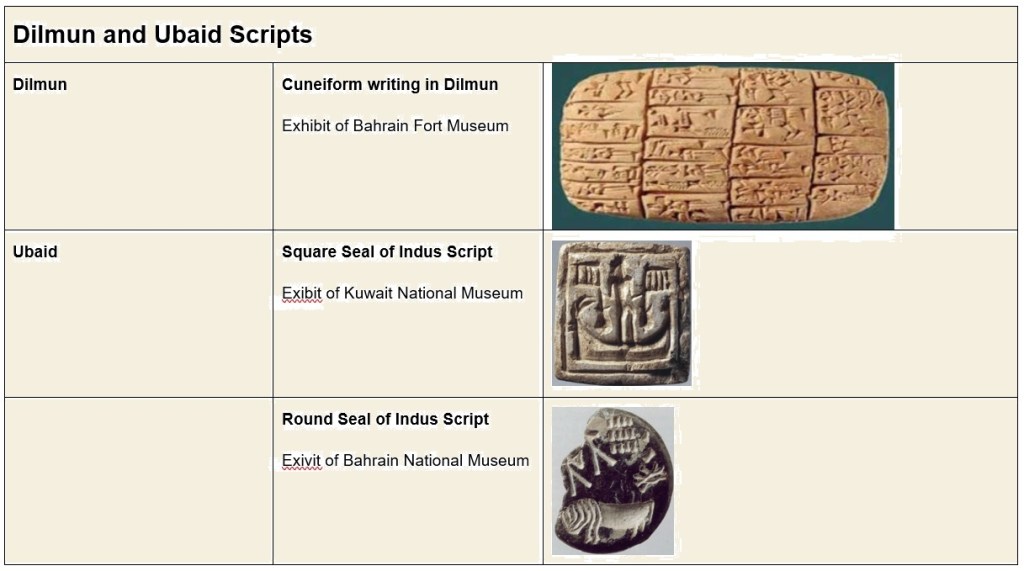
ハサー語Hasaitic という用語は、主にアラビア北東部の サージ(Thaj)、カティーフ(Qatıf) などの遺跡で発見された碑文 (ほぼ完全に葬式) (inscriptions-almost entirely funerary-)を指しますが、時にはさらに離れた場所でも発見されています。これまでに発見された碑文の数が少なく、その内容が反復的であるため、ハサー語(Hasaitic)の言語的特徴についてはほとんど知られていません。一般に、碑文のハサー語(Hasaitic)は、記念碑的な南アラビアのアルファベット(the monumental South Arabian alphabet) (時折の異常な文字形式ではあるが) またはそれに密接に由来するアルファベットのいずれかで書かれていると考えられています。ハサー語の碑文の文字は、分散 ONA テキスト(the Dispersed ONA texts)の文字とは明らかに非常に異なっており、前者が後者から発展したことを示す証拠はありません。これまで知られている碑文の数が少なく、出所や年代の直接的な証拠が不足しているため、現時点では真の古文書学的分析(palaeographical analysis)は不可能でありますが、独自の古文書学的発展(palaeographical development)を開始したという意味で、「ハサー文字(the Hasaitic script)」と云う用語が登場しました。
筆者は、もし、ハサー文字(the Hasaitic script)が古代にこの地域(region)で栄えたウバイド文明(Ubaid Culture, C. 6500~3800BC)やディルムーン文明(Dilmun civilization, 3300~556BC)と関連があれば、大変に興味深いと思いました。
Hasaitic
The Hasaic term refers to inscriptions (almost entirely funerary) found mainly in the northeastern Arabian Peninsula at archaeological sites such as Thaj, Qatıf, etc., but sometimes even further away. Due to the small number of inscriptions found so far and the repetitive nature of their contents, little is known about the linguistic characteristics of Hasaitic. It is generally believed that the Hasaic word in the inscription is written either in the monumental South Arabian alphabet (albeit in the occasional unusual writing form) or in an alphabet closely derived from it. The inscription on the Hasaic inscription is clearly different from the characters of the Dispersed Oasis North Arabian (ONA) texts. And there is no evidence to suggest that the former developed from the latter. Due to the small number of known inscriptions and the lack of direct evidence of origin and date, true palaeographical analysis is not possible at this time, but the term of ‘Hasaitic script’ emerged in the sense that it had launched its own palaeographically development.
The writer, myself, thought it would be very interesting if the Hasaitic script was related to the Ubaid Culture (C. 6500~3800BC) and Dilmun Civilization (3300~556BC) that flourished in the ancient time, there.
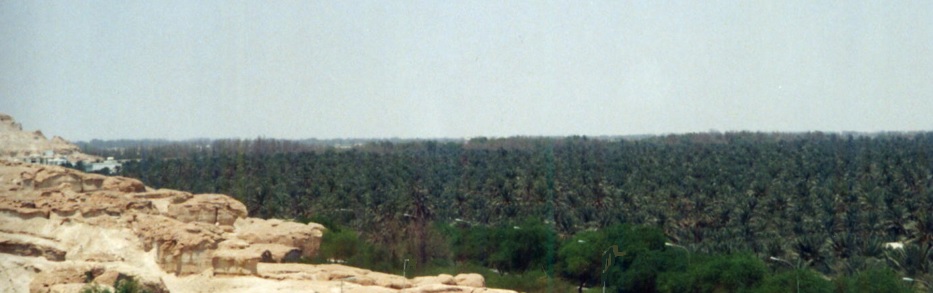
古いアラビア語
古いアラビア語は、西暦 5 世紀後半から 6 世紀前半までは純粋に話し言葉のままだったようです。これはもちろん、それ以前に特定の文字が関連付けられていなかったことを意味します。したがって、まれに、それが書かれたときに、名声のある地元の言語に関連付けられたスクリプトが使用されました。
(1) アラビア半島の南半分で南アラビア語(SouthArabian);
(2) ディーダーン(Dedan)でディーダーン語(Dadanitic);
(3) ヒジュル(Al-Hijr) (الحجر) (Hegra)で ナバテア語(Nabataean)、
(4) ネゲヴ(Negev) とナマラ(Al-Namara)でアヴダト語(En Avdat inscription);
(5) オマーン半島のムレイハ(Mleiha) (مليحة) (Malayha)で東部アラム語の一種(a form of eastern Aramaic);
(6) シリアの教会内で使われるギリシャ語;
(7) 主にシリアで使われた初期のアラビア語(early Arabic)。
この重要性のいくつかの側面については、別途、説明するとして、ここでは、最近の研究で明らかになった事と、用語の改良が必要ないくつかの違いについてのみ説明します。
古いアラビア語(Old Arabic)の文章的証拠には 2 種類あります。
Old Arabic
The Old Arabic seems to have remained purely spoken from the late 5th century AD to the first half of the 6th century. This, of course, means that no particular character was associated with it before that. Thus, in rare cases, when it was written, scripts associated with a local language of fame were used.
(1) South Arabian Language in the southern half of the Arabian Peninsula);
(2) Dadanitic in Dedan;
(3) Nabataean Language in Al-Hijr (الحجر) (Hegra),
(4) En Avdat inscription in Negev and Namara;
(5) A form of eastern Aramaic in Mleiha) (مليحة) (Malayha) of Oman Peninsula;
(6) Greek as used in Syrian churches;
(7) Early Arabic, mainly in Syria.
Some aspects of this importance will be discussed separately, but here we will only discuss what has been revealed in recent studies and some differences that require refinement of terminology.
There are two types of textual evidence for the Old Arabic.
i. 純粋な古いアラビア語
純粋な古いアラビア語のテキストは、既に概説したように、さまざまなスクリプトで書かれていますが、イスラーム以前の Ɔ/l-l 方言で完全に表現されているものです。
i. Pure’ Old Arabic
The ‘Pure’ Old Arabic text, as already outlined, is written in various scripts, but is fully expressed in the pre-Islamic Ɔ/l-l dialect.
ii. 混合した古いアラビア語
混合した古いアラビア語のテキストは、通常は文字に関連付けられている言語 (例えば、サファー語(Safaitic), ディーダーン語(Dadanitic), アラム語(Aramaic), etcなど) で表現されていますが、古いアラビア語(Old Arabic)として識別できるいくつかの言語的特徴を含むものです。これらを「純粋な」古いアラビア語テキストと区別するために、これらを次の様に呼びます。
(1) サファー・アラビア語(Safaeo-Arabic)
(2) シバ・アラビア語 (Sabaeo-Arabic)
(3) ディーダーン・アラビア語(Dadano-Arabic)
(4) ナバテア・アラビア語(Nabataeo-Arabic)
(5) アラム・アラビア語(Aramaeo-Arabic)
侵入要素が 古代北アラビア語(Ancient North Arabian (ANA) や 古代南アラビア語(Ancient South Arabian (ASA)) とは異なる古いアラビア語(Old Arabic)として明確に識別できる場合にのみ、そのようなラベルをテキストに適用します。
現在利用可能な診断基準については、以下を参照してください。資料の不足(paucity)、使用されたスクリプトの不備、および北アラビア語の 2 つのサブグループ間の明らかに密接な類似性を考慮すると、特定の文書の侵入要素が古いアラビア語(Old Arabic)または 古代北アラビア語(Ancient North Arabian (ANA) です。
これらを誤って分類し、将来、2 つのグループの特徴を説明する際に混乱を招くことを避けるために、その他(Miscellaneous) (Restklassenbildung)、または「保留中」のカテゴリを用意すると便利です。
このカテゴリは、これらの言語がより正確に識別できるようになるまで適用できます。したがって、これらのテキストを「未分化の北アラビア語(Undifferentiated North Arabian)」と呼びます。このクラス内では、各テキストのスクリプトと基本言語を反映するように細分化することができます。
したがって、「未分化の北アラビア語(Undiffere tiated North Arabian)」からの押し付けがましい要素を含み、イエメンのジャウフal-Jawfの北、約 1100 メートルにある古代都市ハラム(Haram)で見つかったシバ語(Sabaic)の碑文は、「未分化の北アラビア語(Undiferentiated North Arabian)」のカテゴリー内であり、シバ・北アラビア語(Sabaeo-North-Arabian)と呼ばれます。
ii. Mixed Old Arabic
The Mixed Old Arabic text is usually represented in the language associated with the character (for example, Safaitic, Dadanitic, Aramaic, and so on), but contains several linguistic features that can be identified as the Old Arabic. To distinguish them from the ‘Pure’ Old Arabic texts, we call them as follows:
(1) Safaeo-Arabic
(2) Sabaeo-Arabic
(3) Dadano-Arabic
(4) Nabataeo-Arabic
(5) Aramaeo-Arabic
Apply such a label to text only if the intrusive element is clearly identifiable as Old Arabic as distinct from Ancient North Arabian (ANA) or Ancient South Arabian (ASA). See below for currently available diagnostic criteria.
Given the lack of documentation, the inadequacy of the script used, and the apparent close similarity between the two subgroups of the Northern Arabic, the intrusive element of a particular document is the Old Arabic or the Ancient North Arabian (ANA).
To avoid misclassifying them and causing confusion when describing the characteristics of the two groups in the future, it is useful to have Miscellaneous (Restklassenbildung) , or a “Pending” category.
This category can be applied until such time as theses languages can be identified more exactly. Therefore, we call these texts the Undifferentiated North Arabian Language. Within this class, each text can be subdivided to reflect the script and base language.
Thus, the Sabaic inscription, which contains intrusive elements from the Undifferentiated North Arabian and found in the ancient city of Haram, about 1100 meters north of al-Jawf in Yemen, is within the category of the Undifferentiated North Arabian and is called the Sabaeo-North-Arabian Language.
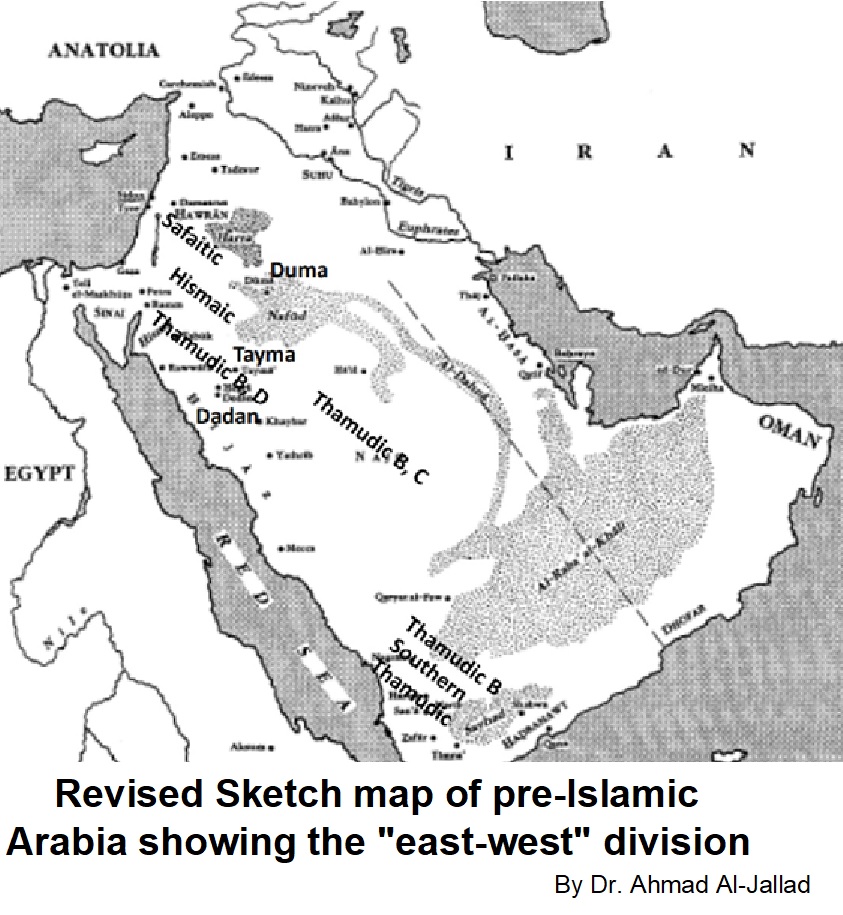
イスラーム以前のアラビアの言語地図
アラビア半島を北西-南東線で非常に大まかに分割し、アラビア半島の西側 3 分の 2 を「西アラビア」、東側 3 分の 1 を「東アラビア」と呼ぶことにします。 (図参照)。
現在の証拠によると、東アラビア(北端と南端の両方)の文化は、西アラビアの文化とはかなり異なる発展を遂げたようです。北西部と南西部の両方の古代史の研究は、いまだに碑文epigraphyに支配されています。
対照的に、東アラビアに関する理解は完全に考古学的研究によるものであり、ドファール(Dhofar)を除いて、ほんの一握りの碑文しか作成されておらず、情報はほとんど含まれていません。
Linguistic Map of Pre-Islamic Arabia
The Arabian Peninsula is very roughly divided into two-thirds of the western part and one-third of the eastern side by the Northwest-Southeast Line. We will call them the Western Arabia and Eastern Arabia, respectively. (See figure).
According to current evidence, the cultures of the Eastern Arabia (both the northern and southern ends) seem to have undergone a very different development from those of the Western Arabia. The study of ancient history in both the Northwest and Southwest has still been dominated by epigraphy.
In contrast, the understanding of the Eastern Arabia is entirely due to the archaeological researches, with the exception of Dhofar. Only a handful of inscriptions have been discovered there and they contain little information.
このように、イスラーム以前の西アラビア(特に南西部)については、社会的および政治的制度、土地と水の権利、宗教的慣習など、記念碑的な碑文の材料である生活の側面について多くの情報を持っています。
東アラビアでは、ほとんど完全に無知です。しかし、アラビア湾岸とオマーンの考古学的調査が、年代学、都市計画、食事、埋葬の慣行などに関する情報を提供してきましたが、西アラビアでもそれらは、次第に入手できるようになって来ています.
Thus, about the pre-Islamic Western Arabia (especially the Southwest), there has been a lot of information about the aspects of life, that are the material of monumental inscriptions, such as social and political institutions, land and water rights, religious and social habits.
In the Eastern Arabia, there is almost completely none of such information. Instead, archaeological surveys in the Arabian Gulf and Oman have provided information on chronology, urban planning, diet, burial practices, etc. Such information has also become available progressively in the Western Arabia.
「西アラビアと「東アラビア」の違い
The difference between the Western Arabia and East Arabia
碑文研究者(epigraphist)にとって、両者の最も際立った違いは、筆記術の使い方にあります。アラビア北西部では、輸入されたアラム語(Aramaic)、ギリシャ語(Greek)、および南アラビア語アルファベット(South Arabian alphabets)に加えて、さまざまなネイティブ (native script)が多数ありました。
少なくとも紀元前 1000 年代半ばから、オアシス北アラビア文字(Oasis North Arabian script)の形式が、ドゥーマDumah (دومة)、タイマー(Tayma) (تيماء)、ディーダーン(Dedan) (ديدان)の主要なオアシスで使用されていました。
それより少し後の時期から、遊牧民は、多くの異なるアルファベットを使用しました。さまざまなアラビア文字の発達と相互関係の問題はまだ非常に不確実です。
しかしながら、これらの北アラビア文字のすべてではないにしても、ほとんどが南アラビア文字から発展した文字ではありません。北アラビア文字は、南アラビア文字と平行して発達した可能性があります。
西アラビアとは対照的に、東アラビアで開発された文字は、唯一の土着文字のドファール(Dhofar)文字だけでした。アラビア湾の北端では、楔形文字(cuneiform)のテキストが数十点発見されています。さらに、同じ地域でギリシア語のテキストと断片が点在しています。
ハサー語碑文(Hasaitic inscriptions)の文字は、明らかに記念碑的南アラビア語(Monumental South Arabian Language)に直接由来していますが、個々のテキストでは、特定の文字の形式に時折奇妙なバリエーションがあります。
アラビア湾岸から発見されたいくつかのアラム語テキスト(Aramaic texts)は、例外を除いて、短いテキスト、断片(fragment)、または「コインの説明書き」(coin legends)です。それらは宝石細工と筆記体の伝統の両方でさまざまな形式のスクリプト(script)を示しており、一部のテキストには、明らかに両方から派生した文字の形が含まれています。
実際、一部のテキストでは、文字が異常な方向に発展したようです。その個々の特徴のいくつかは、ハトラン(Hatran)やパルティア(Parthian)のものと比較できますが、アラム文字(Aramaic script)のこの特定の形式は他の場所では知られていません。
したがって、それが局所的な発展を表している可能性はありますが、アラビア湾岸地域のアラム語テキスト(Aramaic texts)の総数は非常に少なく、その地理的および年代的範囲は明らかに非常に広いため、現時点で結論を得られていません。
イエメンでは、多くの部族が定住し、読み書きのできる文化が育ちましたが、記念碑的な文字の出現には、非常に驚くほどの統一性が見られます。記念碑的なスクリプトの形での碑文と別の碑文の違いは、一般に、地域的な違いではなく、年代の発展に起因すると考えられています。
同時に、南アラビア文字には他に 2 つのタイプがあります: 1つは、グラフィティ(graffiti)と以下に述べるいくつかの刻まれた棒(inscribed sticks)に適応された大文字(majuscule)大文字です。もう1つが北イエメンで発見された大部分の刻まれた棒(inscribed sticks)で使用されたズブル(zubur) (زُبُر)または極小文字(minuscule)のスクリプトです。
どちらの場合も、これらは文字のグループであり、記念碑的な文字とは対照的に、ここには統一性がなく、特にズブル(zubur) (زُبُر)の場合には、さまざまな文字形式が多数(plethora)あります。
サウジアラビア南部(the Southern Saudi Arabia)の沙漠には、南アラビア文字(South Arabian)と南サムード文字(Southern Thamudic)の何千もの落書きがあり、そのうちのいくつかは、北のサファー語(Safaitic) とサムード語(Thamudic)の落書き(graffiti)のように。遊牧民(nomads)によって書かれた可能性があります。
このように、文字がほとんど定着していないように見える東アラビアと、文字が固有であったと思われる半島の西側 3 分の 2を占める西アラビアとの間には、非常に明確な違いがあります。さらに、西アラビアの中でも、北西部と南西部の間には、言語、文字、利用可能な文書の種類、および他の社会との関係においても明確な違いがあります。
For epigraphists, the most striking difference between the two is in the use of the art of writing. In the northwestern Arabia, there were a number of different native scripts, in addition to imported Aramaic, Greek, and South Arabian alphabets.
Since at least the mid-1000s BC, the forms of Oasis North Arabian script had been used in such main oasis as Dumah (دومة), Tayma (تيماء), and Dedan (ديدان).
From a little later period, the nomads used many different alphabets. The question of the development and interrelationship of various Arabic scripts is still very uncertain.
However, almost, if not all, of these North Arabic scripts had not been developed from the South Arabic script. The North Arabic alphabet may have developed in parallel with the South Arabic script.
In contrast to the Western Arabia, only the Dhofar script, the indigenous characters, had been developed in the Eastern Arabia. At the northern end of the Arabian Gulf, dozens of cuneiform texts have been discovered. In addition, Greek texts and its fragments are scattered in the same area.
The letters of Hasaitic inscriptions are clearly derived directly from the Monumental South Arabian Language, but in the individual texts, there are occasional strange variations in the format of certain characters.
Some Aramaic texts found in the Arabian Gulf are known as short texts, fragments, or “coin legends” with some exceptions. They represent different forms of scripting in both jewelry and cursive traditions, and some texts clearly contain character forms derived from both.
In fact, in some texts, the characters seem to have developed in unusual directions. Some of its individual features can be compared to those of Hatran and Parthian, but this particular form of Aramaic script is not known elsewhere.
Therefore, it is possible that it represents a local development, but the total number of Aramaic texts found in the Arabian Gulf region is very limited. Its geographical and chronological scope is obviously so wide that no conclusions have been reached at this time.
In Yemen, many tribes settled and a literate culture was fostered, but the emergence of monumental writing has a very surprising degree of unity. The difference between an inscription in the form of a monumental script and another is generally thought not to be due to regional differences but to be due to the development of the chronology.
At the same time, there are two other types of South Arabic scripts: one is majuscule, used in graffiti and also used in some of inscribed sticks mentioned below. The another is Zubur (زُبُر) (minuscule’s script), used in most inscribed sticks found in the North Yemen.
In either case, these are groups of characters, and in contrast to the monumental characters, there is no unity here, and there are various character forms of plethora, especially in the case of zubur (زُبُر).
In the desert of the Southern Saudi Arabia, there are thousands of graffiti engraved with the South Arabian script or the Southern Thamudic scrips. Some of them might be engraved by nomads like the Safaitic script and Thamudic script in the Northern Arabian Peninsula.
Thus, there is a very clear difference between the Eastern Arabia, where the writing appears to be largely unsettled, and the Western Arabia, which occupies two-thirds of the western part of the peninsula where the writing seems to have been unique. In addition, even within the Western Arabia, there are also clear differences between the Northwest and the Southwest in language, writing, the types of documents available, and their relationship to other societies.
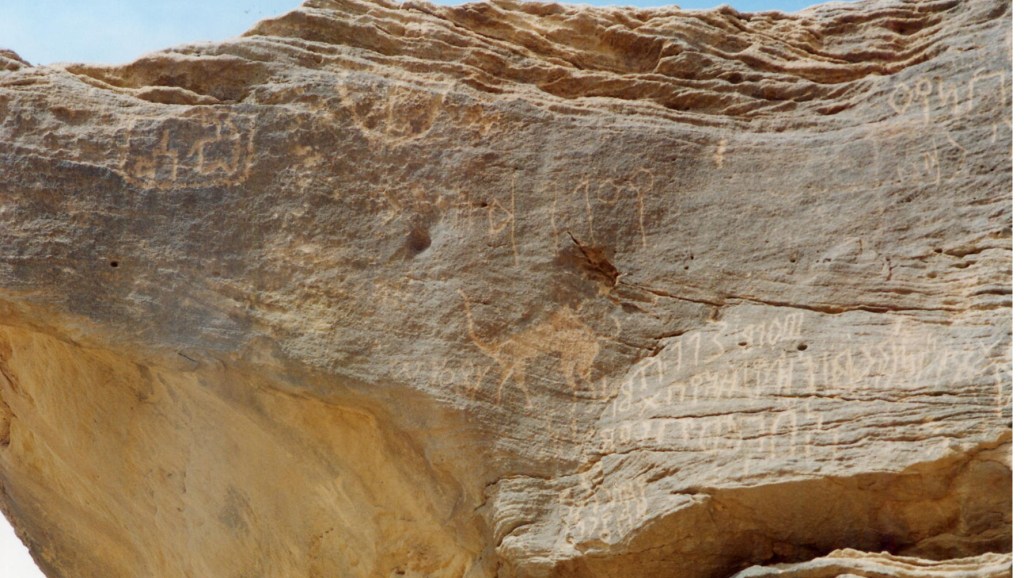
アラム語とアラム文字
Aramaic Language and Alphabet
アラム語の発祥
アラム語はレヴァント(Levant)等の北西セム語(Nothwest Semitic)属し、アラム語を使用していたのがアラム人(Aramaeans)です。アラム人(Aramaeans)は、紀元前3,000年紀以降パレスタイン(Palestine)からメソポタミア(Mesopotamia)に至る地域を征服していたアモリ人(Amorites)地域から出現した同じ北西セム語(Northwest Semitic languages)を話す牧畜部族です。
Origin of the Aramaic Language
The Aramaic language belongs to the Northwest Semitic languages such as Levant, and Aramaeans used Aramaic. Aramaeans belong to Amorites who conquered the region from Palestine to Mesopotamia from 3,000 BC onwards. Aramaeans are a pastoralist tribe that speaks the same Northwest Semitic languages that emerged from the Amorites region.
肥沃な三日月地帯全体の共通語
アラム人(Aramaeans)は、肥沃な三日月地帯(Mesopotamia)の文明化した都市の住人からは恐れと侮蔑を持って見られていました。しかし、紀元前2,000年紀に駱駝による遊牧や隊商貿易で経済的に軍事的に強力な部族となり、紀元前11世紀頃までに、ユーフラテス川(The Euphrates)上流に定住しました。駱駝を用いてシリア沙漠(Syrian Desert)などを舞台した隊商貿易はさらに拡大しました。アラム語(Aramaic Language)は古代オリエント世界の商業語として定着し、紀元前1,000年紀中頃までには肥沃な三日月地帯全体の共通語(lingua franca)になりました。
The lingua franca of the entire Fertile Crescent
Aramaeans were viewed with fear and contempt by the inhabitants of the civilized cities of the Fertile Crescent (Mesopotamia). However, in 2,000 BC they became economically and militarily powerful tribes through nomadic camels and caravan trade, and by about the 11th century BC they had settled in the upper reaches of the Euphrates. The caravan trade, which used camels to set the Syrian Desert and elsewhere, expanded further. The Aramaic language had been established as the commercial language of the ancient Orient, and by the middle of 1,000 BC it was the lingua franca of the entire Fertile Crescent.
アラム文字の発展
アラム語(Old Aramaic Language、1100BC~AD 200)は、北西セム文字を基にして紀元前1050年頃に確立したフェニキア文字(Phoenican Alphabet)を使って書かれていました。紀元前8世紀までにはフェニキア文字(Phoenican Alphabet)を改造したアラム文字(Aramaic Alphabet)で書かれる様になりました。やがて、楔形文字(Cuneiform)で書かれたアッカド語(Akkadian Language)の記述に匹敵するまでにアラム文字(Aramaic Alphabet)は発展しました。
Development of Aramaic alphabet
Aramaic (the Old Aramaic language, 1100BC~AD 200) was written using the Phoenican alphabet. The Phoenican alphabet was established around 1050 BC based on the Northwest Semitic script. By the 8th century BC, the Aramaic language became to be written in the Aramaic alphabet, a modification of the Phoenican alphabet. Over time, the Aramaic alphabet developed to rival the Akkadian language written in the Cuneiform.
オリエント全体の共通語へ
アラム人(Aramaeans)は、戦場に大勢の駱駝騎乗戦士を送り込む能力を持ち、南西アラビアとの交易に従事していました。紀元前9世紀から7世紀の間の北アラビア戦役についてのアッシリアの記録(Assyrian records)でも「部族的に組織されたアルブ(Arubu)すなはちアラブ(Arabs)が北および北西アラビアの沙漠とオアシスを占拠していた」と述べられています。紀元前6世紀までに北西部のタイマー(Tayma)やディーダーン(Dedan)等が隊商町(caravan towns)として十分にその機能が確立して、遊牧民と定住民は物資だけでは無く、儲けの多い陸上交易の運営に対して相互依存する様に成って来ました。その陸上交易などを通じて、アラム語(Aramaic)は紀元前500年頃までにオリエント(Orient)中に広まり、アケメネス朝(Achaemenid Empire, 550 BC – 330 BC)の時代には国際コミュニケーション言語である共通語(Lingua Franca)になりました。
To the lingua franca of the entire Orient
Aramaeans, with the ability to send large numbers of camel-mounted warriors to battlefields, were engaged in the trade with the Southwestern Arabia. The Assyrian records of the Northern Arabian campaign between the 9th and 7th centuries BC also mentioned the “tribally organized Arubu” Arabs occupied the deserts and oases of the northern and northwestern Arabia. By the 6th century BC, Tayma and Dedan in the northwestern Arabia had become to the sufficiently functioned Caravan towns. The both pastoralist tribes and town inhabitants mutually depended not only on goods trading but also on the lucrative management of the caravan routs. Through the on-land trading through caravans, Aramaic spread throughout the Orient by about 500 BC. During the Achaemenid Empire (550 BC – 330 BC), Aramaic became a lingua franca (Lingua Franca) of the entire Orient, an international language of communication.
帝国アラム語の確立
アラム語は、新アッシリア帝国(Neo-Assyrian Empire) (911~609 BC)時代、新バビロニア帝国(Neo-Babylonian Empire) (626~539 BC)、アケメネス朝(Achaemenid Empire) (550~330 BC)を通じて帝国アラム語(Imperial Aramaic)として確立され、公用語とされました。公用語のされたことが、アラム語を国際コミュニケーション言語である共通語になった、大きな要因でもあります。
Establishment of Imperial Aramaic
Aramaic had been established as the Imperial Aramaic through the periods of the Neo-Assyrian Empire (911~609 BC), Neo-Babylonian Empire (626~539 BC) and Achaemenid Empire (550~330 BC) and had become the official language. It was also a major factor in making Aramaic the lingua franca of the entire Orient as an international language of communication.
ナバテア語の派生
ヘレニズム時代(Hellenism Period) (323~31/30BC)には一時的に阻害されましたが、西暦7世紀のイスラーム教徒のペルシア征服(Muslim conquest of Persia)(AD 633~654)(Sassanid Empire) (AD 224~651)まで変わらずにこの地方の共通語(Lingua Farnca)であり続けました。この為、アラム語(Aramaic Language)の使用は広く行き渡り、ユダヤ教(Judaism)、イスラーム教(Islam)やキリスト教の一部の宗派の聖書や仏教(Buddhist)の経典は、アラム文字(Aramaic Alphabet)から発展した文字で書かれています。ナバテア人が公式、行政、法的文書を書くためにアラム語を使用しながら、古アラビア語の方言を話していました。残念ながら、ナバテアの文書は、腐りやすいパピルスに書かれていたために、そのほとんどが消えていますが、それらに密接に関連して派生したのがナバテア語(Nabataean)です。
なお、ナバテア王国(Kingdom of Nabataea) (Anbat)については、「21 ナバテア王国やカルヤ・ファーウ等、フェリクス以外の地域」を参照してください。
Nabataean derivation
Briefly inhibited during the Hellenistic Period (323~31/30 BC), however Aramaic had continuously been the lingua franca of this region until the Muslim conquest of Persia (AD 633~654). This Persia means Sassanid Empire (AD 224~651).
The use of Aramaic language had been so widespread that the Bible and Buddhism scriptures were written in the alphabets that evolved from the Aramaic alphabet. The Nabataeans spoke Old Arabic dialects while using the Aramaic alphabet to write official, administrative, and legal documents. Most of the Nabataean documents have unfortunately disappeared because they were written on perishable papyrus. But a closely related derivative of them became the Nabataean script.
For “the Kingdom of Nabataea (Anbat)” please refer to “21. Regions other than Felix, such as the Kingdom of Nabataea and Qaryat al Faw.”
フェニキア文字
フェニキア文字に由来するアラム文字は、青銅器時代後期にアンモン語、モアブ語、エドム語の方言を書き留めるために使用されていたカナン祖語のスクリプトシステムから派生しました。
フェニキア文字は、古ヘブライ語と古アラム語を含むすべての北西セム語の方言を書き写すために鉄器時代に拡張されました。貿易活動のために、フェニキア文字はカナン文化をはるかに超えて、特に地中海を通して広まりました。それは当時最も広く使われていたアルファベットとなり、西洋のアルファベットシステムに派生しました。
ナバテア人は、碑文とパピルスの文書に続いて、アラム文字の変異体を使用しました。
Phoenician script
The Aramaic alphabet, derived from the Phoenician alphabet, was derived from the Proto-Canaanite script system used to write down Ammonite, Moabite and Edomite dialects in the Late Bronze Age.
The Phoenician alphabet was extended during the Iron Age to transcribe all Northwest Semitic dialects, including Old Hebrew and Old Aramaic. Due to trade activities, the Phoenician script spread far beyond the Canaanite culture, especially through the Mediterranean. It became the most widely used alphabet of the time and was derived from the Western alphabet system.
The Nabataeans used variants of the Aramaic alphabet, following the diversion of alphabet from the epigraphic and papyrological documentation.
アラム語の碑文
アラム語の碑文はナバテア王国の初期から存在しています。アラビア語で完全に構成されているがナバテア文字で書かれた碑文は、シナイ半島(西暦150年頃のアラム語の碑文に囲まれた2行の祈り)とダマスカスの近くで見つかったナマラ碑文(四世紀に書かれたアラビア語最古の碑文の一つ)の2つだけがこれまでに発見されています 。しかし、ナバテア文字使用については、時間の経過に伴う変化や発展も考慮する必要があります。アラム語の使用は、アラビア語の有利性のために時間とともに徐々に弱まりました。そして、紀元前4世紀頃には、アラビア語の影響によって、テキストがアラビア語の特徴を持ち、アラビア語の規則に従っていることが明白になりました。
Aramaic inscriptions
Aramaic inscriptions have existed since the early days of the Nabataean kingdom. Only two inscriptions composed entirely in Arabic but written in the Nabataean script have been found so far: in the Sinai Peninsula (a two-line prayer surrounded by Aramaic inscriptions from around 150 AD) and the Namara inscription. The Namara inscription is one of the Arabic oldest inscriptions in the 4th century and was found near Damascus. However, the changes and developments in Nabataean script usage over time must also be considered. The use of Aramaic gradually weakened over time due to the advantages of Arabic. And around the 4th century BC, the influence of Arabic made it clear that the text had Arabic features and followed Arabic rules.
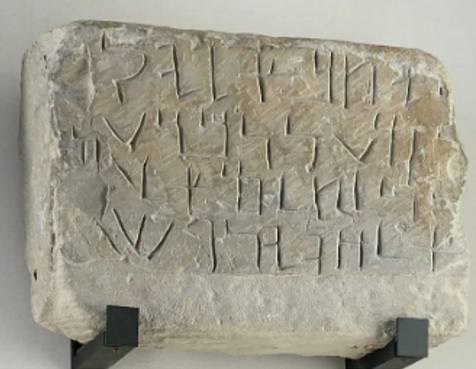
ナバテア文字
ナバテア文字は、ヨルダン南部とハウランからダマスカスまでのすべての主要な都市中心部、ナバテアの影響地帯にあります。ナバテアの影響地帯には、聖域、アラビアのオアシス、シナイ半島、死海周辺、パレスチナ等が挙げられます。 これまでに4000以上の碑文がナバテアアラム語で書かれていることが確認されています。興味深いことに、ローマによるナバテアの併合により、ペトラでは西暦106年以降のナバテア文字が見つからなかったため、ペトラでのナバテア文字の使用が停止したようです。しかし、ハウランでは、このスクリプトはローマの支配とビザンチン時代の下で使用され続けています。古アラビア語の恩恵でアラム語の方言が衰退したため、ナバテア文字はアラム語ではなくアラビア語に関連していることがわかりました。その幅広い使用は、西暦初期に存続したナバテア文化の大きな影響と相互に関連しています。そのようにして、ナバテア文字はアラビア文字へのリンクになりました…言い換えれば、今日のアラビア語は事実上、ナバテアアラム文字の進化の最新の段階です。碑文文書では、この進化は西暦3世紀から5世紀の間に明らかになります。しかし、アラビア語のアルファベットが古典的な形で現れるのを見るには、7世紀を待たなければなりません。
Nabataean script
The Nabataean script is found in the southern Jordan and all major urban centers from Hawran to Damascus and the regions belonging to the Nabataean sphere of influence. Such regions include the sanctuaries, the Arabian oases, the Sinai Peninsula, around the Dead Sea and Palestine.
So far, more than 4000 inscriptions have been confirmed to be written in the Nabataea-Aramaic. Interestingly, the annexation of Nabataea by Rome seems to have stopped the use of the Nabataean script in Petra, as no Nabataean script from 106 AD was found in Petra. However, in Hawran, this script continued to be used under the Roman rule and Byzantine period.
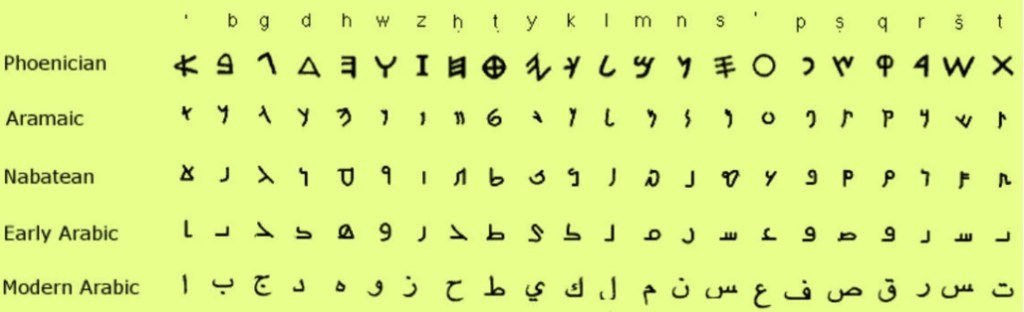
With the decline of Aramaic dialects with the benefit of the Old Arabic, it was found that the Nabataean script was related to Arabic rather than Aramaic. Its wide use is interrelated with the great influence of the Nabataean culture that persisted in the early CE. In that way, the Nabataean alphabet became a link to the Arabic alphabet. In other words, Arabic today is effectively the latest stage in the evolution of the Nabataea-Aramaic script. In the inscriptions, this evolution was revealed between the 3rd and 5th centuries AD. But to see the Arabic alphabet arrival in its classical form, it should be waited for the 7th century.
現代アラビア文字誕生
ナバテア文字は、技術的にはアラビア語を書き写すのに最適なものではないという事実にもかかわらず、他の可能なシステムに課せられました。アラビア語は28の音素を数えるのに対し、22の音素用に設計されました。28文字で構成される南セム語のアルファベットは、より便利で、完璧な解決策でさえあったでしょう。ナバテアのアラム語の使用は、2つの異なる音素に同じ文字を使用することによっていくつかの妥協を余儀なくされました。 文字をつなぐ合字の開発もその一つです。
リンク手法は、次の文字に文字を添付するための固定点を見つけることを要求します。この必要性は文字の形の変更につながります。このプロセスを通じて、ナバテア文字は単語内の文字の位置に応じて文字の形状を増やしました。
Birth of the modern Arabic alphabet
Despite the fact that the Nabataean alphabet was technically not the best one to transcribe Arabic, it was imposed on other possible systems: it was designed for 22 phonemes, while Arabic counts 28 phonemes. The South Semitic alphabet, consisting of 28 letters, would have been more convenient and even a perfect solution. The use of Nabataea-Aramaic script forced some compromises by using the same letter for two different phonemes. The development of ligatures that connect letters is one of them.
The linking technique requires finding a fixed point for attaching a character to the next character. This need leads to a change in the shape of the letters. Through this process, the Nabataean alphabet increased the shape of the letters according to the position of the letters in the word.
参考文献(Reference)
“Reflections on the linguistic map of pre-Islamic Arabia” written by Dr. M.C.A. Macdonald.
“More reflections on the linguistic map of pre-Islamic Arabia” reported by Dr. Ahmad Al-Jallad.
“Inscriptions from ancient Arab civilizations found across Saudi Arabia” (https://www.arabnews.jp/en/saudi-arabia/article_37486/)” prepared under the cooperation of Dr. Sulaiman Al-Thiaeb, an Advisor to King Faisal Center.
“Online Corpus of the Inscriptions of Ancient North Arabia” (http://krc.orient.ox.ac.uk/ociana/)
“The Nabataean Script:A Bridge between the Aramaic and the Arabic Alphabets”
(https://www.pathsofjordan.net/some-facts-about-the-nabataeans/the-nabataean-script-a-bridge-between-the-aramaic-and-the-arabic-alphabets)
 Desert peninsula